Best Lures for Northern Pike in Alberta
The thrill of a northern pike strike is something every angler chases, but knowing which lure to tie on can feel like a guessing game, especially when conditions change or you're fishing a new lake in Alberta. This comprehensive guide is dedicated to cutting through the confusion, helping you understand the best lures for northern pike in Alberta and equipping you with the knowledge to consistently put these toothy predators in your net, no matter the season or situation.
Understanding Northern Pike Behavior and Habitat
Before we even talk about specific lures, it’s essential to grasp what makes northern pike tick. These aren't just any fish; they're apex predators in many of Alberta's water bodies, with a keen predatory instinct that influences where they live and what they eat. Understanding their world is the first step to choosing the right lure that will trigger their aggressive strikes. If you're looking for a broader overview of the species, check out our guide on Northern Pike Fishing in Alberta.
The Pike's Preferred Diet
Northern pike are opportunistic feeders, meaning they'll eat just about anything they can catch, but they do have preferences. Their diet primarily consists of smaller fish like ciscoes, minnows, perch, and even other pike, but they won't hesitate to munch on frogs, ducklings, or small mammals if the opportunity arises. This broad diet means that lures mimicking these prey items are often highly effective. Think about the local forage in the lake or river you're targeting; if there are lots of yellow perch, a perch-patterned lure is a smart choice. Their aggressive nature and powerful jaws make them formidable hunters, and understanding this allows us to select lures that truly antagonize them into biting. You can learn more about What northern pike eat in Alberta lakes to refine your lure choices.
Prime Pike Habitat and Structure
Pike are ambush predators, and their habitat choices reflect this. They love to lurk in areas where they can hide and dart out to surprise unsuspecting prey. This means you'll typically find them in or near:
- Weed Beds: Thick weeds, lily pads, and submerged vegetation are prime real estate for pike. These areas offer cover, oxygen, and a buffet of smaller fish. Look for edges, pockets, and points within these weed lines.
- Structure: Fallen trees, submerged logs, rock piles, and old docks all provide excellent ambush points. Any break in the uniform bottom or shoreline can hold pike.
- Shallow Bays: Especially in spring and fall, shallow, sun-warmed bays with abundant cover can be packed with pike, often larger ones.
- Drop-offs and Channels: While they love the shallows, larger pike, particularly in summer, might retreat to deeper water near drop-offs or channel edges, especially if there's baitfish schooling there.
When you're out on the water, spend time identifying these key areas. A lure that can be effectively presented in dense weeds will be very different from one best suited for open water trolling along a drop-off. Knowing where the pike are hiding is half the battle; the other half is presenting a lure they can't resist. Our guide on Northern Pike Habits in Alberta Lakes offers more insights into their preferred hangouts.
Classic Pike Lures That Always Deliver
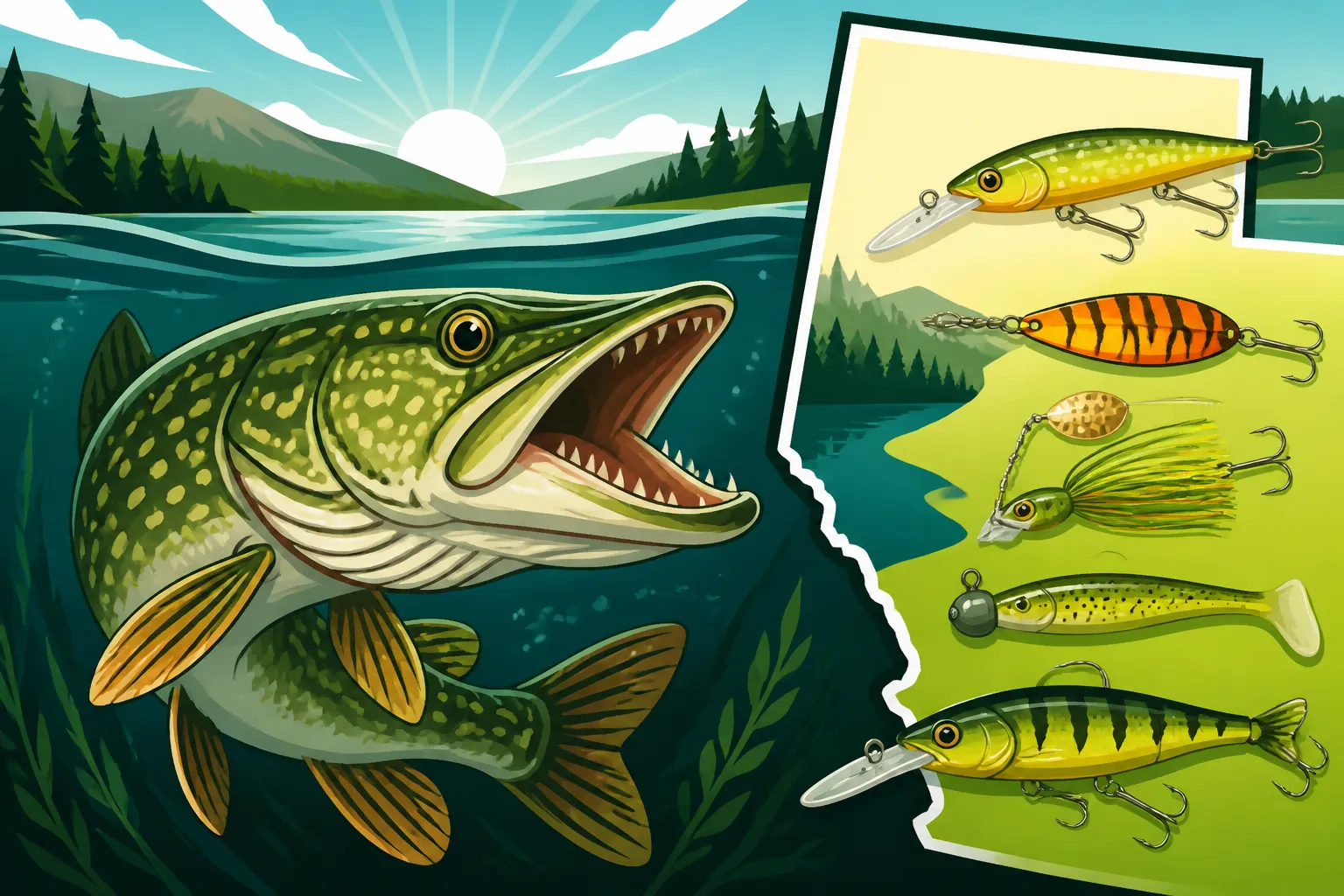
Some lures have stood the test of time for a reason: they consistently catch pike. These are the workhorses of any pike angler's tackle box, proven across countless Alberta lakes and rivers. Mastering these staples will give you a solid foundation for pike fishing success.
Spoon Magic: Wobble and Flash
Spoons are arguably one of the oldest and most effective pike lures out, and for good reason. Their wobbling, flashing action perfectly imitates a wounded baitfish, an irresistible target for a hungry pike. The simplicity and versatility of spoons make them a must-have.
- Types and Action: Classic casting spoons like the Daredevil (red and white, of course!) or the Johnson Silver Minnow are iconic. These spoons have a distinct side-to-side wobble that sends out vibrations and flashes of light, mimicking a dying fish. Trolling spoons, often longer and thinner, have a more subtle, darting action. Weedless spoons, like the Silver Minnow, are invaluable for fishing over and through thick vegetation, minimizing snags where pike often hide.
- Retrieval Techniques: For casting spoons, a simple retrieve works wonders. Vary your retrieve speed: slow it down, speed it up, add a few twitches or pauses. Often, a pike will hit on the pause or as the spoon flutters down. When trolling, experiment with speed and depth. Using a leader, which we’ll discuss later, is non-negotiable with spoons as pike have a tendency to swallow them deep. You can find a great selection of reliable spoons on Amazon, often in multi-packs, which is a convenient way to stock up on different colors and sizes.
Spinnerbaits: Weed-Beating Wonders
Spinnerbaits are fantastic for pike, especially when fishing in heavy cover. Their design makes them relatively weedless, allowing you to punch through vegetation where other lures would snag instantly. The combination of flash, vibration, and a skirted body is a powerful attractant.
- Design and Appeal: Spinnerbaits feature one or more blades (Colorado, Indiana, or Willowleaf) that spin and flash, creating a lot of commotion. Beneath the blade(s) is a weighted head and a silicone or marabou skirt that pulses and breathes in the water, mimicking a baitfish or even a crawfish. The single upturned hook design means fewer snags in weeds, which is exactly where big pike love to hang out. The vibration from the blades is also a huge draw, allowing pike to home in on the lure even in murky water.
- Effective Presentations: Cast spinnerbaits near weed lines, lily pad fields, or submerged timber. A steady retrieve is often all it takes, but don't be afraid to experiment with burning them just under the surface, or slow-rolling them along the bottom. They are excellent for "ripping" through weeds – when you feel resistance, give your rod a sharp snap to clear the lure, often triggering a reactionary strike from any nearby pike. For those looking to learn more, our guide on How to fish a spinnerbait for Alberta lake pike delves deeper into specific tactics.
Bucktail Spinners: The Legendary Pike Attractor
Mention pike fishing to any seasoned angler, and bucktail spinners are bound to come up. These lures, typically featuring one or two large blades and a skirt of deer hair, are pike magnets, especially for larger, more aggressive fish.
- Signature Action: Bucktails create immense flash and vibration, along with the natural pulsation of the bucktail hair in the water. They are designed to be retrieved quickly, often "burned" just below the surface, which drives pike absolutely wild. The combination of speed and flash mimics a frantic fleeing baitfish, an easy target for a powerful pike. Brands like Mepps and Blue Fox are legendary for their effectiveness.
- Targeting Trophy Pike: While bucktails catch pike of all sizes, they are particularly renowned for drawing out trophy-sized fish. The aggressive nature of the presentation often triggers a territorial response in bigger pike. Cast them along expansive weed flats, over submerged humps, or near rocky points. A fast, consistent retrieve is key, allowing the blades to spin freely and the bucktail to flair. Don't be surprised if a pike follows it right to the boat, so be ready to do a "figure-eight" maneuver at the boat side to seal the deal. This is a crucial tactic covered in our piece on How to figure eight a pike boatside.
Modern Lures and Techniques for Tricky Pike
While the classics are always reliable, modern lure technology and refined techniques offer new ways to entice pike, especially when they're pressured or particular. These lures often offer more realistic profiles, intricate actions, or specialized presentations that can make a huge difference.
Jerkbaits: Erratic Dance of a Wounded Fish
Jerkbaits are designed to be worked erratically, mimicking a struggling, dying baitfish. This stop-and-go action can be incredibly effective at triggering reactionary strikes from hesitant pike.
- Lifelike Movement: A good jerkbait, like a Rapala X-Rap or a Lucky Craft Pointer, suspends in the water during pauses, giving pike ample time to inspect it before committing. The key is the retrieve: a series of short, sharp jerks of the rod tip, followed by pauses. During the pause, the lure will hover, sometimes slowly rising or falling, looking incredibly vulnerable. This hesitation often triggers the strike.
- When and Where to Use Them: Jerkbaits shine in clear water where pike can see the lure's realistic profile and erratic action. They are particularly effective in cooler water conditions, such as spring and fall, when pike are a bit more sluggish and appreciate a lure that hangs in their strike zone longer. Fish them over weed tops, along rocky shorelines, or around submerged structure. Experiment with the length of your pauses; sometimes a longer pause is all it takes to convince a wary pike.
Swimbaits: Hyper-Realistic Presentations
Swimbaits have revolutionized fishing by offering incredibly lifelike imitations of baitfish. Their realistic profiles and swimming actions can fool even the most discerning pike, especially in clear water.
- Soft vs. Hard Swimbaits: Soft plastic swimbaits, often rigged on a weighted swimbait hook, offer incredible versatility. They can be slow-rolled, jigged, or even burned, and their soft texture feels natural to a pike, often leading to longer strikes. Hard swimbaits, often jointed, have a more predetermined, seductive swimming action that is perfect for a steady retrieve. Many come pre-rigged, while others allow for customization.
- Slow-Rolling and Bottom Bouncing: Swimbaits are excellent for "slow-rolling" – a steady, slow retrieve that allows the lure to swim naturally near the bottom or just above weed beds. This presentation is very natural and less aggressive than a bucktail, often appealing to less active pike. They can also be effectively worked along contour lines or near offshore humps. Some larger, heavier swimbaits are fantastic for targeting big, deep-water pike. If you're looking to target truly big fish, consider our guide on Best swimbait size for big pike.
Topwater Temptations: Explosive Surface Strikes
Nothing gets the heart pumping quite like a massive pike exploding on a topwater lure. These lures are used on the surface, creating commotion that draws pike up from the depths or out of cover for an unforgettable strike.
- Poppers and Walkers: Poppers, like a Rebel Pop-R, create a "chugging" or "popping" sound as they're retrieved, mimicking a struggling baitfish or a frog. Walk-the-dog lures, such as a Heddon Super Spook, glide from side to side across the surface with a rhythmic retrieve. Both are incredible for drawing aggressive surface strikes.
- Frog and Mouse Imitations: For fishing over dense lily pads or matted vegetation, weedless frog and mouse imitations are unparalleled. These soft plastic lures can be worked directly over the thickest cover, where pike often hide, without snagging. The key is to let the lure sit for a moment after casting, then twitch it, let it sit again, and repeat. The sudden movement after a pause often triggers an explosive strike. Topwater fishing is generally best in warmer water, during low-light conditions (dawn and dusk), or on overcast days when pike are more willing to rise to the surface.
Seasonal Lure Selection Strategies
Pike behavior, and therefore the most effective lures, changes significantly throughout the year in Alberta. Adapting your lure selection to the season is crucial for consistent success.
Spring: The Post-Spawn Feast
Spring in Alberta, particularly after the ice thaws and pike complete their spawning rituals, is a phenomenal time to target them. Pike are often shallow, hungry, and aggressive, making them susceptible to a variety of presentations.
- Shallow Water Attack: As waters warm, pike will be in shallow, sun-warmed bays and weed flats, recovering from the spawn and feeding heavily. Lures that work well here include medium-sized spinnerbaits, spoons, and jerkbaits. They are looking for easy meals. Focus on areas with emerging weeds and access to slightly deeper water.
- Lure Choices: Brightly colored spoons (red and white, orange), chartreuse or white spinnerbaits, and suspending jerkbaits are excellent choices. A slower retrieve can often be more effective early in the season, as the water is still cool. Gradually increase your speed as the water warms. Consider our detailed guide on Best techniques for early spring pike for more insights.
Summer: Weedline Warriors and Deep Divers
Summer sees pike disperse and often become more pattern-oriented. While many stay in thick weed beds, larger pike might move to deeper, cooler waters, especially during the heat of the day.
- Weed Edge and Topwater: During low-light hours or on overcast days, pike will still be active in and around dense weed beds. Topwater lures, weedless spoons, and spinnerbaits are incredibly effective here. As the sun gets high, fish the deeper edges of weed lines or shaded areas.
- Deep Water Tactics: When the sun is high and temperatures climb, look for larger pike near deeper weed edges, rock piles, or submerged humps adjacent to deep water. Trolling large crankbaits that reach these depths or vertical jigging with heavy spoons or large swimbaits can be productive. Pike in deep water are often less active but will strike if the lure is presented right in front of them. This is where a good fish finder comes in handy to locate structure and baitfish schools.
Fall: The Pre-Winter Binge
Fall is another fantastic time for pike fishing. As water temperatures drop, pike enter a pre-winter feeding frenzy, trying to pack on weight for the lean months ahead. They are often incredibly aggressive and will chase down lures.
- Aggressive Presentation: Pike will often be found near deeper weed lines, transition areas, and points where baitfish congregate before winter. Large, aggressive lures are the name of the game. Large bucktail spinners, big crankbaits, and substantial swimbaits are excellent choices.
- Baitfish Patterns: Focus on lures that mimic larger baitfish. Pike are looking for substantial meals. Experiment with faster retrieves, as pike are often willing to expend energy chasing down a meal. The cool, crisp air of an Alberta autumn, combined with aggressive pike, makes for some truly memorable fishing. You'll want to read up on Best lure retrieve speed for pike in fall to maximize your success.
Winter: Ice Fishing for Pike
Even under the ice, pike can be caught, offering a unique winter fishing experience. Pike remain active throughout the winter, often cruising shallower flats or patrolling weed edges beneath the ice.
- Tip-Ups and Dead Baits: Tip-ups rigged with large live or dead bait (where legal) are extremely popular and effective for ice fishing pike. Large smelts, ciscoes, or even substantial frozen herring are excellent choices. Set your tip-ups along weed lines or near shallow to deep transitions.
- Jigging Spoons and Lipless Crankbaits: For active fishing, large jigging spoons, like the Northland Buck-Shot Rattle Spoon or Williams Wabler, can entice strikes. Lipless crankbaits, jigged aggressively, also work well. These lures create a lot of vibration and flash, appealing to the pike's predatory senses even in cold water. Be prepared for a strong fight; ice fishing for pike can be surprisingly intense!
Color, Size, and Presentation: Fine-tuning Your Approach
Choosing the right type of lure is just the beginning. To truly unlock pike fishing success, you need to fine-tune your selection based on environmental conditions and pike preferences.
Lure Color: Matching the Conditions
Color plays a significant role in how visible and attractive your lure is to a pike. It's not just about what looks good to us; it's about what the fish can see and what triggers their instincts.
- Water Clarity:
- Clear Water: In clear lakes like some of the mountain reservoirs or clearer prairie lakes, natural colors like silver, gold, perch patterns, or white are often highly effective. Pike can easily see the realistic details.
- Stained/Murky Water: When the water is murky or stained, brighter, more contrasting colors become essential. Chartreuse, orange, firetiger, and bright greens and yellows stand out better and allow pike to find your lure using their lateral line and sight. Our article on Best crankbait color for pike in stained water provides some excellent examples.
- Light Conditions: On bright, sunny days, natural, reflective colors (silver, gold) or even dark silhouettes can work. On cloudy days or in low light, brighter, more fluorescent colors can improve visibility.
- Forage Base: Always try to match the local forage if possible. If you know a lake has an abundance of yellow perch, a perch-patterned lure is often a top producer.
Lure Size: Matching the Hatch (or the Mood)
The size of your lure is critical. Pike, especially larger ones, are often looking for a substantial meal, but sometimes a smaller, more subtle offering is what it takes.
- Big Lures for Big Pike: Generally, bigger lures attract bigger pike. If you're targeting trophy fish, don't be afraid to throw large bucktails (e.g., #5 or #7), big crankbaits (6-8 inches), or large swimbaits. These present a rewarding meal that a large pike won't pass up. You can explore How big northern pike get in Alberta to understand the potential size of your target.
- Matching Forage Size: If the local baitfish are small, a smaller lure might be more appropriate. Sometimes, a smaller lure can also trigger bites from less aggressive pike or when fishing pressured waters. It’s all about giving them what they’re used to seeing.
- Seasonal Considerations: In early spring, pike might prefer smaller, easier meals, while in late fall, they are often aggressively chasing larger bait to bulk up for winter.
Presentation: The Key to Triggering Strikes
Even the best lure won't work if it's not presented correctly. Presentation encompasses retrieve speed, action, and placement.
- Vary Your Retrieve: Don't just cast and reel. Experiment with slow, steady retrieves; fast, erratic burns; pauses and twitches; and jigging actions. Pike often strike when the lure's action changes or during a pause, as it looks like a vulnerable prey item.
- Targeting Ambush Points: Cast your lures precisely to known pike holding areas: parallel to weed lines, past submerged logs, into pockets in lily pads, or alongside docks. Pike are ambush predators, so bringing the lure right into their strike zone is paramount.
- The "Figure Eight": As mentioned earlier, if a pike follows your lure to the boat but doesn't strike, perform a wide "figure eight" motion with your rod tip in the water. This can often trigger a reactionary strike from a hesitant fish right at the boat. This is a common tactic when they follow but don't commit.
Essential Gear for Pike Fishing Success
Having the right lures is vital, but they're only as good as the gear you use to present them. Proper rods, reels, line, and accessories are crucial for effectively fishing for pike and handling these toothy predators safely. If you're getting serious, check out our guide on Best Pike Gear for Alberta Lakes.
Rods and Reels: The Power Behind the Punch
Pike are powerful fighters, capable of long runs and head shakes. Your rod and reel need to be able to handle the strain and effectively cast larger, heavier lures.
- Rods: A medium-heavy to heavy power casting or spinning rod, typically 6'6" to 7'6" in length, is ideal. This provides the backbone needed to cast larger lures and fight big fish. A fast action tip is beneficial for sensing subtle bites and setting hooks quickly. For dedicated pike anglers, an extra-heavy power rod can be great for throwing the biggest swimbaits or bucktails. Consider our advice on Best rod power for pike fishing.
- Reels:
- Baitcasting Reels: For casting heavier lures and achieving greater accuracy, a sturdy baitcasting reel with a smooth drag system and a good gear ratio (e.g., 6.4:1 to 7.1:1 for versatility, or even higher for burning bucktails) is excellent. Brands like Shimano, Daiwa, or Abu Garcia offer reliable options.
- Spinning Reels: A larger spinning reel (e.g., 3000-5000 series) with a strong drag is suitable for lighter pike presentations or for anglers who prefer spinning gear.
Ensure your reel can hold enough line, as pike can make surprisingly long runs, especially in larger lakes.
Line and Leaders: Unbreakable Connections
Pike have incredibly sharp teeth that can easily slice through standard monofilament or fluorocarbon lines. A strong main line and a bite-proof leader are non-negotiable.
- Main Line: Braided line, in the 30-65 lb test range, is the top choice for pike fishing. It has no stretch, offering excellent sensitivity for detecting bites and direct power for hook sets. It's also highly abrasion-resistant. Our guide on Best braided line for pike fishing provides more details.
- Leaders: This is where the protection comes in.
- Steel/Titanium Leaders: These are the most common and reliable. Pre-tied steel or titanium leaders with strong snaps and swivels are readily available. Look for lengths of 9-12 inches to prevent pike from biting off your main line.
- Heavy Fluorocarbon Leaders: While not completely bite-proof like wire, heavy fluorocarbon (80-100 lb test) can be an option for extremely clear water or when pike are very line-shy. However, there's always a risk of bite-offs. If using fluoro, inspect it constantly for nicks and abrasions. For critical information on keeping your lures, refer to our comprehensive article on Best Leader for Pike Fishing.
You can find a wide array of reliable leaders on Amazon, often in convenient multi-packs.
Essential Accessories for Safe Pike Handling
Pike can be dangerous if not handled carefully due to their sharp teeth and powerful bodies. Having the right tools ensures both angler and fish safety.
- Long-Nose Pliers or Hook Removers: These are absolutely essential for safely removing hooks from a pike's mouth, especially if the lure is swallowed deep. Their long reach keeps your fingers away from those razor-sharp teeth. Don't leave home without a good pair. We have specific recommendations in our guide on Best pliers for unhooking pike.
- Landing Net: A large, rubberized landing net is ideal. The rubber coating protects the fish's slime coat and prevents hooks from getting tangled in the mesh, making for easier release. A big pike can be very difficult to boat without a net. Read up on the Best landing net for pike to choose wisely.
- Gloves: Heavy-duty gloves can protect your hands from gill rakers, teeth, and sharp fins when handling a lively pike.
- Scales and Measuring Tape: If you're interested in documenting your catch, these are great for quick, accurate measurements before release.
Remember, responsible angling includes proper catch and release practices to ensure the sustainability of Alberta's pike fisheries.
Lure Comparison Table for Northern Pike
To help you quickly decide which lure might be best for your current situation, here's a handy comparison table.
| Lure Type | Best Use Case | Key Appeal | Pros | Cons |
|---|---|---|---|---|
| Spoons | All-around, clear to stained water, casting | Wobble, flash, wounded baitfish imitation | Versatile, simple, effective, affordable | Can twist line, treble hooks can snag weeds |
| Spinnerbaits | Heavy weeds, cover, stained water | Flash, vibration, weedless | Excellent for cover, good vibration | Less realistic profile, often smaller |
| Bucktail Spinners | Aggressive fish, trophy hunting, clear water | Massive flash, vibration, fast retrieve | Highly effective for big pike, exciting strikes | Can be expensive, less versatile speed |
| Jerkbaits | Clear water, cooler temps, pressured fish | Erratic, suspending action, realistic | Realistic, triggers reactionary strikes | Requires specific retrieve, less weedless |
| Swimbaits | Clear water, subtle presentation, big fish | Hyper-realistic profile, natural swim | Very lifelike, good for wary pike | Can be pricey, less snag-resistant |
| Topwater Lures | Warm water, low light, heavy cover | Surface commotion, explosive strikes | Thrilling strikes, excellent over weeds | Limited to specific conditions, missed strikes |
| Crankbaits (Diving) | Trolling, deeper water, covering ground | Constant wobble, good for covering water | Covers water efficiently, good depth control | Can snag on bottom, less versatile for casting |
Conclusion
Tackling northern pike in Alberta is a rewarding experience, and having a diverse arsenal of lures is key to consistent success. From the timeless appeal of a classic spoon to the hyper-realism of a modern swimbait, each lure has its place and time. By understanding pike behavior, adapting your choices seasonally, and fine-tuning your presentation with considerations for color and size, you'll be well on your way to mastering the art of pike fishing. Always remember to prioritize safe handling practices for these incredible fish, ensuring they continue to thrive in Alberta's waters for generations to come.
Disclaimer
The information provided in this guide is for general informational purposes only. Fishing regulations, season dates, and lure restrictions can change. Always consult the most current Alberta Guide to Sportfishing Regulations before heading out on the water. Ensure you have all necessary licenses and permits, including an Alberta Fishing License Guide for 2026, and adhere to all local rules and safety guidelines.