Best Techniques for Early Spring Pike
The ice has finally melted, the air still holds a crisp chill, and you're itching to get back out on the water after a long winter. But early spring pike fishing in Alberta can be a real head-scratcher. The fish are often scattered, sometimes sluggish, and the conditions can change faster than you can tie on a new lure. It's not like the summer bite where they're actively chasing everything that moves. This guide is all about understanding that unique early spring period and equipping you with the right techniques to find and successfully catch those powerful northern pike.
Understanding Early Spring Pike Behavior
Early spring is a transitional period for northern pike in Alberta, and their behavior is heavily influenced by water temperature and their impending spawning cycle. Knowing what they're up to is half the battle, and it's certainly not always what you'd expect after the ice has just come off.
Pike Movements After Ice-Out
Once the ice disappears from Alberta lakes and rivers, northern pike don't immediately start their aggressive summer feeding patterns. They're often still quite lethargic from the cold winter months, and their primary focus shifts towards finding warmer water and preparing for spawning. This means they'll often be found in specific areas rather than spread out across the entire water body.
Think about it: the main lake basin is still incredibly cold, often just above freezing. Pike are cold-blooded, and their metabolism speeds up in warmer water. So, they instinctively seek out the warmest available water, which usually means shallow bays, sheltered coves, and areas with dark bottoms that absorb sunlight. These spots might only be a few degrees warmer than the main lake, but those few degrees make a huge difference to a pike. You might find them cruising along shorelines, often in water as shallow as two to five feet, looking for baitfish or just soaking up the sun's warmth. This is also a crucial time to remember the nuances of their seasonal patterns. To learn more about their general habits throughout the year, check out our comprehensive guide on Northern Pike Habits in Alberta Lakes.
Pre-Spawn and Spawning Patterns
The really interesting dynamic in early spring is the pre-spawn and actual spawning phases. Pike are one of the earliest fish species to spawn after ice-out. Depending on the specific lake and zone in Alberta, this can happen anywhere from late April to late May. Before they spawn, they need to bulk up. During the pre-spawn, female pike are loaded with eggs, making them heavy and often quite hungry as they need energy for the upcoming reproduction. Males will also be in the same areas, ready to participate.
They'll congregate in very specific locations: shallow, weedy bays, marshy areas, and flooded shorelines with submerged vegetation. These are the nurseries where they lay their sticky eggs. The actual spawning event itself can be quite short, lasting only a few days to a week. During this intense period, they might not be actively feeding, as their biological imperative is solely reproduction. However, the pre-spawn period leading up to it, and sometimes a brief post-spawn recovery bite, can be excellent. Understanding When Northern Pike Spawn in Alberta is critical for timing your trips. After spawning, they might move slightly deeper to recover but will often remain close to those warm, shallow areas, especially if there's plenty of baitfish around to help them regain energy.
Essential Gear for Early Spring Pike
When you're chasing early spring pike in Alberta, having the right gear is non-negotiable. The conditions can be challenging, from cold snaps to strong winds, and the fish can be notoriously subtle in their strikes. You need equipment that can handle the elements and give you the sensitivity to detect those often-light bites.
Rod and Reel Combos for Cold Water
For early spring pike, I generally lean towards a medium-heavy to heavy power spinning or baitcasting rod, typically in the 7 to 8-foot range. A longer rod provides better casting distance, which can be crucial for covering water in shallow bays, and offers more leverage when fighting a large, green fish. The action should be fast or moderate-fast, allowing for good hooksets but enough flexibility to cast lighter lures and absorb head shakes.
For reels, a good quality spinning reel in the 3000-4000 series or a robust baitcasting reel with a smooth drag system is ideal. Gear ratio isn't as critical as it is for aggressive summer fishing, as you'll often be using slower retrieves. A ratio in the 6.1:1 to 7.1:1 range for baitcasters or a standard 5.2:1 for spinning reels works well. The key is smooth operation and reliable drag, as those cold-water pike can still put up a serious fight. It’s worth checking online retailers like Amazon for deals on trusted brands like Shimano or Daiwa, especially as they often have a wider selection of specialized rods. For a deeper dive into rod selection, our article on Best Rod Power for Pike Fishing provides more specific recommendations.
Line and Leader Considerations
Line choice is paramount for early spring pike. I highly recommend using a braided line as your main line, typically 30-50 lb test. Braid offers superior sensitivity, minimal stretch for better hooksets, and excellent casting distance. The lack of stretch is especially important when you're dealing with subtle bites in cold water. Its strength also helps when fishing around emerging weeds or submerged timber.
However, braid is highly visible, so you'll absolutely need a leader. A fluorocarbon leader is the best choice for its invisibility underwater and its abrasion resistance. Pike have sharp teeth, but the main concern with a fluorocarbon leader is its strength against those teeth. I typically use 30-60 lb fluorocarbon leaders, depending on the size of pike I'm targeting and the type of lure. If you're throwing larger, heavier lures and targeting bigger fish in known trophy waters, err on the side of heavier fluorocarbon. For smaller baits and less aggressive fish, you can drop down a bit. However, for true tooth protection, a short, thin wire leader (like titanium or knot-able wire) is often a wise choice, especially if you’re losing lures to bite-offs. You can find pre-made wire leaders or bulk wire for custom leaders on Amazon, which often come in handy. For detailed advice on this, check out our guide on Best Leader for Pike Fishing.
Cold Weather Apparel and Safety
Never underestimate Alberta's early spring weather. One day can be gloriously sunny, the next can bring snow, sleet, and biting winds. Layering is key. Start with a moisture-wicking base layer, add an insulating mid-layer (fleece or down), and top it off with a waterproof and windproof outer shell. Don't forget a warm hat, gloves, and waterproof boots. Hypothermia is a real risk if you're not properly dressed.
Safety on the water is also crucial. The water is still dangerously cold, even if the air feels mild. Always wear a PFD (personal flotation device) when on a boat. Have a throw rope, spare clothes in a dry bag, and a way to signal for help. If you’re venturing onto newly opened ice edges or questionable ice, err on the side of extreme caution – sometimes it’s just not worth the risk. A hot thermos of coffee or soup can be a real morale booster and a safety measure on those chilly days.
Top Lures and Baits for Early Spring Pike
Early spring pike are often looking for an easy meal. They're not always going to chase down fast-moving baits with reckless abandon. This means your lure selection and presentation need to cater to a fish that might be slightly sluggish, conserving energy, or just waking up to the idea of a meal.
Slow-Moving Crankbaits and Jerkbaits
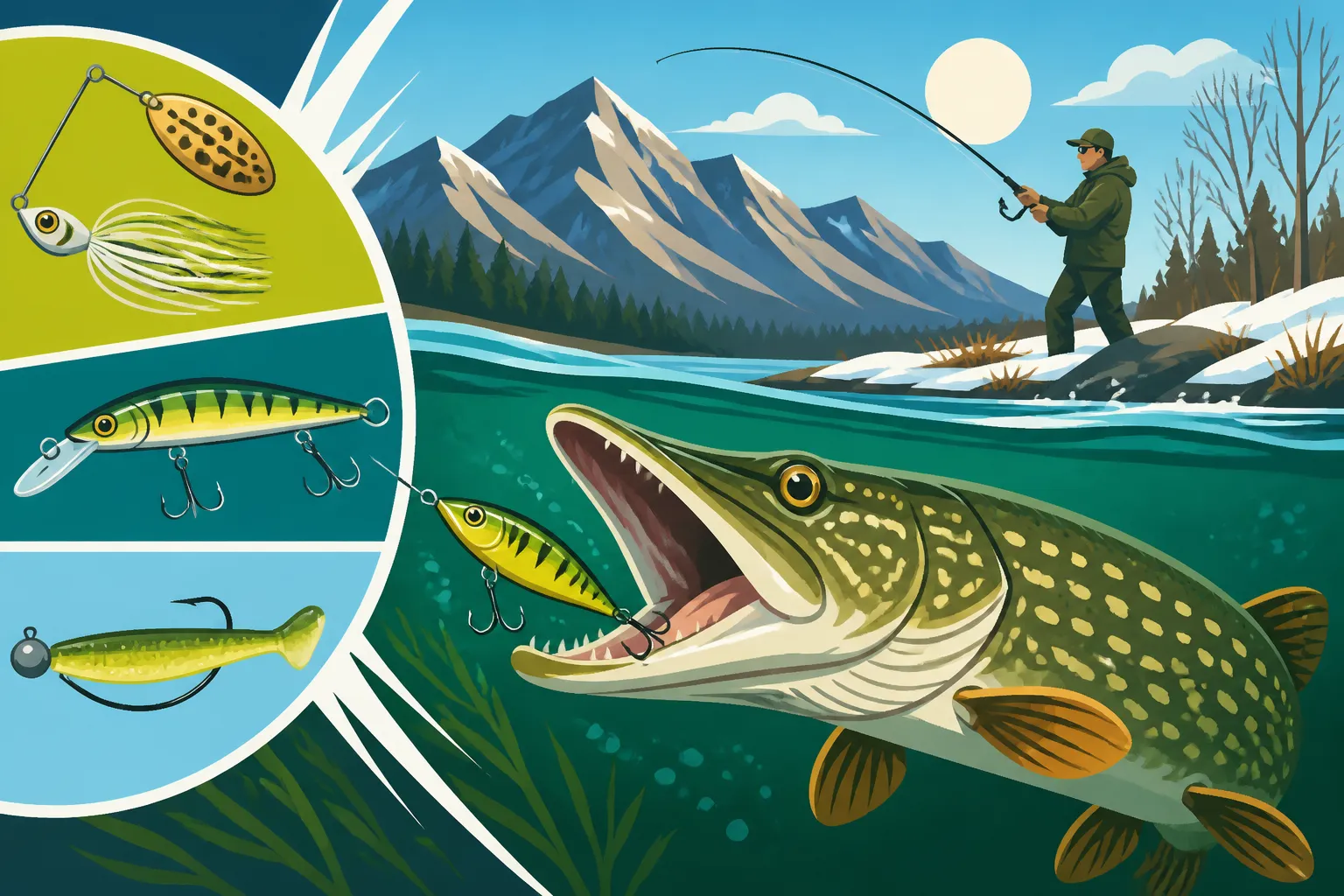
These are often my go-to lures in early spring. Crankbaits, especially those with a wider wobble and a slower retrieve, can be incredibly effective. Look for models that dive to the depths where pike are holding (often 3-8 feet). Colors that imitate common baitfish in Alberta, like perch, shiners, or ciscoes, are always a good bet, but don't shy away from bright, obnoxious colors on overcast days or in stained water.
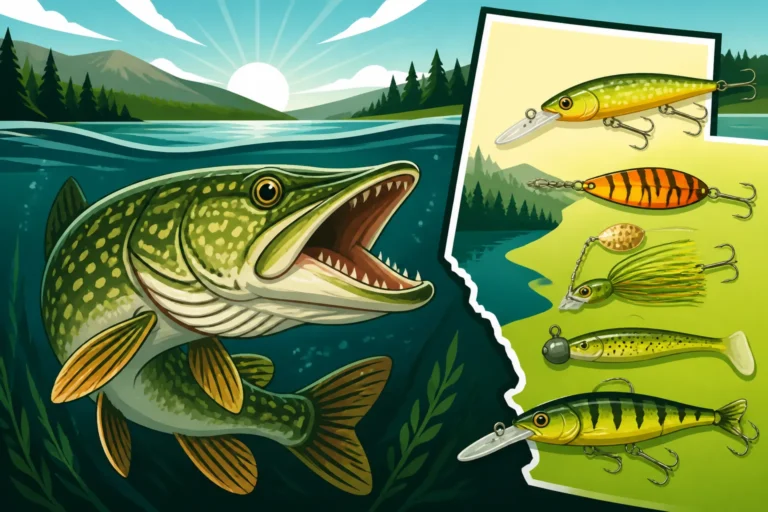
Jerkbaits, particularly suspending jerkbaits, are arguably the kings of early spring pike fishing. These lures mimic a dying or distressed baitfish perfectly. The key technique is to retrieve them with a "twitch, twitch, pause" cadence. The pause is critical; in cold water, pike will often strike during that dead stop. A suspending jerkbait will hang tantalizingly in the water column, giving a lethargic pike plenty of time to decide to strike. Experiment with the length of your pauses – sometimes a 5-second pause is all it takes, other times 10-15 seconds might trigger a bite. Rapala X-Raps and Lucky Craft Pointer series are popular choices, and you can easily find a wide range of sizes and colors on Amazon. For more detailed lure advice, our guide on Best Lures for Northern Pike in Alberta offers extensive insights.
Soft Plastics and Swimbaits
When pike are really shut down or just starting to become active, soft plastics can be incredibly versatile. Large paddle tail swimbaits, rigged on a weighted swimbait hook or a jig head, are excellent choices. They offer a natural swimming action with minimal effort from the angler. You can slowly retrieve them, bounce them off the bottom, or even dead-stick them with a slight twitch. Colors like white, pearl, chartreuse, or natural baitfish patterns work well.
Another excellent soft plastic option is a larger grub or creature bait, fished on a jig head. These can be hopped or dragged slowly along the bottom, mimicking an injured baitfish or even a crayfish. The slow, tantalizing action of soft plastics often triggers a strike from pike that might ignore faster-moving hard baits. Experiment with different weights of jig heads to match the depth and current conditions.
Spoons and Spinnerbaits
While often thought of as summer pike lures, spoons and spinnerbaits definitely have a place in the early spring arsenal, especially on warmer, sunnier days or in stained water where their flash and vibration can be easily detected.
Heavy casting spoons, like Dardevles or Len Thompson Five of Diamonds, can be cast a mile and slowly reeled in with a fluttery action. Their flash is a great attractor. Vary your retrieve speed and add occasional pauses to let the spoon flutter down. Spinnerbaits, with their pulsing skirts and rotating blades, create a lot of vibration, which can be irresistible to pike looking for an easy meal. Look for tandem blade models with large willow or Colorado blades for maximum flash and thump. Slow-roll them through shallow, vegetated areas. On days when the pike are a bit more active, a slow-rolled spinnerbait can often provoke a reaction strike. Many anglers stock up on these classic pike catchers during off-season sales, and they're always readily available from reputable retailers. For a deeper dive into general pike fishing strategies, our article How to Catch Northern Pike in Alberta offers a broader perspective on various techniques.
Here's a quick comparison of popular early spring pike lures:
| Lure Type | Best Use Case | Retrieve Style | Key Feature | Pros | Cons |
|---|---|---|---|---|---|
| Suspending Jerkbait | Cold, clear water; lethargic fish; pre-spawn | Twitch, pause, twitch | Suspends during pause | Mimics dying baitfish; triggers reaction | Can be slow; requires patience |
| Paddle Tail Swimbait | Variable conditions; active/less active fish | Slow retrieve, lift/drop | Natural swimming action | Versatile; can be fished at various depths | Can get snagged in heavy cover |
| Diving Crankbait | Shallow to medium depths; searching for active fish | Steady retrieve; occasional stop | Wide wobble; vibrant colors | Covers water quickly; strong vibration | Less effective for very lethargic fish |
| Heavy Casting Spoon | Long casts; covering open water; flash appeal | Slow to moderate retrieve; flutter | Flash and vibration | Excellent visibility; simple to use | Can twist line; less subtle for finicky fish |
| Spinnerbait | Weedy areas; stained water; targeting active fish | Slow roll; bumping cover | Vibration; flash; weedless | Good for cover; creates commotion | Can be too aggressive for very cold water |
Effective Fishing Techniques for Early Spring Pike
Alright, you've got your gear, you understand where the pike are, and you've picked out some killer lures. Now, how do you actually present those lures effectively to trigger a strike from an early spring pike? It's all about patience, precision, and adapting to the mood of the fish.
Slowing Down Your Presentation
This is probably the single most important piece of advice for early spring pike fishing. Forget the fast, aggressive retrieves of summer. In cold water, pike are often sluggish, and their metabolism is slower. They won't expend a lot of energy chasing down a rapidly moving bait. Your presentation needs to be slow, deliberate, and sometimes agonizingly patient.
Think of it like this: an early spring pike sees your lure not as a fleeing meal, but as an easy opportunity. It's a baitfish that's injured, cold, or just moving slowly enough for them to ambush with minimal effort. This means long pauses with jerkbaits, slow-rolling spinnerbaits, and barely crawling soft plastics along the bottom. Don't be afraid to let your bait sit for extended periods, especially after a twitch. I've had many days where the bites only came after a 10-15 second pause. It feels unnatural, but it works. This slower pace also helps you keep your lure in the strike zone longer, giving those reluctant pike more time to commit.
Targeting Key Shallow Areas
As we discussed, pike are drawn to the warmest, shallowest water after ice-out, especially those areas with emergent vegetation or dark bottoms. This includes shallow bays, coves, river mouths, and creek inlets. These spots warm up first under the spring sun, attracting baitfish and, consequently, the pike that feed on them.
When you're fishing these areas, pay close attention to depth transitions, submerged weed lines (even if they're just starting to grow), and any kind of structure like fallen trees or docks. Pike will often position themselves on the edges of these features, waiting to ambush prey. Focus your casts on these high-percentage areas. Often, the best spots might only be a foot or two deeper than the surrounding shallows. In some cases, like the shallow bays of Lesser Slave Lake, these warming trends can pull a significant number of fish into specific areas. Our article on Northern Pike Fishing in Alberta provides a broader overview of tactics for these impressive fish.
Fan Casting and Grid Searching
Since early spring pike can be scattered and sometimes difficult to locate, a systematic approach to searching an area is incredibly effective. This is where fan casting comes in. Instead of casting in the same spot repeatedly, make a series of casts that cover a wide fan-shaped area in front of you. Start with a cast directly in front, then work your way left, then right, gradually covering the entire water column and all potential holding spots.
Once you've fan-casted an area, move a short distance along the shoreline or in your boat and repeat the process. This "grid searching" method ensures you thoroughly cover a section of water. If you get a bite, stop and thoroughly fish that immediate area, as pike often school up, especially during pre-spawn. Don't be afraid to try different angles and retrieve paths over the same spot, as a pike's mood can change. If you're using a boat on a larger lake, a good fish finder can help identify potential holding structures even in shallow water, but often, it's just about covering ground. Consider different types of boats for varied access, as explored in our guide Best Boats for Alberta Lakes and Rivers.
Finding the Best Early Spring Pike Spots
Locating early spring pike is all about understanding their preferences for warmer water and pre-spawn staging grounds. You can't just blindly cast anywhere and expect results. You need to read the water, understand the geography, and sometimes, just be patient.
Shallow, Dark-Bottomed Bays
These are goldmines in early spring. Bays that are protected from the prevailing winds and have a darker, mucky, or sandy bottom absorb sunlight much more efficiently than deep, rocky areas. This leads to slightly warmer water temperatures, which is a magnet for pike after ice-out. Look for bays with sparse, emerging weeds, as these provide cover and attract baitfish.
Consider lakes like Gull Lake or Pigeon Lake in central Alberta. Their shallow, productive bays often warm up quickly. Even on larger bodies of water like Cold Lake, specific shallow coves will be the first to attract pike. Shoreline access can be great here, but if you have a kayak or a small boat, you can cover these bays more thoroughly. Often, the warmest water will be at the very back of these bays, where the sun has had the most time to heat the shallowest sections.
River Mouths and Inlets
Another prime location for early spring pike is where a river or stream flows into a larger lake. Rivers typically warm up faster than lakes, and the inflowing water brings a consistent source of slightly warmer water and often washes down nutrients and baitfish. This creates a food rich and warmer micro-environment that pike absolutely love.
These areas can be particularly productive during the pre-spawn period. Pike will stage near river mouths, sometimes even moving a short distance up the river to spawn in flooded backwaters. The Athabasca River or North Saskatchewan River where they enter larger lake systems can offer fantastic opportunities. Cast your lures both into the main current and into the slack water pockets on the edges, paying close attention to any current breaks or eddies.
Areas with Emerging Vegetation
Even if the main weed beds haven't fully blossomed yet, areas where new green growth is starting to appear are key indicators. Pike will relate to this early vegetation for both cover and ambush points. These could be small clumps of reeds, emerging coontail, or lily pad shoots.
The new growth not only offers visual cover but also often holds the first insects and invertebrates of the season, which in turn attract small baitfish. Pay attention to how the sun hits these areas. A sunny day will accelerate the growth and warming in these sections. Casting along the outer edges of these weed lines, or even slowly working your lure through sparse patches, can be very effective. Remember, patience is key here, as you're not just casting for fish but for potential structure in the water. For insights on where some of Alberta's largest pike are found, you might find our article on Best Lakes for Trophy Pike in Alberta interesting.
Navigating Early Spring Conditions Safely
Early spring in Alberta is notoriously unpredictable. One day you're shedding layers, the next you're bundled up against a snow squall. Beyond the fishing techniques, understanding and respecting the harsh realities of the season is paramount for a safe and enjoyable trip.
Ice Safety and Variable Conditions
Even after ice-out, lingering ice can be a significant hazard. Some lakes, especially larger, deeper ones, might still have shelves of ice along shorelines or even large ice floes drifting in the middle. Smaller, shallower bays will open first, but don't assume the entire lake is safe. Always use extreme caution. Never venture onto ice that looks questionable or is melting rapidly.
For anglers fishing from shore, watch your footing, as muddy, slippery banks are common. If you’re launching a boat, be aware of ice fragments that could damage your hull or prop. Water temperatures are still dangerously cold, often just a few degrees above freezing. A fall into this water can lead to hypothermia rapidly. Always wear a PFD, even if you’re a strong swimmer. Check local ice conditions and reports before heading out, as they can vary greatly even across different parts of the same lake.
Managing Cold Water Boating
If you're using a boat, cold water adds another layer of complexity. Your boat's performance might be affected by colder fuel, and engines can be more temperamental. Always perform a thorough pre-launch check of your motor, battery, and safety equipment. Ensure you have all required safety gear, including extra warm clothing, a fully charged cell phone (in a waterproof case), a first-aid kit, and an emergency communication device if you're venturing far from shore.
Boating in strong winds can be particularly hazardous on cold water, as waves can quickly swamp a smaller vessel, and the wind chill can be brutal. Consider the size of your boat and your experience level before heading out on large, open bodies of water early in the season. On days with high winds, it might be safer to stick to more sheltered bays or smaller lakes. For general boating regulations, our guide on Alberta Boating Laws for Anglers is a must-read.
Reading the Weather and Adapting
Alberta weather is famous for its sudden shifts. A beautiful sunny morning can quickly turn into a cloudy, windy, and even snowy afternoon. Always check the forecast thoroughly before you go, and be prepared for conditions worse than what's predicted. Look for changes in barometric pressure, as a rapidly dropping pressure can often signal a storm front moving in.
If the weather takes a turn for the worse while you're out, don't hesitate to pack up and head in. No fish is worth risking your safety. Pay attention to sudden drops in temperature, increasing wind speeds, or dark storm clouds gathering. Adapting your plans to the weather means sometimes shortening your trip, moving to a more sheltered location, or even rescheduling entirely. Being flexible and prioritizing safety will ensure you have many more successful early spring pike trips in the years to come. Remember to check local regulations like the Alberta Northern Pike Limit before you start fishing.
Disclaimer
Fishing regulations and conditions can change. Always consult the most current Alberta Guide to Sportfishing Regulations before heading out. This guide is for informational purposes only and does not supersede official government regulations.