How to catch trout in fast current on the Bow River
The Bow River in Alberta is legendary for its trout fishing, but its strong, often relentless currents can be incredibly intimidating and frustrating, even for seasoned anglers. Many find their carefully chosen flies or lures just blow through the seams or get swept away before they can present them effectively, leading to more snags than hook-ups. This comprehensive guide will walk you through the dynamics of the Bow's fast current, the right gear, and the most effective techniques to help you confidently catch more trout in these challenging waters.
Understanding the Bow River's Fast Current Dynamics
Before you even make your first cast, it's crucial to understand why the Bow River's current acts the way it does and how that impacts the trout. It's not just "fast water"; there are nuances that dictate where fish hold and how they feed.
How Current Speed Impacts Trout Behavior
Imagine trying to stand in a strong wind all day – you'd be exhausted! Trout are no different. They are constantly looking for places where they can conserve energy while still having access to food. This means they'll naturally gravitate towards areas where the current is slightly slower, often right next to faster water, to create a "feeding lane."
Trout aren't going to expend precious energy fighting the main current if they don't have to. Instead, they'll tuck into seams, behind rocks, in the slower water of eddies, or along softer edges near the banks. These are prime locations where food items, dislodged by the faster currents upstream, drift right into their comfort zone without them having to work hard for it. Understanding this simple principle – energy conservation – is the foundation of fishing fast currents. If you're consistently casting into the absolute fastest part of the river, you're likely fishing over empty water, or at least over fish that are actively avoiding that strenuous spot.
Identifying Productive Water in Fast Flows
Even in seemingly uniform fast stretches, there are subtle clues the river gives you about where trout might be hiding. Look for any break in the current's flow. This could be a large boulder creating a distinct "eddy" behind it, where the water actually spins back upstream, or a slower current seam just downstream. A good rule of thumb is to look for changes in water surface texture. Smooth, glassy water often indicates deeper, slower water, while rippled or boiling water might be covering structure or a significant depth change that creates a current break.
Pay close attention to where faster water meets slower water – these are often referred to as "seams." Trout will often sit right in the slower side of the seam, waiting for food to be delivered by the faster current. River bends are also key: the outside bend is typically deeper and faster, while the inside bend is shallower and slower, often depositing gravel and creating ideal holding spots for trout. Look for areas where the river widens, causing the current to spread out and slow down, or where it bottlenecks, creating deeper, faster runs. Every little change can create a micro-habitat for a hungry trout.
Essential Gear and Tackle for Fast Water Trout
Fishing fast currents on the Bow River demands specific gear that can stand up to the challenge and help you make effective presentations. Skimping on the right tools will only lead to frustration.
Rod and Reel Selection
For spin anglers tackling the Bow, a medium-light to medium power spinning rod, around 6'6" to 7'6" in length, is often ideal. The extra length provides better line control, allowing you to mend your line and keep it out of the strongest currents, which is crucial for preventing drag. A fast action tip will help you detect subtle bites, even with the current pulling on your line. Pair this with a reliable spinning reel in the 2000-3000 size range, spooled with a strong main line. For those looking for the right balance, checking out options for the best rod setup for Bow River trout can be incredibly helpful.
Fly anglers will find a 9-foot, 5 or 6-weight fly rod to be versatile for the Bow. The extra backbone of a 6-weight can be advantageous for casting heavier nymph rigs or larger streamers into the wind and managing bigger fish in strong currents. A good quality large arbor reel with a smooth drag is essential, spooled with a weight-forward fly line that matches your rod. This setup provides the power needed for longer casts and better line control in challenging conditions. Investing in a quality fly rod is key, and many reputable brands offer excellent choices available on Amazon.
Line and Leader Considerations
When fishing fast currents, your line choice can make or break your day. For spin fishing, I usually recommend a braided main line of 10-15 lb test, followed by a fluorocarbon leader of 6-8 lb test. Braid has almost no stretch, offering superior sensitivity to feel light bites and better hook-setting power. Its thin diameter cuts through the current more efficiently than monofilament. Fluorocarbon leaders are nearly invisible underwater and are more abrasion-resistant, which is a huge plus when fishing around rocky bottom structure. The length of your leader will depend on water clarity and depth, but a 4-6 foot leader is a good starting point.
Fly anglers should consider a weight-forward floating line for most nymphing and dry fly applications. For deep nymphing in fast water, specialized lines like a short, aggressive taper or even a sinking tip line can help get your flies down faster. Leaders for nymphing in fast water should be relatively long, often 9-12 feet, with a strong butt section to turn over heavy rigs. Taper it down to a 3X or 4X tippet, depending on fly size and fish activity. The goal is to get your flies to the fish without too much belly in your line creating drag. Remember, the best tippet size for spooky Bow River trout will often depend on how clear and low the water is.
Lures, Flies, and Weights
Your choice of presentation is paramount in fast water. For spin fishermen, heavy spoons, deep-diving crankbaits, and weighted spinners are excellent choices. Consider jigging techniques with heavier jigs (1/4 oz to 1/2 oz) tipped with soft plastics or bait. The key is to use enough weight to get your offering down to the fish quickly and keep it in the strike zone, without it being immediately swept away by the current. If you're constantly feeling your lure skipping along the surface or getting no depth, you need more weight.
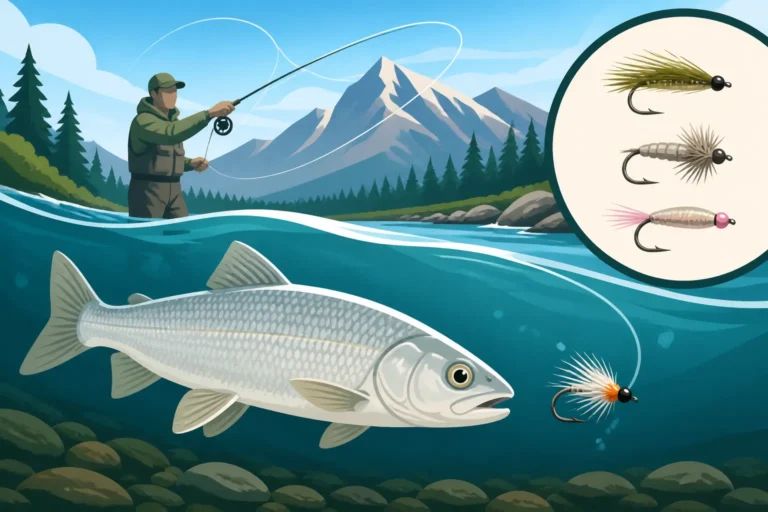
Fly anglers will rely heavily on nymphing techniques. Stonefly imitations, caddis pupae, and mayfly nymphs in various sizes are all effective. Often, a "heavy-light" nymph rig is used: a heavier "point" fly (like a weighted Pat's Rubber Leg) to get the rig down, followed by a lighter, more imitative "dropper" fly (like a pheasant tail or hare's ear). Split shot can be added to the leader to fine-tune your depth. For those keen on specifics, a comprehensive guide to Fly Patterns for the Bow River can offer more detailed recommendations. Streamers, especially heavier patterns like the Kreelex or sculpins, can also be very effective for aggressive trout in fast, deep runs. These can be retrieved with a strip-strip-pause action to imitate baitfish.
Effective Techniques for Fishing Fast Current
Fishing fast water isn't about brute force; it's about finesse and understanding how to manipulate your line and lure to beat the current.
Wading and Positioning Strategies
Wading in the Bow River, especially in fast currents, requires extreme caution. Always use a sturdy wading staff and take slow, deliberate steps, shuffling your feet to feel for bottom structure. Avoid crossing areas with obvious white water or strong currents that are above your knees. Your position relative to the fish is critical. If you're wading, try to cast upstream and slightly across, allowing your presentation to drift naturally downstream into prime holding lies. This gives your lure or fly time to sink and present itself to the fish before it's right on top of them.
When drifting in a boat, your guide (or experienced angler) will often position the boat to allow for optimal drifts through productive seams and runs. The idea is to match the speed of the current as much as possible, often using oars or a trolling motor to slow the drift, giving your fly or lure a longer, more natural presentation. For more on safe wading, you might want to look into How to wade the Bow River safely.
Mastering the Art of the Drift
The key to success in fast current, whether with spin gear or a fly rod, is achieving a "drag-free drift." This means your lure or fly is moving at the exact same speed as the surrounding current, without your line pulling on it unnaturally. For spin anglers, this involves making an upstream cast, then immediately lifting your rod tip and "mending" your line (tossing a loop of line upstream) to allow your lure to sink and drift naturally without the main current pulling on your line. You're constantly managing the slack, keeping just enough tension to feel a bite, but not so much that you create drag.
Fly anglers, particularly those nymphing, are masters of the mend. After casting upstream, you'll immediately execute an upstream mend to throw a belly of line upstream of your indicator or fly, giving your flies more time to sink and drift at the current's speed. As your flies drift downstream, you'll follow them with your rod tip, stripping in slack as needed, and performing additional mends to keep the line from dragging. This technique is often referred to as "high-stick nymphing" when your rod tip is held high to keep as much line off the water as possible, minimizing current interference. Learning Wading Techniques for Alberta Trout Rivers can refine your approach.
Techniques for Spin Fishing in Current
Spin fishing in fast current often involves a combination of casting, retrieving, and controlling your drift.
- Weighted Lures and Jigs: Use heavier spoons, inline spinners, or jigs with soft plastic bodies. Cast upstream and slightly across. Allow the lure to sink, then retrieve just fast enough to keep it off the bottom and give it action, letting the current do much of the work. For spoons or spinners, an upstream cast followed by a slow retrieve often allows them to flutter enticingly as they wash downstream. Jigs can be bounced along the bottom, mimicking a struggling baitfish.
- Bottom Bouncing: This technique is fantastic for getting bait or a lure directly into the strike zone. You'll need a bottom bouncer weight rig or a three-way swivel rig with a bell sinker. Cast upstream, let it sink, and maintain just enough tension to feel the weight occasionally tap the bottom as it drifts. Your bait or lure will trail behind, presenting naturally near the bottom where trout often hold in faster currents.
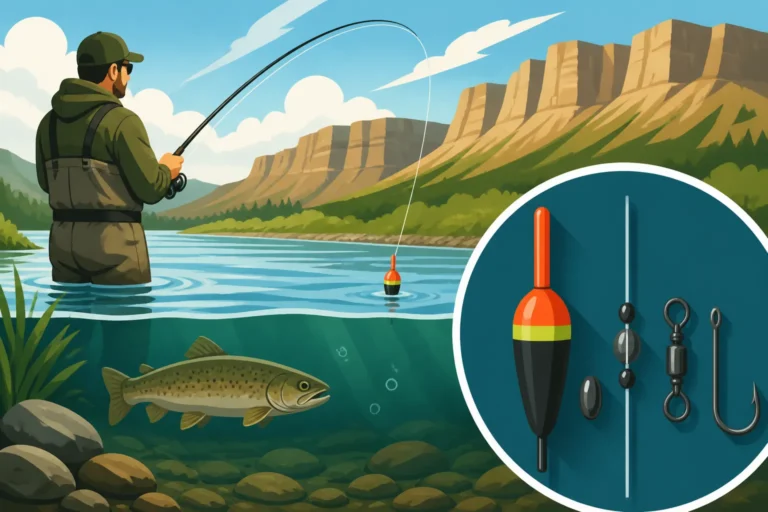
- Drifting Floats/Bobbers: While less common for the fastest runs, a properly weighted float rig can be effective in slightly slower seams. Use a larger, more buoyant float to support enough weight to get your bait (like a worm or minnow) or fly down. Cast upstream, mend your line, and let the float carry your presentation through the holding water. Watch the float intently for any hesitation or dip, which indicates a bite.
Techniques for Fly Fishing in Current
Fly fishing in the Bow's swift water predominantly revolves around nymphing, but streamers can be incredibly effective too.
- Indicator Nymphing: This is perhaps the most common and effective method. Use a strike indicator (a fancy bobber) to suspend your nymph rig at the desired depth. Cast upstream, mend your line aggressively to achieve a drag-free drift, and watch your indicator like a hawk. Any dip, pause, or sudden movement means a fish has eaten your fly. This method allows you to consistently present your flies at the fish's level.
- Euro Nymphing (Tightline Nymphing): For very technical fast water, Euro nymphing minimizes the amount of fly line on the water, reducing drag. Instead of an indicator, you use a sighter (a brightly colored section of monofilament) at the end of your fly line. You keep your rod tip high and just enough line off the water to maintain contact with your nymphs, feeling for strikes rather than seeing an indicator move. This is incredibly effective for getting flies deep quickly and maintaining perfect drifts in complex currents.
- Streamer Fishing: Strip a weighted streamer across and down-current. Cast quartering downstream, let it swing, and then strip it back with varying speeds and pauses. This aggressive presentation often provokes a reaction strike from larger, predatory trout. Vary your retrieve and casting angles until you find what triggers a bite. For specific insights, learning how to Euro nymph the Bow River can really elevate your game.
Reading the Water and Finding Trout in Quick Flows
Finding trout in fast-moving water is less about luck and more about understanding the river's language. Trout are lazy predators; they want maximum reward for minimum effort.
Identifying Current Seams and Eddies
As mentioned earlier, current seams are your best friends. These are visible lines where two different currents meet, or where fast water rubs up against slower water. Trout will often sit just inside the slower side of that seam, waiting for food to be swept past them from the faster side. Look for the distinct line on the water's surface, or even a subtle "slick" where foam or debris accumulates.
Eddies are areas where the current flows upstream or swirls around. They're typically found behind large boulders, submerged logs, or on the downstream side of points of land. The slack water in an eddy offers a perfect resting spot for trout, and the swirling current often concentrates food items. Fish the edges of the eddy where the current from the main flow sweeps food in, as well as the heart of the eddy itself. Don't forget the "eddy line" – that seam where the main current meets the eddy. This can be a high-traffic feeding zone.
Fishing Structure in Fast Water
Any deviation from a uniform bottom or bank structure can create a current break and a potential trout lie.
- Boulders and Rocks: Large rocks and boulders create mini-eddies and slower water directly behind them. Fish will tuck into these sheltered spots. Cast your lure or fly to drift just past the upstream side of the rock, allowing it to swing into the calmer water behind it.
- Logs and Wood Debris: Submerged logs and root wads offer excellent cover and current breaks. Approach these carefully, as they can also be snag hazards. Cast your presentation to drift parallel to the structure, or even slightly upstream to wash down into the calmer water around it.
- Drop-offs and Ledges: Where the river bottom suddenly drops off, deeper, often slower water is created. Trout will hold along the edge of these drop-offs. Use weighted presentations to get down to their level. A good fish finder can be invaluable for identifying these subtle depth changes, which are often not apparent from the surface.
- Bank Edges: The water right along the bank can often be significantly slower than the main current, especially if the bank is undercut or has submerged vegetation. Don't neglect these often-overlooked spots. Present your lure or fly to drift tightly along the bank, as fish will feel secure here and ambush passing food.
The Importance of Depth Control
In fast water, getting your presentation to the correct depth is absolutely paramount. Trout are typically bottom-oriented in strong currents, holding close to the riverbed to avoid being swept away and to intercept drifting nymphs and crustaceans. If your flies or lures are drifting too high in the water column, you're likely fishing above the fish.
For nymphing, this means using enough split shot or weighted flies to tick the bottom occasionally without constantly snagging. It's a delicate balance. For spin fishing, it means choosing lures that dive to the appropriate depth or adding enough weight to your rig. Experiment with different weights and leader lengths until you find that sweet spot where your presentation is consistently drifting through the trout's strike zone. Remember, fish will often only move a short distance, maybe a foot or two, to intercept food in fast current, so your depth control must be precise.
Safety Considerations and Ethical Angling
Fishing fast, cold rivers like the Bow demands respect and adherence to safety and ethical angling practices.
Wading Safety in Strong Currents
We've touched on this, but it bears repeating: wading in the Bow River's fast current can be dangerous. Always wear a quality pair of wading boots with good grip (felt soles often perform well on slippery rocks, but check local regulations as some areas prohibit them to prevent invasive species spread). A wading belt cinched tight around your waders is a must, as it can help prevent your waders from filling with water should you fall. Always use a sturdy wading staff for balance and to probe the bottom before stepping.
Never wade alone if possible, or at least let someone know your float plan and expected return time. Be aware of changing river conditions, especially after heavy rain or snowmelt, which can significantly increase current speed and water levels. Look upstream for any approaching boats or debris. Your safety is always more important than catching a fish.
Boating and Drifting Considerations
If you're fishing from a drift boat or raft, ensure your craft is properly maintained and that you have all the required safety equipment, including personal flotation devices (PFDs) for everyone on board. Everyone should be wearing their PFD, not just have it stowed. The person manning the oars or motor must be experienced in navigating river currents and aware of potential hazards like sweepers (fallen trees extending into the river), rapids, or submerged rocks. Understanding Alberta Boating Laws for Anglers is essential.
Proper boat positioning is key to safe and effective fishing. The rower needs to constantly adjust the drift to avoid hazards and present anglers with the best opportunities. Never anchor in strong currents in the main channel, as this can be incredibly dangerous. Only anchor in slow-moving water or eddies, and use an anchor system designed for river use. Communication between the rower and anglers is vital for safety and success.
Catch and Release Best Practices
The Bow River is home to a robust wild trout population, and practicing proper catch and release is critical for sustaining it. In fast currents, fighting a fish can be especially taxing for both angler and fish.
- Land Fish Quickly: Try to land the fish as quickly as possible to minimize stress. Don't play a fish to exhaustion.
- Keep Fish in Water: Keep the fish in the water as much as possible while unhooking and taking photos. Lifting a fish clear of the water, especially a large one, can damage its internal organs due to gravity.
- Barbless Hooks: Use barbless hooks. They make unhooking much easier and faster, reducing stress and injury to the fish. If your hooks aren't barbless, simply pinch the barb down with pliers. Many of these tools, including specialized fishing pliers, are available on Amazon.
- Minimize Handling: Handle the fish gently with wet hands. Avoid squeezing or touching its gills.
- Revive Carefully: If the fish seems sluggish, hold it gently in the current, facing upstream, until it can swim away on its own. Don't push it or move it back and forth; simply hold it steady and allow water to flow over its gills.
By understanding the Bow River's fast currents, equipping yourself with the right gear, employing effective techniques, and prioritizing safety and ethics, you'll be well on your way to enjoying some of Alberta's most incredible trout fishing experiences. For a broader overview, consider checking out the Bow River Fishing Guide.
Fast Current Tackle Essentials Comparison
To help summarize some key gear choices for tackling the Bow River's fast current, here's a quick comparison:
| Gear Type | Spin Fishing Recommendation | Fly Fishing Recommendation | Rationale for Fast Current |
|---|---|---|---|
| Rod | 6'6" – 7'6" Med-Light to Medium Power, Fast Action | 9' 5wt or 6wt, Medium-Fast to Fast Action | Length for line control, power for casting heavy rigs & fighting fish. |
| Reel | 2000-3000 size, smooth drag, good retrieve ratio | Large Arbor, smooth drag, reliable | Holds ample line, smooth drag for fighting strong fish. |
| Main Line | 10-15 lb Braided Line | Weight-Forward Floating Line (WF) / Sinking Tip Line | Braid for sensitivity & cutting current; WF for casting, Sinking Tip for depth. |
| Leader/Tippet | 6-8 lb Fluorocarbon (4-6 ft length) | 9-12 ft Tapered Leader (3X-4X Tippet) / Sighter Line | Fluorocarbon for invisibility & abrasion resistance; Longer leaders & sighter for deep nymphing. |
| Lures/Flies | Heavy Spoons, Deep Crankbaits, Weighted Jigs, Inline Spinners | Weighted Nymphs (Stonefly, Caddis), Heavy Streamers | Designed to get deep quickly and stay in the strike zone against current. |
| Additional Wgt | Bottom Bouncers, Split Shot | Split Shot, Tungsten Putty, Heavily Weighted Flies | Essential for achieving depth and a drag-free drift. |
| Wading Tool | Sturdy Wading Staff | Sturdy Wading Staff | Non-negotiable for balance and safety in swift, rocky flows. |
Disclaimer
This article is for general informational purposes only and does not constitute professional advice. Laws, prices and regulations vary by location and change over time. Consult a qualified professional for guidance on your specific situation.