Best rod power for pike fishing
One of the trickiest things for a new — or even experienced — angler to get a handle on is the bewildering array of fishing rod specifications out there. You pick up a rod and see "medium-heavy power, fast action," and you might just scratch your head wondering what that actually means for your day on the water, especially when you're targeting toothy, hard-fighting northern pike here in Alberta. This guide is all about breaking down the crucial concept of rod power and helping you choose the perfect rod to tackle those aggressive pike, ensuring you're well-equipped for an exciting and successful fishing adventure.
Understanding Rod Power: Why It Matters for Pike
It's easy to get lost in the jargon of fishing gear, but understanding rod power is fundamental to enjoying your time fishing, especially when you're after a feisty predator like an Alberta pike. Simply put, rod power tells you how much force it takes to bend the rod blank. It's often confused with rod action, but they're two very different, yet complementary, characteristics.
What is Rod Power, Anyway?
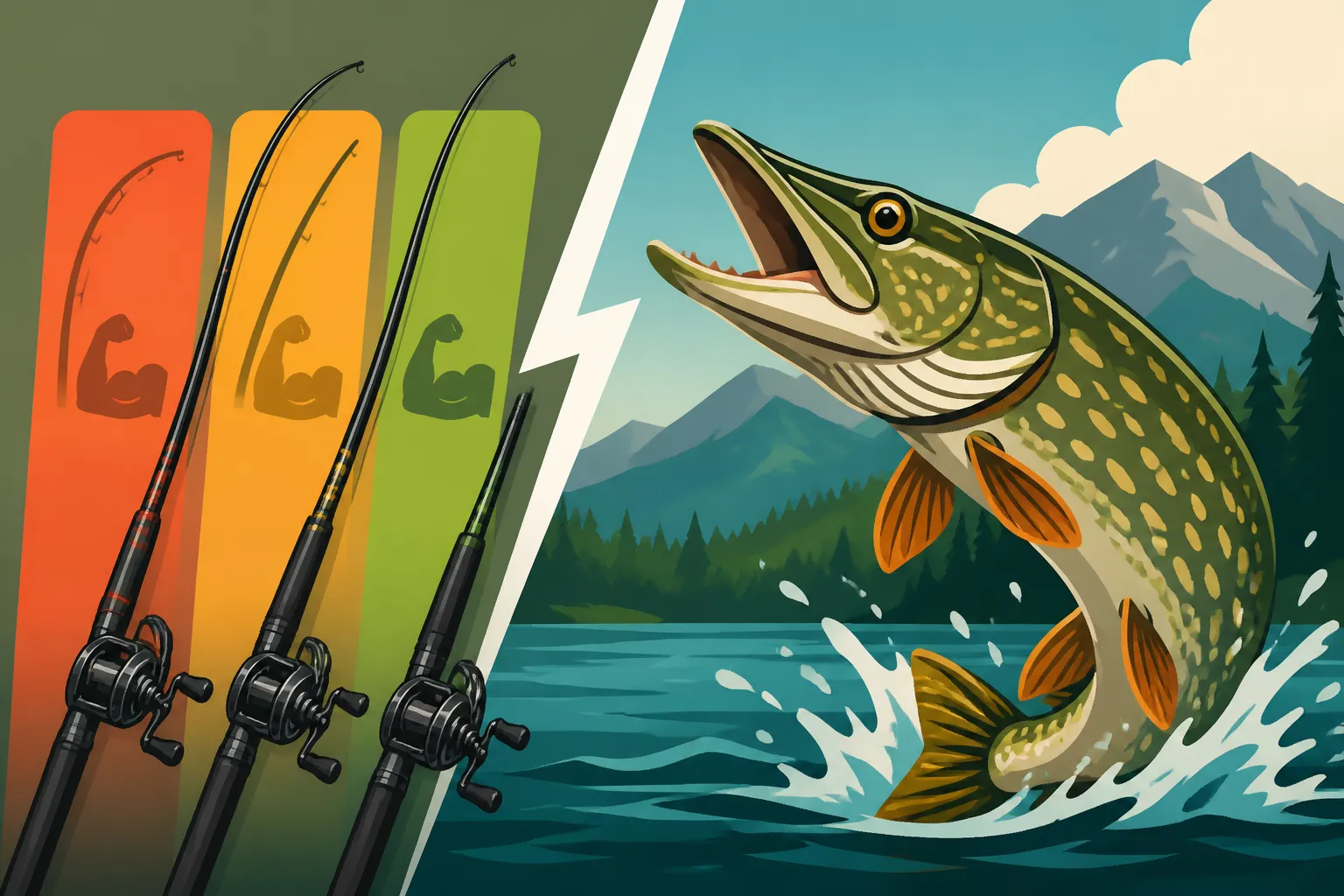
Think of rod power as the rod's lifting strength or backbone. It's the stiffness of the rod and its ability to withstand pressure without breaking. Rods are typically categorized from ultra-light to extra-heavy. An ultra-light rod will bend significantly under very little pressure, while an extra-heavy rod requires a lot of force to show any flex. This isn't about how easily the tip bends (that's action), but how much of the rod bends and how much strength it has in the lower section to control a fish or cast a heavy lure.
For pike, having the right power is absolutely essential. A rod that's too light won't have the muscle to drive a hook through a pike's bony mouth, nor will it give you the leverage needed to steer a big fish away from snags or turn its head when it decides to make a run. Conversely, a rod that's too stiff might rip hooks out of a fish's mouth if you're not careful, or it could make casting smaller, effective pike lures feel awkward and inefficient. It's all about finding that sweet spot.
The Pike's Fight: Why You Need the Right Power
Northern pike are notorious for their explosive strikes and powerful, head-shaking fights. They're built like torpedoes with incredible acceleration and a mouth full of razor-sharp teeth. When a pike hits your lure, it's often with brutal force, and they'll try to dive into cover, wrap around weeds, or simply charge towards the boat, trying to shake the hook.
Imagine hooking into a 15-pound pike on a rod designed for small trout. The rod would be doubled over, you'd have zero control, and the fight would likely end with a broken line or a thrown hook. An underpowered rod makes landing these fish incredibly difficult and stressful, not to mention it can exhaust the fish too much, making a successful release unlikely. A rod with appropriate power allows you to set the hook firmly, apply consistent pressure, and effectively control the fish during the battle. It gives you the confidence to put the screws to a big pike without fear of snapping your rod in half, ultimately leading to more landed fish and a more enjoyable experience. You want a rod that feels like an extension of your arm, capable of both casting your chosen lures and handling the raw power of these freshwater sharks. Understanding Northern Pike Habits in Alberta Lakes can also help you anticipate their fight.
Recommended Rod Powers for Alberta Pike
When it comes to Alberta pike, you're looking for rods that lean towards the heavier side of the spectrum. The "best" power really depends on the size of the pike you're typically targeting and the type of lures you're throwing. Let's break down the most common and effective choices.
Medium-Heavy Power: The All-Around Workhorse
For most general pike fishing across Alberta, from the smaller "hammer handles" you might find in some irrigation canals to the respectable 5-10 pounders common in many lakes and rivers, a medium-heavy power rod is your absolute best friend. This is arguably the most versatile choice for pike anglers.
A medium-heavy rod provides an excellent balance of casting performance and fish-fighting power. It's strong enough to handle lures in the 3/8 oz to 1 oz range, which covers a huge variety of pike favourites like spinnerbaits, spoons, medium-sized crankbaits, and soft plastic swimbaits. When a pike strikes, the medium-heavy backbone allows for a solid hookset, driving that hook deep into their tough mouth. It also has enough power to turn a decent-sized pike's head when it tries to run for a weed bed or dives under the boat. This rod power allows you to feel the subtle taps, but still have the muscle to handle the big blows. If you're looking for one rod to do it all for pike, this is often the go-to. You'll find a wide selection of these rods at outdoor retailers like Bass Pro Shops.
Heavy Power: For Trophy Pike and Big Baits
When you're actively hunting for truly massive pike, perhaps on waters known for their giants like Lesser Slave Lake, or if you're regularly throwing larger, heavier lures, then stepping up to a heavy power rod becomes not just a preference, but a necessity.
A heavy power rod is built with substantial backbone, capable of handling lures that weigh 1 ounce and up, sometimes significantly more. This means you can confidently cast those big, heavy swimbaits, large jerkbaits, oversized spinnerbaits, or even musky-sized bucktails that are often the key to enticing a trophy pike. The increased power translates directly into superior control during the fight. If you hook into a 15-20+ pound monster, this rod gives you the leverage to dictate the fight, keeping the fish away from snags and turning its head when it tries to bulldog you. Setting the hook on a fish of this calibre requires serious force, and a heavy power rod provides that effortlessly. It might feel a bit stiff if you're casting smaller lures, but when you connect with a true goliath, you'll be thankful for every bit of that power. Considering Northern Pike Growth Rate to Trophy Size will highlight why this power is so important for the really big ones.
Extra-Heavy Power: Specialized Applications
While not typically needed for the average pike outing, an extra-heavy power rod has its place for highly specialized situations. These rods are beasts, designed for casting extremely large and heavy lures – often in the 2 oz+ range – and for battling the absolute biggest predators in freshwater, like monster musky or truly colossal pike in heavy cover.
If your pursuit involves throwing 8-inch glide baits, massive soft plastics, or fishing in dense submerged timber where you need to physically pull a fish out of heavy cover, then an extra-heavy rod might be warranted. It's essentially a winch, designed for pure brute force. For most Alberta pike anglers, this level of power might be overkill and can actually hinder your casting of more common lure sizes. However, for those dedicated to throwing oversized presentations or fishing specific, challenging environments, it's an indispensable tool. Just remember, with great power comes the need for great technique to avoid ripping hooks or overpowering the fish too quickly, especially if you plan on catch and release.
Matching Rod Power to Lures and Conditions
Choosing the right rod power isn't just about the fish; it's also about the tools you're using and the environment you're fishing in. A good angler understands how these factors interplay to create a harmonious and effective setup.
Lure Weight and Rod Power Synergy
One of the most critical aspects of selecting a fishing rod is ensuring its power rating aligns with the weight of the lures you intend to cast. Every rod has a recommended lure weight range printed on its blank (e.g., 3/8 – 1 oz). This isn't just a suggestion; it's a guide to optimal performance and rod longevity.
Using a lure that's too light on a heavy power rod will make casting feel like you're trying to throw a feather with a baseball bat – you won't get good distance or accuracy, and the rod won't load properly. Conversely, trying to cast a heavy 2 oz swimbait with a medium power rod is a recipe for disaster. The rod will be severely overloaded, making the cast difficult, inaccurate, and putting immense stress on the blank, which could lead to a catastrophic break mid-cast. The rod needs to "load" – or bend – with the weight of the lure during the cast to propel it efficiently. For example, if you're primarily fishing with heavy spoons and large spinnerbaits for northern pike, a medium-heavy rod is ideal, allowing the rod to load perfectly for long, accurate casts. If you find your favorite lure falling outside your rod's recommended range, it's a good sign you might need a different rod power. You can often find rods categorized by their ideal lure weights when browsing online at places like Amazon.
Fighting Fish in Different Environments
The environment where you're fishing pike also plays a significant role in determining the ideal rod power. The same 10-pound pike will feel very different in open water compared to a dense weed bed.
- Weed Beds and Heavy Cover: If you're targeting pike in thick vegetation or around submerged timber, you absolutely need more power. A medium-heavy or heavy power rod allows you to "horse" the fish out of the cover quickly before it can wrap your line or bury itself, leading to a snagged lure and a lost fish. The extra backbone gives you the leverage to pull a fish free from weeds without having to give it slack, which is often fatal in these scenarios. Best Baits for Pike in Weed Beds often require a sturdy rod to cast effectively and extract fish.
- Open Water: In wide-open lakes or slow-moving river sections without much cover, you might get away with a slightly less powerful rod (like a strong medium-heavy). Here, the fish has room to run, and you can play it out more, letting the drag do more of the work. However, even in open water, pike can make unexpected runs, and a rod with sufficient power ensures you maintain control throughout the fight.
- Current: Fishing for pike in rivers with current, such as sections of the Athabasca River or Peace River, demands more power to battle both the fish and the flow of the water. The current adds resistance, making a fish feel larger and stronger than it might be in still water. A medium-heavy to heavy rod will help you steer the fish against the current and bring it to the net more efficiently.
Other Rod Characteristics to Consider with Power
While rod power is paramount for pike fishing, it doesn't operate in a vacuum. Other rod characteristics work in conjunction with power to create a truly effective fishing tool. Ignoring these can lead to an imbalance, even if you nail the power rating.
Rod Action: Fast vs. Moderate
Rod action refers to where the rod bends along its length when pressure is applied. It's often misunderstood alongside power.
- Fast Action: A fast action rod bends mostly in the tip section. This provides maximum sensitivity, allowing you to feel even subtle bites, and offers quick, precise hooksets. For pike, a fast action is excellent when fishing with single-hook lures like spinnerbaits or jigs, as it allows you to react quickly and drive the hook home before the pike can spit it. It's also great for precise casting into tight spots. Many medium-heavy pike rods will have a fast or extra-fast action.
- Moderate (or Medium) Action: A moderate action rod bends more towards the middle of the blank. This action provides a more parabolic bend, which is fantastic for casting larger, heavier lures that require a longer load time. It also excels with treble-hooked baits like crankbaits or jerkbaits because the more forgiving bend acts like a shock absorber, preventing hooks from tearing out of a fighting fish's mouth during aggressive head shakes. This action helps to keep constant pressure on the fish, which is key with treble hooks.
For most pike fishing, a medium-heavy power rod with a fast action offers a superb combination, giving you both the backbone to fight big fish and the sensitivity for solid hooksets.
Rod Length: Casting Distance and Control
Rod length impacts casting distance, accuracy, and leverage during a fight. Pike rods tend to be on the longer side for these reasons.
- Longer Rods (7' to 8'+): These rods are fantastic for maximizing casting distance, which is often crucial when covering vast pike waters or reaching distant weed lines. The extra length also provides more leverage when fighting a big fish, allowing you to keep its head up and away from cover. If you're chucking big swimbaits or trolling for Trophy Pike Waters in Alberta, a longer rod is a huge advantage.
- Shorter Rods (Under 7'): Shorter rods offer greater accuracy and are easier to manage in tight spaces, like when fishing from a small boat, kayak, or along overgrown riverbanks. While they might sacrifice some casting distance and leverage, they can be more comfortable for repetitive casting or when precision is key. If you're kayak fishing for pike, a rod in the 6'6" to 7' range might be more manageable. Consider the Best Kayak for Lesser Slave Lake to pair with your rod choice.
Material and Construction
The materials and construction of your rod significantly affect its overall performance, weight, sensitivity, and durability.
- Graphite: Most modern high-performance rods are made from graphite. It's known for being lightweight, sensitive, and stiff, allowing for excellent feel and powerful hooksets. Higher modulus graphite typically means more sensitivity and lighter weight, but can also mean more brittle if mishandled.
- Fiberglass: Older rods and some specialty crankbait rods are made from fiberglass. It's heavier and less sensitive than graphite but incredibly durable and offers a more parabolic, forgiving bend, which is great for keeping fish pinned with treble hooks.
- Composite: Many rods are now a blend of graphite and fiberglass, combining the best attributes of both materials – good sensitivity with added durability and a more moderate action.
- Components: Don't overlook the quality of components like guides and reel seats. Stainless steel or ceramic guides are durable and reduce line friction, while a comfortable and secure reel seat ensures your reel stays put during an aggressive fight. Quality components contribute to the overall balance and longevity of the rod.
Choosing the right rod power, action, length, and materials for your Alberta pike fishing adventures will make a world of difference in your success and enjoyment. It's an investment that pays off every time you feel that exhilarating strike!
Pike Rod Power at a Glance
Here's a quick reference to help you decide on the best rod power for your pike fishing needs in Alberta:
| Rod Power | Lure Weight Range (Typical) | Ideal Pike Size | Primary Lure Types | Best Use Case |
|---|---|---|---|---|
| Medium-Heavy | 3/8 oz – 1 oz | Small to Medium (3-15 lbs) | Spinnerbaits, Spoons, Medium Crankbaits, Soft Swimbaits | All-around versatile pike fishing in most conditions |
| Heavy | 1 oz – 3 oz+ | Medium to Large (10-25+ lbs) | Large Swimbaits, Big Jerkbaits, Musky Bucktails, Large Spoons | Targeting trophy pike, heavy cover, large presentations |
| Extra-Heavy | 2 oz – 6 oz+ | Very Large (20+ lbs) | Oversized Musky Lures, Heavy Punching Baits | Extreme trophy hunting, dense cover, specialized baits |
When you're out there on the water, whether it's the Best Walleye Lakes in Alberta or a secluded northern pond where pike thrive, having the right rod power makes all the difference. You'll cast more effectively, set hooks more solidly, and fight fish with greater confidence. Don't be afraid to experiment, but for most Alberta pike fishing, starting with a good quality medium-heavy rod will serve you well, and then consider a heavy power rod when you start chasing those true giants.
Disclaimer
This article is for general informational purposes only and does not constitute professional advice. Laws, prices and regulations vary by location and change over time. Consult a qualified professional for guidance on your specific situation.