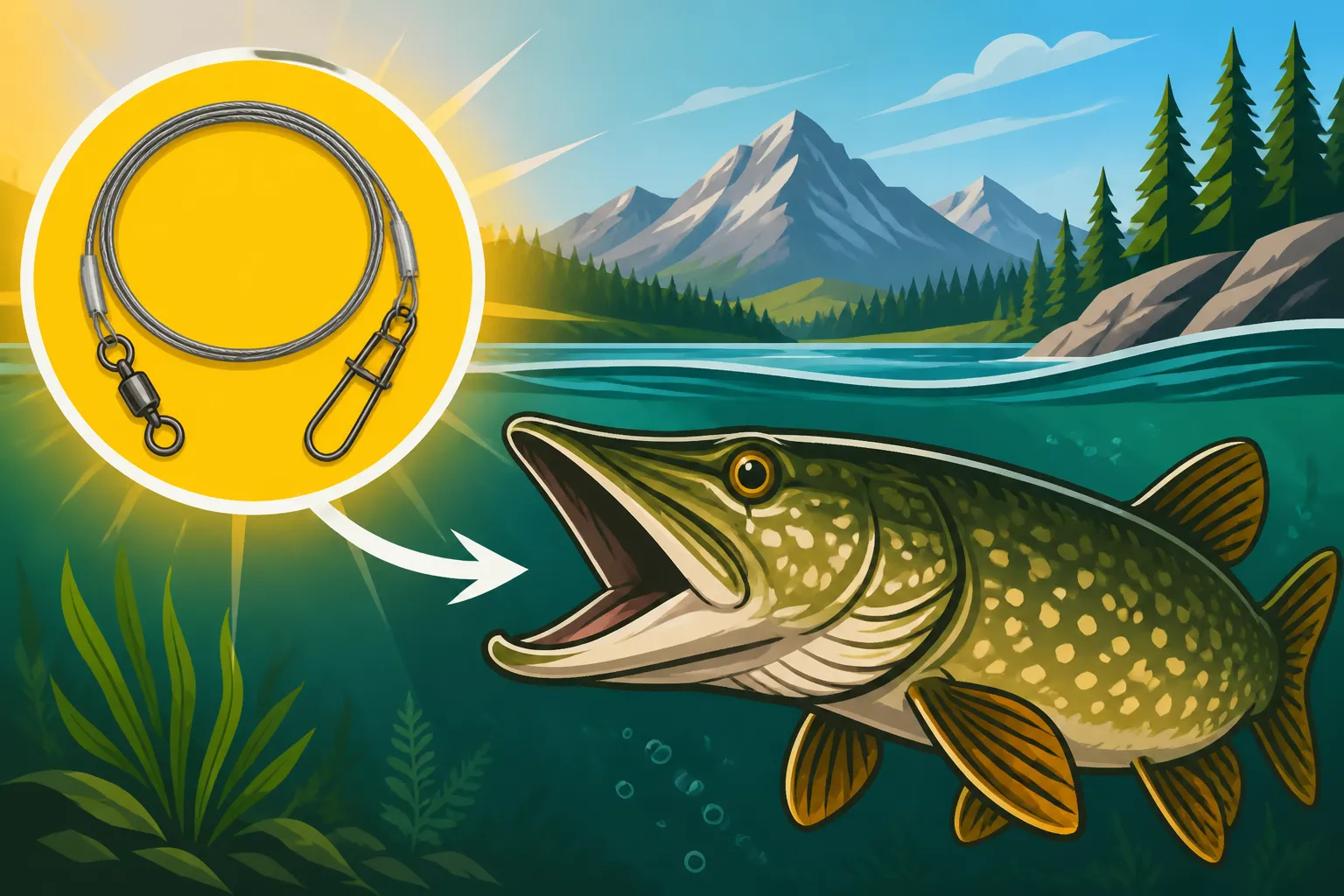
Best leader for pike fishing
It’s happened to the best of us: you feel that aggressive strike, the rod bends, and you’re convinced you’ve hooked into a monster pike, only for the line to suddenly go slack. You reel in to find your expensive lure completely gone, bitten clean off by those razor-sharp teeth. This frustrating experience is exactly why understanding and using the best leader for pike fishing is absolutely non-negotiable in Alberta's waters. This guide will walk you through everything you need to know to prevent heartbreak and land more of those feisty northern pike.
Why Leaders are Absolutely Essential for Pike Fishing in Alberta
Fishing for northern pike in Alberta is an exhilarating experience. These fish are aggressive, hard-fighting, and can grow to impressive sizes, making them a true trophy for many anglers. However, their predatory nature comes with a significant challenge: a mouth full of incredibly sharp teeth designed to shred their prey. If you're heading out to chase pike on Lesser Slave Lake, Lac La Biche, or even a smaller pond near home, neglecting a proper leader is like bringing a knife to a gunfight – you're simply not equipped for the battle.
The Pike's Dental Arsenal: More Than Just a Nuisance
Northern pike have rows of needle-sharp teeth that are perfectly adapted for ambushing and holding onto their prey. These aren't just little nubs; they are formidable weapons capable of slicing through standard monofilament or fluorocarbon mainlines like butter. Imagine hooking into a powerful pike, feeling that head shake, and knowing that your mainline is rubbing directly against those teeth. It's a recipe for disaster, and usually results in a lost fish and a lost lure. Many anglers, especially those new to pike fishing, learn this lesson the hard way, myself included. There's nothing worse than seeing your favorite spoon or crankbait disappear into the depths with a feisty pike because you skimped on a leader.
Using a leader isn't just about protecting your gear, though that's a huge part of it. It’s also about ensuring you can successfully bring that fish to hand, or more accurately, to the net, and then safely release it if you choose to. A clean bite-off means the fish swims away with your lure still attached, which can be harmful to the pike. By using a strong, bite-resistant leader, you minimize the risk of leaving gear behind in the fish’s mouth. This is especially important in Alberta, where sustainable angling practices are encouraged. You can learn more about proper handling in How to Catch Northern Pike in Alberta.
Protecting Your Lures and Your Wallet
Let's be honest, fishing lures aren't cheap. Whether you're casting expensive jerkbaits or retrieving classic spoons, losing even one to a pike bite-off can sting. Multiply that by several lost lures over a season, and you're looking at a significant investment disappearing into the water. A good leader acts as a sacrificial barrier, taking the brunt of the pike’s teeth while protecting your valuable mainline and lure.
Think of it as an insurance policy. A quality leader, while an additional cost upfront, will save you money in the long run by drastically reducing the number of lures you lose. It also means you can fish with confidence, knowing that when that trophy pike finally strikes, you stand a much better chance of bringing it in. This is particularly true when you’re using specialized baits that are critical for success, such as those discussed in Best Lures for Northern Pike in Alberta. You can find a wide array of pre-tied leaders and bulk materials on platforms like Amazon, making it easy to stock up and protect your investment.
Types of Pike Leaders: Materials and Their Pros & Cons
When it comes to pike leaders, you've got a few main choices, each with its own set of advantages and disadvantages. The "best" leader isn't a one-size-fits-all answer; it often depends on your specific fishing situation, the size of pike you're targeting, and even your personal preference.
Steel and Wire Leaders: The Traditional Pike Guard
Steel and other wire leaders have been the go-to choice for pike anglers for decades, and for good reason: they offer superior bite protection. These leaders are designed to withstand the sharpest teeth, giving you peace of mind when a big northern decides to clamp down.
There are several sub-types within the steel/wire category:
- Single-Strand Wire Leaders: These are made from a single solid strand of steel wire. They are incredibly tough and offer excellent bite resistance. The downside is that they can be prone to kinking, especially after battling a fish or getting snagged. Once kinked, their integrity is compromised, and they should be replaced. They also tend to be less flexible and more visible in the water, which can sometimes deter wary pike in clear conditions.
- Multi-Strand (Braided) Wire Leaders: These leaders are made from multiple thin strands of steel or other high-strength alloys woven together, often coated in nylon or plastic. This construction makes them much more flexible and kink-resistant than single-strand wire. They offer superb bite protection and are more forgiving if they get bent. While still more visible than fluorocarbon, their flexibility can make them a bit more subtle. Many anglers prefer braided wire leaders for their durability and ease of use. You can easily find these in various strengths and lengths, often pre-rigged with swivels and snaps, on Amazon. This is often what people mean when they refer to a Best Wire Leader for Pike Fishing.
- Titanium Leaders: A more modern option, titanium leaders offer an excellent balance of strength, flexibility, and kink resistance. They are often lighter than steel and have fantastic "memory," meaning they spring back to their original shape even after being bent or twisted. While generally more expensive than steel, their longevity and performance can make them a worthwhile investment for serious pike anglers. They are an excellent choice if you're looking for a low-maintenance, high-performance leader that will last through many fish.
Pros of Steel/Wire Leaders:
- Unmatched Bite Protection: Virtually impervious to pike teeth.
- Durable: Can withstand significant abuse from fish and snags.
- Reliable: Provides confidence when targeting large, aggressive pike.
Cons of Steel/Wire Leaders:
- Visibility: Can be more visible in clear water, potentially spooking fish.
- Stiffness/Kinking: Some types can be stiff or prone to kinking, requiring replacement.
- Weight: Can affect the action of lighter lures.
Heavy Fluorocarbon Leaders: The Stealthy Alternative
Fluorocarbon has become incredibly popular in all facets of fishing due to its low visibility underwater and excellent abrasion resistance. For pike fishing, heavy fluorocarbon leaders (usually 60-100 lb test) are a common choice, especially when targeting fish in clear water or when using smaller, more finesse presentations.
While not entirely "bite-proof" like steel, heavy fluorocarbon offers a significant level of protection against light nips and abrasion. The main advantage is its near-invisibility underwater, as it has a refractive index very close to water. This means it's much harder for a pike to see the leader, which can be a huge advantage when fishing pressured waters or for finicky fish.
However, it's crucial to understand its limitations. A truly large, thrashing pike can still fray and eventually cut through heavy fluorocarbon, especially if the leader gets wrapped around those teeth repeatedly during a fight. Therefore, diligent inspection of your fluorocarbon leader after every fish or snag is essential. If you see any nicks, frays, or damage, it's time to replace it.
Pros of Heavy Fluorocarbon Leaders:
- Low Visibility: Nearly invisible underwater, ideal for clear water and wary fish.
- Good Abrasion Resistance: Resists rubbing against structure and some incidental contact with teeth.
- Flexible: Doesn't impede lure action as much as some wire leaders.
Cons of Heavy Fluorocarbon Leaders:
- Not 100% Bite-Proof: Can be cut by large pike, especially trophy-sized fish.
- Requires Frequent Inspection: Needs to be checked regularly for damage.
- Stiffer than Monofilament: While flexible, it can be a bit stiff for knot tying compared to mono.
Choosing the Right Leader for Your Pike Fishing Style
Selecting the perfect leader isn't just about material; it's also about matching it to your fishing style, the conditions, and the size of the pike you anticipate catching. A leader that works perfectly for trolling a large spoon might not be ideal for casting smaller soft plastics in clear, shallow water.
Matching Leader to Lure and Technique
The type of lure you're using heavily influences your leader choice. For instance, if you're throwing big, heavy spoons, spinnerbaits, or large crankbaits for Northern Pike Fishing in Alberta, a robust multi-strand steel or titanium leader is an excellent choice. These lures often attract aggressive strikes, and the slightly increased visibility of a wire leader usually isn't an issue for a pike committed to smashing a meal. Plus, these heavy lures can handle the slight stiffness of a wire leader without their action being compromised.
On the other hand, if you're trying a more subtle approach with smaller jigs, swimbaits, or even fly fishing for pike, a heavy fluorocarbon leader might be more appropriate. These lighter presentations often require a more natural movement, and the less intrusive nature of fluorocarbon can be beneficial. Additionally, in very clear water, especially if the pike are finicky, the stealth factor of fluorocarbon can make a real difference. Remember, even with fluorocarbon, going as heavy as you can get away with (80-100 lb test is common) will give you the best chance.
Considering Water Clarity and Habitat
Alberta's waters offer a huge range of clarity, from crystal-clear mountain lakes and rivers to tannin-stained prairie reservoirs. Water clarity should definitely play a role in your leader decision.
- Clear Water: When fishing clear waters like some of the mountain lakes or specific sections of rivers, low visibility is key. This is where heavy fluorocarbon leaders really shine. Their near-invisibility gives you an edge with wary pike that might shy away from a more obvious wire leader. You might also consider longer leaders in clear water (18-24 inches) to further separate your main line from the lure.
- Stained or Murky Water: In darker, stained, or murky waters, visibility is much less of a concern. Pike rely more on lateral line vibrations and scent in these conditions. Here, a sturdy steel or titanium leader is usually the best bet. You gain maximum bite protection without sacrificing strikes due to leader visibility. Rivers with high runoff, for example, often have reduced visibility, making wire leaders perfectly acceptable.
Consider the habitat too. If you're fishing dense weed beds, where pike love to ambush, a leader with good abrasion resistance is important. Both wire and heavy fluorocarbon perform well here, but wire offers that ultimate peace of protection against those toothy attacks within the thick cover.
Pike Size and Aggression Levels
While it's impossible to predict the exact size of every pike you'll hook, having a general idea of the average size in a particular water body can help you choose. If you're fishing a pond known for smaller "hammer handles" (smaller pike), you might get away with a slightly lighter fluorocarbon leader. However, if you're targeting true trophy pike, like those found in larger Alberta lakes, then a robust wire or titanium leader is almost always the smarter choice. The strength and resilience of these materials become paramount when a 40-inch monster starts thrashing at the boat. You don't want to lose a fish that has taken years to reach Northern Pike Growth Rate to Trophy Size.
Aggression levels also matter. During peak feeding times or aggressive bites (like during the spawn or late fall), pike might hit anything, regardless of leader visibility. When they're less active or pressured, a more subtle approach with fluorocarbon might coax a strike. Always err on the side of caution when in doubt – a heavier leader can prevent heartbreak, even if it might slightly reduce strikes in theoretical terms.
Rigging Your Pike Leader and Maintenance Tips
Having the right leader is only half the battle; knowing how to properly attach it to your mainline and lure, and then maintaining it, is equally crucial for success and longevity. A poorly tied knot or a neglected leader can quickly lead to lost fish and tackle.
Connecting Your Leader to Mainline and Lure
The primary goal when rigging your leader is to create strong, secure connections that won't fail under the strain of a fighting pike.
-
Leader to Mainline Connection: Most anglers use a small, high-quality swivel to connect their leader to their mainline. This serves a few important purposes:
- Strength: A good barrel or ball bearing swivel provides a strong connection point. Best Swivel Type for Pike Leaders can guide you on making the right choice.
- Twist Prevention: Many pike lures, especially spoons and spinnerbaits, can spin in the water, causing your mainline to twist. A swivel prevents this, maintaining line integrity and preventing tangles.
- Ease of Change: It allows you to quickly change leaders if one becomes damaged or if you want to switch to a different type or length.
A common and very strong knot to tie your mainline (often braided line, as discussed in Best Braided Line for Pike Fishing) to the swivel is the Palomar knot or the Improved Clinch knot. For the leader material to the other end of the swivel, a Crimp connection is commonly used for wire leaders, or a strong loop knot like the Uni Knot or a reliable Palomar knot for heavy fluorocarbon.
-
Leader to Lure Connection: At the business end of the leader, you'll almost always want to use a snap, a snap swivel, or a sturdy split ring.
- Snaps: A good quality, strong snap allows you to quickly and easily change lures without having to re-tie your leader every time. This is invaluable when you're trying different presentations to find what the pike are hitting. Ensure the snap is rated for heavy use and won't bend open under pressure.
- Snap Swivels: These combine the benefits of a snap for lure changing with a swivel to reduce line twist. They are a very popular choice for pike fishing, especially with lures prone to spinning.
- Split Rings: Some lures come with split rings already attached, and you can simply clip your snap directly to that. For lures without, you can add one or tie your leader directly to the lure's eye if you don't mind re-tying each time you change baits.
Always use hardware (swivels, snaps, split rings) that is strong enough for pike fishing. Flimsy snaps or small swivels are a common weak point that can lead to disappointment. Look for components made from stainless steel or other corrosion-resistant materials, especially if you plan on ordering bulk options from Amazon.
Checking for Damage and When to Replace
Leaders, especially those battling toothy pike, take a beating. Regular inspection is not just recommended, it's essential.
- After Every Fish: Give your leader a thorough once-over after every pike you catch. Look for kinks, nicks, abrasions, or any signs of damage. Even a small kink in a single-strand wire leader can be a point of failure. For fluorocarbon, check for any scuffs or areas where the line looks "whitish" or roughed up – these are weak spots.
- After Every Snag: If you get snagged and have to pull hard to free your lure, always check your leader. The strain can stretch or weaken the material, especially if it was rubbing against a sharp object.
- Signs of Wear: Over time, even without a major incident, leaders can wear down. If a wire leader looks dull, rusted, or heavily kinked, it's time to replace it. If a fluorocarbon leader feels rough, has visible nicks, or its color seems off, cut it off and tie on a fresh one. Don't be cheap here – losing a trophy pike because you tried to squeeze one more fish out of a compromised leader is a terrible feeling.
Proper Storage and Handling
Taking care of your leaders when they're not in use can extend their lifespan and prevent frustration on the water.
- Keep Them Straight: Many pre-tied wire leaders come on small cards or coiled. Try to keep them as straight as possible to avoid introducing kinks. If you make your own leaders from bulk wire, store the spools in a way that prevents the wire from getting bent or crushed.
- Organize Your Tackle: Keep your leaders neatly organized in your tackle box or bag. There are specialized leader wallets or small compartmentalized boxes that can help prevent tangles and damage. This is part of having good Best Pike Gear for Alberta Lakes.
- Environmental Factors: Protect leaders from direct sunlight and extreme heat, which can degrade certain materials over time. Store them in a cool, dry place.
- Safe Handling: Pike are notorious for their teeth and can be quite feisty even when landed. When unhooking, always use long-nosed pliers or specialized fish handling tools. This not only protects your hands but also helps prevent the leader from getting tangled or cut on the pike’s teeth or gill rakers. Best Pliers for Unhooking Pike are a must-have item.
By paying attention to these rigging and maintenance details, you'll significantly increase your chances of successfully battling and landing Alberta's magnificent northern pike.
Leader Lengths: Finding the Sweet Spot for Pike
The length of your leader is another factor that can influence both bite protection and lure presentation. There isn't a universally "perfect" length, as it depends on several variables, but there are some general guidelines that most Alberta pike anglers follow.
Standard Leader Lengths for Most Situations
For the vast majority of pike fishing scenarios, a leader length between 6 and 12 inches is typically sufficient.
- 6-9 Inch Leaders: These are great for smaller to medium-sized lures and when you want to minimize any impact on lure action. They offer enough protection for the initial bite and head shakes, keeping the mainline clear of the pike's teeth. These shorter leaders are also less prone to tangling, making casting smoother, especially with lighter setups. Many pre-tied leaders you'll find in tackle shops or on Amazon will fall into this range.
- 10-12 Inch Leaders: For larger lures, bigger pike, or when you want a bit more insurance, extending your leader to 10 or 12 inches can be beneficial. This extra length provides a greater margin of error if the pike rolls or thrashes, ensuring more of the leader, rather than your mainline, is exposed to its teeth. This length is particularly popular with large jerkbaits or swimbaits where a substantial profile might prompt a pike to engulf the lure deeply.
The goal is to have a leader long enough to withstand a pike's attempts to bite through it, while not being so long that it impedes casting, becomes cumbersome, or negatively affects the lure's natural presentation. Remember that for your mainline, Best Line Weight for Pike Fishing is important for overall strength.
When to Consider Longer or Shorter Leaders
While 6-12 inches is the sweet spot, there are times when adjusting your leader length can be advantageous.
- Longer Leaders (18-24 inches):
- Fly Fishing for Pike: When fly fishing, longer leaders are often employed to achieve a more natural presentation of the fly, allowing it to move freely without the heavy fly line nearby. Fly anglers might use a tapered leader with a longer, heavier bite tippet section, which functions similarly to a traditional leader.
- Extremely Clear Water or Wary Fish: In highly pressured, clear water situations, a longer leader can further separate your mainline from the lure, theoretically making it even harder for the pike to detect. This is a more subtle approach but can sometimes make a difference.
- Deep-Set Hooks: If you find pike are consistently swallowing lures deep (which can happen, especially with live bait presentations or slower retrieves), a longer leader offers more protection against accidental teeth contact further up the line.
- Shorter Leaders (4-5 inches):
- Very Small Lures: Occasionally, for extremely small lures or specialized presentations where any added weight or stiffness from a longer leader severely impacts the lure's action, a very short leader might be used. However, this significantly increases the risk of bite-offs, so it's generally not recommended unless absolutely necessary and with the understanding of the increased risk.
- Quick Strikes: For certain techniques where pike are known to strike very quickly and often from the side, a shorter leader might be less prone to tangling during the erratic retrieve. Still, prioritize bite protection.
Ultimately, experiment with different lengths within the recommended range to see what works best for your specific fishing style and the conditions on your chosen Alberta lake or river. The key is balance: enough length for protection, but not so much that it hinders your fishing experience.
The Best Leader for Pike Fishing: A Comparative Overview
To help you make an informed decision, let's put it all together in a handy table comparing the primary leader types for northern pike fishing in Alberta. This will give you a quick reference when you're stocking up for your next trip, perhaps with a big order from Amazon.
| Leader Material | Bite Resistance | Visibility (in Clear Water) | Flexibility | Kink Resistance | Best For | Typical Lures/Techniques |
|---|---|---|---|---|---|---|
| Single-Strand Wire | Excellent | High | Low | Low | Maximum bite protection, simple setups | Spoons, spinnerbaits, larger crankbaits |
| Multi-Strand Wire | Excellent | Medium | Medium-High | Medium-High | All-around pike fishing, versatile | Most pike lures, general casting and trolling |
| Titanium | Excellent | Medium | High | Excellent | Premium performance, durability, high-frequency use | High-end lures, frequent fishing, minimizing leader changes |
| Heavy Fluorocarbon | Good (not 100%) | Very Low | High | Excellent | Clear water, wary pike, subtle presentations | Smaller swimbaits, jigs, deadbaiting, fly fishing |
Disclaimer
This article is for general informational purposes only and does not constitute professional advice. Laws, prices and regulations vary by location and change over time. Consult a qualified professional for guidance on your specific situation.