How to fish a spinnerbait for Alberta lake pike
There's nothing quite like the thrill of a Northern Pike smashing a lure, but let's be honest, getting those toothy predators to commit on Alberta's vast lakes can sometimes feel like trying to solve a cryptic puzzle. Many anglers struggle with consistently enticing pike, especially when it comes to effectively using versatile lures like spinnerbaits. This comprehensive guide is here to unravel the mystery, providing you with actionable strategies and insights to master fishing a spinnerbait for Alberta lake pike, turning those frustrating days into memorable catches.
Why Spinnerbaits are a Pike Angler's Best Friend on Alberta Lakes
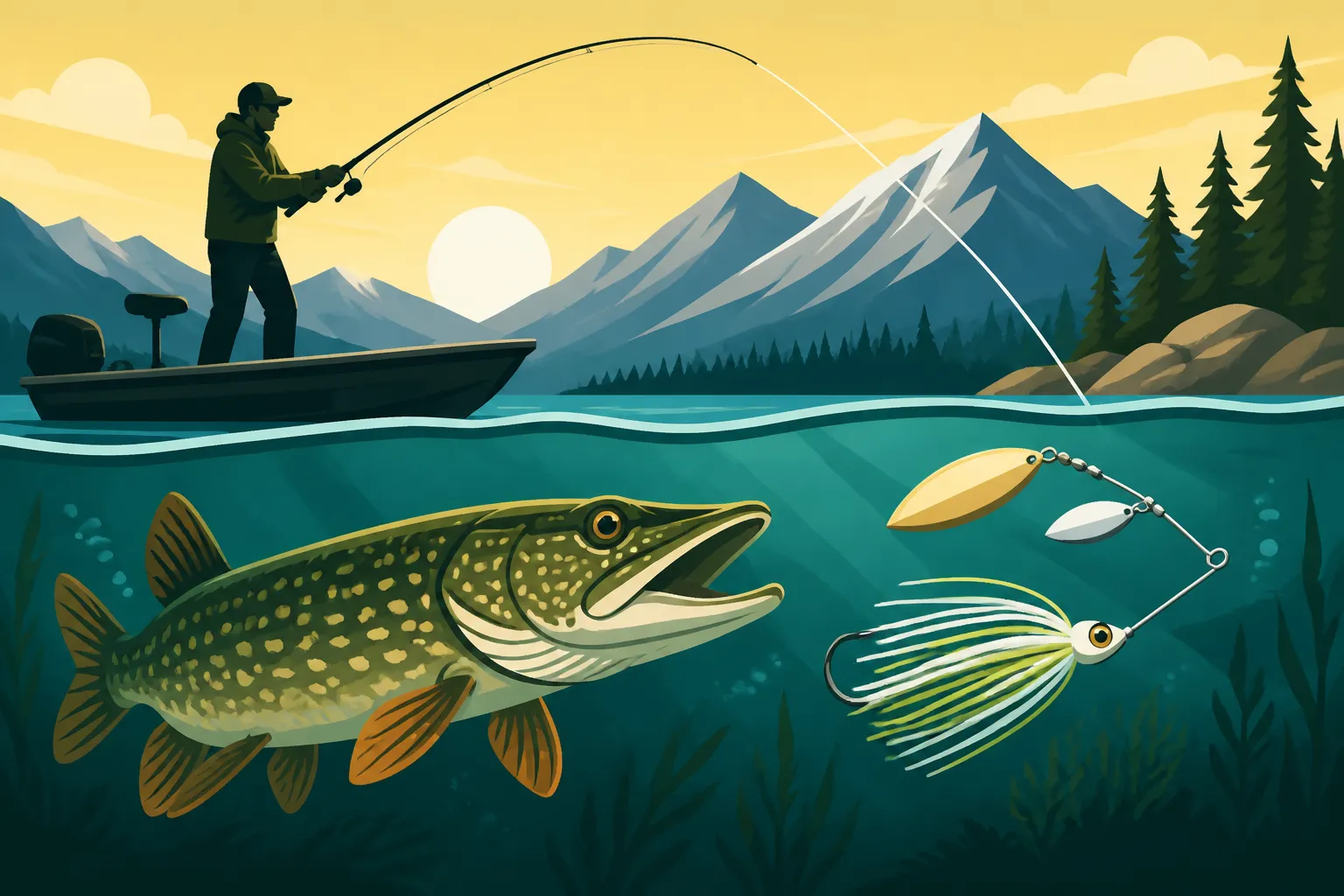
When it comes to pursuing Northern Pike across the diverse waters of Alberta, from the murky depths of Lesser Slave Lake to the crystal-clear expanse of Cold Lake, a spinnerbait is often an overlooked, yet incredibly effective, weapon in your tackle box. These lures just have a way of calling out to pike, and once you understand why, you'll reach for them more often. They hit all the right notes for an aggressive predator like a pike, making them a foundational choice for any serious angler.
The Irresistible Flash and Vibration
Pike are primarily ambush predators, relying heavily on their keen eyesight and lateral line system to detect prey. A spinnerbait excels precisely because it triggers both of these senses simultaneously. The revolving blades, whether they're shiny silver, hammered gold, or painted in vibrant patterns, create an intense flash underwater that mimics schooling baitfish or a struggling, injured fish. This visual attraction is often enough to draw a pike in from a distance, piquing its curiosity and making it investigate.
But it's not just about what a pike sees. The constant rotation of those blades also sends out powerful vibrations through the water, which the pike's lateral line can pick up from surprisingly far away. Think of it as a subtle thumping rhythm that says "dinner is near." This combination of flash and vibration is a potent one, especially in stained or choppy water where visibility might be reduced. A pike might not see your lure clearly, but it will certainly feel it coming, often leading to explosive strikes even in less-than-ideal conditions.
Versatility in Different Conditions
One of the greatest advantages of spinnerbaits for Alberta pike fishing is their incredible versatility. Unlike many other lures that are designed for specific depths or water types, spinnerbaits can be fished effectively in a multitude of scenarios. Are you casting into a shallow, weedy bay on a hot summer day? A light spinnerbait retrieved just above the weed tops will dance and flash, drawing out lurking pike. Is there a sudden chop on the water from a passing squall? The blades will churn through it, maintaining their attracting qualities without getting bogged down.
You can fish them fast, burning them across the surface to trigger reaction strikes from aggressive pike, or slow-roll them along drop-offs and submerged structure when the fish are less active. They handle well in breezy conditions, cast like a dream, and their weedless design means you can confidently pitch them into dense cover where other lures would snag instantly. This adaptability makes them invaluable for fishing the varied environments of Alberta's diverse lakes, from the open water of large reservoirs to smaller, more intimate ponds. They truly are a jack-of-all-trades lure for these magnificent fish. For more on general pike behaviour, check out our guide on Northern Pike Habits in Alberta Lakes.
Pike-Specific Durability and Design
Let's be real, Northern Pike are not gentle eaters. Their mouths are a formidable array of needle-sharp teeth, and a flimsy lure simply won't stand up to repeated encounters. This is where spinnerbaits truly shine. Most quality spinnerbaits are built with a sturdy wire frame, designed to withstand the crushing force of a pike's jaws. The wire arm that holds the blades acts as a protective shield for your line and the main body of the lure, reducing cut-offs and preventing the lure from being mangled.
Furthermore, their single hook design (often with the option to add a trailer hook) makes them relatively snag-resistant, which is crucial when fishing around the thick vegetation and woody cover that pike love. Unlike treble hooks, a single hook is less likely to pick up weeds or get hung up on a log, allowing you to fish in prime pike territory with confidence. Many spinnerbaits also feature durable silicone or rubber skirts that pulsate and flare, creating an enticing profile that can withstand numerous bites. This robust construction means you spend more time fishing and less time re-tying or replacing damaged lures, which is a huge bonus when you're targeting such an aggressive species. You'll find a great selection of these robust options available on Amazon, ready for your next outing. For other essential gear, see our article on Best Pike Gear for Alberta Lakes.
Choosing the Right Spinnerbait for Alberta Pike
Walking into a tackle shop or browsing online for spinnerbaits can be overwhelming. There are so many shapes, sizes, and colours! But don't fret. Selecting the perfect spinnerbait for Alberta pike isn't about having every single one; it's about understanding the key components and how they influence the lure's action and appeal to pike. Once you grasp these principles, you'll be able to confidently choose the right tool for the job, no matter what Alberta lake you're fishing.
Blade Configurations and Colors
The blades are the heart and soul of a spinnerbait, providing that crucial flash and vibration. Different blade shapes offer different actions, and choosing the right one depends heavily on the conditions you're fishing.
- Colorado Blades: These are round, almost spoon-shaped blades. They create the most vibration and lift, making them ideal for slow retrieves, deep water, or murky conditions where maximum thump is needed. They also provide significant resistance, which can be great for keeping your lure higher in the water column over submerged weeds.
- Willowleaf Blades: Long, slender, and shaped like a willow leaf, these blades produce less vibration but a lot more flash. They're perfect for fast retrieves, clear water, or when you need a lure that cuts through the water with minimal resistance, perhaps over vast flats or through sparse weeds. They're also excellent for fishing deeper, as they don't create as much lift.
- Indiana Blades: A hybrid between Colorado and Willowleaf, Indiana blades offer a good balance of flash and vibration. They're a solid all-around choice for many conditions, providing a moderate thumping action and good visual appeal. If you're unsure where to start, an Indiana blade is often a safe bet.
When it comes to blade colors, consider water clarity and light conditions.
- Bright, Shiny Blades (Silver, Nickel, Chrome): Excellent on bright, sunny days and in clear water, mimicking natural baitfish. They reflect light aggressively.
- Duller, Darker Blades (Gold, Copper, Painted): Better for cloudy days, stained water, or low-light conditions (dawn/dusk). Gold blades can also mimic perch or other yellow-hued baitfish. Painted blades, especially in chartreuse, orange, or black, can provide a strong contrast that pike can see more easily in dark water.
Often, a combination of blades (tandem or multi-blade configurations) is used, like a larger Colorado ahead of a smaller Willowleaf, to get the best of both worlds in terms of flash and thump. You can experiment with different combinations to see what the pike are reacting to on a given day.
Weight and Skirt Selection
The weight of your spinnerbait is crucial for controlling its depth and casting distance.
- Lighter Weights (1/4 oz to 3/8 oz): Ideal for shallow water, fishing over weed beds, or burning the lure just under the surface. They don't sink quickly, allowing for a slower retrieve without snagging the bottom or getting tangled in vegetation.
- Medium Weights (1/2 oz to 3/4 oz): The most versatile range for many Alberta lake situations. They offer good casting distance and can be fished at various depths, from shallow to moderately deep water.
- Heavier Weights (1 oz+): Best for deep water presentations, long casts in windy conditions, or when you need to get the lure down quickly to reach suspended pike or deep structure.
The skirt provides the body profile and adds movement, making the spinnerbait look more like a living creature. Skirts are typically made of silicone or rubber.
- Natural Colors (White, Silver, Pearl, Grey): Mimic common baitfish like minnows or ciscoes. Great for clear water and sunny days.
- Bright Colors (Chartreuse, Yellow, Orange): Excellent for stained or murky water, low-light conditions, or when you want a high-visibility target. Pike are often drawn to these flashy colours.
- Darker Colors (Black, Blue, Purple): Can be effective in clear water during low light or when pike are feeding on dark-coloured prey. They also create a strong silhouette against a bright sky.
Consider patterns too, like black and blue (mimicking crayfish or dark baitfish) or perch patterns, which can be highly effective in lakes where those forage species are abundant. Don't be afraid to mix and match skirt colours with blade colours; sometimes a contrasting look is exactly what a finicky pike needs to trigger a strike. For a deeper dive into lure selection, check out Best Lures for Northern Pike in Alberta.
Essential Pike-Proof Upgrades
When fishing for Northern Pike, especially the larger ones, a few crucial upgrades can make all the difference between a landed fish and a heartbreaking loss. These aren't just suggestions; they're almost necessities for consistent pike success.
First and foremost, a wire leader is absolutely non-negotiable. Pike have rows of razor-sharp teeth that can sever standard monofilament or fluorocarbon line with ease. A short, sturdy wire leader (around 6-12 inches) tied between your main line and the spinnerbait will protect your line from these toothy critters. You can buy pre-made wire leaders with swivels and snaps, or you can make your own. Just ensure the snap allows for quick lure changes, and the swivel prevents line twist, especially important with all those spinning blades. Many anglers find reliable wire leaders on Amazon, which saves time when preparing for a trip.
Secondly, consider adding a trailer hook. Spinnerbaits often get hit in the tail, and pike are notorious for short-striking, meaning they might nip at the skirt without fully committing to the main hook. A small, sharp treble or single hook added to the eye of the main hook on your spinnerbait, often secured with a piece of surgical tubing or shrink wrap to keep it properly oriented, can significantly increase your hook-up ratio. This extra hook dangles just past the skirt, ready to catch those hesitant biters. Make sure the trailer hook is sized appropriately so it doesn't foul the action of the lure or get tangled easily. These small additions can dramatically improve your catch rate when the pike are being finicky.
| Spinnerbait Type | Blade Configuration | Ideal Conditions | Retrieve Style | Pike Attraction |
|---|---|---|---|---|
| Colorado | Round/cupped, single or tandem | Murky/stained water, low light, deep water, cold water | Slow-rolling, yo-yoing | Strong vibration, good lift |
| Willowleaf | Long/slender, single or tandem | Clear water, bright sun, shallow water, warm water | Fast burning, steady retrieve | High flash, less vibration, cuts water |
| Indiana | Oval/teardrop, single or tandem | All-around versatile, mixed conditions | Moderate steady retrieve, stop-and-go | Balanced flash & vibration |
| Tandem | Mixed (e.g., Colorado/Willowleaf) | Variable clarity, active fish, searching large areas | Varying speeds, burning & slowing | Combines flash and thump effectively |
Mastering Spinnerbait Presentation Techniques for Lake Pike
Having the right spinnerbait is only half the battle; knowing how to present it effectively is where the real magic happens. Pike are curious but often cautious predators, and your retrieve can make all the difference in convincing them to strike. It's about triggering their instincts, making them believe your lure is an easy meal they can't afford to let escape. Let's talk about how to make that spinnerbait irresistible.
The Basic Retrieve
The beauty of a spinnerbait lies in its inherent action, meaning you don't always need complex rod movements to make it work. A simple, consistent retrieve is often highly effective, but subtle variations can turn a good day into a great one.
- The Steady Retrieve: This is your baseline. Cast out, let the spinnerbait sink to your desired depth (or just below the surface in shallow water), and then reel it in at a steady pace. The blades will do their work, flashing and vibrating, and the skirt will pulsate. This works particularly well for actively feeding pike that are looking for easy prey. Vary your retrieve speed until you find what the fish are reacting to; sometimes a slow roll is best, other times a quick burn will trigger a chase.
- The Stop-and-Go: This technique introduces an erratic element that can be deadly. Reel steadily for a few seconds, then pause for a moment, allowing the spinnerbait to flutter or "die" slightly as it loses forward momentum and the blades slow. Pike often hit on the pause or just as you resume your retrieve, as the sudden change in action can mimic an injured or struggling baitfish. It adds an element of unpredictability that can be irresistible.
- The Burn-and-Kill: This is a more aggressive retrieve, perfect for triggering reaction strikes from active pike or when you're trying to cover a lot of water quickly. Reel as fast as you can for a few seconds, making the spinnerbait almost skip across the surface or rip through the water, then suddenly stop, letting it flutter down. The sudden burst of speed, followed by the "death fall," can infuriate a pike into striking hard. This is particularly effective in warmer water when pike are more energetic. Remember to keep a tight line even on the pause to detect subtle bites. This tactic is especially potent during early spring, which you can learn more about in Best Techniques for Early Spring Pike.
Targeting Structure and Cover
Pike are creatures of structure and cover. They love to ambush prey from hidden positions, so knowing where to cast your spinnerbait is just as important as how you retrieve it. Alberta lakes offer a variety of prime pike habitats.
- Weed Beds: These are pike magnets. Cast your spinnerbait just over the tops of submerged weed beds, or along their edges. The weedless design of a spinnerbait allows you to do this without constantly snagging. If you bump a weed, give your rod tip a sharp twitch to rip the lure free; this erratic movement can often trigger a strike from a pike lurking within the weeds. When fishing a weed line, try to keep your retrieve parallel to the edge for as long as possible, maximizing your lure's time in the strike zone.
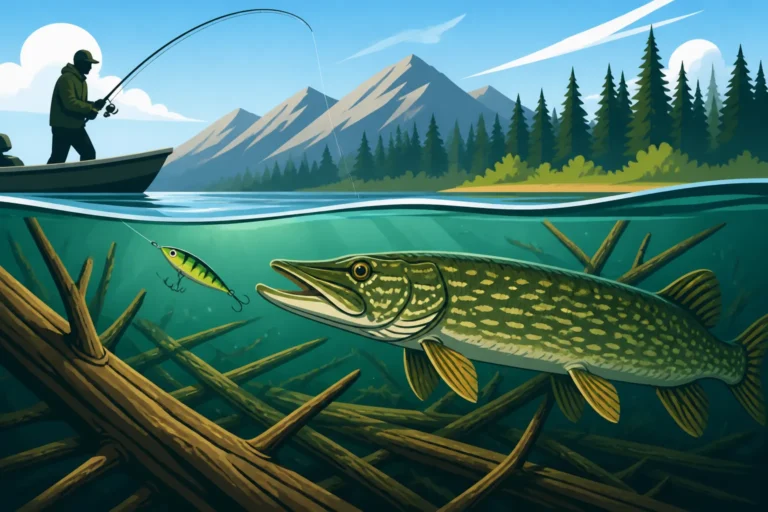
- Submerged Timber and Laydowns: Fallen trees, stumps, and brush piles offer excellent ambush points. Carefully pitch your spinnerbait to these areas, letting it sink momentarily before beginning a slow, deliberate retrieve that brings it past the cover. Be prepared for an immediate strike! The single hook design minimizes snags, but a gentle approach is still key.
- Rock Piles and Drop-offs: In clearer lakes, pike will often relate to rocky structure or sudden changes in depth. Cast your spinnerbait to the shallow side of a rock pile and retrieve it down the face, or parallel to a drop-off. The blades bouncing off rocks can create additional enticing commotion. A heavier spinnerbait will help you maintain contact with the bottom in these areas. Understanding these fish's preferences can drastically improve your success, and our article How to Catch Northern Pike in Alberta offers more detailed insights.
The Importance of a Figure-Eight
You've cast your spinnerbait, worked it back to the boat or shore, and then it happens: a massive pike follows it right to your feet, refusing to strike. This is where the "figure-eight" comes into play – and it's a technique that has saved many a potentially lost fish.
When a pike follows your lure but doesn't commit, it's often curious but hesitant. It's evaluating the meal, and once it gets to the boat, the "escape route" is gone, and the illusion of a fleeing baitfish diminishes. To overcome this, instead of just pulling your lure out of the water, quickly plunge your rod tip into the water and furiously move your spinnerbait in a wide figure-eight pattern right at the boat side. Make those loops big and erratic, keeping the blades spinning and the skirt pulsating.
This sudden, frantic movement often triggers a reaction strike from the hesitant pike. It's like the baitfish suddenly realized it was cornered and is making a last-ditch effort to escape. The pike's predatory instincts take over, and it can result in an aggressive, boat-side strike that will get your adrenaline pumping. Many trophy pike have been caught this way, so never give up on a fish that follows! It’s a vital skill, especially when Best Lakes for Trophy Pike in Alberta are known for producing cautious giants.
Common Mistakes and How to Avoid Them When Fishing Spinnerbaits for Pike
Even with the right gear and a basic understanding of techniques, anglers sometimes fall into common traps that can hinder their success with spinnerbaits. Pike fishing can be incredibly rewarding, but it also demands attention to detail and a willingness to adapt. By recognizing these common missteps, you can elevate your game and start putting more Alberta pike in the net.
Ignoring Water Conditions
One of the biggest mistakes anglers make is treating all water conditions the same. What works on a bright, calm day in clear water might be completely ineffective in murky, choppy conditions, or vice-versa. Pike are highly sensitive to their environment, and their behaviour changes with clarity, light, and temperature.
- Water Clarity: In clear water, pike rely heavily on sight. You'll want more natural-looking spinnerbaits with silver or natural-colored blades and subtle skirt patterns. A faster retrieve can also be effective to trigger a reaction before they get too good a look. Conversely, in stained or muddy water, visual cues are reduced. This is when loud, vibrating Colorado blades and high-contrast skirt colors like chartreuse, orange, or black really shine. A slower retrieve here helps the pike locate the lure by feel.
- Light Conditions: Bright sun calls for flashier blades (silver, nickel) that reflect a lot of light, mimicking a shimmering baitfish. On cloudy days or during low light periods (dawn, dusk), gold or painted blades can offer better visibility and contrast.
- Water Temperature: Pike are more active in warmer water, often preferring faster retrieves and aggressive presentations. In colder water, their metabolism slows, and they become more sluggish. This calls for a much slower, more deliberate retrieve, allowing the spinnerbait to wobble and pulsate enticingly without appearing too fast for a lethargic fish. Matching your approach to the conditions is paramount for consistent success.
Lack of Pike-Specific Rigging
It's astonishing how many anglers still head out for pike without proper rigging, only to be heartbroken by lost lures and fish. As mentioned before, pike have teeth, and those teeth are designed to cut.
- Forgetting a Wire Leader: This is the cardinal sin of pike fishing. Monofilament, fluorocarbon, and even braided line are no match for a pike's sharp teeth. Without a wire leader, you are essentially gambling with every strike. Invest in quality wire leaders; they are a small expense that saves you much larger frustrations (and the cost of lost lures). You can find various types of strong, reliable wire leaders on Amazon, ensuring you're always prepared. Our guide on Best Wire Leader for Pike Fishing provides further details on optimal choices.
- Neglecting a Trailer Hook: Pike are notorious short-strikers. They'll often nip at the tail of the lure, especially when they're less aggressive or just curious. If you're consistently getting bumps or seeing your skirt ruffled without a hook-up, a trailer hook is your answer. It extends the hooking zone just enough to catch those tentative bites, significantly improving your hook-up ratio and turning missed opportunities into landed fish.
These small, seemingly minor rigging details are absolutely critical for successful pike fishing. Don't underestimate their importance.
Not Varying Your Retrieve
Getting stuck in a "one-speed" retrieve is another common pitfall. While a steady retrieve can be effective, pike are often triggered by changes in speed, direction, or depth. If you're consistently casting and retrieving the same way and not getting bites, it's time to shake things up.
- Experiment with Speed: Start with a moderate retrieve, and if that's not working, try speeding it up to provoke a reaction strike, or slow it down to give a less aggressive pike more time to commit. Don't be afraid to burn it for a few cranks, then slow to a crawl.
- Introduce Pauses and Twitches: The stop-and-go retrieve is effective because it mimics a struggling baitfish. Add sharp twitches with your rod tip during the retrieve to make the lure dart erratically. These sudden changes can often be the trigger a pike needs.
- Change Depth: Sometimes pike are holding just below the surface, other times they're deeper in the water column. Use heavier or lighter spinnerbaits, or vary your retrieve speed, to present the lure at different depths. If you’re fishing over a deep weed bed, try retrieving just above the weed tops; if you're working a drop-off, try slow-rolling it right along the edge. The more you experiment and observe, the better you'll become at reading the fish and adapting your presentation. A good understanding of Northern Pike Fishing in Alberta will reinforce these concepts, and having the right reel helps too, as detailed in Best Baitcasting Reels for Pike Fishing.
Disclaimer
This article is for general informational purposes only and does not constitute professional advice. Laws, prices and regulations vary by location and change over time. Consult a qualified professional for guidance on your specific situation.