How to safely release a bull trout you accidentally catch
It’s a moment every angler dreads: you’re out on a beautiful Alberta stream, casting for rainbows or browns, and suddenly, you hook into something that looks different – something unmistakably bull trout. Your heart sinks a little, not because you’ve caught a majestic fish, but because you know the strict rules surrounding this protected species. Releasing a bull trout safely isn't just about following regulations; it's about honouring our commitment to conservation and ensuring these magnificent native fish continue to thrive. This guide will walk you through everything you need to know to ensure that if you ever find yourself in this situation, you can release that bull trout with the best possible chance of survival.
Understanding Why Bull Trout Need Special Care
When you accidentally hook a bull trout, it's not just a "nice catch" moment; it's a critical moment for conservation. These fish are an integral part of Alberta's natural heritage, but they're also highly vulnerable. Knowing why they require such careful handling is the first step in becoming a truly responsible angler.
The Bull Trout's Protected Status in Alberta
Bull trout are Alberta's provincial fish, and for good reason—they are truly magnificent native char. However, they are also a species facing significant challenges, including habitat loss, competition from introduced species, and historical overfishing. This combination of factors has led to their designation as a threatened species in Alberta. Because of their vulnerable status, there's a strict "zero possession rule" for bull trout across the province. This means that if you catch one, you absolutely cannot keep it, not even for a photo session that takes too long or risks injury to the fish. The regulations are incredibly clear: Alberta Bull Trout Zero Possession Rule.
Failing to adhere to this rule isn't just a slap on the wrist; the penalties for fishing without a license or improperly handling protected species can be severe. Enforcement officers take these regulations very seriously, and rightfully so. It's not about punishing anglers, but about protecting a precious, irreplaceable resource. Every bull trout that successfully swims away after being caught contributes to the survival of the species, reinforcing the delicate ecosystem balance. This is why understanding the importance of proper release techniques is paramount, allowing us to be stewards of these incredible fish for future generations.
Identifying a Bull Trout vs. Other Species
One of the biggest challenges for many anglers is accurate fish identification, especially when a fish is thrashing and you're trying to minimize its time out of water. Bull trout can sometimes be confused with lake trout, Dolly Varden, or even brook trout, all of which have different regulations or bag limits. However, bull trout have distinct characteristics that, once learned, are quite easy to spot. They typically have light spots (yellow, orange, or red) on a darker body (olive-green to blue-grey), rather than dark spots on a lighter body, which is common in rainbow or brown trout. Their heads are usually larger and broader in proportion to their bodies, with a distinct "shovel-like" snout. The lower fins often have white leading edges.
Comparing a bull trout to a lake trout, for instance, can be tricky since both are char and can inhabit similar cold, deep waters. However, lake trout tend to have more pronounced, worm-like markings on their backs (vermiculations) and generally lack the vibrant orange or red spots often seen on bull trout. If you're unsure, always err on the side of caution and treat the fish as if it were a bull trout, applying the most stringent catch-and-release practices. You can find more detailed information on how to tell a bull trout from a lake trout or consult a comprehensive trout species identification guide for Alberta to become more confident in your ability to distinguish between these sensitive species. Remember, quick and accurate identification on the water directly impacts the fish's survival chances.
Here's a quick comparison to help you identify:
| Feature | Bull Trout | Rainbow Trout | Brown Trout | Lake Trout |
|---|---|---|---|---|
| Body Colour | Olive-green to blue-grey, darker back | Silver to olive-green, often with a pink stripe | Golden brown to olive, often with red halo | Dark grey/green with pale, irregular spots |
| Spots | Light (yellow, orange, red) spots on dark body | Dark spots on light body (often black) | Dark spots on light body (black/red) | Light (white/grey) worm-like spots (vermiculations) |
| Head Shape | Large, broad, shovel-like snout | Smaller, conical | Moderate, more pointed | Large, elongated, often pointed |
| Tail Fin | Slightly forked | Slightly forked or squared | Squared or slightly forked | Deeply forked |
| Leading Edge of Fins | Often white (pelvic, anal) | No distinct white edge | No distinct white edge | No distinct white edge |
Essential Gear for Responsible Bull Trout Release
Being prepared with the right tools is just as important as knowing the right techniques. Having specialized gear on hand significantly increases a bull trout's chances of survival and makes the release process smoother and faster for everyone involved. Don't wait until you've hooked a fish to realize you're ill-equipped.
Barbless Hooks: Your First Line of Defense
If there's one piece of gear that can dramatically improve a fish's survival chances, it's a barbless hook. A barbed hook creates a larger wound and can be much harder to remove, especially if the fish is thrashing or the hook is set deeply. Barbless hooks, on the other hand, slide out with minimal effort and cause significantly less tissue damage. They are simply gentler on the fish. Many special regulation waters in Alberta specifically require Alberta barbless hook requirement waters, and for good reason. Even if you're not in a designated barbless-only zone, using them voluntarily, especially when targeting trout, is a mark of a truly ethical angler.
If your favourite lures or flies come with barbed hooks, don't despair! You can easily crimp the barb down with a pair of pliers. Just grab the barb and squeeze it flat against the hook shank. This transforms a potentially damaging hook into a fish-friendly one in seconds. It’s a small effort that makes a massive difference, reducing the risk of internal injury and making hook removal quick and stress-free for both you and the fish. Investing in high-quality barbless hooks or taking a moment to crimp barbs on all your gear is a fundamental step in responsible angling, and it should be a standard practice for anyone fishing for sensitive species.
The Right Net and Tools for a Quick Release
Beyond barbless hooks, the tools you use to land and unhook a bull trout are crucial. A proper landing net is essential. Avoid nets with coarse, knotted nylon mesh, as these can strip off a fish's protective slime layer, damage fins, and injure scales. Instead, opt for a net with a rubberized or knotless mesh. These materials are much gentler on fish, reducing abrasion and keeping that vital slime layer intact. A large, deep net allows the fish to remain fully submerged while you prepare for release, minimizing its air exposure. You can find excellent rubberized nets on platforms like Amazon, offering a wide range of sizes and handle lengths to suit your specific fishing style.
Once the fish is safely in the net (and still in the water!), you'll need the right tools for hook removal. Long-nosed pliers or hemostats (also known as forceps) are indispensable. These allow you to reach hooks that are set deeper in the fish's mouth without having to put your fingers near sharp teeth or gills. Choose a pair with a good grip and a long enough reach for various hook placements. Keeping these tools readily accessible—perhaps clipped to your vest or bag—means you won't be fumbling around when time is of the essence. The quicker you can remove the hook and get the fish back on its way, the better its chances of survival, especially for a threatened species like the bull trout.
The Step-by-Step Guide to Safe Bull Trout Release
Catching a bull trout is a privilege, and releasing it safely is a responsibility. Every second counts, and every action you take can impact the fish's survival. Follow these steps meticulously to ensure the best possible outcome.
Minimizing Fight Time and Handling Stress
When you realize you’ve hooked a bull trout, your first priority should be to land it as quickly and efficiently as possible. A prolonged fight exhausts the fish, building up lactic acid in its muscles and significantly reducing its chances of survival after release. Use appropriately sized tackle for the fish you’re targeting, allowing you to bring it in without undue stress. Once hooked, don't play with it; reel it in steadily but firmly. Think of it as a rescue mission, not a battle.
Once the fish is near, try to keep it in the water as much as possible. If you need to bring it close to shore or into a net, ensure its head and gills remain submerged. The moment a fish is pulled from the water, it begins to suffocate. This is especially true for cold-water species like bull trout, which are accustomed to highly oxygenated environments. Never drag the fish onto dry land or rocks, as this can severely damage its protective slime layer and external tissues. Minimal handling is the goal, and when you must handle the fish, ensure your hands are wet to prevent stripping off that crucial slime. Avoid touching the gills or eyes at all costs, as these are extremely delicate and vital organs. These practices are part of general bull trout catch and release survival tips that contribute greatly to the fish's post-release health.
Proper Hook Removal Techniques
With the fish in your rubberized net, or held gently in the water with wet hands, it’s time for hook removal. This is where your barbless hooks and long-nosed pliers or hemostats truly shine. First, assess the hook placement. If it’s in the lip or corner of the mouth, which is often the case with barbless hooks, it’s usually a straightforward removal. Gently hold the fish still, using wet hands to cradle its belly and tail if necessary, keeping it submerged. Use your pliers or hemostats to grasp the hook shank and carefully back it out the way it went in. Avoid twisting or wrenching the hook, as this can tear tissue. The goal is a clean, quick extraction.
If the hook is deeply swallowed or lodged in the gills, this is where things get tricky, and you must act decisively and ethically. Never, ever try to yank a deeply embedded hook out. This will almost certainly cause lethal damage to the fish's internal organs. In these unfortunate situations, the best course of action is to cut the line as close to the hook as possible, allowing the hook to remain in the fish. While this might seem counterintuitive, studies show that hooks made of carbon steel will rust away over time, and the fish has a much better chance of survival than if you attempt a traumatic extraction. Carry a small pair of line cutters or sharp scissors on your person for just such an emergency. It's a tough decision, but it's the most humane one.
Reviving and Releasing the Bull Trout
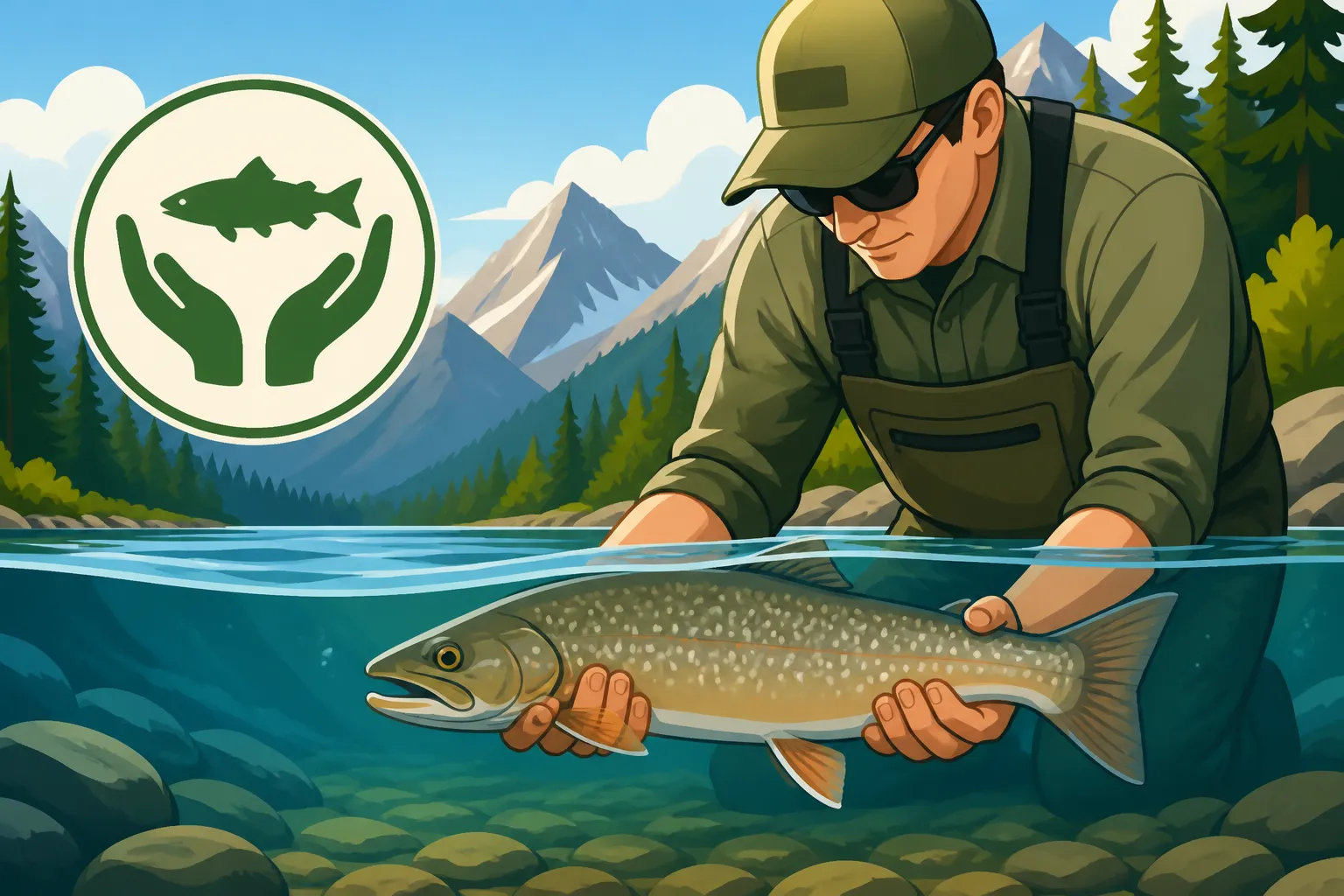
Once the hook is removed, the release process isn't over. The fish might be disoriented and exhausted from the fight. It needs your help to recover before it can swim away strong. Gently hold the bull trout upright in the water, facing it into a slow current. This allows oxygenated water to flow over its gills. Support its belly and tail, but don't squeeze or grip too tightly. You're simply providing stability.
Watch for signs of recovery: the fish will start to move its fins, particularly its tail, and may begin to resist your gentle hold. It might try to swim away, then settle back. Continue to support it until it can maintain its position and swim strongly under its own power. Don't rush this stage; it can take anywhere from a few seconds to several minutes, depending on the length of the fight and water temperature. When it’s ready, allow it to swim away naturally from your hands. Never toss or throw a fish back into the water, as this can cause further injury or disorient it. A gentle, respectful release ensures that the bull trout: Alberta's threatened native fish has the best chance to continue its life journey.
Best Practices for Catch-and-Release Beyond Bull Trout
While these techniques are critical for bull trout, they are also excellent practices for all catch-and-release fishing, especially for other sensitive species or in fragile ecosystems. Adopting a conservation-minded approach benefits all fish and ensures the sustainability of our angling opportunities.
Understanding Water Temperature and Fish Stress
Water temperature is a silent but deadly factor in catch-and-release mortality, particularly for cold-water species like trout and char. As water temperatures rise, the dissolved oxygen levels decrease, and fish become significantly more stressed by the fight. What might be a harmless 30-second fight in cool spring water can become lethal in warm summer temperatures. For bull trout, which prefer frigid, oxygen-rich waters, warm water periods are especially dangerous. During prolonged hot spells, when river or lake temperatures climb above 18-20°C (64-68°F), it's often best to avoid fishing for sensitive trout species altogether. Even a perfectly executed release might not save a fish that is already struggling from heat stress.
Recognizing these conditions is crucial for ethical angling. You can carry a small stream thermometer (many models are available on Amazon for a reasonable price) to monitor water temperatures. If the water is warm, consider targeting other species that are more tolerant of heat, or simply give the fish a break. This isn't just about bull trout; it applies to all native trout and char, like those you'd find when fly fishing for trout on the Bow River or in alpine streams. Choosing when and where to fish, based on environmental conditions, is a core component of responsible fishing that goes beyond simply following regulations.
Photo Etiquette and Limiting Air Exposure
We all love a good photo to remember a special catch, but for species like the bull trout, minimizing air exposure during photography is paramount. Every second a fish is out of water is detrimental. If you absolutely must take a picture, prepare beforehand: get your camera ready, frame the shot, and have your unhooking tools ready. Once the fish is landed, keep it in the net and submerged while you get everything prepared. Then, quickly lift the fish just above the water for a quick snap, and immediately return it to the water. A good photo can often be taken with the fish still mostly submerged, creating a more natural and less stressful image.
Avoid holding fish horizontally by the jaw or tail without proper body support, as this can cause serious internal organ damage, especially to larger, heavier fish. Always support the fish’s body weight fully, ideally with one hand under the belly and the other gently gripping the caudal peduncle (the narrow part before the tail). For bull trout, consider a "grip and grin" where only the head is slightly out of water, or better yet, a beautiful shot of the fish still in the net, submerged. Remember, the fish’s life is far more important than your trophy shot. Adhering to these simple photo etiquette rules contributes significantly to the survival of the fish and sets a positive example for other anglers, ensuring these beautiful creatures remain in Alberta's endangered and protected fish species only in name, not in reality.
Disclaimer
This article is for general informational purposes only and does not constitute professional advice. Laws, prices and regulations vary by location and change over time. Consult a qualified professional for guidance on your specific situation.