How to tell a bull trout from a lake trout
Many Alberta anglers, especially those new to our beautiful, diverse waters or those venturing into remote mountain lakes, often find themselves in a bit of a pickle when they hook into a big, powerful char. The excitement is palpable, but then a question arises: "Is this a bull trout or a lake trout?" This confusion is incredibly common, and honestly, it's an easy mistake to make in the heat of the moment, especially given their shared ancestry. This comprehensive guide is here to clear up that mystery, giving you the confidence to distinguish between these two magnificent species and ensure you're always fishing responsibly.
Why the Confusion Exists
It's no secret that Alberta is home to some truly magnificent trout species, and both bull trout and lake trout are among the most revered for their size, fighting prowess, and the stunning environments they inhabit. However, their physical similarities, coupled with the sheer thrill of having a large fish on the line, can easily lead to misidentification. You're out there, the sun's shining, or perhaps it's a cloudy, moody day in the mountains, and you've just landed a gorgeous, spotted fish – it's natural for the details to blur a bit when your adrenaline is pumping.
Shared Characteristics and Ancestry
Both bull trout and lake trout belong to the Salvelinus genus, which means they are technically "char," not "true" trout like rainbows or browns. This shared ancestry gives them a foundational resemblance. They both feature a generally torpedo-shaped body, dark spots on a lighter background (though the specifics differ greatly, as we'll dive into), and often inhabit cold, clear waters. For a beginner, or even an experienced angler in low light conditions or when the fish is still partially submerged, these broad similarities can be quite deceiving.
Think about it: you're wading through a swift-flowing river or pulling up a fish from the deep, dark waters of a mountain lake. Your mind is probably more on the fight, the cold water on your hands, and less on a forensic examination of fin rays. It's only when you pause, or perhaps snap a quick photo, that the subtle differences start to become apparent. They both have that robust, predatory look that screams "top of the food chain," making immediate, instinctual identification tricky. This is why having a clear understanding of their specific traits before you even cast a line is so crucial.
Angler's Dilemma on the Water
Imagine you've just hooked into a powerful fish in a remote Kananaskis lake. It fights hard, pulls deep, and when you finally bring it to the surface, it's a stunning specimen. Your heart is pounding, and you're just trying to keep the fish calm and healthy. In that moment, trying to recall every minute detail of a fish identification chart can feel like an impossible task. The dilemma is real, especially with bull trout being a protected species in Alberta with a Alberta Bull Trout Zero Possession Rule. Misidentification can lead to serious consequences, not just for you, but more importantly, for the conservation efforts of these vulnerable fish.
This isn't about shaming anyone; it's about acknowledging a common challenge. Many experienced anglers still pause, especially when they catch a juvenile lake trout that might exhibit coloration more similar to a bull trout, or vice versa, making it a bit of a head-scratcher. The pressure of making a quick, accurate identification while trying to minimize stress on the fish is a skill that comes with knowledge and practice. It’s why resources like this guide are so important – to equip you with the confidence to make the right call, every time.
Key Physical Differences
While bull trout and lake trout might initially seem similar, a closer look reveals several distinct physical characteristics that make telling them apart quite reliable. It’s all about focusing on a few key areas, almost like you’re a detective examining clues under a magnifying glass.
Spots and Coloration Patterns
This is often the first and most obvious differentiator for many anglers, and once you know what to look for, it's a strong indicator.
-
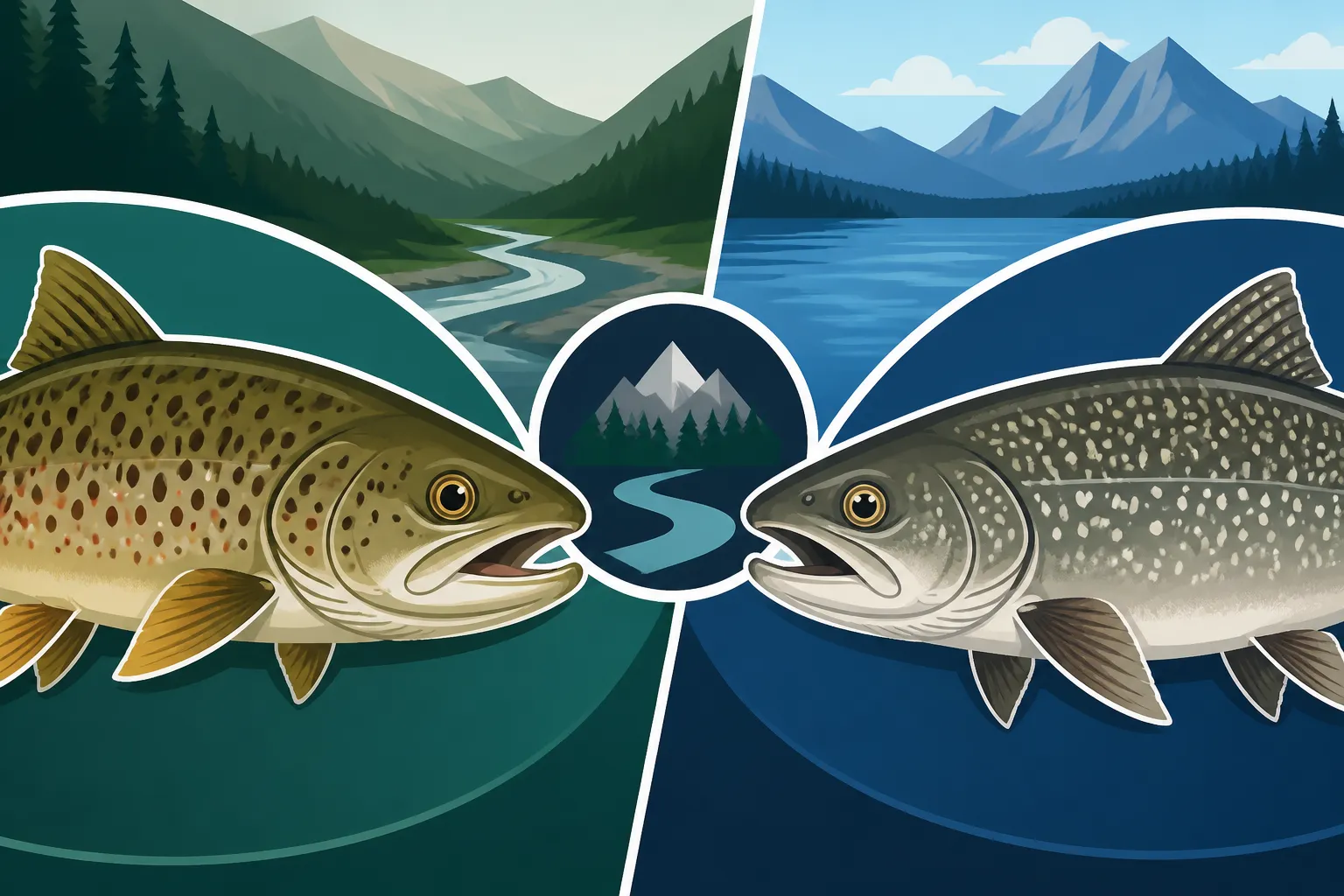
Bull Trout: The classic bull trout coloration is dark olive to brownish-green on their backs, fading to lighter flanks, often cream or white on the belly. What truly sets them apart are their pale, yellowish, or reddish-orange spots on a darker background. Critically, these spots are smaller than the pupil of the eye, and they are never black. You won't typically see spots on the dorsal fin, and the spots on the back and sides don't usually extend onto the caudal (tail) fin. When they are in spawning colours, often in late summer and fall, they can develop incredibly vibrant orange to red bellies and fin tips, especially the lower fins. This transformation is truly breathtaking.
-
Lake Trout: Lake trout, by contrast, tend to have a lighter base color, often olive-green, grey, or even silver, covered in numerous, irregular, and distinctively white or light-coloured spots. These spots are typically larger and more prominent than those on a bull trout, and they extend prominently onto the dorsal, adipose, and caudal fins. The spots can sometimes have a yellowish tint, but they retain that distinct 'worm-like' or irregular, often elongated, shape rather than the crisp, roundness of a bull trout's spots. They almost look like someone splattered white paint all over a darker canvas.
Let's illustrate with a quick comparison table to help solidify these visual cues:
| Feature | Bull Trout | Lake Trout |
|---|---|---|
| Spot Color | Pale (yellow, red, orange) | White or light-coloured |
| Spot Size | Smaller than pupil, roundish | Larger, often irregular/worm-like (vermiculated) |
| Spot Pattern | Distinct, rarely extending to dorsal/tail fins | Extends onto dorsal, adipose, and tail fins |
| Body Color | Dark olive/brownish-green, lighter flanks | Olive-green, grey, silver |
| Spawning Colors | Bright orange/red belly, fin tips | Often darker overall, less vibrant belly colors |
Mouth, Jaw, and Head Shape
Another critical area to examine is the head, particularly the mouth and jaw structure. This requires a careful, but quick, inspection, which is why having the fish in a net right beside your boat or in the shallows is ideal.
-
Bull Trout: Bull trout have a noticeably large, broad head with a very distinct, powerful mouth. The upper jaw typically extends well beyond the eye when the mouth is closed, giving them a formidable, almost 'gator-like' appearance. Their snouts are relatively blunt and robust, perfectly adapted for ambushing and consuming large prey. The sheer size of their mouth compared to their body is a major giveaway.
-
Lake Trout: Lake trout generally have a more pointed snout and a smaller head in proportion to their body size compared to a bull trout. While still possessing a decent-sized mouth, their upper jaw usually extends only to the back of the eye, or just slightly beyond it, and their mouth is not as broad or gape-like. The overall profile of their head is more streamlined, tapering more gently towards the snout.
When you're comparing a mature bull trout to a similarly sized lake trout, the difference in head size and mouth structure can be quite striking. It's an adaptation to their respective diets and hunting styles. If you're struggling to remember these details on the fly, carrying a small, waterproof fishing guide with photos, perhaps one you picked up from Amazon, can be a real lifesaver out on the water.
Tail Fin Shape and Fin Markings
The tail fin, or caudal fin, also provides a strong clue, though it's important to know what you're looking for as fish can have slightly damaged fins from prior encounters.
-
Bull Trout: Bull trout typically have a square or only very slightly forked tail fin. It often appears quite blunt or almost flat at the trailing edge. The spots, as mentioned earlier, generally do not extend onto the tail fin itself, leaving it a more uniform color.
-
Lake Trout: Lake trout, on the other hand, possess a distinctly and deeply forked tail fin. It's often described as crescent-shaped or deeply V-shaped. The spots that are characteristic of lake trout coloration will almost always extend prominently onto this deeply forked tail, making it a key identification feature.
This tail shape difference is a very reliable indicator, particularly on larger fish. A deeply forked tail almost guarantees you're looking at a lake trout, while a square or barely forked tail points strongly towards a bull trout. Remember, even with minor damage, the underlying structure of the fork will usually be apparent. You can learn more about Trout Species Identification Guide for Alberta to refine your skills across all local species.
Body Shape and Proportions
While both are powerful fish, their overall body shape also presents some subtle differences that contribute to identification. These are often secondary clues, but they can support your primary observations.
-
Bull Trout: Bull trout tend to be more thick-bodied and robust, especially towards the head, tapering down to the tail. They have a strong, muscular build, designed for powerful bursts of speed to ambush prey in river currents or along lake drop-offs. Their proportions often give them a more "chunky" or barrel-chested appearance, reflecting their predatory lifestyle.
-
Lake Trout: Lake trout can also be very large and powerful, but they often appear a bit more slender or elongated compared to the bull trout, especially when younger. Their body might appear less dramatically thick at the shoulders and more uniformly torpedo-shaped throughout. This can vary by individual fish and specific lake conditions, but generally, the bull trout carries more overall mass in its forward half.
Habitat and Behavior Clues
Beyond physical appearance, where you catch a fish and how it behaves can offer critical insights into whether it’s a bull trout or a lake trout. These environmental clues are often just as valuable as visual identification, especially when combined with careful observation.
Preferred Water Types and Depths
Both species are cold-water char, but they have different preferences for where in those cold waters they thrive. Understanding these preferences can help you anticipate what you've caught.
-
Bull Trout: Bull trout are famously associated with pristine, clear, cold rivers and streams, especially in mountainous regions like the Crowsnest Pass area or the headwaters of the Bow River. While they do inhabit lakes (often undertaking significant migrations between lakes and tributary streams to spawn), their core habitat requirements emphasize cold, clean, highly oxygenated moving water. When found in lakes, they often stick to cooler, deeper areas but will venture shallower, especially during low light or to chase baitfish into tributary mouths. You'll rarely find a bull trout in a warm, murky prairie pothole lake. Learning about Where bull trout still live wild in Alberta can give you a better idea of their preferred range and critical habitats.
-
Lake Trout: Lake trout are, as their name suggests, primarily lake dwellers. They thrive in large, deep, cold-water lakes, often those with rocky structures, deep drop-offs, and abundant baitfish populations. They are much less common in rivers, except for brief periods during spawning migrations or when moving between connected lake systems. In summer, they retreat to the deepest, coldest parts of the lake, often staying below the thermocline where water temperatures are consistently low. While you might catch a lake trout in shallower waters during spring or fall, their preference is decidedly for the deep, cold, expansive waters of large lakes. Diving into Lake Trout Fishing in Alberta will give you more context on their habitat preferences and how to target them.
So, if you're pulling a fish from a fast-flowing, crystal-clear mountain stream, it's highly likely to be a bull trout (or another native stream trout). If you're jigging or trolling in 80 feet of water in a vast, deep lake like Cold Lake or Lake Athabasca, a lake trout is the more probable catch.
Feeding Habits and Prey
Their physical differences in mouth and body shape are directly related to their feeding habits and the types of prey they target. This too can offer a clue if you observe stomach contents or the location of the strike.
-
Bull Trout: Bull trout are aggressive, opportunistic predators. Their large mouths are perfect for engulfing other fish, which make up a significant portion of their diet. They'll actively hunt smaller fish like juvenile trout, whitefish, and suckers. They're also known to eat insects, leeches, and even small rodents or amphibians if the opportunity arises. In rivers, they often position themselves in prime ambush spots, using current breaks and structure to surprise prey. In lakes, they'll patrol drop-offs and ambush schools of baitfish. They are truly apex predators in their ecosystems, and their diet reflects this.
-
Lake Trout: Lake trout are also formidable predators, but their diet tends to be more focused on a variety of forage fish that inhabit deep, open water, such as cisco (lake herring), whitefish, sculpins, and sometimes even smaller lake trout. In some lakes, they also consume invertebrates like Mysis shrimp. Their feeding often involves cruising deeper waters, using their keen senses to track down schools of bait. While they can be caught on a variety of lures, their preference for deeper, colder water and specific prey often means different angling techniques are employed to target them, such as deep trolling or vertical jigging.
Understanding what these fish eat, and where they eat it, can further help in identification. If you see the fish spitting up a large baitfish upon capture, it leans towards a predatory char, and then you can apply the visual ID tips.
Spawning Differences
The reproductive cycles of these char species also highlight their distinct biological needs and preferred environments. This is more of a background biological clue than an on-the-water identifier, but it reinforces their habitat differences.
-
Bull Trout: Bull trout require very specific conditions for spawning: cold, clear, clean water with adequate gravel substrate, typically in headwater streams. They often undertake significant migrations from lakes into these smaller, often shallower, streams in late summer or early fall. The presence of fine sediments can severely impact their reproductive success, which is a major factor in their threatened status. This need for pristine spawning grounds is a cornerstone of Bull Trout Native Range in Alberta conservation efforts.
-
Lake Trout: Lake trout are unique among char in that they typically spawn in lakes, not rivers. They seek out shallow, rocky shoals or reefs, often at specific depths (e.g., 20-40 feet), in late fall (usually October to December, depending on water temperature and location). The eggs settle into the rock crevices. This distinct spawning behavior is another key indicator of their preference for lake environments over river systems for reproduction. You can check out Lake Trout Spawning Season in Alberta for more details on when and where this happens.
Angler Responsibility and Regulations
Knowing the difference between a bull trout and a lake trout isn't just an academic exercise; it's a critical part of being a responsible and ethical angler in Alberta. The conservation status and regulations surrounding these fish are vastly different, and misidentification can have serious repercussions for both you and the fish populations.
The Importance of Correct Identification
Bull trout are listed as a threatened species in Alberta, which means they are highly protected. The regulations are very strict: with very few exceptions, bull trout are strictly catch and release in Alberta. Why Bull Trout Have a Zero Possession Limit in Alberta details this further and explains the importance of this regulation. Catching and keeping a bull trout, even accidentally, can result in significant fines and penalties. This is why accurate identification on the water is non-negotiable. It's not just about following the rules; it's about contributing to the survival and recovery of a truly iconic native fish population.
Lake trout, while also requiring careful management, generally have more liberal regulations, including specific bag limits and seasons that allow for retention in many areas. For example, Alberta Lake Trout Limit on Cold Lake might allow you to keep a certain number of lake trout, but this is a completely different scenario than with a bull trout. This stark contrast in regulations makes correct identification paramount. Always carry the current Alberta Guide to Sportfishing Regulations, or have the official app handy, and know your fish before you cast. If you're ever in doubt, the safest bet is always to release the fish unharmed. Is Keeping a Bull Trout Ever Legal in Alberta? is an article worth reviewing for its details.
Catch and Release for Bull Trout
Given their threatened status, mastering proper catch and release techniques for bull trout is essential. If you encounter a bull trout, the goal is to minimize stress and ensure its survival after release. Every bull trout released healthy is a victory for conservation.
- Minimize Fight Time: Bring the fish in as quickly as possible without over-stressing it. A prolonged fight can exhaust the fish, reducing its chances of survival.
- Keep it Wet: This is arguably the most crucial step. Do not take the fish out of the water, especially not to take photos. If you must lift it, keep it submerged as much as possible, lift it only for a quick, respectful photo (ideally with the fish partially in the water), and return it to the water immediately.
- Handle Gently: Use wet hands or a knotless rubberized landing net. Avoid touching the gills or eyes, and don't squeeze the fish. Handle it by the tail and support its belly.
- Remove Hook Quickly: Use long-nosed pliers or a de-hooking tool to remove the hook. Consider using barbless hooks, which are often recommended and sometimes mandatory in certain waters (Alberta Barbless Hook Requirement Waters). Many excellent tools are available from fishing retailers, or even through Amazon, that can help with quick and safe hook removal.
- Revive Thoughtfully: Hold the fish gently in the water, facing into a mild current if possible, until it swims away under its own power. Don't simply toss it back; ensure it's strong enough to recover and swim off on its own. It should be able to hold itself upright and react to your touch.
These practices are not just for bull trout; they are good angling ethics for any fish you intend to release. But for bull trout, they are a critical part of their conservation and survival. You can find more comprehensive tips on Bull trout catch and release survival tips.
Gear for Safe Handling
Having the right gear on hand can make all the difference in safely identifying and releasing fish, minimizing stress and injury.
- Knotless Rubberized Landing Net: This is perhaps the most important piece of gear for catch and release, especially for larger fish. A knotless rubberized net protects the fish's delicate slime coat, fins, and scales much better than traditional knotted nylon nets. It also helps prevent hooks from getting tangled, making hook removal quicker. For trout, a net like those you find on Amazon is invaluable.
- Long-Nosed Pliers or Forceps: Essential for quickly and safely removing hooks, especially when a fish has swallowed the bait or the hook is in a tricky spot. The longer reach helps keep your fingers away from sharp teeth and hooks.
- Hook Removal Tool/De-hooker: Some anglers prefer specialized de-hookers, which can minimize handling time even further, particularly for deeply hooked fish (though ideally, you're not deep-hooking fish).
- Camera (Waterproof Recommended): If you absolutely must get a photo, a waterproof camera allows you to take pictures of the fish while it's still partially submerged, reducing air exposure and stress.
- Waterproof Fishing Guide: A small, laminated guide with species identification pictures can be invaluable for a quick reference on the water, especially when you're still learning the nuances. These are often readily available online or in local tackle shops.
Invest in good quality gear for safe handling. It’s a small price to pay for the health of our fisheries. And remember, the joy of fishing in Alberta is as much about protecting these incredible resources as it is about the catch itself. When you learn to identify these magnificent fish correctly, you become a better steward of our wild waters.
Disclaimer
This article is for general informational purposes only and does not constitute professional advice. Laws, prices and regulations vary by location and change over time. Consult a qualified professional for guidance on your specific situation.