Trout Species Identification Guide for Alberta
It's incredibly frustrating when you're out on a beautiful Alberta river or lake, you hook into a gorgeous trout, and then you're left scratching your head, wondering exactly what kind of fish you've just caught. This isn't just a matter of curiosity; knowing your trout species is absolutely critical for adhering to provincial fishing regulations, which can vary wildly from one species to another, especially with our native and protected fish. This comprehensive guide will arm you with the knowledge to confidently identify the diverse array of trout species swimming in Alberta's waters, ensuring you can fish responsibly and enjoy every moment on the water.
The Vibrant Rainbow Trout: A Stream and Lake Favorite
The rainbow trout is arguably one of Alberta's most iconic and widely recognized sport fish. They're adored by anglers for their spirited fights and often stunning coloration. While many of the rainbows you encounter might be stocked, Alberta also boasts healthy populations of wild rainbows in many river systems, particularly in the foothills and mountains.
Spotting a Rainbow: The Signature Stripe and Spots
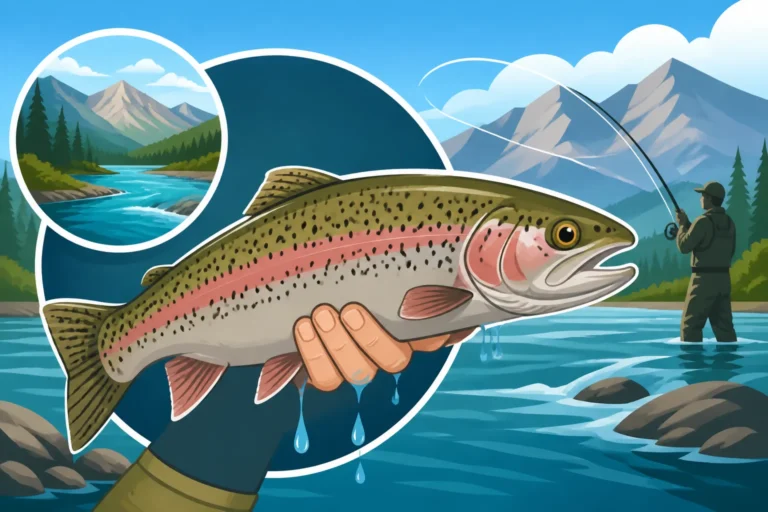
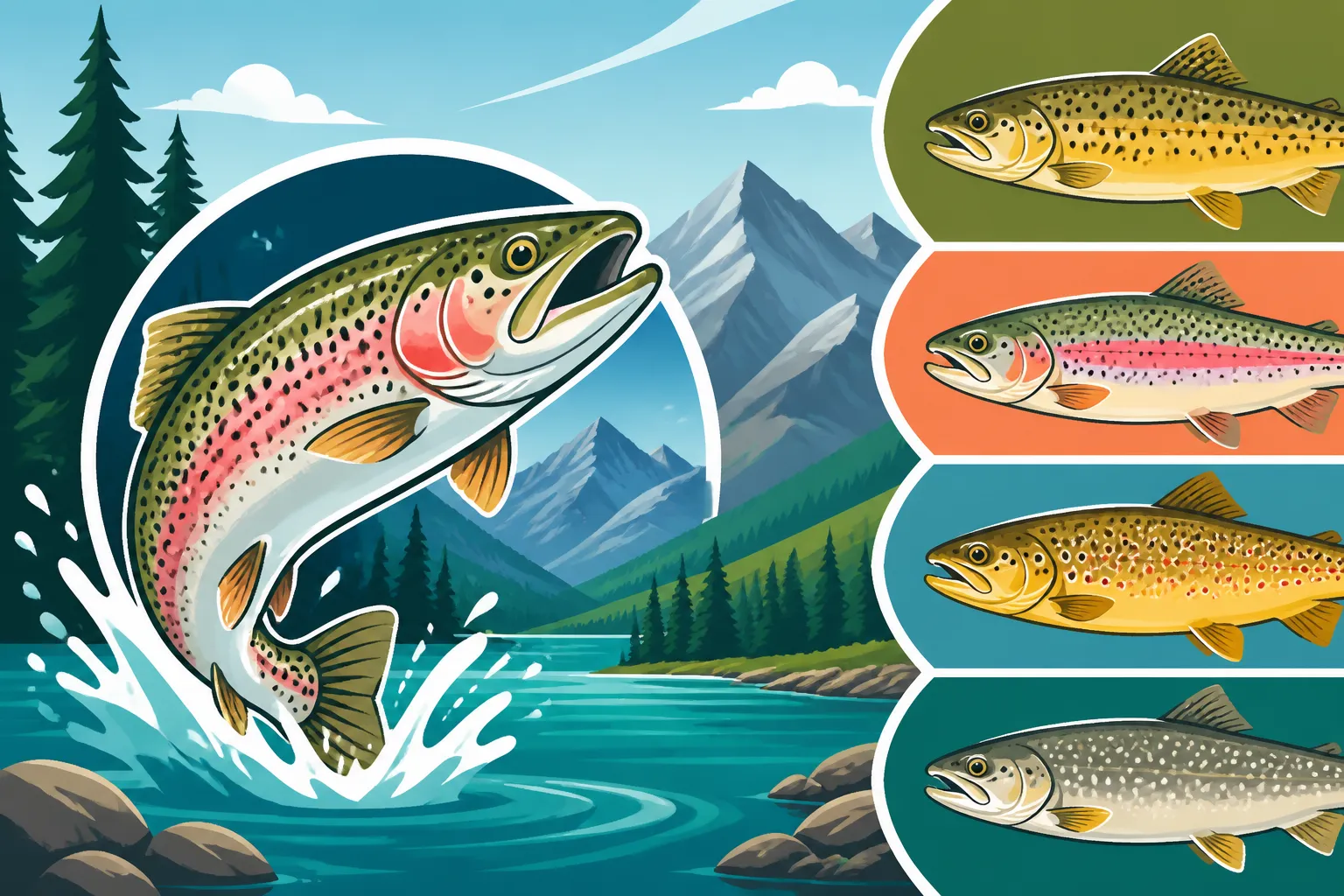
When trying to identify a rainbow trout, the first thing many anglers look for is that distinctive, iridescent pink or red stripe running horizontally along its side, from its gill plate all the way to its tail. This stripe can be incredibly vibrant in some fish, especially during spawning season, or more subtle in others. Beyond the stripe, rainbow trout are typically covered in numerous small, dark spots. These spots extend from their head, across their back, sides, and importantly, onto their dorsal fin and their square-shaped tail fin. The background color of a rainbow can vary from olive green on the back to silvery-white on the belly, often with a brilliant silver sheen on the flanks, making them truly beautiful fish to behold.
Imagine you're casting on the Bow River just outside Calgary, and you bring in a fish that flashes that unmistakable pink stripe. You notice those tiny, pepper-like spots covering its entire body, including its tail. That's your tell-tale sign that you've got a rainbow. Keep an eye out for any red markings under the jaw, as that could indicate a cutthroat, but generally, if it has that broad, pink band and a heavily spotted tail, you're looking at a rainbow. Rainbow Trout Fishing on the Bow River often highlights the incredible populations of these fish in one of Alberta's most famous trout streams.
Where Rainbows Roam: Preferred Habitats
Rainbow trout are incredibly adaptable fish, which is one of the reasons they've been so successfully introduced and managed across Alberta. You'll find them thriving in a wide variety of habitats, from the cold, clear, fast-flowing rivers of the foothills and mountains to many of our cooler, productive lakes and ponds. They generally prefer well-oxygenated water with gravelly bottoms for spawning, and plenty of structure like submerged logs, undercut banks, and large rocks for cover. In lakes, they often cruise open water, chasing baitfish or feeding on insects near the surface.
Think of those pristine mountain streams like the Upper Red Deer River or even many of the stocked ponds across the province – these are prime rainbow territory. They're often stocked in urban ponds to provide accessible fishing opportunities, making them a common catch for both seasoned anglers and beginners alike. Their presence is a good indicator of healthy water quality, though they can tolerate a broader range of conditions than some of our more sensitive native species. For more on where to find them, check out guides on Best Fishing Rivers in Alberta and Best Fishing Lakes in Alberta.
Why Identification Matters: Regulations and Stocking
Correctly identifying a rainbow trout is crucial because while they are a widespread species, regulations still apply. While often quite liberal, possession limits exist, and it's always important to know if you're in a "catch and release only" zone or if specific bait restrictions are in place. Many of Alberta's rainbow populations are sustained through active stocking programs by Alberta Environment and Protected Areas, providing consistent opportunities for anglers.
Failing to properly identify your catch could lead to unknowingly keeping a fish from a species that has a zero possession limit, or exceeding the daily bag limit for rainbows in a specific zone. For example, some special regulation waters might have different size or number limits for stocked versus wild rainbows, making careful identification a must. Always consult the current Alberta Fishing Regulations Explained before heading out.
The Elusive Brown Trout: A Wily Challenger
Brown trout are another highly sought-after species in Alberta, prized for their cunning nature and typically larger size. Originating from Europe, they've established strong wild populations in many of our rivers and some lakes, providing an exciting challenge for even the most experienced anglers.
Brown Trout Distinctions: Haloed Spots and Yellowish Hue
Brown trout can sometimes be mistaken for rainbows, but there are some key differences to look for. While they also have dark spots, brown trout often feature fewer, larger, and more widely spaced spots. Crucially, these spots frequently have a pale "halo" or ring around them, especially on their sides. They also tend to have reddish-orange spots mixed in with the dark ones, particularly along their flanks, which are usually absent on rainbows. The overall coloration is usually a brownish-gold or yellowish-brown, especially on their sides, fading to a creamy white belly and a darker, often olive-green back. Unlike rainbows, brown trout typically have a less spotted or unspotted caudal (tail) fin and no prominent pink or red stripe, though some might display a faint yellowish band.
Imagine you're fly fishing a rocky run on the Crowsnest River, and a solid fish takes your fly. As you bring it in, you notice those distinct, almost coin-sized dark spots, many with a lighter ring around them, and a few reddish dots peppered in. The fish has a beautiful golden-brown hue and a relatively clear tail fin. You've just landed a brown trout, a true trophy in many of Alberta's waters. For more on targeting these fish, check out Brown Trout Fishing in Alberta.
Brown Trout Haunts: Seeking Cover and Colder Waters
Brown trout have a well-deserved reputation for being elusive and wary. They thrive in medium to large rivers with good cover, like deep pools, undercut banks, log jams, and overhanging vegetation. They are often found in slightly warmer water than some of the more cold-loving trout species, though they still prefer cool, well-oxygenated environments. Brown trout are opportunistic feeders, often active during lower light conditions, like dawn and dusk, preying on insects, crustaceans, and often other fish. This predatory nature contributes to their larger average size.
You'll often find brown trout making their homes in the deeper, more complex sections of rivers like the Oldman or portions of the Bow, especially where there's overhead cover to ambush prey. They're not always found in the fastest currents; rather, they prefer holding spots adjacent to the main current where food is delivered to them with minimal effort. Their preference for cover makes them a challenge to spot and catch, demanding stealth and precise presentations from anglers.
The Importance of Knowing Your Browns: Management and Size
Like rainbows, brown trout populations in Alberta are a mix of wild, self-sustaining fish and stocked individuals. Many rivers have very specific regulations regarding size limits and possession limits for brown trout, often designed to protect larger, trophy-sized fish that contribute to the gene pool. Due to their tendency to grow quite large, catching a truly big brown trout is often a lifetime achievement for many anglers.
Incorrect identification could lead you to keep an undersized fish or, conversely, release a fish you were legally allowed to keep if you misidentified it as a protected species. Always check the specific regulations for the waterbody you are fishing. Understanding the habits and preferred habitats of brown trout also makes you a more effective angler and helps you target them responsibly.
Alberta's Native Cutthroat Trout: A Mountain Gem
The cutthroat trout is a true native of western North America, and in Alberta, we are primarily concerned with the Westslope Cutthroat and, in some areas, the Yellowstone Cutthroat. These beautiful fish are a testament to the pristine mountain environments they inhabit.
Identifying the Cutthroat: The Telling Red Slash
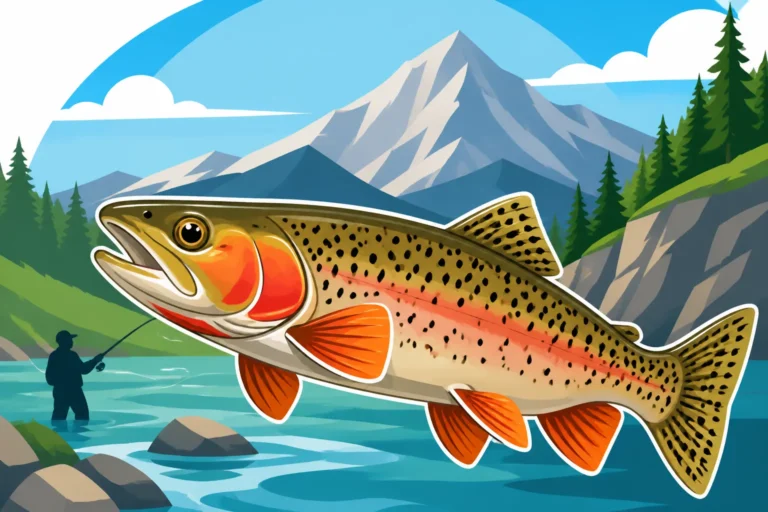
The most distinctive and defining characteristic of a cutthroat trout is the bright red or orange slash marks found in the fold of skin under their jaw, on either side. This "cut" is where they get their name and is almost always present, though its intensity can vary. Aside from this unique feature, cutthroat trout typically have small, dark spots, often concentrated more towards their tail section and along their back, with fewer spots on their lower sides. Their body coloration can range from silvery-gray to olive-green on the back, with yellowish to orange hues on their sides and belly, especially in their mountain stream habitats. Their tail fin is usually square or slightly forked.
Imagine hiking into a remote alpine lake in Kananaskis Country. You hook into a feisty fish, and as you carefully cradle it, you see those unmistakable fiery red slashes under its jaw. This confirms you've encountered a native cutthroat. The spots might be small and concentrated towards the rear, and the overall color might be more muted, but those slashes are the dead giveaway. Remember, Cutthroat Trout Native Range in Alberta often means fragile ecosystems.
Home of the Cutthroat: High-Altitude Streams and Lakes
Cutthroat trout are quintessential mountain fish. They thrive in the cold, clear, high-elevation streams, rivers, and alpine lakes of Alberta's Rocky Mountains and foothills. They require pristine, well-oxygenated water, often with gravel or cobble substrates for spawning and plenty of natural cover. Their distribution is often limited by barriers like waterfalls, and they are highly sensitive to habitat degradation and competition from non-native species like brook trout and rainbow trout.
You'll typically find cutthroat in the headwaters of river systems, often in areas that require a bit of a hike to access. They are a treasure of our wilderness areas, often willing to rise to a dry fly in these secluded environments. Their presence is a strong indicator of an undisturbed, healthy aquatic ecosystem. Anglers often purchase specific gear, like lightweight hiking rods and durable waders, many options available on Amazon, to reach these remote cutthroat strongholds.
Protecting a Native: Special Rules for Cutthroat
The Westslope Cutthroat Trout is a species of concern in Alberta, and conservation efforts are paramount. Consequently, specific and often very strict regulations are in place to protect these native populations. Many waters that hold cutthroat trout are designated as "catch and release only" and may have additional restrictions such as "single barbless hook" rules. It is absolutely vital to correctly identify cutthroat trout and understand the regulations in their specific habitats.
Mistaking a cutthroat for a rainbow or brown trout and inadvertently keeping it could lead to significant penalties and, more importantly, contribute to the decline of a vulnerable native species. These regulations are in place for a reason: to help these beautiful fish survive and thrive for future generations. Knowing your Alberta Bag and Possession Limits by Species is non-negotiable when targeting these sensitive fish.
The Protected Bull Trout: Alberta's Apex River Predator
The bull trout holds a special place in the hearts of Albertan anglers – a native species, an apex predator, and a true indicator of pristine wilderness. Unfortunately, their populations have faced challenges, leading to very stringent protection measures.
Bull Trout Features: Large Head, Pale Spots, and No Red
Bull trout are truly distinct among Alberta's trout species. One of their most noticeable features is their large, broad, somewhat flattened head and mouth, giving them a formidable appearance. Their body coloration typically ranges from olive-green to bluish-gray on the back, fading to white on the belly. Instead of dark spots, bull trout have light, pale spots – often yellowish, greenish, or even pinkish – scattered on their dark background. These spots are usually larger than the spots on a rainbow or brown trout. Another key identifying feature is the absence of any red or orange slash marks under the jaw (like a cutthroat) and no dark spots on the dorsal fin. Their fins may have white leading edges. Their tail is usually only slightly forked or square.
Imagine you're fishing a deep pool in a cold mountain stream, and you hook into a powerful fish with a surprisingly large head. As you gently bring it to hand, you observe that its dark body is adorned with pale, almost glowing spots, and there's not a hint of red under its jaw or dark spots on its dorsal fin. You've just encountered a bull trout, and the first thought in your mind should be safe release. This is critical for Alberta Bull Trout Zero Possession Rule.
Where Bull Trout Hide: Deep, Cold, Pristine Waters
Bull trout are incredibly sensitive to habitat changes and require some of the coldest, cleanest, and most pristine waters in Alberta. They are found predominantly in the headwater streams, rivers, and deep, cold lakes of the Rocky Mountains and foothills. They are highly dependent on complex riverine habitats, including deep pools, large woody debris, and intact riparian zones that provide shade and stable water temperatures. They are also migratory, often moving between spawning grounds in small streams and overwintering or feeding areas in larger rivers or lakes.
You'll find bull trout in systems like the Highwood, the Ram, and specific stretches of the Kananaskis River, often requiring a serious hike or backcountry trip to reach their preferred habitats. Their presence is a strong indicator of a truly healthy and undisturbed watershed. Losing bull trout from a system signals significant environmental degradation. Learning more about Bull Trout: Alberta's Threatened Native Fish highlights their ecological importance.
Critical Identification: The Zero Possession Rule
This is perhaps the most important rule for any angler in Alberta to know: bull trout have a zero possession limit across the entire province. This means if you catch a bull trout, you must immediately release it, unharmed, back into the water. Identifying bull trout correctly is not just a recommendation; it's a legal requirement with serious implications if ignored.
Because of their threatened status, any misidentification leading to the retention of a bull trout is a serious offense. This is why careful identification is paramount. Take a moment, check for the pale spots, the large head, and the lack of red slashes. If there's any doubt, err on the side of caution and release the fish immediately. Many anglers carry a small, waterproof fish identification card, easily found on Amazon, to help with quick, in-the-field decisions. Specific techniques for safe handling are crucial for these protected fish; many guides emphasize Alberta Catch and Release Only Waters best practices.
The Deep-Dwelling Lake Trout: A Cold-Water Giant
While colloquially referred to as "trout," lake trout are actually members of the char genus, more closely related to bull trout and brook trout than to rainbow or brown trout. Nevertheless, they are a magnificent and highly sought-after game fish in Alberta's deeper, colder lakes.
Lake Trout Characteristics: Forked Tail and Irregular Spots
Lake trout are often quite distinct from their river-dwelling cousins. One of the most prominent features is their deeply forked tail, which is much more pronounced than the square or slightly forked tails of other trout species. Their body coloration is highly variable depending on habitat and diet, but typically ranges from dark green or grey to brownish, with distinctive light, irregular, worm-like spots or patterns (known as vermiculations) all over their back and sides, extending onto their dorsal and caudal fins. There are no red or pink markings. Their bellies are usually pale. They also tend to have a larger, more robust body shape than river trout.
Imagine you're jigging or trolling deep on a lake like Cold Lake, and you bring up a truly heavy fish. As it comes closer, you see that unmistakable deeply forked tail. Its body is covered in those unique, squiggly light spots, not uniform dots. That's a lake trout, a powerful fish built for life in the depths. Lake Trout Fishing in Alberta is a specialized pursuit often requiring specific gear.
Living in the Depths: Lake Trout's Preferred Environment
True to their name, lake trout are almost exclusively found in large, deep, cold, and clear lakes. They are highly dependent on cold water, typically remaining in depths where water temperatures are consistently low, often moving shallower only during cooler periods or for spawning. They are long-lived and slow-growing fish, capable of reaching impressive sizes, sometimes weighing well over 20 pounds in Alberta's prime lake trout fisheries. They are primarily piscivorous, meaning they feed on other fish, making them apex predators in their lake ecosystems.
You'll find our biggest lake trout in iconic Alberta waters such as Cold Lake, Lake Athabasca, and other deep, glacial lakes in the mountains and northern regions. These lakes provide the deep, cold water and abundant forage base that lake trout need to thrive and grow to trophy sizes. Anglers often employ specialized techniques like deep trolling, vertical jigging, and using sonar to locate these fish in their deep-water haunts.
Angling for Lakers: Size, Limits, and Conservation
Lake trout are highly prized by anglers, but their slow growth rate and sensitivity to overfishing mean that careful management and adherence to regulations are essential. Regulations for lake trout often include specific size limits, slot limits (where only fish within a certain size range can be kept), and reduced possession limits to protect the breeding stock and trophy-sized fish.
Knowing the difference between a lake trout and, say, a bull trout (also a char, but with a different body shape and different regulations) is important. While both are char, their specific regulations can differ significantly. Always double-check the sportfishing regulations for the specific lake you are fishing to ensure you understand the current limits for Alberta Lake Trout Limit on Cold Lake or other lake trout waters.
Other Trout and Trout-like Species to Know
While the major four – Rainbow, Brown, Cutthroat, and Lake Trout – cover most of what you'll encounter, Alberta has a few other species that are often grouped with trout or are hybrids that present their own unique identification challenges.
Brook Trout: An Invasive, Yet Common, Catch
Brook trout, another member of the char family, are often stocked and have established wild populations in many of Alberta's smaller, colder streams, rivers, and lakes. They are easily identifiable by their striking coloration: a dark olive-green back with light, worm-like patterns (vermiculations) and distinct red or orange spots, often with blue halos, along their sides. Their lower fins (pectoral, pelvic, and anal) are typically orange-red with a prominent white leading edge, followed by a black stripe. Their tail is square. While beautiful, brook trout are an invasive species in many Alberta waters, competing with and displacing native species like cutthroat and bull trout.
You'll often find brook trout in small, brushy creeks in the foothills, or in some of the smaller lakes and ponds that might be less accessible to larger, more popular species. While they can be a fun catch, particularly for beginners, many regulations in Alberta encourage the harvest of brook trout where they are deemed invasive to help protect native fish populations.
Hybrid and Stocked Trout: Splake, Tiger, and Golden Trout
Alberta also stocks a few hybrid or specially managed trout-like species that anglers might encounter:
-
Splake: This is a hybrid cross between a male brook trout and a female lake trout. They are stocked in some Alberta lakes to provide unique angling opportunities. Identifying a splake can be tricky as they often display a mix of characteristics from both parents. Look for a moderately forked tail (less forked than a lake trout, more than a brook trout), light spots on a darker background (like a lake trout), but also often some of the red spots with blue halos and white leading fin edges of a brook trout. Their vermiculations might be less defined than a brook trout's. They are also often found in deeper lake environments, similar to lake trout but can tolerate slightly warmer water.
-
Tiger Trout: Another fascinating hybrid, the tiger trout, is a sterile cross between a brown trout and a brook trout. They are stocked in a limited number of lakes, primarily for recreational angling and to control undesirable fish populations as they are highly predatory. Their most striking feature is their unique vermiculated pattern that resembles a tiger's stripes or marble pattern, running all along their body. This pattern is usually very pronounced and distinct from the spots of their parent species. They also usually have a relatively square tail. If you catch a fish with intricate, maze-like patterns instead of distinct spots, it's likely a tiger trout.
-
Golden Trout: While not widely distributed, some very specific high alpine lakes in Alberta are stocked with golden trout, a true bucket-list species for many hikers and anglers. These fish are renowned for their brilliant golden-yellow coloration, often with red or orange stripes along their sides and darker olive spots on their back. They typically have a more streamlined body than other trout. Catching a golden trout usually involves significant effort, often a multi-day hike into remote wilderness areas.
These stocked hybrids and unique species are introduced for specific management goals or to enhance angling diversity. Understanding their distinct features helps you appreciate the variety in Alberta's fisheries. Remember, for any unfamiliar species, a quick check of an identification guide or the MyWildAlberta portal is always a good idea.
Key Identification Features At-a-Glance
To help solidify your identification skills, here's a quick comparison of the main trout and char species you're likely to encounter in Alberta:
| Feature | Rainbow Trout | Brown Trout | Cutthroat Trout | Bull Trout | Lake Trout | Brook Trout |
|---|---|---|---|---|---|---|
| Side Stripe | Prominent pink/red iridescent stripe | Absent or faint yellowish | Absent | Absent | Absent | Absent |
| Body Spots | Numerous small, dark spots all over | Fewer, larger dark spots, often with light halos; some red/orange spots | Small, dark spots, concentrated towards tail | Large, pale (yellow, green, pink) spots on dark background | Light, irregular, worm-like (vermiculations) spots | Light worm-like (vermiculations); red/orange spots with blue halos |
| Jaw Markings | Absent | Absent | Red/orange slash under jaw (distinct "cut") | Absent | Absent | Absent |
| Tail Fin | Square to slightly forked, often heavily spotted | Square to slightly forked, usually unspotted | Square to slightly forked, often spotted | Square to slightly forked | Deeply forked, often spotted/vermiculated | Square, sometimes slightly notched |
| Dorsal Fin | Heavily spotted | Spots present | Spots present | Unspotted | Heavily spotted/vermiculated | Heavily vermiculated |
| Native to AB | No (introduced) | No (introduced) | Yes | Yes | Yes | No (introduced) |
| Special Regs | General limits | General limits (often size/slot) | Often Catch & Release Only | ZERO POSSESSION | Size/slot limits (often specific to lakes) | Often encouraged harvest (invasive) |
This table provides a handy reference, but remember that individual fish can vary in appearance based on age, diet, and specific habitat. The more time you spend on the water, observing and handling different species carefully, the better your identification skills will become.
Knowing your trout species is more than just a fun fact; it's a fundamental part of being a responsible and ethical angler in Alberta. It allows you to appreciate the unique biology of each fish and ensures that you comply with regulations designed to protect our precious aquatic resources. So next time you're out there, take a moment to truly observe your catch before releasing it or placing it on your stringer. You'll not only become a better angler but also a better steward of Alberta's incredible fishing heritage.
Disclaimer
This article is for general informational purposes only and does not constitute professional advice. Laws, prices and regulations vary by location and change over time. Consult a qualified professional for guidance on your specific situation.