Alberta Barbless Hook Requirement Waters
The frustration of heading out for a peaceful day on Alberta's stunning waters, only to realize you might be breaking the rules without even knowing it, is something many of us have experienced. It's especially tricky when it comes to specific gear requirements, like barbless hooks. These aren't universal, and understanding precisely which rivers, lakes, and even specific sections of water demand them can feel like navigating a maze. This comprehensive guide is here to untangle the complexities of Alberta barbless hook requirement waters, helping you stay compliant, protect our precious fisheries, and enjoy your time on the water with confidence.
Understanding Alberta's Barbless Hook Mandate
The concept of barbless hooks might seem like a minor detail, but it's a cornerstone of responsible angling and crucial for the long-term health of Alberta's fish populations. It's all about minimizing harm, especially when you're practicing catch-and-release.
Why Barbless Hooks Matter for Conservation
Think about the delicate nature of a fish's mouth, gills, and even its eyes. A barbed hook, by design, is meant to hold securely, which is great for landing fish but terrible for their well-being if you intend to release them. When a barbed hook punctures a fish, especially in sensitive areas, it often tears more tissue upon removal. This damage can lead to infection, impede their ability to feed, or even result in death long after they've swum away from your net.
This is particularly critical in Alberta's renowned trout streams and lakes, where native populations like bull trout and cutthroat trout are either threatened or require careful management. These fish are often caught multiple times throughout their lives, especially in popular waters like the Bow River. If every encounter resulted in significant injury, their survival rates would plummet. Barbless hooks reduce the physical trauma dramatically. They allow for quicker, cleaner extractions, minimizing handling time and the stress on the fish. It's a fundamental part of the "leave no trace" ethos applied directly to the fish themselves. When you're carefully releasing a beautiful native rainbow trout back into a pristine mountain stream, knowing that your barbless hook allowed for a smooth, swift release provides a deep sense of satisfaction that goes beyond just the catch.
The Legal Definition of a Barbless Hook
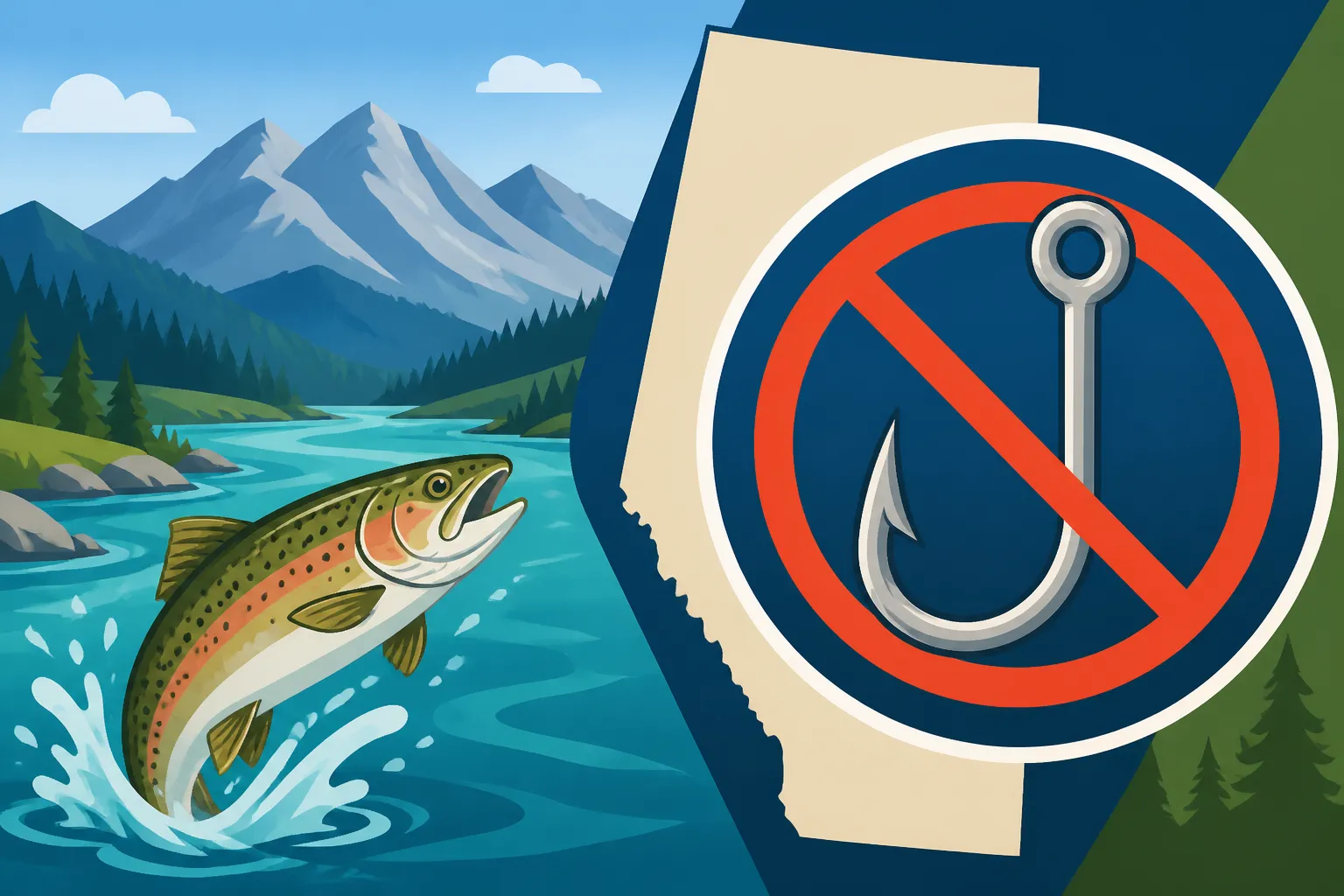
So, what exactly is a barbless hook in the eyes of Alberta's regulations? It's simpler than you might think. A barbless hook is essentially a hook that does not have the small, pointed projection (the barb) that extends backward from the point. This barb is what helps prevent the hook from easily slipping out once a fish is hooked.
For a hook to be considered legal in barbless-only waters, it must either be manufactured without a barb (which many hooks are these days, especially those designed for fly fishing or catch-and-release) or, more commonly, have its barb completely pinched down. "Completely pinched down" means that the barb is pressed flat against the shank of the hook, leaving no discernible protrusion that could catch or tear flesh. You shouldn't be able to feel any resistance when you run your finger along the shank towards the point. Many anglers simply use a pair of needle-nose pliers or a dedicated crimping tool to achieve this. It’s a quick and easy process to convert most barbed hooks to barbless. Before you even cast your line, it's wise to do a quick visual and tactile check on every hook you plan to use. Don't assume a new lure comes with barbless hooks; always check. Missing this simple step could lead to a hefty fine and, more importantly, unnecessary harm to the fish.
Key Waters with Mandatory Barbless Hook Rules
Alberta is home to a vast and diverse network of fishing opportunities, but certain areas, particularly those with fragile or highly valued fisheries, have specific regulations like the mandatory use of barbless hooks. It’s imperative to know these locations before you head out.
Iconic Trout Rivers and Streams
When we talk about barbless hook requirements, Alberta's world-class trout rivers often come to mind first. These are the lifeblood of our province's fly-fishing and spin-fishing culture, and they are rigorously protected. The Bow River, especially its renowned sections near Calgary, is a prime example. Anglers flock to the Bow for its incredible rainbow and brown trout fishing, and throughout much of its productive waters, barbless hooks are non-negotiable. Similarly, the Crowsnest River, a stunning freestone stream in the southwest, demands barbless hooks to protect its wild cutthroat and rainbow trout populations. Further north, rivers like the Oldman River and Highwood River, particularly in their upper reaches and headwaters, also fall under these strict regulations.
These rivers support robust, wild trout populations that are highly susceptible to handling stress. The consistent pressure from anglers means that individual fish might be caught multiple times in a season. By mandating barbless hooks, the province aims to maximize the survival rate of released fish, ensuring these valuable populations continue to thrive for future generations. Whether you're drift fishing a nymph under an indicator or casting spinners from the bank, if you're on one of these iconic rivers, double-checking your hooks is a must. Failure to do so isn't just a regulatory oversight; it's a disservice to the resource we all cherish. Many anglers will purchase specific hooks, often found on platforms like Amazon, that are factory-made barbless, saving them the hassle of pinching barbs on every single lure or fly.
Special Regulation Lakes and Ponds
While rivers get a lot of attention, it's a common mistake to assume that barbless hook requirements only apply to flowing waters. Many special regulation lakes and ponds, often those that are heavily stocked or contain particularly sensitive species, also mandate barbless hooks. These can be trickier to keep track of because they might be smaller, less prominent water bodies, or even specific sections of larger lakes. For instance, some of the smaller, stocked ponds managed by Alberta Environment and Protected Areas might have these rules to ensure the survival of newly introduced trout. You might think you're just heading to a local pond for some casual fishing, but without checking the regulations, you could be in violation.
A good example could be a small, easily accessible lake within a provincial park, perhaps one designated as "catch-and-release only" for certain species. Even if it's not a famous trout river, the intent behind such a designation is clearly conservation, and barbless hooks are an integral part of that. It's easy to overlook these details, especially if you're accustomed to fishing larger, less restricted waters. Always consult the specific regulations for each body of water you intend to fish. A small, seemingly insignificant pond could have just as stringent rules as a renowned river. This careful attention to detail is why understanding how to read the Alberta Guide to Sportfishing Regulations is so important.
Navigating the Alberta Guide to Sportfishing Regulations
The Alberta Guide to Sportfishing Regulations is your bible when it comes to understanding what you can and cannot do on the water. It’s a dense document, but knowing how to navigate it is crucial for every angler.
Locating Barbless Hook Information by Zone
Alberta’s fishing regulations are organized by management zones, reflecting the different ecosystems and fish populations across the province. You’ll find categories like the Eastern Slopes, Prairie, Northern Boreal, and Central zones. Within each of these major zones, specific lakes and rivers are listed, each with its own set of rules. To find barbless hook requirements, you need to first identify the correct zone for your chosen fishing spot.
Once you’ve located the appropriate zone, scan through the list of water bodies. Most barbless hook requirements will be listed under the "Special Regulations" section for that particular lake or river. These sections often detail specific restrictions on gear, bait, and possession limits that deviate from the general zonal rules. For example, if you're planning a trip to the Crowsnest River, you'd look under the Eastern Slopes Zone (ES1, ES2, etc., depending on the specific section of the river). Under the Crowsnest River entry, you'll see a clear note about barbless hooks, often alongside other regulations like bait bans or catch-and-release mandates. The online version of the guide, available through the MyWildAlberta portal, is incredibly user-friendly and allows you to search by water body, making it much easier to pinpoint these specific rules. There's also an Alberta Fishing Regulations App and Zone Lookup, Explained, which can be an absolute lifesaver when you're on the go and need to quickly verify a rule.
Interpreting Regulation Codes and Symbols
The guide sometimes uses specific codes or symbols to convey information efficiently, and understanding these is key to avoiding misinterpretations. While "Barbless Hooks Only" is usually spelled out clearly, sometimes the requirement is implied through other restrictions. For instance, waters designated as "Catch and Release Only Waters" often implicitly require barbless hooks because the entire premise is to ensure fish survival. Similarly, "Flies Only" or "Lures Only" restrictions might also be accompanied by a barbless hook mandate, as these are often associated with conservation-focused fisheries.
It's not enough to just glance at the daily limit. You need to read all the associated regulations for a specific water body. Look for keywords like "terminal tackle restrictions," "gear restrictions," or simply "hooks." Pay close attention to any symbols or footnotes that might point to additional rules. A common mistake is to assume that if a river is open to spin fishing, it means all tackle is fair game. But many trout streams allow spin fishing with lures, provided those lures have barbless hooks. Always cross-reference. If you're planning to fish for bull trout, for example, which generally have a zero possession rule, the emphasis on catch and release strongly implies the need for barbless hooks to maximize their chances of survival. This deep dive into the regulations, while sometimes tedious, ensures you're fishing legally and ethically. For more details on understanding the nuances, check out guides on Reading the Alberta Guide to Sportfishing Regulations.
Gear and Best Practices for Barbless Hook Fishing
Transitioning to barbless hook fishing doesn't require a complete overhaul of your tackle box, but it does necessitate a mindful approach to your gear and how you interact with the fish.
Converting Your Tackle to Barbless
The easiest way to ensure compliance is to convert your existing barbed hooks. This is incredibly simple: grab a pair of needle-nose pliers, or even better, a pair of fishing forceps. Take the hook, position the pliers over the barb, and squeeze firmly until the barb is completely flattened against the shank. Run your finger over it to ensure there are no sharp edges or protrusions. This process works for most single hooks, treble hooks on lures, and even jig heads. For treble hooks, you'll need to pinch down each point individually. It might take a minute, but it's a small investment in time for the health of the fish and to avoid a fine.
Alternatively, you can purchase factory-made barbless hooks. Many manufacturers, recognizing the growing trend in catch-and-release, offer barbless options across a range of hook styles and sizes. When shopping for new lures or hooks, look for "barbless" or "single barbless hook" in the product description. You can often find a great selection of these on platforms like Amazon, making it easy to stock up on compliant gear without having to pinch every single barb. Brands like Gamakatsu and Mustad offer excellent barbless hooks that are durable and sharp. Swapping out barbed treble hooks on your favourite crankbaits or spoons for barbless single hooks is also a common practice that many anglers adopt. This makes unhooking much easier and safer for the fish, and sometimes, for you too!
Responsible Angling: Minimizing Stress on Fish
Beyond the hook itself, practicing responsible angling techniques is paramount, especially in barbless-only waters. Your goal should always be to minimize stress on the fish.
- Handle with Care: Always wet your hands before touching a fish. Dry hands can remove the protective slime coat, leaving the fish vulnerable to disease. Avoid squeezing the fish, particularly around its gills or belly. If you're fishing for species like Bull Trout, which are highly sensitive, extra care is critical. Read more on How to Catch Bull Trout and Release Them Safely.
- Quick Release: The less time a fish spends out of water, the better. Have your tools ready – forceps or a de-hooker – to remove the hook quickly. Barbless hooks usually slide out with minimal effort, often allowing you to release the fish without even taking it out of the water if you're skilled.
- Use Proper Gear: Employing a rod and reel combination that is appropriately sized for the fish you're targeting allows you to land them efficiently. A prolonged fight can exhaust a fish, diminishing its chances of survival post-release. For instance, if you're fishing for large trout on the Bow River, using an adequately powerful fly rod or spinning setup is advisable. Check out Best Gear for Bow River Fly Fishing for some recommendations.
- Landing Nets: Use a rubberized or knotless net. These nets are much gentler on fish scales and fins compared to knotted nylon nets, which can strip slime and cause damage.
- Revive if Necessary: If a fish seems sluggish after being released, gently hold it upright in the water, facing into the current, until it regains its strength and swims away on its own.
Adopting these practices, in conjunction with using barbless hooks, demonstrates a true commitment to conservation and ensures that Alberta's fisheries remain vibrant and healthy.
Common Mistakes and How to Avoid Them
Even the most experienced anglers can occasionally make mistakes when it comes to regulations, especially with the intricate rules surrounding barbless hook waters. Being aware of common pitfalls can help you avoid unnecessary issues.
Overlooking "Hidden" Barbless Requirements
One of the most frequent errors anglers make is assuming that a general regulation for a larger body of water applies to all its tributaries or specific sections. For instance, a major river might have a section that allows barbed hooks for certain species, but a smaller feeder creek flowing into it, perhaps a crucial spawning ground, might have a strict "barbless hooks only" rule. It’s easy to wade a short distance upstream into one of these restricted areas without realizing you've crossed an invisible regulatory line.
Another scenario is when lakes have different rules for different areas, or a small, seemingly insignificant pond is actually a designated "special regulation" water body. Anglers often consult the general provincial regulations and then extrapolate, rather than meticulously checking each specific water body they intend to fish. This oversight can lead to accidental non-compliance. Always take the time to check the exact regulations for each specific water you plan to fish, even if it's just a small unnamed stream you stumble upon while exploring. The Alberta Guide to Sportfishing Regulations is clear about these distinctions, often delineating sections of rivers or specific smaller bodies of water. Don't rely on assumptions or word-of-mouth; verify everything before you cast.
The Consequences of Non-Compliance
Fishing with barbed hooks in regulated barbless-only waters in Alberta is not a minor infraction; it carries significant consequences. Conservation Officers actively patrol these sensitive areas, and they are trained to identify non-compliant tackle. The penalties can range from substantial fines, often hundreds of dollars, to the confiscation of your gear (which could include expensive rods, reels, and tackle) and even the suspension of your fishing license. Ignorance of the law is never an acceptable defense.
Imagine planning a multi-day fishing trip to a remote section of the Highwood River, only to have your trip cut short and your gear seized because you forgot to pinch down the barbs on a few lures. Not only is it a financial hit, but it also impacts your reputation as a responsible angler. More importantly, it undermines the very conservation efforts that these regulations are designed to protect. Every fish injured by a barbed hook in a protected area is a step backward for the health of that fishery. By consciously adhering to the barbless hook rule, you're not just avoiding a penalty; you're actively contributing to the sustainability of Alberta's incredible fishing heritage. Always ensure you have your Alberta Fishing License Guide for 2026 readily available and understand its contents, especially the Alberta Fishing Regulations Explained.
Here's a quick reference table for some common barbless hook waters and their primary target species in Alberta:
| Water Body / Section | Primary Species Targeted (often catch & release) | General Location | Specific Notes (check guide for full details) |
|---|---|---|---|
| Bow River (various sections) | Rainbow Trout, Brown Trout | Near Calgary | Often catch & release only for trout; bait ban also common. |
| Crowsnest River (various sections) | Cutthroat Trout, Rainbow Trout | Southwestern Alberta | Heavy emphasis on wild trout conservation; bait ban in many areas. |
| Oldman River (upper reaches) | Bull Trout, Cutthroat Trout, Rainbow Trout | Southwestern Alberta foothills | Critical habitat for native trout; often paired with bait restrictions. |
| Highwood River (upper reaches) | Bull Trout, Cutthroat Trout, Rainbow Trout | Kananaskis Country | Pristine mountain stream; important for native trout recovery. |
| Livingstone River | Bull Trout, Cutthroat Trout | Southwestern Alberta foothills | Highly sensitive bull trout habitat. |
| Sheep River (upper reaches) | Cutthroat Trout, Bull Trout | Kananaskis Country | Another key native trout stream; often bait ban. |
| Elbow River (upper reaches) | Cutthroat Trout, Rainbow Trout | Kananaskis Country | Important for wild trout. |
| Specific Stocked Ponds (check guide) | Rainbow Trout | Various (often urban/provincial parks) | Typically for catch & release programs or sensitive environments. |
| Other designated "Catch & Release Only" | Various Trout, Mountain Whitefish | Province-wide (check individual water bodies) | Always implies strict handling and gear, often including barbless hooks. |
Please remember, this table is a general guide and does not replace consulting the current Alberta Guide to Sportfishing Regulations for the specific water body and section you plan to fish. Regulations can change annually.
Disclaimer
The information provided in this guide is for general informational purposes only and is not intended as legal advice. Fishing regulations in Alberta are subject to change, and it is the sole responsibility of each angler to consult the most current official Alberta Guide to Sportfishing Regulations before engaging in any fishing activity. Non-compliance with regulations can result in fines, penalties, and gear confiscation. Always fish responsibly and legally.