How to tell a cutthroat from a rainbow trout
It can be incredibly frustrating to be out on the water, reeling in a beautiful trout, only to look at it and wonder, "Is this a cutthroat, or is it a rainbow?" For anglers in Alberta, this isn't just a matter of curiosity; it can have real implications for regulations and conservation. This guide is going to walk you through the key differences, helping you confidently identify these two magnificent trout species when you're casting your line.
Why Telling Trout Apart Can Be a Real Head-Scratcher
Let's be honest, at first glance, many trout can look quite similar, especially to the untrained eye. Rainbow and cutthroat trout, in particular, share a lot of common ground. They're both gorgeous, aggressive fighters, and often inhabit similar waters. This overlap in appearance and habitat is precisely why so many anglers struggle with identification. It's not just about getting it "right" for bragging rights; understanding which fish you've caught is vital for adhering to Alberta's sometimes very specific fishing regulations, which can vary greatly by species and even subspecies.
The Blending of Species: Hybrids and Stocking
One of the biggest reasons for confusion is the existence of cutbows – a hybrid between cutthroat and rainbow trout. These hybrids occur naturally where the ranges of the two species overlap, but they can also result from stocking practices. A cutbow often displays a mix of characteristics from both parents, making a definitive identification a true challenge. Imagine reeling in a fish that has a hint of a red slash but also a strong pink band; that's the kind of genetic mash-up that keeps us guessing! Recognizing these hybrids is even more complex, but generally, if you see a mix of features, you might be looking at a cutbow.
Beyond hybrids, Alberta's extensive stocking programs for rainbow trout mean they are found in a vast array of waters, sometimes even alongside native cutthroat populations. This widespread distribution increases the chances of encountering both species in the same water body, further complicating on-the-spot identification. When fish are young, their markings can be less pronounced, making initial identification even trickier. It's like trying to tell two puppies apart when they're both fluffy and small – sometimes you need to wait for them to grow into their distinctive traits.
Habitat Nuances and General Appearance
While both are trout, their preferred natural habitats can offer subtle clues. Native cutthroat trout, particularly the Westslope subspecies, tend to thrive in colder, clearer, and often higher-elevation mountain streams and headwater lakes, especially in the western parts of Alberta. Cutthroat Trout Native Range in Alberta often aligns with more pristine, untouched environments. Rainbow trout, while also loving cold, clear water, are incredibly adaptable and are found across a broader range of Alberta's rivers and lakes, including many stocked ponds and the larger, more robust rivers like the Bow. Rainbow Trout Habits on the Bow River differ in many ways from the habits of cutthroat in tiny mountain creeks.
The overall colour of a fish can also vary significantly based on its environment, diet, and age, further obscuring identification. A rainbow trout from a dark, tannin-stained lake might appear much darker than one from a clear, gravel-bottomed stream. The same applies to cutthroat. So, while general appearance offers hints, relying solely on colour can be misleading. Always consider the full spectrum of characteristics to make a solid identification.
The Key Identifying Features of a Cutthroat Trout
When you've got a trout in hand and suspect it might be a cutthroat, there are a few tell-tale signs that scream "cutthroat!" These features are often subtle, but once you know what to look for, they become much clearer. Think of it like learning to spot a specific constellation in a sky full of stars; initially, it's just a jumble, but with a guide, patterns emerge.
The Iconic Red "Cut" Markings
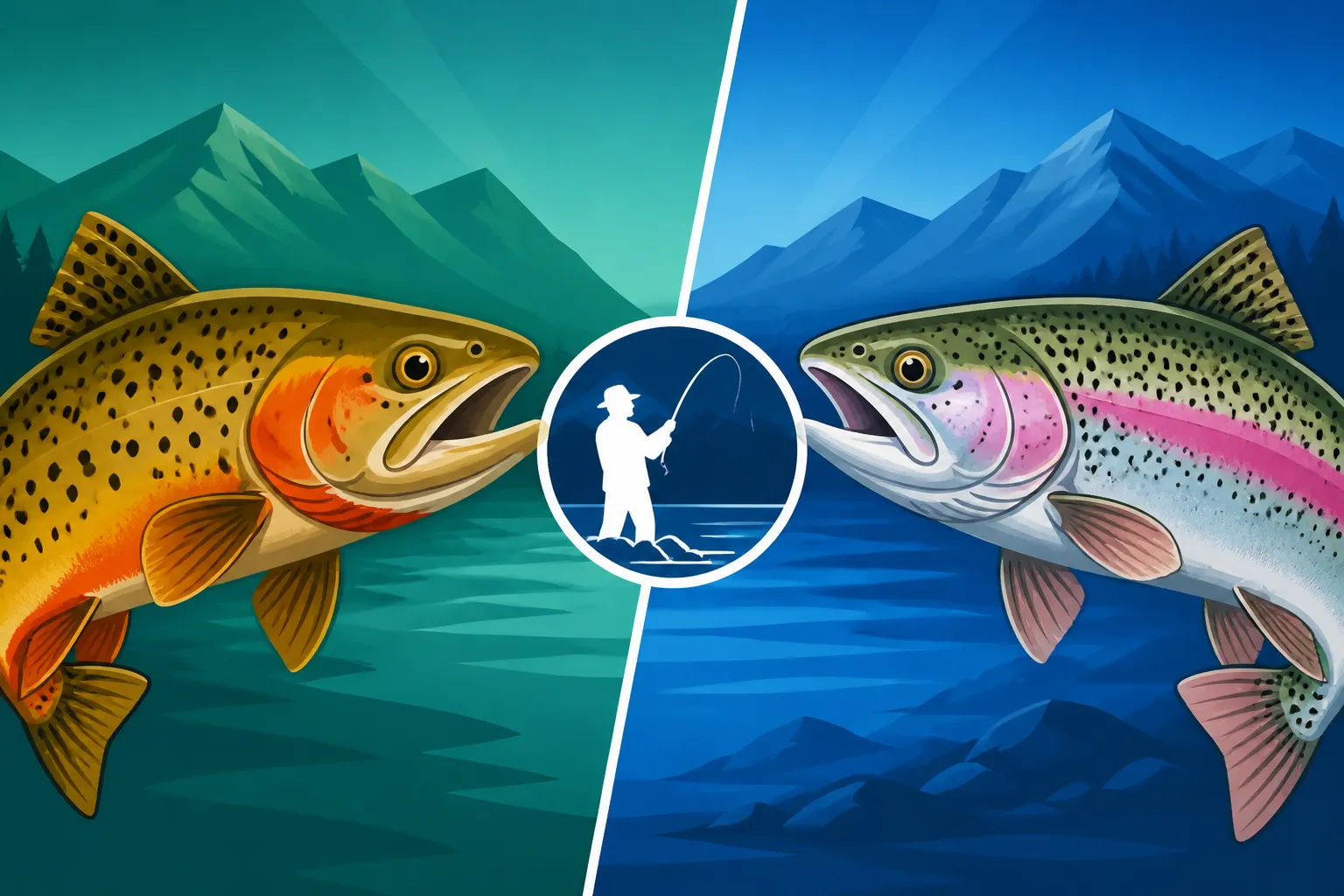
The absolute hallmark of a cutthroat trout, and the source of its name, is the distinctive red, orange, or sometimes yellow "slash" marks found in the fold of the lower jaw. It's usually two thin lines, one on each side, located in the membrane between the gill plate and the lower jawbone. This mark can range from a vibrant, almost neon orange to a faint, dusky red, and its intensity can vary with the fish's mood, health, and even the water conditions.
To spot this, you might need to gently lift the gill plate or carefully open the mouth slightly to get a good look at the underside of the jaw. It's crucial not to mistake a splash of blood from a hook injury for these natural markings. The cutthroat slash is usually on the skin and membrane itself, not a wound. If you’re ever in doubt, get a close-up photo if you can safely do so, and zoom in to verify. Many anglers even carry a small, portable magnifying glass (you can find handy, waterproof options on Amazon) for these moments of precise identification.
Spotting Patterns: Small, Densely Packed Spots
Another major differentiator is the spotting pattern. Cutthroat trout typically have smaller, more numerous, and often irregularly shaped spots compared to rainbow trout. These spots are also frequently concentrated more heavily towards the tail, often covering the caudal (tail) fin completely. You might notice fewer spots, or even very sparse spotting, on the front half of the fish's body, and then a sudden explosion of tiny dots as you move towards the caudal peduncle and tail.
Imagine sprinkling pepper on a plate, then shaking a lot more pepper on one end. That's often how a cutthroat's spots appear. The entire tail fin will often look speckled, almost as if it's been dusted with fine black granules. Compare this to the more evenly distributed, larger spots of a rainbow, and you'll start to see the pattern. It truly takes a keen eye and sometimes a good comparison, especially when dealing with smaller fish where these patterns are less pronounced. For more details on this elusive native, check out What westslope cutthroat trout look like.
Jawline and Overall Body Shape
While less definitive and sometimes harder to judge accurately, the jawline can offer another clue. Cutthroat trout often have a maxilla (the upper jaw bone) that extends noticeably beyond the rear edge of the eye, giving them a slightly larger-mouthed appearance. Rainbow trout, by contrast, typically have a maxilla that ends at or just before the rear edge of the eye. This isn't always a foolproof method, as individual variations exist, but it's a good secondary characteristic to observe.
In terms of overall body shape, cutthroat trout can sometimes appear slightly more slender or "torpedo-shaped" than the often more robust or "football-shaped" rainbow trout, especially those from heavily stocked or well-fed environments. Again, this is a subtle difference and can be influenced by the fish's age, diet, and specific habitat. The tail fin of a cutthroat is also often described as squarish or only slightly forked, in contrast to the more pronounced fork often seen in some rainbow trout.
The Distinctive Traits of a Rainbow Trout
Rainbow trout are perhaps the most recognizable trout species in Alberta, thanks to their widespread distribution and often vibrant colours. But even with their fame, distinguishing them from a closely related cutthroat can still present a challenge. Knowing their distinctive traits helps solidify the identification process.
The Iridescent Lateral Stripe
The most iconic feature of a rainbow trout, and the one that gives them their common name, is the broad, often iridescent pink or reddish band that runs horizontally along their lateral line. This "rainbow" stripe is usually quite prominent, especially on larger, healthy fish, and can shimmer with various colours when light hits it at different angles. It’s like a vibrant watercolour streak painted right down their side.
This stripe can vary in intensity from a deep, rosy red to a lighter pink or even a subtle peach colour. In some environments, or on certain strains of rainbow trout, this band might be less vivid, perhaps just a faint blush. However, it is almost always present to some degree, distinguishing it from the often plainer flanks of a cutthroat. It’s rare for a true cutthroat to display such a strong, iridescent lateral band. If you see that unmistakable streak of colour, you're almost certainly holding a rainbow. For those eager to catch them, Rainbow Trout Fishing on the Bow River offers excellent opportunities.
Uniform Spotting and Head Shape
Unlike the cutthroat's tail-heavy spotting, rainbow trout typically have spots that are more evenly distributed across their entire body, from head to tail, including the dorsal fin and sometimes even the gill plates. These spots are generally larger, rounder, and more uniformly shaped than those of a cutthroat. Imagine evenly scattered polka dots rather than a concentrated cluster of small specks. Their tail fin usually has spots, but they aren't as dense or as completely covering as they often are on a cutthroat.
The head of a rainbow trout can also appear slightly blunter or more rounded than a cutthroat's, particularly around the snout. As mentioned before, their jaw typically doesn't extend past the eye. While these are subtle observations, taking them in conjunction with the prominent lateral stripe and uniform spotting will give you a very strong indication that you’ve caught a rainbow.
Gill Plate and Fin Markings
Pay attention to the gill plate on a rainbow trout; it often has an almost silvery or brassy sheen, sometimes with fine, dark spots. While not exclusive to rainbows, it's another piece of the puzzle. Their fins, especially the dorsal and caudal fins, will generally have clear, well-defined spots that continue the pattern from the body. These spots typically do not merge or become extremely dense on the fin itself, maintaining their distinct, round shape.
The overall impression of a rainbow trout is one of consistency in its markings – the spots are orderly, the stripe is clear. This contrasts with the more "wild" and sometimes almost "disheveled" appearance of a cutthroat, with its concentrated tail spots and the distinctive "cut" mark. For a general overview of trout, consider reviewing a Trout Species Identification Guide for Alberta.
Practical Tips for On-the-Water Identification
Being able to tell these fish apart in a guidebook is one thing, but doing it quickly and accurately when a lively fish is in your net (or worse, trying to flop out!) is another challenge entirely. Here are some practical tips to help you make those crucial identifications at the water's edge.
The "Gentle Hold and Observe" Method
First and foremost, handling fish properly is key to ensuring their survival, especially if you're practicing catch and release. Always wet your hands before touching a fish to protect its slime coat. When you net a fish you suspect might be a cutthroat or a rainbow, quickly but gently bring it into a safe position where you can observe its features without stressing it excessively. A good, knotless rubber net is invaluable here.
Hold the fish horizontally, supporting its belly, and take a quick look. Start by scanning for the most obvious signs: the red slash under the jaw for a cutthroat, or the prominent pink band for a rainbow. If the fish is thrashing too much, try to calm it for a few seconds in the net in the water. Remember, the goal is quick identification and release, so avoid prolonged handling. If you're really stumped, take a clear photo of the jaw area and the body, then release the fish. You can study the photos later with your field guide or even an app. Many anglers rely on gear that makes this easier, and you can find many helpful items like measuring mats and knotless nets on Amazon.
Utilizing Field Guides and Apps
Never underestimate the power of a good visual reference. Consider carrying a small, waterproof field guide specific to Alberta fish species. Many excellent guides are available, and a quick search on Amazon will show you a variety of pocket-sized options perfect for tucking into your tackle box. These guides often feature detailed illustrations or photographs that highlight the key distinguishing features.
Beyond physical books, there are also numerous fishing apps available for smartphones that can help with fish identification. Some even allow you to upload a photo and offer potential matches. While these apps can be a helpful tool, always cross-reference with other sources if conservation regulations are critical. No app is perfect, but they can definitely assist when you’re scratching your head.
Observe the Habitat for Clues
While not a definitive identification method, paying attention to the specific water body you're fishing can offer strong hints. As mentioned, native cutthroat trout are often found in very specific, pristine mountain streams and lakes in certain parts of Alberta. If you're fishing a small, cold, high-elevation stream that is known for its native trout populations, your chances of encountering a cutthroat are higher. Cutthroat Trout in Alberta's Mountain Streams are truly special.
Conversely, if you're on a large, heavily stocked lake or a major prairie river, it's more probable that you'll encounter a rainbow trout. However, remember that many waters can hold both, especially where stocking efforts have expanded rainbow populations into historically cutthroat territory. So, use habitat as a clue, but never as the sole piece of evidence for identification.
Why Accurate Identification Matters
Understanding the difference between a cutthroat and a rainbow trout goes far beyond simple curiosity. In Alberta, accurate identification is crucial for a number of reasons, impacting both conservation efforts and your compliance with fishing regulations. Misidentification can lead to unintended consequences, from fines to inadvertently harming vulnerable fish populations.
Adhering to Alberta's Fishing Regulations
Alberta's fishing regulations are incredibly detailed and often species-specific. For instance, some waters may have a zero-possession limit for certain trout species, or different slot limits and bag limits depending on whether it's a rainbow or a cutthroat. Westslope Cutthroat Trout, being a native and sometimes sensitive species, often have stricter regulations to protect their populations. You might find "catch and release only" rules for cutthroat in some areas, while rainbows in the same water might have a limited harvest opportunity.
Imagine being on a river where the Alberta Bull Trout Zero Possession Rule is in effect, but there are also rainbows present. Mistaking a bull trout for a rainbow, or a cutthroat for a rainbow, could lead to serious legal trouble. Always consult the current Alberta Guide to Sportfishing Regulations before you head out. These regulations are designed to sustain fish populations, and as responsible anglers, it's our duty to understand and follow them. This understanding ensures that we can continue to enjoy Alberta's incredible fishing for years to come.
Conservation and Protecting Native Species
Beyond legal compliance, accurate identification plays a vital role in conservation. Native species like the Westslope Cutthroat Trout face various pressures, including habitat loss, competition with non-native species, and hybridization with rainbow trout. By correctly identifying and releasing native cutthroat, especially in sensitive waters, you contribute directly to the species' survival.
When anglers are knowledgeable, they become stewards of the resource. They can report unusual catches, participate in citizen science efforts, and advocate for responsible fishing practices. Understanding which fish populations are thriving and which are struggling starts with knowing what you're catching. This dedication to conservation helps ensure that Alberta’s diverse fish populations remain healthy and resilient. Endangered and Protected Fish Species in Alberta highlights other species that require extra care and identification knowledge.
Personal Satisfaction and Deeper Understanding
Finally, there's the immense personal satisfaction that comes from truly knowing the fish you've caught. It deepens your connection to the natural world and enhances your overall fishing experience. Instead of just "a trout," you're appreciating a specific species with its own unique characteristics, habits, and ecological role.
This deeper understanding can also improve your fishing success. Knowing which species are in a particular water body, and understanding their preferences, helps you select the right lures, baits, and techniques. Are you targeting Cutthroat Trout in Alberta's Mountain Streams or casting for a feisty rainbow on the Bow? The approach might be different. This added layer of knowledge transforms fishing from a simple pastime into a rich, engaging, and highly rewarding pursuit.
Comparing Cutthroat and Rainbow Trout: A Quick Reference Guide
To help you visualize the differences, here's a handy comparison table summarizing the key distinguishing features.
| Feature | Cutthroat Trout | Rainbow Trout |
|---|---|---|
| Red Slash | Yes, typically a red/orange mark in the jaw fold. | No, generally absent. |
| Spotting Pattern | Numerous, small, often irregular spots, concentrated on tail and caudal fin. | Larger, rounder, more uniform spots, evenly distributed over body and fins. |
| Lateral Stripe | Generally absent or very faint; not iridescent. | Prominent, iridescent pink/red band along the lateral line. |
| Maxilla (Jaw) | Often extends beyond the rear edge of the eye. | Typically ends at or before the rear edge of the eye. |
| Overall Color | Variable, often olive, gold, or grey; can be darker. | Variable, often silvery, green, or brassy with iridescent sheen. |
| Habitat Tendency | Native to colder, clearer, often higher elevation mountain streams and headwaters. | Widespread; adaptable to many rivers, lakes, and stocked ponds. |
| Tail Fin | Often squarish or only slightly forked, densely spotted. | Usually moderately forked, with more evenly distributed spots. |
Armed with this knowledge, your next fishing trip in Alberta should be filled with more confidence and a deeper appreciation for the amazing trout swimming in our waters. Happy fishing!
Disclaimer
This article is for general informational purposes only and does not constitute professional advice. Laws, prices and regulations vary by location and change over time. Consult a qualified professional for guidance on your specific situation.