Best tackle organizer for a small boat
Anyone who's spent a day on the water in a small boat knows the struggle: you're trying to land that trophy walleye, but your pliers are buried under a tangled mess of lures, or your spare reel is rattling dangerously close to the edge. Small boat fishing is incredible for getting into those tight spots, but it comes with the unique challenge of limited space. This guide is here to help you navigate that clutter, offering practical advice and solutions for finding the best tackle organizer to keep your gear safe, accessible, and your small boat ready for action.
Why a Dedicated Tackle Organizer is a Game Changer for Small Boats
When you're out on an Alberta lake or river in a smaller craft, whether it's a jon boat, a canoe, or a fishing kayak, every square inch counts. It's not just about neatness; it's about efficiency, safety, and prolonging the life of your precious fishing gear. A proper tackle organizer transforms your fishing experience from a chaotic scramble to a smooth operation, allowing you to focus on what really matters: catching fish.
The Frustration of Clutter and Chaos
Let's be honest, we've all been there. You're trying to quickly change lures because the bite just turned on, and you spend precious minutes digging through a messy heap of tackle, lines, and tools. Hooks get snagged on other gear, plastics melt together in the sun, and that one specific jig you know you need seems to vanish into the abyss. This isn't just annoying; it can cost you fish and certainly saps the joy out of your trip.
In a small boat, this clutter is magnified. A stray hook can easily snag your clothing or even worse, your skin. A loose rod can be stepped on, or a valuable reel could take an unplanned swim. The sheer frustration of a disorganized boat can overshadow the beauty of Alberta Crown land camping and fishing access permit rules or the excitement of a morning bite. It's a real problem that many small boat anglers grapple with, feeling like there's no good solution.
Maximizing Limited Space
Small boats, by their very nature, are limited in storage. You don't have built-in compartments or vast deck space. This means every storage solution needs to be incredibly efficient and smart. A well-chosen tackle organizer acts like a mini command center, consolidating various items into a compact, easily managed unit. Instead of gear spread haphazardly, everything has its designated spot.
Think about the difference between having your soft plastics in one bag, your crankbaits in another, and your tools floating around, versus having everything neatly categorized within one system. This not only keeps your boat tidier but also frees up floor space, reducing trip hazards and making movement around your boat much safer and more comfortable. For specific fishing challenges, like navigating high water spring conditions on a river, having an organized boat is even more critical for safety.
Protecting Your Investment
Fishing tackle isn't cheap, especially when you start investing in quality rods, reels, and specialized lures for species like pike or walleye. Throwing them all together in a generic container or loose on the boat floor is a recipe for damage. Hooks get bent, lures chip, and sensitive electronics can be exposed to moisture and impact.
A good tackle organizer provides a protective environment for your gear. Individual compartments prevent items from knocking against each other, and sturdy construction, often with water-resistant features, shields everything from spray, rain, and accidental bumps. Considering how much we spend on our passion, protecting that investment with a dedicated organizer is just plain smart. This foresight can save you money in the long run by preventing costly replacements of damaged gear.
Key Features to Look for in a Small Boat Tackle Organizer
Choosing the right tackle organizer isn't about picking the fanciest or most expensive option. It's about finding one that perfectly matches your small boat's dimensions, your fishing style, and the types of gear you typically carry. Let's break down the essential features you should consider to make an informed decision and avoid buyer's remorse.
Size and Footprint Considerations
This is probably the most crucial factor for a small boat. You need an organizer that holds enough gear but doesn't eat up all your valuable deck space. Before you even start looking, take some measurements in your boat. Where do you envision placing the organizer? Under a seat? In the bow? Next to you in a kayak? Knowing the maximum length, width, and height will narrow down your options significantly.
Consider whether you need a single, larger organizer or if multiple smaller ones would work better for your boat's layout. Sometimes, two slim organizers that fit neatly along the gunwales are more practical than one bulky box. Think about its shape too; rectangular designs often fit better in tight corners or against bulkheads than round or oddly shaped ones. Remember, the goal is organization, not adding more clutter in the form of an oversized box.
Durability and Weather Resistance
Alberta weather can be unpredictable, going from sunny and calm to windy and rainy in a heartbeat. Your tackle organizer needs to withstand these conditions. Look for robust materials like thick, impact-resistant plastic or heavy-duty denier fabric for soft-sided options. Sturdy latches are vital on hard boxes; flimsy plastic ones can break easily or pop open, spilling your meticulously arranged gear.
Water resistance is another key factor. While few organizers are truly submersible, many offer features like O-ring seals or hydrophobic coatings that prevent spray and light rain from saturating your tackle. This is especially important for protecting metal lures, hooks, and anything susceptible to rust. If you're frequently fishing on open water like Lesser Slave Lake, where spray is common, this feature becomes a non-negotiable.
Internal Customization and Compartments
Every angler's tackle collection is unique, so a "one-size-fits-all" internal layout rarely works. The best organizers offer a high degree of customization. Look for adjustable dividers that allow you to create compartments of varying sizes for different lures, baits, and tools. This flexibility ensures that everything from your best walleye lures for Lesser Slave Lake in summer to your delicate fly patterns for the Bow River has a snug, secure fit.
Many organizers incorporate multiple layers or trays, which are fantastic for keeping different categories of tackle separate. Clear lids on trays are also a huge plus, allowing you to quickly identify contents without opening every single compartment. Some organizers even feature specialized slots for pliers, scissors, or small tackle boxes, keeping these frequently used items within easy reach. The more tailored you can make the interior, the more efficient your fishing will be.
Accessibility and Portability
When you're actively fishing, you need to be able to access your gear quickly and efficiently. Consider whether a top-loading or front-loading design works best for your boat and how you plan to store it. Top-loading boxes are great if you have direct access from above, while front-loading bags with multiple pockets might be better if the organizer will be tucked under a bench.
Carrying handles and shoulder straps are important for getting your gear to and from the boat, especially if you're frequently moving between vehicles and launching points. If you plan to take your organizer out of the boat for cleaning or restocking, its portability becomes even more critical. Think about the overall weight when fully loaded – you don't want something so heavy it's a chore to move. Many anglers find the range of tackle bags and boxes available at retailers like Bass Pro Shops or online through Amazon offer plenty of options for both accessibility and portability.
Types of Tackle Organizers Best Suited for Small Boats
The world of tackle organizers is vast, but for small boats, certain types truly shine due to their design, functionality, and ability to maximize limited space. Each has its own set of advantages and disadvantages, making the "best" choice highly dependent on your specific small boat and fishing habits.
Soft-Sided Tackle Bags
Soft-sided tackle bags have become incredibly popular, especially among kayak anglers, float tube users, and those with small jon boats. Their primary advantage is flexibility. Made from durable fabrics like heavy-duty polyester or ballistic nylon, they often feature multiple external pockets, mesh pouches, and internal slots for utility boxes. This makes them highly adaptable to different tackle loads.
One of the biggest benefits of a soft-sided bag is its ability to conform to irregular spaces. Unlike rigid hard boxes, a soft bag can sometimes be squeezed into a tight nook or tucked under a console. They also tend to be lighter when empty and often come with comfortable shoulder straps, making them easy to transport from your vehicle to the boat. Brands like Plano, Berkley, and Bass Pro Shops offer a huge variety in this category. However, their flexibility can also be a drawback; they typically offer less rigid protection against crushing impacts and are generally less water-resistant than their hard-sided counterparts, although many now feature waterproof bottoms and rain flaps. They're excellent for kayak fishing techniques for Alberta lakes or quick trips on smaller streams.
Hard-Sided Tackle Boxes
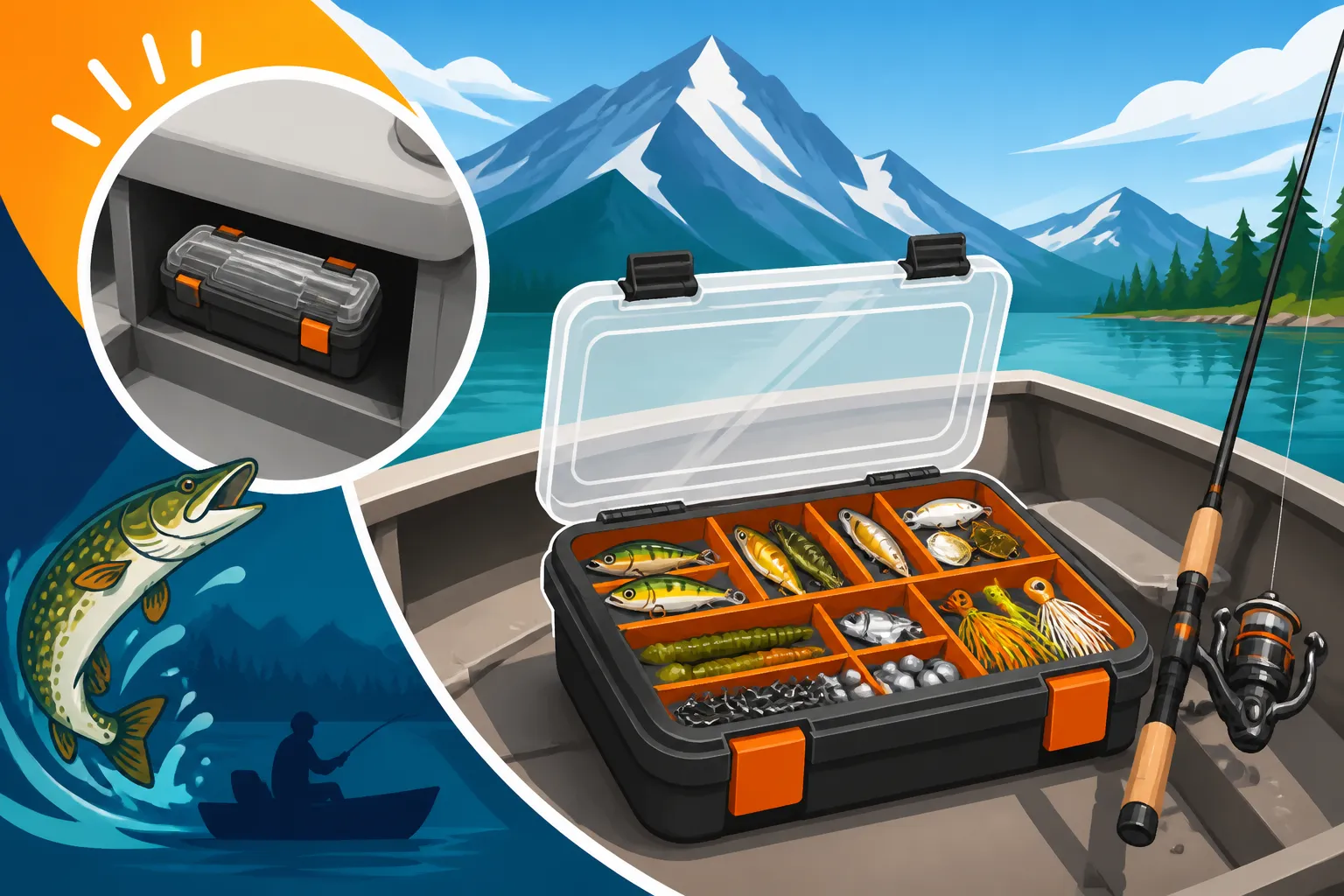
The classic hard-sided tackle box is a perennial favorite for a reason: durability and robust protection. Constructed from tough plastics, these boxes are designed to withstand drops, bumps, and often feature tight seals to keep moisture out. They provide excellent structural integrity, protecting delicate lures and reels from being crushed or damaged. Many modern hard boxes, like those from Plano or Flambeau, incorporate advanced latching systems and O-ring seals, making them highly water-resistant.
While less flexible in shape than soft bags, hard-sided boxes offer predictable internal organization, often with multiple cantilevered trays that fan out for easy access to different compartments. They are ideal for storing bulkier items, tools, and a wide array of hard baits. For anglers running small aluminum boats or tiller boats where gear might get jostled around, the superior protection of a hard-sided box is a huge advantage. They might not be as comfortable to carry long distances, but for sheer protection and straightforward internal organization, they are hard to beat, especially when fishing for hard-hitting species like Northern Pike Fishing in Alberta.
Specialty Storage Solutions
Beyond the main categories, there are several specialized organizers that can be invaluable for small boat anglers.
- Dedicated Tray Systems: Many anglers use individual utility trays (like those made by Plano or Flambeau) within a larger bag or box, or even loose in a boat's built-in compartments. These clear plastic trays are fantastic for organizing specific types of lures, terminal tackle, or soft plastics. They come in various sizes and internal layouts, often with adjustable dividers. The beauty of these is their modularity; you can grab just the trays you need for a specific trip, say Best Baits for Walleye on Lesser Slave Lake, and leave the rest at home. You can find these easily on Amazon in multi-packs.
- Bucket Organizers/Caddies: A simple 5-gallon bucket can be transformed into a highly effective tackle organizer with a bucket caddy insert. These fabric inserts slip inside the bucket, creating pockets and dividers for tools, bait containers, and small tackle boxes. This is an incredibly cost-effective and space-efficient solution, especially for smaller boats where you might already be using buckets for livewells or anchor storage. Some caddies are designed to fit around the outside of a bucket as well, keeping the internal bucket free for other uses.
- Boat Caddies/Mountable Organizers: Some smaller boats or kayaks can benefit from permanently mounted or semi-permanent caddies. These might be suction-cup mounted tool holders for pliers and scissors, or small gear caddies that attach to rails or sit in specific flush mounts. They are excellent for keeping frequently used items instantly accessible without adding clutter to the main deck space.
| Feature | Soft-Sided Tackle Bag | Hard-Sided Tackle Box | Utility Tray System | Bucket Caddy / Organizer |
|---|---|---|---|---|
| Durability | Moderate (fabric can tear, less crush protection) | High (impact-resistant plastic, good crush protection) | Moderate (plastic trays can crack if stepped on/dropped) | High (bucket provides main protection) |
| Water Resistance | Low to Moderate (often water-resistant bottoms, zippers) | High (O-ring seals, tight latches) | Low (trays themselves are not sealed) | Moderate (depends on bucket lid, caddy material) |
| Flexibility | High (conforms to spaces, many external pockets) | Low (rigid shape) | High (modular, fits into various containers) | High (adapts a common bucket) |
| Accessibility | Good (zippers, multiple pockets, main compartment) | Good (cantilever trays, clear lids on some) | Excellent (clear lids, easy to grab specific trays) | Good (open top, external pockets) |
| Portability | Excellent (lightweight, shoulder straps) | Moderate (can be heavy when loaded, often just a handle) | Excellent (light, easy to carry individual trays) | Moderate (bucket can be awkward to carry) |
| Customization | High (adjustable dividers, many pocket options) | Moderate (fixed tray layouts, some adjustable dividers) | High (various sizes, divider options) | Moderate (fixed pockets on caddy) |
| Ideal For | Kayaks, canoes, jon boats, bank fishing | Aluminum boats, tiller boats, general boat use | Supplementing other storage, organizing specific tackle | Cost-effective, simple boats, multi-purpose storage |
Integrating Your Organizer into Your Small Boat Setup
Once you've chosen the perfect tackle organizer, the next step is to integrate it seamlessly into your small boat. This isn't just about throwing it in; it's about strategic placement and smart securing to enhance your fishing experience. A well-integrated organizer becomes an extension of your boat, making every trip more enjoyable and productive.
Strategic Placement for Easy Access
The "best" spot for your tackle organizer isn't universal; it depends on your boat's layout and your fishing style. For instance, in a kayak, you might want a slim soft-sided bag that fits snugly behind your seat or in the bow well, accessible with a simple reach. In a jon boat, it could be under a bench seat, or a dedicated area near your casting deck. The key is to keep frequently used items within arm's reach without creating obstacles.
Consider the flow of movement in your boat. If you often stand to fish, avoid placing the organizer where you'd trip over it. If you have specific areas for different activities – casting, bait prep, net retrieval – try to position your organizer near the most relevant zone. For example, if you're fly fishing for trout on the Bow River from a drift boat, your fly boxes need to be instantly accessible in the stripping basket or a small caddy near your feet, not buried in a large bag at the stern.
Securing Your Tackle Organizer
This is paramount for safety and preventing lost gear. Small boats are prone to rocking, sudden stops, and rough water. An unsecured tackle organizer can slide around, tip over, or even get ejected from the boat entirely. This is where a little ingenuity goes a long way.
Simple solutions include non-slip mats (like those used in car trunks) placed under your organizer to prevent sliding. Bungee cords are incredibly versatile; you can run them over the top of a hard box or through the handles of a soft bag and hook them to cleats, seat frames, or other attachment points. For kayaks, dedicated deck straps or bungee systems are often built-in. Some organizers even have D-rings or loops that allow you to clip them directly to your boat. Taking a few minutes to secure your gear before heading out, especially when navigating larger bodies of water, can save you a lot of headache and potentially expensive losses.
Organizing for Specific Fishing Trips
One of the great advantages of a good tackle organizer is its adaptability. Instead of always carrying every single piece of tackle you own, you can tailor your loadout for specific trips. Are you headed to a stocked pond for panfish fishing in Alberta? You likely don't need your heavy-duty pike leaders. Planning a day on the Crowsnest River for cutthroat trout in Alberta's mountain streams? Pack your small dry flies, nymphs, and light leaders, leaving the big crankbaits at home.
This "trip-specific" organization not only lightens your load but also makes it easier to find what you need when you're on the water. Many anglers use modular systems, where they have multiple utility trays, each pre-loaded for a different species or fishing technique (e.g., one tray for walleye jigs, another for pike spoons, another for trout spinners). You can easily swap these trays in and out of your main tackle bag or box as needed. This flexibility ensures you're always prepared without being overburdened, which is a common problem when fishing in tight quarters.
Disclaimer
This article is for general informational purposes only and does not constitute professional advice. Laws, prices and regulations vary by location and change over time. Consult a qualified professional for guidance on your specific situation.