Best fluorocarbon leader for clear water walleye
There's nothing quite like the thrill of chasing walleye in Alberta's stunning, clear lakes and rivers. But let's be honest, those beautiful, pristine waters can be a real headache sometimes, making the fish incredibly spooky and hesitant to bite if they spot your line. If you've ever felt that frustration of seeing fish on the sonar but getting no takers, you're not alone! This comprehensive guide will walk you through everything you need to know about selecting and using the best fluorocarbon leader to outsmart those wary walleye in clear water conditions.
The Clear Water Challenge: Why Walleye Get Spooky
You've got your boat positioned just right, the sun is shining, and your fish finder is lit up with those tell-tale arches, but your lure is swimming untouched. Sound familiar? In many of Alberta's incredible fishing spots, especially those with clearer water, walleye can be incredibly line-shy. They've got excellent eyesight, and in conditions where light penetrates deep, a thick, visible fishing line can be a huge red flag for them, warning them that something isn't quite right.
This isn't just a theory; it's a frustration many anglers face. Imagine a predator in the wild. If it sees something unnatural, something that doesn't blend in, it's going to be wary. The same goes for walleye. They're smart, opportunistic feeders, but they're also survivors. Anything that looks out of place, like a gleaming monofilament line or a heavy braided line, can send them darting in the opposite direction, even if your bait presentation is otherwise perfect. This sensitivity is particularly pronounced in shallower, gin-clear waters or on bright, sunny days when visibility is at its peak.
Furthermore, clear water often means more light penetration, which can make subtle movements or unnatural presentations even more apparent. Your goal as an angler is to present your bait or lure as naturally as possible, mimicking the forage walleye are accustomed to eating. A visible leader completely undermines that effort, turning a potentially productive spot into a ghost town of uncooperative fish. Understanding this fundamental challenge is the first step to overcoming it with the right gear.
Fluorocarbon: Your Secret Weapon for Stealth and Strength
Enter fluorocarbon, the unsung hero of clear water walleye fishing. This isn't just another fishing line; it's a material with unique properties that make it incredibly effective when visibility is high and fish are wary. Unlike traditional monofilament or braided lines, fluorocarbon offers a combination of stealth, durability, and sensitivity that can drastically improve your hook-up rates. It's truly a game-changer when those finicky walleye won't commit.
The Invisible Advantage: Refractive Index
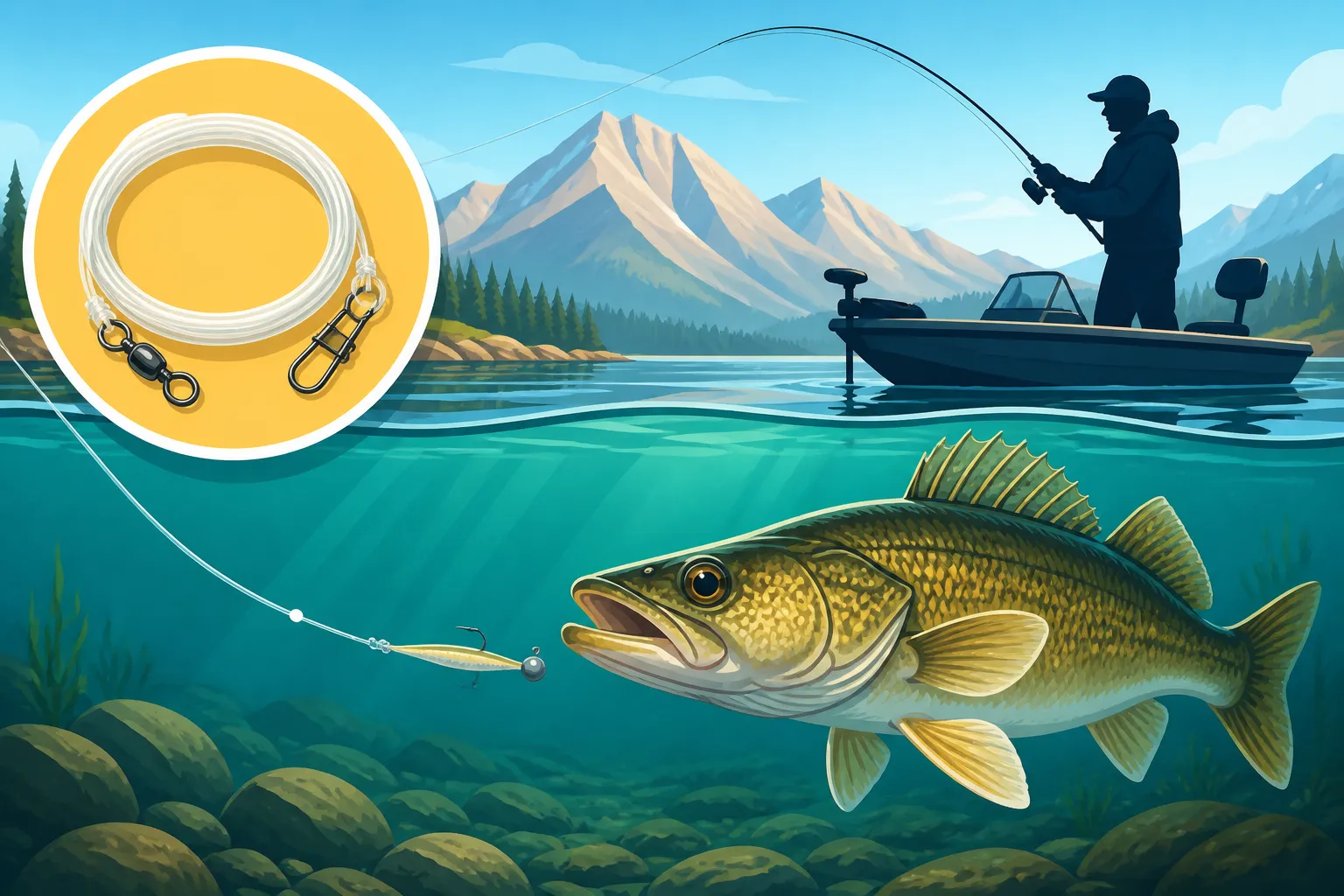
The biggest reason fluorocarbon shines in clear water is its low refractive index. This is a fancy way of saying that light passes through it almost exactly as it passes through water. In practical terms, this means fluorocarbon leaders are nearly invisible underwater. While a monofilament line might shine or create a visible "halo," fluorocarbon virtually disappears, allowing your lure or bait to look much more natural and appealing to even the most suspicious walleye. This invisibility is paramount when targeting walleye in pristine mountain lakes or crystal-clear river stretches like parts of the Bow River.
Think of it like this: if you're trying to sneak up on a deer, you don't wear a bright orange jacket unless it's hunting season! You wear camouflage. Fluorocarbon provides that same level of camouflage for your fishing line, letting your presentation be the star of the show, not your connection to it. This stealth factor alone can turn a slow day into a successful one, especially if you're fishing pressured waters where the walleye have seen it all before.
Strength and Sensitivity: More Than Just Stealth
While invisibility is its prime feature, fluorocarbon brings other significant advantages to the table for walleye anglers. It's incredibly abrasion-resistant, which is a huge plus when fishing around rocky bottoms, submerged timber, or even the sharp gill plates of a thrashing walleye. This means fewer break-offs and more landed fish, giving you confidence when fishing those prime, snag-prone areas. Nobody wants to lose a trophy walleye because their leader frayed!
Furthermore, fluorocarbon has very little stretch compared to monofilament. This low stretch translates directly into increased sensitivity. You'll feel those subtle "thunks" and light bites that often indicate a walleye inhaling your bait, even at great depths or long casting distances. This sensitivity also provides more solid hooksets, as more of your rod's power is transferred directly to the hook point. For jigging presentations, where feeling the bottom and every tap is crucial, fluorocarbon's sensitivity can be the difference between a fish and just a missed opportunity. This is particularly important when you're trying to master techniques like vertical jigging walleye, where every subtle movement matters.
Picking the Perfect Fluorocarbon: Pound Test, Diameter, and Length Considerations
Choosing the right fluorocarbon leader isn't a one-size-fits-all situation. The ideal pound test, diameter, and length will depend on several factors: the clarity of the water, the size of the walleye you're targeting, the type of lure or bait you're using, and the fishing technique. Getting this balance right is key to maximizing both your stealth and your strength.
Pound Test and Diameter: Finding the Sweet Spot
The pound test of your fluorocarbon leader needs to be strong enough to handle a fighting walleye, but thin enough to remain invisible. Generally, for most Alberta walleye fishing in clear water, a leader in the 8-15 lb test range is a good starting point.
- 8-10 lb test: This is an excellent choice for ultra-clear, calm waters, or when targeting smaller to medium-sized walleye with finesse presentations. It offers maximum stealth and allows for very natural lure action. If you're using light jigs or delicate live bait rigs, this lighter leader will be ideal.
- 12-15 lb test: This is often the workhorse range for general clear water walleye fishing. It provides a good balance of stealth and strength, capable of handling larger walleye and resisting abrasion from structure. This range is versatile for casting crankbaits, trolling crawler harnesses, or jigging heavier baits. If you're after trophy walleye waters in Alberta, leaning towards the higher end of this range is a smart move.
- 17-20 lb test (or higher): While less common for leaders, sometimes in very abrasive conditions, or when targeting truly massive walleye in moderately clear water, a heavier leader might be justified. However, you start to sacrifice a bit of that invisibility at these higher pound tests and diameters. This is often more applicable for northern pike fishing where toothy critters are involved.
The diameter of the line is directly related to its pound test. Thinner lines are less visible but less resistant to abrasion and break more easily. Always check the actual diameter of the fluorocarbon on the spool, as different brands can have slightly different diameters for the same pound test. For instance, a 10lb fluorocarbon from one brand might be thinner than a 10lb from another. You'll often find excellent options from reputable brands like Seaguar, Berkley Vanish, or Sufix, available at retailers like Bass Pro Shops or online through Amazon.
Leader Length: A Balancing Act
The length of your fluorocarbon leader is another critical factor. Too short, and the walleye might still see your main line. Too long, and it can become cumbersome to cast or retrieve, especially when dealing with the knot connecting it to your main line.
- 2-4 feet: This is a common and effective length for many applications. It provides enough separation from your main line to offer the invisibility benefit, while still being manageable for casting. It's a great all-around length for jigging, casting crankbaits, and even some trolling setups. This length allows the knot connecting your main line to the leader to stay outside of your rod tip when casting, which helps prevent snags and breakage.
- 5-8 feet: For exceptionally clear water, highly pressured fish, or when drifting with live bait, a longer leader can be beneficial. It maximizes the "invisible" zone around your bait. However, longer leaders can make casting a bit trickier, especially if the connecting knot needs to pass through your rod guides repeatedly. Practice makes perfect here.
- 1 foot or less: Rarely recommended for clear water walleye. This short length defeats much of the purpose of using a fluorocarbon leader, as your main line will still be very close to your presentation. Stick to at least 2 feet to get the true benefit.
Consider the type of main line you're using. If you're running braided line (which has zero stretch and excellent sensitivity but is highly visible), a fluorocarbon leader is absolutely essential. The contrast between braided line and the virtually invisible fluorocarbon is stark, making the leader even more critical.
Best Fluorocarbon Leader Selection Table
To help visualize, here's a quick guide to common scenarios:
| Fishing Technique | Water Clarity | Target Walleye Size | Recommended Leader (lb test) | Recommended Length (feet) |
|---|---|---|---|---|
| Jigging (light jigs) | Ultra Clear | Small-Medium | 8-10 | 2-3 |
| Jigging (heavier jigs) | Clear | Medium-Large | 10-12 | 3-4 |
| Casting Crankbaits | Clear | Medium-Large | 10-15 | 3-5 |
| Trolling (general) | Clear | Any | 12-15 | 4-6 |
| Live Bait Rigs (drifting) | Ultra Clear | Any | 8-12 | 5-8 |
| Fishing Rocky Areas | Clear | Any | 15-20 (for abrasion) | 3-4 |
Remember, these are general guidelines. Conditions on the water are always changing, so be prepared to adjust your leader choice. Sometimes, a slight tweak in pound test or length can make all the difference. How to pattern walleye on an unfamiliar Alberta lake often involves experimenting with leader setups.
Rigging Up: Attaching and Maintaining Your Fluorocarbon Leader
Having the right fluorocarbon leader is only half the battle; knowing how to properly attach it to your main line and care for it is equally important. A poorly tied knot can weaken even the best line, and neglected fluorocarbon can quickly lose its advantages.
Tying a Strong Connection
The knot connecting your fluorocarbon leader to your main line is arguably the most critical knot in your entire setup. Since fluorocarbon is stiffer and has less stretch than monofilament, not all knots will perform equally well. A strong, reliable knot that retains most of the line's breaking strength is essential.
One of the most popular and reliable knots for connecting fluorocarbon to braided main line is the FG Knot. It's incredibly strong, very slim, and passes through rod guides smoothly, making it ideal for longer leaders. It can be a bit tricky to learn at first, but it's well worth the practice. There are plenty of online tutorials that can walk you through the steps.
Other excellent options include:
- Alberto Knot: A simpler knot to tie than the FG, offering good strength for connecting different line types. It's a reliable choice if you're not comfortable with the FG.
- Double Uni Knot: While effective, it creates a slightly larger knot profile than the FG or Alberto, which can sometimes snag in guides, especially with heavier lines. However, it's easy to learn and tie on the water.
Whatever knot you choose, always make sure to moisten it generously with saliva before cinching it down. This lubrication helps prevent friction-induced heat from weakening the line during tightening. Test your knot thoroughly before making your first cast to ensure it holds firm. Consider also adding a small barrel swivel between your main line and leader, especially if you're trolling or using baits that twist, as it can prevent line twist.
The Business End: Attaching Lures and Baits
At the business end of your fluorocarbon leader, where you attach your lure or hook, you'll want a strong, compact knot. The Improved Clinch Knot or the Palomar Knot are both excellent choices. The Palomar Knot is particularly robust and easy to tie, especially with slightly heavier fluorocarbon, and it's a favorite for many walleye anglers. Ensure you leave a small tag end when tying these knots, and trim it neatly so it doesn't catch on weeds or debris.
When you're constantly changing lures, a small, high-quality snap or snap swivel can be incredibly convenient. Just make sure the snap is strong enough for walleye and has a small profile to avoid impacting lure action or spooking fish. This is especially true when using highly active baits like those recommended for best baits for walleye on Lesser Slave Lake.
Caring for Your Fluorocarbon Leaders
Even the best fluorocarbon needs a little care to perform optimally. Here are a few tips:
- Check for Nicks and Abrasion: After every fish, or if you've been fishing around structure, run your fingers along the last few feet of your leader. Feel for any nicks, rough spots, or abrasions. If you find any, cut off the damaged section and re-tie. A compromised leader is a recipe for a lost fish.
- Store Properly: Keep your spools of fluorocarbon line out of direct sunlight and extreme heat when not in use. UV rays and heat can degrade the line over time.
- Fresh Line is Best: While fluorocarbon is durable, it's not immortal. If your leader material has been sitting in your tackle box for several seasons, it might be time to replace it. Fresh line ensures maximum strength and performance. You can often pick up fresh spools on Amazon or at your local Bass Pro Shops.
- Don't Over-Stress: Avoid aggressively yanking on snags with your rod if you can help it. If you're stuck, point your rod directly at the snag and pull with your main line (with a glove, if necessary) to try and break it off, minimizing stress on your knots and rod.
By paying attention to these details, you'll ensure your fluorocarbon leader provides you with the stealth, strength, and sensitivity needed to consistently catch those clear water walleye. It's a small investment in time and technique that can yield huge returns on your next Alberta fishing adventure. When combined with understanding how to catch walleye in Alberta and the best time of day to catch walleye, a good leader is part of a winning strategy.
Disclaimer
This article is for general informational purposes only and does not constitute professional advice. Laws, prices and regulations vary by location and change over time. Consult a qualified professional for guidance on your specific situation.