Best PCOC-compliant safety kit for a small boat
Heading out onto Alberta's beautiful lakes and rivers in your small boat, whether it's for a peaceful fishing trip or a fun day with the family, brings a unique sense of freedom. But let's be honest, trying to figure out all the boating regulations and what safety gear you actually need can feel like navigating a maze. It's frustrating to want to do the right thing and stay safe, but getting tangled in legalese about PCOC-compliant safety kits often leaves you more confused than prepared. This guide is here to cut through that confusion, giving you a clear, comprehensive breakdown of the essential PCOC-compliant safety kit for your small boat, ensuring you're safe, legal, and ready for any adventure on Alberta's waters.
Understanding PCOC and Small Boat Safety Regulations in Alberta
Before we dive into the nitty-gritty of what goes into your safety kit, it's really important to understand why these regulations exist and what the Pleasure Craft Operator Card (PCOC) has to do with it all. Many folks think that as long as they have a PCOC, they're good to go. While the PCOC is absolutely crucial for operating any motorized boat in Canada, it's just one piece of the safety puzzle. The card proves you have the knowledge; the safety kit proves you have the tools to back that knowledge up in an emergency.
The Canadian government, through Transport Canada, sets out specific safety equipment requirements for all pleasure crafts, and Alberta's waterways fall under these federal rules. These requirements aren't just suggestions; they are law. Ignoring them can lead to hefty fines, but more importantly, it puts you and your passengers at serious risk. You'd be surprised how many experienced boaters still aren't entirely sure about all the nuanced regulations, especially when it comes to smaller vessels. It's easy to assume your little fishing boat doesn't need as much as a big cruiser, but that's not always the case. For a detailed look at the operator card, check out Alberta Pleasure Craft Operator Card Requirement.
What is a Small Boat in the Eyes of the Law?
The term "small boat" can be a bit ambiguous when you're thinking about safety gear. Legally, the requirements often depend on the length of your boat and whether it has an engine, rather than just a subjective sense of "small." For the purpose of safety equipment, pleasure crafts are typically categorized by length. Most small fishing boats, canoes, kayaks, and tenders fall into the "up to 6 meters (about 20 feet)" category, which is what we'll primarily focus on here.
Even if you're out on a tiny jon boat with a modest trolling motor, or a solo fishing kayak, you're still considered a pleasure craft and must meet certain safety standards. This often catches people off guard. They might think a canoe or kayak is exempt, but federal regulations are quite broad. The spirit of the law is that if you're on the water, you need to be prepared for the unexpected. Understanding these classifications is the first step to ensuring you're not only compliant but genuinely prepared for a safe day on the water.
Why PCOC Compliance Matters Beyond Fines
Of course, nobody wants a ticket, and fines for non-compliance can certainly put a damper on your day. But PCOC compliance, specifically regarding your safety kit, goes far beyond avoiding penalties. It's about fundamental seamanship and responsible boating. Imagine you're out on Lake Athabasca, the weather suddenly shifts, and you find yourself in choppy water. Or perhaps you're on a quieter stretch of the Bow River and your engine unexpectedly cuts out. Without the right gear, a minor inconvenience can quickly escalate into a dangerous situation.
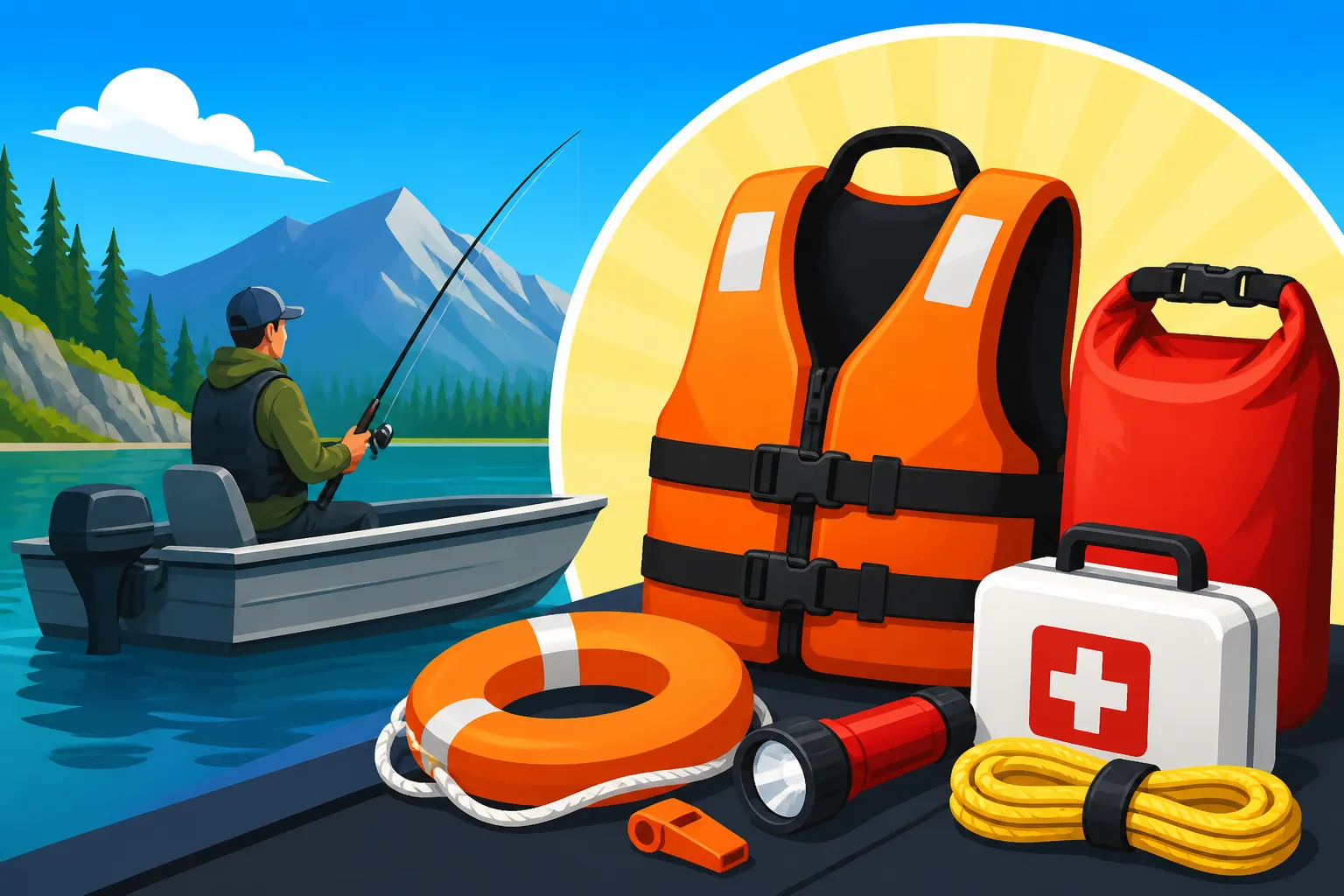
Having a PCOC-compliant safety kit means you have the tools to signal for help, bail out water, or prevent someone from drifting away. It's about peace of mind. Knowing that you've got a bailing device, a buoyant heaving line, and a sound-signalling device onboard means you can react calmly and effectively to unforeseen circumstances. This preparedness is invaluable, not just for your own safety, but for the safety of anyone else you might encounter on the water who needs assistance. For a broader understanding of regulations, see Alberta Boating Laws for Anglers.
Essential Components of a PCOC-Compliant Safety Kit for Small Boats
Alright, let's get down to brass tacks. What exactly do you need in your small boat to be PCOC-compliant on Alberta's waters? These aren't just random items; each one serves a critical purpose in preventing an emergency or helping you manage one if it occurs. It’s not about checking off boxes; it’s about understanding the function of each item.
The specific requirements can vary slightly based on the length of your boat and whether it has an engine. For most small boats under 6 meters (20 feet) in length, especially those with an engine, the list is quite comprehensive. It’s always a good idea to cross-reference with the latest Transport Canada guidelines, but this list will give you a solid foundation.
Personal Flotation Devices (PFDs) and Lifejackets
This is probably the most obvious, but also the most critical item. Every person on board your small boat, including yourself, must have a properly-sized, Canadian-approved lifejacket or PFD. And here's the kicker: it needs to be readily accessible. This doesn't mean stuffed under a seat or at the bottom of a cooler. It means it should be easy to grab and put on in an emergency, ideally worn at all times, especially in smaller boats where sudden capsizing is a real risk.
For kids, this is non-negotiable. A PFD that fits a child correctly can be the difference between life and death. Remember that an adult PFD is useless on a small child. The fit should be snug but comfortable, and it should keep their head above water. Many anglers prefer PFDs with extra pockets for gear, which is a great way to combine safety and convenience. Just ensure they still meet the approval standards. You can often find a good selection at outdoor retailers like Bass Pro Shops, which often have staff who can help with fitting. For more details, check out Life Jacket Requirements for Alberta Boaters.
Sound-Signalling Device
Imagine you're out on a larger lake like Lesser Slave and a thick fog rolls in, or it gets dark faster than you expected. How do you signal your presence to other boats or shore? A sound-signalling device is your answer. For boats under 12 meters (39 feet), this can be something as simple as a pealess whistle. Yes, that little plastic whistle you might use for hiking is perfectly acceptable, as long as it works!
However, many small boat owners opt for a horn, either a manually operated air horn or an electric horn if their boat has a power source. While a whistle meets the minimum requirement, a horn can often carry further and be more attention-grabbing, especially if you're trying to alert a larger vessel. Make sure whatever you choose is in good working order and easily accessible, not buried in a storage compartment.
Bailing Device or Manual Bilge Pump
Small boats, especially open ones, are susceptible to taking on water. Whether it's from rain, waves splashing over the bow, or a minor leak, you need a way to get that water out. That's where a bailing device comes in. For smaller boats, a simple bucket or scoop will do the trick. Many anglers simply use a plastic container they already have on board.
If you have a slightly larger small boat, particularly one with a flat bottom or a deeper hull, a manual bilge pump might be a more efficient option. These hand-operated pumps can quickly remove a surprising amount of water. Regardless of what you choose, ensure it's robust enough to handle the task and that you know where it is and how to use it quickly. A small leak can turn into a serious problem if you can't manage the water intake.
Buoyant Heaving Line
This piece of equipment is often overlooked but is incredibly important. A buoyant heaving line is a floating rope at least 15 meters (50 feet) long. Its primary purpose is to help retrieve someone who has fallen overboard or to pass a tow line to another vessel in distress. It needs to be readily available and free of knots or tangles so you can deploy it instantly.
Think of it this way: if someone goes into the cold Alberta water, every second counts. You don't want to be fumbling around trying to untangle a rope. Many commercial versions come in a bag that makes them easy to throw and re-pack. Some even have a small float attached to the end to make it easier for the person in the water to grab. This is one item where investing in a purpose-built product can make a real difference in an emergency.
Watertight Flashlight or Flares
Visibility is key, especially if you find yourself on the water after dusk or in low-light conditions. For boats under 6 meters, you need either a watertight flashlight or a set of flares (Type A, B, C, or D). Most small boat owners opt for a good quality watertight flashlight as it's reusable and generally less hassle than managing flares.
If you choose a flashlight, make sure it's fully charged or has fresh batteries. It's a good practice to carry spare batteries in a waterproof container. If you opt for flares, ensure they are unexpired and stored in a waterproof container. Flares are excellent for signalling distress over a longer distance, but they are single-use and have expiry dates. For most recreational anglers during daylight, a reliable flashlight for signalling or navigating low light conditions around the boat is a sensible choice.
Anchor with Rode (Line and Chain)
While not always explicitly mandated for all small pleasure crafts, an anchor with enough rode (chain and line) is strongly recommended and often required for any boat with an engine. It's not just for fishing; an anchor is a critical safety device. It can prevent your boat from drifting into danger if your engine fails, or hold you steady in windy conditions.
The size and weight of your anchor, and the length of your rode, should be appropriate for the size of your boat and the typical water depth you fish. A general rule of thumb for rode length is 7-10 times the depth of the water you're anchoring in, plus some extra for surge. Having a proper anchor can save you from a lot of trouble on a windy day on a large lake. Consider how easily you can deploy and retrieve it.
Manual Propulsion (Oar or Paddle)
Even if your small boat has a powerful outboard motor, you need a backup plan for propulsion. For boats under 6 meters, this means at least one oar or paddle. This is your lifeline if your engine gives out or you run out of fuel far from shore. It might seem basic, but trying to paddle a small boat with your hands against a current is a losing battle.
Ensure your oar or paddle is sturdy and long enough to be effective. For a small fishing boat, a collapsible paddle can be a great space-saving option. For kayaks and canoes, paddles are obviously a given, but having a spare is always a good idea. This simple piece of gear can turn a potentially dangerous situation into a mild inconvenience, allowing you to slowly make your way back to shore or a launch point.
Here's a quick summary table of the core requirements for small boats under 6 meters with a motor:
| Item | Description | Purpose |
|---|---|---|
| Personal Flotation Device (PFD) | One Canadian-approved, properly sized per person | Keeps individuals afloat in case of accidental immersion |
| Sound-Signalling Device | Pealess whistle or horn | To signal presence, especially in low visibility or distress |
| Bailing Device | Bucket, scoop, or manual bilge pump | To remove water that has entered the boat |
| Buoyant Heaving Line | Floating rope, min. 15 meters (50 feet) | To rescue a person overboard or assist another vessel |
| Watertight Flashlight / Flares | Watertight flashlight OR unexpired Type A, B, C, or D flares | For signalling in low light/darkness or distress |
| Anchor with Rode | Anchor appropriate for boat size, with line and chain | To prevent drifting, hold position for fishing, or during engine failure |
| Manual Propulsion | One oar or paddle | Backup propulsion in case of engine failure or fuel depletion |
Beyond the Bare Minimum: Enhancing Your Small Boat Safety in Alberta
While meeting the PCOC-compliant requirements is your baseline, smart boaters know that sometimes the bare minimum isn't quite enough for true peace of mind. Alberta's waters can be unpredictable, from sudden squalls on large lakes to rapid temperature drops in mountain rivers. Adding a few extra items to your safety kit can significantly improve your readiness and comfort, making your outings more enjoyable and less stressful.
Think about the specific types of fishing or boating you do. Are you venturing into remote areas? Are you fishing in very cold water? Do you often go out solo? Your personal boating habits should influence what "extra" gear you consider essential. This isn't about being overly paranoid; it's about being proactively prepared for scenarios that could genuinely happen, especially in our beautiful but sometimes challenging wilderness.
First-Aid Kit
This might seem obvious, but it's astonishing how many boats don't have a comprehensive first-aid kit. A small cut, a hook in a finger, or a minor burn from an engine can easily happen on the water. A good marine first-aid kit should be waterproof and contain essentials like bandages, antiseptic wipes, pain relievers, and any personal medications you or your crew might need.
Don't just throw a box in your boat and forget it. Take the time to customize it to your needs and regularly check expiration dates on medications. Knowing where it is and how to access it quickly when someone has a minor injury is just as important as having it. You can find ready-made marine first-aid kits at various outdoor retailers, or easily assemble your own for a fraction of the cost through a general retailer like Amazon.
Emergency Repair Kit and Tools
A small toolkit can be a lifesaver. Picture this: a loose screw on your motor, a clogged fuel line, or a minor electrical issue. Having basic tools like screwdrivers, pliers, duct tape, electrical tape, and maybe even a small can of lubricant can often fix minor problems that would otherwise leave you stranded. For motors, a spare spark plug and the appropriate wrench could also be a wise addition.
It’s about being self-sufficient. Alberta's lakes and rivers aren't always close to service stations or marinas. Being able to perform a quick, temporary repair can prevent a long, frustrating wait for assistance. This kit doesn't need to be huge; a small, waterproof tackle box filled with essential hand tools can do the trick.
Communication Devices
While a sound-signalling device is required, modern communication goes a step further. A fully charged cell phone in a waterproof case is a great start, but remember cell service can be spotty in many remote parts of Alberta. For serious backcountry excursions, consider a satellite messenger or a VHF radio. A VHF radio can communicate with other vessels and marine emergency services, often providing a more reliable connection than a cell phone when on the water.
These devices aren't just for emergencies; they can be incredibly useful for coordinating with other boats in your party or getting weather updates. Knowing that you can reach out for help or information, even when out of cell range, adds a significant layer of safety, especially when you're exploring some of the more isolated fishing spots.
Additional Safety Items
Beyond the core list, there are several other items that can significantly enhance your safety and preparedness:
- Extra Clothing/Layers: Alberta weather can change in a flash. Always have extra, warm, waterproof clothing packed in a dry bag. Hypothermia is a real risk, even in summer if you're caught in a sudden downpour or unexpected capsize.
- Sun Protection: Sunscreen, hats, and sunglasses are vital. The sun's reflection off the water can be intense, leading to severe sunburn or sunstroke.
- Knife: A good quality, sharp knife, preferably one that can cut rope, is incredibly versatile for various tasks and emergencies.
- Navigation Tools: Even with GPS on your phone, a paper map and a compass can be invaluable as a backup, especially if you're exploring unfamiliar waters or your electronics fail. Knowing how to use them is key.
- Re-boarding Device: For small boats, especially those with high sides, a small ladder or a simple rope loop can make re-boarding after a fall much safer and easier, particularly if you're alone or exhausted.
- Fenders and Dock Lines: If you're going to be pulling up to docks or other boats, fenders protect your hull, and extra dock lines are always useful.
- Marine Horn/Whistle (backup): Having a second, different type of sound-signalling device can be a good idea.
- Dry Bag: A small, waterproof dry bag for your keys, phone, wallet, and any other essentials is a must-have. You don't want these items getting wet or lost if you take on water or capsize.
Thinking through these "extras" and considering your specific boating activities will help you tailor your safety kit to provide the best protection possible.
Where to Acquire Your PCOC-Compliant Safety Gear
Once you know what you need, the next step is actually getting it. Luckily, there are many convenient options for assembling your PCOC-compliant safety kit and adding those extra layers of preparedness. You don't have to break the bank, but investing in quality gear that won't fail you when you need it most is always a smart move.
Many dedicated marine and outdoor retailers understand exactly what boaters need for compliance and safety. They often carry ready-made kits, or you can pick and choose individual components. Online options also provide a vast selection, often at competitive prices, but ensure you're getting Canadian-approved products where applicable.
Marine and Outdoor Retailers
For those who prefer to see, touch, and get expert advice, a brick-and-mortar store is a fantastic option. Places like Bass Pro Shops or local tackle shops often have dedicated marine departments. The staff are usually knowledgeable about specific regulations and can help you find Canadian-approved PFDs, flares, and other critical safety items. They can also offer advice on sizing, quality, and what might be best for your particular type of small boat and the conditions you plan to fish in.
The benefit of these stores is the ability to ask questions and ensure you're getting the right items. For instance, when buying a PFD, you can try it on to ensure a proper fit. They might even have pre-assembled starter kits that bundle many of the required items together, which can be a convenient way to get compliant quickly. They are also excellent places to find Best Boats for Alberta Lakes and Rivers or Best Kayaks for Alberta Fishing.
Online Marketplaces
For convenience, selection, and often competitive pricing, online marketplaces like Amazon are incredibly popular. You can browse a vast array of safety equipment from the comfort of your home, read reviews, and compare different brands and models. This is particularly useful for items like watertight flashlights, first-aid kits, or even specific types of paddles.
However, a word of caution: when buying online, always double-check that items requiring approval (like PFDs or flares) are indeed Canadian-approved. While Amazon sells countless products, it's up to you to verify the specifications against Canadian regulations. Read product descriptions carefully, look for certification labels, and cross-reference if unsure. It’s also a great spot to look for Best Fish Finders for Alberta Lakes or Best Tackle for Alberta Walleye.
Second-Hand and DIY Options
Sometimes, you can find perfectly good safety gear in the second-hand market, perhaps from boaters upgrading their equipment or selling old gear. Garage sales, online classifieds, or specialized used marine gear shops can sometimes yield treasures. However, be extremely cautious with items like PFDs and flares. PFDs can degrade over time, losing their buoyancy, and flares have strict expiry dates. Only buy these items new or from a reputable source if you can verify their condition and approval.
For items like bailing buckets or oars, DIY solutions or second-hand purchases are often perfectly fine, as long as they are functional and robust. Just make sure whatever you acquire is in good, working condition and meets the regulatory standards. A rusty bucket won't do you any good in a real emergency.
Maintaining Your Safety Kit and Staying Informed
Just buying the gear isn't the end of your safety journey. A safety kit is only useful if it's properly maintained, regularly checked, and you, as the operator, are aware of its contents and how to use them. Think of your safety kit as a living thing that needs periodic attention, not a static collection of items you forget about after purchase.
Regulations can also change, though generally not rapidly for basic small boat safety. Staying informed is part of being a responsible boater. This proactive approach ensures that every time you launch your small boat onto Alberta's beautiful waters, you're not just ready for the fish, but also ready for anything else Mother Nature might throw your way.
Regular Checks and Replacements
Before every season, and ideally before any major outing, take the time to go through your entire safety kit.
- PFDs: Check for tears, fading, or signs of wear that could compromise their buoyancy. Ensure all buckles and zippers work. If a PFD looks compromised, replace it.
- Flares: Note the expiry dates and replace any that have passed. Dispose of expired flares properly; don't just toss them in the trash.
- Flashlight: Check batteries and replace them if they're old or corroded. Keep spares.
- Sound Device: Test your whistle or horn to ensure it's still loud and clear.
- First-Aid Kit: Replenish any used supplies and check expiration dates on medications.
- Ropes: Inspect your heaving line and anchor rode for fraying or damage.
Making this a routine part of your pre-trip checklist can prevent unpleasant surprises when you least expect them. It’s better to discover a problem in your garage than out on a remote lake.
Storing Your Kit Properly
Where and how you store your safety kit on your small boat is almost as important as having it. As mentioned, PFDs need to be readily accessible. The same goes for your sound device and heaving line. Imagine trying to get a tangled rope from under a pile of gear in an emergency!
Store items in a way that protects them from the elements but keeps them within easy reach. Waterproof bags or containers are excellent for smaller items like flashlights, first-aid kits, and spare batteries. Keep ropes coiled and accessible. Consider designating a specific, easily identifiable spot for your entire safety kit, and make sure anyone else who might operate the boat knows where it is. A small boat often means limited storage, so smart organization is key.
Staying Updated on Regulations
While the core safety requirements for small boats are fairly stable, it's always a good idea to periodically review Transport Canada's requirements. You can usually find the most up-to-date information on their official website or by consulting the Reading the Alberta Guide to Sportfishing Regulations. Small changes or clarifications can occur, and being aware of them ensures you remain compliant.
The boating world is always evolving, and staying informed is part of being a responsible and safe pleasure craft operator. By doing so, you're not just protecting yourself from fines; you're upholding the standard of safety that makes Alberta's waters enjoyable for everyone. Knowing your Alberta Fishing Regulations Explained isn't just for fish limits, it’s for boat safety too!
Disclaimer
This article is for general informational purposes only and does not constitute professional advice. Laws, prices and regulations vary by location and change over time. Consult a qualified professional for guidance on your specific situation.