Best line color for clear river water
There's nothing quite as frustrating as seeing a beautiful fish spook and dart away, not because of a bad cast or a wrong lure, but simply because it spotted your fishing line. In the crystal-clear rivers and streams that flow through much of Alberta, line visibility becomes a huge factor, and choosing the right color can seriously impact your success. This guide will dive deep into understanding what fish see, which line colors are your allies in clear water, and how to stay stealthy on your next Alberta fishing adventure.
The Great Debate: Does Line Color Really Matter?
Oh, the endless debates at the tackle shop! Ask any seasoned angler, and they'll have strong opinions on line color. Some swear by invisible fluorocarbon, others by specific shades of green, and some folks just use whatever's on sale. But when you're faced with gin-clear water, the question of line color isn't just a preference; it becomes a critical strategic decision. Fish in clear environments, especially pressured ones like those in some parts of the Bow River, develop incredible sensitivity and can pick up on visual cues we might completely miss.
Why Fish Notice Your Line in Clear Water
Think about it from the fish's perspective. They spend their lives scrutinizing their surroundings for food and danger. In murky water, they rely more on lateral lines, scent, and vibrations. But in water where they can see for many feet, anything unnatural stands out. Your fishing line, even if thin, creates a visual anomaly. It might cast a shadow, reflect sunlight, or simply appear as an unmoving strand where no such thing should be. This unnatural presence immediately signals "danger" or "something's not right," sending them scattering before they even get a look at your carefully presented lure or fly. It's a tale as old as time, and the clearer the water, the more pronounced this effect becomes.
The Clear Water Challenge in Alberta
Alberta is home to an incredible diversity of waterways, from the glacier-fed, sapphire-blue mountain streams of Kananaskis Country to the more tannin-stained rivers of the boreal forest. Many of our most prized trout fisheries, like sections of the Crowsnest River or the upper reaches of the Oldman River, boast water so transparent you can see individual rocks on the bottom. In these environments, every detail matters. A bright yellow monofilament line, which might be great for seeing subtle bites in turbid water, can look like a neon rope to a wary brown trout in a pristine mountain pool. This is where the choice of line color moves from a minor consideration to a game-changer, directly influencing your catch rates.
Understanding Line Visibility: What Fish See (and Don't See)
To truly pick the best line color, we need to try and understand the world through a fish's eyes, or rather, their optic cones. Fish vision isn't exactly like ours, and several factors play into how visible your line is underwater. It's not just about what we perceive as "clear" or "invisible."
Fish Vision vs. Human Vision
Fish have a different visual spectrum than humans. While we see in reds, greens, and blues, many fish, especially those in freshwater environments, have excellent vision in the blue-green spectrum, which penetrates water best. Some species, like trout, are also known to see ultraviolet (UV) light, which can make certain "invisible" lines actually glow to them. This means a line that looks clear or muted to us might be highly visible to a fish if it reflects UV light or stands out against the ambient light. Their eyes are designed to pick up movement and contrast against their underwater backdrop, making our goal to minimize both.
The Role of Light, Depth, and Water Conditions
The way light behaves underwater dramatically affects line visibility. On a bright, sunny day, reflections off your line can be a major issue, making even clear line shimmer. In overcast conditions or deeper water, light penetration changes, and colors can appear differently. Water clarity isn't just about how "clean" it looks; it also involves factors like algae, suspended sediment, or natural tannins, all of which absorb or scatter light differently.
For example, in a truly crystalline mountain stream, any line can be visible if the light is hitting it just right. But in a slightly tea-stained prairie river, a light green or brown might blend in better. Best Time of Day to Catch Walleye often involves low light, which can also influence line visibility. Understanding these nuances helps you choose a line not just for the fish, but for the specific conditions you're facing.
The Illusion of "Clear" and "Invisible" Lines
Many manufacturers offer "clear" or "invisible" lines, typically fluorocarbon. While these lines are indeed much less visible than traditional monofilaments, they're not truly invisible. Fluorocarbon has a refractive index very close to that of water, which means light bends through it similarly to how it bends through water, making it much harder for fish to detect. However, even clear fluorocarbon can cast a shadow, and if it's too thick, it can still be seen, especially by discerning fish like those found in Best Fly Fishing Rivers in Alberta. The key is reducing its contrast against the background as much as possible. It's a tool for stealth, not a magic cloak of invisibility.
Recommended Line Colors for Clear Alberta Rivers
So, what's an angler to do when facing those pristine, unforgiving clear waters? The general rule of thumb is to choose colors that blend into the environment or that become "invisible" due to water's light-bending properties. Here’s a breakdown of the best choices for different line types and situations in Alberta.
The Almost-Invisible: Clear and Fluorocarbon
When fishing truly clear rivers for finicky fish like trout or walleye, clear or fluorocarbon line is often your best bet. Fluorocarbon leaders, in particular, are almost standard practice for many anglers in Alberta. The material's unique refractive index makes it incredibly difficult for fish to spot. You can often spool your reel with a different line type (like braid) and then add a long Best Fluorocarbon Leader for Clear Water Walleye section. This gives you the best of both worlds: strong, sensitive main line and a nearly invisible presentation where it matters most. For fly anglers, matching your tippet material to the conditions, often favoring clear fluorocarbon, is crucial for those wary trout.
- Best for: Trout (especially larger, pressured ones), walleye, any species in exceptionally clear, shallow water.
- Why it works: Refractive index similar to water, minimal light reflection.
- Things to consider: Can be less abrasion-resistant than mono, especially thinner diameters. Can also be stiffer, affecting knot tying.
The Blenders: Green and Blue Shades
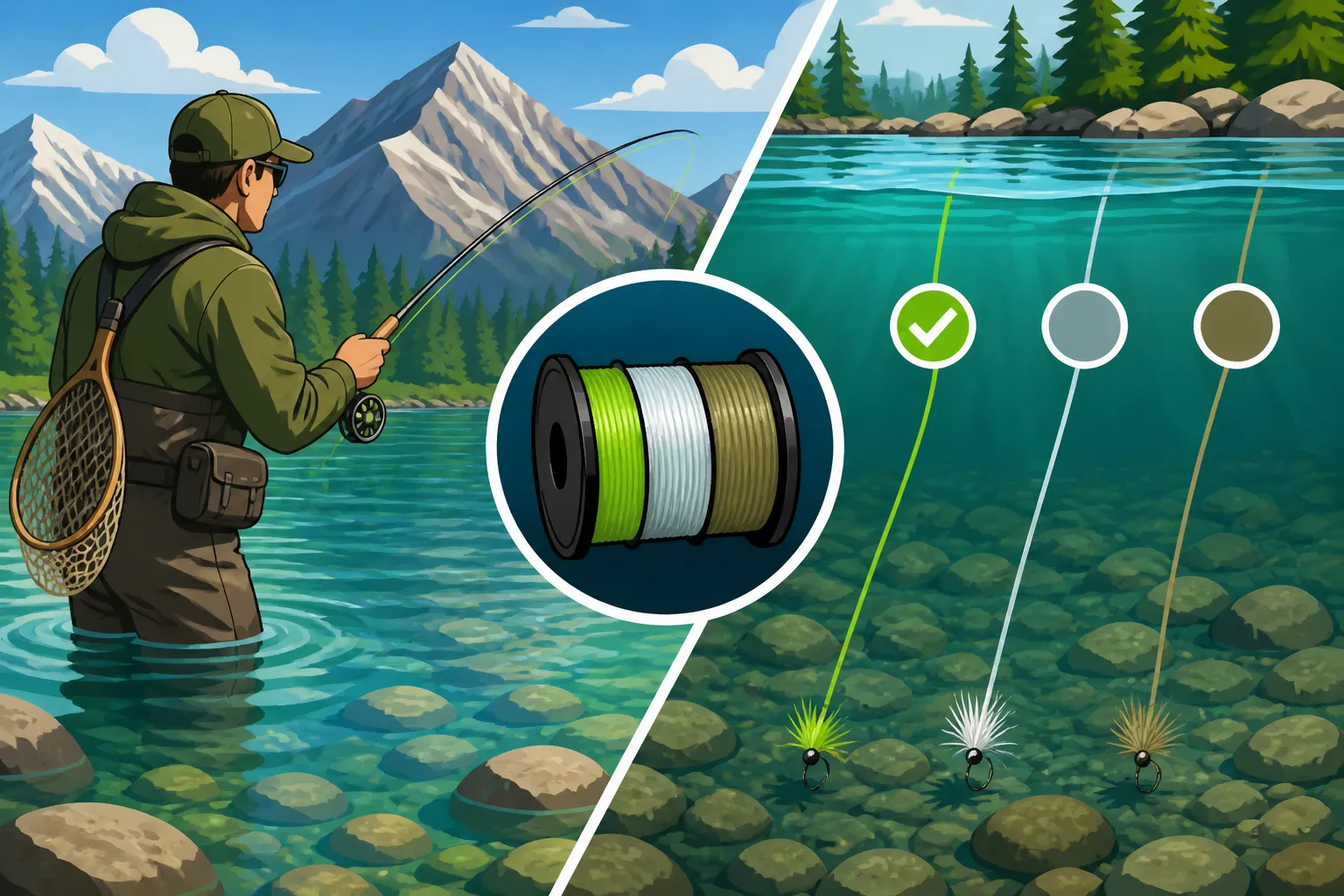
Many anglers swear by muted green or blue lines for clear water, and for good reason. These colors are abundant in natural aquatic environments. Green can mimic algae or submerged vegetation, while blue can blend into the sky overhead, especially if the fish are looking up. Different shades matter here; a pale moss green might be better than a vibrant forest green, and a light blue often outperforms a dark navy. These colors are particularly effective when there's some tint to the water, even if it's generally clear, or when fishing deeper where less light penetrates. Brands like Bass Pro Shops often have a range of these more natural-toned lines to choose from.
- Best for: General purpose fishing in moderately clear rivers, or when there's a slight tint (greenish or bluish) to the water. Good for pike and walleye in clearer parts of larger rivers.
- Why it works: Mimics natural aquatic colors, reducing contrast against the background.
- Things to consider: Still more visible than pure fluorocarbon up close, especially in ultra-clear, sunlit conditions.
The Low-Light Specialists: Brown and Grey
Brown and grey lines are often overlooked but can be surprisingly effective in specific clear-water scenarios. Brown lines can blend into the riverbed in shallower areas, especially if the bottom is rocky or silty. Grey can work well on overcast days or in very deep, dark holes where ambient light is minimal. These are less about matching the water column and more about matching the structure or low-light conditions. If you're fishing a clear river with a lot of wood debris or dark rocks, a brown line might disappear better than a green one.
- Best for: Fishing along darker riverbeds, deeper holes, or during low-light conditions (dawn, dusk, overcast days).
- Why it works: Blends with darker bottom structures or low light environments.
- Things to consider: Can stand out against a bright sky or lighter bottom.
Here's a quick comparison of common line colors and their clear-water performance:
| Line Color | Primary Benefit in Clear Water | Best Application | Considerations |
|---|---|---|---|
| Clear | Very low visibility, matches water | Leaders, finicky trout, walleye, shallow presentations | Can still reflect light; thicker diameters become visible |
| Light Green | Blends with aquatic vegetation/tinted water | General purpose in rivers with some green hue | Can stand out against clear sky/light bottom |
| Light Blue | Blends with sky/water color from below | Open water, fish looking up | Less effective near bottom structures |
| Brown | Blends with riverbed/dark structures | Bottom fishing, areas with wood or dark rocks | Can stand out against open water or light skies |
| Grey | Muted, blends in low light or overcast | Deeper water, overcast days, neutral backgrounds | Less effective in bright sun or specific color matching |
Beyond Color: Other Factors for Stealth in Clear Water
While line color is definitely important, it's just one piece of the stealth puzzle, especially when you're targeting wary fish in Alberta's clear rivers. A truly successful angler understands that a combination of factors contributes to a natural, unthreatening presentation.
Line Diameter and Material: Thinner is Better
Perhaps even more critical than color is line diameter. The thinner your line, the less visible it will be, regardless of color. This is why fly anglers obsess over tippet size. A 4 lb test monofilament will be significantly harder for a fish to see than a 10 lb test, even if both are clear. When you're fishing for educated trout or walleye in clear water, always try to use the lightest line or leader you can get away with for the species and conditions.
- Fluorocarbon: As mentioned, Fluorocarbon Line for Clear Water Trout is fantastic for its low visibility due to its refractive index. It's also quite abrasion-resistant, which is a bonus in rocky rivers. However, it can be stiffer and more expensive than monofilament.
- Monofilament: Traditional mono is softer, more forgiving, and often has good stretch. While clear mono is better than colored, its higher visibility compared to fluorocarbon often relegates it to main line spooling, followed by a fluorocarbon leader.
- Braided Line: Braided lines are incredibly strong for their diameter and offer excellent sensitivity. However, they are highly visible underwater due to their opaque nature and tendency to "glow" with UV light. For this reason, braided lines are almost universally used with a fluorocarbon or monofilament leader in clear water. For instance, if you're targeting pike with Best Line Weight for Pike Fishing, you might use a strong braid as your main line, but you'll certainly add a clear or fluorocarbon leader to present your lure effectively. You can often find great deals on various line types on Amazon or at Bass Pro Shops to experiment with different setups.
Leader Length and Type: The Stealth Connection
A leader is your secret weapon in clear water. It's the less visible link between your main line and your lure or fly. The longer the leader, the more separation there is between your main, potentially more visible line and the presentation to the fish. For spin fishing in clear rivers, a 4 to 8-foot fluorocarbon leader is not uncommon. Fly anglers, of course, rely on tapered leaders and fine tippet sections, precisely designed to offer a stealthy transition from fly line to fly. Learning how to tie strong, reliable knots to connect different line types is a crucial skill here.
Presentation and Technique: Making Your Line Disappear
Even the best line color won't save a sloppy presentation. How you cast, retrieve, and control your line plays a huge role in its visibility.
- Casting: Avoid casting directly over fish, which can throw line shadows or spook them with the splash of your line hitting the water. Cast upstream or across the current, letting your lure or fly drift naturally into the strike zone.
- Line Control: Minimize slack line to maintain contact with your lure and avoid large bows of line on the water that can easily be seen or create unnatural drag. This is especially true when river fishing, where current can grab your line.
- Retrieval Speed: A natural retrieve that matches the current or the movement of baitfish will make your presentation more believable, diverting attention from your line.
- Approach: Don't just think about your line, think about yourself. Wearing neutral colors, staying low, and approaching the riverbank carefully can prevent you from spooking fish before you even make a cast. Techniques discussed in Spring Trout Fishing Techniques for Alberta Streams often emphasize a stealthy approach.
Remember, clear water fishing in Alberta can be incredibly rewarding, but it demands attention to detail. By carefully considering your line color, diameter, and overall presentation, you'll significantly increase your chances of fooling those elusive fish that call our beautiful, clear rivers home.
Disclaimer
This article is for general informational purposes only and does not constitute professional advice. Laws, prices and regulations vary by location and change over time. Consult a qualified professional for guidance on your specific situation.