Best Crankbaits for Alberta Walleye
Figuring out which crankbaits to tie on can feel like a guessing game when you're staring at an endless wall of options at the tackle shop. It’s a common frustration for Alberta anglers, because what works on one lake or at one time of year might be completely useless on another. This guide is here to cut through the confusion and help you select, present, and ultimately catch more walleye with the right crankbaits for Alberta's diverse waters.
Understanding Walleye Behavior and Habitat for Crankbait Selection
Before you even think about picking out a crankbait, it's really helpful to get inside the head of an Alberta walleye. These fish aren't just swimming around aimlessly; their movements, where they hang out, and what they're willing to bite are heavily influenced by the seasons and their natural environment. Understanding these basic principles will be your secret weapon in choosing the right lure at the right time.
Seasonal Movements and Preferred Depths
Walleye are creatures of habit, but those habits change dramatically throughout the year. Knowing where they're likely to be found at different times is paramount to picking a crankbait that can actually reach them.
In the spring, after the ice melts, walleye are often found in shallower water, especially near spawning grounds. They're looking for warmer temperatures and hard bottoms, like rocky points or gravel flats, to lay their eggs. During this post-spawn period, they can be a bit sluggish, but they're also recovering from the spawn and starting to feed. This is when shallow-diving crankbaits that can be retrieved slowly through only a few feet of water become incredibly effective. You don't want a crankbait digging into the bottom when they're only a few feet deep; you want something that presents right in their strike zone without getting constantly snagged.
As summer progresses and water temperatures rise, walleye typically retreat to deeper, cooler water. They'll relate heavily to underwater structure such as humps, points, rock piles, and distinct breaklines where the bottom drops off sharply. They use these areas for ambush points, waiting for unsuspecting baitfish to swim by. During the day, they might be quite deep, sometimes 15-30 feet or more, moving shallower to feed during low light conditions like dawn, dusk, or cloudy days. This means your crankbait arsenal for summer needs to include medium-diving and deep-diving options that can effectively reach these depths, whether you're casting to a specific structure or trolling open water. Thinking about How deep walleye go in summer can really help you choose your dive curves.
Fall is often a favorite time for walleye anglers, and for good reason: the fish are feeding heavily, bulking up for winter. As water temperatures cool, walleye become very active and often move back to shallower depths for feeding frenzies, though they'll still relate to structure and often move between shallow feeding grounds and deeper wintering holes. They're trying to pack on calories, so they're often aggressive. This is a time when a wide variety of crankbaits, from medium to deep divers, can be effective, depending on the specific lake and conditions. You'll often find them chasing schools of baitfish, so matching the hatch in terms of size and profile becomes critical.
Forage Base and Imitation
What walleye eat directly influences what kind of crankbait they'll be interested in. Alberta's lakes and rivers have a diverse range of baitfish, and a good angler pays attention to what's available in the particular body of water they're fishing.
Common forage species for walleye in Alberta include various minnows, shiners, perch, and cisco (also known as lake herring). In some waters, they might also feed on younger whitefish or even smaller walleye. Each of these baitfish has a distinct profile and coloration. Perch, for example, have vertical bars and a greenish-yellow hue. Cisco are slender and silvery. Minnows can vary in size and color, from drab to shiny.
When selecting a crankbait, you're essentially trying to imitate one of these food sources. If you know that a particular lake has a strong population of yellow perch, a crankbait with a perch pattern – greens, yellows, oranges, and dark bars – is an excellent choice. If you're fishing a clear-water lake known for its cisco, a long, slender, silver-sided crankbait will likely be more effective. This is often referred to as "matching the hatch," much like fly fishing. The idea is to present something that looks natural and appealing to a hungry walleye. You might find some excellent local options at Bass Pro Shops or online at Amazon when thinking about What walleye eat in Alberta lakes.
Beyond visual imitation, the crankbait's action also plays a role. A tight-wiggling crankbait might imitate a nervous minnow, while a wider wobble could mimic a struggling perch. The goal is to trigger that predatory instinct in the walleye, making them think they've found an easy meal.
Key Crankbait Features for Alberta Walleye
Crankbaits come in an overwhelming array of shapes, sizes, and colours, but it’s the subtle differences in their features that make them suitable for specific fishing situations. Understanding these key elements will help you decipher which lure is the right tool for the job. You’re not just picking a pretty lure; you’re choosing a specific performance characteristic designed to get down to the fish.
Dive Depth and Lip Design
The most fundamental characteristic of a crankbait is how deep it dives, and this is primarily determined by its lip (or bill) design. The lip is what catches the water and forces the lure downwards as you retrieve it.
Shallow-diving crankbaits typically have a shorter, often more vertical lip. These lures are designed to run in the top few feet of the water column, generally from 0 to about 6 feet deep. They are perfect for targeting walleye in shallow bays during spring, fishing over submerged weed beds, or working along shallow shorelines. Their design allows them to deflect off cover like rocks or wood without getting hung up as easily, which can often trigger a strike. Using a shallow diver in deep water, or vice-versa, is often fruitless, so matching the dive depth to where the fish are holding is crucial for Walleye Fishing in Alberta.
Medium-diving crankbaits feature a longer, often more angled lip, enabling them to reach depths between 6 and 15 feet. These are often considered the workhorses of a walleye angler's tackle box because they're incredibly versatile. They can be cast to probe breaklines, submerged points, or rock piles, or trolled effectively to cover a lot of water at moderate depths. They strike a good balance between reaching reasonable depths and still providing a good casting distance.
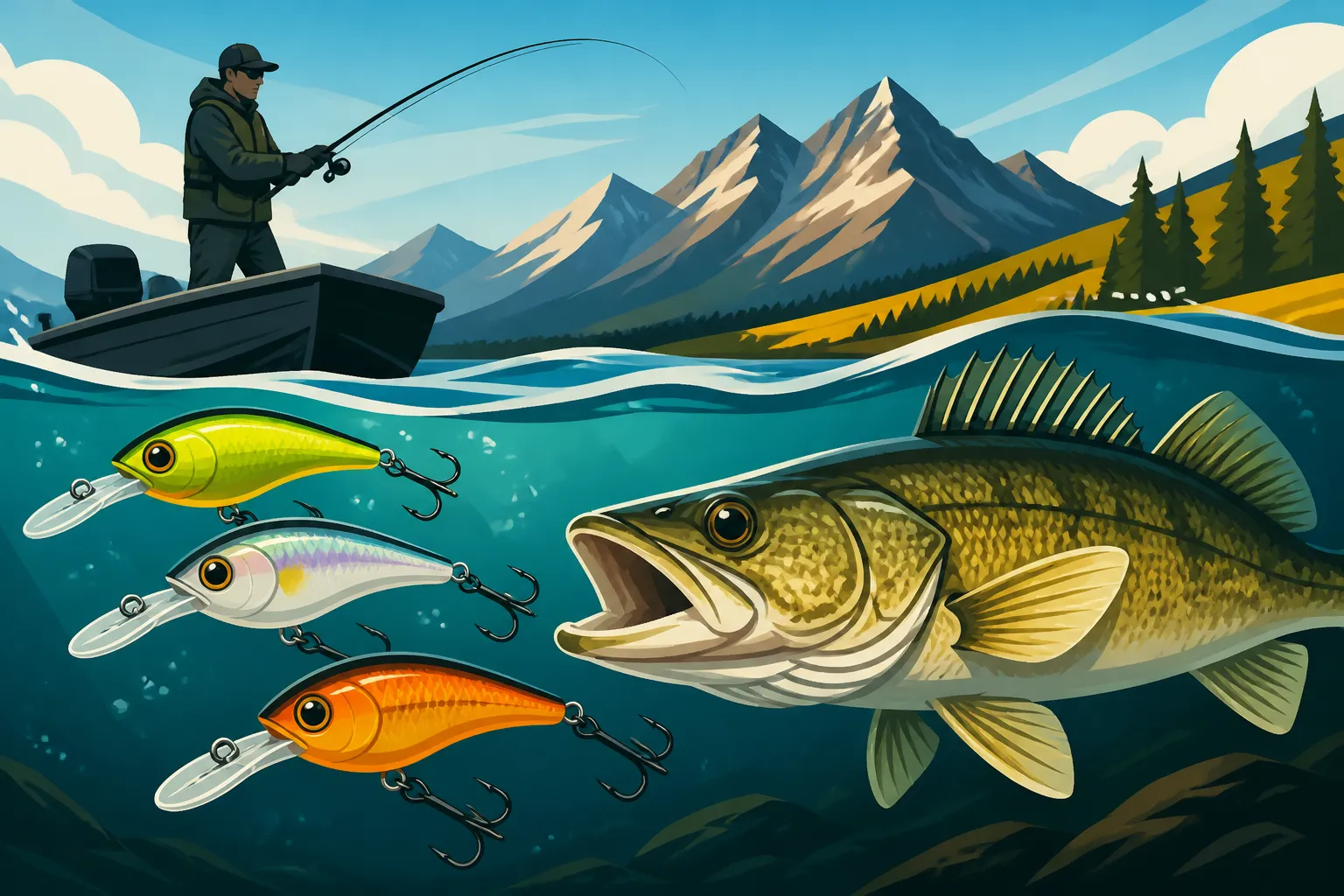
Deep-diving crankbaits are easily identifiable by their exceptionally long, broad, and steeply angled lips. These are designed to plunge deep, often reaching 15, 20, or even 30+ feet on a long cast or troll. They are indispensable for targeting walleye suspended in open water, relating to deep humps, or holding on the bottom of major drop-offs, especially during the heat of summer or when fish are pushed deep by bright sunlight. Trolling with these lures, especially with specific line setups, can be incredibly effective for exploring vast areas of deeper lakes.
The shape of the lip also influences the lure's action and its ability to navigate cover. Square-bill crankbaits (typically shallow divers) tend to "walk" over snags, deflecting off cover rather than digging in, making them great for heavy cover. Round-bill crankbaits (common in medium and deep divers) usually have a smoother dive and retrieve, excelling in open water or when ticking off subtle bottom features. Coffin bills (a hybrid shape) can offer a unique action and good deflection as well.
Color Patterns and Transparency
Color is perhaps the most debated and subjective aspect of crankbait selection, yet it undeniably plays a significant role in walleye success. While walleye vision is excellent in low light, they can still discern colors, and matching the light conditions and water clarity is key.
For clear water conditions, natural baitfish patterns are often most effective. Think about realistic perch, shiner, or cisco imitations with subtle greens, browns, silvers, and whites. Transparent or semi-transparent lures can also be deadly, especially on sunny days, as they allow light to pass through, creating a more natural, subtle flash that mimics live bait. When walleye are very particular, a natural look is usually the best approach.
In stained or turbid water, where visibility is limited, brighter and more contrasting colors tend to stand out better. Firetiger (bright green, yellow, orange, and black stripes), chartreuse, hot pink, and iridescent blue are often excellent choices. Darker colors, like black or deep purple, can also create a strong silhouette in dark water, making the lure easier for walleye to detect against the sky. The idea here isn't to perfectly imitate, but to be highly visible and noticeable. On overcast days or during low light periods like dawn and dusk (which can be the Best Time of Day to Catch Walleye), brighter or darker contrasting colors can also produce well, even in clearer water, by enhancing visibility.
Metallic finishes (gold, silver) provide flash that can be irresistible, especially on sunny days or in clear to moderately stained water. Matte finishes can be more subtle, great for spooky fish or bright conditions. Sometimes, a combination of natural and flashy, like a silver side with a chartreuse back, offers the best of both worlds. It's often a good idea to have a range of colors in your tackle box, varying from very natural to very flashy, so you can adapt to changing conditions on the fly. Don't be afraid to experiment!
Rattles, Action, and Buoyancy
Beyond how deep it dives and what color it is, a crankbait's internal characteristics and how it moves through the water are crucial for enticing walleye.
Rattles are internal BBs or bearings that create sound and vibration as the lure moves. Some crankbaits are silent, while others have loud, multi-rattle systems. The theory is that rattles mimic the sounds of distressed baitfish, attracting walleye from a distance or in murky water where visual cues are limited. In extremely clear or highly pressured waters, silent crankbaits might be more effective as they offer a more subtle presentation. It’s a good idea to have both options in your kit. The vibration created by some lipless crankbaits, even without explicit "rattles," can also be a significant draw.
A crankbait's action refers to how it wiggles, wobbles, or shimmies through the water. Some lures have a tight, rapid wiggle, mimicking a fast-moving minnow. Others have a wide, slower wobble, often preferred in colder water or by fish looking for a lazier meal, such as a struggling perch. The action is largely determined by the lip shape and body design. Some anglers find that a more subtle action is better for finicky walleye, while an aggressive, wide wobble can trigger reaction strikes from active fish. Paying attention to how the lure feels and vibrates through your rod can give you clues about its action.
Buoyancy describes how a crankbait behaves when you stop retrieving it.
- Floating crankbaits will rise to the surface when you pause your retrieve. These are excellent for fishing over heavy cover, as you can retrieve, pause when you hit an obstruction, let the lure float up over it, and then resume your retrieve, preventing snags.
- Suspending crankbaits are designed to hang perfectly still at the depth they reached when you paused. This can be incredibly effective, especially in colder water, as the motionless lure often triggers strikes from hesitant walleye who need a bit more time to commit. Jerkbaits are a classic example where suspending action is critical.
- Sinking crankbaits will slowly descend when paused. These are less common in traditional crankbaits but are often seen in lipless crankbaits, which can be counted down to specific depths or jigged vertically.
Each of these features plays a role in how the crankbait appeals to a walleye under different conditions, and a diverse selection covering these bases will make you a more adaptable and successful angler.
Top Crankbait Categories for Alberta Walleye
Now that we've dug into the individual components, let's talk about the specific types of crankbaits that consistently put Alberta walleye in the net. These categories represent different tools for different situations, and having a few good options from each will round out your tackle box nicely. You'll find these at most major sporting goods stores or through online retailers like Amazon.
Shallow-Diving Crankbaits (0-6 feet)
These lures are your best friends when walleye are holding in skinny water, typically during the early season or when they move shallow to feed under low light conditions.
Shallow-diving crankbaits are characterized by a short, often wide lip that doesn't allow them to dig very deep. They're designed to run just below the surface, skimming over submerged vegetation, rock rubble, or along shallow breaklines. Think spring walleye pushing up into warmer bays after the ice-off, or during early summer evenings when they're cruising weed edges. They're also fantastic for fishing rivers or shallower sections of lakes where deeper lures would constantly snag.
A popular type in this category is the square-bill crankbait. These have a distinct square-shaped lip that helps them deflect off structure like rocks and wood rather than getting hung up. This "ricochet" action can often trigger aggressive reaction strikes from walleye. Retrieval speed can vary; sometimes a slow, steady retrieve is all it takes, other times a stop-and-go with sudden twitches will generate bites. Having a few in perch or firetiger patterns can be very effective in waters like Pigeon Lake or parts of Lesser Slave Lake during the right seasons.
Another style often considered here is the lipless crankbait, which, while capable of running at various depths depending on retrieve, can be very effective in shallow water when retrieved quickly. Their tight wobble and loud rattle call fish in from a distance. We'll delve into them more shortly, but they're certainly a shallow water staple. Look for options with a good rattle system and a tight, vibrant wobble.
Medium-Diving Crankbaits (6-15 feet)
If there's a "general purpose" crankbait for walleye, it's the medium diver. These lures are incredibly versatile and should make up a significant portion of your walleye crankbait collection.
Medium-diving crankbaits have a longer, more angled lip than their shallow-diving counterparts, allowing them to reach that sweet spot between 6 and 15 feet. This depth range covers a huge amount of prime walleye habitat: the edges of weed lines, subtle breaklines on flats, submerged humps, and points. They're effective throughout the summer and into the fall, both for casting to specific pieces of structure and for trolling to cover expansive areas.
These lures typically feature a more traditional round or oval lip. They often have a moderate wobble that can be appealing to walleye in various moods. For casting, try working them along drop-offs, reeling them down until they "tick" the bottom, then pausing or changing retrieve speed. When trolling, these are excellent for following contour lines or covering large areas of a lake like Sylvan Lake or Gull Lake. Match the speed of your boat to the lure's intended action – too fast and it might blow out, too slow and it might not work effectively. Brands like Rapala and Berkley offer a wide range of reliable medium-diving options. Getting familiar with How to pattern walleye on an unfamiliar Alberta lake is a skill that comes in handy with these versatile lures.
Deep-Diving Crankbaits (15+ feet)
When walleye go deep, you need a crankbait that can follow them. Deep-diving crankbaits are essential for probing those deeper structures and open water areas where big walleye often suspend.
Identifiable by their dramatically long and often slender lips, these lures are engineered to get down to significant depths, often 20, 25, or even 30+ feet. They are primarily used for trolling, as casting them to maximum depth can be exhausting and less efficient. These are particularly effective during the summer months when bright sunlight pushes walleye into the cooler, darker depths of lakes like Cold Lake or the deeper sections of Lesser Slave Lake.
Trolling with deep-divers requires attention to detail. Line type, diameter, and length out all affect the diving depth. Fluorocarbon line, with its thinner diameter and less stretch, can help your lure achieve maximum depth. Using a line counter reel is invaluable for replicating successful presentations. Many anglers use planer boards to spread out their lines when trolling deep-divers, allowing them to cover a wider swath of water and present multiple lures at once without tangling. Experiment with trolling speeds; sometimes a slow, deliberate pace is best, other times a slightly faster retrieve will get those reaction bites. Learning How deep to troll for lake trout on Cold Lake might give you some transferable skills for walleye in similar deep waters.
Specialized Crankbaits and Situations
While the previous categories cover the mainstays, there are a couple of other "crankbait family" members that deserve special mention for their unique applications and effectiveness on Alberta walleye. Sometimes, you need a different tool to solve a specific problem, and these lures fit the bill.
Lipless Crankbaits
Lipless crankbaits are a unique beast. As their name suggests, they lack the characteristic diving lip of traditional crankbaits. Instead, they typically have a flat head and a line tie on their back, which causes them to vibrate aggressively and sink when not retrieved.
What makes them so effective for walleye? Their versatility is unmatched. You can cast them a country mile, making them ideal for covering large shallow flats or searching for scattered fish. They sink quickly, allowing you to count them down to specific depths before starting your retrieve. This means you can fish them effectively in anything from a few feet of water to 20 feet or more, depending on your technique.
The tight, high-frequency vibration and loud rattle of many lipless crankbaits are excellent for calling in walleye, especially in stained water or on windy days when fish rely more on their lateral line to detect prey. You can retrieve them steadily, yo-yo them with a lift-and-fall action, or "rip" them through weed beds. Ripping them quickly, then letting them fall on slack line, can often trigger aggressive strikes from walleye that might ignore other presentations. This technique is particularly effective around submerged vegetation. Brands like Cotton Cordell and Rapala offer classic lipless designs that have caught countless walleye in Alberta.
Jerkbaits (Suspending Minnows)
While technically often categorized separately from "crankbaits" by purists due to their different action, jerkbaits (often referred to as suspending minnows) are absolutely indispensable for walleye fishing, especially in colder water or when fish are finicky.
Jerkbaits are typically long, slender lures that imitate minnows or shiners. Their key feature, particularly for walleye, is their suspending nature. When retrieved with a "twitch, twitch, pause" action, they dart erratically from side to side (the "jerk"), then hang motionless in the water column during the pause. It's often during this pause – when the bait just sits there, vulnerable – that a hesitant walleye will commit to a strike.
They excel in clear water conditions where walleye rely more on sight, and in colder water (early spring, late fall, or even through the ice when jigged) when fish are less willing to chase a fast-moving bait. The longer a jerkbait can stay in the strike zone, the better. When the water is frigid, those pauses might need to be 5, 10, or even 15 seconds long! The slower metabolism of walleye in cold water means they appreciate an easy meal that isn't running away.
When fishing jerkbaits, a good quality fluorocarbon leader can be beneficial for stealth in clear water, and a sensitive rod can help you detect those subtle strikes that often happen on the pause. Experiment with different pause durations and jerk intensities to find what the walleye prefer on any given day. You'll find a great selection of these for purchase at any good tackle shop, or by browsing online retailers.
Retrieving and Presenting Crankbaits Effectively
Having the best crankbaits in your box is only half the battle; knowing how to bring them to life in the water is what truly makes the difference. Walleye can be particular, and varying your retrieve or presentation can often be the key to triggering a bite when nothing else seems to work.
Casting and Cranking Techniques
When you're casting a crankbait, you're not just reeling it straight back in. There are subtle nuances that can turn a "follow" into a "strike." The goal is to make your lure look as lifelike and vulnerable as possible.
One of the most fundamental techniques is simply varying your retrieve speed. Sometimes a slow, steady retrieve is all it takes, especially in colder water or when fish are less active. Other times, a fast, aggressive retrieve will trigger a reaction strike from a fish that's not actively feeding but can't resist a fleeing meal. Don't be afraid to experiment: reel three turns, pause; reel five turns, twitch, reel two turns, pause. That erratic motion can often be what seals the deal.
Deflecting off structure is another deadly technique. When you cast a crankbait near or through submerged cover like rocks, wood, or weeds, intentionally let it make contact. The sudden, unnatural deflection and change in direction often mimics a baitfish that's startled or trying to escape, triggering a predatory response from nearby walleye. This is particularly effective with square-bill crankbaits that are designed to "walk" over snags. After the deflection, sometimes a momentary pause is all it takes for the walleye to strike. You have to "feel" your bait and the bottom through your rod and line.
Additionally, consider a stop-and-go retrieve. Cast your crankbait out, reel it down to its maximum depth, and then implement a series of retrieves followed by pauses. If you're using a floating crankbait, it will slowly rise during the pause. If it's a suspending crankbait, it will hang motionless. Both actions can be incredibly effective, especially when fish are hesitant or when trying to entice a follower to commit. This is also a great way to avoid snags in tricky areas; let a floating crankbait rise over the obstruction during a pause.
Trolling Strategies
Trolling is a highly effective method for covering large areas, especially on bigger lakes, and for consistently presenting crankbaits at specific depths. It's a precise technique that requires attention to detail.
Speed is paramount when trolling. Each crankbait is designed to work optimally at a certain speed range. Too fast, and the lure might "blow out," meaning it loses its intended action or spins erratically. Too slow, and it might not have enough action to entice a strike. Experiment with your boat speed, typically between 1.5 to 3.5 miles per hour for walleye, until you find the sweet spot for your chosen lure and the conditions. A GPS unit or your boat's speed indicator is vital for maintaining consistent speed.
Depth control is critical for trolling. Understanding how deep your specific crankbait runs at a given speed with a certain amount of line out is key. Many crankbait manufacturers provide dive charts, or you can use online calculators. Factors like line diameter (thinner lines dive deeper), line type (fluorocarbon dives deeper than mono), and even current can affect depth. Utilizing line counter reels is highly recommended, as they allow you to precisely replicate successful presentations by knowing exactly how much line you have deployed. This is especially useful when you find a productive depth or a school of fish.
Planer boards are another excellent tool for trolling. These devices attach to your fishing line and pull your lure out to the side of the boat, effectively spreading your presentation. This allows you to run multiple lines without tangling, cover a much wider path, and present lures to fish that might be spooked by the boat passing directly overhead. In busy waters, or for wary walleye, getting your lures away from the boat can make a huge difference.
Finally, consider long lining versus using weight systems. Long lining simply means letting out a lot of line (often 50-150 feet or more) to let your crankbait reach its maximum advertised depth. Alternatively, techniques like lead core line or snap weights can be used to get crankbaits deeper than their natural dive curve, which is useful when walleye are holding in extremely deep water or when you want to use a medium diver at deep-diving depths. Understanding how to use techniques like Best technique for vertical jigging walleye (though for jigs, principles of finding fish apply) can help inform your trolling strategies too.
Essential Considerations for Choosing and Buying Crankbaits
Building an effective walleye crankbait arsenal isn't about buying every lure on the shelf. It's about making smart, informed choices that will lead to more success on the water. Thinking about the long game and the quality of your gear will save you headaches and heartbreak in the long run.
Quality and Durability
There's a reason some crankbaits cost a bit more than others, and it often comes down to quality and durability. While it's tempting to grab the cheapest options, investing in good quality lures generally pays off.
Hooks and split rings are often the first things to fail on cheaper lures. Walleye have tough mouths, and a flimsy hook can bend or break, resulting in a lost fish. Good quality hooks are sharper, stronger, and more corrosion-resistant. Similarly, strong split rings ensure the hooks stay attached and the lure maintains its integrity after a battle. Many experienced anglers will actually upgrade the hooks on new lures, especially on those that come with less-than-stellar hardware. Replacing hooks isn't a huge task, but it’s an extra step that you might want to consider when buying.
The paint finish and body construction also contribute to durability. Cheaper lures can chip, crack, or lose their finish quickly, especially after bumping off rocks or getting chewed on by a few fish. A durable finish ensures your lure maintains its appeal and effectiveness for longer. Look for lures with a solid body construction that can withstand the abuse of casting, trolling, and fighting fish. These small details ensure your lure swims true and performs as intended, trip after trip. You’ll definitely find robust options at Bass Pro Shops, known for carrying reputable fishing gear that stands up to the rigours of Canadian waters.
Building Your Walleye Crankbait Arsenal
You don't need a hundred different crankbaits to be successful, but you do need a strategic selection. Start with versatility, then specialize as you gain experience and identify specific needs for the waters you fish most often.
A good starting point is to have a few reliable options from each of the major categories: shallow-diving, medium-diving, and deep-diving. For each category, choose 2-3 proven colors:
- A natural baitfish pattern (like silver/black, perch, or a shiner imitation) for clear water and sunny days.
- A flashy or high-contrast pattern (like firetiger, chartreuse, or hot pink) for stained water, low light, or aggressive fish.
- Perhaps a darker, more silhouetted color (like black/blue or deep purple) for very dark water or night fishing.
Once you have this core selection, you can expand. Add a few lipless crankbaits for covering vast flats or working through weeds. Incorporate some suspending jerkbaits for those tricky cold-water periods or highly pressured fish. As you fish different bodies of water, you'll start to notice patterns in what works best for Best walleye lures for Lesser Slave Lake in summer or specific sections of rivers. Keep a small log of what colors, depths, and retrieves were successful on which days, and you'll quickly refine your selection. It's about smart choices, not just endless quantity. Luckily, online stores like Amazon make it incredibly easy to research and acquire specific crankbait models and colours that you’ve identified as productive.
| Crankbait Type | Typical Dive Depth (feet) | Best Conditions | Key Features |
|---|---|---|---|
| Shallow-Diver | 0-6 | Spring, shallow flats, weed lines, low light, rivers | Short, wide lip; often square-billed for deflection; floating |
| Medium-Diver | 6-15 | Summer structure, breaklines, moderate depths, versatile casting/trolling | Longer, angled lip; moderate wobble; often floating or suspending |
| Deep-Diver | 15-30+ | Deep humps, open water trolling, summer/fall, main lake basins | Very long, slender lip; reaches maximum depths; primarily for trolling |
| Lipless Crankbait | Variable (by retrieve) | Shallow to medium depths, ripping through weeds, windy days, vertical jigging | No lip; tight vibration and rattle; sinks; covers water quickly |
| Jerkbait/Suspending | 0-10 (depends on lip) | Cold water, clear water, finicky fish, stop-and-go retrieve | Slender minnow profile; suspends on pause; erratic darting action with jerks |
Disclaimer
This article is for general informational purposes only and does not constitute professional advice. Laws, prices and regulations vary by location and change over time. Consult a qualified professional for guidance on your specific situation.