How deep to troll for lake trout on Cold Lake
Few things are as frustrating as heading out onto a massive, beautiful lake like Cold Lake, knowing it holds monster lake trout, only to spend hours trolling without a single bite because you can't figure out how deep they're holding. It's a common challenge for even seasoned anglers, as these majestic fish are constantly on the move, chasing comfort and forage. This guide will walk you through the essential strategies for determining the optimal trolling depth for lake trout on Cold Lake, helping you transform those frustrating outings into successful ones.
Decoding Lake Trout Behavior on Cold Lake
To consistently catch lake trout, especially on a deep, expansive body of water like Cold Lake, you need to think like a lake trout. Their movements and preferred depths are largely dictated by water temperature, oxygen levels, and the presence of their food source. Cold Lake is renowned for its deep, clear, and nutrient-rich waters, which makes it prime habitat for these cold-water predators.
Understanding the Thermocline and Oxygen Levels
The thermocline is perhaps the single most critical factor influencing where lake trout will be found in Cold Lake, particularly during the warmer months. As summer progresses, the sun heats the surface water, creating distinct layers: a warm upper layer (epilimnion), a middle layer where temperature changes rapidly (the thermocline), and a cold, deep layer (hypolimnion). Lake trout are cold-blooded and prefer water temperatures generally ranging from 8°C to 15°C (46°F to 59°F).
In Cold Lake, this ideal temperature range often aligns perfectly with the thermocline or just below it, where the water is cool enough but still boasts sufficient oxygen. Above the thermocline, the water can become too warm and less oxygenated for comfort. Below the thermocline, while cold, oxygen levels can sometimes deplete in very deep basins, making it less attractive. Your fish finder will be your best friend in locating this critical temperature break. It usually appears as a distinct, hazy line or band on your sonar screen. This is a crucial piece of information that helps you narrow down the vastness of the lake to where the fish are most likely to be. Focusing your trolling efforts around this depth band, or slightly above or below it, will drastically increase your odds.
The Influence of Baitfish and Forage
Lake trout are apex predators, and their movements are inherently tied to the availability of food. On Cold Lake, their primary forage often includes cisco (also known as lake herring) and various other baitfish species. These baitfish, in turn, are influenced by plankton blooms and water temperature, often congregating along structure or suspended in open water at specific depths.
If you can locate schools of baitfish on your fish finder, you've found a major clue. Lake trout will rarely be far from their food source. Sometimes, they'll hold just below a baitball, ambushing unsuspecting prey from beneath. Other times, they'll be actively chasing through the schools. Observing your electronics for dense baitfish schools, especially those with larger, arched marks lurking nearby, is a strong indicator of where you should deploy your lures. Trolling at or just above these baitfish concentrations, or running your lure through the bottom of the schools, can trigger strikes. This is especially true during early mornings or late evenings when lake trout are often most active in their feeding routines. Understanding the patterns of these forage fish is as important as understanding the trout themselves. For more detailed insights into what these fish eat, check out our guide on What Lake Trout Eat in Alberta.
Seasonal Depth Strategies for Cold Lake Lake Trout
Lake trout behavior, and consequently their preferred trolling depths, shifts dramatically throughout the year. What works in May won't necessarily work in August. Adapting your strategy to the season is absolutely essential for consistent success on Cold Lake.
Spring and Early Summer Tactics
During the ice-off period in spring and through early summer, Cold Lake's waters are relatively uniform in temperature from top to bottom. This means lake trout can be found much shallower than they will be later in the summer. They might be actively cruising rocky points, shoals, or even near shorelines, feeding aggressively after the long winter. Depths from 15 to 40 feet are often productive during this time.
As the water slowly warms, they'll gradually move deeper. In late spring or early summer, before the thermocline fully establishes itself, you might find them in the 30- to 60-foot range. This is a fantastic time for flat-line trolling closer to structure, or using lighter lead core setups. Lures that imitate smaller baitfish are often effective. Look for areas where inflowing water might bring nutrients or slightly cooler temperatures, as these can concentrate fish. Consider using smaller spoons or stickbaits. Our comprehensive guide on Alberta Fishing Seasons by Zone and Month offers broader seasonal insights that can be cross-referenced with this specific lake trout advice.
Mid-Summer Deep Water Challenges
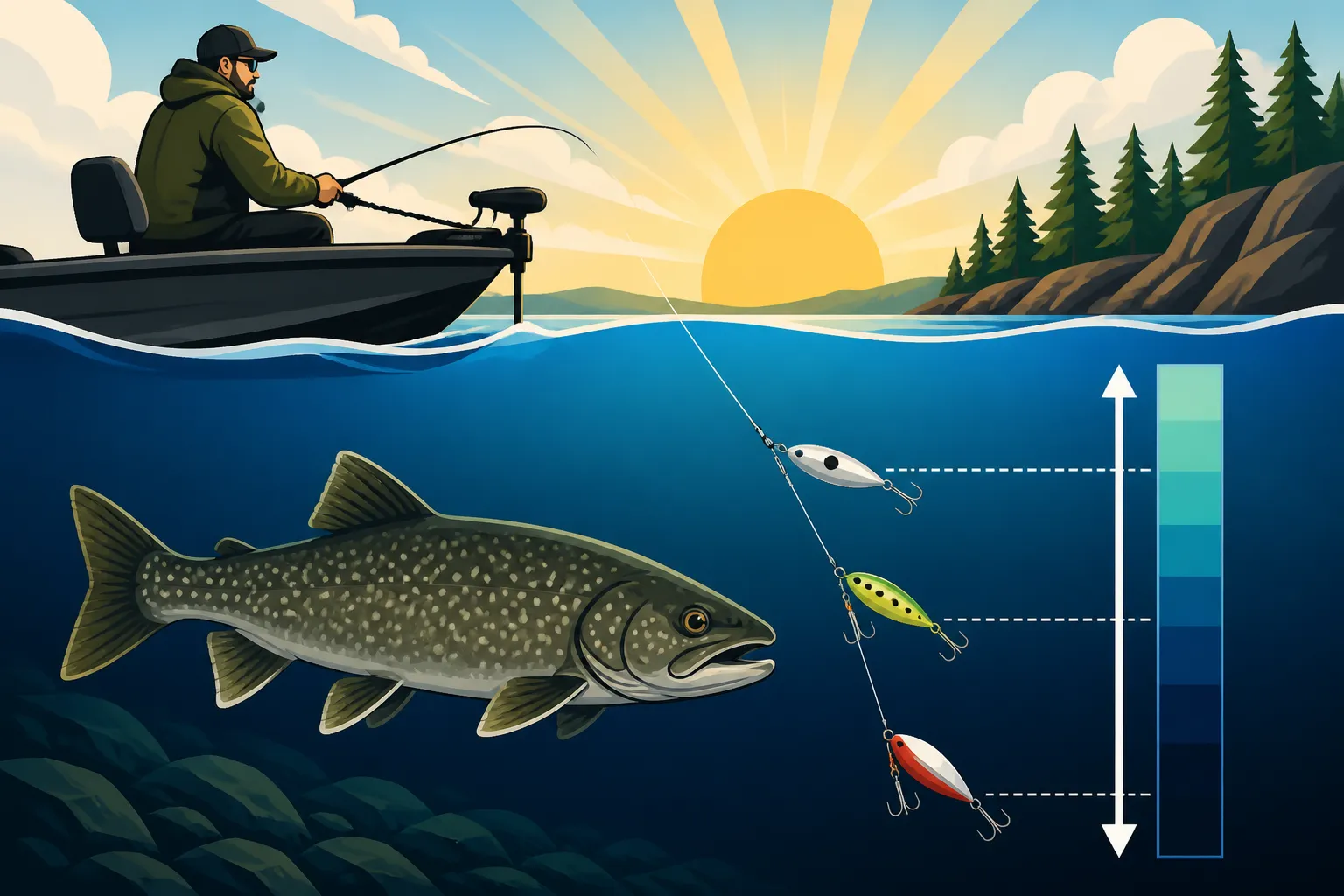
Ah, the dog days of summer. This is when Cold Lake lake trout truly go deep. The surface waters become too warm, pushing the trout down into the cooler, oxygenated depths, often around the thermocline. In mid-summer, you'll frequently find lake trout holding anywhere from 60 to 120 feet, sometimes even deeper, depending on the day and the specific area of the lake. It's not uncommon for anglers to target fish successfully at 80 to 100 feet on Cold Lake during July and August.
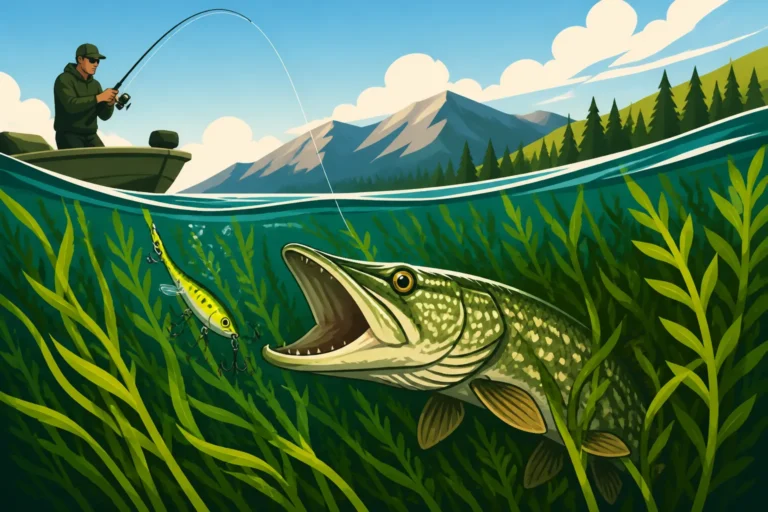
Trolling during this period requires specialized gear to get your lures down to these precise depths. This is where downriggers become indispensable. A good downrigger allows you to present your lure at an exact depth, right in the strike zone, and keep it there consistently. You might also find success with heavy jigs dropped straight down over deep structure or suspended bait balls. When buying new equipment, remember that online retailers like Amazon offer a huge selection of specialized deep-water trolling gear, from downriggers to heavy-duty line, often with detailed customer reviews to help you choose. This is also the time when having a sensitive fish finder truly pays off, as you'll be looking for subtle signs of fish and bait at extreme depths.
Fall Turnover and Winter Ice Fishing Depths
As the air cools in late summer and early fall, the surface water of Cold Lake begins to cool as well. Eventually, the entire water column reaches a similar temperature and density, leading to the "fall turnover." During this period, which can last a week or two, the lake essentially mixes, and temperature stratification breaks down. This can scatter lake trout, making them harder to pattern, but it also allows them to range into shallower areas once again.
After turnover, as the water continues to cool towards freezing, lake trout will once again be found at more varied depths, often shallower than mid-summer. Depths from 30 to 70 feet can be productive, depending on where baitfish are congregating. They'll be actively feeding, bulking up for winter.
When Cold Lake eventually freezes over, ice fishing for lake trout begins. While not "trolling" in the traditional sense, understanding depth is still paramount. Lake trout under the ice will often relate to deep structure, humps, and drop-offs. Anglers will typically use large tube jigs or spoons, actively jigging them at depths anywhere from 40 to 100+ feet, directly over concentrations of fish or structure. The key is to present your lure close to the bottom or suspended at the depth where your sonar marks indicate fish. Many anglers will use portable fish finders, which are easily found on Amazon, to monitor these depths and fish activity. For a more general overview of how to catch these magnificent fish, our guide on How to Catch Lake Trout in Alberta covers various techniques.
Essential Gear and Trolling Techniques for Deep Water
Reaching those elusive deep-water lake trout on Cold Lake requires the right tools and a solid understanding of how to use them. You can't just throw out a crankbait and hope for the best in 100 feet of water!
Mastering Downriggers and Depth Control
Downriggers are the gold standard for deep-water trolling for lake trout. They allow you to precisely control your lure's depth, often within a foot or two of where you want it. A heavy cannonball weight (typically 8-12 lbs) is deployed on a cable, and your fishing line, with its lure, is attached to this cable via a release clip. When a fish strikes, the line releases from the clip, allowing you to fight the fish directly without the weight of the cannonball.
When setting up your downrigger, consider the following:
- Cannonball Weight: Use enough weight to keep your line straight down, even at higher trolling speeds or in current. Heavier weights (e.g., 10-12 lbs) are often necessary on Cold Lake for deeper presentations.
- Cable Depth: Watch your fish finder closely. If you're marking fish at 90 feet, set your downrigger to 88-92 feet. Experiment with running one lure slightly above and one slightly below the main depth you're marking fish or bait.
- Lead Length (from release clip to lure): The distance between your release clip and your lure, often called the "lead," can vary. Sometimes, a short lead of 10-15 feet works best. Other times, a longer lead of 50-100 feet, especially with a subtle lure like a small spoon or a dodger/flasher with a fly, can be more effective as it separates the lure from the downrigger weight, which can spook fish.
- Trolling Speed: For lake trout, a speed between 1.5 to 3.0 mph is often a good starting point, but it's crucial to experiment. Some days they want a faster, more erratic presentation, other days a slow, methodical pace. Observe how your lure is acting behind the boat at different speeds. You can find excellent quality downriggers and all the necessary accessories like release clips and cannonballs on Amazon, offering a wide range of options for every budget and boat size.
Alternative Deep-Water Rigs and Lures
While downriggers are king, there are other effective ways to get your lures deep:
- Lead Core Line: This specialized line has a lead core inside a braided sheath, causing it to sink. Each "colour" (usually 10 yards) of lead core sinks approximately 5 feet at a given trolling speed. So, if you want to fish 50 feet deep, you might let out 10 colours of lead core, plus a fluorocarbon leader. The advantage is no heavy cannonball, but depth control is less precise than a downrigger and is heavily influenced by speed. It's often used with long, light-action rods.
- Dipsy Divers (or Planer Boards with Diving Devices): These disc-shaped devices clip onto your main line and dive, pulling your lure down to a desired depth. They also have a release mechanism like a downrigger. They come in various sizes and can be set to dive to specific depths, sometimes with a directional setting to get your lure out to the side of the boat, covering more water.
- Snap Weights and Trolling Weights: These are lead weights that clip onto your main line a distance in front of your lure. They provide depth but are less precise than downriggers or lead core. They're often used to add extra depth to regular trolling setups.
- Heavy Jigs and Jigging Spoons: For active jigging, especially when you mark fish on structure, large bucktail jigs, heavy spoons like a Luhr-Jensen Crippled Herring, or tube jigs can be very effective. Drop them directly to the marked depth and aggressively jig them. This isn't trolling, but it's a vital deep-water technique to have in your arsenal, particularly in specific spots where you know fish are holding. When browsing for the best spoons for ice fishing lake trout, remember many of these jigs and spoons are also highly effective for open water vertical jigging.
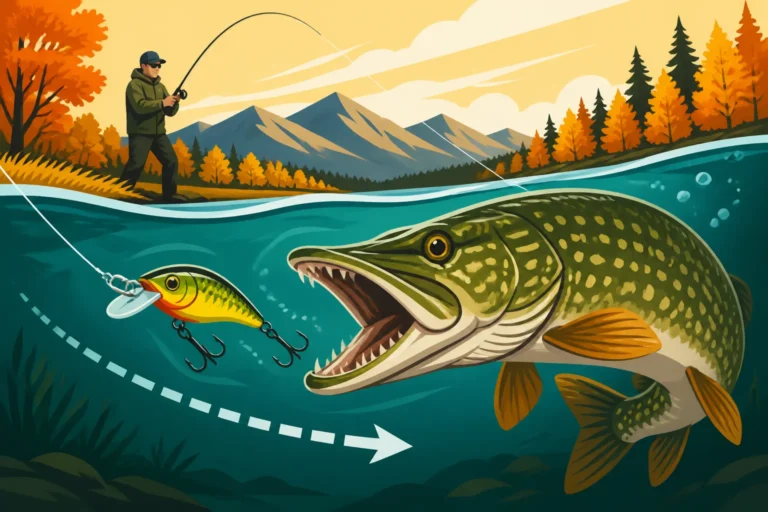
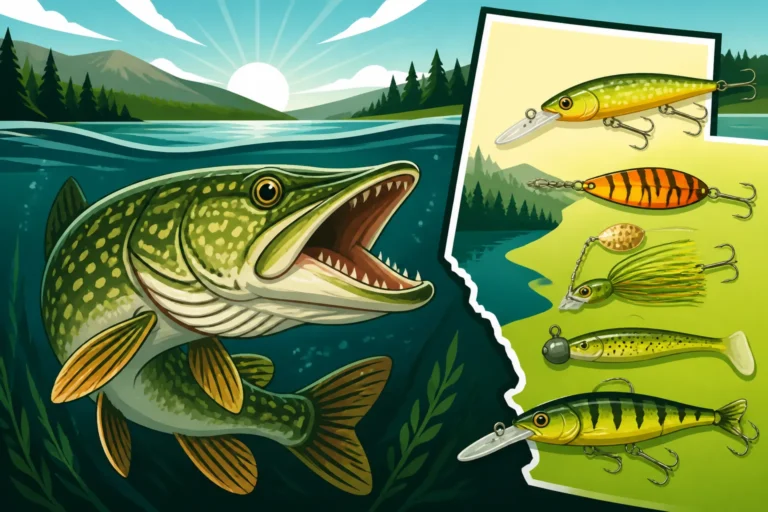
When it comes to lure choices, big spoons (like a Len Thompson, Daredevil, or Northern King) in vibrant colours like silver, brass, or even chartreuse are perennial lake trout favourites on Cold Lake. Also, consider large minnow imitations or flasher-and-fly combinations. Many of these effective lures can be easily sourced from online retailers like Amazon, making it convenient to stock up before your next trip.
Maximizing Success with Electronics and Fine-Tuning
Fishing on Cold Lake without reliable electronics is like navigating a maze blindfolded. Your fish finder isn't just for locating fish; it's your window into the underwater world, showing you depth, structure, baitfish, and the critical thermocline.
Interpreting Your Fish Finder
Understanding what your fish finder is telling you is paramount. Here's what to look for:
- Bottom Depth and Structure: Always pay attention to the bottom. Lake trout, especially large ones, will often relate to underwater points, humps, submerged islands, or dramatic drop-offs. These areas provide ambush points and thermal refuges. Mark these spots on your GPS for future reference.
- Thermocline: As discussed, this is a visible band on your sonar where the water temperature changes rapidly. It's a key indicator of where lake trout will be seeking comfort. You might see a "hazy" layer or a distinct horizontal line across your screen.
- Baitfish Schools: Dense clouds or scattered marks in the water column indicate the presence of forage. Lake trout are almost certainly nearby. Pay attention to the depth of these schools.
- Fish Arches: Larger, distinct arches often indicate individual lake trout. If you see them consistently at a certain depth, that's your target zone. Don't just focus on the biggest arches; sometimes, smaller, more active marks can be aggressive feeders.
- Your Lure: With modern fish finders, especially those with good 2D sonar or CHIRP, you can often see your downrigger ball and even your lure! This is incredibly helpful for ensuring your presentation is exactly where you want it. It's truly amazing to watch your spoon on screen, then see a large fish rise up to inspect it. Many of the Best Fish Finders for Alberta Lakes offer these advanced capabilities.
Adjusting Your Presentation in Real-Time
Trolling is a game of constant adjustment. Very rarely will the fish stay at the exact same depth all day, or respond to the exact same speed or lure.
- Vary Depths: Don't just pick one depth and stick with it. Stagger your lines if you're running multiple. For instance, if you're marking fish at 80 feet, run one downrigger at 75 feet and another at 85 feet. This helps you cover a wider depth range and pinpoint their preferred zone.
- Change Lures/Colours: If one lure isn't getting bites, try another. Lake trout can be incredibly picky. Swap out spoons for stickbaits, or change colours. Sometimes a subtle shift from a bright silver to a more natural baitfish pattern makes all the difference.
- Adjust Speed: Play with your trolling speed. A slight increase or decrease can change the action of your lure and trigger a strike. GPS-enabled boat speed is more accurate than your boat's speedometer.
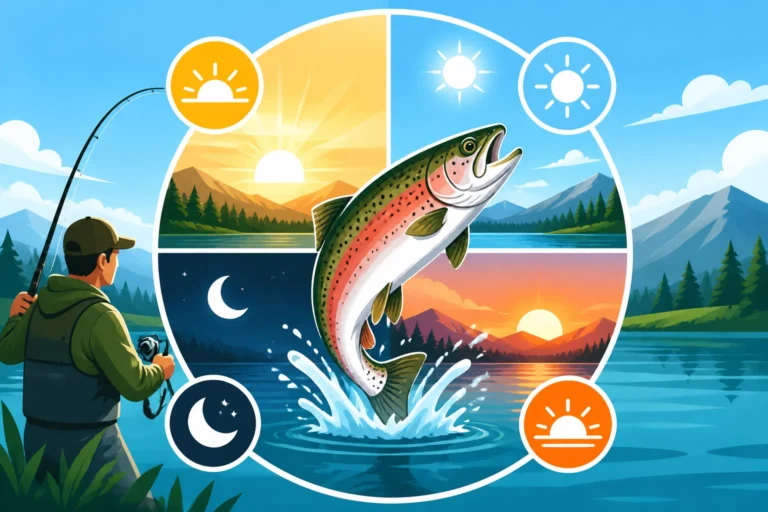
- Consider Time of Day: Early morning and late evening often see lake trout move slightly shallower and become more active. Mid-day, especially under bright sun, they'll usually hold deeper and might be less aggressive.
- The Power of the Turn: Don't forget the power of a turn! When your boat makes a turn, the outside lines speed up, and the inside lines slow down. This change in lure speed and action can often trigger a reaction strike from following fish. Sometimes, that's all it takes to convince a hesitant fish to bite.
- GPS Tracks: Use your GPS to mark successful trolling passes. If you catch a fish at a specific depth and location, mark it and try to repeat that pass. You'll start to build a map of productive areas on Cold Lake over time.
By understanding the seasonal patterns, utilizing the right gear, and constantly interpreting your electronics and adapting your approach, you'll significantly increase your success when trolling for lake trout on Cold Lake. It's a challenging but incredibly rewarding pursuit, especially when you land one of those magnificent deep-water giants.
Seasonal Lake Trout Trolling Depths on Cold Lake
Here's a quick reference guide to general trolling depths for lake trout on Cold Lake, keeping in mind these are approximate and can vary based on specific conditions, baitfish presence, and temperature fluctuations. Always verify with your fish finder.
| Season | Typical Depth Range (Feet) | Key Factors | Recommended Gear |
|---|---|---|---|
| Early Spring (Ice-off) | 15 – 40 | Uniform water temps, post-winter feeding. | Flat-lining, lighter lead core, planer boards. |
| Late Spring/Early Summer | 30 – 60 | Water warming, thermocline forming. | Lead core, light downriggers, Dipsy Divers. |
| Mid-Summer | 60 – 120+ | Strong thermocline, deep cold water refuge. | Heavy downriggers, heavy vertical jigging, deep Dipsy Divers. |
| Fall Turnover | Variable (30 – 80) | Water mixing, scattered fish. | Downriggers, lead core, covering various depths. |
| Late Fall (Pre-Ice) | 30 – 70 | Water cooling, active feeding for winter. | Downriggers, lead core, spoons and stickbaits. |
| Winter (Ice Fishing) | 40 – 100+ | Over deep structure or suspended bait. | Vertical jigging with heavy spoons/tubes, portable sonar. |
Disclaimer
Fishing regulations and conditions can change rapidly. Always consult the most current Alberta Guide to Sportfishing Regulations before heading out. This guide provides general information and recommendations, but it is your responsibility to know and follow all applicable laws. Fishing inherently carries risks; exercise caution and practice safe boating and angling techniques at all times.