How deep walleye go in summer
It can be incredibly frustrating to hit your favorite Alberta walleye lake in the summer, only to find the fish have seemingly vanished into thin air. One day they're biting shallow, the next you can't buy a strike. This guide is here to help you crack the summer walleye code by understanding exactly where these sought-after fish go when the mercury rises, and how you can adapt your approach to put more of them in your net.
Understanding Walleye Behavior in Summer
Summer brings significant changes to our Alberta lakes and rivers, and with those changes come shifts in how walleye behave. It’s not that they disappear; they simply adjust their locations and feeding patterns to stay comfortable and fed. Understanding why they move is key to predicting where they'll be.
The Thermocline and Oxygen Levels
When summer really kicks in, many of our deeper lakes in Alberta develop what's called a thermocline. Imagine your lake forming distinct layers, much like a layered cake. The top layer, warmed by the sun, is called the epilimnion. It's usually warm and oxygen-rich, but often too bright and warm for walleye. Below that, you have the metalimnion, which is the thermocline itself – a distinct zone where the water temperature drops rapidly. This can be a prime zone for walleye, offering cooler temperatures without being too deep.
Underneath the thermocline is the hypolimnion, the deep, cold water. While it's cool, it often has very low oxygen levels (anoxic zones) due to decomposition, making it unsuitable for fish. Walleye, being cold-water fish, are constantly looking for that sweet spot: water that's cool enough to be comfortable, but still rich in oxygen and holding baitfish. This makes the thermocline incredibly important. If you can locate the thermocline with your fish finder, you've often found a critical depth range where walleye might be suspended or relating to structure. They don't want to go too deep where oxygen is scarce, nor do they want to stay too shallow where the water is too warm and bright.
Forage and Light Sensitivity
Walleye are incredibly light-sensitive creatures. Their large eyes are designed to see well in low light conditions, which is why they're often most active at dawn, dusk, or on cloudy days. In the bright glare of a summer sun, they tend to retreat to deeper, darker waters or hide under cover to protect their sensitive eyes. This plays a huge role in their summer depth.
Beyond light, their primary motivation is food. Walleye follow their forage. In summer, schools of baitfish like ciscoes, smelt, and minnows will also seek out comfortable water temperatures and abundant plankton. If the baitfish are suspended in the thermocline, or relating to deep weed edges where they can hide, the walleye won't be far behind. This creates a vertical migration throughout the day. At dawn and dusk, when light is low, walleye might move shallower to ambush baitfish against structure or shallow flats. As the sun climbs higher, they'll often retreat to deeper, darker ambush points. Understanding What baitfish Alberta walleye key on can give you a significant advantage in predicting their movements.
Typical Depths and Factors Influencing Them
There's no single "magic depth" for walleye in summer, as every lake and every day can be different. However, we can talk about general ranges and the critical factors that will nudge them shallower or deeper.
General Depth Ranges
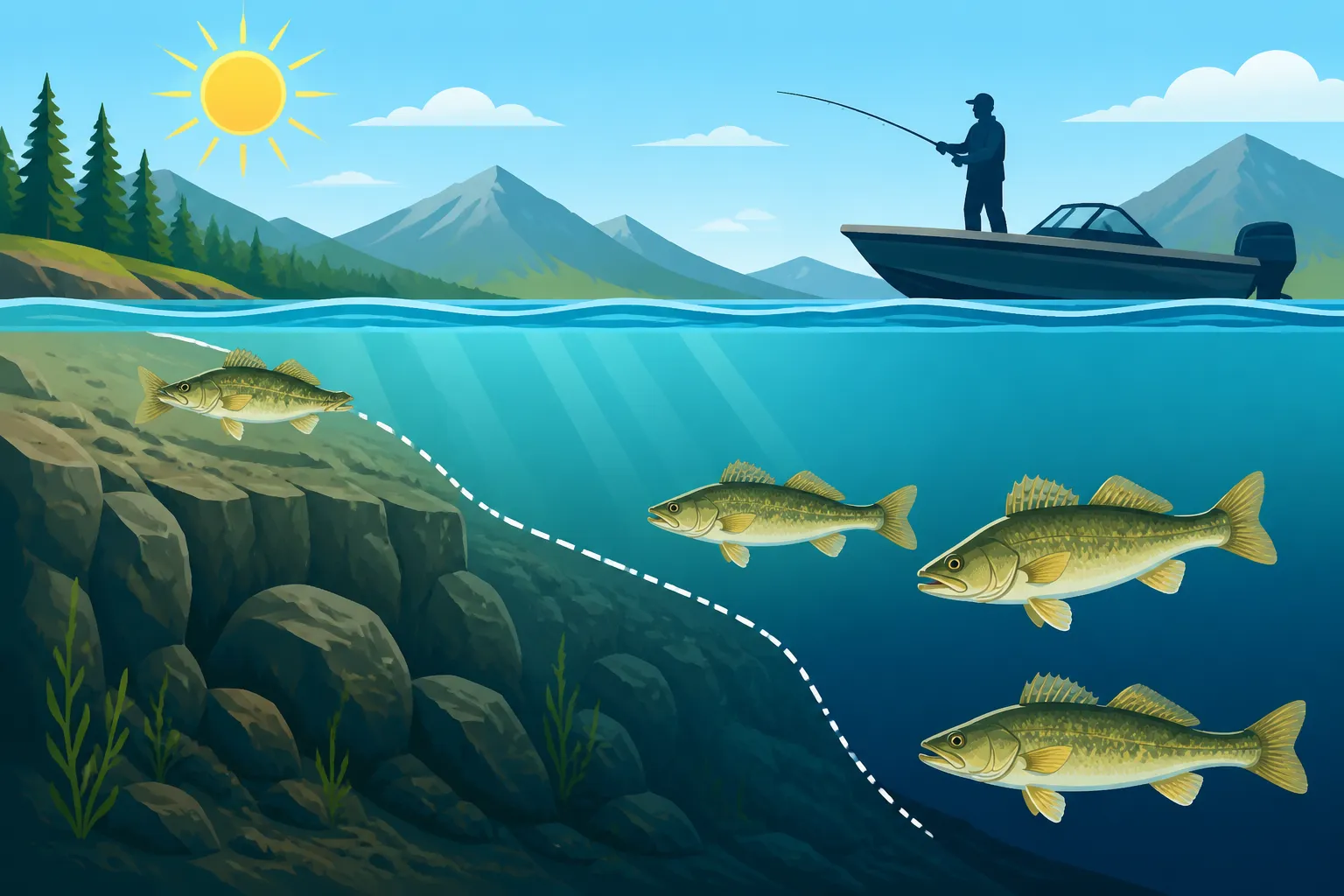
In many of our larger, deeper Alberta lakes during the peak summer months, walleye will often be found in the 15-to-40-foot range. This isn't a hard and fast rule, but it's a great starting point. On a bright, sunny day with clear skies, don't be surprised if they hug the deeper end of that spectrum, especially if the lake has a well-defined thermocline in that zone. They might be suspended in the water column over deeper basins, or relating tightly to deep structure like humps, points, and transition lines.
Conversely, on an overcast, windy day, or during those crucial low-light periods like early morning or late evening, they might push up shallower, into the 8-to-15-foot range, particularly if there are dense weed beds or rocky points offering ambush cover. Always remember that walleye are opportunistic feeders, so they'll move wherever the feeding is best and the conditions are most comfortable. If you’re trying to figure out How to Catch Walleye in Alberta, depth is one of the biggest pieces of the puzzle.
Specific Lake Characteristics
The type of lake you're fishing in Alberta will have a massive impact on summer walleye depth.
- Deep, Clear Lakes: Lakes like Cold Lake or some of the deeper sections of Lesser Slave Lake often have well-defined thermoclines. In these clear waters, sunlight penetrates deeper, pushing walleye into deeper comfort zones, typically 25-45 feet, sometimes even deeper, especially during the middle of the day. They'll often suspend over deep water, or relate to steep drop-offs and submerged islands. Clarity allows them to see prey from further away, but also makes them more wary of bright light.
- Shallow, Stained Lakes: Conversely, shallower, more stained lakes (think some of the smaller prairie reservoirs or large bays with more turbidity) might not form a distinct thermocline, or if they do, it's much shallower. The stained water also reduces light penetration. In these lakes, walleye might be much shallower, perhaps 8-20 feet, even in bright sunshine, because the water itself acts as a filter. They'll relate more to available cover like dense weed beds, submerged timber, or rocky shorelines.
- Current-Dominated Rivers: In rivers like parts of the North Saskatchewan or Red Deer River, walleye will use current breaks, deeper holes, and eddies as their primary holding areas. Depth here might be less about a thermocline and more about escaping strong current and ambushing prey. They'll often be found in the deepest available pockets, which could range from 10-30 feet depending on the river section.
Knowing What water temperature walleye prefer is crucial, as this will guide you to the right depth.
Weather and Time of Day
These are huge influences on walleye depth. Imagine a scorching hot, blue-bird sky day in July. Those walleye are going to be tucked deep, likely clinging to the bottom or suspended in the thermocline in 30-40 feet of water, trying to escape the intense light. They'll be lethargic, possibly only feeding aggressively during brief low-light windows.
Now, picture a cool, overcast day with a light chop on the water. That surface disturbance scatters sunlight, making shallower water much more appealing. The walleye might move up to 15-25 feet, or even shallower if there's good cover, and be much more active throughout the day. A major Cold Front Fishing Tactics for Alberta Walleye rule is often that fish drop deeper and become less active.
- Dawn and Dusk: These are prime walleye times. As the sun rises or sets, light levels are low, and walleye will often move shallower to feed. They might move up onto shallow flats, rock piles, or along weed edges in 5-15 feet of water. This is when you can often find some of the most aggressive bites.
- Midday: On bright, sunny days, midday is when walleye go deep. They'll retreat to the darkest, coolest parts of the water column they can find while still having enough oxygen. This could be the base of a deep weed line, a submerged hump, or suspended over a deep basin. This is where your sonar becomes absolutely invaluable. For more detailed insights on daily movements, check out Best Time of Day to Catch Walleye.
Tools and Techniques for Locating Summer Walleye
Finding summer walleye is often about covering water efficiently and interpreting what your electronics are telling you. It's less about guessing and more about methodical searching.
Sonar and Fish Finders
If you're serious about finding summer walleye in Alberta, a quality fish finder is non-negotiable. Modern units, many of which you can find excellent options for on Amazon, allow you to literally "see" the underwater world. You can identify the thermocline as a distinct band on your screen where the bottom contour suddenly changes its density or where a strong, dark return appears. You can also spot schools of baitfish, often appearing as clouds of dots, and the larger, boomerang-shaped arches that indicate walleye, frequently positioned below or within those baitfish schools.
When you're searching, pay attention to depth readings, water temperature graphs (if your unit has them), and the structure below. Look for abrupt changes in depth, isolated humps, submerged points, or deep weed edges. Mark any fish you see and circle back to present baits. Don't be afraid to adjust your sensitivity to get a clearer picture. For advice on choosing one, read our guide on Best Fish Finders for Alberta Lakes.
Trolling and Jigging
Once you have a general idea of the depth range, trolling and jigging are fantastic ways to present your bait and confirm fish presence.
- Trolling: This is a highly effective method for covering large areas and finding active fish. Use crankbaits (diving lures) that are designed to run at specific depths. Match the dive curve of your lure to the depth you suspect the walleye are holding. You can also use bottom bouncers with spinner rigs or worm harnesses to present baits effectively along the bottom or just above it. Experiment with different colors and sizes. Best Crankbaits for Alberta Walleye are often those that mimic the local baitfish. For deep water, using lead core line or snap weights can help you get your baits down to the desired depth consistently. This is similar to Trolling Techniques for Alberta Lake Trout in principle – present at their depth.
- Jigging: Vertical jigging can be incredibly effective when you've pinpointed a tight school of walleye, perhaps on a deep hump or drop-off. Use jigs tipped with live bait (like minnows or worms) or soft plastic imitators. Drop your jig directly down to the depth where you're seeing fish on your sonar, and work it with subtle lifts and drops. This technique allows for precise depth control and can entice strikes from finicky fish. Experiment with jig weight to ensure your lure gets to the strike zone quickly and stays there. Don't forget to check out Best walleye lures for Lesser Slave Lake in summer for some local favorites.
Interpreting Signs
While electronics are powerful, don't ignore the more traditional signs.
- Bird Activity: Diving birds, especially gulls, can indicate schools of baitfish being pushed to the surface by predatory fish, including walleye, from below. This often happens over deeper water, suggesting that fish are active higher in the water column.
- Current Breaks and Eddies: In river systems, observe where the current changes. Walleye will often sit on the "downstream" side of a point, rock, or other obstruction where the current is slower, conserving energy while waiting for prey to drift by.
- Weed Lines: The transition where a deep weed bed ends and gives way to open water or a hard bottom is a classic walleye ambush point. Walleye will use the weeds for cover and darkness, darting out to grab passing prey. This deep weed edge can be a walleye magnet all summer long. Learning How to read structure for walleye on Lesser Slave Lake can significantly improve your success.
Adapt Your Approach for Success
Summer walleye fishing is rarely a "set it and forget it" affair. The most successful anglers are those who are constantly adjusting their depth, presentation, and location based on current conditions.
Don't Be Afraid to Experiment
Even if you have a solid starting depth, be willing to adjust. Walleye can move up or down the water column throughout the day, often influenced by subtle changes in light, wind, or baitfish movement. If you're not getting bites at 25 feet, try going deeper to 35, or shallower to 15. Run multiple lines at different depths if allowed, to quickly identify the active zone. It's often a process of elimination, but the payoff is worth the effort.
Sometimes, the walleye will be suspended in open water over a deep basin, completely disassociated from the bottom structure. This is where your sonar is truly indispensable. If you see arches halfway down, that's where you need to get your bait. They might be chasing a school of baitfish that is also suspended.
Focus on Structure and Transition Zones
Regardless of the depth, walleye will almost always relate to some form of structure or a transition zone. These are their highways and ambush points.
- Deep Humps and Reefs: These elevated features in deeper water offer prime feeding and resting areas. Walleye will sit on top, along the edges, or just off the sides, waiting for baitfish to swim by.
- Points and Drop-offs: Where a shallower flat drops into deeper water is a classic walleye spot. They'll patrol these edges, especially where points extend into the lake, providing a pathway for fish to move between shallow and deep water.
- Deep Weed Edges: As mentioned, the outside edge of healthy, deep weed beds offers cover, shade, and a consistent food source. These are often overlooked but can hold significant numbers of walleye.
- Hard Bottom to Soft Bottom Transitions: Walleye often prefer a harder bottom (rock, gravel, sand) over soft, mucky bottoms. Pay attention to your sonar for changes in bottom composition, as these transition lines can be productive. Knowing How to fish deep structure for summer walleye is a skill that will serve you well.
Here’s a quick overview of typical summer walleye depths based on conditions:
| Condition | Typical Depth Range (Feet) | Notes |
|---|---|---|
| Bright Sun, Clear Water | 25-45+ | Walleye hug bottom or suspend in thermocline, avoiding light. Look for deep structure. |
| Overcast, Windy, Clear Water | 15-30 | Surface chop scatters light, allowing fish to move shallower. Active on humps and points. |
| Stained Water (Any Light) | 8-20 | Reduced light penetration allows shallower holding. Relate to weed lines and available cover. |
| Dawn/Dusk (Low Light) | 5-15 | Walleye move shallow to feed on flats, shorelines, and shallow rock piles. Aggressive bite window. |
| Midday (Bright Sun, Clear Water) | 30-50+ | Deepest retreat. Look for suspended schools over basins or tight to deep structure. |
| Post-Cold Front | Deeper, tighter to bottom | Fish often become lethargic and drop to deeper, more stable water. Slower presentations are key. |
Finding summer walleye in Alberta often feels like a puzzle, but with the right knowledge and tools, you can piece it together. Pay attention to your surroundings, use your electronics wisely, and be prepared to adapt, and you'll find those elusive summer goldens.
Disclaimer
This article is for general informational purposes only and does not constitute professional advice. Laws, prices and regulations vary by location and change over time. Consult a qualified professional for guidance on your specific situation.