Best landing net size for trout
A common frustration for many trout anglers in Alberta is losing that beautiful fish right at the net, or worse, stressing it out too much during a poor landing attempt. The truth is, choosing the right landing net isn't just about convenience; it's a critical part of successful angling and, more importantly, ensures the health and safe release of our precious trout. This guide will walk you through everything you need to consider when selecting the best landing net size for the diverse trout fishing opportunities Alberta offers, helping you make every landing a smooth one.
Why the Right Landing Net Size is Non-Negotiable for Alberta Trout
It might seem like a small detail in the grand scheme of gear, but your landing net plays a crucial role once you've successfully hooked a fish. Many anglers overlook this piece of equipment, only to realize its importance when that once-in-a-lifetime trout slips away at the last second, or worse, is mishandled.
Conservation and Fish Health
In Alberta, a significant portion of our trout fishing, especially for native species and in many of our blue-ribbon waters, is strictly catch-and-release. This means the health of the fish after it's caught is paramount. A net that's too small or made of the wrong material can inflict serious harm on a trout, even if you intend to release it.
Think about it: a small net forces a large fish into an unnatural, cramped position, often bending its body or fins uncomfortably. This can lead to internal injuries or damage to delicate fin rays. Furthermore, traditional knotted nylon nets can abrade the fish's protective slime layer, leaving it vulnerable to disease and infection once released. Our goal as responsible anglers is to ensure the fish swims away strong and healthy. Using an appropriately sized, fish-friendly net dramatically reduces stress and physical harm, increasing the fish's chances of survival. This is especially true for delicate species like the Cutthroat Trout in Alberta's Mountain Streams or even the majestic Bull Trout: Alberta's Threatened Native Fish, where conservation is paramount, and there's often a Alberta Bull Trout Zero Possession Rule in place.
Successful Landings and Angler Confidence
Let's be honest, there's nothing quite as gut-wrenching as battling a strong trout, bringing it close to the bank or boat, and then fumbling the net, watching your prized catch make one last powerful surge and break off. It's a tale as old as time, and one we all want to avoid. An adequately sized net provides a generous target, allowing for a quicker, smoother, and more confident landing.
When your net is large enough, you're not trying to thread a needle with a thrashing fish. Instead, you can scoop the fish in a single, fluid motion, minimizing the fight time at the critical moment and securing your catch. This not only prevents heartbreak but also reduces the overall stress on the fish. Confidence in your landing gear allows you to focus on the fight, enjoy the process, and know that when the time comes, you'll be ready. There's a certain peace of mind that comes with knowing your equipment is up to the task, letting you fully immerse yourself in the angling experience.
Understanding Alberta's Trout Species and Their Typical Sizes
Alberta's waters are home to a remarkable variety of trout, each with its own characteristics and typical size ranges. Knowing what you're likely to encounter is key to choosing the right net. After all, a net suitable for a small brook trout in an alpine lake won't cut it for a trophy rainbow on the Bow.
Native and Wild Trout in Our Rivers and Lakes
Alberta boasts several native trout species, and encountering a wild, stream-born fish is a truly special experience.
- Bull Trout: These are often the largest native char in Alberta, found in cold, pristine mountain rivers and lakes. While catch-and-release is mandatory, they can grow to impressive sizes, with individuals over 25 inches not uncommon in healthy systems. For these big, powerful fish, a substantial net is absolutely essential to ensure a safe release. Learning How to Catch Bull Trout and Release Them Safely emphasizes the need for proper handling tools.
- Cutthroat Trout: Found primarily in the headwaters of the eastern slopes, these beautiful trout are generally smaller than rainbows or browns, typically ranging from 10 to 18 inches. However, their delicate nature means they still require careful handling.
- Mountain Whitefish: While not technically a trout, mountain whitefish are often caught by trout anglers, especially in rivers like the Bow. They can grow surprisingly large, sometimes exceeding 20 inches, and are strong fighters that deserve the same care as their trout cousins.
Stocked and Introduced Trout You'll Encounter
Beyond our native species, Alberta's waters are generously stocked with several introduced trout, offering fantastic angling opportunities.
- Rainbow Trout: These are arguably Alberta's most popular sport fish, found in countless rivers and lakes. The Bow River, in particular, is world-renowned for its large, hard-fighting rainbow trout, often reaching 18-24 inches and sometimes much larger. Rainbow Trout Fishing on the Bow River often targets these substantial fish. Elsewhere, in stocked ponds, you might find smaller "pan-sized" rainbows from 10-14 inches.
- Brown Trout: Known for their elusive nature and often significant size, brown trout are found in many of the same waters as rainbows. They can grow to considerable sizes, with fish over 20 inches being a prized catch in rivers like the Bow and Crowsnest. Their robust build demands a net that can cradle them securely. Read more in our guide to Brown Trout Fishing in Alberta.
- Brook Trout: Often found in higher elevation lakes and smaller streams, brook trout are typically smaller, usually in the 8-14 inch range, but are incredibly beautiful and aggressive.
- Lake Trout: Predominantly found in deeper, colder lakes like Cold Lake, these are apex predators that can grow absolutely massive, often exceeding 30-40 inches. If you're targeting lake trout, your net requirements will be entirely different from typical river trout fishing.
Average vs. Trophy Sizes: Be Prepared for Both
When selecting a net, it's easy to think about the "average" fish you might catch. However, Alberta's waters always hold the potential for a true trophy. Imagine you're consistently catching 14-inch rainbows, and your net is perfectly sized for them. Then, out of nowhere, you hook into a monster 24-inch brown trout. Suddenly, your "average" net is woefully inadequate, leading to a stressful and potentially harmful landing attempt.
The prudent approach is to consider the maximum size fish you might reasonably encounter in your chosen fishing spot, not just the average. A net that's slightly oversized for most of your catches is far better than one that's too small for the fish of a lifetime. While you don't need a salmon net for every stream, scaling up your net size by a few inches from what you think you'll catch can save you a lot of heartache and ensure the health of any larger, unexpected catches. A good Trout Species Identification Guide for Alberta can help you understand the potential sizes of fish you might encounter.
Essential Features and Considerations for Trout Landing Nets
Beyond just size, several other features of a landing net are crucial for effective, fish-friendly trout angling. These details can make a huge difference in your fishing experience and the well-being of the fish.
Hoop Size and Net Depth
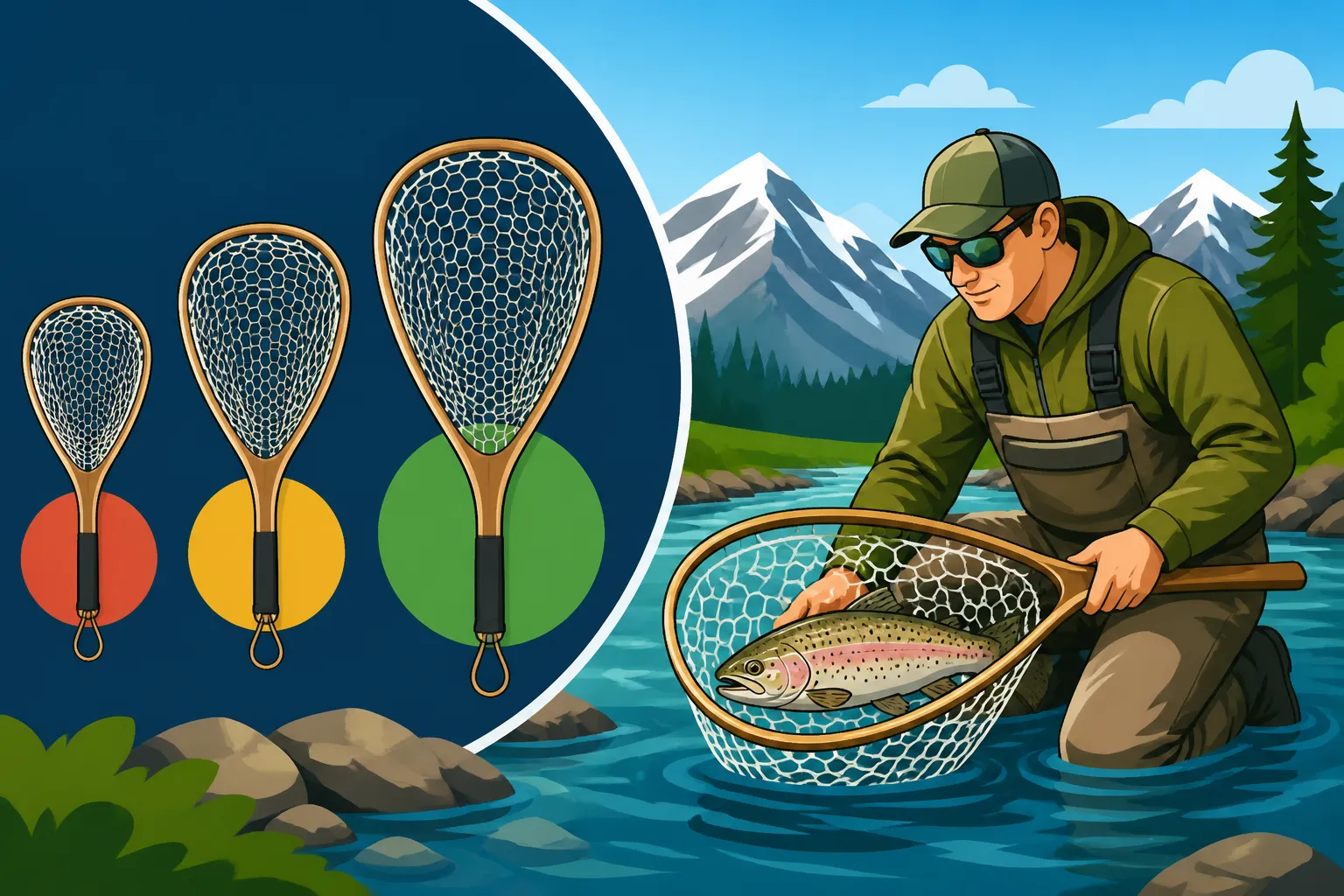
These are arguably the most critical dimensions. The hoop size (the opening of the net) needs to be wide and long enough to comfortably enclose the entire fish, including its tail, without bending or squeezing. For average Alberta trout (say, 12-18 inches), a hoop opening around 10×15 inches to 12×18 inches is generally a good starting point. If you're consistently targeting larger fish (20+ inches on the Bow, for instance), you'll want to move up to hoops in the 14×20 inches or even 16×24 inches range.
Net depth is equally important. Once the fish is in the net, it needs to be cradled securely, preventing it from flopping out. A shallow net allows the fish to bounce and potentially jump free, increasing stress and the chance of injury. Look for nets with a depth of at least 10-15 inches for smaller trout, and up to 20-24 inches for larger, feistier specimens. The goal is to create a "basket" that safely contains the fish the moment it enters the net, allowing you to quickly manage it, unhook, and release.
Handle Length and Portability: Matching Your Fishing Style
The length of your net's handle should directly correspond to your fishing environment and style.
- Short Handles (8-12 inches): These are fantastic for wading small, intimate streams where you're often close to the fish. They're compact, lightweight, and easy to carry on your back, often with a magnetic release system for quick access. Ideal for focused Dry Fly Fishing Alberta Mountain Streams.
- Medium Handles (18-36 inches): This is a versatile range for many Alberta anglers. An 18-24 inch handle works well for wading larger rivers, providing a bit more reach for those unexpected surges. A 30-36 inch handle is excellent for drift boat fishing on rivers like the Bow, giving the oarsman or guide ample reach to net fish for anglers. They're still manageable for transport but offer significantly more leverage.
- Long Handles (3 feet or more): Primarily used for fishing from larger boats on big lakes or wide rivers where fish can be netted from further away. These often feature telescopic or collapsible designs for easier storage when not in use. If you're targeting big lake trout from a boat, this length of handle is invaluable.
Consider how you'll carry your net. If you're backpacking into an alpine lake, a heavy, bulky net will quickly become a nuisance. For wading, a net that attaches securely to your vest or pack with a strong magnetic or elastic lanyard is a game-changer. Don't forget to consider pairing it with other wading gear like a Best Wading Staff for Fast Current.
Netting Material and Fish Safety: Rubber is Your Friend
This is a non-negotiable point for catch-and-release trout fishing.
- Traditional Knotted Nylon: Avoid these at all costs for trout. The knots and coarse material easily strip away the fish's protective slime coat, leading to bacterial infections and poor survival rates. Hooks also get terribly snagged, turning a quick release into a frustrating, prolonged ordeal.
- Rubberized or Knotless Nylon: These are better than traditional knotted nets, as they are smoother and less abrasive. They also reduce hook snagging to some extent.
- Full Rubber (Silicone) Nets: This is the gold standard for trout. The soft, flexible, and completely smooth rubber mesh is incredibly gentle on fish, preserving their slime layer and minimizing fin damage. A huge bonus is that hooks almost never tangle in rubber nets, allowing for incredibly fast and stress-free unhooking and release. While they can be a bit heavier and sometimes have a higher price point, the benefits for fish health and angler convenience are immeasurable. You can find excellent full rubber net options from reputable brands on platforms like Amazon or at dedicated fishing stores like Bass Pro Shops. Always look for nets explicitly labeled "fish-friendly" or "catch and release."
Buoyancy, Grip, and Other Features
A few other details can enhance your netting experience:
- Buoyancy: For wading anglers, a net that floats is a lifesaver. Dropping a non-buoyant net in current means it's likely gone forever. Many modern nets incorporate foam in the handle or frame to ensure they float if accidentally dropped.
- Grip: A comfortable, non-slip grip, whether cork, EVA foam, or textured plastic, is important, especially when your hands are wet and cold. A secure grip ensures you maintain control when that big fish makes its final surge. A good grip from brands you can find at Bass Pro Shops makes a difference when you're netting a feisty fish.
- Net Release Systems: For wading, a magnetic net release attached to your vest or pack, or a sturdy coiled lanyard, provides quick access and keeps your net secure and out of the way until needed.
Tailoring Your Net Choice to Specific Alberta Fishing Scenarios
Now that we've covered the basics, let's look at how to apply this knowledge to common trout fishing scenarios you'll encounter in Alberta.
Small Stream and Backpacking Adventures
Alberta's high country is dotted with countless small streams and alpine lakes, often requiring a hike to access. Here, you'll typically be targeting smaller brook trout, cutthroat trout, or modest-sized rainbows.
For these intimate settings, portability and compactness are paramount. You'll want a lightweight net with a relatively short handle (8-12 inches) and a hoop size that's appropriate for fish generally under 16 inches. A pear-shaped or tear-drop hoop around 8-10 inches wide by 12-14 inches long is usually sufficient. A full rubber mesh is still highly recommended to protect these delicate, often wild, fish. Look for nets that are easy to clip onto a backpack or vest, often with a magnetic release, so it's always ready but out of your way while you're navigating brush or scrambling over rocks. These smaller nets are fantastic for focused Dry Fly Fishing Alberta Mountain Streams where precision and minimal gear are paramount.
Large River Wading and Drift Boat Fishing
When you hit the larger, more famous trout rivers like the Bow, Crowsnest, Oldman, or Red Deer, you're often dealing with more substantial fish, stronger currents, and potentially deeper wading. This environment calls for a more robust net.
For these waters, a medium-length handle (18-24 inches) combined with a larger hoop is ideal. A hoop size of 12-15 inches wide by 18-22 inches long, with a good depth of 15-20 inches, will comfortably handle the 16-24 inch rainbows and brown trout that these rivers are known for. If you're primarily drift boat fishing, the guide will often have a longer-handled net, but if you're wading, that 18-24 inch handle gives you crucial reach without being cumbersome. Again, a full rubber net is non-negotiable here, as you'll want to minimize harm to these powerful fish. If you're doing something like Euro Nymphing the Bow River, quick access to your net is essential for efficient catch and release. Many anglers find excellent options for this category of net on Amazon by searching for "large trout landing net" or "drift boat net."
Large Lake and Boat Fishing for Trophy Trout
If your sights are set on the truly massive lake trout of Cold Lake, or the substantial rainbows and browns found in some of Alberta's larger lake systems, you need to step up your net game significantly. These fish are big, powerful, and often require more reach to net from a boat.
For dedicated boat fishing, a long-handled net (3 feet or more, often telescopic or collapsible) with a very large hoop is necessary. Think hoop dimensions of at least 18-24 inches wide by 24-30 inches long, with substantial depth (20-30 inches) to cradle a trophy-sized fish. The long handle provides the leverage and reach required to scoop a heavy fish from the water without leaning dangerously over the gunwale. Durability is key here; you want a net that can withstand the weight and power of a 20-pound plus fish. Look for heavy-duty, robust frames. Brands found at places like Bass Pro Shops really shine in this category, offering heavy-duty options designed for big game fishing where strength and reliability are paramount.
Here’s a quick overview to help you decide:
| Fishing Scenario | Target Trout Size | Recommended Hoop Size (WxL) | Recommended Handle Length | Netting Material | Key Feature |
|---|---|---|---|---|---|
| Small Stream/Backpacking | Up to 14 inches | 8" x 12" – 10" x 15" | Short (8-12 inches) | Full Rubber | Lightweight, Compact |
| Medium River/Wading | 12-20 inches | 12" x 18" – 14" x 20" | Medium (18-24 inches) | Full Rubber | Magnetic Release |
| Drift Boat/Large River | 16-24+ inches | 14" x 22" – 16" x 24" | Medium-Long (24-36 inches) | Full Rubber | Buoyant, Durable |
| Large Lake/Trophy Fishing | 20+ inches | 18" x 24" – 24" x 30" | Long (36+ inches) | Heavy-Duty Rubber | Extra Reach, Strong |
| Catch & Release Focused | All sizes | Appropriate for target | Appropriate for target | Full Rubber (Mandatory) | Fish-friendly, Hook-free |
Choosing the best landing net size for trout in Alberta really boils down to understanding the fish you're pursuing and the environment you're fishing in. Prioritizing fish health with a full rubber net, ensuring adequate size for potential trophy catches, and selecting a handle length that suits your fishing style will not only lead to more successful landings but also ensure the continued health of Alberta's incredible trout populations. Happy netting!
Disclaimer
This article is for general informational purposes only and does not constitute professional advice. Laws, prices and regulations vary by location and change over time. Consult a qualified professional for guidance on your specific situation.