Best landing net mesh for catch and release
There's nothing quite like the thrill of landing a beautiful fish here in Alberta, whether it's a feisty rainbow trout from the Bow River or a hard-fighting walleye from Lesser Slave Lake. But for many of us, the joy isn't just in the catch, it's in ensuring that fish has the best possible chance to swim away healthy and thrive for future generations. One of the biggest culprits of post-release mortality and injury is often overlooked: the humble landing net. If you've ever wrestled a fish out of a knotted nylon net, only to see scales scraped off or fins torn, you know the frustration. This guide is all about helping you choose the best landing net mesh specifically designed for catch and release, ensuring every fish you touch leaves in prime condition.
Why Your Landing Net's Mesh Matters for Catch and Release
When we talk about catch and release, we're not just talking about unhooking a fish and tossing it back. True catch and release involves minimizing stress and physical harm to the fish as much as humanly possible. The moment a fish enters your net, it's vulnerable, and the material of that net's mesh plays a huge, often underestimated, role in its survival.
Understanding Fish Health and Slime Coat
Every fish, from the smallest brook trout to the largest northern pike, is covered in a protective layer of mucus known as a "slime coat." This natural barrier is incredibly important; it helps the fish move efficiently through water, protects against parasites, bacteria, and fungi, and aids in osmoregulation – maintaining the balance of salts and water in its body. Think of it as their first line of defense, a living suit of armor. When this slime coat is rubbed off or damaged by abrasive net mesh, it's like peeling a layer of skin off ourselves. The fish becomes highly susceptible to infection and disease, and its chances of survival after release plummet dramatically. Even if the fish swims away seemingly fine, the internal damage might already be done. This is especially critical for sensitive species like Bull Trout: Alberta's Threatened Native Fish which are under strict protection.
Beyond the slime coat, a fish's fins, gills, and eyes are also incredibly delicate. Coarse, stiff, or knotted mesh can easily abrade fins, leading to fin rot, or even cause severe injury to the gills, which are essential for respiration. Imagine trying to untangle a treble hook from a net, and in the process, the fish's pectoral fin gets caught and bent awkwardly. It's a common scenario with less-than-ideal nets, and it’s one we want to avoid for the sake of the fish.
Common Net Mesh Materials and Their Impact
Over the years, landing net technology has evolved considerably, largely driven by a greater understanding of fish biology and the ethics of catch and release. Let's look at the types of mesh you'll typically encounter:
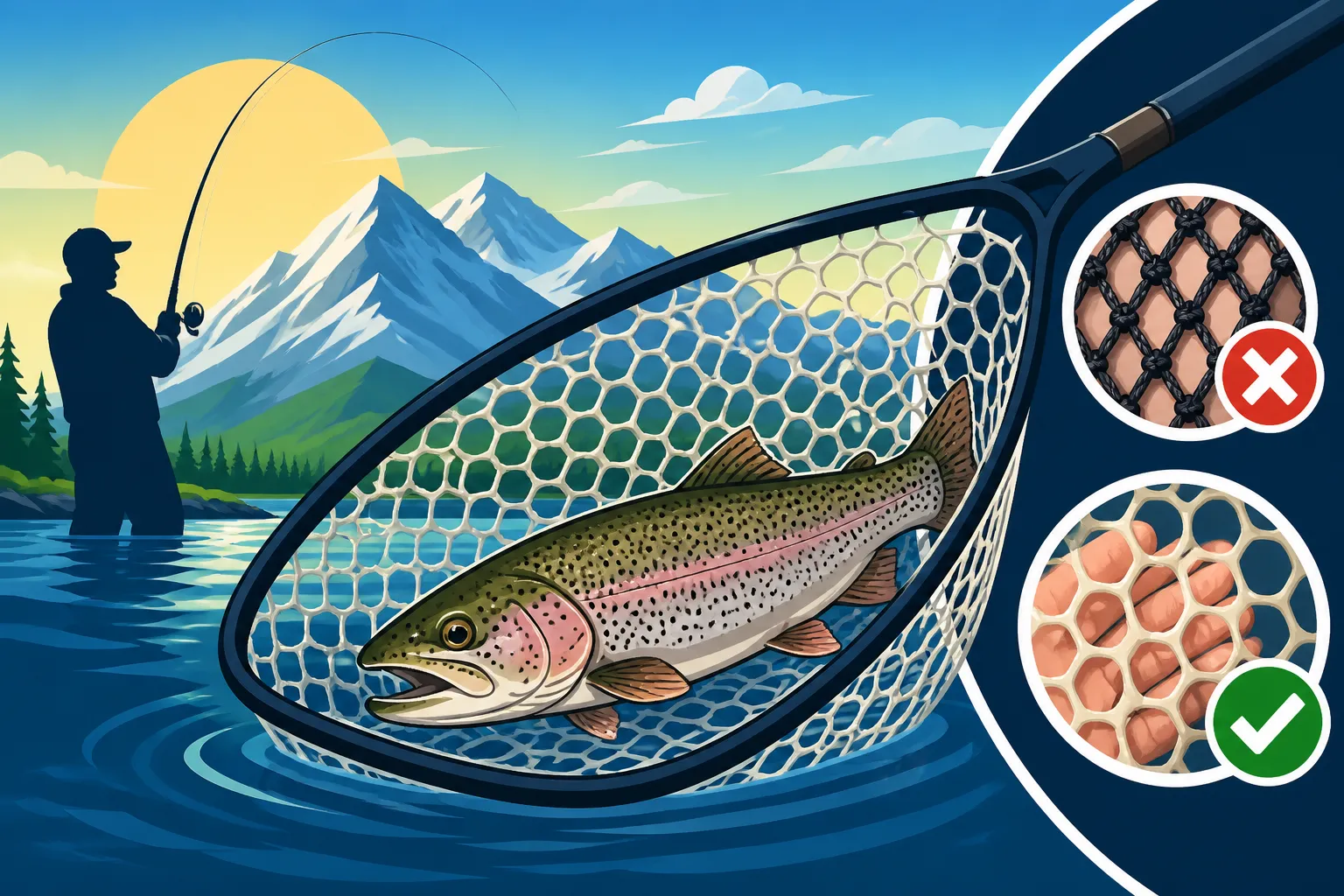
- Knotted Nylon Mesh: This is the traditional, old-school netting many of us grew up with. It's often made of stiff, cord-like material with actual knots at each intersection. While durable and inexpensive, it's arguably the worst choice for catch and release. The knots are highly abrasive, stripping away a fish's slime coat and potentially damaging fins and eyes. Hooks also get notoriously tangled in knotted nylon, prolonging handling time and stressing the fish further.
- Knotless Nylon Mesh: A step up from knotted versions, knotless nylon mesh eliminates the abrasive knots. The material itself is often softer and smoother, reducing friction on the fish's body. It's generally a more budget-friendly option than rubber, and much better for fish than knotted nets. However, hooks can still get somewhat tangled in knotless nylon, and while softer, it's still not as gentle as rubberized alternatives.
- Coated Nylon Mesh: This type of mesh is often knotless nylon that has been dipped in a rubber or plastic coating. It offers a good balance of protection and cost. The coating makes the mesh smoother, reducing slime coat removal and helping to prevent hook snags. It's more durable than uncoated nylon and generally dries faster. This is a popular choice for many anglers who want better fish protection without the full cost or weight of a pure rubber net.
- Rubber Mesh: This is widely considered the gold standard for catch and release nets. Made entirely of soft, pliable rubber or silicone, it's incredibly gentle on fish. The smooth, non-abrasive surface protects the slime coat, and its natural elasticity prevents hooks from snagging. Fish can be unhooked quickly and easily, minimizing their time out of water.
Here’s a quick comparison of popular mesh types for catch and release:
| Mesh Type | Fish Safety (Slime Coat, Fins) | Hook Snagging | Drying Time | Durability | Cost | Ideal Use Case |
|---|---|---|---|---|---|---|
| Knotted Nylon | Poor | High | Medium | High | Low | Not recommended for catch and release |
| Knotless Nylon | Fair to Good | Medium | Medium | Medium | Low to Medium | General fishing, better than knotted but still has limitations |
| Coated Nylon | Good | Low | Fast | High | Medium | Anglers wanting good protection and quick drying, balance of cost and performance |
| Full Rubber/Silicone | Excellent | Very Low | Very Fast | High | High | Dedicated catch and release, high-value fish species, fly fishing |
The Gold Standard: Rubberized and Knotless Mesh Nets
When it comes to protecting the fish you intend to release, rubberized and high-quality knotless mesh nets stand head and shoulders above the rest. These designs prioritize the well-being of the fish, which ultimately leads to higher survival rates and stronger fisheries. If you're serious about ethical angling in Alberta, these are the nets you should be considering.
Benefits of Rubberized Mesh
Pure rubber or silicone mesh nets are truly the best choice for catch and release. There are several compelling reasons why they have become so popular among conservation-minded anglers:
- Ultimate Slime Coat Protection: The soft, smooth, and non-abrasive surface of rubber mesh is incredibly gentle. It slides over a fish's scales and slime coat without scraping or rubbing it off. This drastically reduces the risk of infection and disease once the fish is back in the water. For delicate species like Cutthroat Trout in Alberta's Mountain Streams, this gentle touch is paramount.
- Reduced Hook Tangles: This is a game-changer. Hooks simply don't snag in rubber mesh like they do in fibrous nylon nets. This means you can unhook your fish much faster, minimizing its time out of the water and reducing stress. No more frantic fumbling with pliers trying to extract a deeply embedded treble hook from the net itself while a fish struggles.
- Easy to Clean and Odor-Free: Rubber is non-absorbent, which makes it incredibly easy to clean. Fish slime, scales, and any debris simply rinse off with water. This also means rubber nets don't retain odors, a common issue with traditional nylon nets that can get quite stinky after a few trips if not meticulously cleaned. A quick rinse and they're ready for the next adventure.
- No Waterlogging and Quick Drying: Unlike fabric nets that soak up water, rubber mesh sheds water almost instantly. This means your net won't get heavy and waterlogged, and it dries incredibly fast. This is a huge benefit for portaging or packing up at the end of a trip, especially if you're out kayak fishing on an Alberta lake.
- Durability and Longevity: While initially more expensive, rubber nets are often more durable in the long run. They are resistant to UV degradation and won't rot or mildew, which can happen with nylon. A well-maintained rubber net can last for many seasons.
You can often find excellent rubber net options at outdoor retailers like Bass Pro Shops or through online stores like Amazon, which offer a wide variety of brands and sizes to suit different types of fishing, whether you're fly fishing for trout or targeting pike.
Advantages of Knotless Nylon Mesh
While rubber nets are king, good quality knotless nylon mesh nets still offer significant advantages over their knotted counterparts and can be a solid choice, especially for anglers on a budget or those primarily targeting less delicate species.
- Reduced Abrasion: The primary advantage of knotless nylon is the absence of abrasive knots. This means less friction on the fish's slime coat and less chance of damaging fins compared to traditional knotted nets. It's a definite improvement for fish welfare.
- Lighter Weight: Knotless nylon nets tend to be lighter than full rubber nets, which can be a factor for anglers hiking into remote areas or those who prefer a very lightweight setup for stream fishing.
- Versatility: Knotless nylon nets are widely available in many shapes, sizes, and depths, making them a versatile choice for a variety of fishing scenarios. They handle well in both fresh and saltwater environments.
- More Affordable: Generally, knotless nylon nets are more affordable than rubber nets, making them an accessible option for anglers who want to practice catch and release without a significant initial investment. This makes them a great "starter" net for beginners still learning proper fish handling with your net.
When choosing a knotless nylon net, look for models with soft, fine mesh rather than stiff, coarse material. The softer the material, the less likely it is to cause harm to the fish. While hooks can still snag occasionally, they are generally easier to remove than from knotted nets. For instance, if you're often fishing for Northern Pike Fishing in Alberta, which are known for their sharp teeth and multiple treble hooks on lures, a good knotless or coated nylon net will still be a vast improvement over a cheap knotted one.
What to Look For When Buying a Catch and Release Net
Beyond just the mesh material, there are other critical features to consider when selecting a landing net for catch and release. The overall design, from mesh depth to handle length, plays a role in how effectively and safely you can land and release fish. It's not just about getting the fish into the net, but about getting it out again in the best possible condition.
Mesh Depth and Size Considerations
The dimensions of your net's basket are just as important as the material it's made from. You want a net that can comfortably cradle the fish without bending or contorting its body.
- Adequate Depth: A deep net basket is crucial. When a fish is landed, you want it to be fully submerged and contained within the net, preventing it from flopping out onto the bank, boat floor, or rocks. A deep net also allows you to keep the fish in the water, or at least partially submerged, while you prepare for release. For larger species, or when you're wading in a river like the Bow for trophy trout, a deep basket means you can effectively "trap" the fish and give it a chance to calm down before handling. This minimizes stress for both you and the fish.
- Appropriate Hoop Size: The size of the net's hoop should match the general size of the fish you target. If you're chasing large lake trout on Cold Lake, a small trout net simply won't cut it. Trying to cram a big fish into a small net often results in injury. Conversely, an oversized net can be cumbersome. Aim for a hoop size that allows the fish to fit entirely within the net's opening, with some room to spare.
- Mesh Size (Hole Diameter): Even within rubber or knotless nylon nets, the size of the holes in the mesh can vary. For catch and release, generally, smaller mesh holes are better. This helps prevent fins, especially the delicate dorsal and caudal fins, from poking through and getting bent or broken. Smaller mesh also provides more support for the fish's body, distributing its weight more evenly and preventing stress points. However, too fine mesh can increase drag in the water, making it harder to net a fast-moving fish. A good balance is key.
Remember, the goal is to fully support the fish's body and minimize contact with anything other than water or the soft mesh.
Frame and Handle Design for Safe Handling
The structure of the net—its frame and handle—also contributes significantly to successful catch and release. A well-designed net aids in quick, efficient, and safe handling.
- Robust Frame: A sturdy frame is essential to prevent bending or breaking, especially when netting larger, stronger fish. Aluminum or composite frames are common and offer a good balance of strength and weight. A strong frame ensures the net maintains its shape, properly supporting the fish's weight.
- Comfortable, Non-Slip Handle: You'll be handling wet, often slippery fish and net. A handle with a good grip, possibly with a rubberized or textured surface, is vital. This prevents accidental drops or fumbles, which can lead to the fish being injured or escaping before release. For Best Kayaks for Alberta Fishing, a shorter, more compact handle might be preferred for maneuverability in tight spaces. For wading, a longer handle can give you better reach.
- Handle Length: Consider your fishing style. For bank fishing or wading small streams, a fixed short-to-medium length handle is often sufficient. For boat fishing or wading larger rivers like the Bow, an extendable handle can be incredibly useful, providing extra reach when needed. However, ensure any telescoping mechanism is secure and won't collapse under the weight of a fish.
- Net Portability and Storage: If you're hiking into remote locations or fishing from a small craft, consider how the net folds or collapses for transport. Some nets have collapsible hoops or telescopic handles that make them much more compact. For backcountry fishing, a net that attaches easily to a vest or pack, such as many of the Best Fly Rods for the Bow River setups, is a major plus.
- Net Weight: While less critical than mesh type, the overall weight of the net can impact comfort, especially during long days of fishing. Balance durability and functionality with a weight that you're comfortable carrying and maneuvering.
Ultimately, the best net is one that feels comfortable in your hand, is easy to deploy, securely holds the fish, and facilitates a rapid, injury-free release. Many of these features, alongside top-tier mesh, are highlighted in specialized products you can find at sporting goods stores or online retailers.
Maintenance and Best Practices for Your Catch and Release Net
Having the best landing net for catch and release is only half the battle. How you maintain it and, perhaps more importantly, how you use it, are equally vital for ensuring the well-being of every fish you interact with. Even the most advanced rubber net can cause harm if used improperly or neglected.
Cleaning and Care for Longevity and Fish Health
A dirty net isn't just unpleasant; it can be a vector for disease transmission between waterways, and rough residues can harm fish. Proper care extends both the life of your net and its effectiveness in protecting fish.
- Immediate Rinse: After every fishing trip, give your net a thorough rinse with fresh water. This is especially important if you've been fishing in different bodies of water. This simple step removes fish slime, scales, plant matter, and any residual contaminants. If you're fishing in multiple zones, this helps prevent the spread of invasive species and diseases between sensitive ecosystems.
- Disinfection (When Necessary): If you've been fishing in waters with known disease outbreaks, or if you're transitioning between very different watersheds (e.g., from a prairie lake to a mountain stream), consider a light disinfection. A dilute bleach solution (e.g., 1 part bleach to 10 parts water, followed by a thorough rinse) or a product like Virkon Aquatic can be used. Always ensure the net is thoroughly rinsed and completely dry before its next use to avoid chemical residue harming fish.
- Drying Completely: Always allow your net to air dry completely before storing it. Hanging it in a well-ventilated area prevents mildew and unpleasant odors, particularly for nylon nets. Rubber nets dry very quickly, but still benefit from a full dry-out.
- Inspection for Damage: Periodically inspect your net for any tears, fraying, or sharp edges on the frame or handle. Even a small tear in the mesh can snag a fin, and a sharp burr on the frame can scrape a fish. Repair or replace damaged components promptly.
- Proper Storage: Store your net out of direct sunlight when not in use. UV rays can degrade mesh materials over time, especially nylon. Keep it in a cool, dry place where it won't be exposed to extreme temperatures or accidental damage.
By taking a few minutes to care for your net, you're investing in its longevity and, more importantly, in the health of Alberta's fish populations.
Proper Fish Handling with Your Net
A great catch and release net is a tool, and like any tool, its effectiveness depends on how it's wielded. Developing proper fish handling techniques is just as crucial as the gear itself. These practices complement your net choice to ensure the highest survival rates.
- Minimize Fight Time: The longer a fish fights, the more exhausted it becomes, making it less likely to recover after release. Use appropriately sized tackle, like a rod and reel combo that matches the size of fish you're targeting. For example, don't use ultralight gear if you're consistently hooking large northern pike fish. Bring the fish to the net as quickly and efficiently as possible without horsing it in.
- Keep the Fish in the Water: Whenever possible, try to keep the fish fully submerged in the net. This is where a deep rubber net really shines. You can unhook the fish while it's still in the water, greatly reducing stress and physical contact. If you must lift the fish, do so minimally and only for a quick photo, then immediately return it to the water. Keeping the fish wet protects its sensitive gills and eyes.
- Wet Hands Only: If you need to handle the fish directly, always wet your hands thoroughly beforehand. Dry hands will strip off the protective slime coat just as readily as abrasive net mesh. Avoid squeezing the fish, especially around its internal organs. Support its weight horizontally, ideally with one hand under its belly and the other gently gripping its caudal peduncle (the narrow part before the tail fin).
- Quick Release: The entire process from netting to release should be as swift as possible. Have your pliers, hemostats, or hook remover ready before the fish hits the net. Practice unhooking fish quickly and efficiently. If the fish is deeply hooked, especially in the gills, it might be better to cut the line as close to the hook as possible rather than attempting to rip the hook out, which often causes more damage.
- Revive If Needed: After release, don't just toss the fish back. Gently hold it upright in the water, facing into the current (if any), until it regains its strength and can swim away under its own power. You'll feel it start to kick strongly. For species like How to Catch Bull Trout and Release Them Safely, which can be particularly sensitive to stress, this revival period is vital.
By combining the use of an appropriate catch and release net mesh with these best practices, you become a truly responsible angler, contributing to the health and sustainability of Alberta's incredible fishing resources. Whether you're targeting Walleye Fishing in Alberta or exploring one of the Best Trout Streams in Alberta, your efforts make a difference.
Disclaimer
This article is for general informational purposes only and does not constitute professional advice. Laws, prices and regulations vary by location and change over time. Consult a qualified professional for guidance on your specific situation.