Euro Nymphing the Bow River
Trying to nymph fish the Bow River with a traditional indicator setup can feel incredibly frustrating, especially when you know there are hungry trout hugging the bottom but you just can't seem to get your fly down to them naturally. The strong currents, the varied depths, and the need for a precise drift often leave anglers feeling defeated and wondering if there's a better way. This comprehensive guide is here to introduce you to Euro nymphing, a highly effective technique that will revolutionize your success on the Bow, allowing you to detect even the most subtle takes and consistently put fish in your net.
What is Euro Nymphing and Why It's Perfect for the Bow River
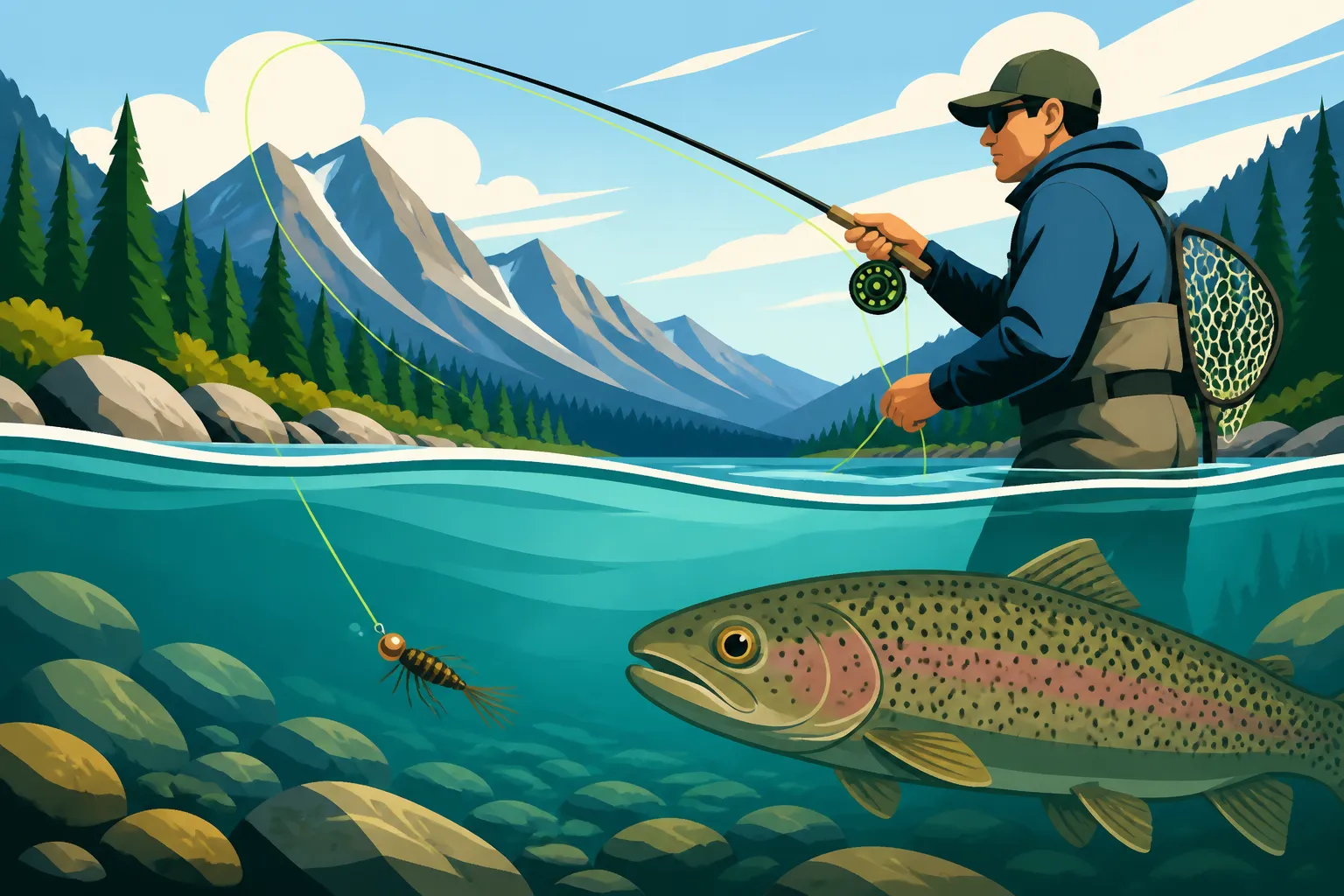
Euro nymphing, sometimes called Czech nymphing, Polish nymphing, or French nymphing, is a specialized fly fishing technique that has exploded in popularity for a very good reason: it’s incredibly effective, especially in moving water with strong currents like our beloved Bow River. Unlike traditional indicator nymphing, which relies on a buoyant indicator to signal a take, Euro nymphing focuses on maintaining direct, tactile contact with your flies. This means you feel everything, from the lightest bump of a rock to the most delicate strike from a trout.
For those who’ve spent countless hours staring at a bobbing indicator, second-guessing every pause or twitch, the direct feedback of Euro nymphing is a game-changer. It allows for superior depth control and an unparalleled ability to detect subtle takes that would otherwise go unnoticed. When you’re trying to tempt those wary Bow River rainbows and browns, every advantage counts. This method significantly increases your hook-up ratio and makes you a much more efficient angler in a wide variety of conditions.
The Core Principles of Euro Nymphing
At its heart, Euro nymphing is all about contact, control, and precision. You’re typically fishing with a specialized long, light rod and a thin, level leader system that minimizes sag and maximizes sensitivity. Instead of casting out and letting a bobber drift, you’re holding your rod tip high, keeping as much line off the water as possible, and tracking your flies through the current with your rod tip. The goal is to match the speed of the current precisely, ensuring your nymphs drift naturally, as if they were real insects tumbling downstream.
The flies themselves are often weighted heavily, designed to sink quickly and get into the strike zone fast. This direct connection, without the drag and delay of a traditional fly line or indicator, allows you to feel the slightest hesitation or tap as a fish mouths your fly. It's an active, engaging form of nymphing that requires constant attention and micro-adjustments, but the rewards are well worth the effort. You're not just casting and hoping; you're actively engaging with the river and its inhabitants in a much more intimate way.
Advantages on the Bow River
The Bow River is famous for its prolific hatches and incredible trout, but it's also a big, powerful river with complex currents and often significant depth. These characteristics make it a prime candidate for Euro nymphing. Traditional indicator setups can struggle in the Bow’s faster, deeper runs, as the indicator often gets pulled by conflicting currents, creating unnatural drag on your flies. This drag makes your flies look artificial and spooks smart trout.
With a Euro nymphing setup, you can keep your flies drifting perfectly dead in the current, penetrating the water column quickly to reach those deep-holding trout without the interference of surface currents. This is particularly crucial when the fish are concentrated near the bottom, perhaps feeding on scuds or stonefly nymphs, or during periods of high water when traditional methods are less effective. Furthermore, the Bow's clear water means trout are often spooky, and the minimal splash and discreet presentation of Euro nymphing can make a huge difference. You're presenting flies directly to the fish, minimizing disturbance, and maximizing your chances of a take. For those serious about catching trout on the Bow, exploring Fly Fishing for Trout on the Bow River will certainly deepen your understanding, and Euro nymphing is a key technique to master.
Essential Gear for Euro Nymphing the Bow River
Stepping into Euro nymphing often means investing in some specialized gear. While you can modify a standard fly rod, having the right tools makes a monumental difference in your effectiveness and enjoyment. Think of it like this: you wouldn't try to change a tire with a butter knife, right? The right tool makes the job not just possible, but efficient and even enjoyable. This technique thrives on sensitivity and control, and your gear plays a starring role in achieving that.
Don't feel like you need to break the bank right away. Many excellent options are available, and the market for Euro nymphing gear has expanded considerably, making it more accessible than ever. You can find a lot of great specialized equipment on platforms like Amazon, offering competitive pricing and a wide selection.
Specialized Rods and Reels
The heart of any Euro nymphing setup is the rod. These rods are distinctly different from traditional fly rods. They are typically longer, often 10 to 11 feet, and much lighter in line weight, usually 2 to 4 weight. The length allows you to reach further, cover more water, and keep more line off the water for better drift control. The lighter line weight and softer tip provide incredible sensitivity, transmitting even the faintest bumps and takes directly to your hand. The backbone of the rod is usually strong enough to handle larger fish, but the tip is incredibly supple to protect light tippets.
A good Euro nymphing rod for the Bow River might be a 10’6” 3-weight. This length gives you the reach you need to manage drifts in wider sections or over complex currents, while the 3-weight rating offers the finesse required for subtle presentations and protecting lighter tippets from strong Bow River Rainbow Trout. When it comes to reels, you want something light, durable, and well-balanced with your long rod. A large arbor reel is a common choice, not necessarily for fighting fish, but for quick line retrieval and balance. Look for one that allows you to finely adjust your drag, although much of the fish fighting will be done directly with your hand on the line.
Lines, Leaders, and Tippet
This is where Euro nymphing truly diverges from conventional setups. You'll use a very thin, level Euro nymphing line, often a specialized monofilament or a thin fly line designed specifically for this technique. The purpose of this line isn't to cast like a traditional fly line, but simply to provide weight for casting and connect to your leader system. It’s designed to minimize sag and offer direct contact. This is radically different from the weight-forward lines used in traditional fly fishing, which are designed to carry the fly's weight.
Your leader system is the true magic trick here. It's often very long, anywhere from 10 to 20 feet, and typically tapers down to a very thin sighter material, which is usually bi-colored or tri-colored mono or fluorocarbon. This sighter is critically important because it acts as your visual indicator. Any pause, twitch, or subtle movement in the sighter indicates a take. From the sighter, you'll attach a tippet ring, and then your tippet and flies. Using a tippet ring, which you can easily find on Amazon, simplifies changing tippet and helps preserve your leader. For Bow River trout, especially the larger ones, a strong yet thin tippet is essential. You might start with 4x or 5x fluorocarbon, adjusting as needed based on water clarity and fish activity. Remember to check out how to properly select and use your tippet material to protect your setup while still being stealthy; finding the right size is crucial, especially when reading the Alberta Guide to Sportfishing Regulations to ensure you're compliant with any specific local rules for leader or tippet material.
Recommended Nymphs for Bow River Trout
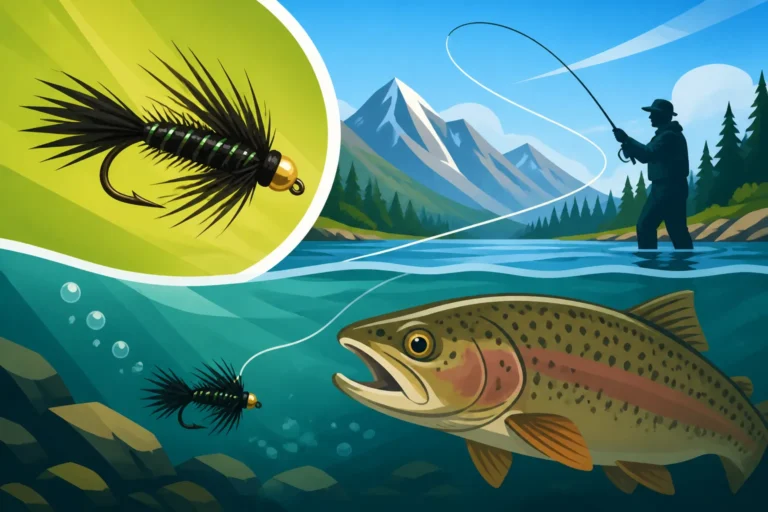
The Bow River has a rich aquatic insect life, and your fly box should reflect that diversity. Euro nymphs are typically weighted, often with tungsten beads, to get down to depth quickly. For the Bow, classic patterns like Prince Nymphs, Hare's Ear Nymphs, and Pheasant Tail Nymphs in sizes 12-18 are always good choices. Scuds and sowbugs are also incredibly important food sources, so having various colors (olive, grey, tan) and sizes (14-20) is non-negotiable.
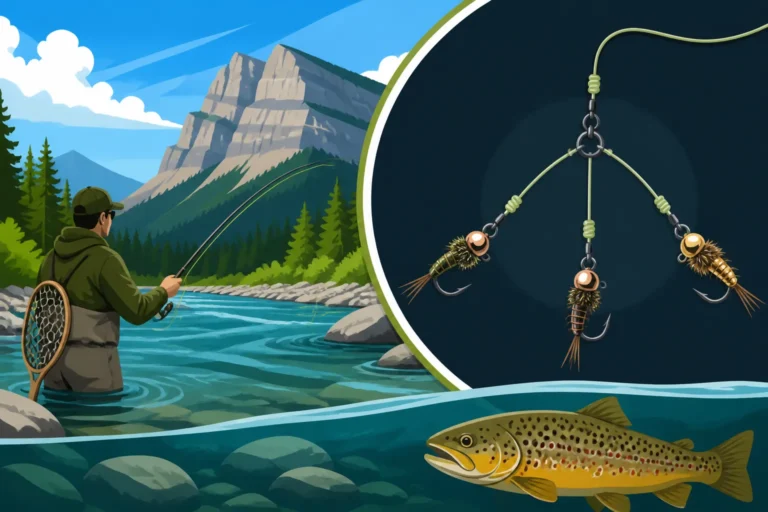
Don't forget about stonefly nymphs, especially early in the season or during high water. Patterns like Pat's Rubber Legs or Kaufmann's Stone in sizes 8-14 can be deadly. Zebra Midges and other tiny midge patterns (18-22) are crucial for slower, deeper pools, especially in winter. Often, Euro nymphing involves a two-fly or even three-fly rig (where permitted), with a heavier point fly to anchor the rig and lighter droppers trailing above it. This allows you to cover different depths and present multiple food items. For more specific patterns, our guide on Fly Patterns for the Bow River offers excellent insights into what's currently hatching and what the trout are feeding on.
| Nymph Pattern | Target Species | Sizes | Typical Weight | Notes |
|---|---|---|---|---|
| Tungsten Prince Nymph | Rainbow, Brown, Cutthroat | 12-16 | Heavy | Excellent attractor, good in varied conditions |
| Tungsten Hare's Ear | Rainbow, Brown, Whitefish | 14-18 | Medium-Heavy | Versatile, mimics various mayflies and caddis |
| Tungsten Pheasant Tail | Rainbow, Brown | 16-20 | Medium | Great small mayfly imitation, very subtle |
| Scud (Olive/Tan/Grey) | Rainbow, Brown, Whitefish | 14-20 | Light-Medium | Essential for Bow River, imitate freshwater shrimp |
| Pat's Rubber Legs | Rainbow, Brown | 8-14 | Very Heavy | Stonefly imitation, great for deep, fast water |
| Zebra Midge | Rainbow, Brown, Whitefish | 18-22 | Light | Small, subtle, highly effective in slower water |
Setting Up Your Euro Nymphing Rig for Success
Okay, you've got your fancy new rod and all the bits and pieces. Now comes the crucial part: putting it all together in a way that maximizes your chances on the Bow. A poorly constructed rig can negate all the advantages of Euro nymphing, leading to tangles, poor drifts, and missed fish. Think of it as fine-tuning a precision instrument; every knot and every length matters.
This setup might look a bit different from what you're used to, but once you get the hang of it, you'll appreciate its simplicity and effectiveness. The key is to create a seamless connection from your hand to your flies, allowing for maximum sensitivity and minimal resistance in the water.
Building Your Leader System
The Euro nymphing leader is specifically designed to be thin, low-stretch, and often brightly colored in sections to act as a strike indicator. A common leader might start with a section of 20-25 lb monofilament, approximately the length of your rod (10-11 feet), directly spliced or knotted to your thin Euro nymphing line. This heavy mono provides a robust butt section. From there, you'll typically transition to a section of 10-12 lb fluorocarbon, about 3-4 feet long. The fluorocarbon is less visible in the water and sinks better.
Next comes the critically important sighter material. This is a 12-30 inch section of highly visible, bi-colored or tri-colored monofilament, usually 2x or 3x equivalent. You can even buy pre-made sighter material, making things easier. This sighter needs to be knotted to your fluorocarbon section with a strong, low-profile knot like a blood knot or triple surgeon's knot. The varying colors allow you to see even the slightest movement against different backgrounds and light conditions. Below the sighter, you’ll tie on a small tippet ring, which is a tiny metal ring used to connect your fishing tippet. These rings are super small and don't add much weight, preserving the delicate balance of your rig. The total length of your leader (excluding tippet) will usually be just under the length of your rod.
Tippet Rings and Sighters
Tippet rings are an absolute godsend for Euro nymphing. Once you've tied your sighter to your main leader, you attach a small tippet ring (often 2mm or 3mm in diameter) to the end of the sighter. From this tippet ring, you'll tie your actual fishing tippet. This method has several advantages. Firstly, it allows you to easily change tippet sizes without cutting into your main leader, which saves time and prolongs the life of your expensive sighter material. Secondly, the tippet ring acts as a clean, strong connection point, minimizing bulky knots.
The sighter, as mentioned, is your visual strike indicator. It’s what you watch, almost obsessively, for any abnormal movement, hesitation, or sudden dart. You hold your rod high, keeping the sighter section visible just above the water surface, or sometimes even touching it if the drift dictates. When a fish takes your fly, it often won't feel like a jarring pull. Instead, the sighter might simply stop, twitch sideways, or straighten out. That's your cue to set the hook! Some anglers also use a small, brightly colored piece of yarn or a tiny piece of indicator material tied into their leader above the tippet ring for additional visual cues, though the specialized sighter material usually does the trick. You can buy tippet rings and various sighter materials from most fly shops or online through retailers like Amazon.
Reading the Water and Presentation Techniques
Knowing how to effectively read the water is paramount for any type of fishing, but it's especially critical for Euro nymphing on a river like the Bow. You're not just casting blindly; you're actively seeking out prime lies where trout are likely to be feeding and then presenting your flies with precision. The Bow River is a complex ecosystem, with diverse currents, depths, and structures that can hold fish. Learning to decipher these clues will dramatically improve your catch rate.
Think of yourself as a detective, looking for clues in the river's flow. Where does the current slow down? Where does it speed up? What kind of structure is on the bottom? These questions are your starting point.
Identifying Prime Lies
On the Bow River, trout, particularly the Rainbow Trout and Brown Trout, love structure and current seams. Look for areas where faster water meets slower water, creating a "seam." Trout will often sit in the slower water, conserving energy, while waiting for food to be delivered by the faster current. This includes the edges of riffles, current breaks behind large rocks, submerged logs, or deeper pools just downstream from faster runs. Undercut banks are also fantastic spots, offering both cover and a steady food supply.
Consider the depth as well. Trout will often hug the bottom, especially in colder water or during periods of bright sunlight. Deeper slots, depressions, and ledges can hold significant numbers of fish. In general, aim your drifts through these "feeding lanes." Don't neglect areas that might seem subtle, either. A small change in the riverbed, a slight drop-off, or even a different gravel composition can be enough to concentrate fish. Our guide to the Bow River Fishing Guide will help you pinpoint specific areas, but learning to identify these lies yourself is a skill that will serve you anywhere. Remember, trout are creatures of efficiency; they want the most food for the least amount of effort.
Casting and Approach
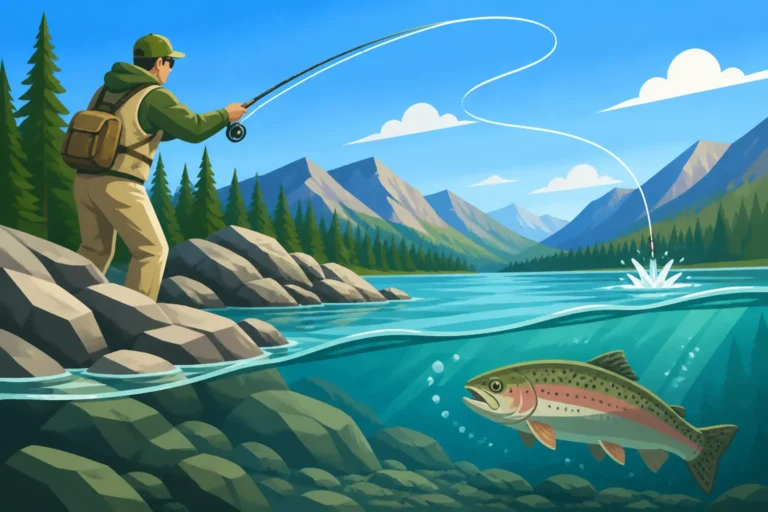
Euro nymphing casts are generally short, precise, and often resemble a pendulum swing rather than a traditional overhead fly cast. The goal is to lob your flies upstream or upstream-and-across, allowing them to sink quickly without a lot of false casting that can spook fish. You’re typically fishing at close to medium range, staying within reach of your long rod. This means your approach is critical. You need to move slowly and deliberately, often wading upstream, positioning yourself to make short, targeted drifts.
When you cast, aim to land your flies softly, just upstream of your target lie. As soon as the flies hit the water, lift your rod tip high, getting your sighter just above the water, and begin tracking your flies through the drift. The idea is to keep your sighter and a minimal amount of your leader off the water to avoid drag and maintain direct contact. This can sometimes feel like you’re leading the flies with your rod tip. You’re constantly adjusting the rod angle and position to match the current speed, ensuring your flies are tumbling naturally, unencumbered by surface currents. This direct connection allows you to feel the bottom and differentiate between a rock and a fish.
Mastering the Drift and Strike Detection
This is where the rubber meets the road with Euro nymphing. Getting a perfect, drag-free drift is the holy grail, and your ability to detect strikes, no matter how subtle, will directly correlate with your success. Many anglers find this part of the technique challenging at first, but with practice, it becomes second nature. It's an active process that requires constant engagement and focus, which is part of what makes it so rewarding.
You’re essentially becoming an extension of your fly line, guiding your nymphs through the water as if they were alive. Every little bump, every slight hesitation in your sighter, could be a fish.
Maintaining Contact and Controlling Speed
The essence of a good Euro nymphing drift is maintaining contact with your flies and controlling their speed through the water. As soon as your flies hit the water, you should lift your rod arm high, extending it upstream, almost over the top of your flies. This high-sticking technique keeps your sighter (and thus most of your leader) off the water, minimizing drag from surface currents.
As your flies drift downstream, you slowly lower your rod arm and follow the flies, always ensuring your sighter remains visible and taut. You’re essentially "leading" the flies through the run. The goal is to match the speed of the current where your flies are drifting, not the speed of the surface current. This means subtle adjustments to your rod angle and speed. If you feel slack or the sighter bows unnaturally, you're experiencing drag. If it straightens out and pulls too fast, you're either pulling too hard or your flies aren't heavy enough. It's a constant dance with the river, finding that perfect equilibrium where your flies look completely natural. This is where a quality fly rod designed for nymphing, like those discussed in Best Fly Rods for the Bow River, really shines, offering the sensitivity needed for this delicate dance.
Spotting Subtle Takes
This is often the hardest part for new Euro nymphers, but it’s also the most exciting. Unlike the often-dramatic plunge of an indicator, Euro nymphing takes can be incredibly subtle. You're looking for any anomaly in the sighter's movement. It might be a slight twitch, a momentary pause, a subtle straightening of the line, or even just a feeling of "heaviness" through the rod. Sometimes, the sighter will simply stop moving where the current should be carrying it along.
It's crucial to differentiate between a fish taking your fly and your fly bouncing off a rock. With practice, you'll develop a feel for the riverbed. A rock bump usually feels like a sharp, distinct tap. A fish take often feels softer, like a slight hesitation, or a "mushy" stop. When in doubt, set the hook! The mantra in Euro nymphing is "set on everything." You'll hook into plenty of rocks at first, but you'll also connect with many more fish than you would have otherwise. Practicing in different water types on the Bow will help you hone this skill.
Common Challenges and Troubleshooting
Even with the right gear and a solid understanding of the technique, Euro nymphing on the Bow River will present its fair share of challenges. From snags in the riverbed to battling strong winds, there’s always something testing your skills. But don't despair! Every angler faces these hurdles, and knowing how to troubleshoot them effectively will save you frustration and keep you on the fish.
Remember, fishing is as much about problem-solving as it is about casting. The Bow is a dynamic river, and conditions can change rapidly, so adaptability is key.
Snags and Break-offs
The Bow River bottom is a complex mix of rocks, gravel, submerged logs, and occasional debris. Getting snagged is an inevitable part of Euro nymphing, especially when you're fishing heavily weighted flies right on the bottom. It can be incredibly frustrating to constantly lose flies and re-tie your rig, but it's part of the learning curve. The key is to minimize how often it happens and recover efficiently when it does.
When you feel a definite snag, try to free your flies by quickly lowering your rod tip and then sweeping it sharply upstream. This motion can sometimes dislodge your flies. If that doesn't work, pulling directly back on the line often just embeds the hook deeper. Instead, try moving to a different angle, if possible, to pull the flies free from the opposite direction. To prevent snags, adjust your fly weight. If you're constantly snagging, your flies might be too heavy for the depth and current, or you might not be high-sticking enough. Consider using a slightly lighter point fly or adjusting your drift to just skim the bottom, rather than dragging. Using lighter tippet at the very end of your rig can also be a strategic move, allowing just the tippet to break, saving your more expensive sighter and leader sections. For protecting your gear, a reliable landing net like the Best Landing Net for Trout is essential, reducing the risk of a break-off during the fight.
Wind and Water Conditions
Wind can be a Euro nymphenger's nemesis. A strong headwind makes those delicate, lob casts difficult, while a crosswind can create unwanted drag on your leader, pulling your flies off course. When facing wind, try to position yourself to cast directly into or with the wind if possible, using the wind to aid your cast rather than hinder it. Shorten your casts, and use a slightly heavier point fly to help penetrate the wind and get your rig down quickly. Sometimes, a lower trajectory cast can also help cut through the wind.
Water conditions on the Bow also play a huge role. High, off-color water (often after heavy rains or snowmelt) usually means fish are closer to the banks and less spooky. In these conditions, don't be afraid to use larger, darker, and heavier flies. The reduced visibility means fish are relying more on vibration and profile. In contrast, low, clear water demands a more stealthy approach. Use longer, finer tippets (6x or 7x), smaller flies (size 18-22), and slower, more deliberate movements. Also, consider fishing during lower light conditions, like dawn or dusk, when trout are often more active and less wary. Having a good pair of waders, like those mentioned in Best Waders for Alberta Trout Rivers, is also crucial for adapting to varying water levels and staying comfortable.
Optimizing Your Euro Nymphing Strategy on the Bow
Once you've got the basics down, you can start refining your approach to maximize your success on the Bow River. Euro nymphing isn't a static technique; it's highly adaptable, allowing you to fine-tune your presentation to match specific conditions and trout behavior. Being strategic about fly selection, understanding when to move, and knowing how to adapt to the changing moods of the river will set you apart.
The Bow is a big, dynamic river, and what works in one run might not work in another, or even an hour later. Learning to adjust on the fly is a hallmark of a successful angler.
Strategic Fly Selection and Rigging
Your fly selection and how you rig them are paramount. Don't just pick two pretty nymphs; think about their purpose. You generally want a heavier "anchor" or "point" fly at the bottom of your rig, which is designed to get down to the bottom quickly. This might be a tungsten-beaded stonefly or a large Prince Nymph. Above that, on a dropper tag (a short piece of tippet tied off the main tippet), you'll add a lighter, perhaps more imitative fly. This could be a smaller Pheasant Tail, a midge, or a scud. This setup allows you to fish multiple depths and present different patterns simultaneously.
Pay attention to what bugs are present in the river. Take a minute to turn over a few rocks; you'll quickly get an idea of what the trout are likely feeding on. If you're consistently snagging, your point fly is too heavy or your tippet is too short. If you're not getting to the bottom, your flies are too light. Don't be afraid to experiment with different patterns, sizes, and weights until you find what the fish are keying in on. Sometimes, a tiny change, like switching to an orange bead head instead of a silver one, can make all the difference.
Wading and Movement
Effective Euro nymphing often involves a lot of calculated wading and strategic movement. You're typically moving upstream, casting short distances and covering water methodically. This upstream movement allows you to present your flies to undisturbed fish and to keep your line out of the fish's immediate sightline. Move slowly and deliberately, disturbing the water as little as possible.
When you're working a run, don't just blast through it. Fish each seam, pocket, and current break thoroughly. Make multiple drifts through the same spot, varying your angle and the depth of your presentation slightly. If you get a bump or a follow, stay in that area. Trout often school up in prime feeding lies, and where there's one, there are often more. If you've fished a spot thoroughly and haven't had any success, it's time to move on to the next promising lie. This active, exploratory approach is a hallmark of successful Euro nymphing on rivers like the Bow. Make sure you're always following Alberta Fishing Regulations Explained and respecting private property boundaries.
Advanced Tips for Bow River Euro Nymphers
Once you’ve got a good grasp of the fundamentals, there’s always more to learn and refine. The beauty of fly fishing, and especially Euro nymphing, is its endless nuances. For those looking to take their Bow River Euro nymphing to the next level, a few advanced tactics can significantly boost your effectiveness and make your time on the water even more productive. These tips involve a deeper understanding of fish behavior, specific rigging tweaks, and an intuitive feel for the river.
Even veteran anglers are constantly learning new tricks, and the Bow River, with its challenging but rewarding fishing, is the perfect classroom for these advanced techniques.
Managing Complex Currents
The Bow River is renowned for its diverse and often tricky currents. You’ll encounter everything from fast, turbulent riffles to deep, slow pools, and frequently, a combination of both in a single run. Mastering these complex currents is where advanced Euro nymphing really shines. The primary goal is to maintain a completely drag-free drift, even when multiple current speeds are trying to pull your leader in different directions.
One key technique is known as the "micro-mend." This involves making tiny, subtle adjustments to your rod position and line tension throughout the drift to counteract conflicting currents. Instead of a large, sweeping mend, you’re making small, precise movements with your rod tip, just enough to keep your sighter aligned with your flies. Another strategy is to identify the dominant current that is affecting your flies the most and focus on managing that current, letting other, weaker currents influence your leader less. Sometimes, shortening your overall leader length (by a foot or two) can help manage currents in extremely turbulent sections, allowing for tighter control. It takes practice, but learning to "read" and react to the intricate dance of Bow River currents is a highly rewarding skill.
High-Sticking and Reach Mending
While "high-sticking" is a core principle of Euro nymphing, truly mastering it involves more than just holding your rod high. It’s about using the full length of your rod to maximize your reach and control, especially when you need to extend your drift over obstacles or across multiple current seams. A high-sticking technique can be exaggerated into a "reach cast" or "reach mend," where you extend your rod arm out over the water, almost perpendicular to your body, to get your flies further upstream or to delay the point at which surface currents impact your leader.
This allows you to achieve a longer, uninterrupted, drag-free drift in challenging spots. For example, if you’re fishing a deep seam that runs parallel to the bank but is separated by a faster current, a proper reach mend combined with high-sticking allows you to drop your flies into that seam and guide them downstream without the faster water grabbing your line. It’s essentially about creating a controlled slack line above the water, which allows your flies to remain tight in the water. Practice this by trying to drift your flies as far as possible downstream while maintaining perfect contact and a straight sighter, using the full length of your rod.
Incorporating Dry-Dropper Rigs
While pure Euro nymphing is incredibly effective, sometimes conditions on the Bow River call for a more versatile approach. This is where a Euro nymphing dry-dropper rig can be deadly. It combines the stealth and strike-detection of Euro nymphing with the visual excitement of dry fly fishing. Instead of using a sighter in your leader, you tie a buoyant dry fly directly into your leader, and then tie one or two nymphs (Euro-style, weighted nymphs) off the bend of the dry fly's hook.
The dry fly acts as your indicator, floating on the surface, and also offers the chance to catch a fish on the surface. When it submerges or twitches, you set the hook. This rig is particularly effective when trout are looking up for dries but also feeding opportunistically on nymphs below, or in water that’s too shallow for a purely subsurface Euro nymphing setup. It also allows you to cover multiple layers of the water column. For the Bow, try a larger, buoyant dry fly like a Chubby Chernobyl or a stimulator, with a smaller scud or Pheasant Tail nymph trailing below. This hybrid approach offers the best of both worlds and can be incredibly productive, especially during periods of active insect hatches.
Disclaimer
The information provided in this guide is for general informational purposes only and is not intended as legal advice. Fishing regulations, licensing requirements, and safety guidelines can change. Always consult the official Alberta Guide to Sportfishing Regulations and any local advisories before heading out on the water. Engage in responsible angling practices, including catch-and-release where mandated, and prioritize your safety and the health of the fishery.