Best Kayak for Lesser Slave Lake
For many Alberta anglers, the dream of silently paddling across a vast lake, casting into untouched waters, is a powerful one. Lesser Slave Lake, with its immense size and incredible fishing opportunities, often beckons, but the sheer scale of such a body of water can make choosing the right fishing kayak feel daunting. This comprehensive guide is here to cut through the confusion, helping you understand what makes a kayak truly suitable for the unique challenges and rewards of fishing Lesser Slave Lake, ensuring you make an informed decision for countless memorable days on the water.
Considering Lesser Slave Lake's Unique Characteristics
Before you even start looking at kayak models, it’s absolutely crucial to understand the environment you’ll be paddling and fishing in. Lesser Slave Lake isn't just any lake; it's a massive body of water with its own distinct personality. Treating it like a small pond or a calm river could lead to a less than ideal, or even unsafe, experience.
Size and Wind Conditions
Lesser Slave Lake is one of Alberta's largest, spanning over 1,100 square kilometers. What does this mean for a kayaker? Well, it means distances are vast. A short paddle across a bay on a small lake can turn into a serious expedition on Lesser Slave. This expansive surface area also makes it highly susceptible to wind. A gentle breeze on shore can quickly whip up significant chop and waves out on the open water. I've been out there on days when the morning started glass-smooth, only for the wind to pick up suddenly, turning a leisurely paddle back to the launch into a strenuous, wave-battling ordeal. You need a kayak that can handle these conditions, not just a calm, sunny day. The ability to cover ground efficiently, especially against a headwind, becomes paramount.
Imagine being miles from the launch, perhaps focused on a hot bite, when the wind suddenly shifts and strengthens. A smaller, less stable, or slower kayak can turn this into a genuinely concerning situation, not to mention an exhausting one. The energy you expend fighting the elements detracts from your fishing time and enjoyment. This is why sheer size and wind susceptibility are top-tier considerations. You need to think about not just getting to your fishing spot, but also getting back safely and without completely exhausting yourself.
Water Conditions and Wave Action
Because of its size and exposure to wind, Lesser Slave Lake can develop considerable wave action. These aren't just gentle ripples; we're talking about legitimate whitecaps and swells that can make a smaller, less stable kayak feel like a bobbing cork. The type of kayak you choose needs to inspire confidence in these conditions. A wobbly platform will quickly zap your focus from fishing to simply staying upright. Moreover, while many areas are relatively shallow, there are deeper sections, and crossing these can expose you to more significant waves, particularly if you’re fishing Lesser Slave Lake Walleye Fishing spots further from shore.
The waves aren't just a comfort issue; they're a safety one. A kayak that can cut through chop or ride over swells rather than being tossed around uncontrollably is essential. If you plan on standing to cast, which many anglers prefer for better visibility and casting leverage, then rock-solid stability in varying water conditions is non-negotiable. Even when sitting, constantly bracing against waves drains your energy and makes precise casting or subtle bite detection incredibly difficult. So, don't underestimate the impact of those potentially choppy conditions when picturing your perfect day on the lake.
Target Species and Fishing Style
Lesser Slave Lake is renowned for its incredible walleye and northern pike fishing, and many anglers also target burbot, particularly through the ice, as detailed in Lesser Slave Lake Burbot Fishing. Your primary target species and preferred fishing style will also influence your kayak choice. If you're primarily trolling for walleye across long distances, speed and efficient propulsion are key. If you're casting large baits for pike in weedy bays, then maneuverability and ample deck space for tackle become more important.
Consider how you fish: Do you prefer to sit and cast, or do you like to stand up for better visibility and casting distance? Do you bring a lot of gear – multiple rods, a tackle box, a cooler, a fish finder? Do you primarily use artificial lures, or do you incorporate live bait that requires a livewell or bucket? All these factors dictate the storage capacity, stability, and overall layout you'll need in a kayak. For example, a serious pike angler might need more rod holders and a larger storage well for bigger tackle boxes and landing nets than someone who simply drifts with a single rod and a small lure selection.
Types of Fishing Kayaks Suited for Large Lakes
When navigating a large water body like Lesser Slave Lake, the type of kayak you choose makes a world of difference. It's not a "one size fits all" situation, and each design has its own set of advantages and disadvantages. Let's break down the most common types you'll encounter and how they stack up for big lake angling.
Sit-on-Top vs. Sit-Inside
This is perhaps the first and most fundamental decision for a fishing kayak.
-
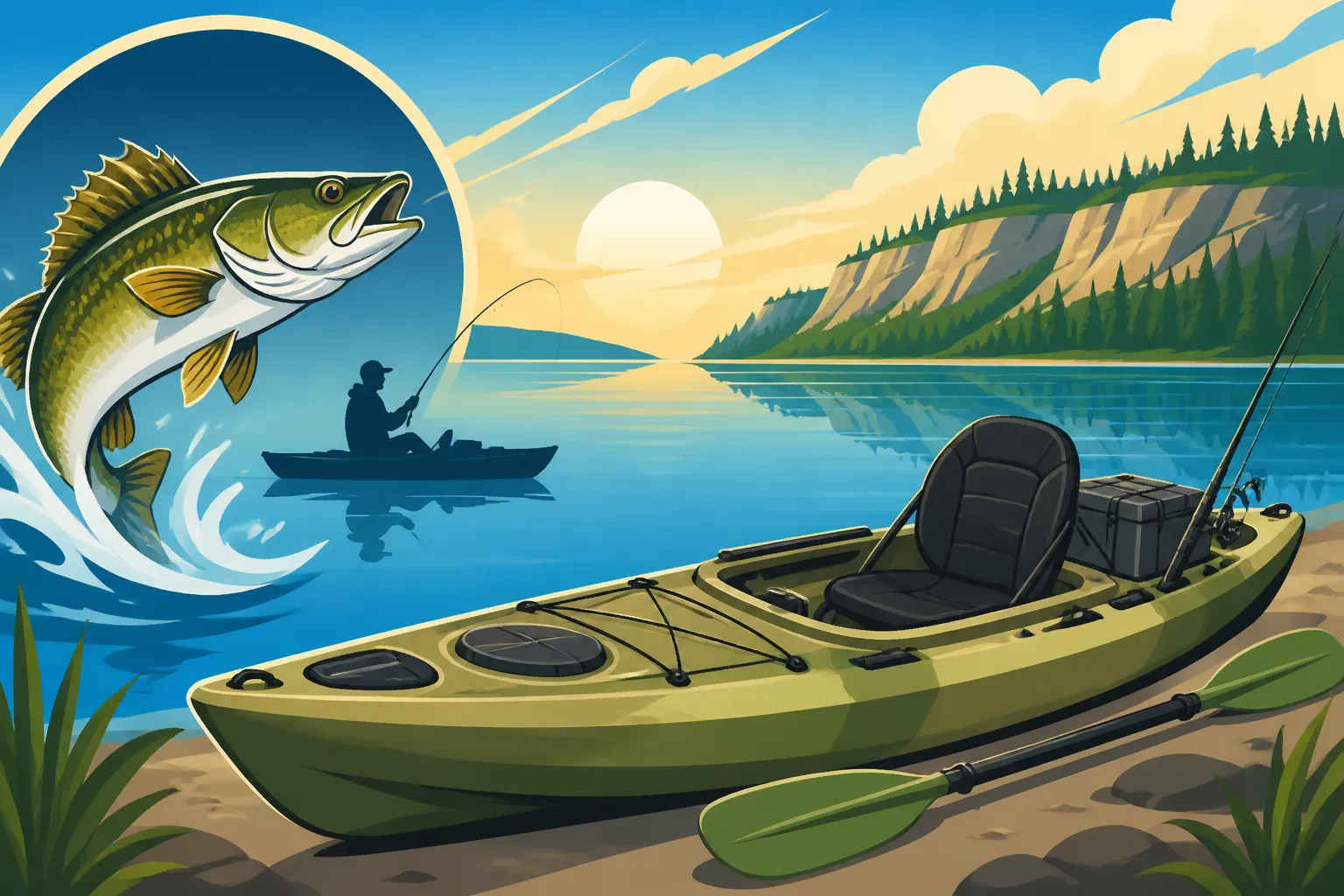
Sit-on-Top (SOT) Kayaks: These are by far the most popular choice for kayak fishing, and for very good reason, especially on a lake like Lesser Slave. SOTs feature an open deck, meaning you sit on top of the kayak rather than inside a cockpit. This design offers superior stability, which is paramount on big, windy lakes where waves can kick up unexpectedly. If you happen to capsize, a sit-on-top kayak is much easier to re-enter, and it's self-bailing, meaning water drains out through scupper holes. This is a huge safety advantage when you're miles from shore. The open deck also provides ample room for rigging accessories like rod holders, fish finders, and anchor systems, and often includes large tank wells for coolers or tackle crates. Many anglers find the ability to stretch their legs or even stand up and cast in a SOT invaluable for all-day comfort and better sight-fishing opportunities. Companies like Perception and Hobie often offer excellent SOT options.
-
Sit-Inside (SI) Kayaks: While traditional sit-inside kayaks are fantastic for touring, whitewater, or very cold conditions due to their enclosed cockpit offering protection from spray and elements, they generally aren't the top recommendation for fishing on large, open lakes like Lesser Slave. Their primary advantage for fishing would be better tracking and sometimes faster paddling in calm conditions, as well as a lower center of gravity. However, stability for standing is usually very limited, and if you capsize, re-entering can be a serious challenge, often requiring specialized rescue techniques or bailing out a flooded cockpit. Storage can also be more cumbersome, often requiring hatches rather than open deck space. While some manufacturers make fishing-specific sit-inside kayaks, their inherent design makes them less versatile and potentially less safe for the dynamic conditions of a massive lake compared to their sit-on-top counterparts.
Pedal vs. Paddle Propulsion
This is where the game really changes for big water fishing.
-
Pedal Drive Kayaks: Once you try a pedal drive kayak on a large lake, it's hard to go back. These kayaks feature a propulsion system, usually a propeller or flippers (like those found on Hobie's MirageDrive), that you power with your legs, much like riding a bicycle. The single biggest advantage of a pedal drive on Lesser Slave Lake is the ability to cover long distances with ease and, critically, to do so hands-free. Imagine trolling for walleye, casting to shorelines, or fighting a fish, all while continuously moving and steering with your feet. This level of control and efficiency dramatically increases your fishing effectiveness and reduces fatigue. When battling wind and waves, using your powerful leg muscles is far more efficient than your arms with a paddle. While pedal kayaks generally come with a higher price tag and can be heavier, for serious big-water anglers, they are often considered a worthwhile investment. You can find excellent selections at retailers like Bass Pro Shops or even explore options on Amazon for specific models or aftermarket additions like a Best Trolling Motor for a Fishing Kayak kit for truly effortless cruising.
-
Paddle Kayaks: The traditional paddle kayak relies solely on arm power. They are typically lighter, more affordable, and simpler in design compared to pedal drives. For smaller lakes, calm days, or anglers on a budget, a good paddle kayak can be perfectly adequate. However, on Lesser Slave Lake, covering significant distances against wind and current can be incredibly demanding. You'll often find yourself having to put your rod down to paddle, breaking up your fishing rhythm. While there are some very efficient paddling kayaks designed for speed and tracking, the physical exertion required to navigate large distances, especially if you're trying to fish simultaneously, can be a major deterrent for long days on the water. Paddle kayaks require a strong core and good paddling technique to be effective in challenging conditions, and even then, fatigue will set in faster than with a pedal system.
Inflatable vs. Rigid Hull Kayaks
Each type has its niche, but for Lesser Slave Lake, one clearly dominates.
-
Rigid Hull Kayaks: These are the traditional hard-shell kayaks made from materials like polyethylene, fiberglass, or composites. They offer superior performance in terms of speed, tracking, and stability compared to most inflatables. Their solid construction means they hold their shape better in waves and wind, providing a more predictable and efficient paddling or pedaling experience. Rigid kayaks are also easier to customize with permanent mounts for rod holders, fish finders, and other accessories. For Lesser Slave Lake, where durability, performance, and the ability to handle chop are key, a rigid hull kayak is almost always the preferred choice. While transport and storage require more space (you'll need a roof rack, truck bed, or a trailer), the on-water benefits are undeniable for a serious angler.
-
Inflatable Kayaks: Inflatable kayaks have come a long way, with many high-pressure drop-stitch floor models offering surprising rigidity and stability. Their main advantages are portability and storage – they can be deflated and packed into a car trunk or closet. For accessing remote ponds or if storage space is extremely limited, they can be a great option. However, for a large, open water body like Lesser Slave Lake, most inflatables still fall short of rigid kayaks in terms of speed, tracking, and overall performance in windy or choppy conditions. They tend to catch more wind, making long paddles arduous, and their more flexible hulls can feel less stable in larger waves. While some heavy-duty inflatables can be surprisingly robust, they often lack the same level of customizable rigging options and inherent stability that a purpose-built rigid fishing kayak offers for big lake environments.
Key Features to Prioritize for Lesser Slave Lake
When you're sifting through the myriad of kayak options, keep Lesser Slave Lake's unique demands at the forefront of your mind. Certain features will make your experience dramatically better, safer, and more productive on this big Alberta water.
Stability, Stability, Stability
I can't stress this enough: stability is paramount on Lesser Slave Lake. You need a kayak that feels solid and forgiving, even when waves start to roll, or a large pike decides to make a run right at the side of your boat. A stable platform allows you to focus on fishing, not on balancing. It enables comfortable casting, retrieving, and most importantly, fighting and landing fish without feeling like you're going to tip over. If you plan to stand up to sight fish or get a better angle for casting, then "standing stability" becomes a non-negotiable feature.
Look for kayaks with wider hulls, often around 32-36 inches or more, and designs that prioritize initial stability (how stable it feels when you first get in) and secondary stability (how stable it feels when leaned on edge or in rougher water). Kayaks with pontoon-style hulls or those explicitly designed for fishing often excel in this area. Think about how the kayak feels when you move around, reach for gear, or land a fish – these are the moments when stability truly shines. It's not just about staying dry; it's about confidence and reducing fatigue from constantly having to brace yourself.
Storage and Deck Space
Anglers, by nature, carry gear. And on a large lake like Lesser Slave, you might need even more: extra layers of clothing, more tackle, food, water, a first-aid kit, and perhaps even a small cooler for your lunch or some fresh walleye fillets. Adequate, easily accessible storage and open deck space are crucial.
Look for large, open "tank wells" at the stern, often with bungee systems, capable of holding a sizable cooler or a specialized tackle crate. Multiple rod holders, both flush-mount and adjustable, are a must. Integrated tackle storage, dry hatches for electronics and valuables, and ample flat areas on the deck for mounting fish finders, GPS, and camera mounts are also highly desirable. The goal is to keep your essential gear organized, secure, and within easy reach without creating a cluttered or tripping hazard. Remember, fumbling for a lure or a set of pliers in choppy conditions is not just annoying, it can be unsafe.
Speed and Tracking
While you're not racing, the ability to cover ground efficiently is a huge advantage on Lesser Slave Lake. Getting to your chosen fishing spot quickly, moving between locations, or battling a strong headwind requires a kayak that tracks well (travels in a straight line with minimal effort) and has decent hull speed. This is where longer, narrower kayaks often perform better than very short, wide ones. However, there's a trade-off: increased speed and tracking often come at the expense of some stability.
Pedal-drive kayaks inherently offer a massive advantage here, as your legs are more powerful and efficient than your arms for sustained propulsion. For paddle kayaks, look for designs with a defined keel line or a rudder system. A rudder is almost essential for a large lake kayak, as it allows you to steer effortlessly, correct your course in crosswinds, and maintain a straight line while paddling or fighting a fish, without having to use sweeping paddle strokes that slow you down. Without good tracking and reasonable speed, those long paddles across the lake can quickly turn into an exhausting grind, eating into your fishing time.
Comfort for Long Days
A day on Lesser Slave Lake can easily stretch from dawn until dusk. An uncomfortable kayak will quickly turn a dream trip into a miserable one. A good seat isn't just a luxury; it's a necessity for enjoying those long hours on the water.
Look for adjustable, framed seating that elevates you off the deck, providing better visibility and a drier ride. This style of seat often offers lumbar support and allows for more air circulation, preventing discomfort. Adjustable foot braces are also key for proper paddling posture and comfort, as they help transfer power to your paddle strokes and keep you secure in the boat. Consider how easy it is to adjust your seating position throughout the day. Some premium seats offer multiple height adjustments, which can be fantastic for standing up or transitioning to sitting. If you’re comfortable, you’ll stay out longer, fish more effectively, and enjoy the experience more.
Propulsion System (Revisited)
We touched on pedal versus paddle earlier, but it's worth reiterating its importance as a priority feature. For Lesser Slave Lake, a pedal drive system, like those offered by Hobie or Old Town (which often features in Bass Pro Shops' inventory), truly elevates the fishing experience. The hands-free operation allows you to continuously troll, cast, or manage your line while maintaining position, even against wind and current. This is incredibly advantageous when you're working a structure or fighting a fish.
If a pedal drive isn't in your budget or preferred style, then a paddle kayak with excellent tracking, a rudder, and the potential to add a small electric trolling motor is the next best option. However, for covering serious ground on Lesser Slave, the efficiency and convenience of a pedal drive are hard to beat. It transforms how you can fish, allowing for more precise boat control and less fatigue over long distances, which means more energy for actually fishing.
Kayak Accessories for Enhanced Lesser Slave Lake Fishing
Once you've chosen your trusty vessel, a few key accessories can significantly enhance your fishing experience and safety on Lesser Slave Lake. Think of them as extensions of your kayak, designed to make your time on the water more productive and enjoyable.
Electronics: Fish Finders and GPS
On a large, diverse lake like Lesser Slave, electronics aren't just a luxury; they're almost a necessity. A quality fish finder with GPS capabilities can dramatically improve your success. It allows you to locate structure, identify baitfish schools, and mark productive fishing spots. Modern units, even compact ones, offer incredible detail.
When selecting a fish finder for a kayak, look for units with good screen resolution, easy-to-use interfaces, and reliable transducer mounting options. Portable units that run on small, rechargeable batteries are perfect for kayaks, and many can be easily installed and removed. Brands like Humminbird and Lowrance offer excellent options for kayak anglers. Having GPS also provides invaluable navigation, especially if fog rolls in or you venture far from your launch point. You can mark your launch, favorite fishing holes, and even retrace your path if needed. Remember, Lesser Slave Lake is big water, and getting disoriented is a real possibility, so a reliable GPS is a strong safety feature. For more in-depth advice, check out Best Fish Finders for Alberta Lakes.
Rod Holders and Storage Solutions
Most fishing kayaks come with at least a couple of flush-mount rod holders, but for serious angling, you'll likely want more. Having multiple rods rigged with different presentations means less retying and more time fishing. Adjustable rod holders, which can be mounted on tracks or rails, allow you to position your rods exactly where you need them for trolling, holding spare rods, or just getting them out of the way when paddling.
Beyond rod holders, consider tackle management systems. Purpose-built tackle crates that fit securely in your stern tank well are excellent for organizing multiple tackle boxes, leader material, and tools. Small dry bags or waterproof boxes are essential for keeping your phone, keys, wallet, and other sensitive items safe from spray or an accidental dunking. Remember, the less clutter on your deck, the safer and more efficient your fishing experience will be. Organization is key when you're on the water.
Anchoring Systems
Being able to hold your position is critical for effective fishing, especially when trying to work a specific structure or hold steady in the wind. A proper anchoring system is non-negotiable for Lesser Slave Lake. A lightweight grappling anchor, typically 1.5 to 3 lbs, is ideal for kayaks as it can grip a variety of bottom types. However, the anchor line is just as important. You'll need at least 50-75 feet of rope, especially for deeper spots, with an anchor trolley system.
An anchor trolley is a pulley system that runs along the side of your kayak, allowing you to deploy your anchor from the bow or stern without having to reach awkwardly or dangerously. This allows you to pivot your kayak and face the wind or current optimally for fishing. For hands-free boat positioning, some anglers also consider a small stake-out pole for shallow water or a micro power pole for more advanced anchoring solutions, which are often mentioned when searching for kayak accessories on Amazon.
Safety Gear and Communication
Safety always comes first, especially on a large lake that can change conditions rapidly. A Coast Guard-approved Personal Flotation Device (PFD) is not just a recommendation; it's a legal requirement, and one that could save your life. Choose a fishing-specific PFD with pockets for gear and a comfortable fit for all-day wear. For more details on legal requirements, refer to Life Jacket Requirements for Alberta Boaters.
Beyond your PFD, always carry a whistle for signaling, a marine-band VHF radio or a fully charged cell phone in a waterproof case, and a signaling mirror. A small first-aid kit, a headlamp or flashlight (even for daytime trips, in case you're delayed), and a spare paddle are also critical. A safety flag on a pole will increase your visibility to other boaters, which is important on a busy lake. Never assume you won't need these items; it's always better to be overprepared when dealing with big water.
Maintenance and Transporting Your Lesser Slave Lake Kayak
Owning a fishing kayak is fantastic, but it comes with responsibilities. Proper maintenance ensures your investment lasts, and having a solid transport plan means you can actually get your kayak to and from the water without a headache. These considerations are just as important as the kayak itself.
Cleaning and Storage Best Practices
After every trip, especially on a lake as dynamic as Lesser Slave, a thorough rinse with fresh water is crucial. This removes any grit, sand, algae, or organic matter that could degrade your kayak's material or harbor invasive species. Pay special attention to any pedal drive units, rudders, or moving parts. A mild soap can be used periodically for a deeper clean. Don't forget to rinse off all your gear too – paddles, PFDs, and tackle.
When it comes to storage, keep your kayak out of direct sunlight for prolonged periods, as UV rays can damage the hull material, causing it to fade and become brittle over time. Store it in a cool, dry place, ideally covered or indoors. If storing outdoors, use a breathable cover. Support the kayak properly across multiple points to prevent hull deformation over time; specialized kayak racks or even sawhorses work well. Never leave heavy gear or water inside the kayak during storage, as this can also cause warping or allow mold to grow. Proper care will extend the life of your kayak for many years of Lesser Slave adventures.
Transport Solutions: Trailers and Roof Racks
Getting a large fishing kayak, especially a pedal-drive model, to Lesser Slave Lake requires a robust transport solution. These kayaks can be heavy and cumbersome.
-
Roof Racks: For single kayaks, a quality roof rack system on your vehicle is a popular choice. You'll need crossbars that span your roof and specialized kayak cradles or J-style carriers to secure the boat. Always use bow and stern tie-downs in addition to straps over the hull to prevent shifting at highway speeds. Loading and unloading a heavy kayak onto a roof rack can be physically demanding, so consider a system with a loading assist feature or enlist a fishing buddy. Retailers like Bass Pro Shops or even general automotive sections on Amazon offer a variety of roof rack components.
-
Trailers: For heavier kayaks, multiple kayaks, or if you prefer not to lift, a small kayak trailer is an excellent investment. These trailers are specifically designed for kayaks, offering easy loading and launching. Many can be pulled by smaller vehicles and are much less strenuous than roof-topping. Some trailers can even be modified to carry extra gear, making them a complete transport and storage solution. A trailer also means you can keep your kayak rigged and ready to go, saving valuable setup time at the boat launch. This is often the preferred method for the larger, fully outfitted fishing kayaks that are best suited for Lesser Slave Lake.
Safety Considerations for Big Water Kayak Fishing
Lesser Slave Lake is stunningly beautiful, but its size demands respect. Being prepared for potential hazards is not just good practice; it's essential for a safe and enjoyable outing. Don't let complacency lead to a dangerous situation.
Personal Flotation Devices PFDs
As mentioned earlier, wearing a Coast Guard-approved PFD is absolutely non-negotiable. It's not enough to have it stowed in your kayak; it needs to be worn at all times while on the water. Modern fishing PFDs are comfortable, lightweight, and designed with pockets and attachment points for gear, so there's no excuse not to wear one. I've had friends who, despite being strong swimmers, were quickly overwhelmed when a sudden capsize in cold water left them disoriented and struggling. Your PFD is your most important piece of safety equipment. For specific regulations, be sure to consult Life Jacket Requirements for Alberta Boaters.
The water in Lesser Slave Lake can be surprisingly cold, even in summer, especially if you venture into deeper sections or if a cold front has recently passed through. Hypothermia is a real danger. A PFD will keep your head above water, conserving precious energy and increasing your chances of survival until help arrives. Don't take chances; wear your PFD, every time.
Communication and Emergency Gear
A fully charged waterproof cell phone is good, but it's not always reliable on a large lake with spotty reception. A marine-band VHF radio is a much better option for communicating with other boaters or emergency services, particularly if you're out of cell service range. Make sure you know how to use it and understand distress calls.
Beyond communication, always carry a small dry bag with essential emergency gear. This includes a robust first-aid kit, a signaling mirror or flare, a loud whistle, and a bright, waterproof flashlight or headlamp. A high-quality knife that can cut fishing line or rope in an emergency is also vital. Remember to check all batteries before each trip. Consider adding a small repair kit for your kayak, especially if it's an inflatable, though rigid kayaks can also suffer minor damage. The more self-sufficient you are, the better prepared you'll be for unexpected situations far from shore.
Weather Awareness and Trip Planning
Weather on Lesser Slave Lake can change rapidly and unpredictably. Always check the forecast before heading out, but understand that conditions can shift quickly. Pay attention to wind speed and direction forecasts, as these directly impact wave height and your ability to paddle or pedal effectively. If the forecast calls for strong winds or thunderstorms, it's always better to reschedule or choose a more sheltered location.
Before you launch, tell someone your float plan: where you're going, your expected return time, and who to call if you don't check in. This simple step can be a lifesaver. Pack appropriate clothing layers, including rain gear and extra warm clothes, even on seemingly nice days. A sudden drop in temperature or a rain shower can make a big difference when you're exposed on the water. Knowing your limits and having the discipline to turn back when conditions worsen is a mark of a responsible angler on big water. There's always another day to fish, but there might not be if you push your luck too far. Consider using an app to check localized weather forecasts and monitor for sudden changes, similar to How to use the Alberta sportfishing regulations app helps with regulations.
Comparing Kayak Types for Lesser Slave Lake
To help simplify your decision, here's a comparative look at the most common kayak types and how they stack up specifically for fishing Lesser Slave Lake.
| Feature / Kayak Type | Sit-on-Top (SOT) Paddle | Sit-on-Top (SOT) Pedal | Sit-Inside (SI) Paddle | Inflatable Fishing |
|---|---|---|---|---|
| Stability | Good to Excellent | Excellent | Fair to Good | Fair to Good |
| Speed/Tracking | Good (with rudder) | Excellent | Excellent | Fair |
| Hands-Free Fishing | Limited (briefly) | Excellent | Limited | Limited |
| Comfort | Good (with good seat) | Excellent | Fair (legs enclosed) | Good |
| Storage/Deck Space | Excellent | Excellent | Limited (hatches) | Moderate |
| Wind/Wave Handling | Good | Excellent | Fair | Fair |
| Transport | Roof rack/Trailer | Roof rack/Trailer | Roof rack/Trailer | Backpack/Trunk |
| Typical Cost | Mid-range | High-end | Low-Mid range | Low-Mid range |
| Best For Lesser Slave | Budget-conscious angler in calm conditions | Serious angler, long distances, rougher water | Very calm days, limited gear | Extremely portable access, calm water |
This table should give you a quick overview, but remember that specific models within each category can vary widely. For instance, a premium SOT paddle kayak will outperform a basic one. When looking for gear or researching specific models, don't hesitate to check out large outdoor retailers like Bass Pro Shops for hands-on comparisons or browse online marketplaces such as Amazon for reviews and competitive pricing. You might also find it helpful to compare these options against general advice on Best Kayaks for Alberta Fishing or even consider Best Boats for Alberta Lakes and Rivers for a broader perspective on watercraft.
Conclusion: Making Your Choice for Lesser Slave Lake
Choosing the best kayak for Lesser Slave Lake isn't about finding the most expensive model or the flashiest one. It's about making an informed decision that aligns with the unique demands of this incredible body of water, your personal fishing style, and your safety priorities. By prioritizing stability, efficient propulsion (pedal drive if possible!), ample storage, comfort for long days, and robust safety gear, you'll set yourself up for countless memorable and successful fishing adventures.
Take your time, do your research, and don't hesitate to visit local outfitters or speak to experienced kayak anglers who frequent large lakes. Their insights can be invaluable. Ultimately, the best kayak for you will be the one that you feel most confident and comfortable in, allowing you to truly immerse yourself in the natural beauty and fantastic fishing opportunities that Lesser Slave Lake proudly offers.
Disclaimer
This article is for general informational purposes only and does not constitute professional advice. Laws, prices and regulations vary by location and change over time. Consult a qualified professional for guidance on your specific situation.