Best crankbait for stained lake water
Fishing in Alberta can be an incredible experience, but sometimes you find yourself on a lake or river where the water isn't crystal clear. Instead, you're faced with stained water – that murky, tea-colored, or cloudy water that leaves you wondering if your bait is even visible to a fish. It's a common frustration, especially when you know there are fish lurking, but they just don't seem to be hitting. This guide is all about tackling that challenge head-on, helping you understand why some crankbaits shine in these conditions and how to choose the very best ones to entice those finicky fish hiding in the murk.
Understanding Stained Water and Its Impact on Fish Behavior
Stained water isn't just a visual nuisance; it fundamentally changes how fish perceive their environment and hunt for food. It's crucial for anglers to grasp this dynamic to select the right tools for the job. Often, stained water in Alberta's lakes and rivers can be caused by anything from heavy rains washing in sediment and tannins from decaying vegetation, to natural processes like algae blooms or glacial melt.
How Stained Water Affects Light Penetration
The most significant impact of stained water is its effect on light penetration. When sunlight hits cloudy or tea-stained water, it doesn't travel far. The suspended particles or dissolved organic matter absorb and scatter light, drastically reducing visibility. This means that at even shallow depths, a fish's vision becomes significantly impaired. Imagine trying to see clearly in a dimly lit, smoky room – that's often what it's like for a fish.
This reduced visibility means that a crankbait relying solely on its natural color or subtle flash might go completely unnoticed. Fish can't see fine details, and their strike zone—the distance from which they'll actively pursue a lure—shrinks considerably. As anglers, we need to compensate for this by offering lures that compensate for the lack of visual clarity with other sensory inputs, or colors that stand out even with limited light.
Impact on Predator and Prey Dynamics
In stained water, fish tend to rely more heavily on their other senses, particularly their lateral line system and vibrations, to detect prey. The lateral line is a sensory organ running along the sides of a fish that detects movement and pressure changes in the water. It's their built-in sonar, and in low visibility, it becomes their primary hunting tool.
Prey fish, too, adapt by sticking closer together or to cover, knowing that predators can't spot them from afar. Predators, like hungry walleye or northern pike, become more ambush-oriented, often positioning themselves in tighter cover or along structure where they can feel the vibrations of passing prey. This behavioral shift means your crankbait not only needs to be seen but also felt through the water. It needs to displace enough water to create those detectable vibrations that trigger a predatory response. Understanding these dynamics is the first step to truly mastering Walleye Fishing in Alberta in less-than-ideal conditions.
Key Characteristics of Effective Crankbaits for Stained Water
When visibility drops, your crankbait needs to work harder to get noticed. It's not just about a bright color; it's a combination of factors that help the lure stand out visually and audibly in the murk. For anglers fishing in Alberta's often unpredictable waters, choosing a crankbait with the right characteristics can make all the difference between a frustrating day and a successful one.
Vibration and Sound Production
As we discussed, a fish's lateral line is king in stained water. Therefore, crankbaits that produce strong vibrations and sound become incredibly effective. Look for lures designed with features that create more water displacement. This could be a wider wobble, a deeper diving lip that pushes more water, or internal rattles.
Rattles, in particular, are your secret weapon. These small internal BBs or spheres clatter against the hard plastic body of the lure, sending out distinct sound waves that travel far in murky water. Both high-frequency, subtle rattles and low-frequency, loud thuds can be effective, so it's often worth experimenting. Many popular crankbaits, readily available at retailers like Bass Pro Shops, come equipped with various rattle systems. The idea is to create a commotion that alerts fish to the lure's presence long before they can see it, drawing them in for a closer look or a reaction strike.
Contrasting and Fluorescent Colors
While subtle, natural colors might dominate in clear water, stained water calls for a different approach. You need colors that provide maximum contrast against the murky background or hues that literally "glow" in limited light conditions. Bright, fluorescent colors are often the ticket. Chartreuse, lime green, hot orange, and fire tiger patterns (a mix of chartreuse, orange, and black stripes) are excellent choices. These colors stand out because they absorb and re-emit light differently, making them more visible even when there's not much light to begin with.
Darker colors like black or deep purple can also create a strong silhouette against a slightly lighter background, making them easier to spot from below. The key is contrast and visibility. Think about how a neon sign pops on a dark night – that's the effect you're aiming for with your crankbait. Don't be afraid to go bold; subtlety is often lost in stained water. Many anglers swear by Best Baits for Walleye on Lesser Slave Lake that are brightly colored when the water is off-color.
Profile and Action
The physical shape and movement of your crankbait also play a significant role. A larger profile can be easier for fish to detect in low visibility, simply because it displaces more water and creates a bigger target. However, "larger" doesn't necessarily mean "giant." Sometimes, a medium-sized crankbait with an exaggerated wobble can be more effective than a massive, subtle one.
The action refers to how the crankbait moves through the water – its wobble, its dive, its roll. In stained water, a wide, aggressive wobble is generally preferred over a tight, subtle shimmy. An aggressive wobble creates more vibration and pushes more water, making the lure more "feelable" to a fish's lateral line. Deep-diving crankbaits are particularly good at getting down to fish holding closer to the bottom, where stained water can be even darker. When fishing for northern pike in Alberta, a lure with a strong, wide wobble can often be the difference maker, especially in those weedy, stained bays.
Top Crankbait Styles and Colors for Alberta's Stained Lakes
Navigating the tackle aisle can be overwhelming with countless crankbait options. When targeting Alberta's stained lakes, however, a few specific styles and color patterns consistently rise to the top, proving their worth by delivering strikes when other lures fail. It's about matching the lure's design to the water conditions and the fish's sensory priorities.
Lipless Crankbaits: The Vibration Powerhouse
Lipless crankbaits are absolute workhorses in stained water, especially for species like walleye and pike. Their compact, often weighty design allows for long casts, and their unique retrieve creates incredible vibration. When reeled in, these lures shimmy intensely, sending out strong sonic waves that activate a fish's lateral line from a distance. Many models also feature loud internal rattles, adding to their auditory appeal.
In stained conditions, go for lipless crankbaits in bright, contrasting colors. Fire Tiger, Chartreuse Perch, or even a bold bluegill pattern with plenty of orange and black can be deadly. The versatility of lipless crankbaits also makes them great for varying depths – you can rip them through weeds, bounce them off the bottom, or just steadily retrieve them over structure. For example, when you're exploring new areas on a lake with stained water, a lipless crankbait allows you to cover water quickly and efficiently, probing for active fish that might be buried in the murk. You can often find a wide selection of these at online retailers like Amazon, making it easy to stock up on your favorite colors and sizes.
Squarebill Crankbaits: Deflection and Flash
Squarebill crankbaits, with their distinct square-shaped lip, are excellent for fishing shallow to medium depths in stained water, particularly around cover like submerged timber, rocks, or weed edges. Their unique lip design causes them to deflect wildly off obstacles, creating an erratic, irresistible action that often triggers a reaction strike from otherwise passive fish. This deflection also creates a sudden burst of vibration and flash, which is critical in low visibility.
Again, vibrant and high-contrast colors are key. Try patterns like Chartreuse Black Back, bright orange, or even a solid white if the water has a greenish tint. The quick, sharp deflections combined with a noisy internal rattle (many squarebills have them) make these lures incredibly effective at drawing attention in less-than-clear conditions. Imagine casting a squarebill along a rocky bank on a stained reservoir; as it bounces off the rocks, it's mimicking a panicked baitfish, sending out those crucial signals that predators can't ignore. This makes them a strong contender when you're fishing How to Catch Northern Pike in Alberta in weedy shallows.
Deep Diving Crankbaits: Getting Down in the Dark
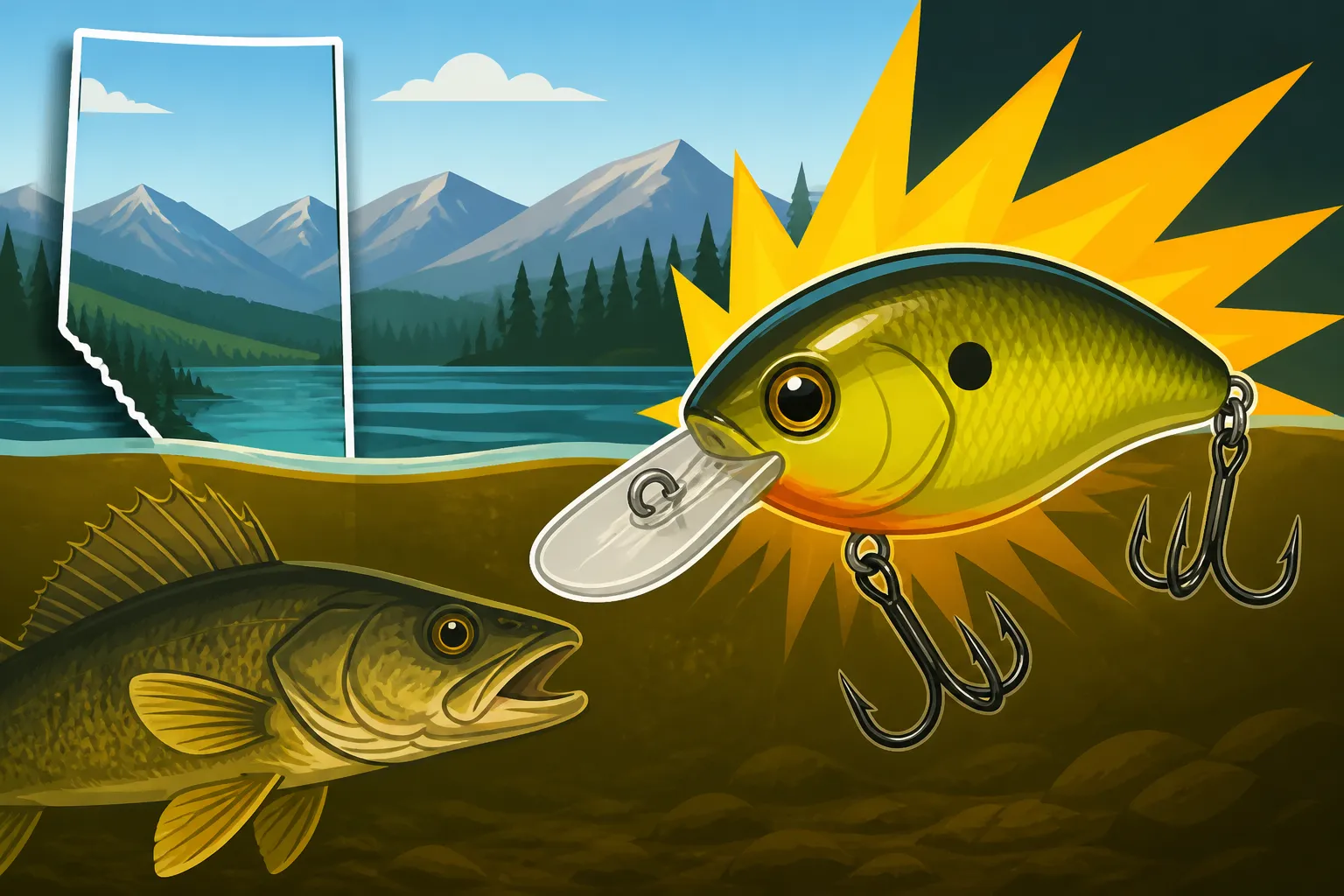
When fish in stained water retreat to deeper contours or channels, a deep-diving crankbait is your best friend. These lures are designed with large, aggressive lips that allow them to plunge quickly to significant depths, putting them right in the strike zone of suspended or bottom-hugging fish. The deeper they dive, the more water they displace, and often, the more prominent their wobble.
For deep-diving crankbaits in stained water, look for colors that maintain visibility at depth. Again, Chartreuse, Fire Tiger, and bright orange are stellar choices. Sometimes, a metallic gold or silver can also catch what little light penetrates, creating a visible flash. The key here is to select a crankbait that can reach the desired depth and run true, creating a consistent vibration pattern. Brands like Rapala offer excellent deep-diving options that are widely available. Whether you're targeting Lake Trout Fishing in Alberta or searching for deep walleye in a murky basin, a well-chosen deep diver can be the key to unlocking those bites.
| Crankbait Style | Primary Feature for Stained Water | Recommended Colors | Best Use Cases in Stained Water |
|---|---|---|---|
| Lipless | Strong vibration, loud rattles | Fire Tiger, Chartreuse Perch, Bright Orange | Covering open water, vertical jigging, ripping through weeds |
| Squarebill | Erratic deflection, wide wobble | Chartreuse Black Back, Hot Orange, Solid White | Fishing shallow cover (rocks, wood, weeds), reaction strikes |
| Deep Diver | Depth, strong wobble, rattles | Fire Tiger, Chartreuse, Bright Orange, Metallic Gold | Targeting deep structure, suspended fish in deep stained water, trolling |
Rigging and Presenting Crankbaits in Stained Conditions
Having the right crankbait is only half the battle; knowing how to rig it and present it effectively in stained water is equally critical. Little adjustments to your setup and technique can dramatically increase your chances of success, turning those frustrating days into memorable ones.
Line Selection and Leader Considerations
In stained water, fish aren't as visually sensitive to your fishing line. This gives you a bit more flexibility, but it doesn't mean you can ignore line choice entirely. Braided line is often a fantastic option for crankbait fishing in stained water. Its lack of stretch provides incredible sensitivity, allowing you to feel every bump, deflection, and subtle tap from a fish. This is crucial when visibility is low, and you're relying more on feel. The stronger vibrations from your crankbait are also transmitted more clearly up the braid.
While visibility isn't paramount for the main line, a short leader can still be beneficial. A fluorocarbon leader, typically 12-20 inches, provides a bit of abrasion resistance, which is helpful if you're deflecting off rocks or wood. The reduced visibility of fluorocarbon is a bonus, but the main advantage here is its durability against structure. You don't necessarily need a long, finesse leader; a slightly heavier test than your main braid can be appropriate, especially for northern pike waters where toothy encounters are common.
Retrieval Speed and Cadence
This is where many anglers overlook a crucial detail: how you work the lure. In stained water, fish often need a slower, more deliberate presentation to locate and commit to a strike. They might not react to a blur streaking past them. Experiment with slower retrieve speeds that still allow your crankbait to achieve its intended wobble and depth. A slow, steady retrieve can often be more productive than a fast, erratic one.
However, incorporating pauses and jerks (a "stop-and-go" or "twitch-and-pause" retrieve) can still be highly effective. The sudden change in speed or direction can create an additional burst of vibration and a "dying baitfish" impression that triggers a reaction strike. Picture a walleye lurking in murky water; it might not see your crankbait until it stops, shimmies, and then starts again, allowing the fish to pinpoint the source of the vibrations. Don't be afraid to experiment with your cadence until you find what the fish are responding to on a given day. This attention to detail is similar to understanding the nuances of Best Time of Day to Catch Walleye or adjusting to Cold Front Fishing Tactics for Alberta Walleye.
Targeting Structure and Cover
In stained water, fish will often hold tighter to structure and cover. They use these features for ambush points and security, given their limited visibility. This means your casting accuracy and ability to "read" the water (even if it's murky) become even more important. Focus your casts on obvious points, humps, weed lines, rock piles, or submerged timber.
Make multiple casts to the same piece of structure from different angles. If a fish is there, it might take a few passes for your crankbait to cross its strike zone and trigger a response. Remember, their strike zone is smaller, so you need to put the bait right in front of them. Using your fish finder, especially models available at stores like Bass Pro Shops or online platforms, to identify subtle depth changes or isolated cover can give you a significant advantage. Don't just cast aimlessly; target your presentations precisely where fish are most likely to be holding, using the strong vibrations and colors of your crankbaits to call them out of the murk. How to use the Alberta sportfishing regulations app can often help you identify likely spots to target on new waters.
Disclaimer
This article is for general informational purposes only and does not constitute professional advice. Laws, prices and regulations vary by location and change over time. Consult a qualified professional for guidance on your specific situation.