Best chatterbait for early spring pike
The ice has just pulled away from the shore, leaving behind a stark, cold landscape, yet there's a buzz in the air for Alberta anglers: early spring pike season is officially here. Many of us struggle to find the right presentation when the water is still frigid and the fish are just waking up from their winter slumber. This comprehensive guide will walk you through why chatterbaits are an absolute game-changer for targeting hungry northern pike in Alberta's early spring waters, covering everything from understanding pike behavior to selecting the perfect lure and mastering the techniques that bring those toothy critters to the net.
Understanding Early Spring Pike Behavior in Alberta
Those first few weeks after ice-out can be a real head-scratcher for many anglers. The lakes and rivers are still numbingly cold, and the pike aren't exactly doing backflips for every lure you throw at them. But there's a method to their madness, and understanding their post-winter routine is key to unlocking consistent success with a chatterbait.
The Post-Ice-Out Hunger Pangs
Imagine waking up from a long, cold nap lasting months. That's essentially what northern pike are doing in early spring. They've spent the winter in a state of reduced activity, conserving energy. While they do feed under the ice, it's often more sporadic. Once the ice melts and the sun starts to penetrate the water, their metabolism slowly begins to kick into gear. This means they are getting hungry, but they're not always willing to chase down a fast-moving bait just yet. Their movements might still be a bit sluggish, making them prefer an easy meal that doesn't require a lot of effort to ambush.
During this period, pike are often still a bit lethargic. They won't always chase a bait across a whole flat. Instead, they'll be positioned in areas where they can ambush prey with minimal energy expenditure. Think about those first few sunny days when you feel like stretching out and just soaking it all in—pike have a similar vibe. They're looking for comfortable spots, often near cover, where they can warm up and wait for an easy meal to swim by. This is why understanding their specific haunts is crucial, especially before significant weed growth starts to provide more universal cover.
Shallow Water Migration
As the sun gains strength and begins to warm the shallower sections of Alberta's lakes and rivers, pike begin to move with purpose. These shallow bays, points, and even river eddies become thermal refuges, warming up faster than the main body of water. This subtle temperature difference, often just a few degrees, can be a magnet for both the pike and their primary forage. Baitfish, insects, and even smaller panfish are also drawn to these warmer, more hospitable areas, creating a natural buffet for the hungry pike. This migration isn't always a mad dash; it's a gradual shift, making these transition zones incredibly productive.
The key to finding these shallow water hotspots is often looking for areas that receive direct sunlight for extended periods. North-facing bays, shallow flats with dark bottoms (which absorb more heat), and protected areas out of the main current are prime examples. Pike will use any available cover in these shallow areas, be it sparse new weed growth, submerged timber, or even rocky outcrops. Presenting your chatterbait in these zones is critical, as the pike will often be lying in wait, ready to ambush anything that dares to cruise past. This predictable movement makes them easier to target than during other times of the year, provided you're fishing the right depth.
Key Forage in Early Spring
What are Alberta's pike dining on when the ice first comes off? Their diet in early spring often consists of whatever small fish have overwintered successfully. Yellow perch, minnows, suckers, and even smaller walleye can be on the menu. These baitfish are also seeking warmer waters and often haven't developed the speed and agility they'll have later in the season. This makes them vulnerable prey, and a good chatterbait can perfectly mimic their distressed movements. You'll often find pike lurking near schools of these baitfish, waiting for the opportune moment to strike.
Matching the hatch, or in this case, matching the baitfish, can significantly increase your success. While a chatterbait's unique action is a major draw, selecting colors and profiles that resemble the local forage can make a big difference. Think about the prevalent baitfish in your chosen fishing spot – are they silvery minnows, darker perch, or perhaps more golden suckers? Carrying a variety of chatterbait colors allows you to adapt to the specific conditions and what the pike are keying in on. Sometimes, a bright, attention-grabbing color can trigger a reaction strike, but often, a more natural presentation will prove more effective in the cold, clear waters of early spring.
Why Chatterbaits Shine for Early Spring Pike
When you're facing those tricky early spring conditions in Alberta, with cold water and sometimes finicky pike, a chatterbait isn't just another lure in your tackle box – it's often the lure that makes all the difference. Its unique design and action address many of the challenges presented by post-ice-out fishing, making it incredibly effective for targeting these toothy predators.
Unique Vibration and Flash
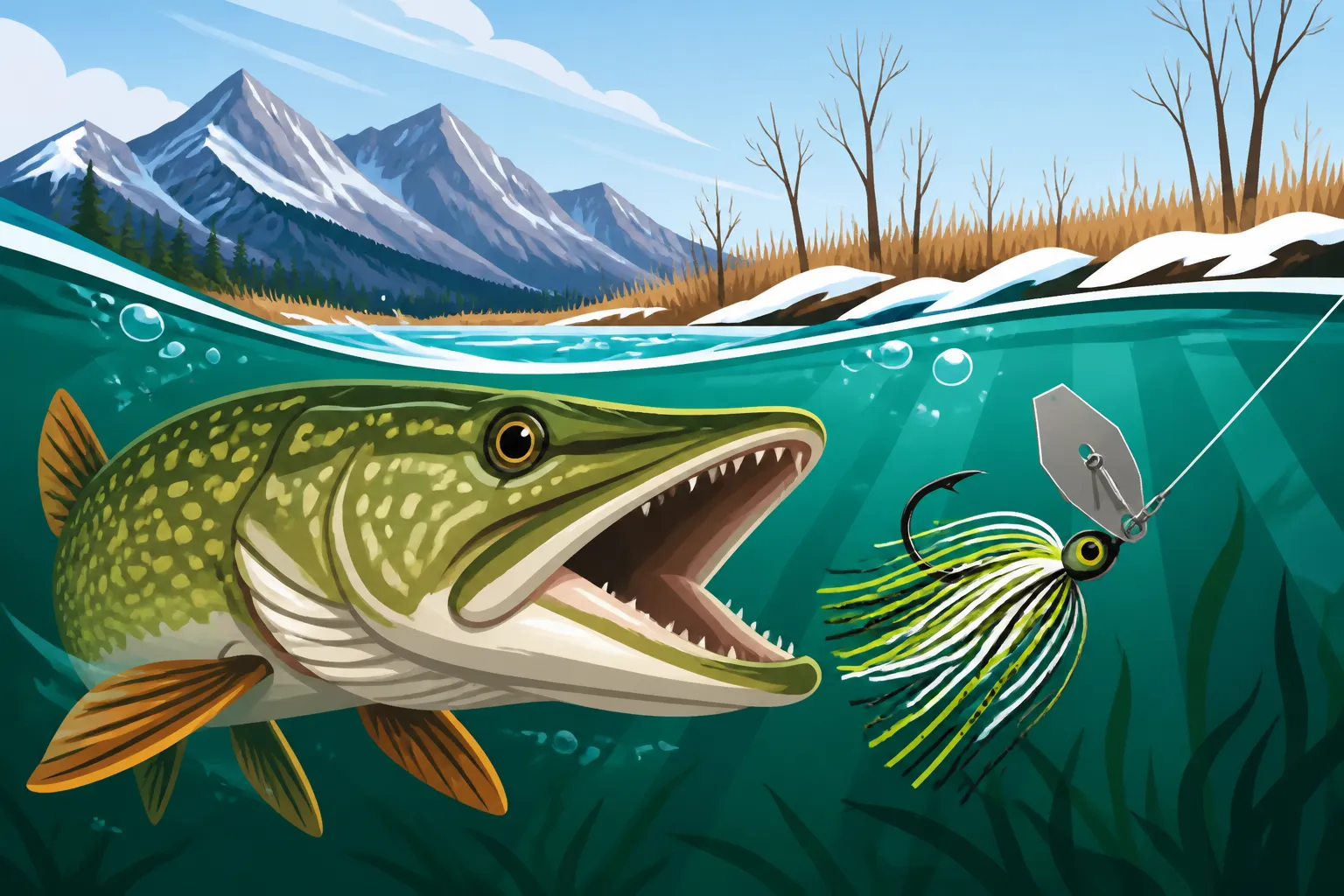
The defining characteristic of a chatterbait is undoubtedly its bladed head, which generates an incredible amount of vibration and flash as it moves through the water. This isn't just a subtle shimmy; it's a distinct, irregular thumping action that sends powerful pulsations through the water column. In the cold, often murky waters of early spring, where pike might not be super active visually, this strong vibration acts like a beacon, drawing them in from a distance. It mimics a struggling baitfish, creating a disturbance that is hard for even a sluggish pike to ignore.
The flash from the blade also plays a critical role, especially on brighter days or in slightly clearer water. As the chatterbait wobbles and vibrates, the blade catches and reflects light in erratic flashes, further enhancing its appeal. This combination of powerful vibration and intermittent flash creates a multi-sensory attack that triggers a pike's predatory instincts. It’s not just about what they see or feel; it’s the combination that screams "easy meal" to a hungry pike, even if they're not in a full-on feeding frenzy. This is why you'll often get strikes on a chatterbait when other lures, like traditional spoons or spinnerbaits, aren't producing.
Versatility in Retrieval
Another major advantage of chatterbaits for early spring pike in Alberta is their incredible versatility in retrieval. Unlike some lures that need to be burned or retrieved at a very specific speed to work effectively, a chatterbait can be worked in a multitude of ways, which is crucial when pike are holding in different depths or reacting to different presentations. You can retrieve it slowly and steadily, allowing the blade to thump along just above the bottom, mimicking a sluggish baitfish. This slow, methodical approach is often deadly for less aggressive, cold-water pike.
Alternatively, you can give it short twitches, pause it briefly, and then continue your retrieve, creating an erratic stop-and-go action that can provoke reaction strikes from more active fish. You can also vary your depth by letting it sink closer to the bottom or reeling it in higher in the water column, adjusting to where the pike are holding. This adaptability means you can use one lure to probe different depths and presentations without constantly changing baits, saving valuable fishing time. This is especially useful when you're still trying to dial in the bite in a new area.
Mimicking Baitfish and Crawfish
The profile and action of a chatterbait, especially when paired with the right soft plastic trailer, do an excellent job of imitating common early spring pike forage. The soft plastic skirt of the chatterbait pulsates and flows, while the trailer adds bulk and a more natural swimming motion. Depending on the trailer you choose – be it a paddle-tail swimbait, a grub, or a crawfish imitation – you can effectively mimic a wide range of prey items that pike are looking for. For instance, a small paddle tail will enhance the swimming action, while a bulkier creature bait might suggest a crawfish scurrying along the bottom.
In many Alberta lakes and rivers, crawfish are a significant food source for pike, even in colder water. A chatterbait with a brown or green pumpkin skirt and a matching craw trailer can be absolutely devastating, especially around rocky points or areas with hard bottom where crawfish might hide. The vibration of the blade, combined with the scuttling action of the craw trailer, makes for an incredibly realistic and appealing presentation. This ability to closely imitate both baitfish and bottom-dwelling crustaceans gives chatterbaits a distinct edge in early spring, covering multiple food sources with one versatile lure.
Key Features of the Best Chatterbaits for Alberta Pike
Choosing the right chatterbait isn't just about grabbing the first one you see. For targeting early spring pike in Alberta, there are specific features that can make a huge difference in your success. Considering these elements will help you select a lure that not only performs well but also stands up to the powerful strikes of a hungry pike.
Blade Design and Material
The blade is the heart and soul of a chatterbait, dictating its vibration, flash, and overall action. For early spring pike, you generally want a blade that provides a strong, consistent thumping action even at slow retrieval speeds. Blades made from durable stainless steel are common and provide excellent vibration, along with a good flash. Some blades are clear or painted, which can alter the visual profile. A clear blade, for instance, might be more subtle in extremely clear water, while a painted blade could offer a stronger contrast.
The shape of the blade also influences the action. A more angular or hexagonal blade will often create a more erratic, hard-thumping vibration, which is exactly what you want to call in those curious but somewhat sluggish pike. Brands like Z-Man, with their original ChatterBait design, have perfected this, and many imitators try to replicate that signature thump. You'll want to ensure the blade is securely attached and made from quality material that won't bend or break under the pressure of a strong pike strike. The blade is what generates the noise and movement that triggers the bite, so it's paramount to pick one designed for maximum effectiveness.
Skirt and Trailer Considerations
While the blade draws attention, the skirt and trailer provide the visual appeal and bulk that entice a pike to commit. The silicone skirt should be full and vibrant, pulsating and breathing with every movement of the lure. For early spring, natural baitfish colors like white, grey, silver, or light blue often work wonders, mimicking perch or minnows. Chartreuse or firetiger patterns can also be very effective, especially in stained or murky water, as they provide a high-contrast target. Don't be afraid to experiment with brighter colors, as pike are often attracted to anything that stands out.
The trailer is where you can truly customize your chatterbait presentation. A paddle-tail swimbait trailer, roughly 3 to 5 inches long, is a classic choice, adding a realistic swimming action and bulk. Popular options often found at places like Bass Pro Shops or online retailers like Amazon include realistic minnow imitations or chunkier paddle tails designed to displace more water. For a more crawfish-like presentation, especially around rocky structures, a creature bait or craw imitation in shades of brown, green pumpkin, or black and blue can be deadly. The key is to ensure your trailer complements the chatterbait, enhancing its action without overpowering it. Sometimes, a subtle split-tail grub is all you need, while other times a bulky creature bait adds just the right profile.
Hook Strength and Sharpness
Pike have incredibly strong jaws and a mouth full of sharp teeth. Because of this, hook strength and sharpness are non-negotiable. There's nothing worse than hooking into a trophy pike only to have the hook straighten out or pull free because it wasn't up to the task. Look for chatterbaits equipped with heavy-duty, super-sharp hooks. Often, these will be black nickel or similar finishes, designed for maximum penetration and durability. Many high-quality chatterbaits come with robust hooks right out of the package, but if you're buying a lesser-known brand, it's always a good idea to inspect them.
Sometimes, after landing a few pike, the hook point can become dulled. Always carry a small hook sharpener in your tackle box and regularly check your hook points, especially after a fish or if you've bounced the lure off rocks or timber. A sharp hook is essential for reliable hooksets, minimizing lost fish and ensuring that when a pike commits, it stays connected. For really big pike, some anglers even opt to upgrade their hooks to even heavier-gauge models, though most reputable brands offer hooks strong enough for typical Alberta pike.
Weight and Size Selection
Matching the weight and size of your chatterbait to the conditions and the expected size of the pike is crucial. For early spring, when pike are often shallower and less aggressive, a lighter chatterbait (typically 3/8 oz to 1/2 oz) is often ideal. These lighter weights allow for slower retrieves and a more subtle fall, which can be exactly what a finicky pike wants. They also help you keep the bait in the strike zone longer without sinking too quickly.
However, if you're fishing deeper drop-offs, areas with stronger current, or targeting truly massive pike, stepping up to a 3/4 oz or even 1 oz chatterbait might be necessary. The larger size can also offer a bigger profile, appealing to those bigger, more predatory fish. Similarly, match the overall size of the lure (including the trailer) to the general size of the baitfish in the area. A 4-inch chatterbait might be perfect for smaller pike, while a 6-inch offering with a bulky trailer could be the ticket for a true gator. Having a selection of weights and sizes will allow you to adapt to the specific conditions of the day, whether you're casting in Alberta Crown land camping and fishing access permit rules areas or targeting shallower bays.
Top Chatterbait Styles and Brands for Alberta Anglers
With so many options out there, navigating the world of chatterbaits can feel a bit overwhelming. However, focusing on a few proven styles and understanding what makes certain brands popular among pike anglers can simplify your choices and significantly boost your early spring success in Alberta.
Classic Bladed Jigs
The original bladed jig, often simply called a "chatterbait" (thanks to the brand that popularized it), remains a staple for a reason. These lures feature a hex-shaped blade attached to a jig head, producing that signature erratic vibration and side-to-side hunting action. The Z-Man Original ChatterBait, for instance, is a benchmark for this style, known for its consistent thump and durable construction. Many other brands have since produced their versions, and while some are excellent, the Z-Man often sets the standard for its distinct feel in the water.
These classic designs are incredibly versatile and are often the first choice for anglers targeting early spring pike. They come in a wide array of colours, allowing you to match local forage or experiment with brighter, more aggressive patterns. The key to their success lies in their ability to displace water and create a strong vibration that pike can detect from a distance, even in cold, turbid conditions. You can find a vast selection of these at most major fishing retailers like Bass Pro Shops or through online platforms like Amazon, making them accessible to any angler looking to improve their pike game.
Heavy-Duty Options for Big Pike
While the classic chatterbaits are excellent, for those truly massive Alberta pike – the kind that could swallow a small dog – you might want to consider some of the more heavy-duty options available. These often feature heavier wire hooks, more robust blades, and thicker skirts designed to withstand the brutal power and sharp teeth of a trophy fish. Lures like the Z-Man ChatterBait JackHammer or Project Z ChatterBait are examples of upgraded versions that boast stronger components, allowing you to fish with confidence knowing your lure won't fail when that fish of a lifetime strikes.
These heavy-duty chatterbaits often come in larger sizes and weights, providing a bigger profile that appeals to larger predators. They're built to take a beating and keep on thumping, which is essential when you're casting into gnarly cover where big pike lurk. If you're specifically targeting areas known for producing giant northern pike, like certain spots on Lesser Slave Lake Walleye Fishing or Cold Lake Lake Trout Fishing, investing in these tougher options is a wise decision. They might cost a bit more, but the peace of mind they offer when battling a true monster is invaluable.
Where to Find Them
Finding the right chatterbaits for your Alberta pike adventures is easier than ever. Most well-stocked local tackle shops will carry a selection, but for the widest variety of brands, colors, and styles, you'll likely turn to larger retailers.
Big box outdoor stores like Bass Pro Shops are excellent resources, offering a vast inventory of Z-Man products, various competing brands, and a wide array of soft plastic trailers to pair with them. You can often find knowledgeable staff who can help you pick out the right colors for local conditions or suggest specific trailers that have been working well.
Alternatively, online platforms like Amazon provide an unparalleled selection, often with competitive pricing and the convenience of home delivery. This is especially useful if you're looking for a very specific color or weight that might not be readily available in smaller shops. When buying online, just be sure to check reviews and ensure you're getting genuine products from reputable sellers. Whether you're buying in person or online, always try to stock up on a variety of weights, colors, and trailers to be prepared for any scenario you might encounter on the water.
Techniques for Fishing Chatterbaits in Early Spring Alberta
Having the right chatterbait is only half the battle; knowing how to fish it effectively in early spring Alberta conditions is what truly brings success. Pike in the cold water can be particular, so adjusting your presentation to their mood and location is key.
Targeting Key Locations
In early spring, pike will gravitate towards specific areas that offer warmth, cover, and access to food. Your first targets should be shallow, north-facing bays that warm up fastest under the sun. These bays often have the first signs of new weed growth, providing essential ambush points. Look for transition zones where deeper water meets shallow flats, especially if there's submerged timber, rocks, or remnant weeds from the previous year. These structure points act as excellent holding areas. River systems are also prime, particularly in slack water eddies, backwaters, and slow-moving current seams where pike can conserve energy while waiting for prey. Best Fishing Rivers in Alberta like sections of the Bow or Red Deer River often have such areas.
When approaching these spots, stealth is your friend. Early spring water can often be quite clear before algal blooms take hold, and pike can be easily spooked. Make long casts to cover water without getting too close, and fan-cast to thoroughly work an area before moving on. Pay close attention to subtle changes in depth, bottom composition, or the presence of any structure. A good depth finder can be invaluable here, but even without one, observing the shoreline for indications of underwater features can help you pinpoint productive zones. Remember that even a few degrees' difference in water temperature can concentrate pike into very small areas.
Optimal Retrieval Speeds and Cadence
This is where many anglers miss the mark with chatterbaits in early spring. Unlike summer, when pike might chase a fast-moving bait, colder water generally requires a slower, more deliberate approach. A slow, steady retrieve is often deadly. You want the blade to be thumping consistently, but not so fast that the pike can't easily intercept it. Think about mimicking a sluggish, perhaps injured, baitfish—easy pickings. Let the chatterbait sink to the desired depth, then begin a slow, consistent reel.
However, "slow" doesn't mean "monotonous." Incorporate subtle variations:
- Stop-and-go: Reel a few cranks, pause for a second or two (allowing the bait to flutter), then continue. Many strikes occur on the pause.
- Lift and drop: Slowly lift your rod tip, then let the lure fall on a semi-slack line. This can mimic a dying baitfish or a crawfish trying to escape.
- Subtle twitches: Occasionally impart a slight twitch of the rod tip to give the bait an extra kick, potentially triggering a reaction bite from a hesitant pike.
Vary your retrieve until you find what the fish prefer on that particular day. One day it might be a dead-slow roll, the next a stop-and-go cadence. Don't be afraid to experiment, especially when fishing new waters or after a change in weather patterns.
Pairing with Rods and Reels
To effectively fish chatterbaits for Alberta pike, having the right gear setup makes a significant difference in casting accuracy, lure action, and landing those hard-fighting fish. A medium-heavy to heavy power baitcasting rod, typically 7 to 7.5 feet in length, is generally ideal. The longer length aids in casting distance, which is important for covering water and maintaining stealth. The medium-heavy or heavy power provides the backbone needed to cast heavier chatterbaits, drive robust hooks into a pike's tough mouth, and control large fish in thick cover. A moderate-fast or fast action tip is preferred, giving you enough sensitivity to feel the subtle thump of the blade and detect soft bites, while still offering the power for a solid hookset.
Pair this rod with a reliable baitcasting reel with a gear ratio in the 6.4:1 to 7.1:1 range. This allows for efficient retrieval, but more importantly, gives you the torque needed to slowly work the chatterbait and fight powerful pike. Spool your reel with 15-20 lb fluorocarbon or a braided line in the 30-50 lb test range with a fluorocarbon leader. Braided line offers superior casting distance and sensitivity, while a 15-25 lb fluorocarbon leader (around 18-24 inches long) provides abrasion resistance against pike teeth and makes the presentation less visible in clear water. For those toothy critters, adding a short (6-12 inch) heavy fluorocarbon leader (60-80 lb) or even a bite-proof wire leader can prevent costly bite-offs, especially when targeting larger pike or when fishing in areas with a lot of them. This setup ensures you're prepared for whatever an Alberta pike throws your way. You might consider checking out articles like Best Fishing Rods for Alberta Rivers for more details on specific rod choices.
Chatterbait Selection Guide for Early Spring Pike
Here's a quick reference table to help you choose the right chatterbait based on common early spring conditions in Alberta.
| Condition | Recommended Chatterbait Weight | Recommended Skirt/Trailer Colors | Retrieval Speed/Action | Notes |
|---|---|---|---|---|
| Cold, Clear Water | 3/8 – 1/2 oz | White, Pearl, Ghost Minnow, Green Pumpkin (craw) | Slow, steady, occasional pause | Natural presentations often best. Smaller profile trailers. Focus on subtle vibration. |
| Stained/Murky Water | 1/2 – 3/4 oz | Chartreuse, Firetiger, Black/Blue | Moderate slow, erratic twitches | Higher contrast, more vibration needed to attract attention. |
| Shallow Weedy Bays | 3/8 – 1/2 oz | White, Green Pumpkin, Perch | Slow roll, stop-and-go, occasional rip | Weedless design is a plus. Use paddle-tail or grub trailers. Fish just above emergent weeds. |
| Deeper Transitions/Current | 3/4 – 1 oz | White, Bluegill, Black/Blue | Slow lift-drop, steady retrieve | Heavier weight to reach depth. Bulkier trailers to displace water. Longer casts needed for wary fish. |
| Sunny Days | 3/8 – 1/2 oz | Silvery, White, Natural Baitfish | Slow to moderate, subtle pauses | Utilize flash, but keep action natural. Consider clear blades for extreme clarity. |
| Overcast Days | 1/2 – 3/4 oz | Chartreuse, Bright Green, Dark | Erratic, more aggressive thumps | Pike might be more active. Contrast is key. Larger trailers might entice bigger bites. |
Disclaimer
This article is for general informational purposes only and does not constitute professional advice. Laws, prices and regulations vary by location and change over time. Consult a qualified professional for guidance on your specific situation.