Best polarized sunglasses for sight fishing
One of the most frustrating things on the water is knowing there are fish out there, but you just can't see them. Whether it's the blinding glare off a calm lake or the shimmering surface of a river, that visual barrier can make all the difference between a successful day of sight fishing and casting blindly. This guide will walk you through everything you need to know about choosing the best polarized sunglasses to cut through that glare and spot more fish in Alberta's beautiful waters.
Why Polarized Sunglasses are a Game-Changer for Alberta Anglers
Let's be honest, we've all been there. You're standing on the bank of the Bow River, scanning for rising trout, or trying to peer into the shallows of Lesser Slave Lake for cruising pike, but all you see is a bright, washed-out reflection. It's not just annoying; it's a huge disadvantage. That's where polarized sunglasses come in – they're not just a fashion statement; they're an essential piece of fishing gear, especially here in Alberta where our waters can be incredibly clear and bright.
Cutting Through the Surface Glare
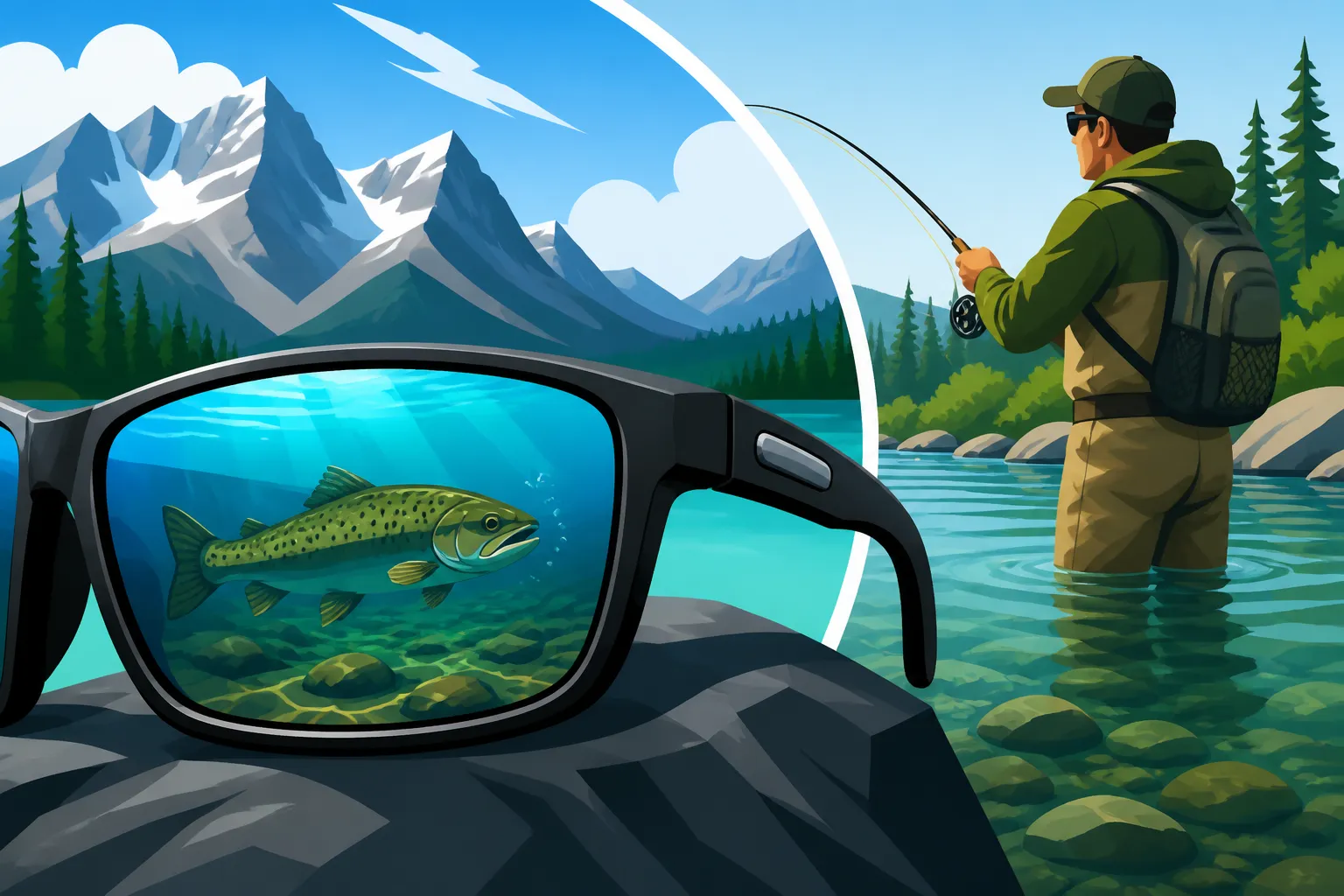
The primary, undeniable benefit of polarized lenses is their ability to eliminate glare. Sunlight hitting the water's surface bounces off at various angles, creating horizontal light waves that manifest as blinding glare. This glare acts like a mirror, obscuring everything beneath the surface. Normal sunglasses simply darken your view, but they don't block this specific type of light.
Think of it like this: without polarized lenses, you're looking at a mirror. With them, it's like someone turned off the lights in the reflection, allowing you to see through the glass. This isn't just about comfort; it's about crucial visual information. Being able to discern subtle movements of fish, the contours of the riverbed, or submerged structure like logs and rocks gives you a massive edge. It allows you to make more precise casts, understand fish behavior, and ultimately, catch more fish.
Enhancing Contrast and Clarity Underwater
Beyond just removing glare, polarized lenses dramatically improve visual contrast and clarity beneath the water's surface. They filter out scattered light, which can make everything look hazy or flat. This means that features like weeds, rocky drop-offs, or even the subtle coloration of a fish against the bottom become much more discernible. You're not just seeing through the water; you're seeing into it with remarkable detail.
Imagine stalking cutthroat trout in a crystal-clear mountain stream. Without polarization, you might only notice a dark shape. With it, you can often make out the fish's fins, its lateral line, and even the direction it's facing. This level of detail allows you to present your fly or lure much more effectively, anticipating the fish's movements rather than reacting to them too late. It's truly like gaining x-ray vision for the water.
Key Features to Look For in Sight Fishing Sunglasses
Choosing the right pair of polarized sunglasses isn't just about picking the coolest frames. There's a science to it, and paying attention to a few key features will make a huge difference in your on-water experience. From the lens material to how they fit your face, every detail contributes to their effectiveness.
Lens Material and Durability
The material of your sunglass lenses is incredibly important, impacting both optical clarity and how well they stand up to the inevitable bumps and drops that happen when you're fishing. Generally, you'll find lenses made from polycarbonate, glass, or a material often referred to as Trivex or NXT.
Polycarbonate lenses are lightweight and highly impact-resistant, making them a popular choice for active anglers. If you're prone to dropping your gear or fishing in rugged terrain, these are a solid option. However, they can sometimes be more susceptible to scratches than glass if not treated with a good scratch-resistant coating. Glass lenses, on the other hand, offer superior optical clarity and are the most scratch-resistant. Many hardcore anglers swear by glass for its distortion-free vision, but they are heavier and can shatter upon impact. Trivex or NXT lenses offer a fantastic middle ground, providing excellent clarity, high impact resistance, and a lighter weight than glass. When you're spending hours on the water, whether wading the Crowsnest River Trout Fishing or paddling a Best Kayaks for Alberta Fishing, comfort and durability matter.
Frame Design and Fit
A great pair of lenses is useless if the frames don't fit well or actively hinder your vision. The ideal frames for fishing sunglasses are lightweight, durable, and offer good coverage. Look for frames that wrap around your face slightly to block peripheral light from entering, which can cause distracting glare. Many brands offer styles specifically designed for angling, with features like rubberized nose pads and temple tips that help keep them securely on your face, even when wet or sweaty.
Consider the fit around your temples and ears; they shouldn't pinch or cause discomfort after hours of wear. Also, pay attention to how they sit on your nose – a good fit prevents them from slipping down when you lean over to net a fish or cast vigorously. The goal is for them to feel like an extension of your face, almost unnoticeable, so you can focus entirely on the water.
Lens Coatings and Treatments
High-quality polarized fishing sunglasses often come with a variety of coatings that enhance performance and durability. A good anti-scratch coating is essential, especially if you opt for polycarbonate lenses. Hydrophobic (water-repellent) and oleophobic (oil-repellent) coatings are fantastic for fishing, as they help water droplets and smudges bead up and roll off, making them easier to clean and maintaining clear vision in light rain or spray.
An anti-reflective (AR) coating on the inside of the lens can also significantly improve clarity by eliminating reflections that bounce off the back of the lens into your eyes. This is a subtle but important feature, preventing internal glare that can be just as distracting as external glare. Some brands even offer mirror coatings, which primarily affect aesthetics but can also provide additional glare protection in extremely bright conditions by reflecting more light away from the lens surface. When browsing retailers like Bass Pro Shops or searching online at Amazon, check the product descriptions for these added features.
Choosing the Right Lens Color for Alberta's Diverse Waters
Just like you wouldn't use the same lure for walleye in a murky lake as you would for trout in a clear mountain stream, you shouldn't rely on a single lens color for all your fishing adventures. Different lens tints are designed to excel in specific light conditions and water types, optimizing contrast and clarity for varying environments across Alberta.
Grey Lenses: For Bright, Sunny Days
Grey lenses are the all-around workhorses of polarized sunglasses, and if you can only have one pair, this is often the best choice for general purpose use. They reduce overall brightness without distorting colors, making them excellent for bright, sunny days on wide-open waters. Think about those glorious summer days on Cold Lake or Pigeon Lake, with the sun beating down and the water shimmering.
A grey tint will cut through that intense glare effectively, allowing your eyes to relax and see clearly without color alteration. This is crucial when you're targeting species like lake trout in deep, clear water, or when you're out on large prairie lakes where the sun exposure is relentless. They provide a true color perception, which is valuable for identifying natural hues of fish and underwater structures under intense light.
Copper/Brown Lenses: For Variable Light and Stained Water
Copper, amber, or brown lenses are incredibly versatile and often favored by many anglers, especially in Alberta's diverse river and lake systems. These tints enhance contrast and depth perception, making them ideal for a range of conditions, from partly cloudy to bright days, and particularly effective in stained or brackish waters.
If you're fishing a river like the North Saskatchewan River Fishing Spots where the water can range from clear to a bit silty, or a lake with a bit more tannin stain like some of our northern waters, a copper or brown lens will make a huge difference. They filter out blue light, which can create haze, thereby sharpening vision and making it easier to spot fish against muted backgrounds. This is often the go-to color for trout fishing in rivers with rocky bottoms, as it highlights contours and movement beautifully.
Yellow/Rose Lenses: For Low Light and Overcast Conditions
When the skies are grey, or you're out during dawn and dusk, yellow or rose-tinted lenses truly shine. These colors are designed to maximize light transmission and enhance contrast in low-light conditions, overcast weather, or early morning/late evening fishing. They brighten your field of view and make everything appear sharper, even when the overall light level is subdued.
While they might not be your first choice for bright mid-day sun (where they can actually cause eye strain due to too much light transmission), they are invaluable for those murky, drizzly days on the Red Deer River or when you're trying to spot subtle rises on a calm morning lake. They allow you to maintain visual acuity when other lens colors would leave you squinting.
Green Mirror Lenses: For High Contrast in Coastal/Shallow Waters
Green mirror lenses typically have a base tint of amber, copper, or grey, with a green mirror coating applied to the exterior. This combination offers the best of both worlds: the contrast enhancement of amber/copper or the true color perception of grey, coupled with additional glare reduction from the mirror coating. The green mirror is particularly effective at amplifying contrast and detail in a wide range of light conditions, especially in shallow water or areas with significant vegetation.
While Alberta doesn't have a coast, this lens color is fantastic for sight fishing in shallow, weedy bays for northern pike or when picking apart intricate structure for walleye. It helps define variations in submerged grass, wood, and rock, making it easier to pinpoint where fish might be hiding. Many anglers find green mirror lenses to be a superb choice for river fishing where there's often a mix of sun and shade, and the water clarity can vary.
Here's a quick reference table to help you decide:
| Lens Color | Best Conditions | Water Type | Primary Benefit | Example Alberta Scenarios |
|---|---|---|---|---|
| Grey | Bright, sunny days | Clear, open water | Reduces glare, true color perception | Mid-day lake trout fishing on Cold Lake; Sunny days on Lesser Slave Lake |
| Copper/Brown | Variable light, partly cloudy to sunny | Stained, clear, river | Enhances contrast, depth perception | Trout fishing on the Bow River; Walleye in slightly stained prairie lakes |
| Yellow/Rose | Low light, overcast, dawn/dusk | Any (but shines in low) | Maximizes light, sharpens vision | Early morning bull trout trips; Overcast days on the Oldman River |
| Green Mirror | Variable light, bright, shallow, vegetation-rich | Shallow, clear, weedy | High contrast, detail enhancement, glare block | Sight fishing pike in shallow bays; Picking apart river structure |
Care and Maintenance for Your Fishing Sunglasses
You've invested in a fantastic pair of polarized sunglasses, and they've become an indispensable tool in your fishing arsenal. Now, the key is to keep them performing at their best for as long as possible. Proper care and maintenance aren't just about prolonging their life; it's about ensuring you always have the clearest possible vision on the water, letting you focus on the fish, not on dirty lenses.
Cleaning Your Lenses Properly
It might seem simple, but there's a right way and a wrong way to clean your polarized lenses. The biggest mistake many anglers make is wiping their lenses with a dirty shirt or a dusty rag. This can actually scratch the delicate lens coatings, especially on polycarbonate lenses, creating permanent imperfections that hinder your vision.
Always start by rinsing your lenses under fresh water (if possible) to remove any grit, salt, or fish slime. If you're on the boat or shore, a quick squirt of lens cleaning spray or even just a splash of water from your drinking bottle can work. Then, use a clean microfiber cloth specifically designed for optics. Gently wipe the lenses in a circular motion, ensuring you don't apply excessive pressure. For stubborn smudges, a tiny drop of mild dish soap can be used, but always rinse thoroughly afterwards. Carrying a small lens cleaning kit in your tackle bag, perhaps one you picked up at Bass Pro Shops or ordered from Amazon, is a great habit to adopt.
Proper Storage and Protection
When you're not wearing your sunglasses, they should always be stored in a protective case. Letting them rattle around loose in your tackle box, on the boat deck, or in your vehicle is an open invitation for scratches and damage. A hard case offers the best protection against crushing and impacts, while a soft pouch can protect against scratches when tossed into a backpack.
Many high-quality sunglasses come with a case, so make sure you use it! If yours didn't, or you prefer a different style, there are plenty of options available. Keeping them in a case not only prevents physical damage but also shields them from dust and dirt buildup, meaning less cleaning is required overall. This simple step can add years to the life of your expensive eyewear.
Avoiding Heat and Chemicals
Extreme heat can wreak havoc on sunglass lenses and frames. Leaving your sunglasses on the dashboard of your truck on a hot Alberta summer day, for example, can cause the lens coatings to delaminate or the frames to warp. The adhesive holding some lens layers together can also degrade, leading to bubbles or cracks in the polarization film. Always store them in a cool, shaded spot when not in use.
Furthermore, be mindful of chemicals. Sunscreen, bug spray, and strong cleaning agents can damage lens coatings and even some frame materials. If you get sunscreen or bug spray on your lenses or frames, wipe it off immediately with a damp cloth and then clean them properly. While these chemicals are essential for a comfortable day of fishing, they are not friends to your sunglasses. Treating your shades with care ensures they're always ready to help you spot that trophy fish. You'll want them in top condition whether you're fly fishing for Rainbow Trout Fishing on the Bow River or How to Catch Walleye in Alberta on a large lake.
Ultimately, a good pair of polarized sunglasses is more than just eye protection; it's a vital piece of equipment that dramatically improves your ability to see and catch fish. Investing in quality and taking care of them means clearer vision, less eye strain, and more successful outings on Alberta's incredible waters.
Disclaimer
This article is for general informational purposes only and does not constitute professional advice. Laws, prices and regulations vary by location and change over time. Consult a qualified professional for guidance on your specific situation.