Best Tackle Bag for Bank Fishing
There's nothing quite like the freedom of bank fishing in Alberta, but we've all been there: fumbling through a mismatched collection of gear, leaving essential items back in the truck, or worse, dropping a prized lure into the river because everything was a disorganized mess. This guide is all about helping you conquer that chaos by selecting the perfect tackle bag designed specifically for the bank angler, ensuring your next outing is smooth, organized, and ultimately, more successful.
Why a Dedicated Tackle Bag Matters for Bank Anglers
When you're out on foot, exploring the shores of a peaceful lake or navigating the winding banks of a river, every piece of gear you carry needs to earn its keep. A dedicated tackle bag isn't just about holding your stuff; it's about optimizing your experience, keeping you mobile, and protecting your investment in fishing tackle. It’s a game-changer for anyone who prefers the feel of solid ground under their boots to a boat deck.
The Frustration of Disorganization
Imagine this: you've finally reached that prime fishing spot you scouted, the one that looks like it's holding a trophy walleye. You cast out, get a bite, and suddenly realize your pliers are buried under a tangle of line spools and snack wrappers. Or maybe you're trying to quickly change a lure as a feeding frenzy erupts, but you can't find that specific crankbait because all your trays are jumbled together. Sound familiar? That's the agony of disorganization, and it can turn a promising day into a frustrating one.
A purpose-built tackle bag eliminates this common headache. It provides designated compartments, trays, and pockets for everything, meaning less time searching and more time fishing. When you can reach for exactly what you need without a second thought, you stay in the moment, focused on the water and the fish. This also helps with quick transitions, whether you're moving from a spinner to a jig or needing to re-tie in a hurry. You'll find yourself fishing more effectively and enjoying the process significantly more.
Maximizing Mobility and Efficiency
Bank fishing, by its very nature, often involves movement. You might be walking a long stretch of shoreline, hopping between promising eddies on a river, or even scrambling over some light terrain to get to that secluded spot no one else fishes. Lugging around a bulky, unbalanced conventional tackle box can be a real pain, literally. It can make a short walk feel like an epic trek, and limit how far you're willing to venture.
A good tackle bag for bank fishing is designed with portability in mind. It often features comfortable shoulder straps, ergonomic designs, and clever weight distribution to make carrying your gear effortless. This enhanced mobility means you can cover more ground, explore more potential fishing holes, and stay comfortable throughout your adventure. The efficiency gained by having everything you need, easily accessible on your person, allows for seamless transitions between spots, maximizing your time with a line in the water. Plus, it frees up your hands for holding your rod or scrambling over rocks.
Protecting Your Valuable Gear
Alberta weather can be unpredictable, and fishing often involves exposure to the elements. Rain, splash, mud, and even the occasional tumble are all part of the experience. Your fishing tackle, especially those expensive lures, delicate reels, and sensitive electronics, needs protection from these hazards. Leaving your gear exposed or in a flimsy bag is an open invitation for damage, rust, or loss.
A quality bank fishing tackle bag provides crucial protection. Many are constructed from durable, water-resistant materials, featuring robust zippers and padded compartments that shield your gear from impacts and moisture. Some even come with hard-bottoms to keep everything dry if you set the bag down on wet ground. Think of it as an insurance policy for your fishing investment. Knowing your gear is safe and sound, even when faced with a sudden downpour or a clumsy moment, offers peace of mind and saves you money in the long run by extending the life of your equipment.
Key Features to Look For in a Bank Fishing Tackle Bag
Choosing the right tackle bag is like picking a good fishing buddy – it needs to be reliable, well-equipped, and not get in your way. When you're shopping, especially if you're looking at options from retailers like Bass Pro Shops or searching for deals on Amazon, there are a few core features that truly make a difference for the bank angler.
Size and Capacity: Finding the Sweet Spot
This is perhaps the most critical balancing act for a bank fishing bag. You need enough space for your essentials, but not so much that the bag becomes cumbersome and heavy. The goal is to bring what you need, not everything you own. For a short outing, a smaller bag that holds a couple of utility boxes, a few tools, and some snacks might be perfect. For a full day of targeting specific species, you might need more capacity.
Consider the types of trips you typically make. Are you usually doing quick, hour-long jaunts to a local pond for panfish, or are you embarking on multi-hour excursions along a river like the Bow for trout? If you're mainly fishing for trout, a compact bag might suffice, especially if you prioritize a light load for wading, but for species like walleye or pike, you might need more diverse lure options and thus a larger bag. Look for bags that come with multiple utility boxes, often called "3600" or "3700" series, which indicate their size. A bag that holds 3-5 of these boxes is a good starting point for most scenarios. Remember, it's about efficient packing, not necessarily maximum volume.
Durability and Weather Resistance
Alberta's fishing conditions can range from bright sunshine to sudden thunderstorms, and the terrain along riverbanks can be rugged. Your tackle bag needs to be built to withstand these challenges. Flimsy fabrics, weak zippers, or exposed seams are recipes for disaster, leading to wet gear, torn pockets, and frustration.
Look for bags made from heavy-duty materials like denier polyester or nylon, often described with a number like "600D" or "1200D," with higher numbers indicating thicker, more durable fabric. The zippers are equally important; large, robust, self-repairing nylon zippers are far superior to small metal ones that can corrode or seize up. Many reputable brands use corrosion-resistant zippers specifically designed for fishing environments. Furthermore, a water-resistant coating or a waterproof bottom can be a lifesaver. Some bags even come with integrated rain covers for extreme downpours. Investing in a bag with good durability and weather resistance will ensure it lasts for many seasons, protecting your gear and your peace of mind.
Organization Systems and Accessibility
A tackle bag is only as good as its ability to keep your gear organized and readily available. The worst thing is having a bag full of stuff but still not being able to find what you need quickly. Effective organization means dedicated pockets, dividers, and accessible compartments that streamline your fishing experience.
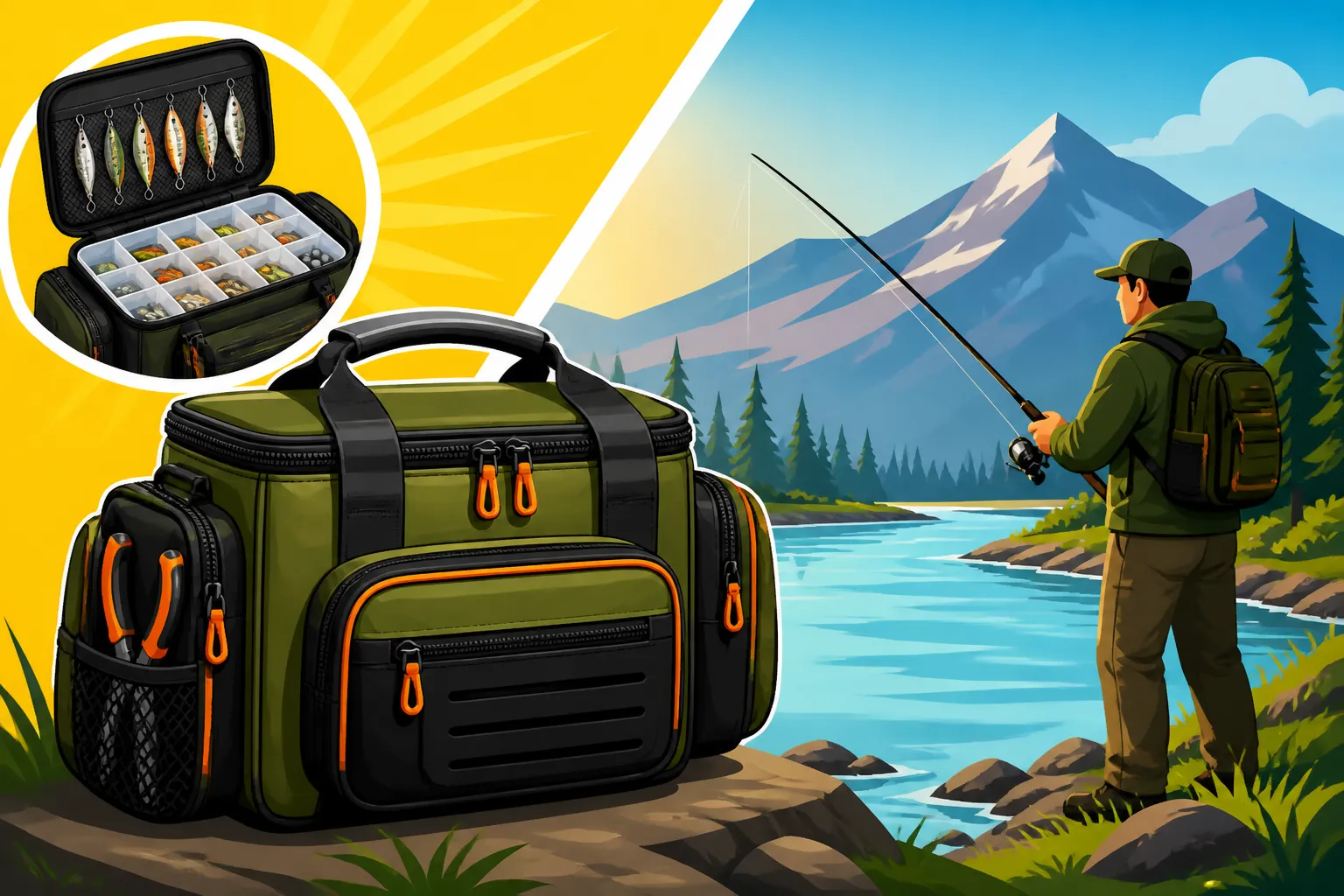
Look for bags that come with several transparent utility boxes – these are fantastic for seeing your lures and terminal tackle at a glance without having to open every single box. External pockets are crucial for items you need frequently, like pliers, line cutters, and sunscreen. Some bags feature specific holders for water bottles, a spare spool of line, or even a small first-aid kit. Rod holders on the side can be a huge bonus when you're moving between spots, freeing up your hands. Quick-access pouches for your phone, keys, or fishing license (like your Alberta Fishing License Guide for 2026) are also incredibly useful. Padded interiors, adjustable dividers, and tool loops further enhance the bag's functionality, ensuring that everything has its place and is within easy reach when you need it most.
Types of Tackle Bags Best Suited for Bank Fishing
The market offers a fantastic array of tackle bag styles, each with its own advantages for the bank angler. Your choice will largely depend on your personal preference, the amount of gear you carry, and how far you typically walk to your spots. Let's break down the most popular options you'll find, whether you're browsing the aisles at Bass Pro Shops or scrolling through options on Amazon.
Backpack-Style Tackle Bags
For many serious bank anglers, especially those who embark on longer treks or fish in more remote areas, a backpack-style tackle bag is the ultimate choice. These bags are designed to be carried comfortably on your back, distributing the weight evenly across both shoulders. This makes them ideal for hiking to those hard-to-reach spots along the Red Deer River or exploring the vast shorelines of a large lake.
The main advantage of a backpack-style bag is its capacity and comfort over extended periods. Most feature a large main compartment that can hold several utility boxes, often vertically oriented for easy access. They also boast numerous external pockets for tools, water bottles, and personal items. Some even integrate rod holders, allowing you to carry a spare rod or free up your hands while moving. The downside can be that you have to take the bag off your back to access its contents, which can be a minor inconvenience if you're making frequent lure changes. However, for those who value mobility and the ability to carry a comprehensive selection of gear without strain, a fishing backpack is often the top pick. They excel when you're fishing rivers where you might need to walk a considerable distance, offering a good way to transport your Best Fishing Rods for Alberta Rivers and all your tackle.
Shoulder Sling Tackle Bags
Shoulder sling tackle bags, sometimes called "messenger style" bags, offer a fantastic compromise between portability and quick access. These bags are designed to be worn across your body, with a single strap over one shoulder. The magic happens when you need to access your gear: you simply swing the bag around to your front without having to take it off. This "swing-around" access is incredibly convenient for anglers who make frequent lure changes or need quick access to tools.
Sling bags typically have a smaller footprint than backpacks, making them perfect for shorter trips or when you're actively wading and don't want a bulky bag hindering your movement. They usually hold 1-3 utility boxes in the main compartment, along with several external pockets for pliers, leaders, and personal items. The comfort level can vary depending on the amount of gear you pack and the quality of the shoulder strap, so look for padded, adjustable straps. While they might not carry as much as a full backpack, their accessibility makes them a favorite for quick stops at a stocked pond or when targeting a specific species like trout with a limited tackle selection. They're excellent for keeping your Best Landing Net for Trout or Best Landing Net for Pike readily available.
Traditional Soft-Sided Tackle Boxes
When we talk about "traditional" tackle boxes, many picture the hard plastic boxes with cantilevered trays. However, for bank fishing, the soft-sided versions of these are often much more practical. These are essentially durable fabric bags that house multiple plastic utility boxes, typically in a horizontal orientation. They usually feature top handles and often a removable shoulder strap.
Soft-sided tackle boxes offer excellent organization, as each utility box can be dedicated to a specific type of lure, bait, or terminal tackle. They are generally very durable and many have reinforced, waterproof bottoms, which is a big plus when setting your bag down on wet ground. Their main drawback for bank fishing is usually their carrying style – the single shoulder strap or top handle can become uncomfortable if you're walking long distances with a heavy load. They also lack the hands-free convenience of a backpack. However, for anglers who fish relatively close to their vehicle, or those who prefer to set their bag down and work a spot extensively, these bags offer superb organization and protection. If you’re targeting species like walleye with a variety of Best Crankbaits for Alberta Walleye and other lures, these bags allow for easy categorization.
| Tackle Bag Type | Pros | Cons | Best For |
|---|---|---|---|
| Backpack-Style | High capacity, excellent comfort for long walks, hands-free mobility. | Accessing main compartment requires taking it off, can be bulky. | Long hikes, remote locations, carrying a lot of gear, multi-species trips, when you need to carry a Best Rod and Reel Combo for Beginners for a companion. |
| Shoulder Sling | Quick access to gear without removing bag, good mobility, compact. | Limited capacity, can get heavy on one shoulder, less comfortable for very long walks. | Shorter trips, frequent lure changes, active wading, minimalist anglers, targeting a single species like on Rainbow Trout Fishing on the Bow River. |
| Soft-Sided Box | Excellent organization with multiple utility boxes, durable, good protection. | Less comfortable for long walks, not hands-free, generally less ergonomic for movement. | Fishing close to vehicle, static fishing spots, carrying specialized tackle for specific species like when focusing on How to Catch Northern Pike in Alberta or How to Catch Walleye in Alberta. |
Essential Contents for Your Bank Fishing Tackle Bag
Once you’ve got that perfect tackle bag, the next step is to fill it wisely. The key to successful bank fishing is being prepared without being overloaded. Every item in your bag should serve a purpose, making your time on the water more enjoyable and productive.
Terminal Tackle and Lure Organization
This is the core of your tackle bag – the hooks, weights, swivels, and, of course, your precious lures. Effective organization here means you're never scrambling when the fish are biting. Start by dedicating a utility box to each category or species you're targeting. For example, one box for bass jigs, another for walleye plastics, and a third for all your various hooks and sinkers.
Within these utility boxes, use the adjustable dividers to create smaller compartments for different sizes and types of items. This prevents hooks from tangling and keeps soft plastics from getting crushed. Carry a selection of your go-to lures, but don't bring your entire collection. For example, if you're primarily fishing for walleye, focus on a good range of Best Tackle for Alberta Walleye such as jigs, crankbaits, and soft plastics in various colors and sizes suitable for the conditions. For pike, pack a selection of Best Pike Gear for Alberta Lakes including spoons, spinnerbaits, and topwaters. Always include extra leaders and line, as snags are an inevitable part of bank fishing. Clear, plastic utility boxes are invaluable here, as they allow you to quickly see what's inside without opening every single one.
Tools and Accessories
Beyond the lures and terminal tackle, a few essential tools can make or break a bank fishing trip. These are the items you'll reach for constantly, so they deserve easily accessible spots in your tackle bag's external pockets.
First and foremost, a good pair of fishing pliers is non-negotiable. Look for multi-purpose pliers that can cut line, remove hooks, and even crimp sleeves. A set with a long nose is particularly useful for safely de-hooking toothy critters like pike. A sharp pair of line cutters or small scissors is also crucial for clean knots and quick re-ties. Don't forget a small scale and measuring tape if you like to track your catches, or if specific regulations require you to measure fish (always check the Alberta Bag and Possession Limits by Species). A hook sharpener is another often-overlooked tool that can instantly improve your hook-up ratio. Additionally, a small first-aid kit, a whistle (for safety), and a headlamp or small flashlight are wise additions, especially if you might be fishing near dusk or dawn. Think about tools that make tasks faster and safer, ensuring you spend less time fussing and more time fishing.
Personal Comfort Items
Your tackle bag isn't just for fish gear; it's also your personal survival kit for a day outdoors. Being comfortable directly impacts your ability to focus and enjoy your time fishing. These personal items should also have dedicated spots, ideally in easy-access pockets.
Hydration is key, so always carry a water bottle, especially on warmer days or if you're doing a lot of walking. Snacks are also a lifesaver, providing energy throughout your trip. Sun protection, including sunscreen, a wide-brimmed hat, and polarized sunglasses for sight fishing clear water, is essential to protect against Alberta's strong sun rays. Bug spray is a must, especially during spring and summer evenings when mosquitoes can be relentless. Depending on the weather, a compact, lightweight Best Rain Gear for Alberta Anglers jacket or a warm hat can also be invaluable. Even a small hand towel can be incredibly useful for drying hands, wiping off fish slime, or cleaning up accidental spills. Packing these comfort items ensures that you stay hydrated, energized, and protected from the elements, allowing you to focus entirely on the joy of fishing.
Choosing the Right Bag for Different Alberta Bank Fishing Scenarios
Alberta offers such a diverse range of fishing opportunities, from small stocked ponds to vast prairie lakes and roaring mountain rivers. The "best" tackle bag isn't a one-size-fits-all solution; it truly depends on the kind of bank fishing adventure you're planning. Tailoring your gear to the scenario will make a huge difference in your enjoyment and success.
Quick Trips to Local Ponds or Stocked Lakes
For those impromptu, after-work trips to a nearby pond or a quick visit to one of Alberta's many stocked lakes, you don't need to haul a massive amount of gear. The goal here is convenience and minimalism. You want to grab your rod, your small tackle bag, and be out the door in minutes.
A shoulder sling tackle bag or a very compact backpack is usually ideal for these scenarios. You'll likely only need one or two utility boxes filled with a few go-to lures, some basic terminal tackle, and perhaps a small container of bait. For example, if you're hitting a stocked trout pond, you might only need a selection of small spinners, some PowerBait, and a few hooks and sinkers. The light load makes for easy walking around the pond, and the quick-access nature of a sling bag means you can change tactics in a flash. You'll appreciate not being burdened by a heavy bag when you're just enjoying an hour or two of relaxed fishing. This setup is perfect for beginners who might be using a Best Rod and Reel Combo for Beginners and want to keep things simple.
Longer Treks Along Rivers and Remote Shores
Now, if your fishing adventures involve navigating challenging terrain, walking for hours along a river like the Oldman or the North Saskatchewan, or exploring remote lake shores that require a significant hike, your tackle bag needs to step up its game. Comfort, capacity, and hands-free mobility become paramount.
This is where a high-quality backpack-style tackle bag truly shines. You'll want one with padded shoulder straps, a comfortable back panel, and potentially a waist strap to help distribute weight. You'll need capacity for more utility boxes, allowing you to carry a wider array of lures, extra line, and specialized gear for varying conditions. Think about packing items like a Best Waders for Alberta Trout Rivers if you plan on wading, or a compact water filter if you're truly going remote. The ability to carry water, snacks, and extra layers without feeling burdened is critical. Plus, having your hands free while scrambling over rocks or navigating dense bush is a huge safety advantage. These longer excursions demand a tackle bag that's built for endurance and keeps all your essentials secure and accessible over many miles.
Specialized Gear for Specific Species (Trout, Walleye, Pike)
Sometimes, you're not just "going fishing"; you're going specifically to target a particular species, like the elusive bull trout in a mountain stream or trophy pike in a prairie lake. In these cases, your tackle bag should reflect the specialized gear and techniques required.
For instance, if you're dedicating a trip to Fly Fishing for Trout on the Bow River, your tackle bag might be a smaller, streamlined sling pack designed to hold fly boxes, tippet, leaders, and tools like forceps and nippers. You won't need bulky lure boxes. On the other hand, if you're pursuing Walleye Fishing in Alberta on a large lake, your bag might be a larger soft-sided tackle box packed with various jigging spoons, Best Spinning Rods for Walleye, bottom bouncers, and a wider selection of soft plastics. For Northern Pike Fishing in Alberta, you'll need large, durable wire leaders, robust hooks, and bigger, flashier lures, which often require more space than smaller trout flies or jigs. The key is to think about the specific requirements of your target species: what size lures, what types of tools, and what accessories will you genuinely need, and then choose a bag that can accommodate those specific items efficiently without unnecessary bulk.
Maintaining Your Tackle Bag for Longevity
Your tackle bag is an investment, protecting your even larger investment in fishing gear. Just like your rods and reels, it needs a little TLC to ensure it performs optimally and lasts for many seasons. A well-maintained bag not only functions better but also keeps your gear cleaner and safer.
Regular Cleaning and Inspection
After a few trips, your tackle bag is bound to accumulate dirt, mud, fish slime, and maybe even a few stray hooks or bits of bait. Regularly cleaning and inspecting your bag is crucial for its longevity and hygiene. Start by emptying all the contents and removing any utility boxes. Shake out any loose dirt, leaves, or sand from the main compartments and pockets.
For tougher grime, a damp cloth with mild soap can usually tackle most external surfaces. Pay special attention to zippers – sand and salt can corrode them over time, so a quick rinse and a light lubrication with a silicone spray can keep them running smoothly. Check for any tears, frayed seams, or weak points in the fabric or straps. Addressing these small issues early can prevent them from becoming major problems down the line. It’s a good habit to do a quick clean after every few outings, or certainly at the end of the fishing season before storing your gear away. This also gives you a chance to organize and replenish any tackle you’ve used up.
Proper Storage Between Trips
How you store your tackle bag between fishing adventures is just as important as how you maintain it after each trip. Improper storage can lead to mildew, rust on forgotten lures, or degradation of the bag’s materials.
Ensure your tackle bag is completely dry before storing it. Leaving wet items or a damp bag in a confined space is an open invitation for mold and mildew, which can ruin both your bag and its contents. If possible, leave zippers partially open to allow for air circulation. Store the bag in a cool, dry place away from direct sunlight, which can fade and weaken fabrics over time. Garages, sheds, or even a closet are usually suitable. If your bag comes with a specific protective cover, use it. Taking the time to properly clean, dry, and store your tackle bag will ensure that it's always ready for your next Alberta fishing adventure, looking good and functioning perfectly, just like it did on day one.
Disclaimer
This article is for general informational purposes only and does not constitute professional advice. Laws, prices and regulations vary by location and change over time. Consult a qualified professional for guidance on your specific situation.