Best Rod and Reel Combo for Beginners
Stepping into the world of fishing for the first time can feel like you're staring at a giant, confusing wall of gear. Rods, reels, lines, lures – where do you even begin? It’s easy to get overwhelmed and worried you’ll make the wrong choice, especially when you just want to get out on an Alberta lake or river. This guide is here to cut through the confusion and help you confidently pick the best rod and reel combo to kickstart your angling adventures.
Understanding the Beginner's Dilemma: Why Combos Are King
Many seasoned anglers forget what it was like to be a complete novice. They might suggest you build a custom setup, meticulously matching a high-end rod with a perfectly balanced reel. While that's fantastic advice down the line, for someone just starting out, it's a recipe for frustration and unnecessary expense. That's where the beauty of a pre-matched rod and reel combo truly shines.
The Overwhelming World of Fishing Gear
Think about it: you walk into a sporting goods store, or start browsing online, and you're immediately bombarded with options. There are rods of every length, power, and action; reels with different gear ratios, bearing counts, and drag systems. Each component seems to have its own specialized purpose, and without a foundational understanding, it's like trying to solve a puzzle with a thousand pieces when you haven't even seen the picture. This complexity can be a real barrier, making some folks give up before they even wet a line. You just want to feel the tug of a fish, not spend hours researching graphite modulus versus E-glass.
The Convenience and Value of a Combo
This is precisely why rod and reel combos are the beginner's best friend. Manufacturers understand this hurdle, so they put together setups where the rod and reel are already matched for optimal performance. This means you don't have to worry about whether your reel is too heavy for your rod, or if the rod's power is suitable for the reel's line capacity. It’s all done for you! Not only does this save you the headache of compatibility, but it also often saves you money. Buying a combo is typically more cost-effective than purchasing the rod and reel separately, offering excellent value as you learn the ropes. You get a ready-to-fish package, often even spooled with line, meaning you can literally walk out of a store like Bass Pro Shops or click "buy" on Amazon and be ready to hit the water almost immediately.
Key Factors to Consider When Choosing Your First Combo
Before you just grab the first combo you see, let’s think about what kind of fishing you're hoping to do in Alberta. While a combo is a great starting point, understanding a few basic considerations will help you pick one that truly suits your initial ambitions.
Species You'll Target Think Walleye, Pike, Trout
Alberta offers an incredible diversity of fishing opportunities, from battling hard-fighting pike and walleye in our prairie lakes to delicately presenting flies to trout in our mountain rivers. The type of fish you're primarily hoping to catch will influence the kind of rod and reel combo you need.
For instance, if your dream is to land a trophy walleye on Lesser Slave Lake or hook into some feisty northern pike, you'll want a combo with a bit more backbone. These fish are known for their strong runs and aggressive strikes, requiring a rod with sufficient power to handle them. On the other hand, if you're picturing yourself casting for rainbow trout on the Bow River, you'll likely want a lighter, more sensitive setup that allows you to feel subtle bites and enjoy the fight of smaller, but often more acrobatic, fish. Thinking about your target species helps narrow down the choices significantly. Walleye Fishing in Alberta and Northern Pike Fishing in Alberta will give you a good idea of what to expect from these species.
Type of Water Lakes vs. Rivers vs. Ponds
The environment you plan to fish in also plays a big role. Are you heading to wide-open lakes, fast-flowing rivers, or smaller, stocked ponds?
- Lakes: For bigger lakes, especially if you plan to cast from shore or a small boat, a slightly longer rod (7 feet or more) can help with casting distance, allowing you to cover more water. If you're targeting fish like burbot through the ice, then an entirely different, much shorter ice fishing rod would be needed, but that's a specialized path for later!
- Rivers: Rivers, particularly those with heavy current like the Bow River, often benefit from rods that offer a good balance of casting accuracy and control. Depending on the river's size and how much brush is on the banks, a medium-length rod (around 6'6" to 7') is often a great all-around choice. For stream fishing, a shorter rod might be ideal for navigating tight spots.
- Ponds: Small ponds, especially those stocked with trout for families, generally don't require long casts, so a shorter, lighter rod combo (5' to 6'6") can be perfect, offering a fun experience with smaller fish. Consider your immediate fishing spots – are they mostly List of Alberta stocked trout lakes or larger bodies of water?
Your Budget Getting the Most Bang for Your Buck
Let's be real: fishing can be an expensive hobby if you let it be. But as a beginner, you absolutely do not need to break the bank. There are fantastic entry-level rod and reel combos available that will serve you well without costing a fortune.
For a beginner, the sweet spot is usually in the mid-range of entry-level gear. You want something durable enough to withstand a few bumps and scrapes, and reliable enough that you're not battling equipment failures instead of fish. Avoid the absolute cheapest options, as they often sacrifice quality and can lead to a frustrating experience with sticky drags or flimsy components. Conversely, don't feel pressured to buy the most expensive gear—you won't appreciate the subtle differences in sensitivity or specialized features until you've gained more experience. Focus on a solid, reliable combo that feels comfortable in your hands, and you'll be well on your way. Both Bass Pro Shops and Amazon offer extensive selections across various price points, making it easy to compare.
Dissecting the Rod: What to Look For
The rod is your direct connection to the fish, a crucial part of the setup. Understanding a few basic characteristics will help you appreciate why certain rods perform better in different situations and choose a combo that feels right for you.
Rod Length and Action The Feel of the Fight
When we talk about rod length, it’s pretty straightforward: it’s how long the rod is from tip to butt. Generally, longer rods (7 feet and up) are great for casting further distances, which can be really helpful when you're fishing from shore on a big lake or needing to reach across a wide river. However, longer rods can also be a bit more cumbersome in tight, brushy areas. Shorter rods (under 6 feet) are excellent for accuracy and fighting fish in close quarters, like small streams or dense cover.
Rod "action" refers to where the rod bends when pressure is applied.
- Fast action rods bend mostly in the tip. They are very sensitive, meaning you can feel even the lightest nibbles, and they allow for quick, powerful hook sets. This is great for feeling a walleye's subtle bite.
- Moderate action rods bend more towards the middle. They offer a good balance of sensitivity and forgiveness, making them a popular choice for beginners. They cast a wider variety of lures well and provide a good cushion against sudden jerks from a hooked fish, preventing you from ripping the hook out of its mouth.
- Slow action rods bend throughout the entire blank. These are less common for general-purpose fishing but can be excellent for casting light baits or protecting light lines.
For a beginner, a moderate to fast action rod around 6'6" to 7' is often the most versatile choice, capable of handling various species and casting most common lures effectively.
Rod Power Handling Different Fish Sizes
Rod power, sometimes called "weight," describes how much force it takes to bend the rod. It's about the rod's strength and what size of line and lure it’s designed to handle, and by extension, what size of fish it's meant to catch.
- Light Power: Think panfish like perch, small trout, or whitefish. These rods are delicate, highly sensitive, and designed for lighter lines and lures. If you're focusing on Panfish Fishing in Alberta or Best Techniques for Panfish in Alberta, a light power rod might be what you want.
- Medium Light Power: A step up, great for slightly larger trout, small walleye, or perch where you need a bit more backbone.
- Medium Power: This is often the sweet spot for a beginner in Alberta. A medium power rod can handle a wide range of fish, from average-sized walleye and pike to larger trout. It’s versatile for different lure weights and line strengths.
- Medium Heavy Power: When you're specifically targeting bigger northern pike or larger lake trout, or fishing around heavy cover, a medium-heavy rod provides the necessary power to muscle those fish out and handle heavier lures. Best Lures for Northern Pike in Alberta often require a medium-heavy setup.
- Heavy Power: Reserved for truly large, powerful fish, saltwater species, or heavy cover situations. Not typically needed for general beginner fishing in Alberta.
As a beginner, a medium power rod will likely be your best bet, offering enough versatility to explore different types of fishing without being under or over-gunned for most common catches.
Rod Material and Components Durability and Sensitivity
The material a rod is made from greatly impacts its performance.
- Fiberglass rods are generally very durable and forgiving. They are less expensive, but also heavier and less sensitive, bending more easily. They're a great choice if durability is your top concern, say for a child's first rod or if you anticipate being a bit rough with your gear.
- Graphite rods are lighter, stiffer, and much more sensitive. You can feel even the slightest tap on your lure. They tend to be more expensive and can be more brittle than fiberglass if mistreated. Most modern, mid-range combos will feature a graphite or a graphite composite (a blend of graphite and fiberglass) blank, offering a good balance of features.
- Rod Guides: These are the rings along the rod that the line passes through. Look for guides that are smooth and durable, typically made with ceramic inserts. Smooth guides reduce friction on your line, allowing for longer casts and preventing line wear.
- Reel Seat: This is where your reel attaches to the rod. It should feel secure and comfortable in your hand. An ergonomic reel seat makes a big difference during a long day of casting.
For your first combo, a graphite composite rod will offer a nice balance of sensitivity to feel those fish bites and enough durability to withstand the learning curve.
Unpacking the Reel: What Matters for Starters
The reel is where your line is stored and retrieved, and it's essential for a smooth casting and fighting experience. For beginners, choosing the right type of reel can make all the difference between enjoyment and endless tangles.
Spinning vs. Baitcasting Why Spinning is Beginner-Friendly
This is perhaps the most crucial decision for a new angler's reel:
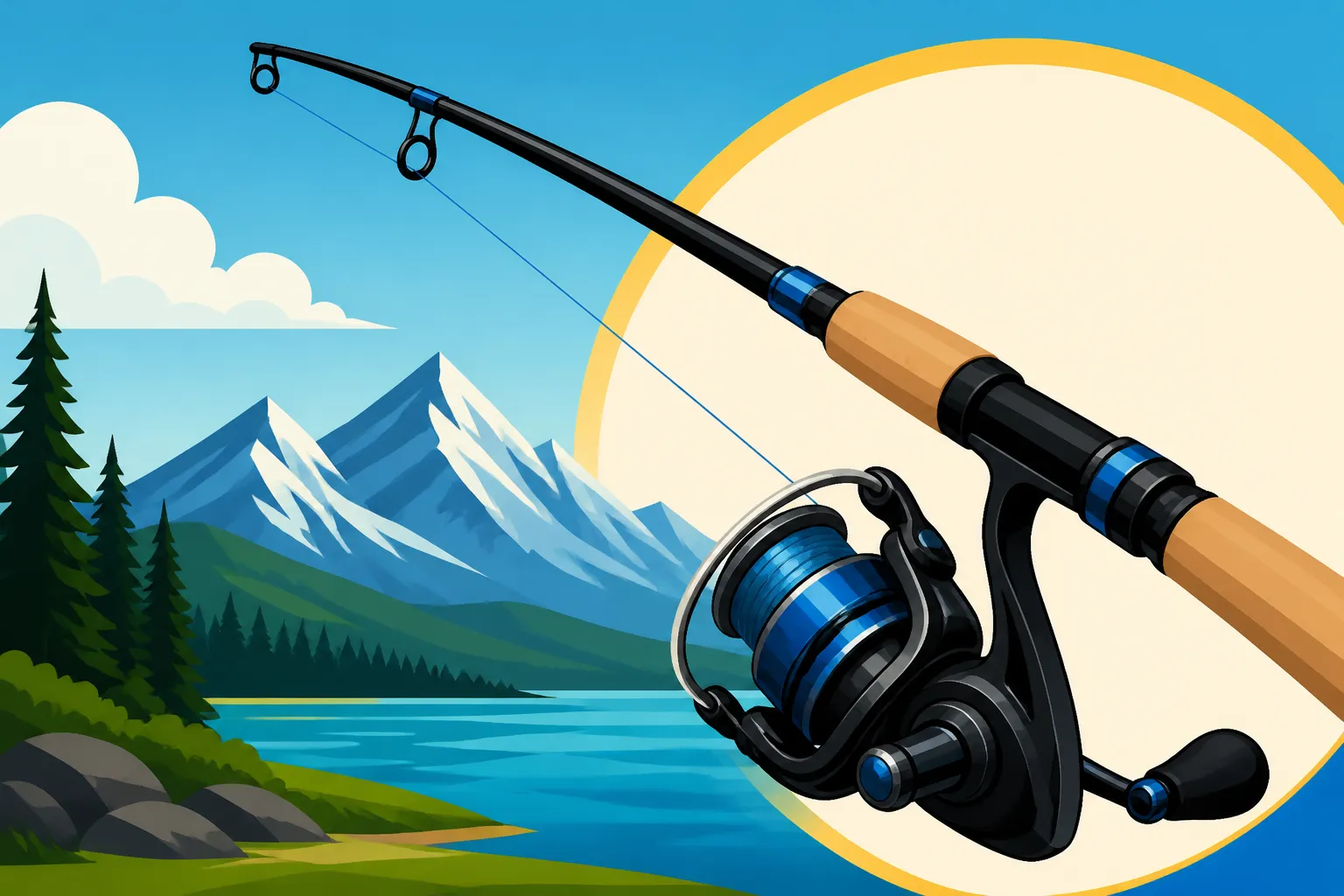
- Spinning Reels: These are by far the most recommended type of reel for beginners, and for good reason! The spool remains stationary when you cast, and the line comes off in coils. This design drastically reduces the chances of frustrating "backlashes" (where the line tangles into a bird's nest), which are common with baitcasting reels for inexperienced users. Spinning reels are versatile, easy to learn, and excellent for casting lighter lures. Almost every beginner combo will feature a spinning reel.
- Baitcasting Reels: While powerful and very accurate once mastered, baitcasting reels require a lot of practice to use effectively. They are more prone to backlashing, especially with lighter lures or in windy conditions. While fantastic for specific techniques and heavier lures, they are definitely not where a beginner should start.
So, for your first combo, stick with a spinning reel. You'll thank yourself for avoiding the early frustration! Many combos available at retailers like Bass Pro Shops or on Amazon will be spinning setups.
Gear Ratio Retrieval Speed Explained
A reel's gear ratio tells you how many times the spool or line roller rotates with one full turn of the handle. It basically dictates how fast you can reel in your line.
- Lower Gear Ratios (e.g., 5.2:1 to 5.6:1): These are slower reels, meaning for every crank of the handle, the line pick-up is less. They're great for lures that you want to retrieve slowly, like some deep-diving crankbaits or when fishing for species that prefer a slower presentation. They also provide more torque, making it easier to pull in larger, stubborn fish.
- Higher Gear Ratios (e.g., 6.2:1 to 7.1:1): These are faster reels, ideal for quickly retrieving slack line, working topwater lures, or reeling in fish from a distance. If you're using techniques that involve lots of casting and quick retrieves, a faster gear ratio can be beneficial.
For a beginner's all-around combo, a mid-range gear ratio (around 5.2:1 to 6.2:1) is a great choice. It offers enough versatility to handle both slower and moderately fast retrieves for most common lures and fish in Alberta.
Ball Bearings Smoothness and Durability
Ball bearings in a reel reduce friction between moving parts, making the reel operate more smoothly and increasing its lifespan. You'll often see reels advertised with numbers like "4+1 bearings" – this means 4 ball bearings and 1 roller bearing (which often acts as an anti-reverse bearing).
Generally, more bearings can mean a smoother reel. However, for a beginner, don't get too caught up in chasing the highest bearing count. A reel with 3-5 good quality stainless steel bearings will perform perfectly well for starting out. What matters more is the quality of the bearings, not just the quantity. A reputable brand's reel with 4 good bearings will outperform a cheap reel with 10 poor-quality bearings any day. Focus on overall smooth operation when you crank the handle; if it feels gritty or clunky, move on.
Recommended Combos for Alberta Beginners
Now that we've broken down the components, let's look at what kind of combos will serve you best as you embark on your Alberta fishing journey.
The All-Around Workhorse Versatility for Many Species
If you're looking for one combo that can do a little bit of everything in Alberta's diverse waters, a versatile spinning setup is your best bet. This "all-around workhorse" will allow you to explore various lakes and rivers, and target a good range of fish without feeling under-equipped.
Look for a medium power, moderate-fast action spinning combo with a rod length of 6'6" to 7 feet. This length offers a great balance of casting distance and control, suitable for both casting from shore on a small lake or working a spinner on a medium-sized river. The medium power will give you enough backbone to handle most average-sized walleye, smaller northern pike, and a variety of trout, while the moderate-fast action provides a good blend of sensitivity for feeling bites and forgiveness for easy casting. The reel should be a 2500 or 3000 series spinning reel (these numbers refer to the reel's size, with larger numbers indicating larger reels and line capacity) with a mid-range gear ratio and at least 3-5 quality bearings. Many popular fishing brands offer excellent options in this category. You'll find plenty of these reliable combos at stores like Bass Pro Shops or through online retailers like Amazon, often pre-spooled with monofilament line.
This type of combo is perfect if you're not sure which species you'll focus on first or if you simply want to try a bit of everything. It's the kind of setup you can take to a stocked pond for trout one weekend, and then to a larger lake for walleye the next.
Specific Combos for Targeted Fish
While the all-around combo is great, if you already have a specific target in mind, you can fine-tune your choice a bit.
- For Walleye and Pike: If your heart is set on catching these aggressive predators, you might lean towards a medium-heavy power, fast action spinning combo that's 6'6" to 7'6" in length. The added power gives you more leverage to set the hook on their tough mouths and to control them during a fight. A fast action helps you feel those often subtle walleye bites and get a quick hook set. A 3000-4000 series spinning reel with a mid-to-high gear ratio will provide good line capacity and retrieval speed. This setup is great for casting heavier spoons, crankbaits, or jigs that are common for these species. How to Catch Walleye in Alberta and How to Catch Northern Pike in Alberta will detail the methods these combos are well-suited for.
- For Trout (especially in Rivers): For the delicate art of trout fishing, particularly in streams and smaller rivers, a medium-light power, fast or moderate-fast action spinning combo is often preferred. A shorter rod, perhaps 5'6" to 6'6", can be more maneuverable in tight spaces with overhanging trees. The lighter power allows for more sensitive presentations of small spinners, spoons, or even bait, and makes even smaller trout feel like a fantastic fight. A smaller 1000 or 2000 series spinning reel will balance perfectly with these lighter rods. This kind of combo is ideal for Spring Trout Fishing Techniques for Alberta Streams or exploring the numerous beautiful trout waters across Alberta.
Essential Accessories to Get Started
Getting the combo is just the first step! You'll also need a few basic accessories to make your first trip a success.
- Fishing Line: Many combos come pre-spooled, which is a great bonus. If not, pick up some good quality monofilament line in 6-10 lb test for an all-around combo. Monofilament is forgiving, easy to tie knots with, and relatively inexpensive.
- Basic Tackle: Don't go overboard! A small selection of hooks (sizes 6-10), sinkers (split shot and small weights), swivels, and a few basic lures like small spoons, spinners, or soft plastic jigs will get you started. For bait fishing, pick up some worms or power bait.
- Pliers: Essential for unhooking fish safely and cutting line.
- Small Tackle Box: To keep your essential gear organized.
- Measuring Tape: To ensure your catch meets Alberta's size regulations.
- Fishing License and WIN Card: Absolutely crucial! Make sure you have your Alberta Fishing License Guide for 2026 and Alberta WIN Card, Explained before you even step foot near the water.
- Safety Gear: Don't forget a Life Jacket Requirements for Alberta Boaters if you plan to be in a boat, even a small one, and always tell someone where you're going.
Here's a quick comparison of general combo types for Alberta beginners:
| Combo Type | Rod Power | Rod Action | Rod Length | Reel Size (Spinning) | Best For |
|---|---|---|---|---|---|
| All-Around Workhorse | Medium | Moderate-Fast | 6'6" – 7' | 2500 – 3000 | General multi-species, most lakes & rivers |
| Walleye & Pike Focus | Medium-Heavy | Fast | 6'6" – 7'6" | 3000 – 4000 | Larger aggressive fish, heavier lures |
| Trout & Panfish Focus | Medium-Light | Fast-Moderate | 5'6" – 6'6" | 1000 – 2000 | Smaller fish, clear streams, light lures |
Choosing your first rod and reel combo doesn't have to be a daunting task. By focusing on a versatile spinning combo that matches your initial fishing aspirations and budget, you'll be well on your way to enjoying the fantastic fishing opportunities Alberta has to offer. Don't overthink it—just pick a reliable setup, grab your Alberta Fishing Regulations Explained, and get out there to experience the thrill of the catch!
Disclaimer
This article is for general informational purposes only and does not constitute professional advice. Laws, prices and regulations vary by location and change over time. Consult a qualified professional for guidance on your specific situation.