How Alberta’s tiger trout differ from splake
It’s easy to feel a bit lost when you hear about some of the more unique fish species gracing Alberta’s waters, especially when they’re hybrids! Many anglers, even experienced ones, often scratch their heads trying to figure out the difference between a tiger trout and a splake. This guide is here to clear up that confusion, diving deep into what makes each of these fascinating fish unique, where you might find them, and how their distinct characteristics impact your fishing adventures across Alberta.
Unraveling the Identity Crisis: What are Tiger Trout and Splake?
When we talk about trout fishing in Alberta, most folks immediately think of rainbows, browns, or native cutthroats. But then you hear whispers of "tiger trout" or "splake," and suddenly, it's like a whole new category of fish has opened up. These aren't just different species; they're actually hybrids, meaning they're a cross between two different types of fish. Understanding their lineage is the first step in appreciating what makes them special.
The Enigma of the Tiger Trout
A tiger trout is a striking, aggressive, and often elusive fish that gets its name from its distinctive, maze-like patterns, much like a tiger's stripes. But here's the kicker: it's a cross between a brown trout and a brook trout. Pretty cool, right? This hybrid is typically created in hatcheries because, in nature, it's quite rare for these two species to cross-breed. The reason for their existence in our Alberta lakes and ponds isn't just for their looks; they're often sterile, which means they can't reproduce.
This sterility is a huge advantage for fisheries managers. It means they can stock these fish into certain waters without worrying about them establishing a self-sustaining population that might compete with native species or alter the ecosystem in unexpected ways. They’re essentially a put-and-take fishery with an exciting twist. Anglers love them because they fight hard, grow quickly, and can be quite a challenge to catch. If you’re lucky enough to hook into one, you’ll definitely remember it! Often, these fish are released into smaller, managed lakes where they provide excellent sportfishing opportunities and can sometimes even help control populations of nuisance fish.
The Splake Story
Now, let's talk about splake. Like tiger trout, splake are also a hybrid, but their parentage is different. A splake is a cross between a lake trout and a brook trout. Again, this is typically a hatchery-produced fish, though very rare instances might occur naturally where the two parent species coexist and spawn at similar times and places. The name "splake" itself is a blend of "speckled trout" (another common name for brook trout) and "lake trout."
Unlike most tiger trout, splake can sometimes be fertile, although the rate of successful reproduction can vary greatly. However, for stocking purposes in Alberta, most splake introduced into lakes are also managed in a way that minimizes natural reproduction, focusing on their growth and angling appeal. The idea behind splake stocking is often to provide a hardier, faster-growing fish that can thrive in environments that might be a bit too warm for pure brook trout but perhaps lack the deep, cold water preferred by native lake trout. They offer a unique blend of their parents' characteristics, often exhibiting the aggressive nature of brook trout with some of the growth potential of lake trout. You’ll find them in a variety of Alberta lakes, often providing fantastic ice fishing opportunities due to their willingness to bite in colder conditions. Splake Stocking in Alberta Lakes is a common practice to enhance fishing experiences.
Key Differences: Appearance, Habits, and Angling Experience
Distinguishing between these two hybrids can be tricky, especially if you're not familiar with their specific traits. It's not just about what they are, but how they look, where they live, and how they behave once you hook them that truly sets them apart. Getting a good look at the fish you've caught can be key, not just for identification but for understanding their unique characteristics.
Visual Distinctions: Spotting the Hybrids
The most obvious differences between tiger trout and splake lie in their appearance. While both are strikingly beautiful, their patterns and body shapes tell a clear story of their parentage.
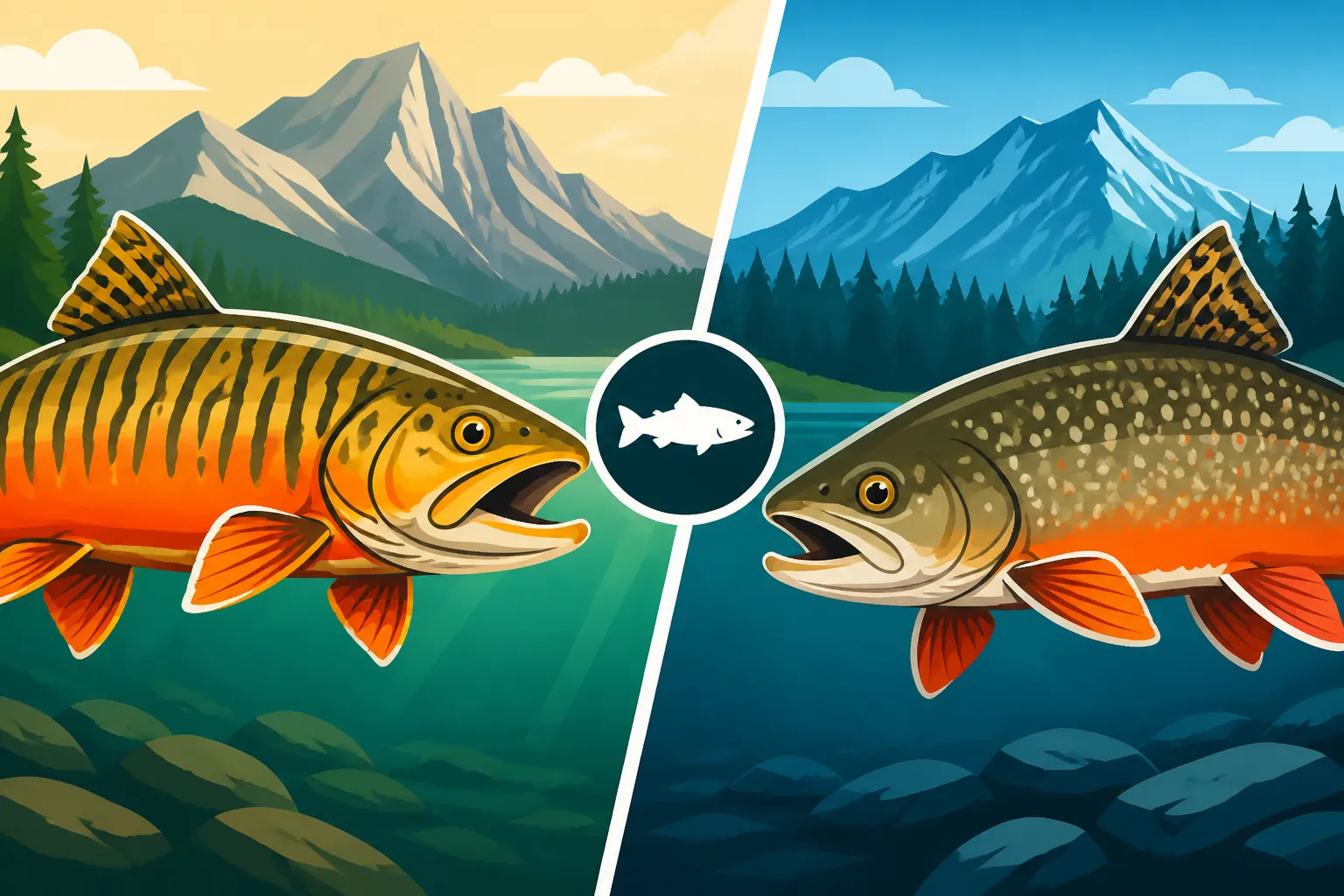
Tiger trout are renowned for their intricate, worm-like markings, known as vermiculation, covering most of their body. These patterns are typically a dark, earthy brown or olive green against a lighter, often golden-yellow, background. They usually have a sleek, torpedo-shaped body, inherited from their brown trout side. Their tail is typically square, much like a brook trout. If you see a fish with a mesmerizing, almost camouflage-like maze of patterns, it's likely a tiger trout.
Splake, on the other hand, tend to have a more mottled appearance, a mix of the pale spots and "vermiculations" of a brook trout with the lighter spots and forked tail of a lake trout. However, their tail is usually less deeply forked than a pure lake trout, often appearing more squared or slightly indented – a telltale sign of their brook trout heritage. The spots on a splake are usually lighter than their body colour, and while they might have some worm-like markings, they won't be as pronounced or widespread as on a tiger trout. Their body shape is generally more elongated and robust than a brook trout but perhaps not as streamlined as a brown trout. Knowing these visual cues is essential for any angler looking to confidently identify their catch. For a broader understanding of various trout, check out our Trout Species Identification Guide for Alberta.
Here’s a quick comparison to help you distinguish between the two:
| Feature | Tiger Trout (Brown Trout x Brook Trout) | Splake (Lake Trout x Brook Trout) |
|---|---|---|
| Appearance | Dark, worm-like vermiculations/maze patterns on lighter body | Faint, light spots (like lake trout) and some light vermiculations |
| Coloration | Golden-yellow to olive-green body with dark patterns | Darker green/grey body, often with a reddish hue on fins, paler spots |
| Body Shape | Sleek, torpedo-shaped, typical trout profile | More elongated and robust, less streamlined than a brown trout |
| Tail Fin | Typically square or slightly emarginate (like brook trout) | Slightly forked or squared, less deeply forked than a pure lake trout |
| Pectoral Fins | Often have a white leading edge (subtle) | Distinct white leading edge on pectoral, pelvic, and anal fins |
Habitat Preferences and Behavior
Just as they look different, tiger trout and splake also tend to prefer different haunts and behave in unique ways, largely influenced by their parent species. This means understanding where to find them and how they might react to your offerings is crucial for a successful outing.
Tiger trout, with their brown trout genetics, are often found in environments where brown trout thrive – cooler, moving water, or lakes with good structure like submerged logs, rock piles, and weed beds. They tend to be quite aggressive predators, often targeting smaller fish. Because many tiger trout are stocked in smaller, managed ponds or lakes, they become readily accustomed to specific areas and can be somewhat predictable once you find their preferred feeding lanes. They're known for powerful runs and acrobatics when hooked, making for a truly exciting fight. They can be found cruising shorelines in the spring and fall, retreating to deeper, cooler water during the warmer summer months.
Splake, leveraging their lake trout and brook trout heritage, tend to prefer colder, deeper waters. They are often stocked in larger, deeper lakes, and they are particularly popular targets for ice fishing. Ice Fishing in Alberta on lakes like those mentioned in Best Ice Fishing Lakes in Alberta can be prime splake territory. Their lake trout side makes them comfortable in open water, while their brook trout side gives them a bit more hardiness in varied conditions. Splake are often found suspended over deeper drop-offs, around underwater humps, or near current breaks. They can be very aggressive feeders, especially when actively searching for baitfish. Their fight tends to be strong and deep, characteristic of lake trout, but with a surprising burst of energy inherited from the brook trout.
Angling Experience and Challenges
Fishing for tiger trout and splake offers distinct experiences, each with its own set of challenges and rewards. Understanding these differences can help you tailor your approach and gear, improving your chances of success.
Targeting tiger trout often involves tactics similar to brown trout fishing. They respond well to artificial lures that mimic small fish, such as spoons, spinners, and small crankbaits. Fly anglers will find success with streamers or even dry flies during specific hatches, though their predatory nature often makes them keen on a well-presented minnow imitation. They are often found in relatively shallower water early and late in the season, making them accessible to shore anglers or those in smaller craft. The challenge with tiger trout lies in their unpredictable bursts of speed and their tendency to try and wrap you around structure. You'll need a rod with a good backbone and a smooth drag system. If you're looking for a versatile rod, consider some options for Best Fishing Rods for Alberta Rivers, many of which work well for these hybrids too.
Splake, particularly in deeper lakes, can present a different challenge. Trolling with spoons or stickbaits is effective during open water seasons, mimicking the baitfish they prey on. For ice fishing, jigging spoons, tubes, or small swimbaits presented near the bottom or suspended in the water column can be incredibly productive. They have a tendency to hit hard, and their strong, bulldogging fight requires a solid reel and line. A medium-heavy rod with sensitive tip can help detect subtle bites in deeper water. Finding them can sometimes be the biggest challenge, making a good fish finder (available on platforms like Amazon) an invaluable tool. Regardless of which hybrid you're after, always check the specific regulations for the water body you're fishing, as limits and special rules can vary. Alberta Fishing Regulations Explained is a great resource for understanding these nuances.
Stocking Strategies and Conservation Implications
The decision to introduce hybrid fish like tiger trout and splake into Alberta's waters isn't made lightly. There are specific reasons and strategic goals behind these stocking programs, all of which contribute to the broader management of the province's fisheries. Understanding these strategies helps shed light on why these unique fish are part of our angling landscape.
Why Alberta Stocks These Hybrids
Alberta's fisheries managers employ hybrid stocking for several key reasons, focusing on enhancing angling opportunities while maintaining ecological balance. For tiger trout, one primary driver is their sterility. Because they cannot reproduce, they don't pose a threat of interbreeding with native trout populations or overpopulating a water body. This allows for a "put-and-take" fishery where fish are stocked, grow quickly, provide excellent sport for anglers, and are then harvested without impacting future generations. They can also be effective at controlling populations of smaller, prolific species in some stocked ponds, acting as a natural predator. Their rapid growth to a respectable size makes them a highly attractive target for anglers seeking a trophy-calibre fish in a relatively short timeframe. You'll find these programs often aim to create unique fishing experiences in specific ponds and lakes, adding diversity to Alberta's fishing scene beyond the traditional species.
Splake are often stocked for similar reasons, but with a focus on their hardiness and ability to thrive in certain conditions. As a cross between lake trout and brook trout, splake often exhibit "hybrid vigour," meaning they can be more robust and grow faster than either parent species in certain environments. This makes them ideal for stocking into lakes that might not be perfect for pure lake trout (perhaps lacking extreme depths) or brook trout (perhaps too warm or with too much competition). Their adaptability means they can provide excellent angling, particularly during the colder months when other species are less active. Their popularity for ice fishing is a significant factor in their stocking, ensuring that Alberta anglers have exciting opportunities even in winter. Learning about What a splake is and where they are stocked can reveal the thought process behind specific stocking initiatives.
Conservation and Management
The conservation implications of stocking hybrid fish are carefully considered. The sterility of most stocked tiger trout is a deliberate choice to prevent any potential negative genetic impact on wild brown or brook trout populations. This ensures that while anglers get to enjoy a unique fighting fish, the natural genetic integrity of Alberta's native fish remains protected. It’s a way to boost angling without disrupting the natural order.
For splake, while some individuals can be fertile, stocking programs are usually managed to minimize natural reproduction. This control is vital to ensure that splake don't outcompete native species or introduce unintended genetic changes into wild lake trout or brook trout populations. Fisheries management carefully selects stocking locations, often choosing lakes where there are no existing self-sustaining populations of the parent species or where the ecosystem can support a managed hybrid population. This proactive approach helps to provide diverse fishing opportunities while safeguarding Alberta's precious aquatic ecosystems. It's a fine balance that fisheries biologists strive to maintain, ensuring that introduced species, even hybrids, don't pose a risk to the long-term health of the province's waters. This careful management is part of the broader framework covered in Alberta Fishing Regulations Explained, which governs how we interact with all fish species. Understanding these regulations is key to being a responsible angler; for instance, knowing that Is It Legal to Keep a Bull Trout in Alberta? highlights the importance of species identification due to stringent conservation rules for native species.
Your Hybrid Trout Fishing Adventure: Tips and Considerations
Now that you know the ins and outs of tiger trout and splake, it's time to put that knowledge to good use. Whether you're planning a trip specifically for these hybrids or just hoping to stumble upon one, a few targeted tips can make all the difference. Get ready to add some exciting new catches to your Alberta fishing log!
Targeting Tiger Trout
When you're heading out to chase tiger trout, think like a brown trout angler with a bit of a brook trout twist. These fish are aggressive and often found cruising near structure or along drop-offs in their stocked waters.
- Lure Selection: Focus on lures that mimic baitfish. Small spoons (like Dardevles or Five of Diamonds), inline spinners (Mepps or Panther Martins), and minnow-imitating crankbaits (Rapala countdowns or Berkley Flicker Shads) in natural colours or bright, flashy patterns can be very effective. Try to match the size of local baitfish.
- Techniques: Casting and retrieving along shorelines, especially near submerged logs, weed edges, or rocky points, is a great starting point. Vary your retrieve speed – sometimes a quick, erratic retrieve triggers a strike, while other times a slow, steady retrieve is preferred. Fly anglers should have a selection of streamer patterns (e.g., Woolly Buggers, Clouser Minnows) ready, perhaps in olive, black, or white.
- Best Times: Early morning and late evening often yield the best results, as tiger trout are most active during lower light conditions. In colder weather, they might be active throughout the day.
- Gear: A medium-light to medium power spinning rod with a fast action, paired with a 2000-2500 size reel spooled with 6-8 lb monofilament or fluorocarbon, is a good all-around setup. For fly fishing, a 5 or 6-weight rod will handle most tiger trout comfortably. You can find a wide array of reliable fishing gear on Amazon to build your ideal setup.
Chasing Splake
Splake are a fantastic target, especially if you enjoy fishing deeper lakes or are an avid ice angler. Their blend of lake trout and brook trout traits means they can be found across varying depths and conditions.
- Lure Selection: For open water, trolling with medium-sized spoons (like Silver Horde or Northern King) or deep-diving crankbaits is often productive, especially when targeting suspended fish. For ice fishing, jigging spoons (Swedish Pimples, Crippled Herring) or tube jigs in white, grey, or chartreuse can be deadly. Don’t forget to tip your jig with a piece of bait like a minnow head or a maggot to add scent.
- Techniques: In open water, use a fish finder (many excellent models are available on Amazon) to locate schools of baitfish or underwater structure like humps and drop-offs. Troll your lures at varying depths until you find where the fish are holding. When ice fishing, vertical jigging is key. Drop your lure to the bottom, reel up a foot or two, and jig with varying cadence. Watch your sonar for fish moving in to investigate!
- Best Times: Splake can be active throughout the day, especially during the colder months or in deeper water. Dawn and dusk are often prime times, but during ice fishing season, consistent action can occur mid-day.
- Gear: For open water, a medium to medium-heavy spinning or baitcasting rod, 6.5 to 7.5 feet long, is versatile. Pair it with a 3000-4000 size spinning reel or a baitcaster spooled with 10-15 lb braided line with a fluorocarbon leader. For ice fishing, a medium-heavy ice rod with a good quality spinning reel and 8-10 lb ice line is recommended.
Essential Gear for Hybrid Hunters
No matter which hybrid you're specifically targeting, having a few essential items in your tackle box will make your trip more enjoyable and successful. Remember, preparedness is key in Alberta's diverse fishing environments.
Beyond your rod and reel, always carry a selection of terminal tackle, including various hooks, sinkers, swivels, and leaders. A good pair of fishing pliers is indispensable for unhooking fish safely and cutting line. A robust landing net, especially one with rubberized mesh for easier catch and release and to protect the fish, is a smart investment – particularly if you're hoping for that trophy-sized hybrid. Consider a multi-tool for quick adjustments and repairs. And, of course, always have a first-aid kit, plenty of water, and weather-appropriate clothing. For a general overview of useful tackle, take a look at Best Tackle for Alberta Walleye, many principles of which apply to hybrid trout too. Always double-check Alberta Fishing Season Dates by Zone for any specific water bodies you plan to visit, as regulations can vary.
Remember, the joy of fishing these unique hybrids lies not just in the catch, but in the appreciation of their unique story and the challenges they present. Good luck out there, and enjoy your hybrid trout adventure!
Disclaimer
This article is for general informational purposes only and does not constitute professional advice. Laws, prices and regulations vary by location and change over time. Consult a qualified professional for guidance on your specific situation.