How to catch trophy pike in the fall
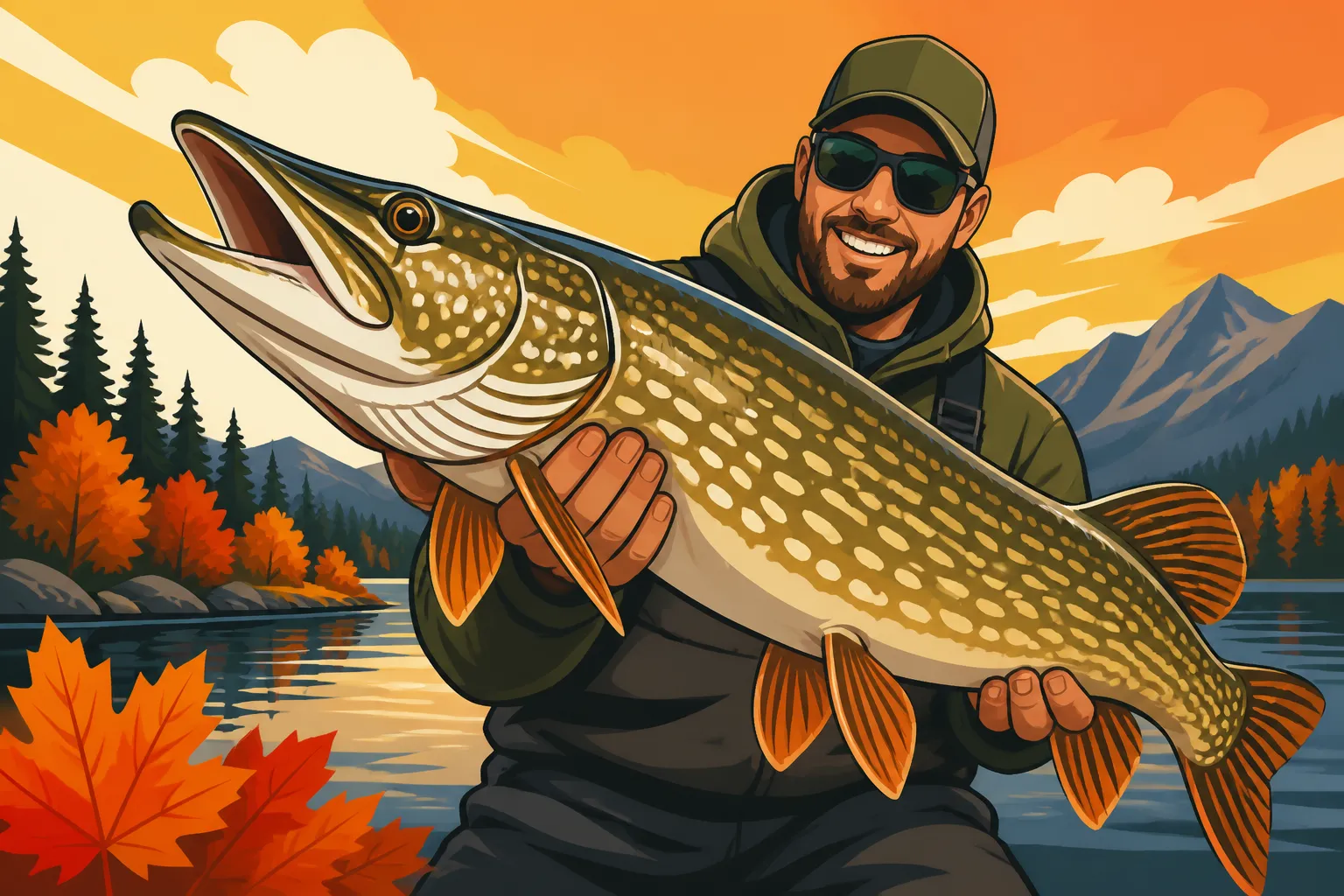
The crisp air and turning leaves of autumn signal a significant shift for Alberta's northern pike, transforming them from summer's occasional ambush predators into voracious feeders. For anglers, this isn't just a seasonal change; it's a prime window of opportunity to target truly massive, trophy-sized pike before winter sets in. If you've ever dreamt of battling one of Alberta's gator-sized pike but aren't sure how to consistently find and hook these giants in the fall, this comprehensive guide will equip you with the knowledge, gear, and tactics to make those dreams a reality.
Understanding Fall Pike Behavior for Trophy Success
As summer's warmth fades and the days shorten, the underwater world undergoes a dramatic transformation that directly influences where and how northern pike feed. Understanding these behavioral shifts is paramount for anyone hoping to land a trophy in the fall.
The Autumn Feeding Frenzy: Fueling Up for Winter
Unlike the somewhat lethargic, heat-stressed pike of mid-summer, fall pike are on a mission: to pack on as much weight as possible before the long, lean winter months. This biological imperative drives an intense feeding frenzy. As water temperatures begin to drop, pike metabolism, which slowed in the heat, kicks back into a higher gear, demanding more calories. They know that once ice forms and temperatures plummet, finding food will become significantly harder and their energy expenditures will need to be minimized. This makes them incredibly aggressive and less selective about their meals.
Picture it: a large female pike, perhaps pushing into the 40-inch range, senses the coming cold. She's been conserving energy in deeper, cooler water through the summer, only making short forays into the weeds for opportunistic strikes. Now, with the water cooling to her preferred range, she's feeling energetic, hungry, and ready to chase down bigger prey. This is the window you want to exploit. The change in water temperature also affects baitfish, causing them to school up more tightly and move from dying shallow weeds into deeper, more stable environments, which in turn concentrates the pike.
Where Pike Position Themselves as Seasons Change
The habitat preferences of northern pike shift considerably from their summer haunts. During the warmer months, smaller pike often hide in dense weed beds, ambushing unsuspecting prey. Larger, trophy pike might also utilize these areas, but often hold in slightly deeper fringes or nearby structures, especially during the brightest parts of the day.
However, as fall progresses and water temperatures drop, those lush shallow weed beds that provided cover and oxygen throughout summer begin to die off. This forces the baitfish, and consequently the pike, to seek refuge in deeper, more stable environments. Trophy pike will typically abandon the dying shallow weeds and relocate to structural elements that offer depth transitions and ambush points. Think about distinct points extending into a lake, steep drop-offs leading into main lake basins, submerged humps, rock piles, or even old creek channels. These areas become magnets for schooling baitfish, which in turn attracts the predatory pike. A perfect fall scenario might be a large rocky point that drops from 10 feet down to 30 feet, with a submerged weed line or rock cluster at the 15-foot mark—an ideal ambush spot where pike can sit comfortably in slightly deeper water and dart up to hit passing schools of ciscoes or whitefish. Knowing Northern Pike Growth Rate to Trophy Size also helps understand why these older, larger fish prefer specific, more advantageous territories.
Prime Locations for Fall Trophy Pike in Alberta
Alberta is blessed with an abundance of fantastic pike waters, but pinpointing the exact "trophy spots" in fall requires a keen eye for specific features. Not all pike lakes are created equal when it comes to producing giants, especially once the leaves start to turn.
Larger Lakes and Their Structure: Deep Water Havens
When targeting trophy pike in the fall, larger, deeper lakes often present the best opportunities. These lakes typically have more significant structural elements and provide ample cold, oxygenated water for big pike to thrive. Lakes like Lesser Slave Lake, Cold Lake, or Lake Athabasca are renowned for their massive pike populations.
On these larger bodies of water, focus your efforts on areas with dramatic depth changes and extensive underwater structure. This includes prominent main lake points that stretch far into the basin, underwater humps (often called "reefs" by locals), rock shoals, and sharp drop-offs. These are the highways and dinner tables for schooling baitfish like ciscoes, lake whitefish, and even perch, and where the biggest pike will congregate to intercept them. Imagine a massive, shallow flat on Lesser Slave Lake that suddenly plunges into the deeper main channel; the edge of that flat, especially where it meets a rocky break, is a prime hunting ground. Or consider the numerous bays and points on Cold Lake that transition from shallower rocky areas to deeper water – these are classic fall pike hangouts. Always remember, the biggest pike often require the biggest meals, and these larger lakes provide the consistent forage base for them to grow truly massive. For a deeper dive into general pike fishing, you might also want to check out Northern Pike Fishing in Alberta. To find specific locations, a good starting point is researching Best lakes for trophy pike in Alberta.
River Systems and Their Opportunities: Current and Cover
While large lakes get a lot of attention, Alberta's vast river systems can also be absolute goldmines for fall trophy pike. Rivers often act as natural funnels, concentrating baitfish and, consequently, the predators that feed on them. Look for sections of rivers that have slower-moving water, deep bends, or large pools where current breaks create slack water. Confluences, where two rivers meet, are also fantastic spots as they often churn up baitfish and create diverse current patterns that pike can exploit.
On river systems like the Athabasca or Peace River, trophy pike might hold in deep eddies behind large boulders or log jams, at the mouths of feeder creeks, or along cut banks where erosion has created deeper pockets. The key is to find areas that offer a combination of reduced current, good depth, and nearby access to food. A deep pool below a set of rapids, for example, can be a holding area for large pike waiting for disoriented baitfish to come downstream. Even the mighty North Saskatchewan River, particularly in its quieter stretches and oxbows, can hold some impressive fall pike. When exploring river systems, pay close attention to topographical maps or sonar readings that show sudden depth changes or prominent underwater features. To learn more about fishing specific river systems in Alberta, you might find guides like Best Fishing Rivers in Alberta useful.
Essential Gear and Lures for Fall Trophy Pike
Catching a truly massive fall pike isn't just about finding them; it's about having the right tools to tempt them and, crucially, to land them safely. These fish are powerful, and undergunned tackle will lead to heartbreak.
Heavy-Duty Rods, Reels, and Line for the Fight
Forget your light panfish setup for these giants. Fall trophy pike demand robust gear that can handle their violent strikes and powerful runs. You'll want to lean towards medium-heavy to heavy power rods, typically in the 7 to 9-foot range. A longer rod provides better casting distance for covering water and more leverage when fighting a big fish.
- Rods: For casting larger lures, a fast-action baitcasting rod with a strong backbone is often preferred. This allows for accurate casts with heavy baits and the power to really lean into a thrashing pike. If you prefer spinning gear, opt for a heavy-power spinning rod with a sturdy reel seat.
- Reels: Pair your rod with a high-quality baitcasting reel with a good drag system and a decent line capacity (e.g., a 200 or 300 series). For spinning, a 4000 to 6000 size reel will offer the necessary power. Smooth drag is absolutely critical; a trophy pike will test it.
- Line: Spool up with 30-65 lb braided line. Braid offers incredible strength, sensitivity, and no stretch, which is ideal for detecting subtle bites and setting hooks on big fish. Crucially, always use a heavy fluorocarbon or wire leader, at least 12-18 inches long, to prevent bite-offs. Pike have razor-sharp teeth that will easily sever monofilament or fluorocarbon mainlines. A 50-80 lb fluorocarbon leader or a 60-100 lb wire leader is not overkill. For more details on this, check out Best leader for pike fishing.
Beyond the rod, reel, and line, remember safety: a long-handled landing net with rubberized mesh (better for fish health), jaw spreaders, and long-nose pliers are non-negotiable for safe unhooking and release. Heavy-duty gloves can also protect your hands from those notorious teeth. Looking for a new setup? Many reputable brands offer excellent options; you can often find great deals on a robust baitcasting combo on Amazon, or specialized pike gear at your local Alberta tackle shop. To get a broader idea of what you might need, definitely check out Best Pike Gear for Alberta Lakes.
Top Lure Choices for Fall Pike: Go Big or Go Home
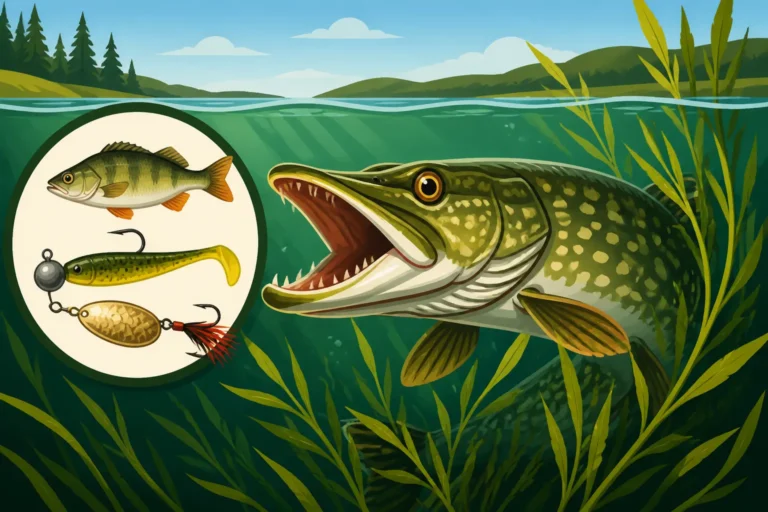
Fall pike are looking for a substantial meal, so this is the time to embrace larger baits. Don't be shy about throwing lures that might feel enormous for other species—pike want to gorge, and a big profile makes them easier targets. Best Lures for Northern Pike in Alberta provides a fantastic overview, but let's dive into some fall specifics.
- Large Swimbaits: These are arguably one of the most effective lures for trophy fall pike. Soft plastic swimbaits, often 6-12 inches long, mimic large baitfish like ciscoes or whitefish. They can be retrieved slowly, with a lifelike swimming action that triggers aggressive strikes. Hard-bodied swimbaits, whether jointed or single-piece, also excel. When choosing, consider Best swimbait size for big pike – bigger is often better. You can find a huge variety of quality swimbaits on Amazon.
- Jerkbaits and Glide Baits: These lures, often 6-10 inches, are fantastic for working over submerged structure or along drop-offs. Their erratic, darting action when twitched or reeled with pauses can imitate a wounded baitfish, irresistible to a hungry pike. Glide baits, in particular, have a wide side-to-side sashay on a steady retrieve or sweep, drawing attention from a distance.
- Large Spoons: Simple, yet incredibly effective. Casting spoons in the 3/4 oz to 2 oz range, with plenty of flash and wobble, are excellent for covering water, especially in deeper areas. Gold, silver, and copper finishes are staples, but experiment with bright colours like orange or chartreuse on cloudy days or in stained water.
- Big Bucktail Spinners and Inline Spinners: These create a lot of vibration and flash, triggering the lateral line of pike from a distance. Blades like large Colorado or Willowleaf are good choices. Sizes like Musky-sized bucktails might seem excessive, but they are often just what a trophy pike is looking for.
- Deep-Diving Crankbaits: For probing deeper contours and structure, deep-diving crankbaits are essential. Look for models that can dive to 15-25 feet or more, depending on the depth you're targeting. These are great for trolling or casting along deep break lines. Experiment with colours, but natural baitfish patterns, firetiger, or perch patterns are often reliable. Learning the Best crankbait retrieve for pike in fall is key to maximizing their effectiveness.
Here's a quick comparison of popular fall pike lure types:
| Lure Type | Typical Size Range | Ideal Depth Range | Key Action | Pros | Cons |
|---|---|---|---|---|---|
| Large Swimbaits | 6-12 inches | 5-30+ feet | Realistic swim, slow | Highly realistic, triggers trophy pike | Can be expensive, specialized retrieve |
| Jerkbaits/Glides | 6-10 inches | 5-20 feet | Erratic dart, glide | Excellent for reaction strikes, covers mid-depths | Requires angler input for action |
| Large Spoons | 3/4 oz – 2 oz | 10-40+ feet | Flash, wobble, flutter | Simple to use, casts far, good for deep water | Less realistic, can twist line if not rigged right |
| Bucktails/Spinners | Large (#7-#10) | 5-20 feet | Vibration, flash | High visibility, covers water quickly | Can be heavy to cast repeatedly |
| Deep Crankbaits | 5-8 inches | 15-30+ feet (diving) | Wobble, dive | Great for trolling, reaches deep structure | Dive curve limits depth flexibility |
Tactics and Techniques for Landing Monster Pike
Having the right gear is only half the battle; knowing how to present your lures and approach your fishing spots effectively will dramatically increase your chances of hooking into a fall trophy pike. This is where experience and fine-tuning come into play. Many of these principles apply broadly, as covered in How to Catch Northern Pike in Alberta, but the fall demands specific emphasis.
Varying Retrieve Speeds and Pauses: Finding the Trigger
The "perfect" retrieve speed for fall pike isn't constant; it changes based on water temperature, light conditions, and the pike's mood. While fall pike are generally aggressive, they can sometimes be finicky. The key is to experiment. Start with a moderate retrieve that allows your chosen lure to exhibit its natural action. Then, vary it.
- Slow Roll: For large swimbaits or spoons in deeper water, a slow, steady retrieve (a "slow roll") can be deadly. This mimics a cruising baitfish and can be particularly effective when pike are holding tight to structure or in slightly colder water.
- Rip-Pause: With jerkbaits, a common technique is to "rip" the rod tip sharply once or twice, then pause for several seconds. Many strikes occur on the pause as the lure suspends or slowly falls, appearing like a vulnerable meal.
- Stop-and-Go: For crankbaits and some spoons, a stop-and-go retrieve can be effective. Reel for a few seconds, then pause briefly, allowing the lure to float or sink slightly before resuming your retrieve. This erratic action often triggers a chase and strike.
- Speed Bursts: Don't be afraid to incorporate short bursts of speed into your retrieve, especially with bucktails or swimbaits. This can make the lure appear to be fleeing, often provoking a predatory instinct.
The most important advice here is to pay attention to what the fish are telling you. If you're getting short strikes or follows without committed bites, try changing your retrieve speed, the length of your pauses, or even the depth you're fishing. The Best lure retrieve speed for pike in fall is often discovered through trial and error on any given day. If you are specifically using crankbaits, you may want to consult Best crankbait retrieve for pike in fall for more advanced techniques.
Covering Water and Targeting Key Structure: Efficiency is Key
Fall fishing for trophy pike is often a game of covering a lot of water efficiently until you locate active fish. These powerful predators are often found in concentrated pockets, so once you find one, there are likely more nearby.
- Fan Casting: From a boat, systematically fan cast areas, making casts at different angles to cover a wide swathe of water. Cast past your target structure and retrieve your lure through it, paying close attention to any changes in depth or bottom composition.
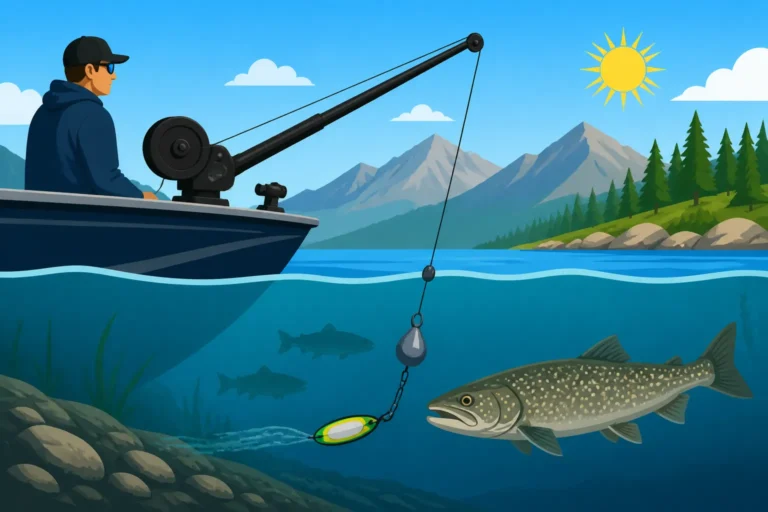
- Trolling: Trolling large crankbaits or swimbaits can be incredibly effective for covering expansive areas of deeper water, especially on larger lakes. Use your fish finder to identify promising structure, baitfish schools, or even individual pike holding near the bottom. Vary your trolling speed until you find what works.
- Grid Search: If you suspect pike are in a certain area (e.g., a large flat adjacent to a drop-off), implement a grid search pattern. Make parallel passes with your boat, casting or trolling along a defined path, then move over slightly and repeat, systematically covering the entire area.
- Focus on Transitions: As discussed earlier, pike love transition zones. Spend extra time working areas where shallow water drops into deep, where soft bottom meets hard bottom, or where one type of structure gives way to another. These "edges" are prime ambush points. Using a quality fish finder is almost a necessity for fall pike fishing, as it allows you to pinpoint these subtle structural changes and locate baitfish.
Remember that Best techniques for late fall pike will often involve slowing down your presentation slightly as water temperatures dip further, but the general principles of finding structure and bait remain constant.
Safe Handling and Release of Trophy Pike
Landing a trophy pike is an exhilarating experience, but the fight isn't truly over until the fish is safely released. These large fish, especially older females, are vital to the health of Alberta's pike populations. Their survival after release ensures future generations of trophy pike.
- Minimize Air Exposure: Pike are powerful, but they are also sensitive to being out of water. Keep the fish in the water as much as possible while unhooking. If you must bring it into the boat for a quick photo, be prepared to do so swiftly.
- Use the Right Tools: This cannot be stressed enough. Long-nose pliers are essential for reaching hooks deep inside a pike's mouth without getting your fingers near those formidable teeth. Jaw spreaders can be helpful, though some anglers prefer to avoid them if possible, as they can sometimes damage the fish's jaw.
- Support the Fish: When holding a large pike for a photo, always support its belly with one hand, especially if you're holding it horizontally. Never hold a large pike solely by its jaw or gill plates, as this can cause severe internal damage.
- Revive Carefully: After unhooking, gently hold the pike upright in the water, facing into any current. Support its belly and tail, allowing water to flow over its gills. Wait until the fish shows strong signs of recovery and is able to swim away on its own before releasing your grip. Don't simply toss it back into the water.
Practicing careful catch and release, particularly for these magnificent trophy specimens, is a sign of respect for the resource. Alberta's fisheries depend on anglers being good stewards. While this article focuses on pike, the same principles of careful handling apply to other sensitive species; for example, you can learn more about careful handling of another important Alberta fish in Bull Trout: Alberta's Threatened Native Fish. Remember to always be aware of Alberta Northern Pike Limit regulations for the specific zone you are fishing.
Disclaimer
This article is for general informational purposes only and does not constitute professional advice. Laws, prices and regulations vary by location and change over time. Consult a qualified professional for guidance on your specific situation.