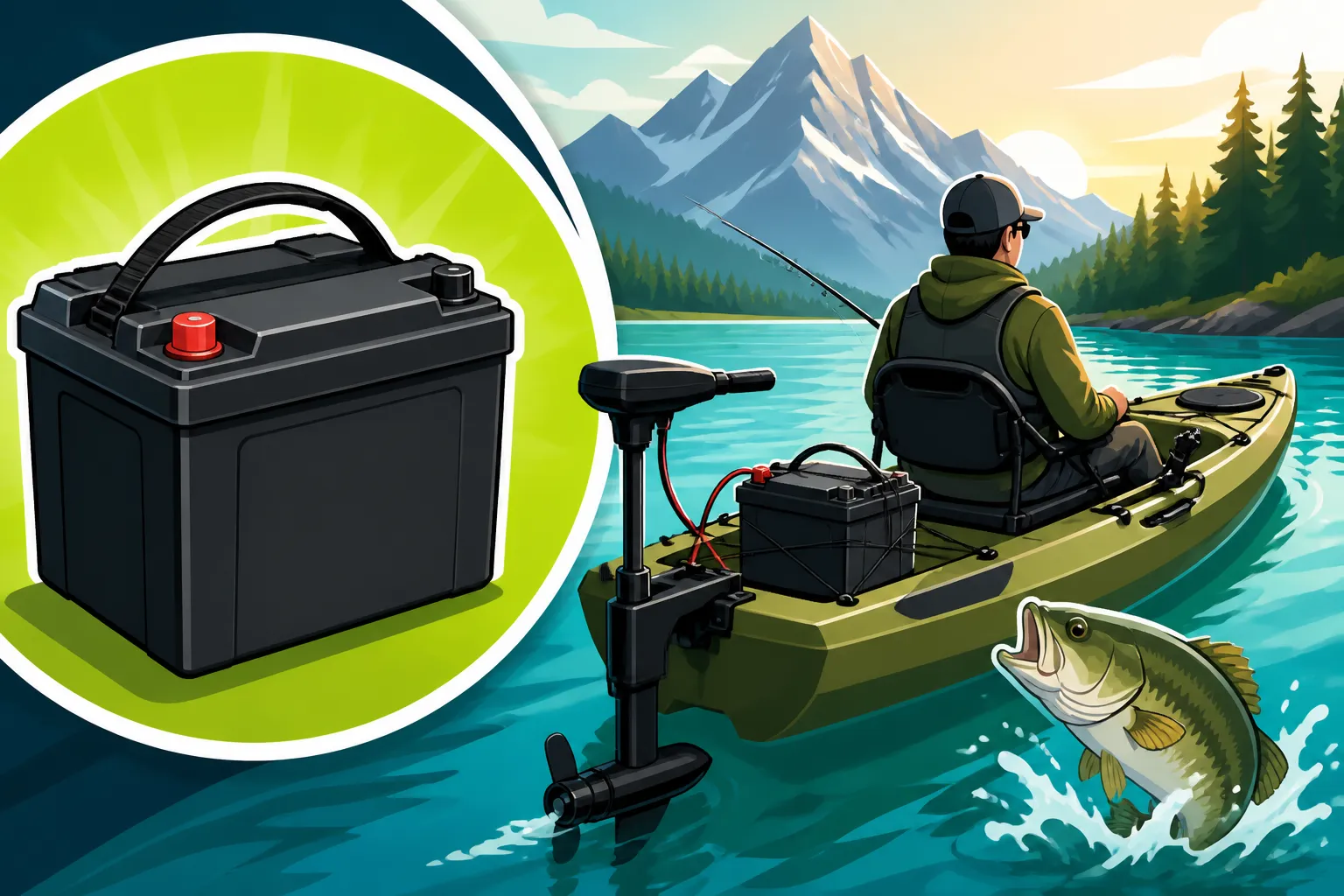
Best trolling motor battery for a fishing kayak
Ah, the quest for the perfect fishing kayak setup! There’s nothing quite like the freedom of paddling out to your favorite honey hole, but let’s be real, sometimes a little electric assist can make all the difference, especially when battling current or covering long distances. The problem many of us face is figuring out how to power that trolling motor reliably without weighing down our precious kayak or running out of juice when the fish are finally biting. This guide is all about helping you navigate the sometimes overwhelming world of trolling motor batteries so you can choose the best one for your fishing kayak, ensuring your time on the water is spent reeling in fish, not struggling with power.
Why Your Trolling Motor Battery Choice Matters for Kayak Fishing
Choosing the right battery for your kayak trolling motor isn't just about making your motor spin; it's about optimizing your entire fishing experience. Kayaks are unique vessels, demanding different considerations than a large bass boat. What works for a bigger boat won't necessarily translate well to the confined, weight-sensitive world of kayak angling. Overlooking this crucial piece of gear can lead to frustrations that could easily be avoided.
The Frustration of a Dead Battery Mid-Paddle
Picture this: you've spent an hour meticulously paddling against a stiff headwind to reach that perfect lily pad field on an Alberta lake. You drop your line, catch a few nice pike, and decide to reposition. You hit the button on your trolling motor, expecting that familiar hum, but all you get is silence. Dead battery. Now you're facing a long, arduous paddle back, exhausted and utterly defeated, perhaps even missing out on what could have been the best part of your day. This scenario is far too common for kayak anglers who haven't adequately planned their power source. It's not just about convenience; it can seriously impact your enjoyment and even your safety, especially if you're in a busy waterway or a remote area. A reliable power source means less worry and more focus on the angling itself.
Understanding Kayak-Specific Power Needs
Kayaks, unlike larger boats, have strict limitations when it comes to weight, space, and portability. Every pound you add affects performance, stability, and ease of transport. A massive, heavy marine battery might power a trolling motor for days on a larger boat, but it could make your kayak unstable, difficult to launch, or impossible to car-top. We need batteries that are efficient, relatively lightweight, and compact enough to fit securely without impeding your paddling or fishing activities. Think about how you transport your kayak – if you're hoisting it onto a roof rack, every extra pound of battery is going to feel like ten. Plus, the often-wet environment of a kayak deck means your battery needs to be robust and ideally, well-protected from splashes and accidental dunkings. Your Best Kayak for Alberta Fishing deserves a battery that complements its design and purpose.
Types of Trolling Motor Batteries: Pros and Cons for Kayak Anglers
When you start looking at batteries, you'll quickly realize there's more than one option out there. Each type has its own set of advantages and disadvantages, particularly when applied to the unique demands of kayak fishing. Understanding these differences is key to making an informed decision that suits your budget, fishing style, and kayak setup.
Lead-Acid Batteries: The Traditional Workhorse
Traditional flooded lead-acid batteries are what most people think of when they imagine a "car battery" or a "boat battery." They are typically the most affordable option upfront, making them appealing to anglers on a budget. These batteries work by immersing lead plates in a liquid electrolyte (sulfuric acid and water). While they're readily available at most automotive or marine supply stores, like your local Bass Pro Shops, they come with significant drawbacks for kayak use. They are usually quite heavy, meaning they add considerable bulk to your kayak. They also require maintenance, such as checking and refilling electrolyte levels with distilled water, and they can off-gas hydrogen, which requires ventilation. If tipped, they can leak corrosive acid, which is a big concern in a small, enclosed space like a kayak. Their discharge cycle is also less efficient, meaning you can only safely use about 50% of their stated capacity without significantly shortening their lifespan.
AGM Batteries: A Step Up in Reliability
Absorbed Glass Mat (AGM) batteries are a type of sealed lead-acid battery that offers several improvements over their flooded counterparts. In an AGM battery, the electrolyte is absorbed into fiberglass mats between the lead plates, rather than being free-flowing liquid. This design makes them maintenance-free – no need to add water – and spill-proof, which is a huge advantage for kayak fishing. You don't have to worry about acid leaks if your kayak gets swamped or flips. They also tend to handle vibrations better and charge faster than traditional lead-acid batteries. While they are more expensive than flooded lead-acid batteries, they are generally lighter and offer a more consistent power output. You can typically discharge them to about 60-80% of their capacity, giving you a bit more usable power. For many kayak anglers looking for a good balance between cost and performance, AGM batteries represent a solid middle-ground.
Lithium-Ion LiFePO4 Batteries: The Modern Solution
Lithium-ion, specifically Lithium Iron Phosphate (LiFePO4) batteries, are rapidly becoming the gold standard for kayak trolling motors, despite their higher initial cost. There's a reason these are so popular right now. The biggest advantage is their incredible weight savings – they can be up to 70% lighter than an equivalent lead-acid or AGM battery. For a kayak, where every pound counts for transport and on-water performance, this is a game-changer. They also offer a much longer lifespan, often lasting 5-10 times longer than lead-acid batteries, and they can be discharged almost completely (up to 90-100%) without damage, providing more usable power per charge. LiFePO4 batteries are also virtually maintenance-free, charge much faster, and hold their charge for extended periods when not in use. They don't off-gas and are generally safer, often featuring an internal Battery Management System (BMS) that protects against overcharging, over-discharging, and overheating. While the upfront investment is significant, their longevity, performance, and weight savings often make them the most cost-effective solution in the long run. Many anglers are finding great options for these on sites like Amazon, alongside specialized marine retailers.
Here's a quick comparison of the main battery types:
| Feature | Flooded Lead-Acid | AGM Lead-Acid | Lithium-Ion (LiFePO4) |
|---|---|---|---|
| Initial Cost | Lowest | Medium | Highest |
| Weight | Heaviest | Heavy | Lightest |
| Lifespan (Cycles) | ~100-300 | ~300-800 | ~2000-5000+ |
| Usable Capacity | ~50% | ~60-80% | ~90-100% |
| Maintenance | High (water refills) | None | None |
| Spill-Proof | No | Yes | Yes |
| Charging Speed | Slow | Medium | Fast |
| Kayak Suitability | Poor (weight, spill risk) | Good (balance of factors) | Excellent (weight, performance) |
Key Factors to Consider When Choosing Your Battery
Selecting the best trolling motor battery isn't a one-size-fits-all decision. Your specific fishing habits, the type of kayak you have, and your budget will all play a role. Let's dig into the crucial factors you need to think about before making your purchase.
Amp-Hours (Ah) and Run Time
The Amp-hour (Ah) rating of a battery is essentially its fuel tank size. It tells you how much energy the battery can deliver over time. A higher Ah rating means longer run time for your trolling motor. To figure out what you need, you first need to know the amp draw of your trolling motor. A typical 30-lb thrust trolling motor might draw around 30 amps at max speed, while a 55-lb thrust motor could draw 50-60 amps. If your motor draws 30 amps, and you have a 30Ah battery, theoretically you could run it for one hour at max speed. However, remember the usable capacity varies by battery type (50% for lead-acid, 80% for AGM, 90-100% for LiFePO4).
So, for a truly effective run time, you'll need a battery with a significantly higher Ah rating than your expected motor draw, especially considering you won't always be running at full throttle. Think about how long you typically spend on the water and how much you use your motor. Are you just making quick adjustments, or are you covering miles of water in places like Lesser Slave Lake? Most kayak anglers find a 30-50Ah LiFePO4 battery, or a 75-100Ah AGM battery, provides a good balance for a full day of mixed use. If you're going for marathon sessions, consider upsizing.
Weight and Portability
This is arguably the most critical factor for kayak fishing. Unlike a large boat, you're often loading and unloading your kayak by hand, potentially carrying it short distances, and stability on the water is paramount. A heavy battery can make a sleek, nimble kayak feel sluggish and difficult to maneuver. It can also throw off the balance of your kayak, affecting how it sits in the water and how easy it is to paddle or fish from.
Lithium-ion batteries excel here, offering significant weight savings. For example, a 50Ah LiFePO4 battery might weigh around 12-15 pounds, while a comparable 50Ah AGM battery could easily be 30-40 pounds, and a flooded lead-acid even heavier. This difference is enormous when you're loading your kayak onto your vehicle after a long day of Walleye Fishing in Alberta. Reducing weight also means your kayak will perform better, allowing it to glide more easily when paddling and making it more efficient under motor power. The less weight you carry, the more gear, or fish, you can bring home!
Size and Kayak Storage
Kayak cockpits and storage areas are notoriously compact. You need a battery that not only fits but can be secured properly to prevent it from shifting around, especially in choppy water or if you happen to flip. Measure the dimensions of your battery compartment, dry hatch, or the area where you plan to install your battery. Don't forget to account for any battery box or waterproof casing you might use.
Many kayak anglers opt for smaller, more compact batteries that can fit inside a dry hatch or be stowed in a crate behind the seat. Some specialized kayak models even have dedicated battery compartments. Think about accessibility too; you want to be able to connect and disconnect your motor easily, and potentially access the battery for charging without completely dismantling your setup. A battery that's too bulky will either not fit or will be a constant obstruction, hindering your ability to move around in the kayak. A battery box, often found at retailers like Bass Pro Shops, can also help manage the size and provide added protection.
Charging Requirements and Lifespan
Consider how you'll charge your battery and how long you expect it to last. Different battery types have different charging requirements and lifespans. Lead-acid batteries generally require a trickle charger and can take a long time to fully charge. AGM batteries charge a bit faster. Lithium-ion (LiFePO4) batteries charge very quickly with a compatible charger, often in just a few hours. This can be a huge convenience if you plan on fishing multiple days in a row or have limited time between trips.
Lifespan is also a major factor in the long-term cost. While LiFePO4 batteries have a higher upfront price, their ability to handle thousands of charge cycles means they can last for many years, potentially outliving several lead-acid or AGM batteries. This makes the total cost of ownership much lower over time. Look for batteries with a good warranty, especially for higher-end models, as this indicates the manufacturer's confidence in their product. Remember to research the specific charger required for your chosen battery type; using the wrong charger can damage the battery or severely shorten its life.
Setting Up and Maintaining Your Kayak Trolling Motor Battery
Once you've made the big decision and picked out your ideal trolling motor battery, the job isn't quite done. Proper setup and diligent maintenance are crucial for getting the most out of your investment, ensuring safety, and extending the battery's lifespan. Cutting corners here can lead to frustrating performance issues or even dangerous situations on the water.
Proper Wiring and Connections
Correct wiring is paramount for both performance and safety. Your trolling motor will have specific gauge wire requirements; using wire that is too thin can lead to voltage drop, causing your motor to run inefficiently and heat up your wires, which can be a fire hazard. Always use marine-grade, appropriately sized wiring and crimp connectors for a secure connection. Avoid twisting wires together and wrapping them in electrical tape, which is a recipe for disaster in a wet environment.
When connecting your battery, ensure terminals are clean and free of corrosion. Use marine-grade heat shrink tubing to seal all connections, protecting them from water intrusion and preventing short circuits. Consider installing a fuse or circuit breaker close to the battery to protect your motor and wiring in case of an overload or short. If you're using quick-disconnect plugs, ensure they are rated for marine use and can handle the amperage of your motor. This might seem like a lot of technical detail, but a solid, well-protected electrical system means you won't be troubleshooting power issues when you should be Fly Fishing for Trout on the Bow River. You can often find all the necessary wiring and connectors at stores like Bass Pro Shops or online through Amazon.
Protecting Your Battery from the Elements
Your kayak, by its very nature, is exposed to the elements: water, sun, and sometimes even a little roughhousing. Your battery needs protection from all of these. While AGM and LiFePO4 batteries are sealed and less prone to issues than flooded lead-acid, direct exposure to water can still corrode terminals and damage external components. A dedicated, waterproof battery box is an excellent investment. These boxes typically have a seal around the lid and provide a safe enclosure for your battery, often with external terminals for easy connection.
Beyond water, prolonged exposure to direct sunlight can cause batteries to overheat, which can reduce their lifespan and performance. Try to store your battery in a shaded area or use your battery box to shield it from harsh UV rays. For those adventurous trips where your Best Kayak for River Fishing in Alberta might take a spill, securing the battery box within the kayak is vital to prevent it from floating away or getting damaged. Adding a Best Dry Bag for Kayak Fishing for other electronics and gear is also a smart move to keep everything safe and dry.
Charging and Storage Best Practices
How you charge and store your battery when not in use significantly impacts its longevity. Always use a charger specifically designed for your battery type (lead-acid, AGM, or LiFePO4). A smart charger is highly recommended as it will automatically detect the battery's state of charge and adjust the charging cycle to prevent overcharging, which can damage any battery.
For storage, especially during the long Alberta winters, ensure your battery is fully charged before putting it away. Lead-acid and AGM batteries should be topped off periodically (e.g., once a month) during storage to prevent sulfation, which can permanently reduce capacity. LiFePO4 batteries have a much lower self-discharge rate and generally require less maintenance charging. Store all batteries in a cool, dry place away from direct sunlight and extreme temperatures. Disconnect all loads from the battery when storing it to prevent parasitic drains that could slowly deplete its charge. Proper charging and storage ensure your battery is ready to go when the Alberta Trout Season Opener Dates by Zone finally arrive, and you won't be scrambling to replace a dead battery at the last minute. This commitment to care will allow you to enjoy many seasons of hassle-free power for your kayak fishing adventures.
Disclaimer
This article is for general informational purposes only and does not constitute professional advice. Laws, prices and regulations vary by location and change over time. Consult a qualified professional for guidance on your specific situation.