Best drift boat length for the Bow River
Choosing the right drift boat for the Bow River can feel like trying to solve a puzzle with too many pieces. You want something that handles the famous currents and riffles like a dream, keeps you safe, and fits your fishing style, but with so many options, how do you even begin? This guide is here to break down the ins and outs of drift boat lengths, helping you understand what truly works best for chasing those magnificent trout on Alberta's iconic river.
Understanding the Bow River's Unique Characteristics for Drift Boats
The Bow River isn't just any river; it's a dynamic, ever-changing waterway that demands respect and the right equipment. Many anglers, myself included, have learned this firsthand, sometimes the hard way, by trying to make a less-than-ideal boat work. From its powerful flows through Calgary to the serene stretches downstream, its characteristics directly influence what makes a drift boat "best" for its waters.
Current Speeds and Water Depth Variations
One of the first things you'll notice about the Bow, especially after a good rain or during spring runoff, is its current. It can be deceptively fast in places, and slower, deeper pools can quickly transition into shallow, gravelly riffles. This variability means your boat needs to be responsive. A boat that's too long might feel sluggish in tighter turns or when you need to quickly adjust your line in a fast current, potentially swinging wide and missing a prime casting spot or, worse, putting you in an awkward position around an obstacle. Conversely, a boat that's too short might get tossed around a bit more in heavier chop, requiring constant course correction and tiring out the rower.
Think about navigating a stretch near Fish Creek Provincial Park – you might have a long, smooth glide where stability is key, only to quickly approach a series of faster runs that demand precise boat control to present a fly perfectly to rising trout. The ability to pivot quickly and hold your line against the current is paramount. Understanding these nuances is crucial, which is why I always recommend anglers spend time getting to know the river before committing to a boat. For a deeper dive into the river itself, check out our Bow River Fishing Guide.
Obstacles and Maneuverability Requirements
The Bow River, like many natural waterways, has its fair share of natural obstacles. Submerged logs, rock gardens, and braided channels can pop up, especially during lower water levels. If you're drifting through the city, you'll also encounter bridge abutments and other urban features that demand careful navigation. A longer boat, while often more stable, can be a real handful when you need to quickly spin 180 degrees to avoid a snag or thread the needle through a narrow passage. I remember one particular instance near Policeman's Flats where a sudden drop in water level exposed a hidden rock bar. A nimble boat allowed us to quickly pivot and slide past, but a longer, less responsive boat might have ended up high and dry, or worse, damaged.
The constant need to adjust your drift, hold your position for anglers to cast, and react to changing river conditions means that maneuverability is a non-negotiable trait for a Bow River drift boat. It's not just about getting from point A to point B; it's about making those precise adjustments that put you on fish and keep you safe. Understanding Alberta Boating Laws for Anglers is also incredibly important here, as safe operation directly ties into navigating obstacles.
How Drift Boat Length Impacts Performance on the Bow
When we talk about drift boat length, we're not just discussing a number on a spec sheet; we're talking about a fundamental aspect of how the boat will feel and perform on the water. Every inch makes a difference, and for a river as nuanced as the Bow, those inches can truly define your fishing experience.
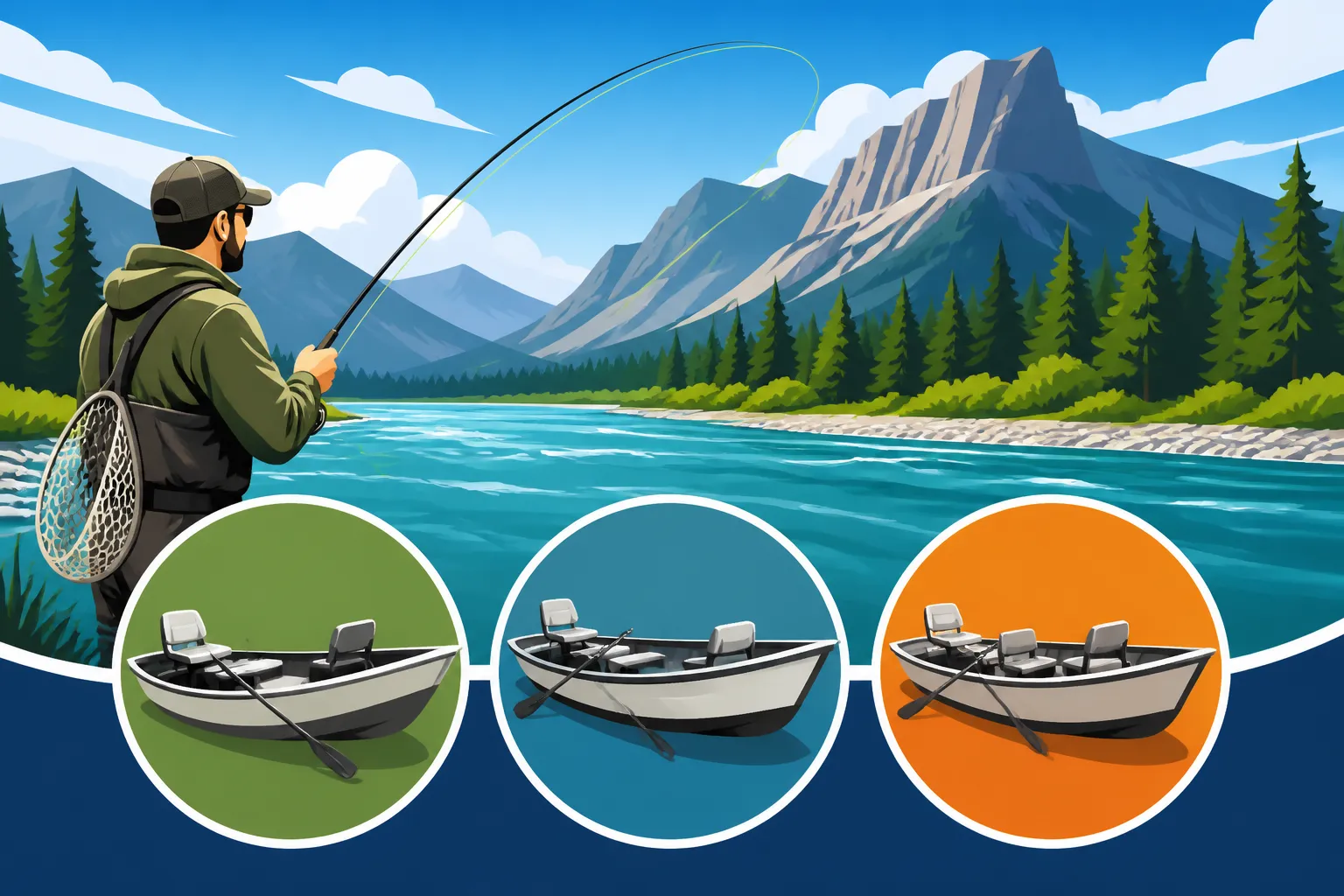
Shorter Drift Boats 14-15 Feet: Agility and Precision
Shorter drift boats, typically in the 14 to 15-foot range, are often the darlings of anglers who prioritize agility and a light footprint. These boats excel in tight spots and faster, more technical water. They turn on a dime, making it much easier to hit those subtle seams where trout hold or to quickly adjust your angle to avoid a submerged hazard. Imagine you're fly fishing a busy stretch of the Bow: with a shorter boat, your rower can precisely hold your position, allowing you to make multiple accurate casts into a small feeding lane without drifting too far past it. This precision is invaluable, especially when targeting finicky fish.
However, this agility comes with trade-offs. Shorter boats tend to have less internal space, which can be a real squeeze if you're planning a multi-day trip or fishing with more than two people and a lot of gear. They can also feel a bit less stable in truly turbulent water or high winds, requiring more active rowing to maintain course. If you often find yourself fishing solo or with just one other person, and prefer an active, responsive rowing experience that allows for pinpoint accuracy, a shorter boat might be your ideal choice. You'll definitely want to have your Best Gear for Bow River Fly Fishing packed efficiently in a boat of this size.
Medium Drift Boats 16 Feet: The Versatile Workhorse
The 16-foot drift boat is often considered the "sweet spot" for many Alberta anglers, and it's easy to see why. This length strikes a fantastic balance between the nimbleness of shorter boats and the stability and capacity of longer ones. A 16-footer generally offers ample room for two anglers and a rower, along with a decent amount of gear for a full day on the water, without feeling cramped. It handles a wider range of Bow River conditions, from the quicker riffles to the longer, slower pools, with commendable stability and still enough maneuverability to make necessary adjustments.
This versatility makes the 16-foot boat a popular choice for guided trips and recreational anglers alike. It's often forgiving enough for less experienced rowers while still offering the performance that seasoned oarsmen appreciate. If you're looking for a boat that can do a bit of everything on the Bow, accommodate different fishing partners, and provide a comfortable, capable platform for various conditions, the 16-foot model is a very strong contender. Many reputable outfitters, including those you might find through resources like Bass Pro Shops for other gear, often utilize this size for their guiding operations due to its broad appeal and performance.
Longer Drift Boats 17-18 Feet: Stability and Capacity
When you start looking at drift boats in the 17 to 18-foot range, you're entering the realm of maximum stability and carrying capacity. These boats are beasts of burden, designed to comfortably carry three anglers, a rower, and a significant amount of gear – perfect for those longer trips or when you simply want more room to stretch out. The extra length translates into a smoother ride in choppy water and a very stable platform for casting, even for taller anglers. They track incredibly straight in open water, reducing the amount of effort needed for long, uneventful drifts.
However, the trade-off here is maneuverability. A longer boat requires more effort and space to turn, making it less ideal for extremely technical or narrow sections of the Bow. You'll find yourself needing to anticipate turns and obstacles further in advance. Parking or holding precisely over a specific spot can also be more challenging. For anglers who prioritize comfort, stability, and the ability to bring along a larger crew or more equipment, especially on wide, open stretches of the Bow, these longer boats shine. But be prepared for a slightly less agile experience, particularly if you're frequently fishing the tight corners or technical rapids of the Best Fishing Rivers in Alberta.
| Drift Boat Length | Ideal Bow River Conditions | Pros | Cons |
|---|---|---|---|
| 14-15 Feet | Technical riffles, tight bends, shallow water | Highly agile, precise control, easy to launch/retrieve | Less stable in chop, limited capacity, less comfortable for multiple anglers |
| 16 Feet | Mixed conditions, most common stretches | Versatile, good balance of agility and stability, decent capacity | Can feel slightly large in very technical water, less space than longer boats |
| 17-18 Feet | Wide open sections, big water, long floats | Maximum stability, high capacity, smooth ride, comfortable for 3+ anglers | Less maneuverable, harder to launch/store, requires more effort in tight spots |
Factors Beyond Length to Consider for Your Bow River Drift Boat
While length is a huge part of the equation, it's far from the only thing to think about when you're looking for the perfect Bow River drift boat. Over the years, I've seen anglers get hung up on one spec, only to realize later that other factors play a massive role in their overall satisfaction and safety.
Beam Width and Bottom Design
The beam width (how wide the boat is) works hand-in-hand with length to determine stability and interior space. A wider beam generally means more stability, which is fantastic when you have multiple anglers moving around the boat, or when you encounter unexpected waves. However, an excessively wide beam can also make the boat harder to row, as you'll have to reach further for each stroke. It also impacts how the boat handles in strong crosscurrents.
The bottom design is another critical feature. Some drift boats have a flatter bottom, which makes them very stable and allows them to float in shallower water – a distinct advantage on some stretches of the Bow where water levels can drop quickly. Others have a more pronounced rocker or a slight V-hull, which can improve maneuverability and allow the boat to "track" better in current. For most Bow River fishing, a balance is key. You want enough rocker to pivot easily but enough flat bottom to maintain stability and glide over shallower areas. The specific river section you plan to fish most often, such as Bow River Carseland Dam Fishing Access versus the more technical upper river, should influence your choice here.
Weight and Construction Materials
The overall weight of a drift boat is a significant consideration, not just for how it performs on the water, but also for transport and storage. Lighter boats are generally easier to load, unload, and tow. This is a big plus if you're frequently launching and retrieving, or if you don't have a heavy-duty tow vehicle. Common construction materials include aluminum, fiberglass, and various composites. Aluminum boats are incredibly durable and maintenance-friendly, standing up well to bumps and scrapes against rocks, which are almost inevitable on any river. Fiberglass boats often offer a smoother ride and can have more custom aesthetic options, but might require a bit more care.
Consider your own physical capabilities and your vehicle's towing capacity. A heavier boat, while potentially more stable, can be a real pain if you're constantly struggling to manage it on ramps or gravel roads. You might spend countless hours on the water in your boat, but you'll spend just as many getting it to and from the river. For anglers looking for options, you might find a good selection of materials and designs by browsing online marketplaces or visiting a large outdoors store like Bass Pro Shops or even online retailers such as Amazon.
Storage and Transport Considerations
Let's be real, owning a drift boat isn't just about fishing; it's about storing it when you're not using it and getting it to the river when you are. A longer boat needs a longer garage or a dedicated storage spot. A heavier boat needs a more capable trailer and tow vehicle. If you live in an urban area like Calgary and have limited garage space, a shorter, lighter boat might be a much more practical choice, even if you sometimes wish for a bit more room on the water.
Think about the ramps you'll be using. Some Bow River access points have excellent concrete ramps, while others are rough gravel or even just a dirt track. A boat that's too heavy or too long can become a nightmare on challenging ramps. Also, factor in any required certifications or licenses. You'll want to ensure you're familiar with the Alberta Pleasure Craft Operator Card Requirement if you're using a motorized boat, even if it's just for shuttling. These logistical details are often overlooked but can dramatically impact your enjoyment of boat ownership.
Making Your Final Decision: Matching Boat to Your Fishing Style
Ultimately, the best drift boat length for the Bow River isn't a one-size-fits-all answer. It's about finding the perfect match for your specific fishing style, the type of water you prefer to fish, and your practical considerations. Don't let anyone tell you there's only one "right" answer.
Solo vs. Group Fishing Preferences
How do you typically fish? Are you a lone wolf who prefers the solitude of the river, perhaps with just a single trusted fishing buddy? Or do you frequently go out with a group of friends or family? If you're often fishing solo or with one other person, a 14 to 15-foot boat might be incredibly appealing for its ease of handling and precise control. It allows the rower (which might be you!) to be incredibly responsive to the angler's needs.
However, if your typical outing involves two anglers plus a rower, a 16-foot boat is almost certainly the minimum you'd want to consider for comfort and safety. Trying to squeeze three adults and all their gear into a smaller boat quickly becomes uncomfortable and can compromise safety and casting space. For those who frequently guide or host larger groups, a 17 or 18-foot model might be worth the trade-off in maneuverability for the sheer amount of space and stability it provides. Keep in mind that Life Jacket Requirements for Alberta Boaters apply to all occupants, regardless of boat size.
Preferred Fishing Techniques and Target Species
The way you fish also influences your ideal boat length. If you're primarily a fly angler focusing on delicate presentations to wary trout, especially in tighter seams and eddies, the precision of a shorter boat can be a huge advantage. The ability to "anchor" the boat in place with minimal rowing effort, or to quickly spin to hit a rising fish, is invaluable. Fly fishing often requires a clean, uncluttered deck, and smaller boats can feel less cavernous and easier to navigate.
If, however, you're more into casting larger lures for pike or walleye, or perhaps trolling for lake trout (though that's more often done in lakes than the main stem of the Bow), a longer, more stable boat might be preferred. The extra room allows for longer casts and more comfortable fighting of larger fish without feeling like you're going to tip over. While the Bow is primarily known for trout, Alberta offers many other fantastic opportunities, and the versatility of a 16-foot boat often covers a broader range of techniques for our province's diverse fisheries, like those found in our Best Walleye Lakes in Alberta or Northern Pike Fishing in Alberta guides.
Testing and Researching Options
My biggest piece of advice, after years of trial and error (and more than a few boat-related headaches), is to try before you buy. If you have friends with different boat lengths, ask if you can join them for a float on the Bow. Better yet, consider hiring a guide who uses the size of boat you're interested in; it's a fantastic way to experience its performance firsthand. This hands-on experience will give you invaluable insight that no amount of online research can replicate.
Talk to other anglers on the river, visit local fishing shops, and spend time looking at different models. Don't be afraid to sit in a boat at a dealership (or even online, just to get a feel for dimensions through resources like Amazon or manufacturers' sites) and imagine yourself fishing from it. Think about where your tackle will go, where you'll stand, and how comfortable you'd be for a full day. The Bow River is too special to settle for a boat that doesn't feel right for you. For more details on various options, consider exploring our guide on Best Drift Boats for the Bow River.
Disclaimer
This article is for general informational purposes only and does not constitute professional advice. Laws, prices and regulations vary by location and change over time. Consult a qualified professional for guidance on your specific situation.