Best Techniques for Winter Lake Trout
The icy grip of winter settles over Alberta, transforming our beautiful lakes into vast, white canvases. For many anglers, the thought of fishing in sub-zero temperatures seems daunting, especially when targeting a powerful and deep-dwelling species like the lake trout. It's true, these fish can be elusive under the ice, often hugging deep structure and requiring a specific approach. But with the right techniques, gear, and a solid understanding of their winter habits, you can experience some of the most exhilarating fishing the province has to offer. This guide will walk you through everything you need to know to successfully pursue those magnificent winter lake trout, turning a potentially frustrating endeavor into a rewarding adventure.
Understanding Alberta's Winter Lake Trout Behavior
To consistently catch lake trout through the ice, you first need to understand how these majestic fish adapt to the cold, dark depths of winter. Their behavior shifts dramatically from summer, and recognizing these patterns is the key to unlocking their secrets.
Lake Trout Metabolism and Feeding Habits in Winter
As water temperatures plummet beneath the ice, a lake trout's metabolism slows down significantly. They become less active than their summer counterparts, conserving energy in the frigid environment. This doesn't mean they stop eating, but rather that their feeding windows tend to be shorter, more intense bursts of activity. Instead of chasing down smaller, fast-moving prey over long distances, they often prefer larger, slower-moving meals that offer a high caloric payoff for minimal energy expenditure.
Think of it like this: a lake trout in summer might casually pursue a school of minnows, picking off stragglers. In winter, that same fish might wait in ambush near a deep-water structure, expending a burst of energy only when a substantial meal, like a cisco or a large whitefish, presents itself. This shift influences the types of lures and presentations that are most effective. You'll often find them suspending over deeper water or tight to underwater points and humps on lakes like Cold Lake or even Lake Minnewanka, waiting for the opportune moment.
Depth and Structure Preferences
Unlike in summer when lake trout might be found at various depths depending on the presence of a thermocline, the entire water column in winter is uniformly cold. This means they often relate to structure in a different way. While they can still be found deeper than in many other seasons, sometimes in 80 to 120 feet of water, they are frequently associated with specific underwater features.
Look for main lake basins, especially those with steep drop-offs, underwater humps, distinct points, or sudden changes in depth. These features offer ambush points and concentrate their prey. During periods of low light, such as dawn, dusk, or heavily overcast days, lake trout may temporarily move shallower, sometimes into 20-40 feet, especially if baitfish are present in those zones. However, if you're marking fish deep, stick with them. Remember that lake trout are often found near their food source. If you can locate schools of cisco, smelt, or whitefish on your sonar, chances are the lake trout won't be far behind. Knowing How deep lake trout go in summer can help you understand their general depth preferences, but winter demands a slightly different interpretation.
Essential Gear for Ice Fishing Lake Trout
Conquering winter lake trout demands more than just a regular ice fishing setup. These are powerful fish, often found in deep water, requiring robust gear to handle the fight and the conditions. Investing in the right tools will make your experience more comfortable, safer, and ultimately more successful.
Rods, Reels, and Line
For ice fishing lake trout, you're going to need a stout rod. Forget those flimsy panfish rods! A medium-heavy to heavy power ice rod, typically ranging from 36 to 48 inches in length, will provide the backbone needed to absorb powerful runs and lift heavy fish from deep water. Shorter rods can make fighting a strong fish feel like an uphill battle, especially if you're sitting on a bucket. Longer rods offer better leverage and help cushion the fight.
Pair your rod with a sturdy spinning reel in the 2500-4000 series or a low-profile baitcasting reel designed for heavier lines. The reel should have a smooth, reliable drag system, as sudden surges from a hooked lake trout can snap lighter lines. When it comes to line, a strong braided main line (20-40 lb test) is ideal due to its no-stretch properties, which provide excellent sensitivity and solid hooksets in deep water. Always add a fluorocarbon leader (12-20 lb test, depending on water clarity and fish size) of about 3 to 6 feet. Fluorocarbon is nearly invisible underwater and more abrasion-resistant, crucial for those toothy encounters. You can find a fantastic selection of these gear items on Amazon, often at competitive prices. For a broader overview, check out this guide on Essential Gear for Ice Fishing in Alberta.
Augers and Electronics
Trying to chase lake trout with a hand auger is a fast track to exhaustion. Lake trout often require drilling many holes to locate active fish or to cover promising structure. A power auger—whether gas, propane, or electric—is an absolute necessity. A 6-inch auger is usually sufficient for most panfish, but for lake trout, an 8-inch or even 10-inch hole is preferred to comfortably land a larger fish without getting its head stuck in the ice. With Alberta's frequently thick ice, a reliable power auger makes all the difference.
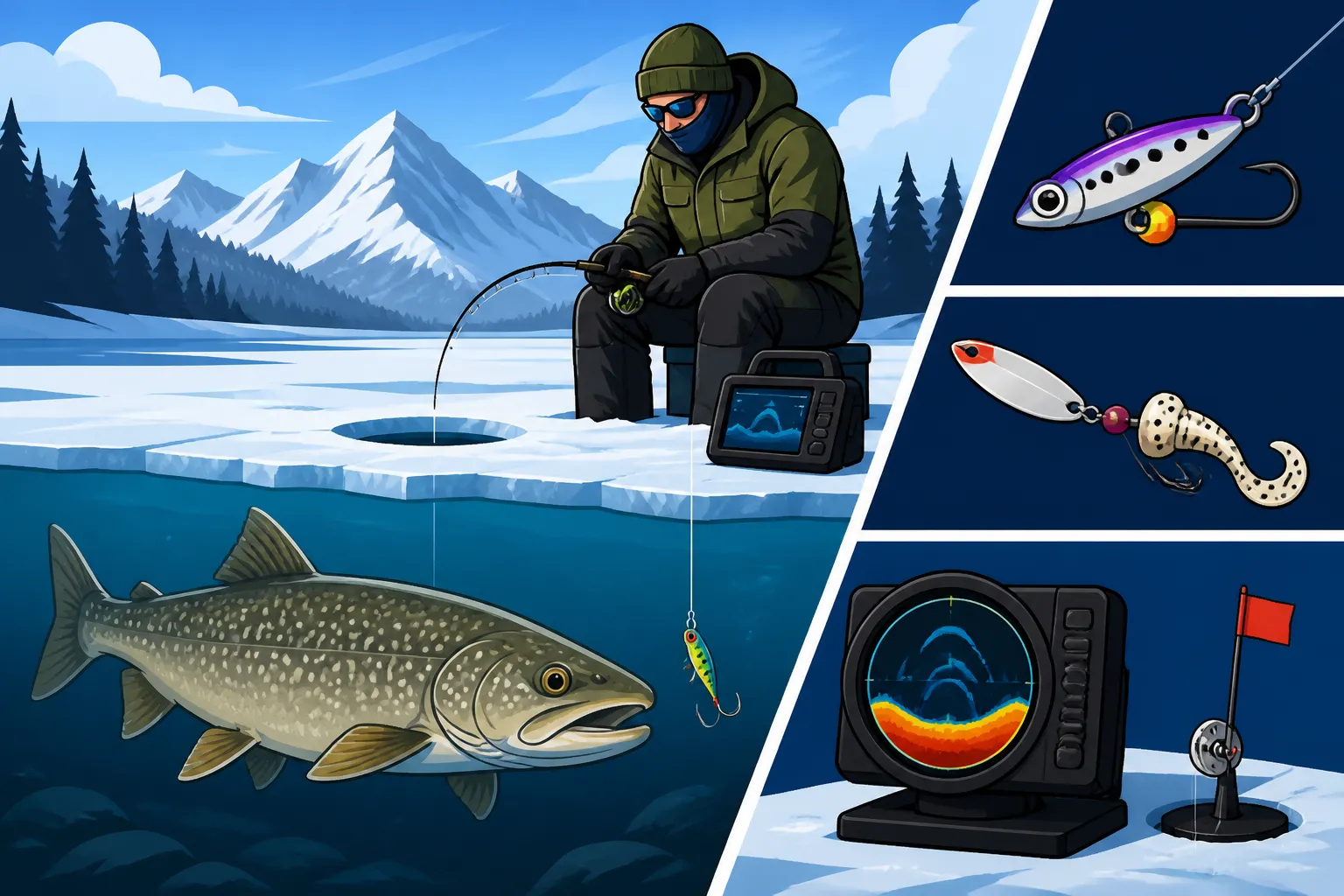
Electronics are your eyes under the ice, and for lake trout, they are indispensable. A good fish finder or flasher, like those from Vexilar, Humminbird, or Garmin, allows you to see your lure's depth, detect fish, and observe their reactions to your presentation in real-time. This feedback loop is crucial for adjusting your technique on the fly. Many anglers also carry an underwater camera, which can provide visual confirmation of fish species, baitfish presence, and even how a lake trout inspects your lure before striking. For advice on specific models, look into the Best fish finder for deep lake fishing.
Baits and Lures
Winter lake trout, despite their slower metabolism, are still apex predators and respond well to larger, more aggressive presentations. The goal is to imitate their primary food sources or to aggravate them into striking.
- Jigging Spoons: These are a cornerstone of lake trout ice fishing. Heavy, flashy spoons like Luhr-Jensen Krokodiles, Williams Wablers, or Northland Buck-Shot Rattle Spoons are excellent. Sizes typically range from 1/2 oz to 1.5 oz, often tipped with a piece of minnow or a plastic grub for added scent and appeal.
- Tube Jigs: A favorite for many, 4-6 inch tube jigs in white, chartreuse, natural minnow, or glow-in-the-dark colors, rigged with a heavy jig head (1/2 oz to 1 oz), are deadly. The pulsating action of the tentacles often entices strikes.
- Swim Baits: Soft plastic paddle-tail swimbaits rigged on heavy jig heads can be incredibly effective, especially when imitating cisco or whitefish. Their realistic profile and swimming action can trigger bites from even finicky fish.
- Lipless Crankbaits: Larger lipless crankbaits, retrieved with aggressive rips and pauses, can generate a lot of flash and vibration, calling in fish from a distance.
- Live or Cut Bait: Where legal, a large live minnow (such as a shiner or smelt) on a plain hook or a small jig, set just off the bottom on a dead stick or tip-up, is often irresistible. Cut bait, like a piece of herring or smelt, also works well. Always check the Alberta Guide to Sportfishing Regulations for specific bait restrictions in your chosen lake.
Top Techniques for Winter Lake Trout Success
Once you have your gear ready, it's time to put it to work. Winter lake trout fishing is often a game of finesse and aggression, requiring anglers to be adaptable and observant.
Jigging Strategies
Aggressive jigging is often the most effective way to grab a lake trout's attention in deep, cold water. The goal is to create enough commotion and flash to draw fish in from a distance, then refine your presentation to trigger a strike.
Start with "pounding" the bottom – repeatedly dropping your lure to the bottom and quickly lifting it a few inches. This creates a puff of sediment and mimics a foraging baitfish, signaling a meal. After this initial attraction, begin a series of varied retrieves. This might involve long, sweeping rips of 3-5 feet, followed by a controlled fall, or shorter, sharp snaps. The key is to experiment until you find what the fish prefer on that particular day.
The "kill switch" is a critical component of aggressive jigging. After a series of aggressive jigging motions, stop your lure completely dead for 5-15 seconds. Often, a lake trout will follow a fast-moving lure, but it's the sudden stop that triggers their predatory instinct, making them commit to a strike. Many strikes occur on the pause or as the lure begins its next subtle movement. Watching your flasher will show you exactly how fish react to these changes in cadence. If fish appear but don't commit, adjust your speed, pause length, or even switch to a different lure. You can apply some of these principles when you're Jigging for Burbot Through the Ice, too, as they share some similar deep-water habits.
Dead Sticking and Tip-Ups
While active jigging is potent, employing a "dead stick" or tip-up can significantly increase your chances, especially in lakes where multiple lines are permitted (always check current regulations in the Alberta Fishing Regulations Explained). A dead stick simply refers to a rod set up in a rod holder, with a bait or lure suspended at a specific depth, usually with minimal to no action from the angler.
For lake trout, a common dead stick setup involves a larger minnow or a piece of cut bait on a plain hook or a small, glow-in-the-dark jig, set a few feet off the bottom or at the depth where you've marked fish. The natural movement of a live minnow or the scent of cut bait can be incredibly attractive to a less active lake trout.
Tip-ups are similar but offer a visual flag that signals a bite. They are excellent for covering more water, especially if you have a group of anglers each managing a few lines. Like dead sticks, rig tip-ups with a large minnow or cut bait. Spacing your lines across different depths and areas of structure can help you pinpoint where the active fish are holding. Always ensure your bait is presented at the right depth; a lake trout will often look up for food, but rarely down.
Working the Water Column and Reading Electronics
Lake trout don't always hang out right on the bottom. They can suspend in the middle of the water column, especially if baitfish schools are present there. This is where your fish finder becomes your best friend. Instead of just looking for fish on the bottom, pay close attention to any marks appearing throughout the water column.
When you mark a fish, immediately adjust your lure to that depth. Often, fish will appear to come up to inspect your lure, but a surprising number will actually ascend to strike. If you see a fish rising towards your lure on the flasher, subtly lift your bait a foot or two, slowly drawing the fish up. This "cat and mouse" game can trigger aggressive strikes. If the fish follows your lure up several feet but then stops, try the "kill switch" – let it hover completely still. Sometimes, a subtle quiver is all it takes to seal the deal. Remember, your electronics show you how fish are reacting; interpret that information to change your presentation in real-time.
Finding the Best Lake Trout Spots in Winter
Knowing how to fish for winter lake trout is only half the battle; you also need to know where to find them. Alberta boasts some incredible lake trout fisheries, but even in the best lakes, locating the fish under a thick sheet of ice can be challenging.
Interpreting Lake Maps and Sonar
Before you even step on the ice, spend time studying detailed contour maps of your chosen lake. Look for classic lake trout structures: deep main lake basins, prominent points that extend into deep water, underwater humps, steep breaks, and old river channels. These features are likely to hold baitfish, and therefore, lake trout. Online mapping tools or specialized fishing apps like Navionics can be invaluable for this reconnaissance.
Once on the ice, use your power auger to drill a series of holes over your target structure. Don't be afraid to drill many holes, covering different depths and positions on the structure. For example, if you're fishing a point, drill holes along the shallow top of the point, down the break, and out into the deeper water around it. Drop your fish finder transducer into each hole for a quick scout. You're looking for baitfish activity, sharp depth changes, and, of course, actual fish marks. If you mark fish in one hole, fish it thoroughly before moving on. This active scouting is often what separates successful lake trout anglers from those who struggle.
Focusing on Known Lake Trout Fisheries
Alberta is blessed with several premier lake trout destinations, each offering slightly different characteristics and challenges.
- Cold Lake: This massive, deep lake on the Alberta-Saskatchewan border is a renowned trophy lake trout fishery. Here, you'll often find lake trout in 60-120 feet of water, relating to deep drop-offs, humps, and the main basin.
- Lake Minnewanka (Banff National Park): While requiring a specific park fishing permit in addition to an Alberta license, Minnewanka offers stunning scenery and impressive lake trout. Depths can be extreme here, with fish often found suspending or near structure in 80+ feet.
- Spray Lakes Reservoir (Kananaskis Country): Another picturesque mountain fishery, Spray Lakes offers excellent lake trout opportunities. Fish often relate to the old river channel and submerged timber in its deep sections.
- Upper and Lower Kananaskis Lakes: These mountain gems also hold good populations of lake trout, often shallower than some of the other lakes, but still requiring a keen eye for contour changes.
Always consult the Alberta Guide to Sportfishing Regulations for specific rules, bait restrictions, and season dates for each of these lakes. For an even deeper dive into specific locations, you might find this guide helpful: Best Lake Trout Fishing in Alberta. Consider these locations also when planning your trips to the Best Ice Fishing Lakes in Alberta.
Adapting to Conditions
Lake trout, like all fish, are influenced by environmental conditions. While you can't control the weather, you can adapt your approach.
- Weather: Stable weather patterns often mean more consistent fishing. Cold fronts can shut fish down, making them less aggressive. During these times, slow down your presentation and use more natural baits.
- Light Conditions: Dawn and dusk are often peak feeding times for lake trout, regardless of the season. Plan to be on the ice and fishing during these low-light periods. Overcast days can also extend these feeding windows.
- Ice Conditions: Always prioritize safety. Ice can change rapidly. Deeper snow cover can make fish less active by reducing light penetration, while clearer ice might make them warier.
- Depth Changes: Don't assume lake trout will stay at the same depth all day. They might move shallower to feed during low light, then retreat to deeper water as the sun gets higher. Regularly checking various depths, especially if your bite dies, is a smart strategy.
Safety First on the Ice
Ice fishing for lake trout often means venturing onto large, deep lakes where conditions can be unpredictable. Prioritizing safety is not just a recommendation; it's a non-negotiable requirement for a successful and enjoyable trip. Never compromise on safety.
Ice Thickness and Conditions
The single most important safety rule is to know the ice thickness. While there's no such thing as 100% safe ice, general guidelines exist:
- 4 inches (10 cm) of clear, solid ice: Minimum for walking alone.
- 5 inches (12 cm): Safe for small groups.
- 8-10 inches (20-25 cm): Required for snowmobiles or ATVs.
- 12-15+ inches (30-38 cm): For light vehicles like trucks or cars.
Always verify ice thickness with an auger or spud bar as you venture out. Never rely on someone else's tracks or assumptions. Ice conditions can vary dramatically across a single lake. Be wary of areas with current (like river inlets/outlets), pressure ridges (where ice plates buckle), springs, or areas with slushy conditions or abnormal coloration. Darker ice often indicates older, stronger ice, while opaque or white ice might be snow-ice, which is much weaker. Pay attention to warnings from Alberta Environment and Protected Areas or local authorities. This guide on How thick ice needs to be to fish safely in Alberta provides even more detail.
Emergency Preparedness
Even if you follow all the rules, accidents can happen. Being prepared is your best defense.
- Never go alone: Always fish with a buddy. If something goes wrong, you'll have help.
- Tell someone your plans: Inform a trusted person where you're going, your route, and when you expect to return.
- Wear flotation: A floatation suit is highly recommended. It provides warmth and buoyancy if you go through the ice. At a minimum, wear a life jacket (PFD) over your winter clothing. While often associated with boating, the principle of Life Jacket Requirements for Alberta Boaters absolutely applies on the ice.
- Carry essential safety gear:
- Ice Picks: These are paramount. Worn around your neck, they provide grip to pull yourself out if you fall in.
- Spud Bar: For testing ice ahead of you.
- Throw Rope: A rope with a weighted bag for rescuing others.
- Charged Phone: In a waterproof bag, for emergencies.
- First Aid Kit: For minor injuries.
- Extra Warm Clothing: In a waterproof bag, in case you get wet.
- Navigation: A GPS or compass can be invaluable on large, featureless lakes, especially if fog or whiteout conditions suddenly roll in.
Always check the weather forecast before heading out and be prepared for rapidly changing Alberta conditions. Hypothermia is a serious risk.
Conservation and Responsible Angling
Alberta's lake trout populations are a precious resource, especially in our mountain lakes where they are native. Practicing responsible angling ensures these fisheries remain vibrant for future generations and respects the delicate balance of our aquatic ecosystems.
Catch and Release Best Practices
Many lake trout fisheries in Alberta operate under strict catch-and-release or highly restrictive possession limits. This is because lake trout are slow-growing and can be particularly vulnerable to overfishing, especially in winter when they might be concentrated.
If you plan to release a fish, follow these guidelines:
- Minimize Handling: Try to keep the fish in the water as much as possible, especially during extremely cold temperatures where air exposure can damage gills and eyes.
- Use Proper Tools: Have long-nosed pliers or a de-hooker ready to quickly remove hooks.
- Support the Fish: If you must lift the fish for a photo, support its full body weight horizontally. Never hold a large lake trout vertically by its jaw or gills, as this can cause internal damage.
- Quick Photos: Get your photos quickly and return the fish to the water immediately.
- Revive Gently: If the fish seems sluggish, hold it gently in the water, facing into any current or moving it slowly back and forth until it regains its strength and swims away on its own.
- Barbless Hooks: Consider using barbless hooks, or crimping down barbs on your lures. This makes hook removal easier and faster, reducing stress on the fish.
Understanding and strictly adhering to the Alberta Bag and Possession Limits by Species is crucial for the health of these populations. For example, some lakes have a zero possession limit for bull trout, a closely related species often found in similar waters. Distinguishing between them is vital.
Respecting Regulations and the Environment
Responsible angling goes beyond just handling fish. It encompasses a broader respect for the environment and the regulations designed to protect it.
- Adhere to Regulations: Always carry your current Alberta Fishing License Guide for 2026 (digital or paper) and be familiar with the regulations specific to the water body you are fishing. Rules can vary significantly between lakes and zones. Don't be that angler who ruins it for everyone else.
- Pack it in, Pack it out: Leave no trace. All litter, including broken lines, bait containers, and food wrappers, must be packed out. This includes ice shacks; if you set one up, you are responsible for removing it by the specified dates.
- Dispose of Waste Properly: If you keep fish, dispose of the offal responsibly, well away from the lake and popular access points, to avoid attracting predators or creating unsanitary conditions.
- Avoid Spreading Invasive Species: Always clean your gear, boots, and even your auger before moving between different water bodies to prevent the spread of aquatic invasive species.
By practicing these responsible angling ethics, we can all contribute to the long-term health and enjoyment of Alberta's incredible winter lake trout fisheries.
| Lure Type | Description | Ideal Use | Pros | Cons |
|---|---|---|---|---|
| Jigging Spoons | Heavy metal spoons, often with flash/rattle. | Aggressive presentation, deep water, attracting fish from afar. | High flash, vibration, can be worked fast. | Can twist line, requires active jigging. |
| Tube Jigs | Soft plastic tube on a heavy jig head. | Imitating baitfish, slower presentation, finicky fish. | Realistic profile, subtle action, can be tipped with bait. | Can be swallowed deeply, harder to detect subtle bites. |
| Swim Baits | Soft plastic paddle tails on heavy jig heads. | Mimicking larger baitfish (cisco, whitefish), covering water. | Realistic swimming action, triggers reaction strikes. | Less versatile in terms of jigging styles. |
| Lipless Cranks | Hard-bodied, rattling crankbaits. | Aggressive search bait, deep water, lots of vibration. | High vibration, loud rattle, calls in fish from a distance. | Can be snaggy on rough bottoms, sometimes too aggressive. |
| Live/Cut Bait | Minnows, herring, smelt on a plain hook/jig. | Dead sticking, tip-ups, lethargic fish. | Natural scent and action, highly effective for less active fish. | Requires careful regulation checks, can be messy to handle. |
Disclaimer
The information provided in this article is for general guidance only. Fishing regulations, ice conditions, and fish behavior can change rapidly. Always consult the most current Alberta Guide to Sportfishing Regulations and local advisories before heading out on the ice. Your safety is your responsibility.