Best Line Weight for Pike Fishing
There's nothing quite like the heart-stopping strike of an Alberta Northern Pike, a true freshwater predator. But that thrill can quickly turn to heartbreak if your fishing line isn't up to the task, leaving you with a snapped line, a lost lure, and the lingering regret of a missed trophy. This guide is dedicated to helping you navigate the sometimes-confusing world of fishing line, ensuring you choose the best line weight to confidently battle and land those powerful Alberta pike, no matter where you're casting your line.
Understanding Northern Pike and Their Fight
Before we dive into the specifics of line weight, it's crucial to understand why pike require particular attention when it comes to your tackle. These aren't your average panfish; they're muscular, aggressive, and equipped with some serious weaponry. Knowing your adversary is the first step to equipping yourself properly.
Why Pike Demand Stronger Line
Northern Pike are notorious for their violent strikes and powerful runs. When a pike hits a lure, it's often with a sudden, bone-jarring impact that tests every component of your setup, especially your line. They don't just gently mouth a bait; they engulf it with speed and force. This initial shock can easily snap lighter lines that aren't designed to handle such explosive energy. Beyond the initial strike, their fight is characterized by strong head shakes, sudden dives, and sometimes acrobatic jumps. Each of these actions puts immense strain on your line, often exceeding the static breaking strength you might assume.
What truly sets pike apart, however, is their formidable dental arsenal. Their mouths are packed with hundreds of needle-sharp teeth, angled backward to trap prey. A light fishing line, even if strong enough to withstand the pulling force, is simply no match for these razor-sharp implements. Without adequate protection, your line will be shredded in an instant once it makes contact with those teeth. Many an angler has felt the sudden slack in their line, knowing instantly that a pike's bite was the culprit, leaving them with nothing but a frayed end and a story of "the one that got away." This makes line abrasion resistance as critical as its tensile strength when targeting pike.
The Importance of Leader Material
Given the pike's formidable teeth, a leader is not just recommended; it's absolutely essential. Think of it as your primary defense against cut-offs. While your main line handles the casting and the main fighting force, the leader is the sacrificial lamb, taking the brunt of the pike's teeth and ensuring your more expensive main line remains intact. There are generally two types of leaders commonly used for pike: steel/titanium wire and heavy fluorocarbon. Steel or titanium leaders offer the ultimate cut protection, virtually impenetrable by pike teeth. They are especially popular when targeting larger, more aggressive pike or when using expensive lures you don't want to lose.
However, many anglers, myself included, also find great success with heavy fluorocarbon leaders. While not entirely bite-proof like wire, fluorocarbon in heavier tests (think 40-80 pound test) is remarkably abrasion-resistant and much less visible in the water than wire. This can be a huge advantage in clear water conditions or when pike are particularly wary. The stiffer nature of heavy fluorocarbon also helps prevent your lure from fouling your main line during casts, particularly with larger, air-resistant baits. Choosing the right leader is a delicate balance between protection, stealth, and how it impacts your lure's action, but for pike fishing in Alberta, never skip this critical piece of terminal tackle. You can often find a good selection of pre-made leaders or spools of heavy fluorocarbon at retailers like Bass Pro Shops.
Factors Influencing Your Line Weight Choice
Deciding on the "best" line weight isn't a one-size-fits-all answer. It really boils down to several key factors that dictate the demands placed on your line. Understanding these nuances will help you make an informed decision for your next Alberta pike adventure.
Target Pike Size and Fishing Location
The size of the pike you're realistically expecting to catch, and the body of water you're fishing, play a massive role in line selection. If you're heading to a smaller pond or a lesser-known provincial park lake where the pike tend to top out around 5-10 pounds, a lighter line in the 15-20 pound test range might be perfectly adequate. These smaller fish, while still feisty, won't exert the same kind of pressure or require the same brute force to control. However, if your sights are set on the true monsters that patrol vast waters like Lesser Slave Lake Walleye Fishing or the northern reaches of Lake Athabasca, where pike can easily exceed 20 pounds and push into trophy territory, you'll want to significantly beef up your line.
For these larger waters and bigger fish, opting for 30-65 pound test braided line as your main line, coupled with a robust leader, becomes a necessity. A heavier line gives you the leverage to turn a surging fish away from snags, absorb powerful runs, and ultimately bring a true Alberta gator to the boat or shore. Remember, it's always better to be slightly over-gunned than under-gunned, especially when a potential personal best is on the line.
Fishing Techniques and Lure Types
Your chosen fishing technique and the lures you'll be throwing heavily influence the optimal line weight. Are you casting large, heavy crankbaits or oversized swimbaits all day? These lures generate a lot of drag in the air during the cast and in the water during the retrieve. A lighter line might stretch too much under this constant strain or, worse, snap mid-cast, sending your expensive lure flying into the abyss. Heavier line handles these big, wind-resistant baits much better, allowing for longer, more accurate casts and the ability to work them effectively without fear of breakage.
If you're trolling for pike, which is a popular and effective technique on many of Alberta's larger lakes, line stretch and visibility become key considerations. Monofilament's stretch can be beneficial for absorbing the shock of strikes while trolling at speed, but too much stretch can hinder hooksets at long distances. Braided line offers minimal stretch, providing excellent sensitivity to feel subtle bites and better hook-setting power, even with hundreds of feet of line out. Similarly, if you're using jerkbaits or twitchbaits where every twitch of the rod needs to translate directly to lure action, a low-stretch line like braid or fluorocarbon is paramount. Conversely, finesse techniques for pike, while less common, might call for slightly lighter lines to maximize lure action, but always with a heavy leader in mind.
Water Conditions and Structure
The environment you're fishing in also dictates your line weight. Clear water conditions, common in many of Alberta's mountain-fed rivers and lakes, often encourage anglers to use lighter, less visible line. However, for pike, this desire for stealth must always be balanced with the need for strength. This is where a heavy fluorocarbon leader shines, providing some invisibility without compromising bite protection. In murky or stained waters, visibility is less of a concern, allowing you more freedom to use heavier, more robust lines without spooking fish.
Perhaps even more important is the presence of structure. Are you fishing around heavy weed beds, submerged timber, or rocky shorelines? Pike love to ambush prey from cover, and once hooked, their first instinct is often to dive back into that structure to try and break free. If you're fishing in these "dirty" conditions, you absolutely need a heavier line that allows you to strong-arm the fish away from snags and keep it from burying itself in cover. A lighter line might give way to the abrasive forces of weeds, rocks, or wood, or simply lack the power to turn a big fish from its escape route. In heavy cover situations, bumping up your line test by 10-20 pounds can be the difference between landing a fish and losing it. For fishing around heavy cover, a strong braided line is often preferred due to its superior abrasion resistance compared to mono.
Popular Line Types and Their Ideal Weights for Pike
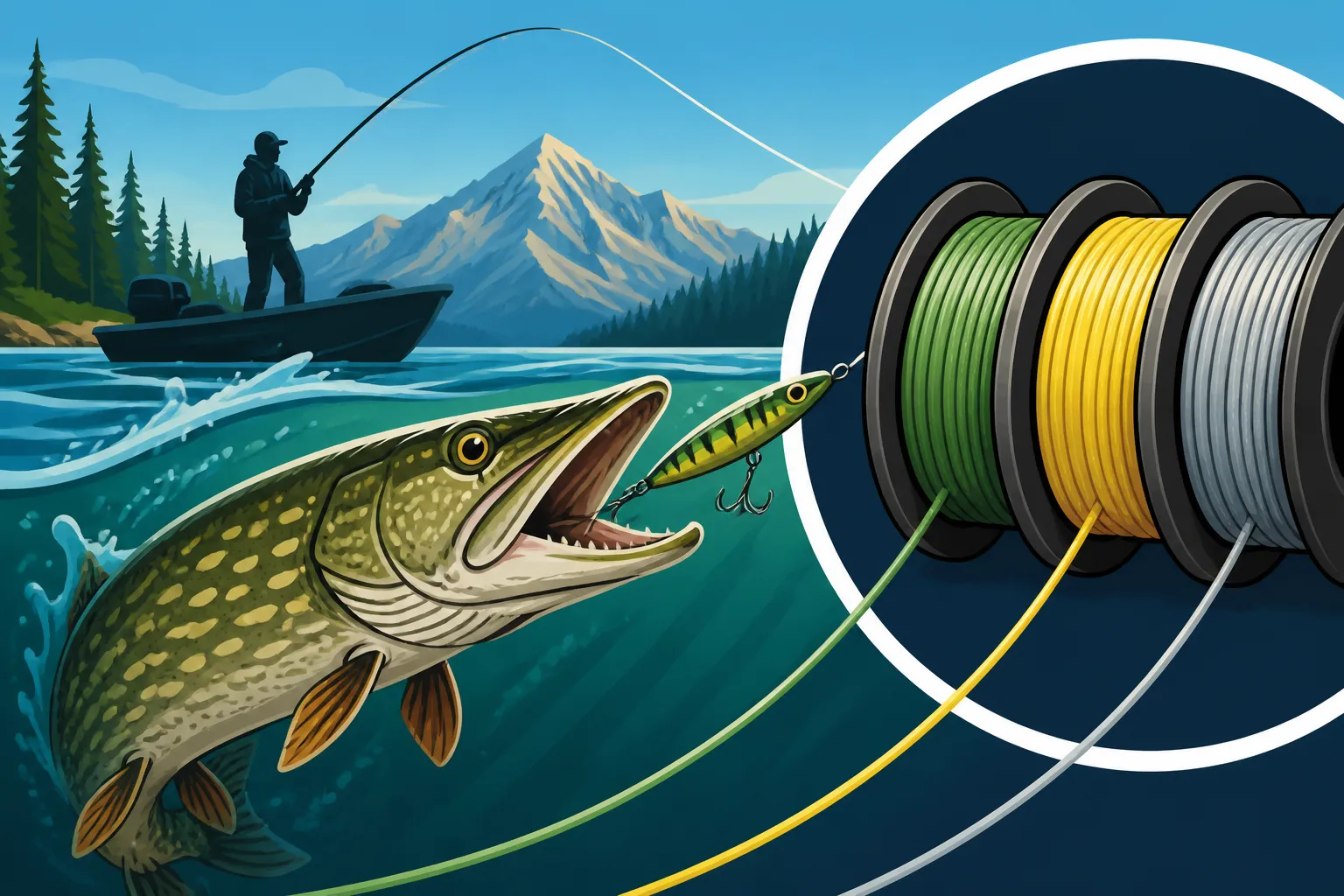
When you walk into any tackle shop or browse online at places like Amazon, the sheer variety of fishing lines can be overwhelming. But for pike fishing, we can narrow it down to three main types, each with its own advantages and ideal applications.
Monofilament Line: Pros and Cons for Pike
Monofilament, or "mono," is the classic fishing line. It's made from a single strand of nylon, and its popularity stems from its affordability, ease of use, and versatility. For pike fishing, mono can be a decent option for certain scenarios, particularly for beginners or when fishing for smaller pike. It's relatively stretchy, which acts as a shock absorber, cushioning the violent strikes and head shakes of a pike. This stretch can also be forgiving if your drag isn't set perfectly, preventing sudden snaps. Mono is also more buoyant than fluorocarbon or braid, which can be an advantage for topwater lures, helping them stay on the surface.
However, mono also has significant drawbacks for serious pike angling. Its stretch, while sometimes beneficial, can also make it harder to feel subtle bites and achieve strong hooksets, especially at longer casting distances or when trolling. It also has a larger diameter for a given breaking strength compared to braid, meaning you can fit less on your spool. Crucially, mono is the least abrasion-resistant of the three main types, making it highly susceptible to pike teeth. For pike, if you're using mono, stick to heavier tests, generally in the 20-30 pound range as a main line, always paired with a much heavier, bite-proof leader. Anything lighter is just asking for heartbreak.
Fluorocarbon Line: The Stealthy Choice
Fluorocarbon line, often referred to simply as "fluoro," is another single-strand line, but it's made from a different polymer. Its key advantage is its refractive index, which is very close to that of water, making it nearly invisible underwater. This stealth factor is incredibly valuable in clear water conditions or when targeting wary pike. Fluoro also boasts excellent abrasion resistance, much better than mono, making it a good choice for leaders as we discussed. It has very little stretch, offering good sensitivity and solid hook-setting power. Furthermore, fluorocarbon sinks, which can be beneficial when you want your lures to get down deeper faster, or when fishing jigging spoons or soft plastics.
While some anglers use fluorocarbon as a main line, particularly in lighter applications, it can be quite stiff and prone to memory, especially in heavier tests. This stiffness can lead to frustrating tangles, especially on spinning reels. For pike, fluorocarbon excels as a leader material, usually in tests ranging from 40 to 80 pounds. This heavy fluoro provides a good balance of bite protection and invisibility. When considering it as a main line for pike, you'd be looking at 20-30 pound test to maintain castability, but again, a heavier fluoro leader is still non-negotiable. It's a fantastic option for adding a subtle, durable connection to your main braided line.
Braided Line: Power and Sensitivity
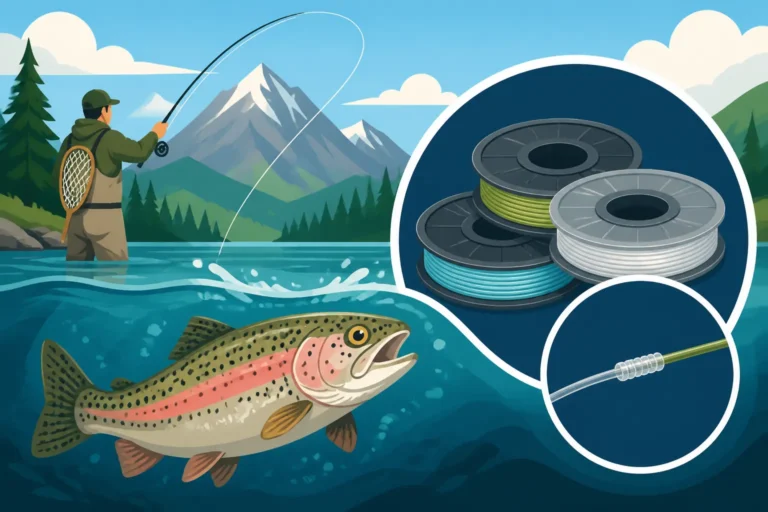
Braided line is constructed from multiple strands of synthetic fibers woven together, creating an incredibly strong, thin, and virtually stretch-free line. For pike fishing in Alberta, braided line is often the main line of choice for experienced anglers, and for good reason. Its strength-to-diameter ratio is unparalleled; you can spool 40-pound test braid that is the same diameter as 10-pound test monofilament. This means you can cast further, get more line on your reel, and have incredible pulling power for battling big fish and pulling lures free from snags. The lack of stretch provides extreme sensitivity, allowing you to feel every bump, tick, and subtle bite, giving you an immediate advantage for hooksets.
Braided line also boasts excellent abrasion resistance against general wear and tear, though it is still vulnerable to direct contact with pike teeth. This is why a leader is still absolutely crucial. Common main line weights for pike fishing in Alberta range from 30 to 65 pound test braid. Lighter tests can be used for smaller pike or finesse presentations, while heavier tests are ideal for trophy hunting in heavy cover. The only real "downside" to braid is its visibility (it's not invisible like fluoro) and its tendency to absorb water, which can be an issue in freezing temperatures. However, when paired with a fluorocarbon leader, these minor drawbacks are easily mitigated. Many popular braid brands are readily available at stores like Bass Pro Shops or through online retailers.
Here's a quick comparison of the line types:
| Line Type | Pros for Pike | Cons for Pike | Ideal Main Line Weight (lbs) | Ideal Leader Weight (lbs) |
|---|---|---|---|---|
| Monofilament | Affordable, good knot strength, shock absorption | High stretch, low abrasion resistance against teeth, thicker | 20-30 | 40-60 (Fluorocarbon) |
| Fluorocarbon | Low visibility, good abrasion resistance, sensitive | Stiff, prone to memory, more expensive, less shock absorption | 20-30 (less common for main) | 40-80 (as leader) |
| Braided | High strength-to-diameter, sensitive, no stretch | Visible, less shock absorption, requires a leader | 30-65 | 40-80 (Fluorocarbon/Wire) |
Matching Line Weight to Rod and Reel
Choosing the right line weight isn't just about the fish; it's also about ensuring your entire fishing system works harmoniously. Your rod and reel are designed to handle specific line classes, and mismatching them can lead to poor performance, frustration, and even damaged gear.
Rod Power and Action Considerations
Every fishing rod has a "power" rating (e.g., Medium, Medium-Heavy, Heavy) and an "action" rating (e.g., Fast, Moderate). The rod's power refers to its lifting strength and how much force it takes to bend the blank. A rod rated for "Medium-Heavy" power, for instance, is designed to handle heavier lures and provide the backbone needed to fight larger fish. This power rating directly correlates to a recommended line weight range, which is usually printed on the rod blank near the handle. For pike fishing, you'll generally be looking at Medium-Heavy to Heavy power rods.
Using a line that's too light on a heavy-power rod will make casting difficult and could lead to line snapping on hooksets or heavy loads. Conversely, putting too heavy a line on a light-power rod will overpower the rod, making it feel "noodly" and potentially damaging the blank or guides during a fight. The rod's action, or where it bends, also plays a role. A fast-action rod, which bends mostly at the tip, pairs well with braided line for maximum sensitivity and quick hooksets, which is ideal for pike. A moderate-action rod, bending more through the middle, offers more shock absorption, which can be good with monofilament but might feel less responsive with braid. Always check your rod's specifications and match your line weight to stay within the manufacturer's recommended range for optimal performance and longevity.
Reel Drag and Spool Capacity
Your fishing reel's capabilities are just as important as your rod's. The "drag" system on your reel is crucial for fighting strong fish like pike. It allows the line to slip out when a fish pulls harder than the set resistance, preventing line breakage. A reel designed for pike will have a smooth, powerful drag system that can withstand long, hard runs. You need a line strong enough to allow you to apply sufficient drag pressure without fear of snapping, yet light enough to break before your rod does. When setting your drag, a general rule of thumb is to set it to about one-third of your line's breaking strength. For a 50-pound braided line, for example, your drag would be set to roughly 15-17 pounds of pressure.
Spool capacity is another practical consideration. Heavier lines have a thicker diameter, meaning less of it will fit on your reel spool. While braided line helps mitigate this with its thin diameter, you still need enough line to handle long casts or extended runs from a powerful pike. A reel with a larger spool will allow you to hold more line, which is particularly beneficial on larger lakes where pike can make significant runs. For example, a reel in the 3000-5000 size range for spinning reels or a low-profile baitcasting reel with a generous line capacity (e.g., 150-200 yards of 50 lb braid) would be appropriate for most Alberta pike fishing scenarios. Ensuring your reel can comfortably hold the desired amount of your chosen line weight is paramount to a successful fishing experience. You can find robust reels with excellent drag systems and ample spool capacity at any well-stocked tackle provider, including online at Amazon or in person at Bass Pro Shops.
Practical Scenarios for Alberta Pike Fishing
Let's put all this theory into practice. Alberta offers a diverse range of pike fishing experiences, from small, stocked ponds to vast, wild lakes. Your approach to line weight should adapt to these different scenarios.
Light Tackle for Smaller Pike
Sometimes, the goal isn't necessarily a monster trophy, but simply a fun day catching numbers of smaller, feisty pike. This is often the case in smaller, shallower lakes or ponds, or even certain river backwaters where the average pike size is in the 3-10 pound range. For these situations, you can certainly scale down your tackle a bit, making the fight more exciting.
A good choice here would be a 20-30 pound test braided main line. This still offers excellent casting distance and sensitivity, allowing you to feel every nibble and accurately place lighter lures. Pair this with a 20-pound test Medium power rod and a quality spinning reel in the 2500-3000 size range. Crucially, even with smaller pike, you still must use a leader. A 40-50 pound test fluorocarbon leader, about 12-18 inches long, will provide ample bite protection without overly hindering your lighter lure's action. This setup is fantastic for throwing smaller spoons, spinnerbaits, or even bass-sized soft plastics. It makes catching those smaller pike a blast, offering a good fight on appropriately matched gear. You'll find that for targeting Yellow Perch in Alberta Lakes or Panfish Fishing in Alberta this setup can cross over well too.
All-Around Medium-Heavy Setup
This is likely the most versatile and commonly used setup for general pike fishing across Alberta's diverse waters. It strikes an excellent balance between power, casting performance, and fight control, making it suitable for a wide range of situations, from medium-sized lakes to larger rivers. This setup is what I typically recommend to friends heading out for a day on a popular spot.
For an all-around setup, I strongly recommend a 40-50 pound test braided main line. This provides ample strength for handling most pike you'll encounter, offers excellent sensitivity, and allows for long casts with moderately heavy lures. Pair this with a Medium-Heavy power rod, typically 6'6" to 7'6" in length, with a fast action. A 3000-4000 size spinning reel or a low-profile baitcasting reel designed for 15-25 lb mono equivalent line is a perfect match, offering good drag and spool capacity. For the leader, a 60-80 pound test fluorocarbon leader or a 50-80 pound test steel/titanium leader of 12-18 inches is ideal. This combination allows you to throw a wide variety of pike lures, from larger spoons and spinnerbaits to medium-sized crankbaits and soft plastics. It gives you the confidence to tackle larger pike while still being enjoyable for smaller ones. This is also a fantastic setup for Northern Pike Fishing in Alberta in general.
Heavy Duty for Trophy Pike
When you're specifically targeting the true "gators" – those 15-20+ pound behemoths that patrol the deepest sections of massive lakes like Lesser Slave Lake, Lake Athabasca, or Cold Lake – you need to step up your game considerably. These fish are not only larger and more powerful, but they often inhabit areas with heavier cover, requiring you to really lean on them to bring them in. This is where you bring out the heavy artillery.
For trophy pike, a 65-pound test braided main line is your minimum, and some anglers even go up to 80 pounds. This heavy braid provides immense pulling power to extract big fish from thick weeds or timber, withstand their powerful runs, and ensure your line won't be the weak link in the fight. Match this with a Heavy power rod, 7'6" to 8'6" in length, with a fast or extra-fast action. This rod will have the backbone to cast enormous lures (like large swimbaits, oversized crankbaits, or heavy bucktails) and control a truly massive fish. A robust baitcasting reel in the 4000-5000 size range, or a heavy-duty spinning reel capable of holding plenty of heavy braid, is essential. Your leader, at this stage, should be 80-100 pound test fluorocarbon or a heavy-duty steel/titanium wire leader, 18-24 inches long. This setup is designed for brute force and confidence, giving you the best chance to land that once-in-a-lifetime Alberta trophy. For specific techniques for these monsters, consider reading How to Catch Northern Pike in Alberta.
Remember, while this guide offers suggestions, the ultimate choice comes down to personal preference and the specific conditions you face. Always inspect your line for nicks and abrasions before and after each outing, especially after a tough fight. A compromised line is an invitation for disaster. Keeping your line in top condition is as important as choosing the right weight.
Conclusion
Choosing the best line weight for pike fishing in Alberta is a crucial decision that can significantly impact your success and enjoyment on the water. It's not just about the breaking strength; it's about matching your line to the size of the pike you're targeting, the techniques you're employing, the conditions you're fishing in, and the overall balance of your rod and reel setup. From the shock-absorbing properties of monofilament to the stealth of fluorocarbon leaders and the brute force of braided main lines, each type has its place in the pike angler's arsenal.
By understanding the aggressive nature and sharp teeth of Northern Pike, and by carefully considering factors like fishing location, lure type, and the presence of structure, you can confidently spool up with the right line. Whether you're chasing numbers of smaller pike on light tackle or battling behemoths on heavy-duty gear in Canada's vast northern lakes, having the correct line weight ensures you're prepared for the thrill of the strike and the satisfaction of a successful landing. So, tie on that leader, pick your perfect line, and get ready to experience some of the best pike fishing Alberta has to offer!
Disclaimer
This article is for general informational purposes only and does not constitute professional advice. Laws, prices and regulations vary by location and change over time. Consult a qualified professional for guidance on your specific situation.