Best tippet size for stocked trout
One of the most common head-scratchers for any angler, especially when you're just getting into the rhythm of fly fishing or even light spin gear for our feisty stocked trout here in Alberta, is figuring out the right tippet size. It's not just about attaching your fly; it's about making sure your presentation is natural, that your line isn't spooking those surprisingly smart fish, and that you have the best chance of actually landing your catch without snapping off. If you've ever felt overwhelmed by the tiny numbers and X's on those spools, you're not alone. This guide is here to untangle that confusion and help you choose the best tippet for tackling Alberta's stocked trout, giving you an edge on your next outing.
Why Tippet Size Matters for Stocked Trout
When you're out on one of Alberta's many beautiful stocked ponds or lakes, like those you might find listed in an Alberta Provincial Park Fishing Guide, you might think that stocked trout are less wary than their wild cousins. And while they can sometimes be more aggressive, they're often exposed to a lot of fishing pressure. This means they can become quite line-shy, developing a keen eye for anything unnatural in the water. Your tippet, that final, thin section of line connecting your leader to your fly or lure, is your crucial link to the fish and plays a monumental role in your success.
Visibility Versus Strength: The Eternal Balancing Act
Here's the rub: the thinner your tippet, the less visible it is to the fish. That's fantastic for stealth. But, there's always a trade-off. A thinner tippet means less breaking strength, making it more prone to snapping if you hook into a particularly strong fish, get a snag, or set the hook too hard. Conversely, a thicker tippet is much stronger and more durable, but it's also more visible in the water, which can be a huge deterrent for trout, especially in clear conditions.
For stocked trout, especially in the clear, often calm waters of many of Alberta's ponds and smaller lakes, finding this balance is paramount. These fish, while sometimes eager, are not entirely oblivious. A thick, obvious line can cause them to shy away from your perfectly presented fly, no matter how enticing it looks. You're trying to fool a creature whose survival instinct tells it to avoid anything that doesn't look completely natural. The thinness of your tippet is a major component of that natural look, helping your fly appear unattached and free-floating.
Achieving a Natural Presentation
Beyond visibility, tippet size profoundly impacts how your fly behaves in the water. A thin, supple tippet allows your fly to drift naturally with the current, tumbling and flowing just like real insects or baitfish. This is what fly anglers refer to as a "dead drift"—where the fly moves at the same speed as the surrounding water, without drag. If your tippet is too thick or stiff, it can create drag, causing your fly to skate unnaturally across the surface or pull against the current. This artificial movement is often all it takes for a trout to refuse your offering.
Consider fishing a tiny dry fly, imitating a small midge or mayfly, on a glassy pond surface. If your tippet is too heavy, the surface tension created by the line can cause the fly to "skate" or create an unnatural ripple, instantly alerting the fish. On the other hand, a fine tippet allows the fly to sit perfectly in the water's film, presenting a convincing meal. The same principle applies to nymphs and small lures; a natural sink rate and wobble are best achieved with appropriate tippet.
Decoding Tippet Sizes: The X-Scale Explained
Stepping into the world of tippet can feel a bit like learning a secret code. You see numbers followed by an "X" – 0X, 2X, 5X, 7X. What on earth does it all mean? It’s actually a system designed to standardize diameters and, by extension, approximate breaking strengths, making it easier for anglers to choose the right line without needing a micrometer.
What "X" Actually Means
The "X-scale" is simply a way to categorize tippet diameters. The larger the number before the "X", the finer (thinner) the tippet. So, 7X is much thinner than 3X. This scale originated in the fly fishing world but is a universal measurement for tippet materials.
Why is it called "X"? It's a remnant of an old system where 0X was considered the standard, and each "X" indicated a reduction in diameter by a certain amount. While the exact historical conversion isn't critical for us today, understanding the inverse relationship between the number and the diameter is key. Think of it this way: the higher the number, the more "delicate" or "fine" the tippet.
Most tippet spools will list not only the X-rating but also the actual diameter in thousandths of an inch or millimeters, and a suggested breaking strength in pounds. This provides a more concrete understanding of what you're buying. While manufacturers might have slight variations, the X-scale provides a generally accepted guideline.
Common Sizes for Stocked Trout
For Alberta's stocked trout, you'll generally find yourself fishing with tippets in the 4X to 6X range. This is the sweet spot that offers a good balance of subtlety and strength for most typical conditions.
- 4X Tippet: This is a good all-around choice. It's strong enough to handle a feisty 16-inch rainbow trout, offers good knot strength, and is still relatively discreet. It's excellent for slightly larger flies like Woolly Buggers, larger nymphs, or small spoons and spinners you might use on light spin gear.
- 5X Tippet: This is arguably the most versatile size for stocked trout. It's noticeably finer than 4X, making it ideal for clearer water and average-sized dry flies or nymphs. It provides excellent presentation and still retains enough strength for most fights. Many anglers consider 5X their go-to for general stocked trout scenarios.
- 6X Tippet: When the water is crystal clear, the fish are particularly finicky, or you're fishing very small flies (like tiny midges or small emergers), 6X becomes your best friend. It offers the most natural presentation but requires a gentle hand during the fight and careful knot tying. You might also reach for this when sight fishing to trout that are actively refusing other presentations.
Going much finer than 6X (like 7X or 8X) usually isn't necessary for typical stocked trout in Alberta and can lead to too many break-offs, unless you are targeting extremely small fish, using incredibly tiny flies, or fishing to ultra-spooky trout in highly pressured, shallow, clear water. On the flip side, going much heavier than 4X (like 3X or 2X) for stocked trout can compromise your presentation significantly, making your line too visible, unless you're specifically targeting very large, aggressive fish with substantial lures in turbid water.
Here’s a general overview of the X-scale, which you'll find printed on most tippet spools you can pick up at Bass Pro Shops or order from Amazon:
| Tippet Size | Approximate Diameter (Inches) | Approximate Breaking Strength (Lbs) | Common Use for Stocked Trout |
|---|---|---|---|
| 7X | 0.004 | 2-3 | Very small flies, extremely clear/calm water, very spooky fish |
| 6X | 0.005 | 3-4 | Small dry flies, tiny nymphs, clear water, finicky fish |
| 5X | 0.006 | 4-5 | All-around best for most stocked trout, average flies/conditions |
| 4X | 0.007 | 5-6 | Larger dry flies, nymphs, small streamers, slightly stained water |
| 3X | 0.008 | 6-8 | Larger streamers, heavier nymphs, aggressive fish, slightly murky water |
Note: Breaking strengths can vary slightly between brands and materials.
The Sweet Spot: Recommended Tippet Sizes for Alberta's Stocked Trout
Let's dive deeper into the actual choices you'll be making when you're standing on the bank of an Alberta pond, wondering which spool to pull out. As mentioned, the 4X to 6X range is your bread and butter, but how do you fine-tune that choice for the day's conditions?
General Recommendations for Pond/Lake Stockers
For the vast majority of stocked trout fishing in Alberta's community ponds, provincial park lakes, and other easily accessible waters, a 5X tippet is an excellent starting point. It's the Goldilocks zone: not too thick, not too thin. This size provides a fantastic balance, allowing for delicate presentations with most common fly sizes (from size 14 to 20) while still offering enough tensile strength to confidently fight a vigorous rainbow trout without immediate fear of a snap-off. This is especially true if you're using a lighter rod, like a 3-weight or 4-weight, which already helps protect finer tippets. If you're using a Best Starter Combo for a First-Time Angler, which often comes with a mid-range outfit, 5X will pair perfectly.
When I head out to a local stocked pond near Calgary or Edmonton, my leader is almost always ending in a 5X section. It just works. I can fish small pheasant tail nymphs, parachute Adams dry flies, or even tiny leech patterns with confidence. The fish rarely seem to mind the line, and I have good control during the fight.
Adjusting for Water Clarity and Conditions
However, fishing is rarely a "one-size-fits-all" scenario. The environment you're fishing in, and even the weather, should influence your tippet choice.
- Crystal Clear, Calm Water: If you're on a pond with gin-clear water, especially on a bright, sunny day with little wind, those stocked trout can see everything. This is when you want to lean towards 6X tippet. The enhanced stealth it provides can be the difference between a refusal and a strike. This is often the case on smaller, shallower ponds or in sheltered bays where the water isn't churned up. Think about still mornings on a small trout pond – the fish have all day to inspect your offering.
- Slightly Turbid or Moving Water: If the water has a slight tint to it, perhaps after a bit of rain, or if there's a gentle breeze creating some chop on the surface, you can often get away with 4X tippet. The reduced visibility from the water conditions makes your line less conspicuous. This extra strength is a boon, especially if you anticipate slightly larger fish or want to use a slightly bigger fly or lure. For instance, if you're exploring Best Shore Fishing Spots in Alberta where the bottom might be a bit snaggy, the added durability of 4X can save your day.
- Windy Conditions: Wind can make delicate casting a nightmare. With a finer tippet, your fly might get tossed around more, making presentation tricky. In these conditions, a slightly heavier 4X or even 3X tippet can help stabilize your cast and turn over your fly more effectively, especially if you're using a larger, wind-resistant fly pattern like a larger streamer. The chop on the water surface also helps to mask the line, so visibility isn't as much of a concern.
- Fly/Lure Size: This is a huge factor, and we'll cover it in more detail next, but generally, the larger your fly or lure, the heavier your tippet can be. A large, bushy streamer demands a stronger connection than a tiny dry fly.
Remember, it's always a dance between getting the bite and landing the fish. Start with 5X, but don't hesitate to go finer (6X) if you're getting refusals in clear water, or slightly heavier (4X) if conditions allow and you want more confidence in your knot strength.
Matching Tippet to Fly Size
One of the golden rules in fly fishing, which translates well to light tackle spin fishing for stocked trout, is to match your tippet size to your fly or lure size. This isn't just about presentation; it's about the physics of casting and the integrity of your rig. A tippet that's too fine for a large fly will struggle to turn it over properly during the cast, resulting in tangles and frustrating presentations. Conversely, a tippet that's too heavy for a tiny fly will overwhelm it, preventing a natural drift.
A common guideline for fly fishing is the "rule of three" or "rule of four": divide your fly size by three or four to get a good starting point for your tippet X-rating. For example, if you're fishing a size 12 fly, dividing by 3 gives you 4. So, a 4X tippet would be a good match. For a size 16 fly, dividing by 3 or 4 would suggest 5X or 4X tippet. This is a guideline, not a strict law, but it's a solid place to begin.
Dry Flies and Emergers: The Delicate Touch
When you're presenting dry flies or emergers to rising stocked trout, subtlety is key. These flies sit on or just below the surface film, and any unnatural movement or visible line can instantly send a wary trout darting away. For this reason, you'll almost always want to err on the side of a finer tippet.
- Small Dry Flies (size 18-22): Think tiny midges, Tricos, or small BWO (Blue-Winged Olive) imitations. For these delicate presentations, 6X or even 7X tippet is often necessary. The gossamer-thin line allows the fly to sit perfectly on the water and drift freely, appearing completely unattached. This is especially critical on calm, clear days when the trout have ample time to inspect your offering. If you're fishing one of Alberta's special regulation waters that mandate specific fly fishing techniques, this precision becomes even more vital.
- Medium Dry Flies (size 12-16): This covers a broad range of common patterns like Parachute Adams, Elk Hair Caddis, or larger Mayfly imitations. For these, 5X tippet is generally ideal. It provides the necessary finesse for a natural drift while still offering decent strength. If the fish are particularly aggressive or the water is a bit choppy, you might drop down to 4X, but 5X will give you excellent results most of the time.
- Larger Dry Flies (size 8-12): Patterns like Stimulators, large hoppers, or chubby Chernobyls are meant to create a bit of a commotion. For these, 4X tippet is usually sufficient. While stealth is still a factor, the larger profile of the fly can often distract from a slightly heavier tippet, and the increased strength helps with casting the bulkier fly and fighting a potentially larger fish that might strike such a meal.
Nymphs and Streamers: Going Deeper
When you're fishing nymphs or streamers, which are designed to be fished subsurface, some of the visibility concerns are mitigated by the water column itself. However, presentation and strength remain paramount.
- Small Nymphs (size 18-22): Just like small dry flies, tiny nymphs (like micro-midges or very small pheasant tails) still benefit from 6X or 7X tippet. These imitate delicate aquatic insects, and a fine tippet allows them to sink naturally and drift without resistance, especially important when using a Best Nymph rig for the Crowsnest River on a clear flowing body of water, though for stocked ponds, the principle remains.
- Medium Nymphs (size 12-16): This is the workhorse size for many nymphing scenarios. For patterns like Prince Nymphs, Hare's Ears, or larger Pheasant Tails, 5X or 4X tippet is your best bet. 5X offers a good natural drift, while 4X provides more confidence if you're hitting snags on the bottom or expect stronger fish. If you're trying to fish a dropper rig with multiple nymphs, 4X is often preferred for the lead nymph, tapering to 5X or 6X for the trailer.
- Streamers and Wet Flies (size 6-12): When you're stripping larger streamers like Woolly Buggers, muddler minnows, or small leeches, you're often targeting more aggressive fish. The movement of the fly itself is part of the attraction, so super-fine tippet is less critical. 4X or 3X tippet is usually appropriate here. The added strength helps with the often aggressive takes, the larger fish these flies attract, and the sheer force of casting a weighted fly. It also provides more abrasion resistance if your fly is bumping along structure. For similar reasons, anglers using light spin gear with small spoons or spinners for stocked trout often opt for slightly heavier leader materials comparable in strength to 3X or 4X tippet.
Tippet Material Considerations
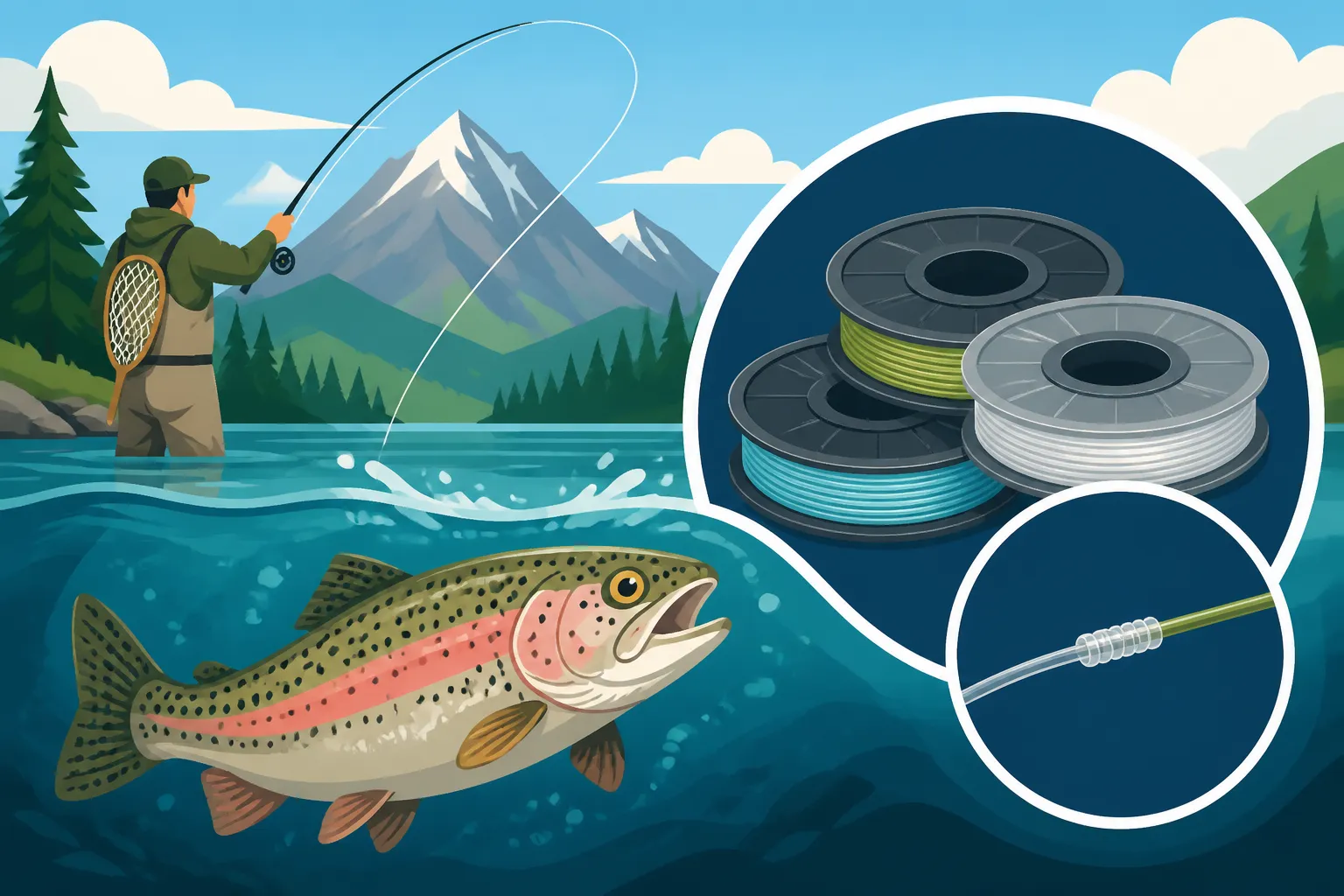
Beyond size, the material your tippet is made from can significantly impact its performance, especially when targeting stocked trout. The two main players in the tippet world are monofilament and fluorocarbon, and each has its strengths and weaknesses. You'll find a wide selection of both at places like Bass Pro Shops or through online retailers like Amazon.
Fluorocarbon: The Stealthy Sinker
Fluorocarbon tippet has become incredibly popular in recent years, and for good reason. It offers several distinct advantages, particularly for subsurface presentations.
- Near-Invisibility: This is fluorocarbon's superpower. It has a refractive index very close to that of water, meaning it bends light in a similar way to water. This makes it incredibly difficult for fish to see, even in gin-clear conditions. For wary stocked trout, this stealth factor can make a huge difference, especially if they've seen a lot of fishing pressure.
- Sinks Naturally: Unlike monofilament, fluorocarbon is denser than water, causing it to sink. This is a massive advantage when fishing nymphs, streamers, or even small jigs and soft plastics on spin gear. It helps your flies get down to the fish faster and maintain a natural depth, which can be critical for presenting patterns like a Best Tube Jig for Walleye (though for trout, much smaller versions). This helps keep your subsurface presentations exactly where they need to be.
- Abrasion Resistance: Fluorocarbon is generally more abrasion-resistant than monofilament. This means it stands up better to rubbing against rocks, logs, or even a trout's rough mouth during a fight. This added durability can save you from frustrating break-offs.
- Low Stretch: While not as rigid as some might think, fluorocarbon has less stretch than monofilament. This can translate to better hook sets and increased sensitivity, allowing you to feel even the most subtle takes.
The downside? Fluorocarbon tends to be stiffer, which can sometimes hinder the natural movement of very small, delicate dry flies. It's also typically more expensive than monofilament. But for nymphing, streamer fishing, or any subsurface technique for stocked trout, a fluorocarbon tippet in 4X, 5X, or 6X is often your best friend.
Monofilament: The Versatile Floater
Traditional monofilament tippet is still a staple for many anglers and has its own set of advantages, particularly for dry fly fishing.
- Floats: Monofilament is less dense than water, meaning it floats. This characteristic is perfect for dry flies, helping your tippet stay on the surface film, reducing drag, and preventing your dry fly from sinking prematurely. If you're focused on presenting delicate dry flies to rising trout, like what you'd do on the famous Bow River Trout Fishing Near Calgary, monofilament often provides a superior presentation.
- More Supple: Monofilament is generally more flexible and supple than fluorocarbon. This can lead to more natural movement for dry flies and a softer landing on the water, which is important for spookier fish.
- More Stretch: The added stretch in monofilament can be a double-edged sword. While it might reduce sensitivity, it acts as a shock absorber, cushioning sudden strikes and powerful runs. This extra "give" can be invaluable when fighting a strong fish on a fine tippet, helping to prevent break-offs.
- Economical: Monofilament is typically less expensive than fluorocarbon, making it a budget-friendly option, especially if you go through a lot of tippet or are just starting out.
For dry fly fishing for stocked trout, particularly in 5X or 6X, monofilament tippet is an excellent choice. It provides the necessary buoyancy and suppleness for delicate presentations on the surface. However, for subsurface work, fluorocarbon usually takes the lead due to its invisibility and sinking properties. Many anglers carry both, switching as their fishing situation demands.
Practical Tips for Using Tippet
Knowing what tippet to use is only half the battle; knowing how to use it effectively is where the real magic happens. Mastering a few practical tips can dramatically improve your success rate and reduce frustration when targeting Alberta's stocked trout. This includes everything from how you tie your knots to how you store your tippet.
Knot Tying: Your Strongest Link (or Weakest)
No matter how strong or invisible your tippet is, it's only as good as the knots you tie. A poorly tied knot can reduce your tippet's breaking strength by 50% or more, leading to frustrating break-offs even on lighter fish. For the relatively fine tippets (4X-6X) used for stocked trout, strong, reliable knots are absolutely critical.
- Choose the Right Knot: For attaching your tippet to your fly or lure, the Improved Clinch Knot and the Palomar Knot are two excellent choices that maintain a high percentage of the line's strength. The Palomar Knot is particularly strong but can be a bit trickier to tie with very small flies. Practice these knots at home until you can tie them quickly and correctly in the field.
- Moisten Your Knots: Always moisten your knots with saliva before cinching them down. This lubrication reduces friction and heat build-up, which can weaken the line. It allows the knot to seat properly and evenly, distributing the stress when pressure is applied.
- Cinch Down Slowly and Firmly: Don't just yank your knots tight. Pull them down slowly and firmly, ensuring all wraps are neat and snug. A sloppy knot is a weak knot.
- Check Your Knots: After tying, always give the knot a gentle but firm pull to test its integrity. Also, visually inspect it for any crossed lines or imperfections. Better to find a weak knot before you hook into a fish.
For connecting tippet to leader, knots like the Surgeon's Knot or Blood Knot are popular and strong. The Surgeon's Knot is easier to learn for beginners. Remember, consistency in knot tying is more important than knowing a dozen different knots; master a few reliable ones.
Regular Inspection and Replacement: Don't Wait for Failure
Tippet, especially the fine stuff we use for stocked trout, is susceptible to wear and tear. It's constantly exposed to UV light, which degrades nylon and fluorocarbon over time, and it can get nicked or abraded by rocks, submerged branches, or even the teeth of a fish.
- Inspect Frequently: Make it a habit to inspect the last few feet of your tippet regularly, especially after catching a fish, after freeing a snag, or if you've been fishing in areas with abrasive bottom structure. Run your fingers along the line; if you feel any nicks, rough spots, or even slight crimps, it's time to replace that section.
- Change When Dull: Tippet can lose its transparency and become dull or cloudy with prolonged use and sun exposure. This increases its visibility to fish. If your tippet isn't looking as clear and fresh as it should, cut off a few feet and tie on a fresh section, or replace the entire tippet section if it's nearing the end of its length.
- Seasonal Replacement: Even if you haven't fished much, tippet spools from the previous season might have degraded simply from being stored in your tackle box or vest, exposed to temperature fluctuations and some ambient light. Start each new season with fresh spools of your go-to tippet sizes. You can stock up on fresh spools at any reputable tackle shop like Bass Pro Shops or easily add them to an Amazon order. This is a small investment that can prevent big disappointments.
Carrying a Range of Sizes: Be Prepared for Anything
One of the biggest mistakes an angler can make is showing up to the water with only one tippet size. Conditions can change rapidly, fish behavior can vary, and what worked yesterday might not work today.
- Essential Spools: For stocked trout in Alberta, I always recommend carrying at least three spools: 4X, 5X, and 6X. This covers the vast majority of situations you'll encounter. For example, if you're fishing for panfish, you might even consider 7X tippet, while Best Ultralight Rod for Panfish setups often go even lighter.
- Be Flexible: Start with a middle-of-the-road choice (like 5X). If you're getting strikes but breaking off, consider going up to 4X. If you're getting refusals or seeing fish shy away, try dropping down to 6X. The ability to adapt your tippet size to the specific conditions of the day is a hallmark of a successful angler.
- Storage: Keep your tippet spools organized, perhaps on a tippet holder or in a small compartment of your tackle box. This makes it easy to find the right size quickly when you're on the water and helps protect the line from tangles and damage. Having a Best Tackle Box Setup for Alberta Anglers that includes good tippet management is key.
Remember, the goal is always to present your fly or lure as naturally as possible, with the strongest possible connection. By understanding tippet sizes, materials, and employing these practical tips, you'll be well on your way to more successful and enjoyable fishing trips for stocked trout in Alberta. For more general advice on fishing gear, check out Best Fishing Rods for Alberta Rivers.
Disclaimer
This article is for general informational purposes only and does not constitute professional advice. Laws, prices and regulations vary by location and change over time. Consult a qualified professional for guidance on your specific situation.