Best Fluorocarbon Line for Clear Water Trout
There’s nothing quite as frustrating as seeing a beautiful Alberta trout spook and dart away the moment your line hits the water, especially in those crystal-clear mountain streams or pristine tailwaters. Clear water is a blessing for sight fishing but a curse for presenting anything that looks unnatural. That’s where the right fishing line makes all the difference, and for those wary trout, fluorocarbon can be a game-changer. This guide will dive deep into why fluorocarbon is your best friend when targeting trout in clear water, what to look for, and how to use it effectively.
The Undeniable Advantage of Fluorocarbon for Clear Water Trout
When you're staring into water so clear you can count the rocks on the bottom, you know every little detail of your presentation matters. Trout, especially the larger, more experienced ones, are incredibly visual predators, and anything that stands out from their natural environment will send them packing. This is precisely where fluorocarbon line shines, offering several distinct advantages over other line types.
Invisibility in Water
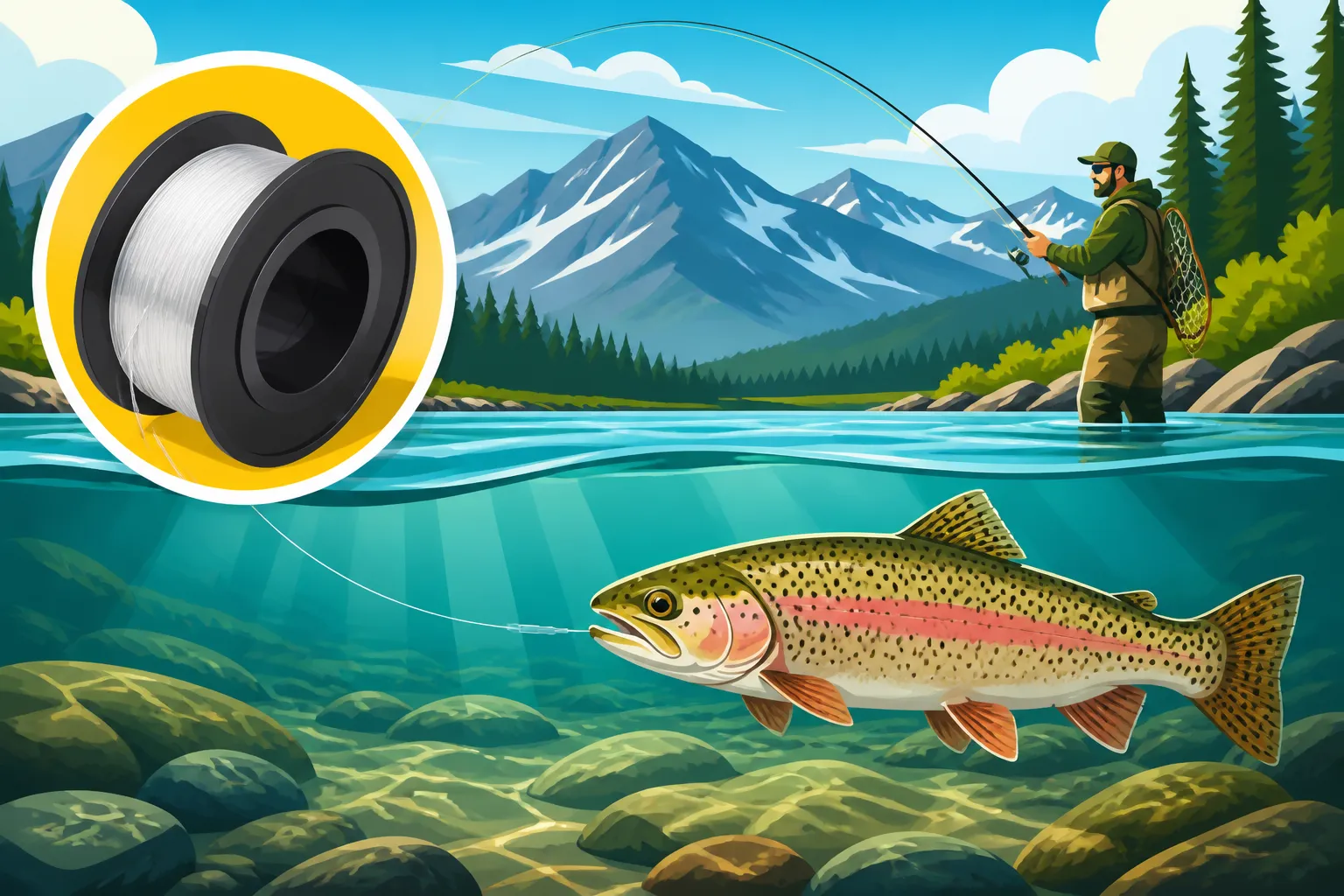
The primary reason anglers turn to fluorocarbon for clear water trout is its near-invisible property underwater. Unlike traditional monofilament or even braided lines, fluorocarbon has a refractive index that is very close to that of water. Think about how a glass rod nearly disappears when submerged – fluorocarbon behaves similarly. This means that when a trout is inspecting your fly or lure, the line itself becomes significantly less noticeable, reducing the chances of spooking a fish that has already seen it all.
Imagine you're casting to a wary brown trout holding in a slow, clear pool on the Crowsnest River. With regular monofilament, that line might appear like a shimmering spiderweb against the current, sending the trout bolting. But with a good quality fluorocarbon leader or main line, your offering seems to drift in naturally, unattached, making it far more appealing and greatly increasing your chances of a take. This optical illusion is perhaps its most powerful asset when dealing with educated fish in transparent environments.
Sensitivity and Abrasion Resistance
Beyond its stealth, fluorocarbon offers a fantastic combination of sensitivity and durability. It's a denser material than monofilament, which means it sinks faster and transmits vibrations more efficiently. This increased sensitivity is crucial when you're fishing subtle takes, especially with nymphs or small jigs in current. You can feel those faint bumps and nudges that a trout makes before fully committing, allowing you to set the hook quicker.
Furthermore, Alberta's rivers and lakes often feature rocky bottoms, submerged logs, and sharp gravel banks, which can be brutal on fishing line. Fluorocarbon is remarkably abrasion resistant. When your line inevitably brushes against a rough surface, it's far less likely to fray or snap compared to monofilament. This resilience gives you more confidence when fighting a strong fish that might try to dive into structure, knowing your line can take a beating. It’s peace of mind when a big fish on the Bow River makes a run for a log jam.
Minimal Stretch for Better Hooksets
One common frustration with monofilament is its inherent stretch. While some stretch can be forgiving, it often translates into missed hooksets, especially at longer casting distances or when a fish takes the bait softly. Fluorocarbon, in contrast, has very low stretch. This minimal elasticity provides a direct connection to your lure or fly, allowing for incredibly crisp and powerful hooksets.
Consider fishing a nymph rig in a fast-moving current or working a small spoon in a deep lake. That instant feedback and direct power transfer from your rod tip to the hook point can mean the difference between landing a fish and watching it swim away with your offering. This characteristic, combined with its sensitivity, makes fluorocarbon an excellent choice for detecting light bites and ensuring those crucial hook-ups, particularly with the delicate mouths of trout. It ensures that when you feel a subtle tap, your response translates directly to the fish, improving your strike-to-land ratio.
Essential Characteristics of Quality Fluorocarbon Line
Not all fluorocarbon lines are created equal, and understanding the key characteristics of a high-quality product is essential for maximizing your success on the water. Investing in good line is like investing in good tires for your vehicle—it’s where the rubber meets the road, or in this case, where your lure meets the fish.
Diameter and Suppleness
When you're trying to present a delicate fly or a small, lightweight lure, line diameter plays a huge role. Thinner lines generally cast further, have less drag in the current, and are even less visible. However, ultra-thin lines can be more prone to breaking. Good fluorocarbon strikes a balance, offering a thinner diameter relative to its breaking strength compared to monofilament. Always check the actual diameter rather than just the stated test strength, as these can vary between brands.
Suppleness is another critical factor. Early fluorocarbon lines were notoriously stiff, leading to memory issues on spinning reels, difficult casting, and poor knot tying. Modern advancements have led to much more supple fluorocarbon lines that handle beautifully on both spinning and baitcasting setups. A supple line lays nicely on the spool, casts smoothly, and allows for natural bait presentation. If a line feels stiff right off the spool, it might not be the best choice for delicate trout presentations, especially if you're using light spinning gear for something like Rainbow Trout Fishing on the Bow River.
Knot Strength and Reliability
Fluorocarbon can be a bit trickier to tie knots with than monofilament. Its harder surface can make knots slip if not tied carefully and cinched down properly. However, a high-quality fluorocarbon line, when tied correctly, offers exceptional knot strength. The key is to lubricate your knots thoroughly before tightening them—a little saliva or water goes a long way to prevent friction heat that can weaken the line. Using knots designed for fluorocarbon, such as the Palomar knot or improved Clinch knot, is also recommended.
Poor knot strength is a surefire way to lose fish, and nobody wants to feel that heartbreaking snap when a trophy trout makes a last-ditch run. Always test your knots gently after tying them and ensure they look neat and even. Practicing at home will build confidence for when you're out on the water, shivering on a cold morning by an Alberta stream, trying to tie on a new leader. Many anglers specifically choose brands known for their consistent knot strength to avoid these frustrations.
UV Resistance and Longevity
One often-overlooked advantage of fluorocarbon is its resistance to ultraviolet (UV) light degradation. Monofilament lines can weaken over time when exposed to the sun's rays, becoming brittle and losing strength. Fluorocarbon, being less porous and more dense, is far more resilient to UV damage. This means your line will maintain its strength and performance characteristics for a longer period, even after multiple sunny days on the water.
This longevity makes fluorocarbon a more cost-effective choice in the long run, as you won't need to replace it as frequently due to sun exposure. It's particularly beneficial if you keep a reel spooled with line for an extended period, or if your gear spends a lot of time exposed to the elements during multi-day trips. Knowing your line isn't silently degrading while you're focused on fishing for Cutthroat Trout in Alberta's Mountain Streams provides an added layer of confidence.
Choosing the Right Test Strength for Alberta Trout
Selecting the appropriate line test strength is crucial for both effective fishing and ethical angling. Too heavy, and your presentation suffers; too light, and you risk breaking off a good fish. For Alberta trout, a nuanced approach is best, considering the specific species, water conditions, and your fishing style.
Matching Line to Trout Species
Alberta is home to a variety of trout, each with different fighting characteristics and typical sizes. For smaller brook trout or pan-sized rainbows in stocked ponds, a lighter line of 2-4 lb test is often sufficient. This allows for delicate presentations of small baits or flies and maximizes casting distance with light tackle.
When targeting wild rainbow and brown trout in rivers like the Bow or Crowsnest, which can grow to impressive sizes and put up strong fights, stepping up to 4-6 lb test is generally a good idea. This provides enough backbone to turn a strong fish away from snags and handle the sudden surges these fish are known for. For the larger lake trout in deep, cold bodies of water like Cold Lake, or if you're after trophy Lake Trout Fishing in Alberta, you might even go up to 8-10 lb test, especially if you're trolling or fishing heavy jigs in deep water. Remember, the goal is to balance stealth with the strength needed to land the fish safely and efficiently.
Considering Water Conditions and Cover
The environment you're fishing in heavily influences your line choice. In extremely clear, calm waters with little current and sparse cover, going lighter (2-4 lb) will give you the best chance for bites, as visibility is at its peak. Think small alpine lakes or slow-moving stretches of spring-fed creeks.
Conversely, if you're fishing in areas with heavy current, lots of submerged structure (like logs or boulders), or slightly stained water, you can often get away with a heavier line (6-8 lb). The increased current or reduced visibility will help mask the line, and the extra strength will be invaluable for extracting a fish from cover. For instance, fishing a powerful run on the Red Deer River with lots of sweepers might warrant a heavier fluorocarbon leader than a glassy section of a small pond. Always err on the side of caution if trophy fish or challenging structure are present.
Leader vs. Main Line Application
Many anglers opt to use fluorocarbon primarily as a leader material rather than spooling their entire reel with it. This is a popular and cost-effective strategy. You can use braided line as your main line, which offers incredible strength, sensitivity, and casting distance, and then attach a few feet of fluorocarbon as a leader. This gives you the best of both worlds: the strength and casting performance of braid, combined with the near-invisibility and abrasion resistance of fluorocarbon where it matters most—close to your bait or fly.
For example, a common setup for Fly Fishing for Trout on the Bow River might involve a braided backing, a fly line, and then a tapered fluorocarbon leader with a fluorocarbon tippet. For spinning gear, you might spool with 10-20 lb braided line and then tie on a 4-8 lb fluorocarbon leader using a reliable knot like the FG knot or a blood knot. This allows you to reap the benefits of fluorocarbon without the higher cost of a full spool, and it also simplifies knot tying at the business end of your setup. This is a fantastic way to stretch your dollar while still achieving stealthy presentations.
Fluorocarbon vs. Other Line Types: A Comparison
Choosing fishing line can feel a bit like picking a tool from a toolbox – each has its specific strengths and weaknesses. For trout fishing in Alberta, you'll primarily encounter three main types: monofilament, braided line, and fluorocarbon. Understanding their differences will help you make an informed decision for various fishing scenarios.
Fluorocarbon vs. Monofilament
Monofilament (mono) is the traditional choice, a single strand of nylon. It's generally less expensive than fluorocarbon, easy to tie knots with, and offers a good amount of stretch, which can be forgiving during a fight. However, mono is more visible underwater due to its higher refractive index, less abrasion resistant, and susceptible to UV degradation. It also floats, which isn't always ideal for sinking lures or subtle presentations.
| Feature | Fluorocarbon | Monofilament |
|---|---|---|
| Visibility | Near-invisible | Moderately visible |
| Stretch | Low | High |
| Sensitivity | High | Moderate |
| Abrasion Resist. | High | Moderate |
| Sink/Float | Sinks | Floats |
| UV Resistance | High | Low |
| Knot Tying | Can be tricky, needs lubrication | Easy |
| Cost | Higher | Lower |
| Memory | Low to moderate (depends on quality) | Moderate to high |
For clear water trout, fluorocarbon's invisibility and sensitivity often outweigh mono's ease of use and lower cost. If you're fishing for particularly wary fish in calm, clear conditions, fluorocarbon will almost always give you an edge. However, mono still has its place, especially as a main line for certain techniques where its stretch is an advantage, or for beginners learning the ropes.
Fluorocarbon vs. Braided Line
Braided line is made of multiple interwoven strands, typically synthetic fibers like Spectra or Dyneema. It boasts incredible strength-to-diameter ratio, zero stretch for maximum sensitivity, and exceptional casting distance. Braided line is also very durable and rarely suffers from memory issues. Its main downsides are its high visibility (it often comes in bright colors, though clear options exist, they still don't disappear like fluoro), its tendency to cut easily on sharp objects (like boat propellers or certain rocks), and its inability to sink effectively on its own (it tends to float or be neutrally buoyant).
For trout, braid is rarely used as a main line on its own, especially for presenting a lure or fly directly. Its visibility is simply too high for wary fish in clear water. However, as mentioned earlier, it makes an excellent main line when paired with a fluorocarbon leader. This combination leverages braid's strengths (casting, sensitivity, brute strength) while mitigating its weakness (visibility) with fluorocarbon's stealth. If you're using a Best Spinning Rods for Walleye setup to target a large northern pike, braid might be a primary consideration, but for delicate trout, it's a different game.
When to Mix and Match
The best approach for many Alberta trout anglers is a hybrid setup. Using braided line as a main line with a fluorocarbon leader is incredibly popular. This allows you to cast a long distance, feel every subtle bump, and still present your bait or fly with the stealth required for clear water conditions. You get the best of both worlds without the full cost of spooling an entire reel with fluorocarbon.
For fly anglers, a fluorocarbon tippet or leader is almost standard, especially when chasing finicky trout with small flies. The combination of a traditional fly line for casting and presentation with a nearly invisible fluorocarbon section right at the fly maximizes your chances. Experimentation is key; sometimes a full spool of fluorocarbon on a spinning reel can be advantageous for a truly seamless, sensitive setup, while other times, a fluoro leader on braid offers more versatility and economy. Understanding the specific demands of your target species and the water you're fishing is paramount.
Spooling and Maintaining Fluorocarbon Line
While fluorocarbon offers incredible benefits, it does have a reputation for being a bit "finicky" compared to monofilament. Much of this comes down to improper handling. Learning the correct techniques for spooling, tying knots, and maintaining your line will ensure you get the best performance and avoid common frustrations.
Proper Spooling Techniques
Fluorocarbon, especially in heavier tests, can have a bit of "memory" or a tendency to retain the coil shape from the manufacturer's spool. This is why proper spooling is vital. If spooling onto a spinning reel, lay the manufacturer's spool label-side up on the floor. As you reel, watch which way the line comes off the spool. If it jumps off in coils, flip the spool over. You want the line to come off the manufacturer's spool in the same direction it will go onto your reel's spool. This minimizes line twist.
For baitcasting reels, it's generally best to have someone hold the manufacturer's spool on a pencil or rod, allowing the line to come off straight, under light tension. Apply steady, moderate tension as you spool, but don't overdo it. Too much tension can stretch the line as it's being spooled, potentially weakening it. Fill your spool to about 1/8th of an inch from the rim. Overfilling can lead to tangles and wind knots, especially with casting gear. Taking your time during this initial step will prevent a lot of headaches later.
Knot Tying for Fluorocarbon
As mentioned earlier, fluorocarbon can be prone to slipping if knots aren't tied correctly. The material is harder and less elastic, which means it doesn't "bite" into itself like nylon monofilament. The cardinal rule for fluorocarbon knots is lubrication. Always wet your knot thoroughly with saliva or water before pulling it tight. This reduces friction and heat build-up, which can severely weaken the line. Slowly pull the knot tight, making sure all the wraps cinch down evenly.
Recommended knots for fluorocarbon include the Palomar knot, improved Clinch knot, and the San Diego Jam knot. For connecting a fluorocarbon leader to braided main line, the FG knot is incredibly strong, streamlined, and passes through rod guides smoothly. The Albright knot and blood knot are also viable options for line-to-line connections. Practice these knots at home until you can tie them confidently and correctly. A poorly tied knot is the weakest link in your entire setup, and something like a large Alberta resident fishing license cost 2026 fish will expose it quickly.
Storage and Care Tips
Even though fluorocarbon is UV resistant, it's still a good idea to store your spools and reels out of direct sunlight when not in use. Extreme heat can potentially affect line performance, just like with any fishing line. Keep your spools in a cool, dry place.
Regularly check your fluorocarbon line for nicks, abrasions, or kinks, especially the last few feet near your lure or fly. These weaker spots can easily lead to a break-off. If you find any damaged sections, cut them off and re-tie your leader or re-spool if the damage is extensive. For spinning reels, line twist can be an issue. If you notice excessive coiling or tangles, you might need to stretch your line out behind a boat or simply replace the affected portion. By taking these simple care steps, your fluorocarbon will serve you well for many fishing adventures.
Top Considerations When Buying Fluorocarbon
With so many brands and types of fluorocarbon on the market, choosing the right one can feel a bit overwhelming. However, by focusing on a few key factors, you can narrow down your options and find a line that perfectly suits your trout fishing needs in Alberta.
Brand Reputation and Product Lines
Not all fluorocarbon lines are created equal, and brand reputation often correlates with quality. Established brands that specialize in fishing line have invested heavily in research and development to produce high-performance fluorocarbon. You'll find many reputable options available. When you're browsing for lines, whether in a local shop or online at a place like Bass Pro Shops or Amazon, you'll encounter numerous choices.
Some lines are specifically designed as leaders, being stiffer and more abrasion-resistant, while others are marketed as "main line" fluorocarbon, which tends to be softer and more supple for better casting. Ensure you're buying the right type for your intended use. Reading reviews from other trout anglers can be incredibly helpful in guiding your decision, as they often highlight specific characteristics like stiffness, knot strength, or how well a line performs on a particular type of reel.
Cost vs. Performance
There's no denying that fluorocarbon is generally more expensive than monofilament. High-quality fluorocarbon, especially a full spool, can be a significant investment. However, when you weigh the cost against the benefits—improved stealth, sensitivity, abrasion resistance, and ultimately, more landed fish—many anglers find it to be well worth the price. Think of it as an investment in your fishing success.
While it's tempting to go for the cheapest option, particularly on online marketplaces like Amazon, remember that a cheap fluorocarbon might negate all the advantages you're hoping to gain. Stiff, brittle, or inconsistent fluorocarbon can lead to poor casting, weak knots, and frustration. Sometimes, a mid-range, reputable brand offers the best balance of performance and value. Consider using fluorocarbon as a leader with a more economical braided main line if the cost of a full spool is prohibitive.
Availability and Local Preferences
While you can always order fishing line online from major retailers like Bass Pro Shops or Amazon, don't overlook your local tackle shops. These stores often stock lines that are popular with local anglers, which means they're likely well-suited for the specific fishing conditions and species in Alberta. Plus, the staff can offer invaluable advice based on their own experiences.
Check out different options and talk to fellow anglers on the water. What works wonders for a fly angler on the Bow River might be different from what a spin fisherman uses on a smaller lake. Experimentation is part of the fun in fishing, and finding the fluorocarbon line that gives you the most confidence in landing those elusive Alberta trout will ultimately make your time on the water more enjoyable and successful. It's about finding what feels right for your style and the waters you fish most often, whether that's the Best Fly Fishing Rivers in Alberta or your favourite stocked pond.
Disclaimer
This article is for general informational purposes only and does not constitute professional advice. Laws, prices and regulations vary by location and change over time. Consult a qualified professional for guidance on your specific situation.