Best jon boat size for shallow lakes
Let's talk about those fantastic, often overlooked shallow lakes and backwaters across Alberta. It’s a common frustration to pull up to a promising fishing spot, see the shimmering shallows or thick weed lines, and know your deep-V hull just isn't going to cut it. You want to access those untouched coves and reedy bays where the big fish hide, without risking your prop or getting bogged down. This guide is all about finding the perfect jon boat size to conquer Alberta’s skinny waters, ensuring you can reach those secret honey holes with confidence.
Why Jon Boats are Your Go-To for Alberta's Skinny Waters
Jon boats are often seen as simple, utilitarian vessels, and honestly, that's exactly why they excel in the shallow, often challenging waters we have here in Alberta. Unlike their V-hulled cousins, these flat-bottomed workhorses are designed specifically for navigating tight, shallow, and sometimes obstacle-laden environments. If you've ever wanted to sneak into a calm backwater on the Bow River Fishing Guide or explore the reedy edges of a lesser-known prairie lake, a jon boat is your best friend.
Their Flat-Bottom Advantage
The defining characteristic of a jon boat is its flat bottom. This design element is absolutely crucial for shallow water operations. Think about it: a V-hull pushes water down and out, requiring more depth to float. A flat bottom, however, disperses its weight over a larger surface area, allowing it to float in incredibly shallow conditions. We're talking inches, sometimes. This means you can glide over submerged logs, sneak through weed beds, and access those tucked-away pockets where the fish feel safe from bigger, noisier boats.
Beyond just the shallow draft, the flat bottom offers incredible stability. You know how some boats can feel a bit tippy when you stand up to cast? Not so with most jon boats. Their broad, flat stance makes them super stable, which is a huge advantage when you're sight fishing for pike in the reeds or trying to maintain balance while casting a heavy lure. It also makes them a safer platform for kids or less experienced anglers. This stability also translates to easier loading and unloading of gear, which anyone who's ever wrestled with a cooler and tackle box will appreciate.
Navigating Alberta's Unique Shallow Waters
Alberta offers a diverse range of fishing environments, and many of our most productive spots are inherently shallow. Picture those sprawling, fertile prairie lakes with their extensive weed beds and mud flats – perfect walleye and pike habitat, but a nightmare for deep-draft boats. Imagine the calm, oxbow lakes formed by winding rivers, often accessible only via narrow, shallow channels. A jon boat can slip through these passages with ease.
Take, for example, the countless small, often unnamed ponds and irrigation canals that dot the landscape in southern Alberta. These can be absolute goldmines for panfish and smaller pike, but they're rarely deep enough for a conventional boat. A lightweight jon boat, easily launched from a truck bed or small trailer, can turn these overlooked spots into your personal fishing paradise. Even on larger bodies of water like Lesser Slave Lake, which has its deep sections, the most productive areas for species like walleye and pike are often the shallower bays, points, and weed lines. A jon boat allows you to confidently work these areas without constantly worrying about your lower unit hitting bottom. It truly opens up a whole new world of angling opportunities right here in our own backyard.
Decoding Jon Boat Sizes: What to Consider for Shallow Lakes
When it comes to choosing the best jon boat size for shallow lakes, it’s not a "one-size-fits-all" situation. There’s a balance to strike between capacity, stability, portability, and how truly shallow you want to go. Every inch in length or width can make a difference, impacting how much gear you can bring, how many buddies can join, and how easily you can launch and retrieve.
Length and Width: The Stability and Maneuverability Equation
The length of a jon boat typically ranges from 10 to 20 feet, with widths varying accordingly. For shallow lakes, we’re generally looking at the shorter to mid-range of that spectrum.
- Length: A longer boat, say 16 feet or more, generally offers more stability and space for gear and passengers. It's less affected by chop on slightly larger, though still shallow, lakes. However, it's also heavier, harder to transport, and requires more water to float. Shorter boats, like 10-12 foot models, are incredibly nimble, lighter, and can access the absolute shallowest water. They are a dream to maneuver in tight spots, weave through standing timber, or paddle through narrow channels. The trade-off is less internal space and often less stability, especially with multiple people moving around.
- Width: This is arguably even more critical than length for shallow water stability. A wider jon boat, even if it's shorter, will feel much more stable, allowing you to stand up and cast without feeling like you're going to take an unexpected swim. It also provides more floor space for tackle boxes, coolers, and other essentials. However, an extremely wide boat might be a bit more challenging to push through dense weeds or navigate very narrow waterways, and might also require a bit more power to move efficiently. For true shallow lake comfort, I generally lean towards a wider beam within your chosen length category.
Transom Height and Motor Compatibility
The transom height of your jon boat dictates the type of outboard motor you'll need. Most jon boats designed for shallow water use will have a shorter transom, typically around 15 inches, designed for short-shaft outboard motors. Some larger models might have a 20-inch transom for long-shaft motors, but these are less common for the absolute shallowest applications.
- Short Shaft Motors (15-inch transom): These are ideal for navigating shallow water. A prop that sits higher in the water column is less likely to strike bottom, allowing you to run in incredibly thin water. When looking at motors, whether it’s a small gas outboard or an electric trolling motor, ensure it’s designed for a short shaft application. If you try to put a long shaft motor on a short transom boat, the prop will be too deep, increasing your risk of striking obstacles and potentially damaging your motor.
- Electric Trolling Motors: For truly stealthy approaches in shallow, weed-choked bays, an electric trolling motor is invaluable. Many small jon boats are perfectly suited for bow-mounted or transom-mounted electrics. Paired with a small gas kicker for longer runs, this combination offers the best of both worlds for shallow water fishing. Brands like Minn Kota and Motorguide offer excellent options, and you can often find a good selection at Bass Pro Shops or even online via Amazon. Consider a model with a "weedless" prop design for those heavily vegetated spots.
Material and Weight: Portability and Durability
The vast majority of jon boats are made from aluminum, and for good reason.
- Aluminum: It's lightweight, incredibly durable, and resists corrosion, making it perfect for dragging over rocky shores or scraping against submerged obstacles – things that happen regularly in shallow water fishing. Welded aluminum boats tend to be stronger and more watertight than riveted ones, though riveted boats are often lighter and more affordable. The lighter the boat, the easier it is to launch, retrieve, and transport, especially if you're frequently fishing remote spots without proper boat ramps. For truly shallow-water performance, a lighter boat means a shallower draft.
- Weight Capacity: Always check the boat's maximum weight capacity. This isn't just about people; it's about all your gear, your motor, and fuel. Overloading a jon boat will significantly increase its draft, defeating the purpose of a shallow-water vessel. A good rule of thumb is to calculate the total weight of yourself, your fishing partners, tackle boxes, coolers, anchor, and motor, then add a buffer. You don't want to be constantly pushing the limits, especially in potentially challenging shallow environments.
Matching Your Adventure: Jon Boat Sizes for Every Angler
When it comes down to it, the "best" size really depends on how you plan to fish, where you're going, and how many people you typically bring along. Let's break down the common size categories and what kind of shallow water adventures they're best suited for.
Small and Mighty: 10-12 Footers
These are the nimble little workhorses of the shallow water world. If you're often fishing alone or with just one other person, and your primary goal is to access the absolute skinniest water, a 10 or 12-foot jon boat is probably what you're looking for.
- Ideal for: Solo adventures, tight creeks, beaver ponds, small stocked lakes, river backwaters, or very reedy bays on larger lakes. They're perfect for throwing in the back of a pickup truck or easily trailering with a small car. Think of those secluded spots you've always wanted to explore but couldn't get to with a bigger boat. These boats make it possible.
- Pros: Extremely shallow draft, super portable, easy to maneuver in tight spaces, often more affordable. Can be easily powered by a small electric trolling motor or a low horsepower gas outboard. Great for Best Shore Fishing Spots in Alberta where you might need to launch directly from the bank.
- Cons: Limited space for gear, can feel a bit cramped with two larger anglers, may not handle chop well on open water. Stability, while good for their size, won't be as rock-solid as a wider, longer boat.
- Example Scenario: You're keen on exploring a series of small, interconnected ponds just off a highway near [Lethbridge], known for their abundant yellow perch and smaller northern pike. A 10-foot jon boat, powered by a 5hp outboard, would be perfect. You can easily navigate the narrow channels between ponds, pull it over small obstructions, and fish comfortably for hours. For those who prefer a paddle-powered approach, a specialized Best Kayaks for Alberta Fishing might also fit this bill, especially if you're really looking to minimize draft.
The Versatile Mid-Range: 14-16 Footers
This category is often the sweet spot for many Alberta anglers looking to fish shallow lakes. A 14 to 16-foot jon boat offers a fantastic balance of space, stability, and shallow water performance.
- Ideal for: Two to three anglers, slightly larger shallow lakes like Keho Lake or parts of Pigeon Lake, exploring larger river sections, and scenarios where you need to carry a bit more gear (e.g., multiple tackle boxes, a larger cooler, camping supplies for a shore lunch). They offer enough room to move around without constantly bumping elbows.
- Pros: Excellent stability, good carrying capacity, still relatively easy to trailer and launch, can handle a wider range of shallow to moderately shallow conditions. Can accommodate a wider range of motor sizes, typically up to 25hp, allowing for quicker runs across larger bodies of water. This size is often considered the workhorse for many Best Jon Boats for Alberta Lakes.
- Cons: Not quite as nimble as the smaller boats in extremely tight spots, and might require a bit more effort to pull over very shallow obstructions. You might start needing a dedicated boat trailer for this size, although some lighter 14-foot models can still be car-topped with effort.
- Example Scenario: You and two buddies want to hit a specific bay on Lesser Slave Lake known for its huge northern pike. A 16-foot jon boat provides ample room for three anglers, all your pike rods, and a substantial cooler. It's stable enough for everyone to stand and cast, and its shallow draft allows you to penetrate deeper into the weed beds where those monster pike are lurking. You might also find this size ideal for How to Catch Northern Pike in Alberta by casting big lures into cover.
Larger Jon Boats: 17+ Feet
While these are still jon boats, the 17-foot and up models start to blur the line a bit with more conventional fishing boats, particularly in terms of shallow water access. They still have the flat bottom, but their increased length and weight mean they'll have a slightly deeper draft than their smaller counterparts.
- Ideal for: Larger groups (3-4+ anglers), bigger shallow lakes with occasional open water crossings, carrying significant amounts of gear (like ice fishing shelters if you're combining seasons, see Best Ice Fishing Lakes in Alberta), or if you plan to install more permanent electronics and livewells. They offer maximum stability and deck space.
- Pros: Superior stability, maximum space and comfort, can handle a bit more rough water than smaller jons, and can accommodate larger outboards for faster speeds. Often equipped with features like casting decks and storage.
- Cons: Significantly heavier and harder to launch, retrieve, and transport, requiring a robust trailer and vehicle. Deeper draft than smaller jons, limiting access to the absolute skinniest waters. Less maneuverable in very tight quarters.
- Example Scenario: You're organizing a family fishing trip to a large but shallow-rimmed lake. A 17-foot jon boat allows you to comfortably bring four people, a full spread of fishing gear, and all the snacks and drinks. You can fish the expansive shallow flats without worry, and if there's a short run across a slightly choppier open section to get to another bay, the larger size provides more confidence. While still a jon boat, it leans more towards general shallow-lake utility rather than extreme shallow-water sneaking.
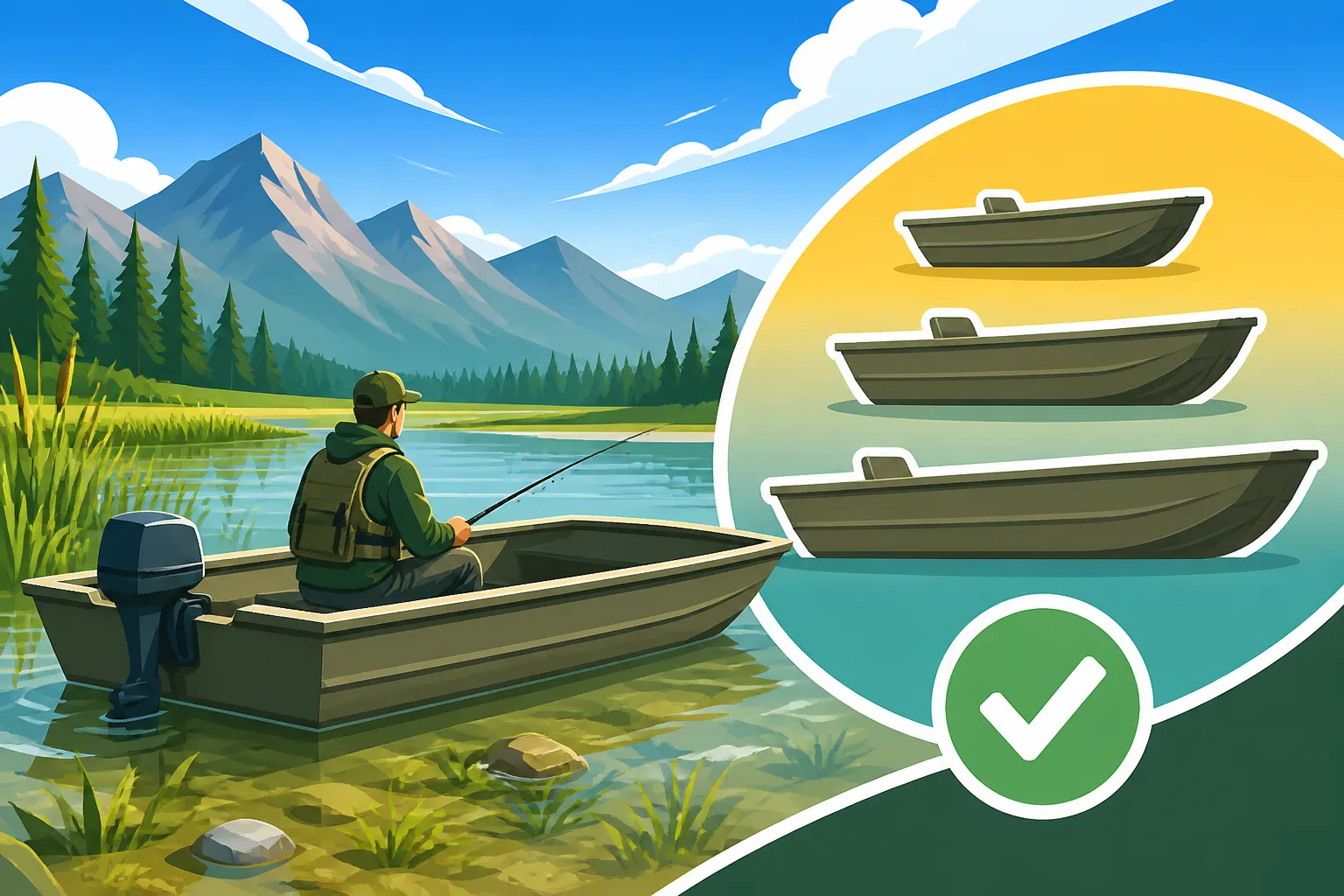
Here’s a quick overview to help visualize the differences:
| Size Category | Typical Length (ft) | Ideal Anglers | Shallow Water Access | Portability | Stability | Common Use Cases |
|---|---|---|---|---|---|---|
| Small & Mighty | 10-12 | 1-2 | Excellent (inches) | Very High | Good | Creeks, ponds, river backwaters, tight weed beds, solo fishing |
| Versatile Mid-Range | 14-16 | 2-3 | Very Good | High | Very Good | Larger shallow lakes, river sections, general family fishing, more gear capacity |
| Larger Jon Boats | 17+ | 3-4+ | Good | Moderate | Excellent | Large shallow lakes, bigger water with some chop, maximum comfort & gear |
Gearing Up: Outfitting Your Shallow-Water Jon Boat
Once you've settled on the perfect size, it's time to think about how you'll equip your jon boat to make the most of your shallow-water adventures. A well-outfitted boat can significantly enhance your fishing experience, making it safer, more comfortable, and more productive. Remember, the goal is often simplicity and functionality for these types of boats.
Powering Your Jon Boat
The right motor setup is crucial for shallow water. While a larger jon boat might handle a bigger gas outboard, smaller models truly shine with more modest propulsion.
- Small Gas Outboards: For 10-14 foot jon boats, a 5-15 horsepower gas outboard is often plenty. These motors are relatively lightweight, fuel-efficient, and provide enough thrust to get you across open stretches of water. Ensure you get a short-shaft model to match your jon boat's transom. Brands like Yamaha, Mercury, and Honda are popular choices, offering reliability. Always carry a spare shear pin or two, especially in shallow water where prop strikes are more common.
- Electric Trolling Motors: These are indispensable for shallow-water stealth. For maneuvering through lily pads, sneaking up on spooky fish, or holding your position against a light current, an electric motor is silent and efficient. A transom-mount motor works well for smaller boats, while a bow-mount motor with foot pedal control can be a game-changer for hands-free fishing on larger mid-range jons. Consider thrust ratings; for shallow lakes, 30-55 lbs of thrust is often sufficient for 10-14 foot boats. Look for models with GPS spot-lock features if your budget allows; it's incredibly useful. You can browse a huge selection of these at retailers like Bass Pro Shops or online at Amazon, often with user reviews to help guide your choice.
Essential Safety and Comfort Gear
No matter how simple your boat, safety should always be your top priority. Alberta has Alberta Boating Laws for Anglers that you need to be aware of, including specific requirements for safety equipment.
- Life Jackets (PFDs): This is non-negotiable. Every person on board must have a Canadian-approved PFD, and it must be readily accessible. For maximum safety, consider wearing it at all times, especially in shallow, obstacle-ridden waters where an unexpected fall could be dangerous. Check out Life Jacket Requirements for Alberta Boaters for full details.
- Anchor: Even in shallow water, an anchor is vital for holding your position against wind or current. A lightweight, folding grapnel anchor or a small mushroom anchor works well for jon boats. Make sure you have enough rope for the deepest parts of the waters you'll be fishing, plus extra.
- First-Aid Kit: Accidents happen, especially when hooks and sharp objects are involved. A basic first-aid kit with bandages, antiseptic wipes, pain relievers, and any personal medications is essential.
- Paddles/Oars: Even with a motor, always carry a set of oars or at least a sturdy paddle. Motors can fail, run out of fuel, or get fouled in weeds. Having a backup means you won't be stranded.
- Bailing Device: A small bucket or scoop is mandatory for removing any water that might get into your boat from rain or splash.
- Sound Signaling Device: A whistle or horn is required by law to signal other boats or in case of emergency.
- Navigation Lights: If you plan to be on the water during low light conditions (dawn, dusk, or night fishing for walleye), you will need appropriate navigation lights.
- Comfort Items: While not safety gear, don't forget comfortable cushions (those aluminum benches can get hard!), a dry bag for electronics and personal items, and perhaps some rod holders to keep your gear organized. A simple bimini top can also provide welcome shade on a hot Alberta summer day.
Storage Solutions
Jon boats often have open layouts, which is great for flexibility but means you need to be smart about storage.
- Tackle Boxes & Bags: Soft-sided tackle bags are often preferred over hard boxes in jon boats as they can conform to odd spaces and reduce rattling.
- Dry Boxes: For wallets, phones, keys, and other water-sensitive items, a small, waterproof dry box is invaluable.
- Coolers: Look for coolers that can double as extra seating. Smaller, personal-sized coolers are usually sufficient for a day trip.
- Rod Storage: Simple vertical rod holders mounted to the boat's side or gunwale can keep your rods organized and out of the way, preventing them from being stepped on or tangled. You can find many cost-effective solutions for this on Amazon.
By carefully considering your needs and outfitting your jon boat thoughtfully, you'll be well on your way to exploring those incredible, untouched shallow fishing grounds Alberta has to offer. Just remember to always check Alberta Fishing Regulations Explained for your specific zone before heading out!
Disclaimer
This article is for general informational purposes only and does not constitute professional advice. Laws, prices and regulations vary by location and change over time. Consult a qualified professional for guidance on your specific situation.