Best glide bait for trophy pike
Catching a true trophy pike in Alberta can feel like chasing a ghost. These massive predators are cunning, wary, and often require a specialized approach beyond your everyday spinner or spoon. If you've been struggling to entice those larger-than-life gators, this guide is for you. We're diving deep into the world of glide baits – the secret weapon many serious pike anglers use to fool those elusive giants.
Understanding Trophy Pike Behavior and Why Glide Baits Work
It's easy to assume all pike act the same, but trust me, there's a world of difference between a feisty hammer handle and a true trophy fish pushing forty inches or more. Big pike are smart, opportunistic, and they often demand a presentation that truly stands out from the crowd. Understanding their habits is the first step to choosing the right tool, and that's where glide baits shine.
The Elusive Nature of Large Pike
Trophy pike aren't like their smaller, more aggressive counterparts that will hit almost anything that moves. These older, larger fish have seen it all. They've been caught, they've escaped, and they've developed a keen sense of what looks genuinely "easy prey" versus a threat. They are ambush predators, often holding tight to structure like weed lines, submerged timber, or deep breaks, waiting for a substantial meal to present itself. They conserve energy, preferring one big meal over expending effort on multiple smaller ones. This means your presentation needs to be compelling enough to draw them out of their hiding spots and trigger that primal predatory strike.
Their territoriality also plays a role. A massive pike often dominates a specific area, and anything that moves through that zone looking vulnerable can quickly become a target. They're not just feeding; sometimes they're eliminating competition or asserting dominance. This is why a larger, more lifelike bait, presented with precision, is often more effective. You're not just offering food; you're offering a challenge or a perceived threat that they feel compelled to eliminate. If you're keen to learn more about these fascinating fish, check out our guide on Northern Pike Habits in Alberta Lakes.
How Glide Baits Mimic Natural Prey
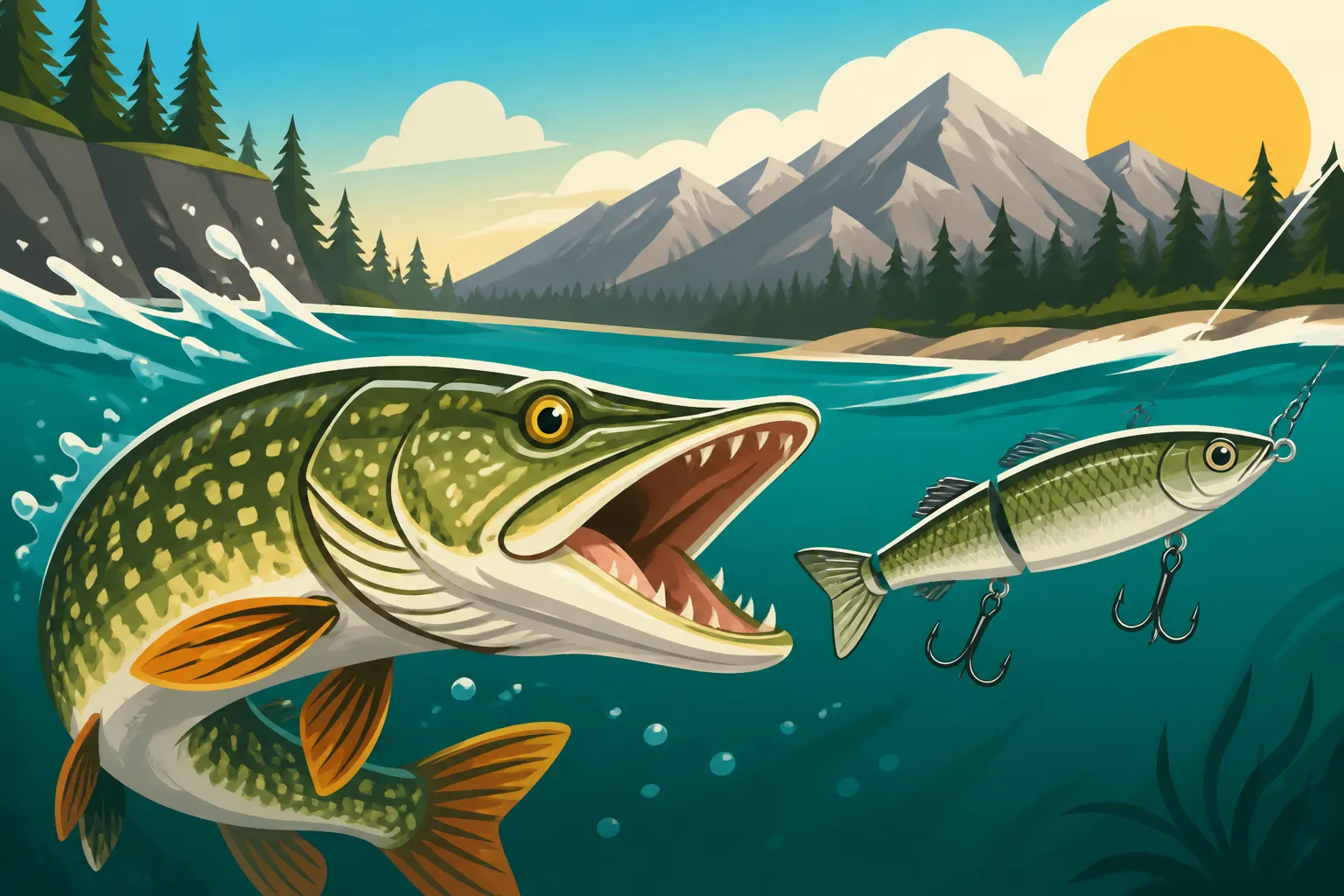
So, what makes a glide bait so special for these wise old pike? It's all about the action. Unlike a wobbling crankbait or a spinning spoon, a glide bait, with its flat sides and usually jointed body, has a unique side-to-side, "S-shaped" swimming motion when retrieved with rhythmic twitches. Imagine a wounded baitfish, perhaps a cisco or a large perch, struggling just below the surface or deeper in the water column. It's not swimming in a straight line; it's darting erratically, then pausing, then darting again. This is exactly what a well-fished glide bait imitates.
This erratic, natural movement is incredibly enticing to a large pike. The wide sweeps and sudden changes in direction mimic a prey fish that's injured, disoriented, or simply an easy target. The pause after a glide is often the most critical moment – that split second where the bait hangs tantalizingly in the water column, looking vulnerable, is when a big pike is most likely to commit. They track the bait, assess it, and then, when it pauses, they strike. This subtle yet powerful imitation of natural prey behavior is why glide baits have become a go-to for anglers serious about targeting Trophy Pike Waters in Alberta.
Key Features of a Great Pike Glide Bait
Choosing the right glide bait isn't just about grabbing the biggest lure on the shelf. There are specific characteristics that make certain baits more effective for trophy pike. From size to durability, every detail matters when you're trying to fool a fish that could weigh as much as a small child.
Size and Weight Considerations
When targeting trophy pike, size absolutely matters. You're trying to appeal to a fish that prefers a substantial meal, not a snack. Glide baits for big pike typically range from 6 to 10 inches, and sometimes even larger. A 7-inch glide bait might seem enormous to someone used to bass fishing, but for a 40-inch pike, it's just another meal swimming by. The larger profile creates a more significant water displacement and visual presence, making it easier for pike to detect from a distance, especially in murky water.
The weight of the bait is also important. Heavier baits cast further, which is crucial for covering vast expanses of water in large Alberta lakes like Lesser Slave or Cold Lake. They also get down to depth quicker and maintain their position better in windy conditions or when fishing over deeper structure. Most trophy pike glide baits will be in the 2-ounce to 5-ounce range, sometimes even more. You need gear robust enough to handle these substantial lures, a topic we'll dive into a little later.
Action and Sink Rate
The action of a glide bait is its signature. When retrieved correctly, it should exhibit a wide, slow, "S-curve" glide from side to side. This isn't a tight wiggle; it's a broad, lazy sweep. Many glide baits are designed with a specific sink rate:
- Slow Sink: These are perhaps the most versatile, allowing you to work them just below the surface, in the middle of the water column, or count them down to specific depths. They hover seductively during pauses, giving pike ample time to decide.
- Fast Sink: Ideal for deeper water, faster currents, or when pike are holding tight to bottom structure. They get into the strike zone quickly.
- Floating/Suspending: Less common for traditional glide baits aimed at trophy pike, but some variations might exist for specific shallow water applications or if you want to work them strictly on top.
For trophy pike, a slow-sinking or suspending glide bait is often preferred. The ability to pause the bait and let it hang in the strike zone, subtly rocking and flashing, is a huge trigger for hesitant fish. This "hang time" mimics a struggling, vulnerable baitfish perfectly.
Durability and Hardware
Let's be real: a trophy pike hit is an explosion. Their teeth are like razors, and their head shakes are violent. Your glide bait needs to be built like a tank. Look for baits made from high-quality, durable ABS plastic or even solid wood. The paint job should be tough, able to withstand countless tooth marks without peeling off.
Crucially, pay close attention to the hardware. Many stock hooks and split rings on even expensive lures are simply not strong enough for a true trophy pike. You'll often want to upgrade to heavier-duty split rings and strong, razor-sharp treble hooks right out of the box. Brands like Gamakatsu, Owner, or VMC offer excellent options that can withstand the brutal power of a big pike. You can often find these essential upgrades at your local Bass Pro Shops or easily order them through Amazon. Don't skimp here; losing a once-in-a-lifetime fish because of bent hardware is a gut-wrenching experience.
Color and Pattern Choices
Pike are visual hunters, and color can definitely make a difference. While natural patterns are often a safe bet, having a variety in your tackle box is key.
- Natural Baitfish Patterns: For clear water conditions, patterns mimicking local forage are highly effective. Think perch, cisco, sucker, or rainbow trout patterns. These subtle, realistic finishes blend in and look exactly like what a pike expects to eat.
- Bright and Aggressive Patterns: In stained, murky, or low-light conditions, brighter colors like firetiger, chartreuse, hot pink, or bright orange can really shine. These high-contrast patterns create a more visible silhouette and grab a pike's attention when natural colors might get lost.
- Black and Silver: A classic combination that works surprisingly well in many conditions, especially on bright, sunny days when the silver flashes, or in low light where the black provides a distinct silhouette.
Consider the water clarity of the specific Alberta lake or river you're fishing. On clear mountain lakes, natural patterns might be key. On more turbid prairie lakes, something bolder might be necessary.
Top Glide Bait Retrieval Techniques for Alberta Pike
Okay, you've got your glide bait, your beefy rod, and your heavy leader. Now what? The magic of a glide bait isn't just in its design; it's in how you work it. The retrieve is an art form, and mastering it will dramatically increase your chances of connecting with that trophy pike.
The "Walk-the-Dog" Underwater
This is the quintessential retrieve for glide baits and the one you absolutely need to master. It's essentially mimicking the topwater "walk-the-dog" action, but underwater.
Here's how to do it:
- Cast: Make a long cast to your desired target, whether it's a weed line, a rocky point, or open water where you suspect pike are cruising. Let the bait sink to your desired depth.
- Twitch and Slack: Point your rod tip downwards, towards the water. Give a sharp, downward twitch of the rod tip, then immediately give the line a bit of slack as you return the rod tip to its starting position. This slack is crucial.
- The Glide: As the bait moves forward with the twitch, the slack allows it to "glide" out to one side in a wide, sweeping motion.
- Repeat: Repeat the twitch-and-slack action. The next twitch should send the bait gliding to the opposite side. If you're doing it right, the bait will create a beautiful, slow, S-shaped path through the water.
- The Pause: Intermittently, pause your retrieve completely. Let the bait sit there, slowly sinking or suspending, for 2-5 seconds. This pause is often when the strike occurs, as the pike has time to move in and engulf the seemingly helpless bait.
Practice this retrieve until it becomes second nature. It might feel awkward at first, but once you get the rhythm, it's incredibly effective. You'll notice the rod tip work is subtle, mostly a wrist movement, letting the bait do its dance.
Varying Retrieve Speed and Cadence
While the "walk-the-dog" is fundamental, becoming truly proficient with glide baits means knowing when and how to vary your retrieve. Pike aren't always in the same mood, and water conditions change.
- Faster Retrieve: If the water is warm, or if you're fishing a highly active population of pike, you might speed up your retrieve. Quicker twitches and shorter pauses can trigger a reaction strike from aggressive fish.
- Slower Retrieve: In colder water, after a cold front, or when pike seem lethargic, slow everything down. Longer pauses (up to 10 seconds or more) can be incredibly effective. Let the bait hang, inviting a cautious pike to inspect and eventually strike.
- Erratic Cadence: Don't be afraid to mix it up. Try a few quick twitches, then a long pause. Or two slow glides, then a sudden burst of speed. The unpredictable nature can often be the trigger that pushes a hesitant pike over the edge.
Pay attention to how the fish are reacting. If you're getting follows but no strikes, try slowing down. If they're hitting short, speed up slightly or lengthen your pauses. The key is to experiment until you find what works on that particular day. If you want to refine your general pike tactics, consider reading up on How to Catch Northern Pike in Alberta.
Targeting Specific Structures
Glide baits excel when fished around key pike holding areas. Their controlled, often slow presentation allows you to effectively pick apart structure.
- Weed Lines: Cast parallel to deep weed edges. Let the bait sink just above the weeds and work it slowly, pausing frequently. Pike love to ambush from the safety of dense cover.
- Drop-offs and Ledges: Cast over the deeper water and retrieve the bait up the face of the drop-off, or parallel along a ledge. The glide bait can mimic a baitfish struggling against a current or trying to ascend/descend.
- Submerged Timber and Rock Piles: These are classic trophy pike haunts. Cast your glide bait carefully around these snags. The ability to pause the bait and even let it slightly touch the cover before gliding away can often trigger a strike. Be ready for a fight, as these fish will try to dive back into the cover.
- Open Water: Don't neglect open water, especially in large lakes. Pike often cruise open water looking for schools of baitfish. Long casts with a glide bait can help you cover water and draw out those cruising giants.
Remember, precision casting is important. You want to place your glide bait exactly where you think a pike might be lurking. The controlled action of a glide bait allows for this targeted approach, making it perfect for teasing out the biggest fish. You'll find great information on local waters in our Best Fishing Rivers in Alberta and Best Fishing Lakes in Alberta guides.
Essential Gear for Throwing Glide Baits
You can't bring a knife to a gunfight, and you certainly can't bring ultralight gear when you're throwing heavy glide baits for trophy pike. This isn't just about preventing break-offs; it's about being able to effectively work the bait and having the leverage to control a powerful fish.
Rod, Reel, and Line Selection
The right tackle is paramount when glide baiting for big pike. You need a setup that can handle heavy lures, strong fish, and deliver the precise control needed for the bait's action.
- Rod: Look for a heavy power, fast action casting rod. A length of 7'6" to 8'6" is ideal. The heavy power provides the backbone needed to cast heavy baits and battle big fish, while the fast action tip allows for precise twitches to impart the glide bait's action. This kind of rod also gives you excellent leverage during a fight. Consider brands that specialize in Musky or large Swimbait rods, as they're often perfectly suited for this application.
- Reel: A robust baitcasting reel is essential. You'll want a reel with a high line capacity for heavy braid and a strong, smooth drag system that won't give out under the strain of a surging pike. A gear ratio around 5.0:1 to 6.5:1 is a good starting point, providing enough torque for a controlled retrieve. Look for reels designed for big game or heavy freshwater use. You can find excellent options and compare models at Bass Pro Shops or online at Amazon.
- Line: Heavy braided line is the way to go for glide baits. Opt for 65 lb to 100 lb test braid. Braid offers incredible strength, zero stretch for maximum sensitivity and hook setting power, and excellent castability with heavy lures. Its abrasion resistance is also a huge plus when fighting fish around structure. For detailed guidance on lines, check out Best Line Weight for Pike Fishing.
Matching your rod, reel, and line correctly ensures optimal performance and confidence when that monster pike finally strikes.
Leader Material for Pike
This is non-negotiable. Pike have rows of razor-sharp teeth that will effortlessly slice through monofilament or fluorocarbon main line. A proper bite-proof leader is absolutely critical.
- Heavy Fluorocarbon Leaders: Many anglers prefer heavy fluorocarbon leaders (80 lb to 130 lb test) for glide baits. Fluorocarbon is nearly invisible underwater, providing a stealthy presentation, and its abrasion resistance is excellent. It's stiff enough to prevent hooks from fouling on the line. Ensure your connections (knots or crimps) are flawless.
- Wire Leaders: For ultimate bite protection, wire leaders are still a top choice. Options include solid wire, multi-strand coated wire, or titanium leaders. While some anglers feel they can spook fish, modern wire leaders are quite thin and often have minimal impact, especially on aggressive pike. They are practically chew-proof.
The leader should be long enough (12-24 inches) to prevent any part of the main line from entering the pike's mouth. Always use heavy-duty swivels and snaps that can handle the force of a trophy fish. Learning about Best Leader for Pike Fishing can save you from heartbreak on the water.
This table provides a general overview to help you choose the right glide bait and accompanying gear for your trophy pike hunt in Alberta.
| Feature | Glide Bait Recommendation (Trophy Pike) | Why it Matters | Gear Consideration |
|---|---|---|---|
| Size | 7-10 inches+ | Mimics substantial prey; better visibility for large predators. | Heavy Power Rod (7'6" – 8'6") |
| Weight | 2-5 ounces+ | Aids casting distance, depth control, stable action in current. | Heavy Power Rod, Robust Baitcasting Reel |
| Action | Slow, wide S-curve glide | Mimics injured/disoriented baitfish; high appeal to wary pike. | Fast Action Rod Tip for precise twitches |
| Sink Rate | Slow Sink / Suspending | Allows for crucial "hang time" pauses in the strike zone. | Important for depth control and triggering strikes |
| Durability | Tough ABS plastic/wood, strong construction | Withstands violent strikes and sharp teeth; ensures longevity. | Quality lure selection, check hardware. |
| Hardware | Heavy-duty split rings, strong treble hooks | Prevents bent hooks or opened rings during fierce fights. | Upgrade stock hooks (Gamakatsu, Owner) and split rings. |
| Colors (Clear Water) | Natural (Perch, Cisco, Sucker, Trout) | Realistic imitation for visual hunters; less likely to spook fish. | Varies by local forage |
| Colors (Stained/Low Light) | Bright (Firetiger, Chartreuse, Orange) | High visibility; creates strong contrast to grab attention. | Varies by water conditions |
| Line | 65-100 lb Braided Line | Strength, zero stretch, sensitivity, abrasion resistance. | Baitcasting Reel with high capacity |
| Leader | 80-130 lb Fluorocarbon or Wire (12-24") | Critical bite protection; prevents pike from cutting line. | Heavy-duty crimps/knots, strong swivels/snaps |
Good luck out there, fellow anglers. The pursuit of a trophy pike is a rewarding challenge, and with the right glide bait and technique, your chances of success will soar. Remember to always fish responsibly and practice safe handling for these magnificent fish.
Disclaimer
This article is for general informational purposes only and does not constitute professional advice. Laws, prices and regulations vary by location and change over time. Consult a qualified professional for guidance on your specific situation.