Best dry fly patterns for summer Bow River hatches
Oh, the sheer joy – and sometimes the utter frustration – of summer dry fly fishing on Alberta's legendary Bow River! There's nothing quite like seeing a magnificent rainbow or brown trout gently sip your carefully presented dry fly off the surface, but nailing down the right pattern for the day can feel like trying to solve a cryptic puzzle. Those summer hatches can be incredibly prolific, yet incredibly selective, leaving many of us scratching our heads when our go-to patterns aren't getting any love. This guide is all about cutting through that guesswork, giving you the lowdown on the best dry fly patterns that consistently fool Bow River trout when the summer bugs are popping, and how to make sure your presentation counts.
Understanding the Bow River's Summer Hatches
Before we even get to specific fly patterns, let's talk about why summer on the Bow River is such a special, albeit challenging, time for dry fly anglers. It's a period of incredible abundance, where the river's ecosystem truly bursts with life, providing an all-you-can-eat buffet for its resident trout.
Why Summer Hatches are Crucial on the Bow
Summer on the Bow means warmer water temperatures (within safe limits, of course), longer daylight hours, and an explosion of aquatic insect life. Unlike the more sporadic hatches of spring or the more generalized feeding of fall, summer often sees consistent, sometimes overlapping, hatches throughout the day. This can lead to trout becoming incredibly focused, or "locked in," on a specific insect at a particular stage of its life cycle. If you're not offering something that perfectly mimics what they're eating, you might as well be throwing a bare hook. This selectivity is the main frustration for many anglers, but also the ultimate reward when you crack the code. The sheer biomass of bugs like caddisflies, mayflies, and terrestrials drifting down the river means that trout don't have to expend much energy to find a meal, making them picky eaters. For dedicated anglers looking to hook into some truly impressive fish, mastering these summer hatches is key. If you're generally interested in Best Time of Year to Fish in Alberta, summer definitely has its unique charm and challenges.
Key Insect Species to Watch For
The Bow River is a fertile ecosystem, supporting a diverse array of insects that become trout food. In summer, a few specific groups really dominate the menu. Keeping an eye on these will help you narrow down your fly choice.
- Mayflies (Ephemeroptera): These are perhaps the most iconic dry fly insects. On the Bow, summer brings out various species, from the larger Pale Morning Duns (PMDs) to smaller Blue Winged Olives (BWOs) that can still appear even in warmer months, and even some larger Green Drakes or Brown Drakes depending on the specific stretch of river and water conditions. Trout love mayflies because they often sit high on the water for a moment after emerging, making them easy targets. Their distinctive upright wings are a dead giveaway.
- Caddisflies (Trichoptera): Caddisflies are often a more chaotic hatch, fluttering and skittering across the water's surface as they emerge or egg-lay. This erratic movement can drive trout into a frenzy. Different species of caddis hatch throughout the summer, ranging from tan and olive to darker brown colors. Their tent-like wing profile is very different from mayflies, so observing the insect's silhouette on the water is crucial.
- Terrestrials (Grasshoppers, Ants, Beetles): While not aquatic insects, terrestrials become a huge food source in summer as they fall or are blown into the river from the surrounding banks. Grasshoppers, various ants, and beetles can make up a significant portion of a trout's diet, especially on windy days or near grassy banks. These are "opportunity meals" for trout, and often trigger aggressive takes. You'd be surprised how often a chunky trout will forego a delicate mayfly for a juicy hopper.
Knowing the general size, color, and behavior of these bugs will give you a massive advantage when choosing your dry fly patterns.
Essential Dry Fly Patterns for Bow River Summers
Alright, let's get down to the brass tacks: the specific dry fly patterns that have earned their stripes on the Bow River during the summer months. It's not just about having the right pattern, but also having it in the right size and color. Many of these flies, or materials to tie them, can be conveniently found on Amazon.
Mayfly Imitations
Mayflies are a staple for Bow River trout, and having a few reliable imitations in your fly box is non-negotiable. Trout become very accustomed to these predictable drifts.
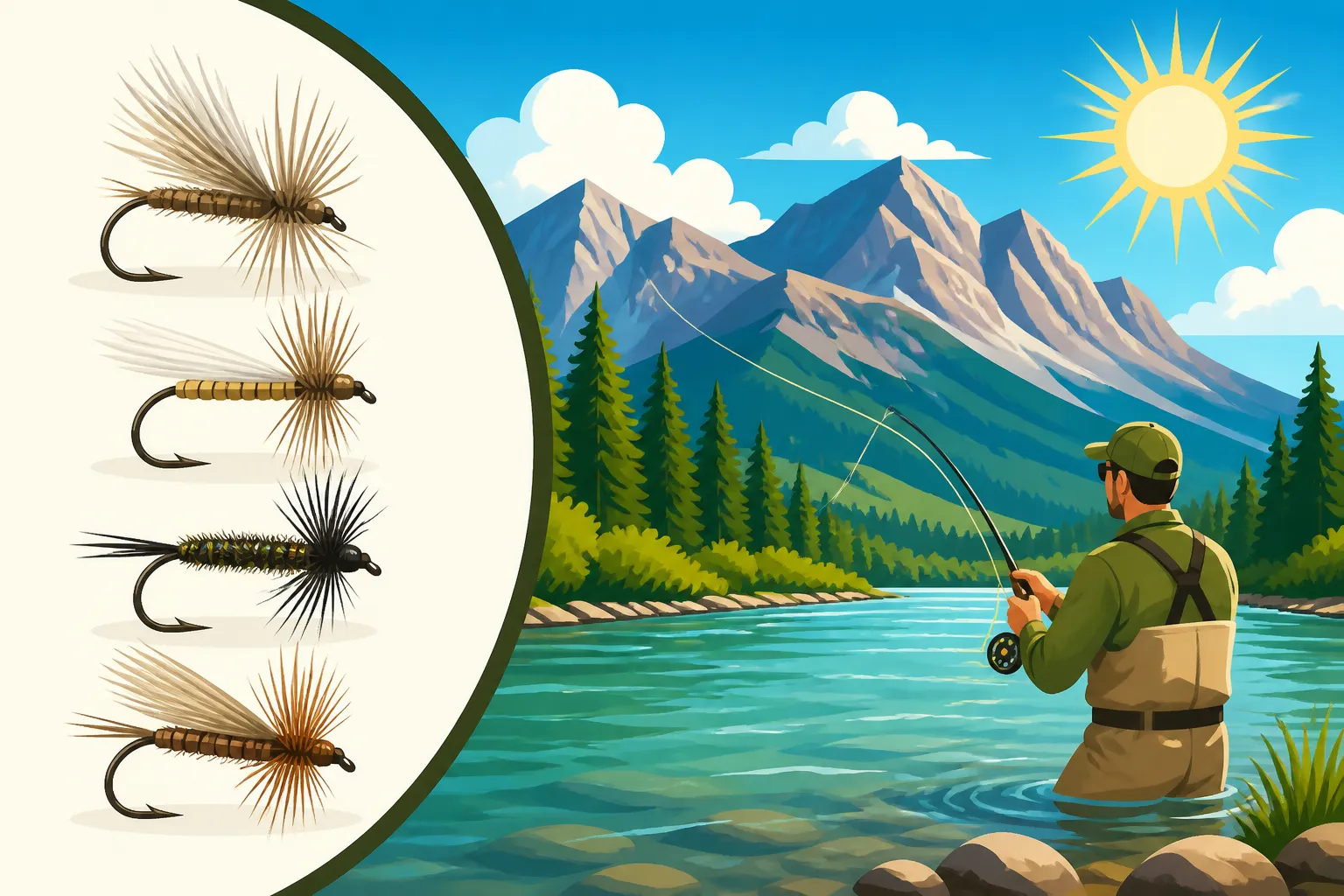
- Parachute Adams: This is arguably the most versatile dry fly pattern ever created, and for good reason. It effectively imitates a wide range of mayfly species, from PMDs to smaller BWOs, due to its classic grey body and distinct white parachute post, which mimics the upright wing of an emerging or adult mayfly. Fish it in sizes #12-20 on the Bow River, with #14-16 being particularly effective during general hatches. The parachute post makes it incredibly visible to the angler, too, which is a huge bonus when you're trying to track a tiny fly in broken water. Many anglers swear by it, and it's a pattern you'll find in almost every serious fly fisher's box.
- Pale Morning Dun (PMD) Parachute: When PMDs are hatching (which they do reliably throughout early to mid-summer on the Bow, often in the late morning or early afternoon), you absolutely need a dedicated imitation. The PMD Parachute is similar in construction to the standard Parachute Adams but features a pale yellow or cream body and light-colored hackle, matching the natural insect's coloration. Sizes #14-18 are generally best. These hatches can be dense, and trout will key in specifically on this color. Having a few different shades, from light cream to a more yellowish-tan, can make all the difference on a picky day.
- Blue Winged Olive (BWO) Parachute: Don't let the "winter bug" reputation fool you; smaller BWOs can hatch throughout the cooler periods of summer, especially on overcast days or in the early mornings and late evenings. The BWO Parachute, with its olive-grey body and dun-colored hackle, is perfect for these situations. You'll typically be fishing smaller sizes, like #18-22, so good eyesight and a steady hand are a must! Even if the main hatch is something else, a BWO can sometimes tempt a wary trout that's still opportunistically feeding on smaller insects.
Caddisfly Imitations
Caddisflies, with their frantic movements, can be incredibly exciting to fish. Trout often hit these with more aggression, making for some heart-stopping moments.
- Elk Hair Caddis: Another legendary pattern, the Elk Hair Caddis is a must-have. Its messy, tent-like wing of elk hair perfectly imitates the natural caddisfly profile, and its buoyancy makes it great for skating or twitching across the surface to mimic a struggling caddis. You'll want a range of colors (tan, olive, grey, brown) and sizes (#12-18) to match the various species present on the Bow. When a caddis hatch is in full swing, and trout are slashing at the surface, an Elk Hair Caddis presented with a bit of movement can be deadly. It's also a fantastic general attractor pattern even when no specific caddis are hatching.
- X-Caddis: This pattern is a bit more subtle, featuring a trailing shuck of Z-Lon or antron that imitates a caddisfly emerger struggling to break free of its nymphal shuck. This "still-attached" shuck is often what trout key in on, as it represents a vulnerable insect. Fish the X-Caddis in tan, olive, or grey in sizes #14-18, especially when you see trout rising but not fully committing to a standard dry fly. It can often be the secret weapon when fish are being particularly finicky during a caddis emergence. Many specific Fly Patterns for the Bow River will include this staple.
Terrestrial Patterns
When the wind picks up, or you're fishing near overhanging vegetation, don't overlook terrestrials. These patterns can often tempt the biggest fish in the river.
- Dave's Hopper: A classic grasshopper imitation, the Dave's Hopper is buoyant, durable, and has a great profile that screams "big meal" to a trout. Fish it in tan, yellow, or pinkish-orange in sizes #8-14. Focus on casting it tight to grassy banks, under cut banks, or near fallen logs. A subtle twitch can sometimes make it irresistible. There's nothing quite like a big trout exploding on a hopper pattern. It's exhilarating!
- Ant Patterns (Cinnamon, Black): Ants, both winged and wingless, are a common terrestrial on the Bow, especially in late summer. A simple Cinnamon Ant or Black Ant pattern, typically in sizes #14-18, can be incredibly effective when fish are looking up but nothing obvious is hatching. Trout rarely refuse an ant. These flies don't need fancy presentation; just a good, drag-free drift. Even if you don't see ants, sometimes a subtle ant pattern can fool weary trout that have seen every other mayfly and caddis pattern imaginable.
- Beetle Patterns (Foam Beetle, Japanese Beetle): Beetles also fall into the water, and foam beetle patterns, usually black or dark brown, in sizes #12-16, are excellent imitators. Their hard, segmented bodies offer a different profile and density than other insects, and trout readily take them. Like hoppers and ants, these are best fished along banks or over deeper, slower sections where a large terrestrial might drift.
Other Important Patterns
Sometimes, the trout just want something different, or you're dealing with a specific, less common hatch.
- Griffith's Gnat: This small, bushy cluster of hackle and peacock herl is a fantastic imitation for midges or small clusters of tiny insects. Often fished in sizes #16-22, it's a great "confidence fly" when you see tiny sips but can't identify the specific bug, or during slow periods. Every angler should have a few in their box, as trout are almost never truly off midges.
- Stimulator: While technically an attractor pattern, the Stimulator can imitate larger stoneflies (which can hatch in summer on some stretches of the Bow) or simply represent a juicy, buggy meal. Its bushy profile and high visibility make it an excellent choice for prospecting or as a lead fly in a dry-dropper rig. Colors vary, but yellow, orange, or olive in sizes #8-14 are popular. It’s a great choice for Dry Fly Fishing Alberta Mountain Streams as well, where larger, more aggressive trout often reside.
- Amy's Ant: This foam-bodied terrestrial is a modern classic, combining elements of an ant, beetle, and even a hopper. It’s extremely durable, floats like a cork, and its rubber legs add irresistible movement. Sizes #8-14 in black or tan are fantastic for targeting larger trout along the banks. It’s a great searching pattern when you’re not sure what they’re hitting.
Here's a quick rundown of some key patterns for summer on the Bow:
| Fly Pattern | Primary Imitation | Best Sizes | Typical Colors | Key Characteristics |
|---|---|---|---|---|
| Parachute Adams | General Mayfly | #12-20 | Grey, Olive | Versatile, visible parachute post |
| PMD Parachute | Pale Morning Dun Mayfly | #14-18 | Pale Yellow, Cream | Specific PMD imitation, delicate |
| BWO Parachute | Blue Winged Olive Mayfly | #18-22 | Olive-Grey | Small, subtle, for picky fish |
| Elk Hair Caddis | Adult Caddisfly | #12-18 | Tan, Olive, Brown | Buoyant, great for twitching |
| X-Caddis | Caddisfly Emerger | #14-18 | Tan, Olive | Trailing shuck for emerging insects |
| Dave's Hopper | Grasshopper | #8-14 | Tan, Yellow, Pink | Large, buoyant, for aggressive takes |
| Cinnamon/Black Ant | Terrestrial Ant | #14-18 | Cinnamon, Black | Simple, effective, for selective fish |
| Foam Beetle | Terrestrial Beetle | #12-16 | Black, Dark Brown | Durable, floats well, distinct profile |
| Griffith's Gnat | Midge Cluster | #16-22 | Black, Grey | Tiny, for subtle sips or midges |
| Stimulator | Stonefly/Attractor | #8-14 | Yellow, Orange, Olive | Bushy, buoyant, great searching pattern |
Strategies for Success with Dry Flies
Having the right fly is only half the battle. How you present it, and how you read the river, can make or break your day on the Bow. This is where the art of dry fly fishing truly comes into play. For more comprehensive insights, check out Fly Fishing for Trout on the Bow River.
Reading the Water and Identifying Rises
One of the biggest mistakes anglers make is just casting blindly. On the Bow, especially in summer, you need to be a detective.
- Look for Rises: Obvious, right? But not all rises are equal. A subtle "sip" or "dimple" might indicate trout taking small emergers or spent spinners just below the surface, or very tiny midges. A more aggressive "splashy" rise often points to caddisflies or larger terrestrials being taken. Watch for patterns: are the rises consistent in one spot? Are they moving?
- Observe Natural Insects: Before you even cast, spend a few minutes observing what's actually on the water. What color are they? How big? Are they struggling to emerge (emerger patterns), fluttering erratically (caddis), or sitting still (mayfly dun)? This is your primary clue. If you don't see any naturals, try a general attractor like an Elk Hair Caddis or a hopper near the banks.
- Target Feeding Lanes: Trout will position themselves in current seams, eddies, and riffles where food is funneled to them. Look for obvious seams where faster water meets slower water, or behind large rocks. These are prime feeding lies. Casting into these lanes, even if you don't see a rise, can often provoke a strike from a fish holding there. The Bow River near Calgary, particularly Bow River Trout Fishing Near Calgary, offers numerous such spots.
Presentation is Key
You could have the perfect fly, but a poor presentation will guarantee rejection. Trout on the Bow are notoriously discerning.
- Drag-Free Drift: This is the golden rule of dry fly fishing. Your fly needs to float downstream at the exact same speed as the natural current, without any unnatural drag from your fly line. Mending your line (making small adjustments upstream or downstream) is critical to achieve this, especially in complex currents. Practice casting upstream and allowing your fly to drift back to you with minimal line on the water.
- Accurate Casting: Placing your fly gently and accurately is paramount. Overcasting or sloppy casts can spook fish. Aim to land your fly a few feet upstream of a rising fish, allowing it to drift naturally into the feeding zone. Accuracy isn't just about distance; it's about hitting your target consistently.
- Stealth: Trout, particularly the larger ones, are incredibly wary. Approach the water slowly, use natural cover, and avoid heavy footsteps on the bank. Long leaders and fine tippets (like 5X or 6X) help minimize visible line and are essential for a natural presentation, especially for Best Tippet Material for Spooky Bow River Trout. Consider using lighter tippet material when fish are highly selective.
- Twitching/Skating: While a drag-free drift is usually best for mayflies, caddisflies often call for a different approach. A slight twitch or skate of your Elk Hair Caddis can imitate an egg-laying female or an emerging caddis struggling to take flight, often eliciting an aggressive strike from a trout that ignored a dead drift.
Gear Considerations for Dry Fly Fishing
Having the right gear makes a difference in your ability to present flies effectively. You don't need the fanciest setup, but quality components help.
- Fly Rod: A fast-action 4- or 5-weight fly rod, typically 9 to 10 feet long, is ideal for dry fly fishing on the Bow River. This length helps with line control and mending in complex currents. A faster action helps punch flies through the wind, which is common in Alberta. For more details, explore Best Fly Rods for the Bow River.
- Fly Line: A weight-forward floating line matched to your rod weight is standard. Look for lines designed for delicate presentations.
- Leaders and Tippets: A tapered leader, usually 9-12 feet long, ending in 4X, 5X, or even 6X tippet, is essential. The longer leader helps present the fly naturally without spooking fish. I always carry spools of tippet in various sizes, often from brands like Rio or Seaguar, which you can easily find on Amazon. You'll be re-tying and adding tippet frequently, so having a good supply is a smart move.
- Floatant: A good quality dry fly floatant (liquid or gel) is crucial to keep your flies riding high on the water. Apply it regularly to ensure your fly remains buoyant and visible.
- Landing Net: Always use a rubber or silicone mesh landing net. It's much gentler on the fish's delicate slime coat and fins, ensuring a healthy release, especially when you're targeting Rainbow Trout Fishing on the Bow River. This is particularly important on a river like the Bow, where conservation is key.
Remember, practice makes perfect. The more time you spend on the water, observing the hatches, and refining your presentation, the more successful you'll become. Even on days when the fish are tricky, just being out on the river, surrounded by Alberta's stunning scenery, is a reward in itself. Don't be afraid to experiment, and always keep an eye out for that next perfect drift! Sometimes, even when the dry fly bite is tough, an alternative technique like Euro Nymphing the Bow River can still put fish in the net.
Disclaimer
Please note that fishing regulations can change. Always consult the most current Alberta Guide to Sportfishing Regulations before heading out. This guide provides general information and best practices for fly fishing.