How to catch pike through thick weeds
There’s nothing quite like the thrill of chasing northern pike in Alberta’s lakes and rivers. You cast, you retrieve, you feel that sudden, aggressive strike – it’s pure adrenaline! But let's be honest, few things are as frustrating as knowing those toothy predators are lurking in a prime weed bed, only to have your lure foul up with aquatic vegetation on every single retrieve. It feels like they're mocking you from their green fortress, doesn't it? This guide is going to dive deep into exactly how you can penetrate those dense green jungles and pull out some magnificent pike, turning that frustration into triumph.
Understanding Pike Behavior in Weedy Environments
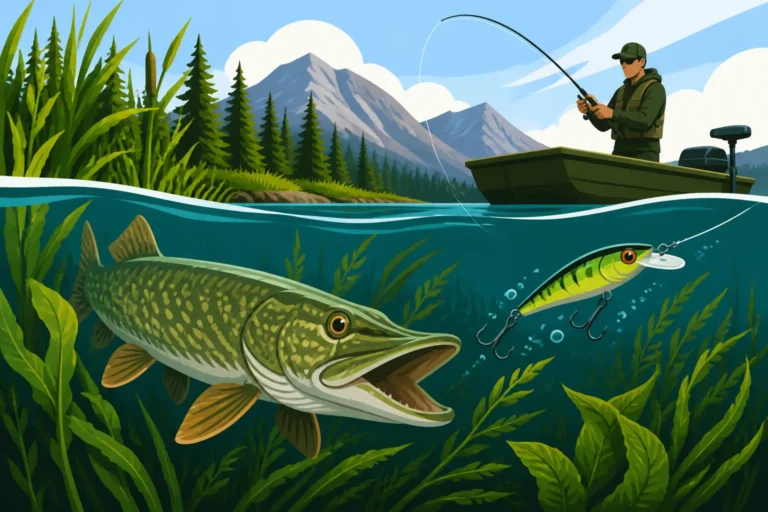
Pike are ambush predators, and thick weeds are their natural hideouts and hunting grounds. They aren't just in there to hide from you, the angler; they're also waiting patiently for unsuspecting baitfish, frogs, or even small ducks to swim by. Knowing why they choose these spots is the first step to figuring out how to get them out.
Why Pike Love Weeds
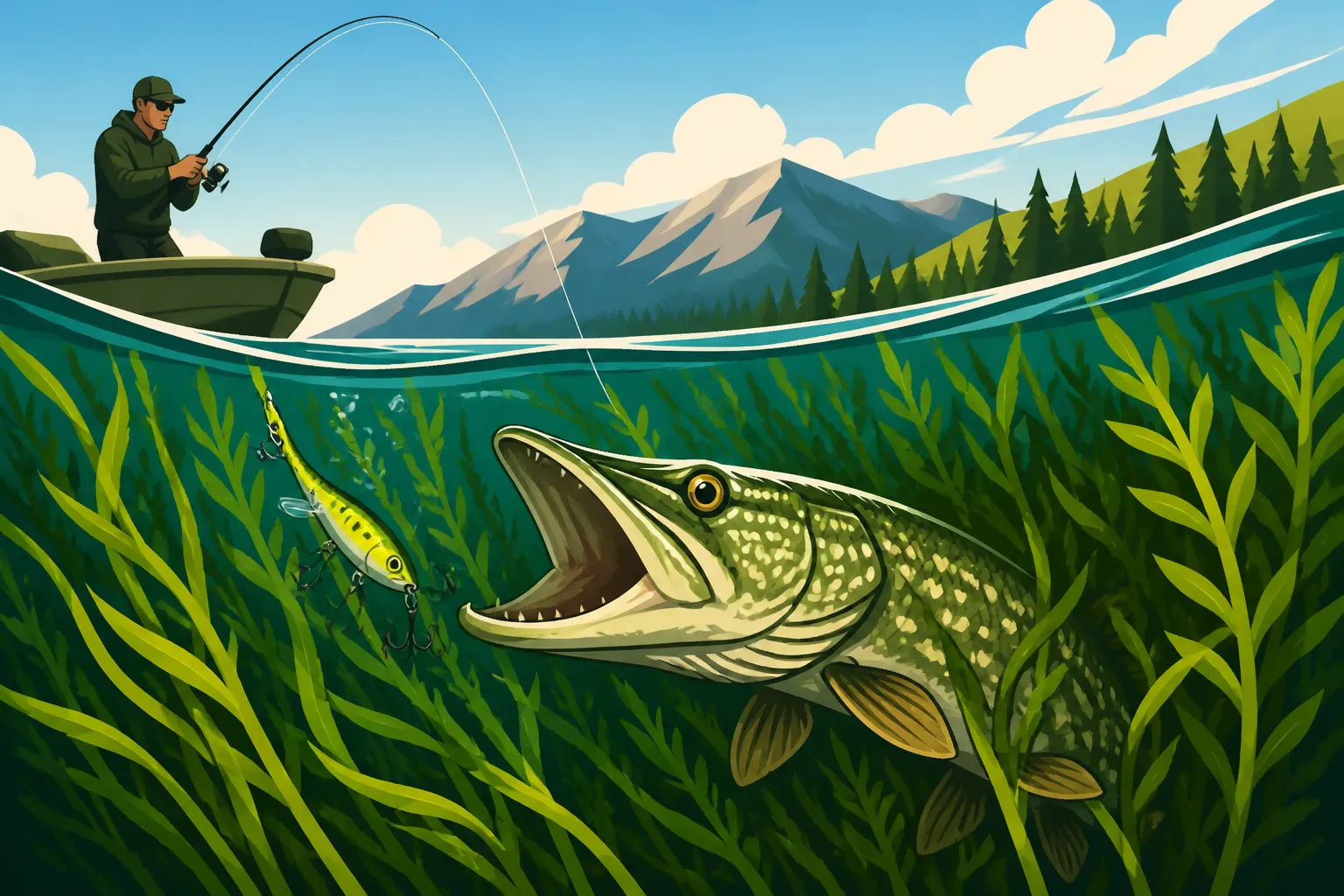
Think about it from a pike's perspective. A dense weed bed offers the perfect combination of cover, shade, and an abundant food source. The weeds provide camouflage, allowing them to blend in and explode out at prey without being detected too early. On a hot summer day, the weeds offer cooler, oxygenated water, which is crucial for fish comfort and activity. Furthermore, many of the smaller fish and insect larvae that make up a pike's diet will also seek refuge and food within these weeds, creating a self-sustaining ecosystem right there in the green jungle. It's a veritable supermarket and fortress all rolled into one. For more general insights into these fascinating fish, check out Northern Pike Habits in Alberta Lakes.
Identifying Different Types of Weed Cover
Not all weeds are created equal when it comes to pike fishing. Understanding the differences can help you refine your approach. Some weeds, like milfoil or pondweed, grow in dense, often matted clumps that can be incredibly difficult to fish through without snagging. These are your real challenge areas. Then you have more sparse weed lines, often along drop-offs or points, where the weeds might be thinner on top but still offer plenty of cover below. Coontail, for instance, often forms dense, bushy patches. Bulrushes and cattails, common in shallow margins, provide vertical cover that pike use to hide and ambush from. Learning to "read" the weeds—understanding their density, height, and location relative to deeper water—will give you a significant advantage. Pike will often position themselves at the edges of these dense mats, or in pockets within them, ready to strike.
Essential Gear for Conquering Thick Weeds
Trying to fish thick weeds with the wrong gear is like trying to chop down a tree with a butter knife – frustrating and ineffective. You need tackle that's robust enough to handle the weeds themselves, and strong enough to extract a powerful pike from their leafy lair.
Rods, Reels, and Line for the Jungle
When you're dealing with heavy cover, finesse goes out the window. You need a powerful setup.
- Rods: Opt for a heavy or medium-heavy power casting rod, ideally in the 7 to 8-foot range. This extra length gives you leverage to cast heavier baits and pull fish out of thick vegetation. The stout backbone is critical for driving hooks home through tough weed growth and then horsing a strong pike out before it can wrap itself around even more weeds. A fast action tip will help with casting accuracy and feeling subtle bites, but the real work will be done by the rod's power.
- Reels: A sturdy baitcasting reel with a strong drag system is your best friend here. Look for one with a good retrieve ratio, something around 7.1:1 or higher, which allows you to quickly pick up slack line and get a fish moving once it bites. A robust reel like a Best Baitcasting Reels for Pike Fishing option found on Amazon will stand up to the abuse of pulling fish and weeds.
- Line: Braided line is non-negotiable for thick weed fishing. Its incredible strength-to-diameter ratio means you can use heavier pound test without sacrificing casting distance. More importantly, braided line has zero stretch, which is crucial for cutting through weeds on the retrieve and for getting a solid hook set. You'll want to spool up with 30 to 65-pound test, depending on the density of the weeds and the size of pike you expect. This might seem like overkill, but it gives you the confidence to really lean into a fish without fear of snapping off. For detailed line choices, see Best Line Weight for Pike Fishing.
Weedless Lures That Get the Job Done
This is where the magic happens. You absolutely need lures designed to navigate weeds without constantly snagging.
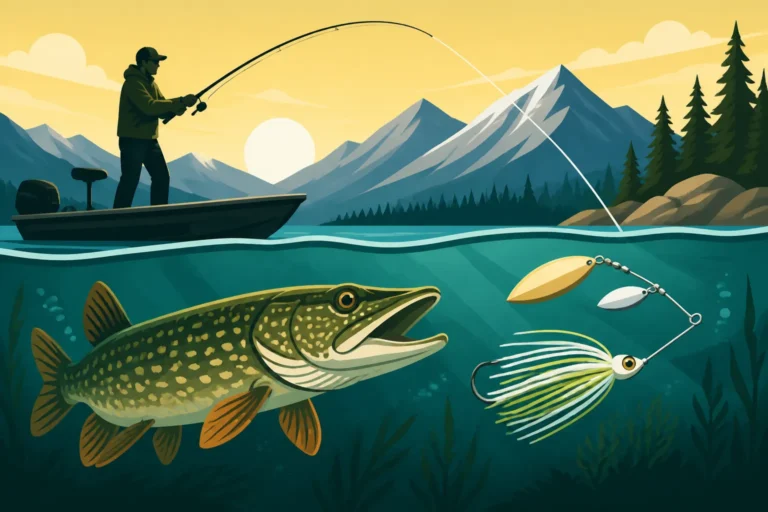
- Spinnerbaits: These are absolute workhorses in the weeds. The single hook rides upright, shielded by the wire arm and blade, making them remarkably weedless. Their flash and vibration are irresistible to pike. Choose models with heavier wire frames for durability and a good thumping blade. Colours often depend on water clarity, but chartreuse, white, and black are perennial pike favourites.
- Buzzbaits and Topwater Frogs: When pike are active and looking up, nothing beats the excitement of a topwater strike. Buzzbaits create a commotion on the surface, drawing pike out of their lair. Soft plastic topwater frogs, rigged weedless with a double hook system, can be walked or popped right over dense mats of vegetation where other lures would be useless. The thrill of a pike blowing up on a frog from seemingly impenetrable cover is truly unforgettable. For tips on this exciting method, check out Topwater Fishing for Pike in Alberta.
- Weedless Spoons: Silver or gold weedless spoons (like the Johnson Silver Minnow) are classics for a reason. They have a single hook protected by a wire guard, allowing them to wobble and flash through weeds without snagging. They're incredibly versatile and can be retrieved steadily, fluttered, or ripped through cover.
- Soft Plastics (Rigged Weedless): Large soft plastic swimbaits, worms, or creature baits can be incredibly effective when rigged weedless on a heavy-duty wide-gap hook. A Texas rig or a weighted, unexposed hook allows these baits to slip through weeds like ghosts. The key is to bury the hook point back into the plastic to prevent snags.
Here's a quick comparison of some popular weedless options:
| Lure Type | Primary Action | Weedless Rating | Best For | Pros | Cons |
|---|---|---|---|---|---|
| Spinnerbait | Flash, Vibration, Undulating skirt | Excellent | Subsurface, light-to-medium weeds | Versatile, strong vibration, highly visible | Can still pick up stringy weeds on retrieve |
| Buzzbait | Surface commotion, splashing | Excellent | Top of heavy mats, open pockets | Exciting topwater strikes, covers water quickly | Only effective when pike are looking up |
| Topwater Frog | Walking, popping on surface | Superior | Dense matted weeds, lily pads | Truly weedless, irresistible to lurking pike, exciting | Slower retrieve, can be missed by fish |
| Weedless Spoon | Wobble, flash, flutter | Good | Through sparse weeds, open pockets | Casts far, simple retrieve, classic effectiveness | Less vibration than spinnerbaits |
| Texas-Rigged Swimbait | Subsurface swimming action | Excellent | Dense weeds, bottom bouncing, vertical drops | Highly versatile, realistic profile, good for slow presentations | Requires heavier tackle to rip free, can foul sometimes |
For a broader view of successful pike lures, see Best Lures for Northern Pike in Alberta. You can find many of these effective lures, from various brands, readily available on platforms like Amazon.
Masterful Techniques for Weed Bed Dominance
Having the right gear is only half the battle. You need to know how to use it to effectively present your lure and extract your catch.
Precision Casting and Presentation
When fishing weeds, accuracy is everything. You're often targeting small pockets, lanes, or edges within the vegetation where a pike might be hiding.
- Targeting Pockets and Edges: Instead of casting indiscriminately over a huge mat, look for subtle breaks in the weeds, small clearings, or the distinct lines where weeds meet open water or a drop-off. These are prime ambush points. Make short, accurate casts to these spots. Overcastting means more chance of snagging on the retrieve back to your target.
- Skipping and Pitching: These are advanced casting techniques that allow you to get your lure into tight spaces under overhangs or deep into pockets that might be otherwise inaccessible. Skipping involves using a low trajectory cast to make your lure "skip" across the surface of the water or matted weeds, much like skipping a stone. Pitching is a quiet, accurate underhand cast that minimizes splash. Both are invaluable for stealthy presentations.
- Varying Your Retrieve: Once your lure is in the strike zone, experiment with different retrieve speeds and cadences. Sometimes a steady, fast retrieve that keeps the lure just above or skimming the top of the weeds will trigger a reaction strike. Other times, a stop-and-go retrieve, allowing the lure to fall into pockets, might be more effective. With topwater frogs, a slow walk-the-dog action or short twitches that mimic a struggling frog can be deadly.
Extracting Pike from Heavy Cover
The hook set and the fight are entirely different when a pike is buried in weeds. You need to be decisive.
- The Power Hook Set: When you feel a strike in heavy cover, resist the urge for a gentle "reel set." You need to hit that fish hard. Reel down quickly to take up slack and then deliver a powerful, sweeping hook set, leaning into the rod. The goal is to drive the hook through any weed material that might be in the pike's mouth and into solid flesh. Remember, braided line's lack of stretch is your friend here.
- The "Rip and Reel": Once you've hooked a fish, your immediate priority is to get it out of the thickest part of the weeds. Don't let it burrow deeper. Keep constant, heavy pressure on the fish. If it tries to bury itself, keep the rod tip high and reel as hard as you can, sometimes literally ripping the fish through the weeds. This isn't a gentle fight; it's a brute force extraction. A stiff rod is crucial here.
- Boat and Angler Positioning: If you're fishing from a boat, try to position yourself so you can follow the fish and maintain the best angle. This might mean using your trolling motor to move parallel to the weed line or to quickly approach a hooked fish. Don't be afraid to put the boat right into the weeds if you need to, especially if you're alone and can't quickly net the fish. Always be ready with a large, rubber-coated net to safely land your catch once you get it clear of the densest cover. A good net, like those found on Amazon, can make all the difference in quickly securing your catch. For more comprehensive tips, consult How to Catch Northern Pike in Alberta.
Safety, Handling, and Conservation in Weed Beds
Landing pike, especially big ones, can be a challenge. Doing it safely for both you and the fish, especially when dealing with weeds, is paramount.
Safe Handling of Pike
Pike have mouths full of razor-sharp teeth, and they can thrash violently, especially when tangled in weeds.
- Tools are Your Friends: Always carry long-nosed pliers or a jaw spreader. These are indispensable for unhooking fish safely without putting your fingers near those teeth. A good quality pair of fishing pliers is an absolute must.
- Support the Fish: When handling a pike for a photo or release, always support its body, especially if it’s a larger fish. One hand under the belly and the other gripping the lower jaw (carefully, away from teeth) will allow you to control it and minimize stress. Try not to let it flop around in the weeds, as this can injure it further.
- Minimize Time Out of Water: Pike are tough, but like all fish, they need oxygen. Get them unhooked, photographed (if you wish), and back in the water as quickly as possible. This is particularly true when they've just had a strenuous fight in heavy weeds.
Protecting the Environment
As anglers, we have a responsibility to leave the environment as we found it, or even better.
- Responsible Weed Management: While you'll inevitably pull up some weeds when fighting fish, try to minimize unnecessary damage. If your lure is snagged beyond retrieval, consider breaking off and re-tying rather than ripping up huge chunks of the weed bed.
- Leave No Trace: Always take out everything you bring in. This includes old fishing line, lure packaging, and any other trash. Fishing line, especially braided, can be deadly to wildlife if left in the water.
- Respect Wildlife: Remember that you are a visitor in their home. Be mindful of nesting birds, other animals, and other anglers. A little courtesy goes a long way.
Fishing for pike in thick weeds can be challenging, but with the right gear, smart techniques, and a commitment to responsible angling, it's an incredibly rewarding experience. There's nothing quite like pulling a vibrant, feisty pike out of a seemingly impenetrable green fortress. So, next time you see those thick weeds, don't shy away – grab your heavy tackle and get ready to rumble!
Disclaimer
This article is for general informational purposes only and does not constitute professional advice. Laws, prices and regulations vary by location and change over time. Consult a qualified professional for guidance on your specific situation.