Where mountain whitefish live in Alberta rivers
It can feel like finding a needle in a haystack when you're trying to pinpoint exactly where mountain whitefish hang out in Alberta's vast and diverse river systems. With so many waterways, from mighty glacial-fed rivers to smaller, winding streams, it's easy to feel overwhelmed. This guide is here to demystify their preferred habitats, helping you understand not just which rivers, but where within those rivers you're most likely to encounter these fascinating and often underrated sport fish.
Understanding Mountain Whitefish Habitat Preferences
Mountain whitefish, or "whiteys" as many of us lovingly call them, are incredibly unique fish with specific needs that dictate where they choose to live. They aren't just found anywhere; they've got particular tastes when it comes to their environment. Knowing these preferences is the first step to successfully locating them in Alberta's beautiful waterways.
Cold, Clear, and Oxygen-Rich Waters
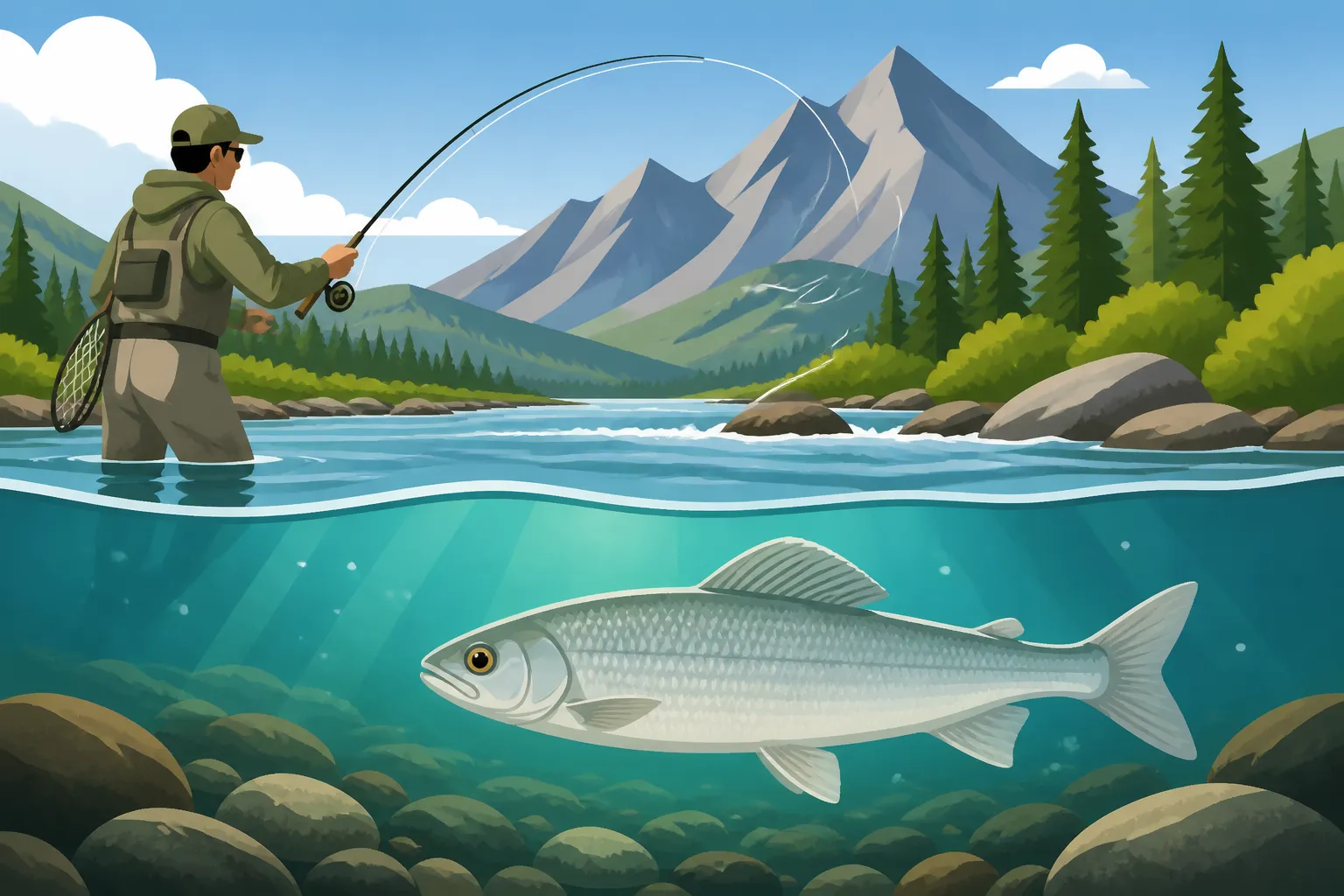
The primary characteristic of mountain whitefish habitat is the water itself: it must be cold, clear, and highly oxygenated. This is why you primarily find them in rivers that originate from glaciers or mountain snowmelt, rather than the warmer, murkier waters of prairie rivers. Think of those crisp, sparkling streams and rivers winding through the Rockies and foothills – that's their ideal home. These conditions are vital for their survival, particularly for respiration and the availability of their invertebrate food sources. During hot summer months, they'll actively seek out areas where cold springs enter rivers or where deeper pools maintain lower temperatures, making these spots prime targets.
When temperatures rise, the amount of dissolved oxygen in the water decreases. Whitefish, being cold-water species, are highly sensitive to this, which drives them to areas with consistent cold water flows. This also means that rivers affected by heavy agricultural runoff or significant human development might be less appealing to them due to potential water quality issues and temperature fluctuations. It’s a delicate balance that these fish rely on, and understanding this sensitivity will help you narrow down your search considerably.
Rocky or Gravel River Bottoms
Beyond water quality, the substrate of the riverbed is crucial. Mountain whitefish are bottom feeders, primarily sifting through gravel and rocks for insects, larvae, and other small invertebrates. Therefore, rivers with predominantly sandy or silty bottoms are generally not their preferred stomping grounds. They need those coarse, varied riverbeds to forage effectively and to lay their eggs during spawning season.
You'll often find them congregating near areas where the current has scoured out the finer sediments, leaving behind a mosaic of pebbles, cobbles, and larger rocks. These rocky bottoms provide excellent cover from predators and offer a smorgasbord of aquatic insect life. When you're scouting a river, look for these types of riverbeds – you can often see them through clear water, or feel them underfoot if you're wading. Many anglers looking for good river access also keep an eye out for suitable wading boots with good grip for these conditions, which you can easily find on platforms like Amazon.
Moderate Currents, Riffles, and Deeper Pools
Mountain whitefish aren't fans of stagnant water, nor do they typically hold in the most violent rapids. They thrive in areas with moderate currents, which bring a constant supply of food and oxygen. You'll often find them in transition zones where the river slows slightly after a riffle, or along the edges of faster runs.
Specifically, look for them in:
- Riffles: These are shallower, fast-moving sections of the river where the water tumbles over rocks, creating excellent oxygenation and dislodging insect larvae. Whitefish will often sit just downstream of the heaviest current, waiting for food to drift by.
- Runs: Deeper, more uniform sections of current that offer a steady flow. Whitefish will hold near the bottom, often in depressions or behind larger rocks that break the current.
- Deeper Pools: While they love current, pools offer respite, especially during colder months or for larger fish seeking cover. You'll often find them in the tailouts of pools, where the water begins to speed up again, or along the current seams where fast and slow water meet.
Understanding these micro-habitats within a river system is key. It's not enough to know which river; you need to know where in that river to cast your line.
Specific Rivers and Regions Where Whitefish Thrive
Alberta is blessed with numerous rivers that fit the bill for mountain whitefish, predominantly in the western half of the province. These are the arteries flowing down from the Rocky Mountains and the foothills, bringing that pristine, cold water whitefish adore.
The Bow River System
The Bow River, particularly the section downstream from Banff National Park and through Calgary, is legendary for its trout, but it's also a phenomenal mountain whitefish fishery. Its cold, clear, oxygenated waters and abundant rocky/gravel substrate make it an ideal environment. Whitefish are present throughout much of the river, but some stretches are particularly productive.
- Upper Bow (Canmore/Banff to Cochrane): Here, the river maintains its strong mountain character, with numerous riffles, runs, and deep pools. The whitefish here are often larger and more aggressive, competing with the healthy populations of brown and rainbow trout. Access can be found in various spots through Banff National Park Fishing Guide and Kananaskis Country Fishing Guide.
- Middle Bow (Cochrane to Calgary): Even as the river leaves the immediate mountains, it retains much of its prime habitat, especially closer to Cochrane. Look for them in the consistent runs and deeper pockets, often mixed in with trout.
- Lower Bow (Calgary to Carseland): While the river warms slightly and agricultural influence increases, the Bow still holds a significant whitefish population, especially in the swift currents and gravel bars. They can often be found in the same lies as trout, making for exciting multi-species days. If you're planning a trip here, check out our Bow River Fishing Guide for more details.
Rivers of Southern Alberta's Foothills and Mountains
This region is a goldmine for mountain whitefish, as it's crisscrossed with rivers directly fed by the Rockies. These rivers offer some of the most consistent and often spectacular whitefish fishing opportunities.
- Oldman River: A classic mountain river that flows through the foothills. The upper and middle sections, particularly around communities like Lundbreck and near the Gap, are excellent. Look for them in the long, gravelly runs and behind structure. The Oldman River Fishing Spots guide offers more specific locations.
- Crowsnest River: Renowned for its trout, the "Crow" is equally fantastic for whitefish. Its freestone nature, with clear water and abundant riffles and runs, provides perfect whitey habitat. Focus on the faster, shallower sections and the head of pools. You can learn more about fishing this fantastic river in our Crowsnest River Trout Fishing article.
- Highwood River & Sheep River: These smaller, more intimate rivers also hold healthy populations of mountain whitefish, especially in their upper reaches before they warm too much on the prairies. They offer a more secluded experience, often requiring wading. These rivers often require specialized gear for tricky wading, and Amazon carries a wide selection of robust wading boots and staffs.
- Livingstone River: A true gem, the Livingstone is a cold, clear stream with strong currents and plenty of pocket water, making it a prime spot for both trout and whitefish. It's a bit more remote but highly rewarding.
Rivers of Central and Northern Alberta's Foothills
As you move north, the character of the rivers shifts, but the mountain-fed streams still provide ideal whitefish habitat.
- Red Deer River (Upper Reaches): Above Sundre and into the mountains, the Red Deer River is a beautiful, productive mountain whitefish fishery. Similar to the Bow, focus on gravelly runs and the seams of currents.
- Clearwater River & Ram River: These are fantastic, wild rivers in the west-central part of the province. They offer pristine mountain whitefish habitat, often requiring a bit more effort to access but delivering incredible fishing.
- North Saskatchewan River (Upper Reaches): While it becomes a wide prairie river further east, the North Saskatchewan, particularly above Edmonton and into the Rocky Mountain House area, holds good numbers of mountain whitefish. Look for them in the swifter, rocky sections.
Here’s a quick overview of some prime river types and where you'll find whitefish:
| River Type | Typical Location for Whitefish | Substrate | Current | Key Characteristics |
|---|---|---|---|---|
| Major Mountain Rivers (e.g., Bow, Oldman) | Tailouts of pools, heads of runs, gravelly riffles, seams of current | Rocky, Gravel | Moderate to Swift | Excellent oxygenation, consistent cold temperatures, abundant food sources, often larger whitefish. |
| Foothills Streams (e.g., Crowsnest, Highwood) | Pocket water, small runs, behind boulders, deeper cut banks | Gravel, Cobble | Moderate | More intimate fishing, good populations, may require more technical wading. |
| Upper Prairie Rivers (e.g., Upper Red Deer, N. Saskatchewan) | Areas where current picks up over gravel, colder spring inflows | Mixed (Gravel, Silt) | Moderate | Whitefish exist in transition zones where mountain characteristics persist before the river warms significantly. |
Seasonal Movements and How to Adapt Your Search
Just like other river-dwelling fish, mountain whitefish don't stay in one spot all year. Their location can shift significantly with the seasons, driven by factors like water temperature, food availability, and spawning urges. Understanding these patterns is crucial for consistent success.
Spring and Early Summer: Following the Melt
In spring, as snowmelt fills the rivers, water levels can be high and often murky. Whitefish will typically move to areas where the current is a bit less ferocious, often congregating in slower eddies, side channels, or behind large obstructions. As the water begins to clear and settle down in late spring to early summer, they spread out into their classic feeding lies: the heads of runs, riffles, and oxygen-rich pockets.
This is a fantastic time to target them, as they are actively feeding after the lean winter months. They'll be keying in on emerging aquatic insects, so if you're fly fishing, matching the hatch can be very effective. If the water is still a bit discolored, sometimes brighter or larger nymphs are more effective. It's also a good idea to bring a variety of flies, which you can find in sets or individually on Amazon to cover different conditions.
Mid-Summer: Seeking Cool, Oxygenated Refuges
As summer progresses and air temperatures soar, river temperatures can climb, especially in rivers that aren't purely glacial-fed. This is when whitefish become particularly sensitive to water temperature and dissolved oxygen. They will actively seek out the coldest, most oxygenated water available. This often means moving to deeper pools, the mouths of cold feeder creeks, or areas where springs percolate into the main river channel.
During these warmer periods, fishing early in the morning or later in the evening can be more productive, as water temperatures are at their coolest. Avoid targeting them during the hottest parts of the day, as stress from being caught in warm water can be detrimental to their survival. Always prioritize the well-being of the fish, especially with cold-water species.
Fall: Spawning Runs and Aggressive Feeding
Fall is a particularly exciting time for mountain whitefish anglers. As water temperatures begin to drop, whitefish become incredibly active. This is their spawning season, and they will undertake migrations to suitable spawning grounds, typically gravelly riffles and runs in upstream sections of rivers. During these migrations, they can be highly concentrated and incredibly aggressive, both in their feeding and territorial behavior.
Fishing during the fall spawn can be very productive, but it's essential to understand the regulations for specific rivers, as some areas may have closures or restrictions to protect spawning fish. Post-spawn, they will often remain in these high-oxygen, gravelly areas, continuing to feed heavily to recover condition before winter sets in. This is truly one of the Best Time of Year to Fish in Alberta for these spirited fish.
Winter: Deeper, Slower Waters
Once winter truly sets in and rivers become covered in ice or slow to a crawl, mountain whitefish move to the deeper, slower sections of rivers. They'll seek out large, deep pools where they can conserve energy and find what little food is available. While not typically a prime ice fishing target in the same way as walleye or pike, they can still be caught through the ice in some deeper river sections, or by open-water anglers in stretches that remain unfrozen. Their metabolism slows down, and they become less active, requiring a more subtle approach from anglers.
Factors Affecting Whitefish Distribution
Beyond the immediate physical characteristics of the water, several other ecological factors play a significant role in where mountain whitefish can be found, and in what numbers. These interconnected elements create the complex tapestry of their riverine homes.
Food Availability and Aquatic Invertebrates
Mountain whitefish are primarily invertivores, meaning their diet consists almost entirely of aquatic insects and other small invertebrates. Therefore, they are naturally drawn to areas where these food sources are abundant. This includes prolific hatches of mayflies, caddisflies, and stoneflies, as well as the larval stages that live in the riverbed. A river rich in bug life is almost certainly a river rich in whitefish.
The type of river bottom (rocky, gravelly) directly supports these insect populations. Healthy riparian zones (the vegetation along the riverbanks) also contribute by providing shade, bank stability, and terrestrial insects that fall into the water. If a river experiences significant pollution or habitat degradation that impacts its insect populations, the whitefish will suffer and their numbers will decline or they will move elsewhere. Knowing what insects are prevalent in a specific river can also guide your lure or fly selection, a point often emphasized in detailed guides for specific rivers like the Bow River Fishing Guide.
Predation and Competition
Mountain whitefish share their cold-water habitats with other predatory fish, most notably various trout species (rainbow, brown, cutthroat, bull trout). They are an important part of the food chain, serving as prey for larger fish and birds of prey. This constant threat of predation influences where they choose to hold in the river. They will seek areas that offer some protection, such as deeper pockets, complex structure (large boulders, submerged logs), or areas where the current provides a degree of camouflage.
They also compete with trout for food resources. While whitefish are bottom feeders and trout often feed higher in the water column or on larger prey, there is still overlap. This competition can sometimes push whitefish into slightly different niches within the river, though they often coexist successfully in healthy river ecosystems. Understanding these dynamics helps explain why you might find both whitefish and trout in the same prime fishing spots.
Human Impact and Conservation Efforts
Human activities can have a profound impact on mountain whitefish distribution and populations. Habitat degradation, such as excessive siltation from runoff, bank erosion, or alteration of river channels, can destroy critical spawning and feeding grounds. Water withdrawals for agriculture or municipal use can reduce flow and increase water temperatures, making parts of a river uninhabitable for whitefish. Pollution, even in small amounts, can decimate invertebrate populations, robbing whitefish of their food.
Fortunately, there are ongoing conservation efforts in Alberta to protect and restore these vital river ecosystems. Regulations on fishing, such as bag limits and seasonal closures, help manage fish populations. Projects aimed at restoring riparian zones, improving water quality, and removing barriers to fish migration also contribute significantly. As anglers, we play a crucial role in these efforts by practicing responsible catch and release, respecting regulations, and advocating for healthy rivers. Familiarizing yourself with the Alberta Fishing Regulations Explained is a crucial step for every responsible angler.
Disclaimer
This article is for general informational purposes only and does not constitute professional advice. Laws, prices and regulations vary by location and change over time. Consult a qualified professional for guidance on your specific situation.