Best fly line for small mountain streams
Navigating Alberta's picturesque but often challenging small mountain streams can be incredibly rewarding, but it presents a unique set of frustrations for fly anglers. You're not trying to launch 70-foot casts across wide-open rivers; instead, you're constantly battling overhanging branches, tight banks, and finicky trout in crystal-clear, intimate settings. This guide is all about cutting through the noise to help you pick the perfect fly line that will make those precise, short-range presentations a joy rather than a constant struggle against your gear.
Understanding Small Mountain Streams in Alberta
Alberta's mountain streams are truly gems, offering breathtaking scenery and a chance to connect with wild trout in their natural habitat. However, they're a world away from the wide, open casting lanes of the Bow River. If you try to use the same heavy-duty, long-distance fly line you use for big rivers, you'll quickly find yourself tangled in trees, spooking fish, and generally having a frustrating time. These smaller waters demand a much more nuanced approach, starting with your fly line.
The Intimacy of Tight Spaces
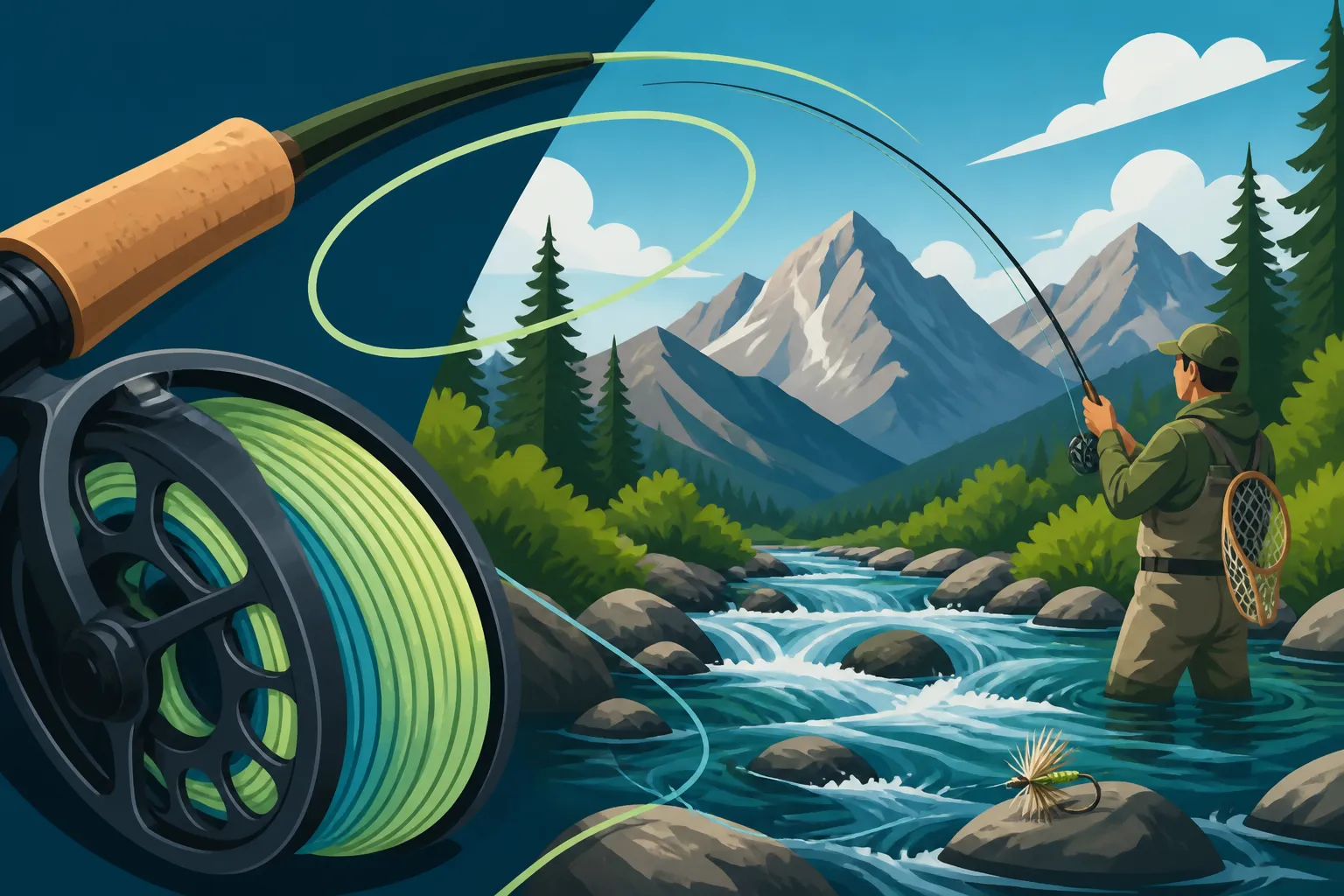
When you're knee-deep in a small mountain stream, you're not making graceful, wide-arc casts. Oh no. You're often side-arming it under a willow bush, roll casting from a cramped bank, or delicately dapping a dry fly into a tiny eddy just inches from the bank. The reality is that distances are short, often less than 20 feet, and precision is paramount. A fly line that struggles to load your rod at such close quarters, or that crashes down loudly on the water, is going to be your worst enemy. You need a line that loads quickly with minimal false casts, allowing you to get your fly in the strike zone fast and accurately without much fuss. Think of it like trying to park a big SUV in a compact car spot – it's just not designed for that kind of tight maneuvering.
Clarity and Spooky Fish
One of the most appealing aspects of Alberta's mountain streams is their pristine, crystal-clear water. It's beautiful to look at, but it also means the fish have an exceptional view of everything above and around them. Trout in these environments are often incredibly wary. A heavy fly line slapping down on the water, or even the glint of a brightly colored line, can send them darting for cover faster than you can say "fish on!" You're trying to present a tiny fly as naturally as possible, mimicking an insect softly landing on the surface. Anything that disrupts that illusion – a splashy landing, a visible line – will compromise your chances significantly. This sensitivity means your gear needs to be as stealthy as your approach.
Typical Fish Species and Size
While Alberta boasts some impressive trophy trout in its larger rivers, the fish you'll encounter in small mountain streams are generally smaller. We're talking about beautiful, wild rainbow, cutthroat, and sometimes even bull trout (remembering those Alberta Bull Trout Zero Possession Rule guidelines!). These fish, while feisty, rarely require a heavy-duty fighting setup. A lighter rod and a more delicate line are not only appropriate for their size but also crucial for presenting small flies effectively. Overpowering your tackle for these smaller, more delicate fish can lead to less enjoyable fights and more missed strikes due to heavy-handed presentations. The joy of these streams often comes from the sheer number of eager, wild fish, not necessarily their gargantuan size, and your line should reflect that delicate balance. You might also encounter Mountain Whitefish in Alberta Rivers in these streams, which also appreciate a subtle presentation.
Key Characteristics of an Ideal Fly Line for Small Streams
So, what exactly should you be looking for in a fly line to conquer these tricky small streams? It's not about the heaviest, fastest-shooting line. Instead, it’s about finesse, quick loading, and delicate presentation. Think of it as a precision instrument rather than a blunt tool.
Weight Forward WF vs Double Taper DT for Small Streams
This is often where the debate begins, and for good reason!
- Weight Forward (WF) Lines: Traditionally, WF lines have a concentrated weight in the front section, designed to help load the rod quickly and shoot line for distance. For small streams, a WF line can work, especially if it has a shorter, more aggressive front taper designed to load at close range. The benefit here is that you often only need to cast the heavy front section, allowing for quick, short casts without needing much line out. However, a standard long-taper WF line might feel clumsy for delicate presentations and can sometimes be harder to mend precisely for short drifts. If you're frequently casting short and need quick power, a WF line with a specific short-belly or "presentation" taper could be a good fit. Many anglers find these versatile for a range of fishing scenarios, even if not perfectly optimized for ultra-close quarters.
- Double Taper (DT) Lines: This is often considered the traditionalist's choice for small streams, and there's a lot of merit to it. A DT line has a symmetrical taper, meaning it's thickest in the middle and tapers down to a fine tip on both ends. This design offers a couple of significant advantages for small streams:
- Delicate Presentation: The long, fine taper on both ends of a DT line allows for incredibly delicate presentations. The fly lands softly, disturbing the water minimally, which is crucial for spooky trout in clear water.
- Roll Casting Mastery: DT lines are kings of roll casting. In tight quarters where a traditional backcast is impossible due to brush or rock walls, the ability to effortlessly roll cast a fly is invaluable. The even weight distribution of a DT line makes this motion incredibly smooth and efficient.
- Mending and Drag-Free Drifts: The consistent diameter of the belly allows for superior line control and mending, which is vital for achieving long, drag-free drifts in complex currents, even over short distances. This can be a game-changer when you're targeting a trout holding in a tricky current seam.
- Longevity: Since both ends are tapered, you can reverse a DT line on your reel when one end shows wear, effectively doubling its lifespan.
While some might argue that WF lines are more modern, for the unique demands of small mountain streams, a DT line often shines brightest, particularly for those who prioritize delicate presentation and roll casting ability.
Line Weight Considerations
For small mountain streams, lighter is almost always better. While you might use a 5- or 6-weight line on the larger Bow River Trout Fishing Near Calgary, for intimate waters, a 2- to 4-weight line is generally ideal.
- 2-Weight Lines: These are truly ultralight and incredibly fun for tiny creeks with very small fish. They offer the most delicate presentation possible, but require a very light touch and aren't practical if there's any wind or if you might encounter a slightly larger fish.
- 3-Weight Lines: This is often the sweet spot for many small mountain streams. A 3-weight line provides enough backbone to cast small dries and nymphs effectively, handles a little bit of wind, and still offers fantastic delicacy. It pairs wonderfully with a sensitive 3-weight rod, making fighting those spirited small trout an absolute blast.
- 4-Weight Lines: A 4-weight can be a good choice if you anticipate slightly larger fish, more wind, or need to cast slightly larger nymphs or small streamers. It still offers good presentation but gives you a bit more power and versatility than a 3-weight. It's often chosen by anglers who want a single setup that can handle both small streams and perhaps some smaller ponds or slower rivers.
The key is to match your line weight to your rod's rating. A perfectly balanced system will load effortlessly for those short, precise casts.
Taper Design and Presentation
Beyond just WF or DT, the specific taper of the line's front section dramatically impacts presentation. For small streams, you want a line with a relatively short, gentle front taper.
- Short Front Taper: This design helps the line load the rod quickly for those crucial short casts. It means you don't need a lot of line out of the rod tip to feel the "load" and make an accurate presentation. Lines specifically designed for "presentation" or "creek fishing" often feature this.
- Gentle Taper: A gentle taper allows for a softer landing of your fly and leader. A harsh, aggressive taper designed for punching through wind or turning over heavy flies will likely crash your small dry fly down, sending those wary trout scattering. You want a line that gracefully unfurls and lays the leader and fly down softly, like a feather.
Some manufacturers specifically design fly lines with tapers optimized for close-range accuracy and delicate presentation, sometimes labeling them as "creek," "presentation," or "trout" specific lines. When you're browsing the selection at Bass Pro Shops or searching online at Amazon, look for these descriptions.
Line Color and Stealth
While not always at the forefront of a beginner's mind, line color can play a significant role in clear, shallow mountain streams. Bright, fluorescent lines (think neon orange or chartreuse) are fantastic for visibility, helping you track your line and detect subtle strikes on larger rivers. However, in intimate, clear environments with spooky fish, a bright line can be a liability.
Consider duller, more natural colors:
- Olive Green or Sage: These colors blend naturally with riparian vegetation and dappled light, making the line less conspicuous to fish.
- Subtle Tan or Grey: Similar to olive, these muted tones disappear against many natural backgrounds, particularly if you're fishing against a gravelly or rocky bottom.
- Camo or Mottled: Some lines feature a multi-tone or mottled pattern designed for ultimate stealth.
While there's ongoing debate about whether fish truly see the fly line or just its shadow or disturbance, erring on the side of caution with a less visible line color certainly can't hurt your chances in these sensitive environments. It’s all part of the overall stealth package when fishing these beautiful, clear waters.
Top Fly Line Recommendations for Alberta's Small Mountain Streams
Given the unique demands of Alberta's small mountain streams, certain types of fly lines rise above the rest. It's not about brand names as much as it is about the fundamental design characteristics that empower delicate and accurate short-range casting.
Weight-Forward Lines for Versatility
Even though Double Taper lines often get the nod for small streams, don't completely discount Weight Forward lines. The key is to choose one specifically engineered for subtle presentations and quick loading at close distances, not one built for sending streamers to the horizon.
Many manufacturers offer "Trout Taper" or "Presentation Taper" WF lines in lighter weights (2-4 weight). These lines typically feature a shorter, more compact head and a longer, finer front taper than a standard WF line. This design allows the line to load the rod quickly with less line out, which is perfect for those tight casting situations. The fine front taper then ensures a soft landing of your fly and leader, reducing the risk of spooking those wary trout. They offer a good balance for anglers who might also fish slightly larger creeks or small rivers where a bit more punch might occasionally be needed. Think of them as the "all-rounder" for a variety of smaller water scenarios, particularly if you're comfortable with traditional casting strokes but want a line that handles close-quarters better than a general-purpose WF line.
Double-Taper Lines for Delicate Presentation
For many purists and those who frequently find themselves in truly challenging, brush-lined streams, the Double Taper (DT) line remains the gold standard. As we discussed, their symmetrical taper excels at delicate presentations, especially with dry flies and small nymphs. The ability to execute effortless roll casts and precise aerial mends with a DT line is unmatched, making them incredibly effective when a traditional backcast is simply not an option.
When choosing a DT line, focus on a 3- or 4-weight for most small stream applications. A high-quality DT line will have a supple coating, allowing it to coil neatly and shoot smoothly through the guides. The long, continuous taper helps maintain momentum on roll casts and allows for very controlled, soft landings. If your primary goal is the utmost in delicate presentation, superior roll casting, and fine-tuned line control for drag-free drifts, especially with tiny dry flies, then a DT line is likely your best friend on those intimate Alberta mountain streams. Brands like Scientific Anglers or Rio often have excellent DT offerings you can find at a specialty fly shop or on Amazon.
Specialized Lines for Ultra-Short Casts
Beyond the traditional WF and DT lines, some manufacturers have developed highly specialized fly lines specifically for situations demanding extremely short-range performance. These lines often have very aggressive, short heads or unique tapers designed to load a rod almost instantly with just a few feet of line out of the tip.
These "micro-taper" or "creek specific" lines are excellent for situations where you're truly dapping flies, high-sticking, or making casts of less than 15 feet. They excel at turnover for small flies and light leaders even in minimal space. While they might not be ideal for longer casts, for dedicated small stream anglers who spend most of their time working very close to the fish, these lines can significantly improve efficiency and enjoyment. They're often available in 1- to 3-weight options, perfectly suited for the lightest of tackle. If you're looking to push the boundaries of delicate, short-range work, exploring these specialized lines can open up new possibilities on those tiny trickles.
Here's a quick comparison of WF vs. DT lines for small streams:
| Feature | Weight Forward (WF) Line | Double Taper (DT) Line |
|---|---|---|
| Primary Strength | Quick loading, can cast further if needed | Delicate presentation, superior roll casting |
| Casting Range | Versatile for short to medium casts (with specific tapers) | Excels at short to medium, ultra-delicate casts |
| Loading at Close Range | Good, especially with short-belly or presentation tapers | Excellent, loads rod smoothly with minimal line |
| Delicacy | Good, with fine front taper designs | Excellent, long, even taper provides very soft landings |
| Roll Casting | Good, but often requires more effort than DT | Excellent, the most efficient line for roll casting |
| Mending Ability | Good, with proper technique | Excellent, consistent diameter aids in precise mends |
| Durability/Longevity | Standard, one end wears out | Can be reversed on reel when worn, extending life |
| Ideal for | Anglers needing versatility for small-to-medium streams | Anglers prioritizing stealth, roll casting, and dry fly presentation |
Setting Up Your Small Stream Fly Line System
Selecting the perfect fly line is just one piece of the puzzle. To truly maximize your effectiveness and enjoyment on Alberta's small mountain streams, you need to ensure your entire fly fishing system is harmonized. Every component, from your rod to your tippet, plays a role in achieving those delicate, accurate presentations.
Matching Line to Rod
This is non-negotiable for optimal performance. Your fly line must match the weight rating of your fly rod. If your rod is rated for a 3-weight line, use a 3-weight line. Period. Using an improperly weighted line will either overpower your rod (making delicate casts impossible) or underpower it (making it difficult to load the rod for accurate casting).
For small streams, as discussed, you're likely looking at a 2- to 4-weight rod. These lighter rods are designed to flex and cast effectively with lighter lines, offering a much more enjoyable fight with smaller fish and protecting light tippets. A perfectly matched line and rod will create a seamless extension of your arm, allowing you to feel the rod load and unload, giving you the control needed for pinpoint accuracy in challenging conditions. Many anglers enjoy the incredibly sensitive feel of a 2-weight or 3-weight rod when fishing these intimate waters. If you're still considering your rod, perhaps check out Best Fly Rods for the Bow River for principles, then size down accordingly.
Leader and Tippet Selection
Your leader and tippet are the critical link between your fly line and your fly, and for small streams, they need to be chosen with as much care as your line.
- Leader Length: Forget those super long, 12-foot leaders you might use on a big river. For small stream fishing, especially in tight quarters with short casts, a shorter leader is often more manageable and effective. A 7.5-foot leader is often a great starting point, and some anglers even go down to 6 feet, particularly if they're mostly roll casting or high-stick nymphing. The shorter leader helps the fly turn over more efficiently on short casts and keeps your fly closer to the heavier fly line for better control.
- Leader Taper: You still want a tapered leader to transfer energy from the fly line to the fly smoothly. Look for leaders with a delicate taper designed for trout fishing.
- Tippet Size: This is where finesse really comes into play. You'll generally be using light tippets, often 5X, 6X, or even 7X, especially when fishing small dry flies to wary fish in clear water. Lighter tippet is less visible to the fish and allows for a more natural drift of your small flies. However, there's a trade-off: lighter tippet is more prone to breaking, so you'll need to play fish carefully. It's a balance between stealth and strength. For more insights on specific sizes, check out Best tippet size for stocked trout – the principles apply to wild fish as well. Keep a spool of each size in your Best Fly Boxes for the Bow River (or any stream, really!).
When you're shopping at a local fly shop or browsing Bass Pro Shops, make sure to pick up leaders and tippet spools that are designed for light presentations.
Backing Considerations
For small stream fishing, your backing setup is usually quite straightforward. Since you're targeting smaller fish and making shorter casts, it's highly unlikely you'll ever see your backing during a fight. The primary purpose of backing on a small stream reel is simply to fill the spool, allowing the fly line to sit nicely and prevent excessive coiling or memory.
A good quality 20-pound test Dacron backing is more than sufficient. You typically only need 50 to 100 yards. Don't overthink it; reliability and a secure knot to your fly line are the main concerns here. The focus should be on the fly line and leader, not on a backing capacity you'll almost certainly never fully utilize. The reel itself can also be lighter and simpler, as heavy drag systems are rarely needed.
Conclusion
Choosing the right fly line for Alberta's small mountain streams is less about brute force and more about surgical precision and delicate presentation. By understanding the unique challenges of these intimate waters – the tight spaces, clear water, and often spooky trout – you can make an informed decision that elevates your angling experience. Whether you lean towards a specialized Weight Forward line with a presentation taper or embrace the traditional finesse of a Double Taper, the goal remains the same: to deliver your fly with utmost stealth and accuracy. Pair your chosen line with a balanced light rod, a short, delicate leader, and appropriate tippet, and you'll be well-equipped to unlock the true magic of fishing Alberta's hidden gems. So go ahead, gear up with confidence, and get ready to enjoy those quiet moments and spirited tugs on the line in some of the most beautiful places our province has to offer. Remember that fishing is a journey of continuous learning, and adapting your gear to the specific environment, like those pristine mountain streams, is a huge part of that adventure.
Disclaimer
This article is for general informational purposes only and does not constitute professional advice. Laws, prices and regulations vary by location and change over time. Consult a qualified professional for guidance on your specific situation.