Best Techniques for Ice Fishing Lake Trout
For many Alberta anglers, the thought of dropping a line through a hole in the ice to target a monster lake trout is both a thrilling challenge and a source of intense frustration. These majestic, deep-water predators are notoriously elusive, especially under a blanket of ice, often leaving even experienced ice anglers scratching their heads. This comprehensive guide will pull back the curtain on the most effective techniques, essential gear, and crucial safety tips to help you consistently connect with these incredible fish, turning those frustrating days into memorable victories.
Understanding Alberta's Lake Trout for Ice Fishing Success
Before you even think about drilling a hole, understanding the behaviour of lake trout under the ice is paramount. They're not like your typical shallow-water walleye or pike; these fish operate in a different world, and your approach needs to reflect that.
Lake Trout Habits and Habitat Under Ice
Lake trout, often simply called "lakers," are creatures of habit, but their habits are dictated by the deep, cold, oxygen-rich waters they prefer. When the ice caps Alberta's larger lakes, these fish don't simply disappear; they adapt to their new, often darker, environment. They are primarily piscivorous, meaning they feed on other fish. In many of Alberta's prime lake trout waters, such as Cold Lake, Lake Athabasca, or even some of the deeper Kananaskis Lakes, their diet largely consists of ciscoes (also known as lake herring) and whitefish. Knowing this helps us choose our presentations.
Under the ice, lake trout often patrol specific underwater structures. This could be a rocky reef that drops into a deep basin, a prominent underwater hump, or the sheer edges of a deep drop-off. They use these features for ambush points, congregating areas, and migration routes. Unlike some species that might cruise vast, open flats, lakers are often tied to structure, even if that structure is miles from shore in the middle of a massive lake. They'll follow contour lines, moving up and down the water column along these features, looking for schools of baitfish. Their activity can also be influenced by light penetration – on bright, sunny days, they might hug deeper shadows, while on overcast days, they might move shallower.
Prime Times and Locations
Timing is everything when it comes to ice fishing for lake trout. While you can catch them throughout the season, there are definitely periods when your chances significantly increase. Early ice, typically from November into early December, is often considered a golden window. The fish are still relatively active from the open water season, and ice formation is just beginning, which means less fishing pressure. They might still be found in slightly shallower water than mid-winter, often around depths of 20-40 feet, especially near points or transitional areas.
As mid-winter sets in, with thicker ice and often heavy snow cover, lake trout tend to retreat to deeper basins. This is when you'll be targeting them in 50, 80, or even over 100 feet of water. Don't be afraid of extreme depths; How deep lake trout go in summer can give you some insight, but remember that under the ice, their comfort zone shifts. This is where those deep humps, extensive rock piles, and sharp drop-offs become critical. Look for areas marked on your contour maps where these features are present, particularly if they are adjacent to very deep water.
Late ice, typically from March into April (depending on regional regulations and ice conditions), can also be productive. As the ice begins to break down and more oxygen enters the water, lakers can become more active again, often moving shallower to feed aggressively before the spawn. Always check the Alberta Fishing Regulations Explained before heading out, as season dates can vary by zone and species.
For specific locations, Best Ice Fishing Lakes in Alberta is an excellent resource. However, Cold Lake is arguably the most famous and productive lake trout ice fishery in Alberta. It's a massive, deep lake known for producing trophy-sized fish. Lesser Slave Lake also holds lake trout in its deeper sections, though it's more famous for walleye. The deeper lakes in the Kananaskis Country area, like Barrier Lake (with specific regulations), can also offer opportunities, though the fish tend to be smaller.
Essential Gear for Ice Fishing Lake Trout
You wouldn't bring a butter knife to a sword fight, and you certainly shouldn't bring ultralight panfish gear when targeting substantial lake trout through the ice. This isn't just about landing the fish; it's about making the entire experience efficient and enjoyable.
Rods, Reels, and Line Selection
When selecting your rod, think strength and sensitivity. A medium-heavy to heavy power ice rod, typically ranging from 36 to 48 inches in length, is ideal. These rods have enough backbone to handle a powerful lake trout but are short enough for comfortable use inside an ice hut or kneeling beside a hole. Look for a rod with a sensitive tip to detect subtle bites in deep water, transitioning quickly to a stout blank for setting the hook and fighting the fish. Fenwick, Shimano, and St. Croix all make excellent ice rods suitable for this application.
For reels, a sturdy spinning reel in the 3000-4000 size range is a solid choice. If you prefer baitcasting, a low-profile baitcaster designed for heavier lines can also work, offering better control over line drop and retrieval in deep water. The key is a smooth drag system and a robust gear ratio to crank up fish from significant depths.
Line choice is critical. Most serious lake trout ice anglers opt for a braided mainline, typically 20-30 pound test. Braid has zero stretch, offering superior sensitivity for detecting deep-water bites and powerful hooksets. It also cuts through the water better, reducing line bow. However, braid is visible, so you must tie on a fluorocarbon leader, usually 10-20 pound test, connected with a strong knot like an FG or Alberto knot. Fluorocarbon is nearly invisible underwater and has excellent abrasion resistance, which is important when fishing around rocky structure. For more general advice on specific gear, check out Best Ice Fishing Gear for Alberta.
Ice Augers and Fish Finders
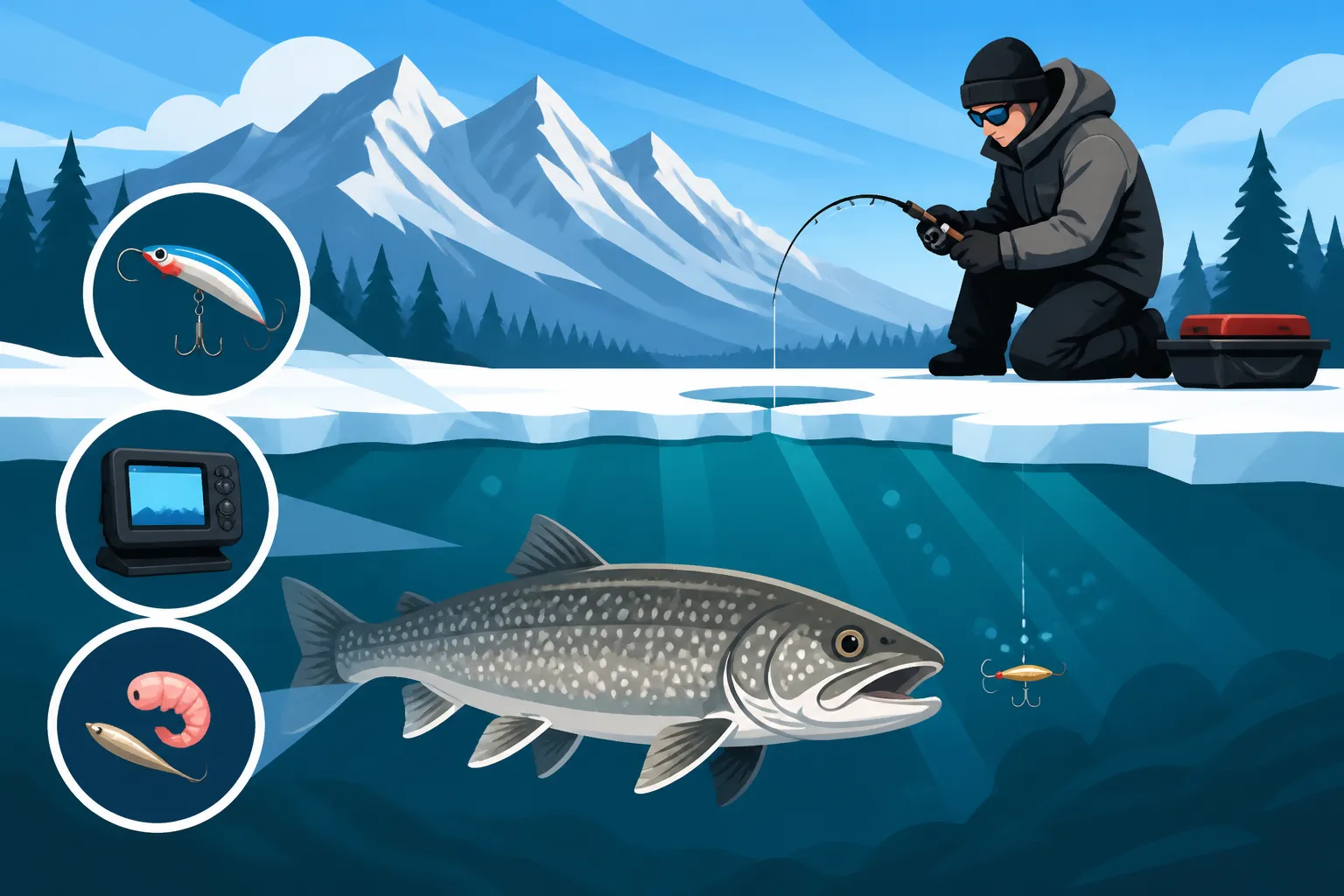
These two pieces of equipment are non-negotiable for serious lake trout ice fishing. Lake trout often require larger holes than other species, not just for landing them, but also for getting larger baits down and for better visibility with your fish finder. An 8 to 10-inch auger is recommended. While manual augers can work in thinner ice, a powerful gas, propane, or electric auger will save you immense time and effort, especially when drilling multiple holes or in deep, thick ice. Brands like Eskimo, Ion, and K-Drill are popular choices. You can often find a great selection of these on Amazon. An electric auger like the Ion G2 8-inch is fantastic for portability and quiet operation, especially if you're hole-hopping aggressively. This is all covered in depth in Best Ice Auger for Alberta Lakes.
A high-quality fish finder, or flasher, is absolutely essential. Lake trout are often found in deep water, and a flasher allows you to see your lure, monitor its depth, detect fish approaching, and observe their reaction to your presentation in real-time. This feedback loop is invaluable. Look for units with clear displays, good target separation, and excellent deep-water performance. Garmin, Humminbird (with their Helix series), and Vexilar are top contenders. The ability to distinguish between your lure, baitfish, and the actual lake trout will dramatically increase your success rate. This is especially true when you're looking for Best Fish Finder for Deep Lake Fishing.
Top Baits and Lures for Alberta Lake Trout
Lake trout can be quite aggressive, but also finicky. Having a diverse arsenal of baits and lures that mimic their natural prey is key to cracking the code on any given day.
Jigging Spoons and Lipless Crankbaits
These are workhorse lures for ice fishing lake trout. Their flash and vibration can call fish in from a distance, mimicking fleeing baitfish.
- Jigging Spoons: Think heavy, slender spoons that flutter and dart on the fall. Common sizes range from 1/2 oz to 1.5 oz, depending on depth and current. Popular options include the Luhr-Jensen Crippled Herring, Northland Buck-Shot Rattle Spoon, and Swedish Pimple. Silver, gold, white, and chartreuse are classic colours.
- Presentation: Drop the spoon to the desired depth, then use sharp, upward jigging motions followed by a pause. The pause is critical, as fish often strike on the fall or immediately after the pause. Vary the intensity and length of your jigging strokes until you find what the fish prefer. You might start with a 2-3 foot lift, then shorten it to a foot or even just a few inches if the fish are lethargic. Often, tipping a spoon with a small piece of minnow or a soft plastic grub can enhance its appeal.
- Lipless Crankbaits: These offer a different profile and vibration. Lures like the Rapala Rippin' Rap or Salmo Zipper create a strong rattling sound and a tight wobble, which can be highly effective, especially when fish are aggressive. Sizes typically range from 2 to 3.5 inches.
- Presentation: Lipless crankbaits are generally fished with a shorter, sharper lift-and-drop motion. They fall quickly and vibrate intensely on the retrieve. Again, watch your fish finder. If fish are rising to inspect but not committing, try subtle shivers of the rod tip or long pauses. These lures can be particularly effective in areas where whitefish are prevalent.
Tube Jigs and Swimbaits
When lakers are a bit more finicky or feeding on larger bait, soft plastics can be incredibly effective.
- Tube Jigs: A classic for lake trout, tube jigs imitate ciscoes, sculpins, or even crawfish. Large tubes, often 4 to 6 inches, rigged on heavy lead jig heads (1/2 oz to 1 oz or more) are the go-to. White, grey, black, and natural baitfish colours are popular.
- Presentation: The beauty of a tube jig is its slow, spiralling fall. Drop it down, let it hit bottom, and then impart subtle lifts and drops. Allow it to spiral back down on a slack line (while watching your line for any twitch!). Many strikes occur on the fall. You can also swim them slowly with a series of short lifts, mimicking a dying baitfish.
- Swimbaits: Paddle-tail swimbaits, 4 to 7 inches long, rigged on substantial jig heads (1/2 oz to 1.5 oz), can be deadly. Brands like Keitech, Berkley, or even some of the larger saltwater swimbaits work well.
- Presentation: Swimbaits are best retrieved with a lift-and-drop or a slow, steady retrieve to get that tail working. They create a natural swimming action that can entice a strike from even wary lakers. Experiment with different retrieve speeds. Sometimes, a slow, methodical retrieve is what it takes; other times, an aggressive, almost ripping retrieve can trigger a reaction strike. You can find a wide array of these soft plastic options on Amazon.
Live and Dead Baits (where legal)
While Alberta regulations can be strict on live bait, dead bait, where permitted, can be highly effective, especially for larger, less aggressive fish. Always confirm bait regulations for your specific body of water in the Alberta Guide to Sportfishing Regulations as they can change.
- Dead Baits: A whole or cut dead minnow (like smelt or shiners) can be rigged on a plain hook or tipped on a jigging spoon. The scent and natural profile can be irresistible.
- Presentation: Drop the dead bait to the bottom or just above where you're seeing fish on your flasher. Let it sit, or impart very subtle lifts and drops. This is a patience game, but often yields results for bigger fish.
- PowerBait or Scented Plastics: In some cases, scented soft plastics or PowerBait-style offerings designed to mimic fish can be effective, especially when tipped onto jigging spoons or small jigs. They add scent and often a bit of irresistible movement.
| Lure Type | Weight Range (typical) | Primary Action | Best Use Case | Tips for Success |
|---|---|---|---|---|
| Jigging Spoons | 1/2 oz – 1.5 oz | Fluttering, darting, flashing | Actively searching, drawing fish in, aggressive bites | Tip with minnow head or grub. Vary lift height and pause duration. Watch flasher for reactions. |
| Lipless Crankbaits | 1/2 oz – 1 oz | Vibrating, rattling, tight wobble | Aggressive fish, cover lots of water quickly | Quick, sharp lifts. Let it fall on slack to create vibration. Great for imitating fleeing baitfish. |
| Tube Jigs | 1/2 oz – 1.5 oz+ | Spiralling fall, subtle glide | Finicky fish, imitating ciscoes/sculpins, slower bite | Allow generous slack on the fall. Subtle twitches and long pauses. Match jig head weight to depth. |
| Paddle-tail Swimbaits | 1/2 oz – 1.5 oz+ | Natural swimming, tail action | Imitating larger baitfish, slow presentation | Slow, steady retrieves with occasional pauses. Rig on heavy jig heads. Can be very versatile. |
| Dead Minnows | N/A | Scent, natural profile | Lethargic fish, trophy hunting, scent trail | Check local regulations. Rig on a plain hook or tipped on a jig. Fish directly on bottom or suspended. |
Effective Jigging and Presentation Techniques
It's not just what you use, but how you use it. Mastering different jigging and presentation styles will set you apart.
Aggressive Jigging vs. Finesse Approaches
Lake trout often respond to extremes. They might be incredibly aggressive one day, chasing down anything that moves, and the next day, they might be incredibly lethargic, requiring the most subtle presentation.
- Aggressive Jigging: This is often your starting point. Use long, sharp rips of 3-5 feet with your rod, followed by a quick drop to let the lure flutter back down on a semi-slack line. Let it pause for 5-10 seconds, then repeat. This creates a lot of flash, vibration, and water displacement, which can attract lakers from a wide radius. This is particularly effective during early and late ice periods or when fish are actively cruising. Don't be afraid to experiment with the rhythm. Sometimes a "walk the dog" style under the ice, where you twitch the rod tip rapidly, can induce a strike.
- Finesse Approaches: When aggressive jigging isn't producing, scale back. This is where tube jigs shine, or a jigging spoon tipped with a minnow head. Use very subtle lifts of only 6-12 inches, or even just a quivering motion of the rod tip. Prolong your pauses significantly, sometimes up to 30 seconds or more. Often, a barely perceptible lift off the bottom, followed by a long, slow drop, is what it takes. This is often necessary during mid-winter when fish activity slows. Remember, lake trout are curious; sometimes, a stationary or barely moving bait is enough to trigger a strike when they're inspecting it on your flasher.
Hole Hopping and Depth Targeting
Lake trout are migratory even under the ice, constantly searching for food. Sitting in one spot all day is rarely productive.
- Hole Hopping: This is the most effective search strategy. Drill a series of holes over a promising structure – along a contour line, across a hump, or at varying depths on a drop-off. Fish each hole for 10-15 minutes. If you don't see any activity on your flasher or get a bite, move to the next hole. This methodical approach allows you to cover a lot of water and find active fish. It might seem like a lot of work, but the payoff can be huge. Make sure you're geared up for mobility; a sled for your gear and a powerful auger are key.
- Depth Targeting: Lake trout can suspend at various depths. Don't assume they'll always be on the bottom. Start by dropping your lure all the way to the bottom, then reel up a few feet and begin jigging. If no bites, reel up another 5-10 feet and repeat. Continue this process, working your way up the water column, until you find the depth where fish are holding. Your fish finder will be your best friend here, showing you exactly where the fish are and if they're reacting to your lure. Sometimes, lakers might be suspended 20-30 feet off the bottom in 80 feet of water, chasing baitfish. Remember the Alberta Lake Trout Limit on Cold Lake if you're fishing there; regulations can impact your retention strategy.
Reading Your Sonar for Success
Your fish finder is more than just a depth sounder; it's your window into the underwater world. Learning to interpret its signals is vital for ice fishing lake trout.
- Identifying Fish: On a flasher, fish will appear as coloured bands or arcs. Stronger, thicker bands usually indicate bigger fish. Watch for these bands rising to your lure.
- Interpreting Reactions: This is the game-changer. Drop your lure, and you'll see it appear as a signal (often green or yellow) on your flasher. When a fish approaches, you'll see its signal move towards your lure's signal.
- Aggressive Fish: Their signal will rapidly shoot up towards your lure and often appear right on top of it. This is when you might need to jig aggressively or even try to "run away" from them by reeling up quickly to trigger a chase.
- Neutral Fish: They might slowly rise to your lure's level and just sit there. This is when you need to try finesse techniques, barely moving your lure, or simply holding it still. Sometimes, just a slight quiver of the rod tip is enough to entice them.
- Finicky Fish: They might come up halfway, then drop back down. This tells you they're interested but not committed. Try changing your lure size, color, or presentation drastically. Often, making the lure appear to "escape" by reeling up a few feet rapidly can trigger a reaction strike.
- Bottom Structure: Your flasher will also show you the bottom contour. Look for subtle changes, small humps, or rocky areas that can hold baitfish and, consequently, lake trout. This knowledge, combined with the general Lake Trout Fishing in Alberta principles, will significantly enhance your approach.
Safety and Winter Preparedness
Ice fishing for lake trout often means venturing onto large, potentially treacherous bodies of water. Safety must always be your top priority.
Ice Safety Protocols
Never take ice conditions for granted. Even on well-fished lakes, conditions can vary dramatically from one area to another.
- Check Ice Thickness: The absolute minimum safe ice thickness for walking is 4 inches of clear, hard ice. For snowmobiles or ATVs, you need at least 5-7 inches, and for light vehicles, 8-12 inches. Never assume the ice is safe; always check with an ice chisel or auger as you go. Be especially wary of inlets, outlets, pressure ridges, and areas with current, as ice can be much thinner there.
- Go with a Buddy: Never ice fish alone, especially on large lakes targeting deep-water fish. A partner can provide assistance in an emergency.
- Carry Safety Gear: Essential safety items include ice picks (worn around your neck for quick access), a throw rope, and a fully charged cell phone. Tell someone your plans and expected return time.
- Avoid Slushy Areas: Slush on top of the ice often indicates weak ice beneath due to insulating snow, or simply a sign of deteriorating conditions.
- Dress Appropriately: Layering is key. Wear a flotation suit if possible; they provide both warmth and buoyancy in case of a fall through the ice.
Staying Warm and Comfortable
Long days on the ice, especially when targeting deep-water lakers, can be brutal if you're not properly prepared for the elements.
- Layer Your Clothing: Start with a moisture-wicking base layer, add insulating middle layers (fleece, down), and finish with a waterproof and windproof outer shell. This allows you to adjust to changing temperatures and activity levels.
- Protect Extremities: A good quality winter hat, insulated gloves or mitts (with backups), and warm, waterproof boots are essential. Many anglers prefer insulated rubber boots or pac boots for their warmth and waterproof qualities. Chemical hand and foot warmers can also be a lifesaver on bitterly cold days.
- Consider a Shelter and Heater: An ice hut, whether a portable pop-up or a more permanent shack, offers a sanctuary from the wind and cold. Pair it with a safe, portable heater (like a Mr. Heater Buddy) to stay warm. Always ensure proper ventilation when using propane heaters to prevent carbon monoxide buildup. For more details on shelters, consult Best Ice Hut for Alberta Lakes.
- Fuel Your Body: Pack plenty of high-energy snacks and hot beverages in a thermos. Staying hydrated and nourished helps your body regulate its temperature. A hot coffee or soup can make a world of difference on a frigid day.
Catch and Release Best Practices for Lake Trout
Lake trout are a valuable resource, and practicing responsible catch and release is crucial for maintaining healthy populations, especially for the larger, older fish that are vital for spawning.
Minimizing Stress for Deep-Water Fish
Lake trout caught from deep water (typically anything over 30-40 feet) can suffer from barotrauma, where rapid changes in pressure cause their swim bladder to expand.
- Identify Barotrauma: Signs include bulging eyes, distended belly, and difficulty swimming back down. While venting (puncturing the swim bladder with a needle) is a practice for some species, it's not always recommended or effective for lake trout and requires specific training.
- Quick Release: The best strategy is to get the fish back in the water as quickly as possible. Have your camera and measuring tape ready before you even bring the fish through the hole.
- Avoid Excessive Handling: Handle the fish minimally and with wet hands to protect its slime coat. Keep it in the water as much as possible, even when unhooking.
- Consider a Descent Device: For larger fish showing severe barotrauma, a descent device (like a "fish descender") can help them get back to depth safely by clamping onto their lip and releasing at pressure.
Essential Tools for Release
Having the right tools at hand makes for a quicker, safer release for both you and the fish.
- Long-Nosed Pliers or Hook Removers: These are indispensable for quickly dislodging hooks, especially if the fish has swallowed the bait or is thrashing. The longer reach helps keep your hands away from sharp hooks and potentially snapping jaws.
- Large Landing Net or Cradle: While bringing a net through an ice hole can be tricky, a large scoop net with rubberized mesh or a portable fish cradle (if space allows) can minimize harm to a large laker's fins and scales, especially when trying to manage it at the hole.
- Barbless Hooks: Whenever possible, use barbless hooks or pinch down the barbs on your lures. This makes unhooking much easier and less damaging to the fish. Some special regulation waters in Alberta mandate barbless hooks.
Remember that Alberta Fishing Regulations Explained will have specific rules about retention limits and special harvest licences. For example, some lakes like Cold Lake have unique slot limits or reduced possession limits for lake trout to protect the population. Familiarize yourself with these before you head out, and always prioritize the health of these magnificent fish for future generations.
Disclaimer
The information provided in this guide is for general informational purposes only and is not intended as legal advice. Fishing regulations, ice conditions, and safety recommendations can change frequently. Always consult the most current official Alberta Guide to Sportfishing Regulations, local authorities, and reliable ice condition reports before embarking on any ice fishing trip. The author and publisher are not responsible for any accidents, injuries, or legal infractions that may occur. Fish responsibly and safely.