Best Techniques for Deep Water Summer Lake Trout
Ah, summer fishing! While many anglers are happily casting for walleye in the shallows or chasing rainbows in a bustling river, you, my friend, are thinking about a different kind of challenge: the elusive deep-water lake trout. It’s a common frustration when those big lakers disappear into the cold, dark depths as the surface waters warm up. You know they're down there, but coaxing them to bite requires a whole new set of tactics. This guide is dedicated to helping you master the art of deep-water summer lake trout fishing in Alberta, covering everything from understanding their behavior to the specialized gear and techniques you'll need to succeed.
Understanding Summer Lake Trout Behavior
When the warm Alberta summer arrives, lake trout don't just vanish; they simply relocate. These cold-water predators seek out specific conditions that provide both comfort and an ample food supply. Understanding their seasonal movements and preferences is the first crucial step to consistently hooking into these magnificent fish.
The Thermal Stratification Phenomenon
One of the most significant factors influencing where lake trout hold in summer is thermal stratification. As the sun beats down on large, deep lakes like Cold Lake or Lesser Slave Lake, the water column separates into distinct temperature layers. The upper layer, called the epilimnion, is warm and oxygen-rich but too warm for lake trout. Below that is the thermocline, a transitional zone where the temperature drops rapidly. Finally, the hypolimnion is the deepest, coldest layer, where temperatures remain stable and often preferred by lake trout.
Lake trout are physiologically adapted to cold water, typically preferring temperatures between 7-12 degrees Celsius (45-54 degrees Fahrenheit). During summer, this ideal temperature range is almost exclusively found within or just below the thermocline, or in the hypolimnion itself. This is their comfort zone, their refuge from the warmer surface waters. They’ll move vertically throughout the day, often shallower during low-light conditions or when forage pushes up, but generally, their home base is in the cool depths. Trying to fish for them in 60-degree surface water is like trying to find a polar bear in the desert—it just won't happen.
Forage Fish Movement
Lake trout are apex predators, and their movements are heavily dictated by the availability and location of their food sources. In Alberta's deep lakes, their primary forage often includes cisco (also known as lake herring), smelt, and sometimes smaller whitefish. These baitfish also have their own temperature preferences and migratory patterns. As temperatures warm, these baitfish schools will often congregate along the thermocline or over deep water structures where they find their own preferred conditions and food.
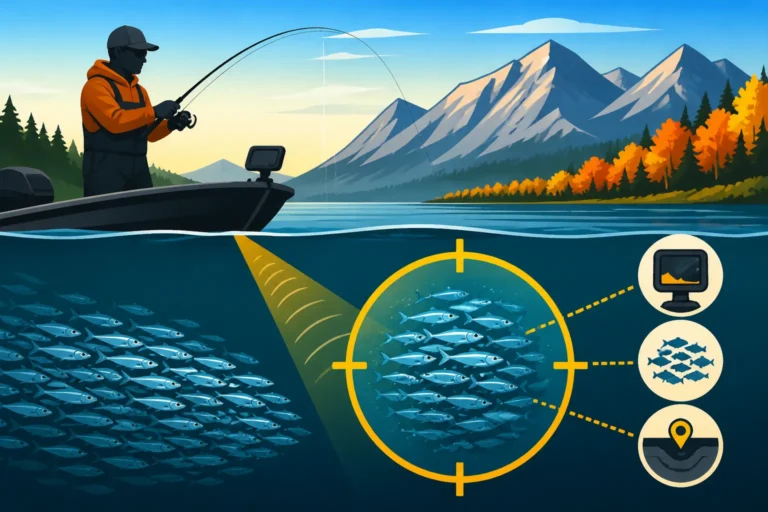
So, when you're looking for lake trout, you're really looking for their food. If you can locate dense schools of baitfish on your fish finder, especially if they are suspended in the ideal temperature range, you've likely found a prime feeding ground for lake trout. The trout will often be found either directly within these baitfish schools, or just below or around them, ambushing their prey. It's a dynamic relationship, and successful anglers understand that tracking the forage is key to tracking the predators.
Seasonal Patterns and Deep Water Retreat
While the general rule is "deep in summer," the exact timing and depth can vary slightly from lake to lake and year to year, based on the specific conditions. Early summer, after ice-out and before the full stratification sets in, might see lake trout still relatively shallow. However, by mid-July and throughout August, especially in larger, deeper bodies of water like those found in the mountains or the big northern lakes, they are consistently in the depths.
This deep-water retreat isn't just about temperature; it's also a safety mechanism. The deeper water provides protection from predators (though they are often the top predators) and gives them a more stable environment. As the season progresses towards fall, the lake will begin to "turn over," and temperatures will equalize, allowing lake trout to spread out and move shallower again. For now, though, your focus is entirely on getting your presentation down to where they live and feed. Remember, these are powerful fish that live in a cold, low-light environment, so your gear and tactics need to be specifically designed to handle these conditions.
Essential Gear for Deep Water Lake Trout
Catching lake trout in deep water during summer isn't just about dropping a line and hoping for the best. It requires specialized gear that can handle the depths, the powerful fight of a laker, and the unique techniques involved. Trying to use your standard walleye or pike setup will likely lead to frustration, lost fish, and maybe even broken equipment.
Rods, Reels, and Line Choices
For deep-water lake trout, your rod and reel combo needs to be robust. You're dealing with substantial weight to get your lures down, and powerful fish that can strip line and put immense pressure on your gear.
- Rods: Look for rods specifically designed for trolling or downrigging. These are typically 7 to 9 feet long, with a medium-heavy to heavy power and a moderate action. The moderate action is crucial as it acts like a shock absorber, helping to keep hooks set during the fight and preventing the fish from tearing free. A stiffer rod might be great for jigging, but for trolling with a downrigger, a rod with a good bend will show you a "loaded" state when you clip it to the downrigger, and a clear "strike" when the line releases. Companies like Daiwa or Shimano offer excellent trolling rods.
- Reels: A sturdy conventional (baitcasting) reel is often preferred over a spinning reel for deep-water trolling. These reels handle heavier lines better, offer more cranking power, and their line counters are invaluable for knowing exactly how much line you have out. Look for models with a strong drag system and a good line capacity (300+ yards of 20-30 lb test).
- Line: This is where things get interesting.
- Braided Line: For main line, many anglers opt for 30-50 lb braided line. Braid has almost no stretch, which gives you excellent sensitivity even at extreme depths, allowing you to feel subtle bites or detect if your lure is fouled. Its thin diameter also helps cut through the water, reducing drag.
- Monofilament Backing/Leader: While braid is great, it can be quite visible in clear water, and its lack of stretch can be hard on fish and gear when a laker suddenly hits. Many anglers will spool their reel with braid and then add a 50-100 foot top shot of 20-25 lb monofilament or fluorocarbon leader. Monofilament offers some stretch, and fluorocarbon is nearly invisible underwater, making it a fantastic choice for the leader section directly connected to your lure.
- Wire Line or Lead Core: For certain trolling methods where downriggers aren't used, specialized lines like lead core or wire line are employed. Lead core line has a lead center with a braided sheath, designed to sink a certain amount for every color (typically 10 yards) that passes through your guides. Wire line (often stainless steel) is even denser and sinks faster, allowing lures to reach extreme depths with less line out. These lines are challenging to work with, but incredibly effective for precise depth control without a downrigger.
Downriggers and Dipsy Divers
These are the unsung heroes of deep-water trolling, allowing you to present your lures at precise depths, far below what traditional methods could achieve.
- Downriggers: A downrigger is essentially a small winch system that uses a heavy cannonball weight (typically 8-12 lbs) to take your line and lure down to a specific depth. Your fishing line is clipped into a release mechanism on the cannonball. When a fish strikes, the line pops free from the clip, allowing you to fight the fish directly without the weight. This is probably the most effective way to consistently present lures at exact depths for lake trout. Whether you're using manual or electric models, having a good quality downrigger system is non-negotiable for serious deep-water laker fishing. You can find a wide range of reliable downriggers on Amazon, often with good reviews.
- Dipsy Divers (Planer Divers): These are disc-shaped diving devices that attach directly to your main line. They use water resistance and an adjustable trip mechanism to dive to specific depths (up to 100 feet or more, depending on size and settings) and then "trip" when a fish strikes, taking the diver out of play and allowing you to fight the fish. They also pull your lure out to the side of the boat, helping to spread out your presentation and cover more water. Dipsy divers are a more budget-friendly alternative to downriggers, or a great addition to a downrigger spread for covering different depths and zones.
Lure Selection: Spoons, Plugs, and Tubes
The right lure, presented at the right depth, is what ultimately entices a strike. Lake trout aren't particularly finicky when they're feeding aggressively, but certain lure types consistently produce.
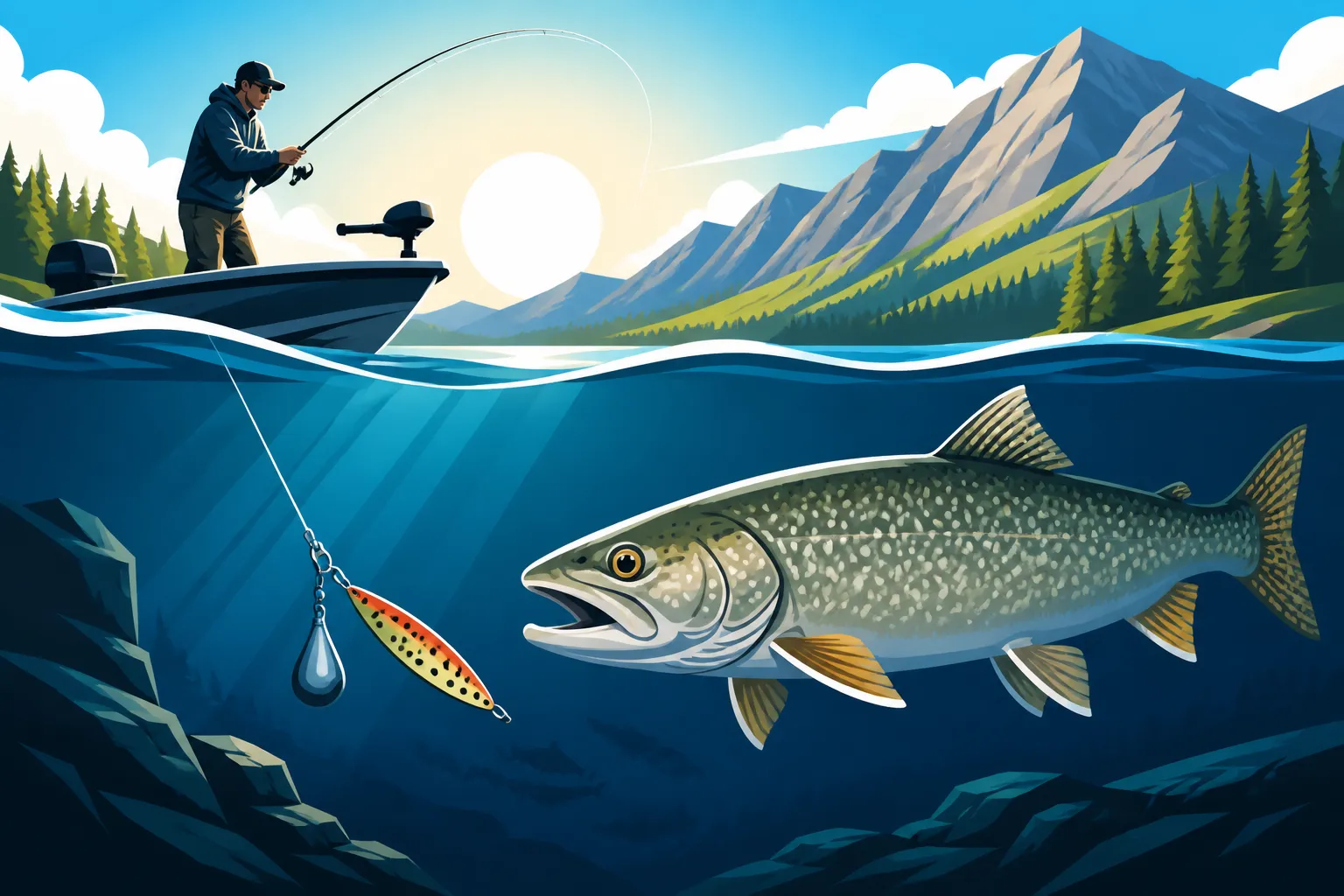
- Spoons: Classic trolling spoons are a staple for lake trout. Their wobbling, flashing action mimics injured baitfish. Larger sizes (3-6 inches) are generally preferred for deep-water lakers. Popular brands include Northern King, Luhr Jensen, and William's. Colors can vary, but silver, blue/silver, green/silver, chartreuse, and sometimes even vibrant oranges or pinks can be highly effective, especially in lower light conditions found at depth. Experiment with different flutter rates and profiles; some spoons have a wider, slower wobble, while others are more erratic.
- Plugs (Stickbaits/Minnow Baits): Deep-diving crankbaits or plugs that imitate baitfish are also excellent choices. Look for models designed to dive 15-30 feet on their own, as these will reach deeper when run behind a downrigger or Dipsy Diver. Brands like Rapala (Deep Tail Dancer, Down Deep Husky Jerk) or Storm (Deep ThunderStick) are common. Again, natural baitfish colors, as well as bright, UV-enhanced patterns, can be effective. The key is their tight wobbling action and ability to maintain depth.
- Tube Jigs and Vertical Jigs: While primarily associated with jigging, heavy tube jigs or vertical jigging spoons can also be trolled, especially in conjunction with a three-way swivel rig. White, pearl, and chartreuse are fantastic colors for tube jigs, mimicking dying baitfish. For vertical jigging, the "How to Catch Lake Trout in Alberta" guide dives deeper into this, but for deep trolling, these lures provide a compact, weighty profile that can be very attractive.
- Flasher/Dodger Combinations: Often, anglers will run a flasher or dodger in front of their lure. These are large, metal or plastic attractors that create a lot of flash and erratic movement, drawing attention from a distance. The actual fishing lure (often a smaller spoon, fly, or a plastic imitation of a cisco) is then trailed 18-36 inches behind the flasher. This combination is particularly deadly, especially when trying to imitate a school of baitfish.
Proven Deep Water Trolling Techniques
Trolling is arguably the most consistent method for covering vast expanses of water and presenting lures at specific depths to summer lake trout. It allows you to systematically search for fish, track bait schools, and respond to their movements. However, successful deep-water trolling is more than just dragging a lure behind the boat; it's a science of speed, depth, and presentation.
Controlled Depth Trolling with Downriggers
When lake trout are consistently holding at a specific depth, usually indicated by your fish finder or temperature probe, downriggers are your best friend. This technique offers unparalleled precision.
First, you'll want to deploy your cannonball to the desired depth. If your sonar is showing fish at 80 feet, set your downrigger to 80 feet. Next, clip your fishing line, with the chosen lure attached, into the release clip. Let out enough line so that your lure is running a good distance behind the cannonball – typically 50 to 150 feet. This "setback" is crucial. Too short, and the fish might be spooked by the cannonball; too long, and you lose sensitivity and depth control.
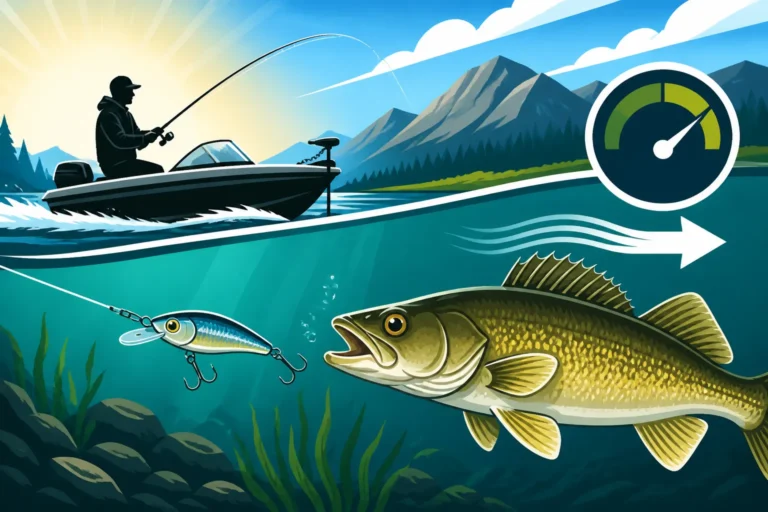
Maintain a trolling speed between 1.5 to 3.0 miles per hour. The ideal speed will depend on your lure and the fish's activity level. Watch your rod tip; it should be bent, indicating that the line is "loaded" into the downrigger clip. When a laker hits, the line will snap out of the clip, and your rod will spring back, signaling a strike. This system allows you to run multiple lines at different depths (if regulations allow) and distances behind the boat, creating a wide "spread" to intercept actively feeding fish. For more detailed instructions, check out our guide on Trolling Techniques for Alberta Lake Trout.
Lead Core and Wire Line Techniques
If you don't have downriggers or want to experiment with different presentations, lead core and wire line are effective alternatives for reaching deep water. These methods rely on the weight of the line itself to sink your lure.
- Lead Core: This multi-colored line (each color usually represents 10 yards) sinks at a consistent rate. By letting out a certain number of "colors," you can estimate your lure's depth. For instance, if your lure runs at 10 feet on its own, and you let out 5 colors of lead core, you might be fishing around 40-50 feet. The actual depth will vary with trolling speed, current, and lure action. Anglers often use a long fluorocarbon leader (20-50 feet) with lead core to provide a less visible connection to the lure. The main challenge is the bulkiness of the line and the significant bow in the line, making precise depth difficult to gauge.
- Wire Line: Even denser than lead core, wire line can get lures down very deep with less line out. It's often used with heavy conventional reels and specialized rods with roller guides, as wire line can easily abrade standard guides. Like lead core, it's about letting out a measured amount of line to achieve depth. Both lead core and wire line require a slower trolling speed than downriggers to be most effective, usually in the 1.0 to 2.0 mph range, allowing the line to sink. These lines are fantastic for presenting large spoons or heavy plugs over deep reefs and humps, but require a bit more finesse to master.
Planer Boards and Spreader Rigs
While more commonly associated with walleye or salmon fishing in shallower waters, planer boards can be adapted for deep-water lake trout, especially when paired with Dipsy Divers or heavy inline weights.
- Planer Boards: These devices clip to your main line and pull your lure out to the side of the boat, effectively widening your trolling spread. This is particularly useful in lakes like Cold Lake, where fish can be scattered. By running lines far from the boat, you can present lures to fish that might be spooked by the boat's engine noise. When a fish strikes, the board either releases from the main line (tethered by a secondary line) or simply stays on the line, allowing you to fight the fish. When targeting deep lakers, you'd typically run a Dipsy Diver or a heavy snap weight in front of your lure on the line running to the planer board, ensuring it gets down to the desired depth.
- Spreader Rigs (Three-Way Swivels): A simple and often effective technique for deeper water involves a three-way swivel. Tie your main line to one eye, a heavy sinker (2-6 oz) on a short leader (1-2 feet) to another eye, and your lure on a longer leader (4-8 feet) to the third eye. This setup allows the sinker to take your lure down while the lure trails freely behind and above the bottom. It's a great way to probe varying depths by adjusting the weight of the sinker and the amount of line let out. This method is particularly effective when you're targeting specific humps or ledges, allowing your lure to run just above the structure.
Effective Jigging Strategies for Lake Trout
While trolling covers water efficiently, sometimes lake trout are concentrated in specific areas, such as deep-water humps, drop-offs, or around baitfish schools. In these situations, vertical jigging can be incredibly effective, offering a more direct and often more exciting way to target individual fish or small groups.
Vertical Jigging Over Structure
When your fish finder lights up with fish arches around a deep structure, such as a submerged island, a prominent hump, or a sharp breakline, vertical jigging becomes the go-to technique. The key is to position your boat directly over the fish or structure using your trolling motor or anchor.
Once positioned, drop a heavy jig (usually 1-4 ounces) down to the depth where you're seeing fish. Lead jigs, heavy spoons, or large tube jigs are excellent choices. The action involves lifting the rod tip sharply, then allowing the jig to fall on a semi-slack line. This creates an erratic, dying baitfish action that often triggers aggressive strikes. Vary your retrieve speed and jigging cadence until you find what the fish prefer. Some days it's a slow, subtle lift; other days, a violent rip and drop is what they want. Keep a close eye on your sonar for any fish rising to inspect your lure; sometimes a paused presentation is what seals the deal. This technique is particularly effective on lakes with significant underwater topography, allowing you to pinpoint fish holding tight to structure.
Drifting and Bottom Bouncing
For those days when the lake trout are more spread out over a deep flat or gently sloping bottom, or when there's a light breeze to move your boat, drifting can be a highly productive jigging strategy.
Instead of staying anchored, you allow the wind or current to slowly push your boat across a promising area. As you drift, you'll still be vertically jigging your lure, but you'll be covering more ground. This method helps you find scattered fish without the noise and intrusion of a trolling motor or outboard. Pay close attention to your fish finder during the drift, noting where you get bites or see concentrations of fish. You might find a subtle depth change or a small piece of overlooked structure that's holding fish.
For drifting over rockier bottoms, a "bottom bouncing" approach can work. Use a heavy jig or a lead-head with a soft plastic swimbait, allowing it to periodically contact the bottom. This kicks up puffs of sediment, mimicking feeding baitfish or crayfish, and can attract curious lakers. Just be prepared for snags if you're over very rough terrain!
Ice Fishing Crossover Techniques
It might sound odd to talk about ice fishing in a summer guide, but many of the principles of deep-water jigging for lake trout through the ice translate directly to open water. The fundamental approach to jigging for lake trout is surprisingly consistent year-round.
Think about how you'd target lake trout through an ice hole: you drop a heavy jig or spoon, often tipped with a piece of minnow or scent, and you watch your flasher intently. The same visual and sensory approach applies in summer. You're still presenting a vertical bait to fish often holding near the bottom or suspended in specific layers. Lures like the Sebile Vibrato, Gibbs Croc Spoon, or heavy Bucktail Jigs are popular choices for both seasons. The key is still about getting your lure into the strike zone and imparting an action that triggers a bite.
Just as you'd jig a "Best Jigging Spoon for Winter Lake Trout" in January, you can apply similar rapid lifts, long pauses, and subtle trembles to your summer jigging. The only real difference is the method of delivery (through a boat vs. a hole) and the ability to move more freely to cover water. If you're proficient at ice fishing for lake trout, you already have a solid foundation for summer deep-water jigging.
Locating Lake Trout in Deep Water
Finding deep-water lake trout isn't about blind luck; it's about leveraging technology and understanding the underwater topography. When fish are holding at 80-150 feet, your eyes can't help you much. Your sonar unit and detailed maps become your most valuable tools.
Mastering Your Fish Finder and Sonar
A high-quality fish finder is absolutely indispensable for deep-water lake trout fishing. This isn't just for seeing fish; it's for understanding the entire underwater world beneath your boat.
- Interpreting the Display: Learn to differentiate between baitfish schools (often appearing as dense clouds or tightly packed arches) and larger individual fish (distinct, strong arches). Pay attention to the depth at which these targets are appearing. Are they suspended mid-water? Are they right on the bottom? The clearer your interpretation, the more efficient your fishing. Modern units from brands like Humminbird, Lowrance, or Garmin offer incredibly detailed displays, and you can often find great deals on them on Amazon.
- Settings and Transducers: For deep water, you'll want to adjust your sonar's sensitivity and range. Run a lower frequency (e.g., 50 kHz) transducer for better deep-water penetration, as higher frequencies (like 200 kHz) offer better detail in shallower water but lose power quickly at depth. Many units have a CHIRP sonar, which provides excellent target separation at all depths. Don't be afraid to tinker with the gain, scroll speed, and color palettes to optimize the display for your specific conditions. For a more comprehensive understanding of these vital tools, refer to our guide on the Best Fish Finders for Alberta Lakes.
- Side Imaging/Down Imaging: If your unit has side imaging or down imaging capabilities, utilize them. Side imaging can reveal structure and fish far to the sides of your boat, helping you identify promising areas without having to motor directly over them. Down imaging provides a photographic-like view directly beneath your boat, making it easier to identify specific features like boulders or submerged timber.
Reading Topographic Maps and Lake Charts
Long before you even launch your boat, studying topographic maps and lake charts can give you a massive advantage. These maps reveal the underwater landscape, guiding your search for prime lake trout habitat.
Look for areas with sharp depth changes, such as drop-offs, ledges, and submerged river channels. Humps, saddles, and underwater points are also prime holding areas, as they create current breaks and funnel baitfish. On large lakes like Cold Lake, identifying the major basins and correlating them with known lake trout areas is crucial. For instance, if you're considering Cold Lake Lake Trout Fishing, you'd look for its numerous deep basins and the dramatic drop-offs that often hold large schools of cisco, and consequently, the lake trout that prey upon them.
Modern electronic charts available on your fish finder or via apps like Navionics offer incredible detail, including contour lines that show depth changes, highlighting structures that would otherwise be invisible. Mark potential hotspots on your GPS before you even leave the dock. This pre-trip scouting saves valuable time on the water, allowing you to focus your efforts where fish are most likely to be.
Identifying Key Structural Features
Lake trout aren't just in deep water; they're in specific deep water locations that offer shelter, ambush points, and access to food.
- Deep Humps and Reefs: These elevated underwater features are magnets for baitfish, which in turn attract lake trout. The trout will often cruise around the edges, over the tops, or suspend near these structures, waiting to ambush prey. The depth of the hump's top, and the steepness of its sides, will influence how fish relate to it.
- Drop-offs and Ledges: A sudden change in depth provides a vertical highway for fish. Lake trout will often patrol these areas, moving up to feed and then retreating to deeper water. A deep ledge with access to a major basin is almost always a good bet.
- Underwater Points: Just like points on shore, underwater points extend into the lake, creating current breaks and natural funnels for baitfish. These can be particularly productive as fish will often congregate on the leeward side, out of the main current.
- Deep Flats with Scattered Boulders: While not as dramatic as humps, large, deep flats that are littered with scattered boulders or rocky outcroppings can also hold lake trout. These structures provide cover and ambush points on otherwise featureless bottom. Your side imaging sonar will be invaluable for identifying these subtle features.
- Thermal Clines: As discussed earlier, the thermocline itself is a "structural" feature in terms of temperature. Even if there's no physical structure, if a dense baitfish school is holding at a particular depth within the thermocline, lake trout will be there too. Always keep an eye on your temperature gauge, if your fish finder has one, or use a separate temperature probe to find this critical zone.
Maximizing Your Deep Water Lake Trout Success
Catching lake trout in their deep summer haunts is a rewarding experience, but it requires a blend of patience, persistence, and attention to detail. Beyond just getting your lure to the right depth, there are several nuances that can significantly increase your catch rate.
Varying Presentation and Speed
Lake trout, like all fish, can be finicky. What worked yesterday might not work today, and what works at one time of day might not work an hour later. This makes experimentation absolutely vital.
- Trolling Speed: Don't stick to a single speed. Try varying your trolling speed between 1.5 mph and 3.0 mph. Sometimes a subtle change in speed will alter your lure's action just enough to trigger a strike. Faster speeds often provoke a reaction strike, while slower speeds can entice less aggressive fish. Pay attention to your GPS speed and note down what's working. If you're running multiple rods, try different speeds on each to see what the fish respond to.
- Lure Action: Different lures perform best at different speeds. A spoon might have a wide wobble at 2.0 mph but wash out and spin at 3.0 mph. Plugs might dive deeper or have a tighter wiggle. Experiment with different lure types and sizes. If you're not getting bites, try switching lures entirely, or changing colors. Sometimes a subtle change from silver to a blue/silver or even a chartreuse can make all the difference, especially in the deeper, darker water.
- Jigging Cadence: When vertical jigging, vary your retrieve. Try sharp, aggressive rips followed by long pauses. Then try subtle lifts and drops, mimicking a dying baitfish. Sometimes a quick retrieve of 5-10 feet, then a free fall, can get a reaction. Observe your sonar; if fish are rising to your lure but not committing, adjust your cadence until they bite.
Reading the Conditions and Adapting
Successful anglers are constantly assessing and adapting to the changing conditions on the water. No two days are exactly alike, and the fish's behavior can shift rapidly.
- Weather Patterns: Barometric pressure changes can affect lake trout activity. A stable high-pressure system often means consistent fishing, while a rapidly dropping pressure before a storm can make fish more aggressive (or shut them down entirely). Overcast days or low-light conditions (dawn/dusk) often bring fish slightly shallower or make them more active feeders.
- Water Temperature: Even in deep water, subtle temperature fluctuations can influence where lake trout hold. If your fish finder has a temperature gauge or you use a probe, try to stay within that optimal 7-12 degrees Celsius range. This might mean adjusting your downrigger depth by a few feet throughout the day.
- Baitfish Location: Always be scanning your sonar for baitfish. If the bait moves, the lake trout will follow. Don't be afraid to pull up and move if the bait disappears from your chosen area. The ability to locate and stay on top of baitfish schools is a major determinant of success.
Utilizing Scent and Attractants
While lake trout are primarily sight feeders, especially in the clear waters of Alberta's mountain lakes, adding scent can sometimes provide an extra edge, particularly in deeper, darker water or when fish are less aggressive.
- Natural Scents: Attractants like Pro-Cure or Mike's Lure Scent can be applied to spoons, plugs, or soft plastics. These often mimic the natural oils of baitfish. Many anglers will also tip jigs with a small piece of dead minnow or even a strip of sucker meat, using the natural scent and texture to entice a strike.
- Scented Soft Plastics: Some tube jigs or swimbait bodies come pre-scented, offering a convenient way to add an olfactory component to your presentation.
- The "Why": In deep water, light penetration is limited. While the flash and vibration of a lure are primary attractors, scent can provide an additional stimulus, helping a curious laker home in on your offering, especially if they are hesitant to strike purely on visual cues. It's often that little extra something that convinces a reluctant fish to bite.
Safety and Ethical Angling Practices
Fishing for deep-water lake trout, especially on large, often remote Alberta lakes, comes with inherent responsibilities. Beyond just understanding the techniques, it's crucial to prioritize safety, adhere to regulations, and practice responsible angling to preserve these incredible fisheries for future generations.
Understanding Alberta Regulations
Before you even think about dropping a line, you need to be intimately familiar with the Alberta Fishing Regulations Explained. This is not just a suggestion; it's a legal requirement.
- License Requirements: Ensure you have a valid Alberta fishing license and a Wildlife Identification Number (WIN) Card. If you're a non-resident, your license requirements will differ. Our guide on Alberta Fishing License Age Requirements is a good place to start for general information.
- Zone-Specific Rules: Alberta's waters are divided into management zones, and regulations often vary greatly from one zone or lake to another. Pay close attention to specific rules for the lake you are fishing, such as Alberta Lake Trout Limit on Cold Lake. Always consult the latest Alberta Guide to Sportfishing Regulations.
- Bag and Possession Limits: Know the daily bag limit (how many fish you can keep in a 24-hour period) and the possession limit (how many fish you can have in your possession, including at home). These limits are critical for sustainable harvesting.
- Season Dates and Closures: Understand the fishing season dates for lake trout in your specific zone. Some lakes or rivers may have special closures or "catch and release only" periods to protect spawning fish. Ignoring these can result in hefty fines.
Responsible Catch and Release
Lake trout are long-lived fish, and many anglers, especially those targeting trophy-sized specimens, prefer to release them. Practicing proper catch and release techniques is essential for the survival of released fish.
- Minimize Fight Time: Use appropriate gear (heavy rods, strong lines) to land fish as quickly as possible, reducing their exhaustion.
- Handle with Care: Avoid handling fish by their gills or eyes. If possible, keep the fish in the water. If you must remove it, use wet hands to support its belly and tail. Avoid squeezing the fish.
- De-hooking: Use long-nosed pliers or a de-hooking tool to remove hooks quickly and gently. Barbless hooks can make this process much easier and are mandated on some Alberta waters.
- Revival: If a fish is exhausted, hold it gently in the water, facing into a mild current, until it regains its strength and can swim away on its own. Never just toss an exhausted fish back; it may not survive.
- Deep Water Considerations: When bringing lake trout up from extreme depths (e.g., deeper than 60 feet), they can suffer from barotrauma (swim bladder expansion). While some specialized tools like "fizzing" needles exist, proper use requires training and is often debated. The best approach is to minimize the time spent on the surface and release them as quickly as possible. Consider the potential for barotrauma when deciding whether to target fish from very deep water if your intention is strictly catch-and-release.
Boating Safety on Large Lakes
Large, deep lakes that hold summer lake trout can be vast and unpredictable. Safety should always be your top priority.
- Weather Awareness: Check the marine weather forecast before you leave and regularly throughout the day. Conditions can change rapidly, especially in mountain regions. Sudden squalls and high winds can turn a calm lake into a dangerous one very quickly.
- Required Safety Gear: Ensure your boat is equipped with all required safety gear, including life jackets (one for every person on board, easily accessible), a bailing device, a paddle or auxiliary propulsion, a sound-signaling device, and navigation lights if operating after sunset. If you're looking for gear, Amazon often has good starter kits for boat safety.
- Communication: Carry a fully charged cell phone (in a waterproof bag) and consider a marine VHF radio, especially if fishing out of cell service range. Let someone know your float plan—where you're going, when you expect to return, and who is with you.
- Know Your Boat: Understand your boat's capabilities and limitations. Don't overload it, and know how to operate it safely in various conditions. Ensure your engine is well-maintained.
- Staying Hydrated and Prepared: Even on the water, sun exposure can lead to dehydration. Bring plenty of water, snacks, sunscreen, and appropriate clothing layers. Being prepared for anything that Mother Nature throws at you will make your deep-water lake trout adventure much safer and more enjoyable. Our comprehensive guide on Life Jacket Requirements for Alberta Boaters offers crucial details on essential safety gear.
Fishing for deep-water summer lake trout in Alberta is an incredible pursuit, challenging and rewarding in equal measure. By combining an understanding of their deep-water habits with the right gear, precise techniques, and a strong commitment to safety and ethics, you'll be well on your way to experiencing the thrill of battling these majestic fish from the hidden depths.
Disclaimer
Please remember that fishing regulations and best practices can change. Always consult the most current Alberta Guide to Sportfishing Regulations before heading out on the water. This article is for informational purposes only and does not supersede official government regulations.