Best Sunglasses for Sight Fishing Clear Water
We’ve all been there: standing on the bank of a crystal-clear Alberta river, squinting into the glare, convinced there's a monster trout holding in that seam, but unable to see a thing past the surface shimmer. That blinding reflection, especially on bright days, is the ultimate enemy of the sight angler. This comprehensive guide is here to shed light on that frustrating problem, walking you through everything you need to know about choosing the best sunglasses specifically for sight fishing in Alberta's diverse and often stunningly clear waters.
Why Quality Sunglasses Are Non-Negotiable for Sight Fishing in Alberta
Fishing, especially in Alberta, offers some incredible opportunities for sight fishing. Whether you're stalking big brown trout on the Bow River, looking for cruising walleye in a clear lake, or trying to spot bull trout in a mountain stream (for careful catch and release!), being able to see into the water is an unparalleled advantage. Without the right pair of sunglasses, you're essentially fishing blind, relying on guesswork rather than direct observation.
The Frustration of Surface Glare and Eye Strain
Think about a bright summer day on the Oldman River or even a calm section of Lesser Slave Lake. The sun beats down, hitting the water at an angle, and bam—you're hit with a wall of white light. This isn't just uncomfortable; it actively prevents you from seeing anything beneath the surface. You can't spot fish, can't identify structure, and can't even see your fly or lure's presentation. It's incredibly frustrating when you know fish are there, but the sun is mocking your efforts.
Beyond the immediate hindrance to your fishing, constant squinting against glare leads to significant eye strain. A long day on the water without proper eye protection can leave you with headaches, fatigue, and a burning sensation in your eyes. Over time, this exposure to harmful UV rays can even contribute to serious eye conditions. So, it's not just about catching more fish; it's about protecting your vision for years of angling to come.
Gaining a Tactical Advantage in Clear Alberta Waters
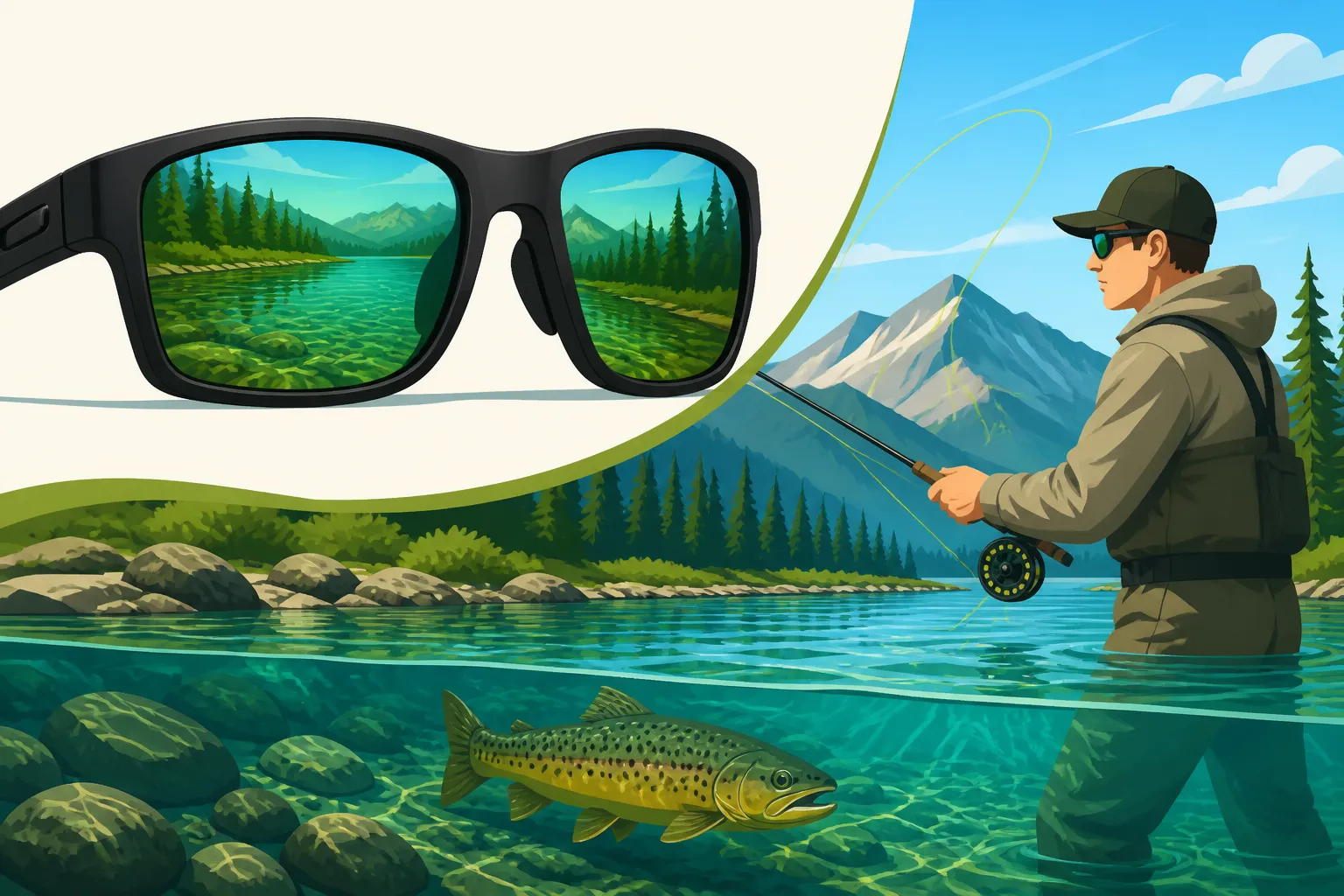
In many of Alberta's fisheries, especially our famous trout streams and pristine mountain lakes, the water is exceptionally clear. This clarity is a double-edged sword: it means fish can see you, but it also means you can see them – if you have the right tools. Good polarized sunglasses cut through that surface glare, allowing you to penetrate the water column visually. This lets you spot fish before they spot you, observe their feeding habits, identify subtle structure, and make more precise casts.
Imagine being able to see that logjam where a northern pike might be lurking, or the exact feeding lane where a rainbow trout is rising to an unseen hatch. This kind of visual information completely changes your approach, turning speculative casting into targeted presentations. It's the difference between guessing where the fish are and knowing, with certainty, where to put your fly or lure. This tactical advantage isn't just for fly anglers; anyone targeting fish in clear conditions, from spin casting for walleye to sight fishing for carp, will benefit immensely.
Understanding Polarization: The Angler's Superpower
If there's one feature that makes sunglasses indispensable for anglers, it's polarization. This isn't just a fancy marketing term; it's a fundamental technology that transforms your view of the water, making the invisible visible. Without it, you're just wearing tinted lenses, which might dim the light but won't cut the glare.
How Polarized Lenses Work to Eliminate Glare
The sun's light typically scatters in all directions. However, when it hits a flat, reflective surface like water, a significant portion of that light becomes horizontally polarized. This means the light waves vibrate primarily on a horizontal plane. It's this horizontally polarized light that creates that blinding glare we experience on the water, effectively acting as a mirror that prevents you from seeing beneath the surface.
Polarized lenses contain a special chemical filter that's vertically oriented. Think of it like a tiny, microscopic venetian blind. This filter blocks the horizontally polarized light while allowing vertically oriented light to pass through. The result? That harsh, reflective glare from the water's surface is dramatically reduced, allowing your eyes to perceive what lies beneath. It's not magic, but it certainly feels like it when you first experience the clarity.
The Tangible Benefits on the Water
The benefits of polarization for sight fishing are immediate and profound. Firstly, you gain unparalleled visual clarity into the water. Instead of seeing a shimmering white sheet, you'll see rocks, weeds, submerged logs, and most importantly, fish. This is crucial for navigating tricky wading situations in rivers like the Crowsnest River or spotting submerged hazards in a shallow lake.
Secondly, polarized lenses significantly reduce eye strain and fatigue. By cutting out the harsh glare, your eyes don't have to work nearly as hard, allowing you to stay focused and comfortable for much longer periods. This means more time enjoying the fishing and less time rubbing your temples. Finally, and perhaps most critically, they allow for true sight fishing. You can spot a fish, observe its behaviour, and accurately present your offering, vastly increasing your chances of a successful hook-up. This is especially vital when targeting elusive species or those with specific holding patterns, transforming your approach from hopeful casting to strategic pursuit.
Choosing the Right Lens Color for Alberta's Varied Waters
Picking the right lens color isn't just about aesthetics; it's a critical decision that dictates how effectively your sunglasses will perform in specific light conditions and water types common throughout Alberta. Different tints enhance contrast and manage light differently, giving you a distinct advantage depending on where and when you're fishing.
Amber, Copper, and Brown: Versatile All-Rounders
For the vast majority of fishing situations in Alberta, especially in our clear rivers and lakes, amber, copper, or brown lenses are your best bet. These colors excel at increasing contrast, making it easier to spot fish against varying bottom structures like rocks, sand, or weeds. They filter blue light, which can create haze, and enhance reds and greens, making the underwater world pop with definition.
-
Bright, Sunny Days: On those glorious, cloudless Alberta days, these darker tints provide excellent light reduction, cutting down on excessive brightness without sacrificing clarity. They're fantastic for chasing trout on the Bow River under a high sun or scanning for pike in a clear-water bay on Pigeon Lake. The enhanced contrast helps differentiate fish from their surroundings, even at a distance. Many anglers consider these colors their "go-to" lenses for everything from fly fishing to casting from a boat, offering a great balance of protection and visibility.
-
Partly Cloudy to Overcast Conditions: Even when the sun ducks behind the clouds, these lens colors maintain good performance. While they might be slightly darker than optimal for truly low light, the contrast enhancement remains valuable, helping to penetrate the diffused surface glare that still exists on overcast days. They're a solid choice for someone who wants one pair of sunglasses that can handle a wide range of typical Alberta weather conditions without needing to switch out lenses constantly. You'll find a great variety of these tints at stores like Bass Pro Shops.
Grey/Smoke: Ideal for Extremely Bright Conditions
While amber and copper are excellent for contrast, sometimes the Alberta sun is just relentlessly bright, especially on expansive, open lakes or rivers with very reflective bottoms. In these situations, grey or smoke-colored lenses really shine.
-
Maximum Light Reduction: Grey lenses offer the most natural color perception while providing maximum light reduction. They dim the overall light without altering colors, which can be beneficial if you're trying to accurately judge the color of a specific fly or lure. They don't enhance contrast as much as amber or copper, but their ability to cut down on sheer brightness is unparalleled. This can be a lifesaver on days when the sun is absolutely blasting the water, reducing strain and improving comfort.
-
Open Water and Bluebird Skies: If you're out on a large lake like Cold Lake targeting lake trout, or fishing a wide-open prairie reservoir on a blazing summer day, grey lenses are superb. They're also a strong contender for offshore fishing or any situation where there's intense, unyielding sunlight. While not always the first choice for intricate sight fishing in a stream, they are indispensable when sheer light reduction and true color representation are paramount, making them a useful addition to any angler's kit, perhaps purchased conveniently through Amazon.
Yellow/Copper Rose: Enhancing Low Light and Overcast Conditions
When the light starts to fade, or if you're faced with consistently heavy cloud cover or even murky water, your amber or grey lenses might feel too dark. This is where lighter tints like yellow or copper rose come into their own.
-
Low Light Penetration: These lighter tints are designed to brighten your field of view by allowing more light transmission while still maintaining polarization. They enhance contrast significantly, especially in dim conditions, making details more visible. This is incredibly useful during dawn or dusk bites, or when fishing on truly dark, rainy days. They can help illuminate shadows and reveal structure that would be completely obscured with darker lenses.
-
Overcast Skies and Murky Waters: For persistently overcast days, or when fishing waters that have a bit more color or murkiness to them, yellow or copper rose lenses can dramatically improve your ability to see beneath the surface. While "clear water" is the focus, sometimes even our clearest rivers can run a little off-color after a rain, and these lenses can still provide an edge. They’re less common for bright sight fishing but are invaluable for extending your fishing window in less-than-ideal light, ensuring you don't miss that crucial strike.
Here's a quick comparison of popular lens colors:
| Lens Color | Primary Use Case | Light Conditions | Key Benefit | Ideal Alberta Scenario |
|---|---|---|---|---|
| Amber/Copper/Brown | All-round fishing, contrast enhancement | Bright to Partly Cloudy | Max contrast, depth perception | Bow River trout, Walleye in clear lakes, general use |
| Grey/Smoke | Extremely bright conditions, natural color | Very Bright, Sunny | Max light reduction, true color perception | Open Cold Lake, Large reservoirs on bluebird days |
| Yellow/Copper Rose | Low light, overcast, hazy conditions | Low Light, Overcast, Dawn/Dusk | Brightens view, enhances contrast in dimness | Early morning river, murky post-rain conditions |
Frame Features and Fit for All-Day Comfort and Performance
The lenses might do the heavy lifting in terms of glare reduction, but a poor frame can quickly ruin your day on the water. The fit, material, and design of your sunglass frames are just as crucial for comfort, durability, and overall performance, especially when you're wearing them for hours on end, actively fishing.
Secure and Comfortable Fit for Active Angling
There's nothing more distracting than sunglasses that constantly slip down your nose or pinch your temples. For active angling, whether you're casting, wading, or netting a fish, a secure yet comfortable fit is paramount. Look for frames that have rubberized nose pads and temple grips. These materials prevent slippage even when you're sweating or getting splashed, ensuring your glasses stay put during critical moments. Many anglers, myself included, have lost a good pair of sunglasses to an unexpected lunge or a clumsy step while Wading Techniques for Alberta Trout Rivers.
The overall shape of the frame also contributes significantly to comfort. A lightweight design, often achieved with materials like TR90 nylon or titanium, reduces pressure points on your face and behind your ears. Wrap-around styles are particularly effective for anglers because they block peripheral light, preventing glare from sneaking in around the edges of the lenses. This comprehensive coverage helps maintain that crucial sight-fishing advantage and reduces eye strain from stray light. Before buying, try on several pairs and even mimic fishing movements to ensure they stay secure and don't interfere with your headwear.
Durability and Materials for the Rugged Outdoors
Alberta fishing can be tough on gear, and your sunglasses are no exception. They'll be exposed to sun, water, dirt, and inevitably, a few accidental drops. Investing in durable frame materials is a wise decision that will save you money and frustration in the long run. Polycarbonate and nylon frames are popular choices for their combination of strength, flexibility, and light weight. They can withstand impacts better than traditional plastic frames, which are prone to cracking.
Some premium fishing sunglasses feature grilamid or bio-based nylon frames, which offer enhanced durability and often a more sustainable profile. Metal frames, while stylish, can be heavier and are sometimes less practical for fishing due to corrosion concerns or their tendency to get hot in the sun. Consider frames with integrated hinges or robust hinge designs, as these are common points of failure. The goal is a frame that can endure the demands of river wading, boat bounces, and general outdoor abuse, protecting your valuable lenses within.
Vented Designs and Floatation Options
Beyond basic fit and material, some specialized frame features can greatly enhance your fishing experience. Vented frames, for example, are designed with small openings or channels that promote airflow, reducing fogging. This is a huge benefit when moving from a cold boat deck to a warm vehicle, or during strenuous activity on a humid day. Fogging lenses can completely blind you at a critical moment, so anti-fog features are more than just a luxury.
Another incredibly useful feature for anglers is floatation. Let's be honest, we've all had gear go overboard. Many high-quality fishing sunglasses now incorporate buoyant materials within their frames, ensuring that if they do take an unplanned swim, they'll bob on the surface instead of sinking to the bottom of the lake or river. This can be a real peace of mind feature, especially when you're fishing from a kayak or canoe, or Best Kayak for Lesser Slave Lake, where quick retrieval might be difficult. While not every pair floats, it's a feature worth considering if you're particularly prone to dropping things.
Essential Lens Technologies and Coatings Beyond Polarization
While polarization is the star of the show for cutting glare, modern sunglass lenses offer a suite of other technologies and coatings that further enhance clarity, durability, and comfort. Overlooking these features would be a missed opportunity to optimize your vision on the water. These aren't just marketing gimmicks; they provide tangible benefits that contribute to a superior angling experience.
Scratch-Resistant Coatings: Protecting Your Investment
It's an unfortunate truth that lenses are prone to scratches, especially when exposed to the grit and grime of a fishing environment. A tiny grain of sand, a brush against a branch, or even improper cleaning can leave a permanent mark that obstructs your vision. This is where high-quality scratch-resistant coatings come into play.
These coatings add a hard, clear layer to the lens surface, making it much more resilient to abrasive damage. While no lens is truly "scratch-proof," a good scratch-resistant coating significantly prolongs the life of your sunglasses and maintains optimal clarity. When you're spending good money on a pair of polarized lenses, ensuring they have this protection is a no-brainer. Look for brands that clearly state their lenses include this feature; it's a testament to their commitment to durability. A small scratch might seem minor, but it can quickly become an irritating distraction, especially when you're trying to spot a subtle rise or a cruising fish.
Anti-Reflective (AR) Coatings: Eliminating Internal Glare
You might think once the exterior glare is polarized, you're all set. However, light can also reflect off the back surface of your lenses, creating distracting glare that comes from behind you or from the sides. This internal reflection can be just as annoying and visually fatiguing as external glare, reducing the overall clarity and comfort of your vision.
Anti-reflective (AR) coatings, typically applied to the inside surface of the lens, work by reducing these reflections. They allow more light to pass through the lens rather than bouncing off it, leading to a clearer, sharper image with less distraction. For anglers, this means fewer phantom reflections of your own face, shirt, or the inside of your hat appearing in your field of view. It's a subtle but significant enhancement that contributes to less eye strain and a more focused view of the water, allowing you to concentrate fully on tasks like fly tying at the bank or reading the subtle movements of fish.
Hydrophobic and Oleophobic Coatings: Keeping Lenses Clear
Water, sweat, and oily smudges are constant companions on a fishing trip. These elements can quickly obscure your vision, forcing you to constantly clean your lenses. This is where hydrophobic and oleophobic coatings become incredibly useful, almost essential for an angler.
-
Hydrophobic coatings repel water. When water splashes onto your lenses, instead of sheeting out and leaving streaks, it beads up and rolls right off. This means clearer vision during rain, splashes from wading, or when landing a lively fish. It reduces the need for constant wiping, which in turn reduces the risk of scratching. Imagine being able to see clearly immediately after a sudden splash while working on a fish, rather than having your vision blurred.
-
Oleophobic coatings repel oils and smudges from skin, sunscreen, bug spray, and fish slime. These coatings make it much harder for oils to adhere to the lens surface, and when they do, they are much easier to wipe away cleanly without leaving streaks. This is particularly valuable for anglers who are frequently handling bait, fish, or applying sunblock. Combined, these coatings keep your lenses clearer for longer, allowing you to maintain focus on the water and your target species without interruption. You'll find these advanced lens features on many high-end brands available at retailers specializing in outdoor gear.
Protecting Your Investment: Care and Maintenance Tips
A good pair of fishing sunglasses is a significant investment in your angling success and eye health. Like any valuable tool, they require proper care and maintenance to ensure they perform optimally and last for many seasons to come. Neglecting them can quickly lead to degraded performance and a shortened lifespan.
Proper Cleaning Techniques on and Off the Water
The way you clean your sunglasses is critical. Wiping dirty lenses with a dry shirt sleeve is a surefire way to introduce tiny scratches over time, even with scratch-resistant coatings. Always start by rinsing your lenses under fresh water (if available) to remove any loose grit, dirt, or salt spray. If you're on the water and don't have fresh water, a gentle spray of breath followed by a wipe can work in a pinch, but be cautious.
Once rinsed, use a clean microfiber cloth specifically designed for lenses. Many sunglasses come with one in their case; if not, you can easily find them. Gently wipe the lenses in a circular motion. For stubborn smudges, a drop of lens cleaning spray (avoid harsh chemical cleaners) can be applied to the cloth, not directly to the lens, before wiping. Make sure to clean the frames as well, especially around the nose pads and hinges where sweat and grime can accumulate, leading to material degradation over time. Proper cleaning not only keeps your vision clear but also preserves the integrity of all those beneficial coatings.
Safe Storage and Handling to Prevent Damage
Where and how you store your sunglasses when not in use is almost as important as how you clean them. Never toss them loose into a tackle box, backpack, or car console. They will inevitably get scratched, bent, or even broken. Always store them in a hard case, which provides robust protection against impacts and crushing. If a hard case isn't practical for quick access, at least use a soft pouch or bag to prevent direct contact with other items that could scratch the lenses.
Avoid leaving your sunglasses in direct sunlight, especially on your dashboard or in a closed vehicle, for extended periods. Extreme heat can damage the lens coatings, warp plastic frames, and even compromise the polarization film. Similarly, be mindful of how you put them on and take them off. Using two hands to remove them reduces stress on the hinges and prevents accidental bending of the temples. Simple habits like these can add years to the life of your favorite pair of fishing shades.
Addressing Minor Issues and When to Replace
Even with the best care, sometimes minor issues arise. Loose screws in the hinges can often be tightened with a small jeweler's screwdriver, a common tool to keep in your Best Tackle Box Setup for Alberta Anglers. Replacement nose pads are also often available and can be easily swapped out if yours become worn or discolored. Don't be afraid to perform these small maintenance tasks; they can prevent bigger problems down the line.
However, there comes a point when replacement is the best option. Deep scratches that are constantly in your line of sight, frames that are severely warped or broken, or lenses where the polarization film has started to delaminate (you might see bubbles or haziness) are all signs that it's time for a new pair. While it can sting to replace an expensive pair, continuing to use compromised sunglasses will lead to eye strain, diminished performance, and ultimately, less enjoyable fishing trips. Consider your sunglasses a critical piece of safety and performance gear, just like a life jacket or a reliable fishing rod, and treat them with the respect they deserve.
Disclaimer
This article is for general informational purposes only and does not constitute professional advice. Laws, prices and regulations vary by location and change over time. Consult a qualified professional for guidance on your specific situation.