Best wading staff for fast river current
Navigating Alberta's stunning, yet often swift, rivers like the Bow or the Crowsnest can be an exhilarating experience for any angler. However, the sheer power of fast currents can quickly turn a picturesque day into a precarious situation, making footing uncertain and falls a real danger. This comprehensive guide is dedicated to helping you understand why a high-quality wading staff is not just an accessory, but an essential piece of safety equipment, and how to choose the best one to keep you stable and confident in even the most challenging flows.
Why a Wading Staff is Essential for Fast Currents
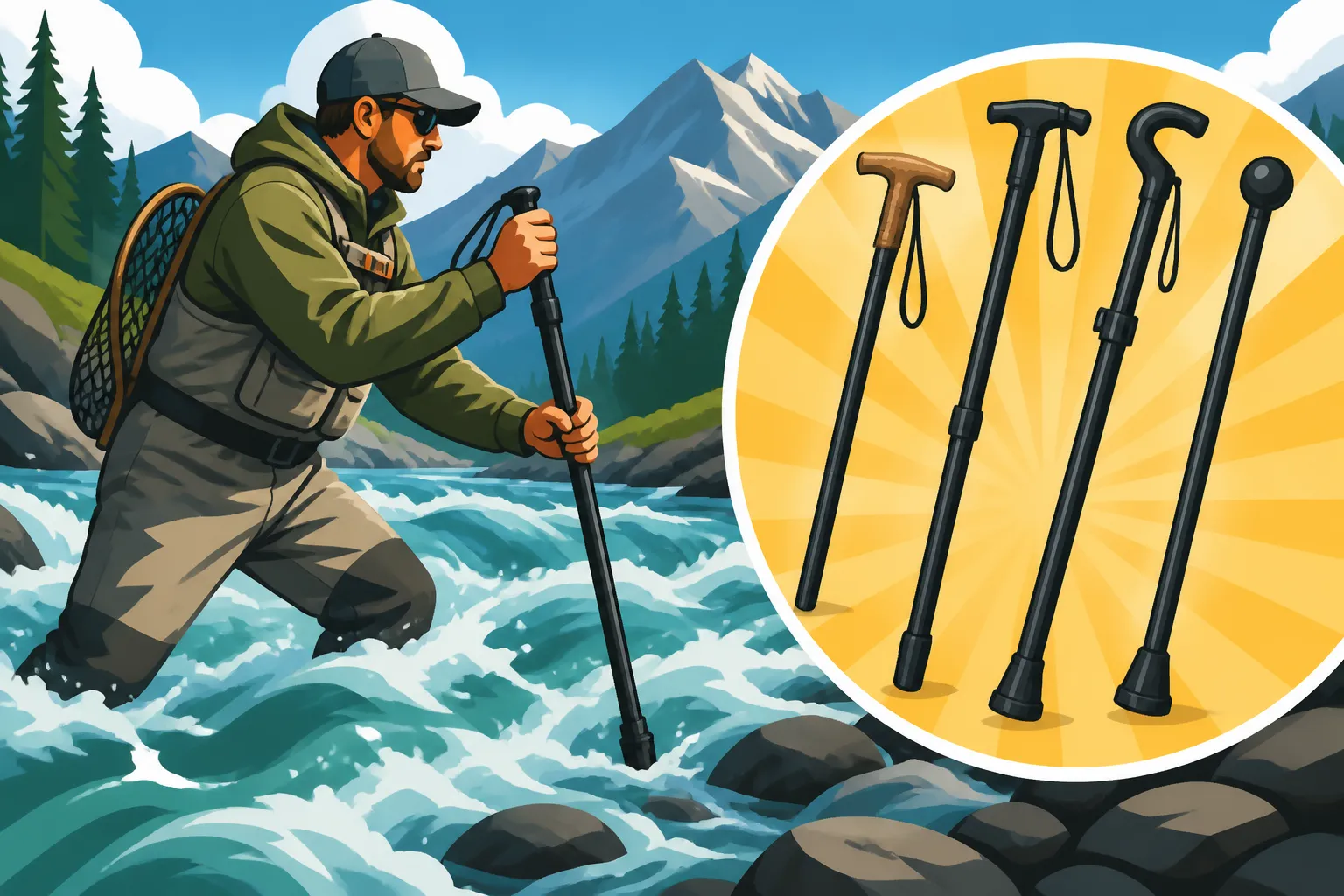
There's nothing quite like the feeling of standing in the middle of a prime trout run, water rushing past your legs, casting to rising fish. But that thrill comes with a genuine risk, especially when the current picks up. A sudden shift in the riverbed, a slippery rock, or an unexpected eddy can throw you off balance in an instant. This is where a wading staff truly earns its keep, acting as your third point of contact with the riverbed and significantly enhancing your stability. It’s not about being weak or inexperienced; it’s about being smart and safe.
Enhancing Stability and Preventing Falls
Think about walking across an icy patch on solid ground – you probably spread your feet wider, maybe shuffle a bit. Now imagine doing that on uneven, submerged rocks with a powerful force pushing against you. It's a recipe for disaster. A wading staff fundamentally changes this dynamic. By planting it firmly on the riverbed before taking your next step, you create a stable triangle with your two feet. This allows you to probe the depth, test the slipperiness of the bottom, and confirm your next foothold without committing your full weight. It’s like having an extra leg that never gets tired. This added point of contact drastically reduces your chances of a slip, stumble, or even a full-blown fall into cold, fast water, which can be dangerous and potentially damaging to your gear.
Many experienced anglers, even those who consider themselves sure-footed, have learned the hard way that one moment of inattention in a swift current can lead to an unexpected dunking. A staff helps mitigate this by giving you a constant, reliable point of support. It's particularly useful when crossing deeper sections or areas with turbulent water.
Probing Depth and Identifying Obstacles
One of the biggest unknowns when wading a new stretch of river, or even a familiar one after a big rain, is what lies beneath the surface. You can't see the bottom clearly, and guessing can be dangerous. A wading staff becomes your eyes underwater. Before you step, you can use the staff to feel for sudden drop-offs, large submerged rocks, deep holes, or slick algal growth. This proactive approach allows you to adjust your path, find safer passage, or decide if a particular section is simply too risky to wade.
Imagine you're trying to reach that sweet spot on the Bow River Fishing Guide, where the big browns often hold. You're slowly making your way across, feeling the current tugging. With your staff, you can gently tap ahead, identifying a sudden depression or a patch of loose gravel that might otherwise cause you to lose your footing. It helps you anticipate the terrain, rather than reacting to it as you fall. This careful probing not only keeps you upright but also builds confidence, allowing you to focus more on your cast and less on whether your next step will send you swimming.
Key Features to Look for in a Wading Staff
When you're out there, battling a robust current or making your way over slippery river rock, your wading staff needs to be an extension of yourself – reliable, easy to use, and durable. Not all staffs are created equal, and understanding the critical features will help you pick one that truly enhances your safety and enjoyment on the water.
Material and Durability
The material of your wading staff directly impacts its weight, strength, and longevity. You want something robust enough to withstand the forces of the river, the occasional bump against a rock, and constant use, yet light enough not to be cumbersome.
Aluminum Construction
Aluminum staffs are incredibly popular for a good reason: they offer an excellent balance of strength and weight. They're generally rigid and can take a beating, making them a solid choice for anglers who frequently navigate rocky riverbeds. Many quality aluminum staffs are anodized to resist corrosion, which is crucial when constantly exposed to water. The downside? While strong, they can sometimes bend or dent under extreme pressure, especially if they're a thinner gauge. However, for most Alberta river conditions, a well-made aluminum staff, perhaps from a brand you might find at Bass Pro Shops, will serve you faithfully for many seasons. They provide that reassuring thud on the riverbed that tells you your footing is secure.
Carbon Fiber and Other Composites
For those who prioritize ultralight gear, carbon fiber staffs are the crème de la crème. They offer superior strength-to-weight ratio compared to aluminum, meaning they're incredibly light but still exceptionally strong. This lightness can be a huge advantage on longer hikes to remote spots or for anglers who spend all day holding their staff against the current. The trade-off is often the cost, as carbon fiber is a premium material. While incredibly strong, carbon fiber can be more brittle than aluminum under certain types of impact, potentially cracking if struck sharply against a very hard, sharp rock. Other composite materials aim to strike a balance, offering good performance without the top-tier price of pure carbon fiber. They are worth considering if you're looking to shave ounces from your gear without compromising too much on durability.
Grip and Ergonomics
The grip of your wading staff is where you connect with the tool, and a poor grip can make even the best staff uncomfortable and less effective. You need something that feels secure in your hand, wet or dry, and provides good leverage against the current.
Comfortable and Non-Slip Handle
Look for a handle that fits comfortably in your hand, ideally with a textured or ergonomic design. Cork, dense foam, or rubberized grips are common and effective. Cork can be lovely to hold, naturally absorbing some shock and warming to your hand, but it can degrade over time. Foam or rubberized grips offer excellent non-slip properties, even when your hands are cold and wet. A secure grip prevents the staff from twisting in your hand when you lean on it or when the current pushes against it. You don't want your hand cramping up after an hour of steady wading, or worse, losing your grip when you need it most.
Adjustable Wrist Strap or Lanyard
This is a non-negotiable safety feature. A sturdy, adjustable wrist strap or coiled lanyard ensures that if you momentarily lose your grip on the staff, it doesn't float away downstream. Imagine dropping your staff in a strong current on the Crowsnest River – it's gone in seconds. A strap allows the staff to dangle from your wrist, keeping it accessible and preventing loss. Some lanyards are even designed with quick-release clips, which can be useful if the staff gets snagged in the current, allowing you to jettison it safely without being pulled off balance. Always make sure the strap is comfortable and secure, allowing for full hand movement while wading.
Deployment and Portability
How easily you can deploy and stow your wading staff is crucial, especially when you're moving between wading and bank fishing, or hiking to different spots. Convenience directly impacts how often you'll actually use it.
Folding vs. Telescoping Designs
Most modern wading staffs are either folding or telescoping.
- Folding staffs typically consist of several sections connected by an internal elastic cord, much like tent poles. They snap together quickly and securely with a single pull, and collapse into a compact size for easy storage. This quick deployment is a huge advantage when you suddenly encounter tricky wading. They're generally very sturdy once assembled.
- Telescoping staffs have sections that slide into one another and are locked with twist-locks or lever-locks. While they often offer greater adjustability in length, they can sometimes be slower to deploy than folding staffs, and if sand or grit gets into the locking mechanisms, they can become stiff or fail to lock properly.
Consider how you’ll be carrying it. If it’s mostly tucked away until needed, a compact folding staff that fits into a small pouch or clips to your pack might be ideal. If you anticipate needing frequent, minor length adjustments, a telescoping model could work, but maintenance to keep the locking mechanisms clean will be important.
Compact Storage and Carry Options
A good wading staff should fold down to a manageable size that can be easily stowed when not in use. Many come with a neoprene sheath or a small pouch that can be attached to a wading belt, backpack, or even inside a vest. Some anglers prefer a staff that simply clips onto a D-ring on their pack. The key is that it shouldn't be cumbersome or get in the way when you're casting or hiking. If it's a hassle to carry, you'll be less likely to take it, and then it can't protect you when you need it most. Check product descriptions, perhaps on Amazon, for their folded length to ensure it meets your portability needs.
Types of Wading Staffs and Their Best Uses
Just like different fly patterns are suited for different conditions, various wading staffs excel in particular environments. Understanding the nuances of each type can help you make an informed decision for your specific Alberta angling adventures.
Folding Wading Staffs
Folding staffs, sometimes called collapsible staffs, are arguably the most popular choice for river anglers, and for good reason. They are designed for quick assembly and compact storage. These staffs typically feature multiple short sections connected by an internal elastic cord. With a quick flick of the wrist, the sections align and lock into place, transforming a compact package into a rigid staff ready for action.
Best for Quick Deployment and Portability
The primary advantage of folding staffs is their rapid deployment. When you're transitioning from walking a riverside trail to entering a fast-flowing run, you can pull it from its sheath, snap it together in seconds, and have that crucial third point of contact immediately. This speed is invaluable in dynamic river environments. When folded, they are incredibly compact, often fitting neatly into a small pouch on your wading belt or backpack. This makes them ideal for anglers who hike to their fishing spots, or who frequently move between wading and bank fishing. If you're tackling sections of the Best Fishing Rivers in Alberta that require varied approaches, a folding staff is your agile companion. They are generally very sturdy once deployed, offering excellent stability.
Telescoping Wading Staffs
Telescoping staffs operate much like hiking poles, with sections that slide into one another. They use either twist-locks or lever-locks to secure the desired length. While they share some similarities with folding staffs, their design offers different advantages and considerations.
Best for Adjustable Length and Varied Depths
The key benefit of a telescoping staff is its adjustability. You can easily fine-tune the length to suit different depths or personal preferences, which can be useful if you're fishing a river with wildly varying depths. This adjustability might appeal to anglers who find themselves in both shallow riffles and deeper pools on the same outing. However, deploying them can take a little more time than a folding staff, as you might need to adjust and lock each section individually. They also tend to be slightly less compact when fully collapsed compared to some folding models. A potential drawback is that the locking mechanisms can sometimes seize up if exposed to a lot of grit or sand, requiring regular cleaning. If you tend to wade in extremely varied conditions and prioritize precise length adjustment, a telescoping staff could be a strong contender.
Fixed-Length Wading Staffs
While less common for general angling due to portability issues, fixed-length wading staffs are the simplest in design: they are one solid piece. They don't fold or telescope, offering unwavering rigidity and reliability.
Best for Maximum Rigidity and Durability
The strength of a fixed-length staff lies in its uncompromising rigidity. There are no moving parts to break or jam, making them incredibly durable. For guides or anglers who spend all day in the water, consistently navigating extremely fast and rocky currents, this might be a preferred option. You'll often see these used in very demanding environments where absolute stability is paramount. However, their major drawback is portability. Carrying a 4-5 foot solid pole while hiking or casting can be cumbersome. They're typically not stored away; they are constantly in hand. This means they are generally only practical if you are fishing directly from a boat or accessing very specific spots that require minimal walking. For most general-purpose wading in Alberta, where you might hike to a spot or change locations frequently, a fixed-length staff is usually too inconvenient.
Here's a quick comparison of the main types of wading staffs:
| Feature | Folding Wading Staff | Telescoping Wading Staff | Fixed-Length Wading Staff |
|---|---|---|---|
| Portability | Excellent (very compact) | Good (moderately compact) | Poor (bulky, non-collapsible) |
| Deployment | Very fast (snap-together) | Moderate (adjust and lock) | N/A (always ready) |
| Adjustability | Fixed length once deployed | Excellent (variable length) | N/A (single length) |
| Rigidity | Very Good | Good | Excellent |
| Durability | Very Good | Good (locking mechanisms can be vulnerable to grit) | Excellent (fewest moving parts) |
| Best Use | Mobile anglers, varied terrain, quick transitions | Anglers needing precise length adjustments, less frequent stowing | Guides, constant in-water use in extreme conditions, limited mobility |
Maintaining Your Wading Staff
A wading staff is a tool, and like any tool, it needs a bit of care to perform its best and last for many seasons. Neglecting it can lead to frustrating failures when you least expect them, potentially compromising your safety on the water. A little bit of TLC goes a long way in ensuring your staff is always ready to be your reliable third point of contact.
Regular Cleaning and Drying
This might sound obvious, but it's often overlooked. After every outing, especially if you've been in muddy or silty water, give your wading staff a good rinse with fresh water. This is particularly crucial for folding and telescoping models. Silt and small pebbles can get into the joints of folding staffs, making them difficult to assemble or disassemble. For telescoping staffs, grit can jam the twist-locks or lever-locks, preventing them from securing properly.
After rinsing, make sure to dry your staff thoroughly. If you have a folding staff, separate the sections as much as possible to allow air to circulate. For telescoping staffs, extend all sections fully to dry before collapsing them again. Storing a wet staff can lead to corrosion, especially on aluminum models, and can promote mildew on any fabric straps or grips. A quick wipe-down and air dry in a garage or shed will drastically extend its lifespan. You wouldn't put away your Best Fishing Rods for Alberta Rivers wet, so don't do it with your staff!
Inspecting for Wear and Tear
Before each fishing trip, take a moment to visually inspect your wading staff. Look for any signs of damage that could compromise its integrity.
- For folding staffs: Check the elastic cord that holds the sections together. Is it still taut? If it's starting to fray or lose tension, it might be time for a replacement or repair, as a slack cord makes assembly difficult and unreliable. Inspect the connection points between sections for any cracks or significant wear.
- For telescoping staffs: Examine the locking mechanisms (twist-locks or lever-locks). Do they still engage firmly? If they feel loose or sticky, they might need cleaning or adjustment according to the manufacturer's instructions. Check the integrity of the staff sections themselves for any bends, dents, or deep scratches that could weaken the material.
Don't forget the tip of the staff – the part that actually contacts the riverbed. Is the rubber cap (if it has one) still in good condition, or is it worn smooth? A worn tip will offer less grip on slippery rocks. Many staffs have replaceable tips, which is a great feature to look for when purchasing, as it extends the life of the entire unit.
Proper Storage Techniques
How you store your wading staff when not in use can also impact its longevity. Ideally, store it in a cool, dry place away from direct sunlight and extreme temperatures. Heat can degrade elastic cords and certain plastics, while extreme cold can make materials brittle.
If your staff comes with a protective sheath or bag, use it! This protects the staff from dings and scratches when it's in storage or being transported. For folding staffs, store them collapsed to keep the elastic cord under less tension, which can help prolong its life. Hanging a staff by its wrist strap can sometimes stretch the strap over time, so if possible, lay it flat or store it upright in a corner. These small habits ensure that when you grab your staff for your next adventure to a Best Trout Streams in Alberta, it's in prime condition and ready to keep you safe.
Disclaimer
This article is for general informational purposes only and does not constitute professional advice. Laws, prices and regulations vary by location and change over time. Consult a qualified professional for guidance on your specific situation.