Best swivel type for pike leaders
There’s nothing quite like the heart-stopping strike of a big northern pike, but that excitement can quickly turn to frustration if your leader fails. Many anglers in Alberta have felt that gut-wrenching moment when a trophy pike snaps off, often due to a weak link in their setup. One frequently overlooked component is the humble swivel, which plays a far more critical role in pike fishing than you might imagine. This guide is all about diving deep into the world of swivels, helping you understand which types are best for your pike leaders, ensuring your tackle holds up when that monster hits.
Why the Right Swivel for Pike Leaders Even Matters
You might think a swivel is just a swivel, right? Just a small piece of metal that connects two lines. But when you’re targeting aggressive, toothy critters like northern pike in Alberta's diverse waters, every single component of your setup needs to be up to the task. Pike are notorious for their violent head shakes, powerful runs, and their tendency to roll during a fight, all of which can put immense strain on your line and leader. If your swivel isn't right, it can quickly become the weakest link in your entire system.
Preventing Line Twist: The Silent Killer
One of the primary jobs of a swivel is to prevent line twist. Imagine casting and retrieving a spoon or a spinner for hours on end; without a swivel, your main line would quickly become a tangled mess, coiling up like a spring. This twisted line not only makes casting difficult and reduces your casting distance, but it also severely weakens the line itself, making it much more prone to breaking under pressure. When a big pike hits, the last thing you want is a compromised main line. The right swivel allows your lure to spin freely without transferring that rotation to your main line, keeping everything straight and strong.
Connecting Leader to Main Line: A Crucial Junction
Your pike leader, whether it's heavy monofilament, fluorocarbon, or wire, is designed to withstand those razor-sharp teeth. But how do you connect that robust leader to your potentially lighter main line? This is where the swivel steps in as a critical connector. It provides a secure, strong junction between two different line types and strengths, ensuring that the transition is smooth and doesn't create a weak point that can unravel during a fierce battle. Without a reliable swivel, you'd be forced to tie complex knots that might not be as strong or as easy to manage, or worse, risk the pike simply biting through a direct connection.
Durability Under Duress: Surviving the Fight
Pike fights are not gentle affairs. These fish hit hard, dart rapidly, and often try to "death roll" to throw the hook. This puts incredible torsion and stress on every part of your terminal tackle, including the swivel. A flimsy, poorly constructed swivel can bind up, open, or simply break under the strain. Imagine hooking into a true Alberta trophy, a northern pike that's pushing forty inches, only to have your swivel give out mid-fight. It's not just frustrating; it's heartbreaking. Choosing a high-quality, appropriately strong swivel ensures that this critical component can withstand the rigours of an intense pike battle, giving you the confidence to fight the fish hard and bring it to the net. You want to make sure your Best Line Weight for Pike Fishing is matched by all other components in your setup.
Understanding the Main Types of Swivels for Pike
When you walk into a tackle shop or browse online at places like Bass Pro Shops or Amazon, you'll see a bewildering array of swivels. While they all perform the basic function of preventing line twist and connecting components, some are far better suited for the demands of pike fishing than others. Let's break down the most common types and their suitability for those toothy predators.
Barrel Swivels: The Basic Workhorse
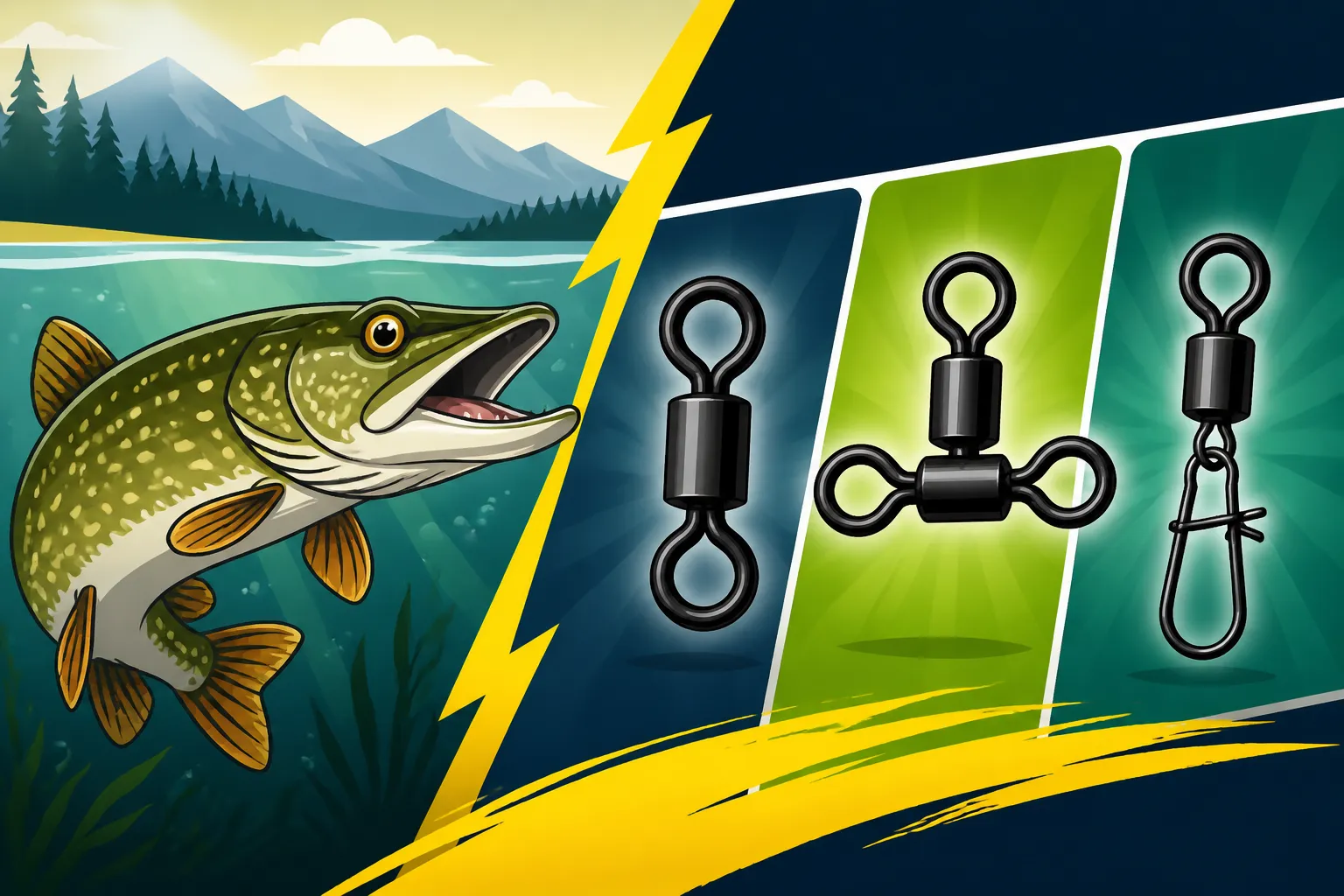
Barrel swivels are perhaps the most common and recognizable type of swivel. They consist of two rings joined by a barrel-shaped body that rotates. They are simple, affordable, and readily available in almost any tackle section.
- Pros: Very inexpensive, easy to find, and generally effective at preventing line twist for lighter applications or when using lures that don't spin excessively. They are fine for connecting your main line to a leader when targeting smaller panfish or modest trout.
- Cons: For pike fishing, especially for larger fish or with lures that create a lot of torque (like large spoons or bucktail spinners), standard barrel swivels can often fall short. Their rotation isn't always as free, and the construction can sometimes be less robust than other types. They might seize up under heavy load or allow some twist to transfer to your line. For aggressive pike, they can sometimes be a weak point in terms of sheer breaking strength, and they might open up on powerful head shakes.
Crane Swivels: A Step Up in Performance
Crane swivels look similar to barrel swivels but are generally built with a more refined design. They feature two rings connected by a central, typically more elongated body that allows for smoother rotation.
- Pros: Crane swivels offer a noticeable upgrade in both strength and rotational efficiency compared to standard barrel swivels. Their design often means they rotate more freely, doing a better job of eliminating line twist, which is crucial when throwing big, erratic lures for pike. They are also usually made with higher quality materials and construction, making them more durable and reliable under the strain of a pike fight. They strike a good balance between performance and cost, making them a popular choice for many anglers seeking to upgrade their terminal tackle without breaking the bank.
- Cons: While better than barrel swivels, they can still be prone to binding under extreme pressure, and some anglers find they don't offer the absolute smoothest rotation compared to ball-bearing options. They might still be a bit too clunky for very stealthy presentations, though pike are generally not considered line-shy.
Ball Bearing Swivels: The Ultimate in Smoothness and Strength
Ball bearing swivels are the crème de la crème of the swivel world. Instead of a simple metal-on-metal rotation, these swivels incorporate tiny ball bearings within their housing, much like a fishing reel. This design allows for incredibly smooth, almost frictionless rotation, even under heavy load.
- Pros: These are the undisputed champions for preventing line twist. If you're throwing big, high-resistance lures like heavy spoons, large inline spinners, or musky-sized bucktails for big pike, a ball bearing swivel is your best friend. Their superior rotation means virtually no line twist, and their robust construction typically gives them excellent breaking strength. They are incredibly reliable and durable, giving you maximum confidence when a trophy pike is on the other end of the line. If you're serious about targeting large pike, especially in places known for trophy fish, these are worth the investment.
- Cons: The main drawback of ball bearing swivels is their cost; they are significantly more expensive than barrel or crane swivels. They also tend to be physically larger and heavier, which can sometimes be a concern for presentation, although for large pike, the size difference is usually negligible. Despite the cost, many dedicated pike anglers consider them an essential piece of gear.
Swivel-Snap Combinations: For Quick Lure Changes
While not a swivel type in itself, many swivels come pre-attached to a snap, often a Coastlock or Duo-Lock snap. These combinations are incredibly popular for pike fishing because they allow for rapid lure changes without having to re-tie your knot every time.
- Pros: The convenience is undeniable. You can quickly unclip one lure and snap on another, saving valuable fishing time. This is especially useful when you're trying to "dial in" what the pike are hitting, or if you're rotating through different types of Best Lures for Northern Pike in Alberta.
- Cons: The addition of a snap introduces another potential point of failure. A cheap or poorly constructed snap can bend or break under the force of a strong pike. Always opt for high-quality snaps with a strong locking mechanism, and check them regularly for signs of fatigue or damage. The snap can also add a bit more bulk to your presentation. If you're purchasing a swivel-snap combo, prioritize the quality of the snap as much as the swivel.
Key Considerations When Choosing a Swivel for Your Pike Leader
So, you've got a general idea of the different types. Now, how do you pick the right one for your specific pike fishing adventures here in Alberta? It's not just about getting the most expensive one; it's about matching the swivel to your gear, your target fish, and your fishing style.
Strength (Test Rating): Don't Underestimate Your Adversary
This is arguably the most critical factor for pike fishing. Pike are powerful, and their fights can be brutal. Always check the test rating of the swivel. It should match or exceed the breaking strength of your main line and leader. If your main line is 20-pound test, using a 10-pound test swivel is asking for trouble.
- Matching Strength: Ideally, your swivel should be rated for at least the same pound test as your leader material. If you're using a 30-pound wire leader, you want a swivel that can handle 30 pounds or more. For large pike, many anglers opt for swivels rated for 50-80 pounds, just for that extra peace of mind. This often means going up a size or two from what you might typically use for other species. Remember, the stronger the fish, the stronger your components need to be.
- Beyond the Label: Keep in mind that not all pound ratings are created equal. A cheap, generic brand's 50-pound swivel might not be as reliable as a reputable brand's 30-pound one. When buying from stores like Bass Pro Shops or online marketplaces like Amazon, stick to well-known fishing brands that have a reputation for quality terminal tackle.
Size (Profile): Balancing Strength and Stealth
While pike are not typically considered "line shy" like some trout or walleye, the size of your terminal tackle can still make a difference. You want a swivel that's strong enough without being excessively bulky or conspicuous.
- Optimal Size: For most pike fishing, a swivel that's just large enough to handle the breaking strength you need is perfect. Overly large swivels can negatively impact the action of smaller lures, create unnecessary drag, and might even spook some fish in clear water conditions, though this is less common with pike. Conversely, a swivel that's too small might not have the necessary strength or rotational capabilities for a heavy lure or a big fish. Aim for a balance. A good starting point for general Alberta pike fishing might be a size 5-7 crane or ball-bearing swivel, but always cross-reference with the pound test rating.
- Lure Action: Consider the lure you're using. A large, heavy spoon or inline spinner might benefit from a slightly larger, more robust swivel that can handle the torque without compromising its action. For smaller soft plastics or jerkbaits, a more compact swivel might be preferred to maintain a natural presentation.
Material and Finish: Corrosion Resistance and Visibility
Swivels are constantly exposed to water, and sometimes to rough treatment. Their material and finish play a role in their longevity and effectiveness.
- Corrosion Resistance: Most quality swivels are made from brass, stainless steel, or other corrosion-resistant alloys. This is crucial, as rust can quickly compromise a swivel's integrity and its smooth rotation. Always rinse your tackle, including swivels, with fresh water after fishing, especially if you've been in brackish or slightly saline waters (though less common in Alberta's freshwater systems, it's good practice). A black nickel or black chrome finish is often preferred for swivels used with pike leaders.
- Visibility: A dark, non-reflective finish is generally preferred for terminal tackle, including swivels. This helps to reduce flash and make the swivel less noticeable to the fish. While pike are ambush predators and often not deterred by visible hardware, minimizing anything that looks unnatural is always a good strategy.
Ease of Use: Tying Knots and Changing Lures
Finally, consider how easy the swivel is to work with on the water.
- Knot Tying: The rings on a swivel should be large enough to easily thread your leader and main line through, even with cold fingers or in low light conditions. The eyelets should be smooth to prevent line abrasion. For connecting your main line to your swivel, a strong knot like the Palomar knot or the Uni knot works very well.
- Snap Functionality: If you're using a swivel-snap combination, test the snap's opening and closing mechanism to ensure it's secure and easy to operate. You don't want to fumble with a stiff snap when the fish are biting, nor do you want one that can easily pop open during a fight.
Here’s a quick comparison of the main swivel types for pike leaders:
| Swivel Type | Primary Benefit | Common Application for Pike | Key Drawback | Ideal For |
|---|---|---|---|---|
| Barrel Swivel | Inexpensive, widely available | Light-duty pike setups, smaller lures | Less robust, prone to binding | Budget-conscious anglers, smaller pike, less aggressive presentations |
| Crane Swivel | Good balance of strength and smooth rotation | General pike fishing, medium to large lures | Can still bind under extreme torsion | Most anglers seeking a reliable, strong all-rounder for typical pike |
| Ball Bearing | Superior smoothness, ultimate line twist prevention | Heavy-duty pike, large lures, trophy fish, high-resistance baits | Most expensive, potentially larger profile | Serious pike anglers, trophy hunting, high-volume casting, big bucktails |
Integrating Swivels into Your Pike Leader Setup
Choosing the right swivel is just one piece of the puzzle. How you integrate it with your chosen leader material and main line is equally important. Pike leaders are specifically designed to withstand their sharp teeth, and the connection points need to be just as robust. Understanding the various leader types and how swivels interact with them is key to a bulletproof setup.
Leader Materials: The First Line of Defense
Before connecting your swivel, you need to select your leader material. For pike, you generally have a few strong options:
- Steel Wire Leaders: These are perhaps the most common choice for pike, and for good reason. Nothing is more bite-proof than steel wire. They come in various strengths and lengths, often pre-rigged with swivels and snaps. Steel leaders can be single-strand (stiff, less visible but can kink) or multi-strand (more flexible, kink-resistant, often coated). When using steel, you might opt for crimps instead of knots to secure your swivel.
- Heavy Monofilament (Mono): For smaller to medium pike, or when you want a bit more stretch and less visibility than wire, heavy monofilament leader (50-80lb test) can work. While not entirely bite-proof, its thickness often prevents teeth from fully severing it. A good quality mono leader allows for good knot tying directly to your swivel.
- Heavy Fluorocarbon (Fluoro): This is a popular choice for many anglers because it's virtually invisible underwater and incredibly abrasion-resistant. Like heavy mono, 50-80lb test fluorocarbon can stand up to some pike teeth, but it's not truly bite-proof. It's often preferred for clear water conditions or when pike might be a bit more finicky. Fluorocarbon is excellent for knot strength, making it ideal for direct connection to your swivel. The choice of leader often depends on the water clarity and the size of the pike you're targeting. For instance, fishing the clear waters of a lake like Cold Lake for big pike might have you considering fluorocarbon, while a stained prairie lake might be perfect for heavy steel.
Knots: Securing the Connection
A great swivel is useless if your knots fail. For connecting your leader to your swivel, and your main line to your swivel, strong, reliable knots are paramount.
- Leader to Swivel:
- Palomar Knot: This is a fantastic, strong knot for both monofilament and fluorocarbon leaders. It's relatively easy to tie and retains a very high percentage of line strength. It’s perfect for securing your fluoro or mono leader directly to the eye of your chosen swivel.
- Uni Knot (Grinner Knot): Another excellent choice for connecting mono or fluoro to the swivel. It's versatile and provides a very secure connection.
- Crimping (for Wire Leaders): For solid wire leaders, or some multi-strand wire, crimping sleeves are often used instead of knots. This creates a very strong, streamlined connection. Ensure you use the correct size crimp for your wire and a proper crimping tool to avoid weakening the wire.
- Main Line to Swivel:
- Again, the Palomar Knot and Uni Knot are superb choices for connecting your main fishing line (whether braid, mono, or fluoro) to the other eye of the swivel. Ensure you moisten the knot before cinching it down to prevent friction damage. If you're using braided main line, make sure you double the line through the eye of the swivel before tying your Palomar or Uni to give it a bit more bite and prevent slippage, or consider a more specialized braid knot. For more detailed knot instructions, many resources are available online.
Real-World Scenarios and Setup Examples
Let's put this all together with some common pike fishing scenarios you might encounter here in Alberta.
- Scenario 1: Trophy Pike on Lesser Slave Lake: You're casting large spoons and swimbaits, targeting the monster pike Northern Pike Growth Rate to Trophy Size that cruise the bays and drop-offs. Here, a premium ball-bearing swivel with an integrated heavy-duty Coastlock snap is ideal. You'd likely connect this to a 60-80lb multi-strand wire leader (using crimps if necessary), which in turn is tied to your 30-50lb braided main line with a strong Uni knot. The smooth rotation of the ball bearing swivel will handle the resistance of those big lures and eliminate any twist, while the robust wire and snap will shrug off those crushing bites and violent head shakes. This setup provides maximum confidence when you hook into a true giant.
- Scenario 2: General Pike Fishing in a River (e.g., North Saskatchewan River): You're throwing a mix of medium-sized spinners, crankbaits, and soft plastics for average-sized pike. A strong crane swivel with a high-quality snap would be an excellent choice. You might opt for a 50lb fluorocarbon leader for its low visibility and abrasion resistance, tied to the swivel with a Palomar knot. Your main line, perhaps 20lb braid or mono, would connect to the other end of the swivel with a reliable Uni knot. This setup offers a good balance of strength, stealth, and versatility for varied lure presentations. Check the North Saskatchewan River Fishing Spots for specific regulations.
- Scenario 3: Fly Fishing for Pike: Yes, fly fishing for pike is a blast! For this, you're using large, bulky flies that can create some drag. A compact, strong crane swivel (without a snap, as flies are tied directly) would be excellent. This would connect your bite-proof pike leader (often heavy fluorocarbon or a short section of specialized wire) to the end of your fly line's tapered leader. The swivel helps prevent your main fly line from getting twisted when casting big, air-resistant flies, and offers a secure connection.
Always remember that regular inspection of your tackle is crucial. Check your swivels for any signs of rust, bending, or stiff rotation. If a snap feels loose or sticky, replace it immediately. Your terminal tackle is a small investment that can make all the difference between landing your dream fish and telling a heartbreaking "one that got away" story. Knowing the Alberta Bag and Possession Limits by Species is also critical before you head out.
Disclaimer
This article is for general informational purposes only and does not constitute professional advice. Laws, prices and regulations vary by location and change over time. Consult a qualified professional for guidance on your specific situation.