Best rod leash for kayak fishing
There’s nothing quite like the freedom of kayak fishing on one of Alberta's stunning lakes or rivers, but that sense of peace can quickly turn to panic if your prized fishing rod slips overboard and sinks to the bottom. Losing expensive gear, or worse, losing that once-in-a-lifetime fish because your rod went swimming, is a real frustration many of us face. This guide is all about preventing that nightmare by helping you understand and choose the best rod leash for your kayak fishing adventures, ensuring your gear stays with you, no matter what.
Why a Rod Leash is Essential for Kayak Fishing in Alberta
Kayak fishing in Alberta presents unique challenges and thrills. From the vast, sometimes choppy waters of lakes like Lesser Slave Lake or Cold Lake to the swift, often unpredictable currents of rivers like the Bow, your rod is constantly at risk. A sudden gust of wind, an unexpected paddle stroke, or even just reaching for a drink can send your gear flying. This isn't just about saving money; it's about preserving your sanity and ensuring a safer, more enjoyable day on the water.
Protecting Your Investment
Let's be honest, fishing rods aren't cheap. Whether you're sporting a high-end setup for finicky trout on the Bow River Fishing Guide or a sturdy pike rod for those monster northerns in the shallow bays, that rod represents a significant investment. Imagine spending hundreds of dollars on a rod and reel, only for it to disappear into the depths during a moment of inattention. A rod leash is a small, inexpensive accessory that acts as an insurance policy, tethering your rod securely to your kayak. It's not just the cost of replacement; it's the hassle of finding a new setup, re-spooling, and potentially missing out on prime fishing time. This simple piece of gear keeps your investment safe, allowing you to focus on the fish, not on where your rod is going.
Enhancing Safety and Focus
Beyond just protecting your gear, a rod leash significantly contributes to your safety and overall fishing experience. When you're out on the water, especially alone, maintaining balance and awareness is crucial. A rod slipping overboard can cause a sudden, instinctual lunge, potentially destabilizing your kayak and putting you at risk of an unexpected swim. In colder Alberta waters, an unplanned dip can be genuinely dangerous. By securing your rod, you eliminate that specific hazard, allowing you to stay focused on navigating, paddling, and, most importantly, fishing. It frees up your hands when needed, whether you're taking a photo of a catch, re-rigging, or just enjoying a snack, without the constant worry of a rod escaping. This peace of mind allows for a more relaxed and productive outing.
Navigating Alberta's Diverse Waters
Alberta's fishing landscapes are incredibly varied. You might be gently paddling a calm, stocked pond one day, and battling currents on a river or facing whitecaps on a large lake the next. Each environment poses its own challenges for loose gear. On a river, a lost rod might be carried downstream quickly, making recovery almost impossible. On a big lake, it could sink into deep water or drift away faster than you can paddle to retrieve it, especially if you're dealing with a fish. A properly chosen and installed rod leash mitigates these risks dramatically. It allows you to confidently transition between different fishing scenarios, from casting in tight spots along riverbanks to trolling open water, knowing your valuable tackle is always right there with you, tethered and secure. This reliability is paramount when you're exploring the full spectrum of fishing opportunities Alberta has to offer.
Types of Rod Leashes: Exploring Your Options
When it comes to keeping your fishing rod connected to your kayak, you've got a few solid options. Each type has its own strengths and weaknesses, so understanding them will help you choose what's best for your specific kayak fishing setup and preferences. It’s not a one-size-fits-all situation, and what works for one angler might not be ideal for another.
Coiled Leashes
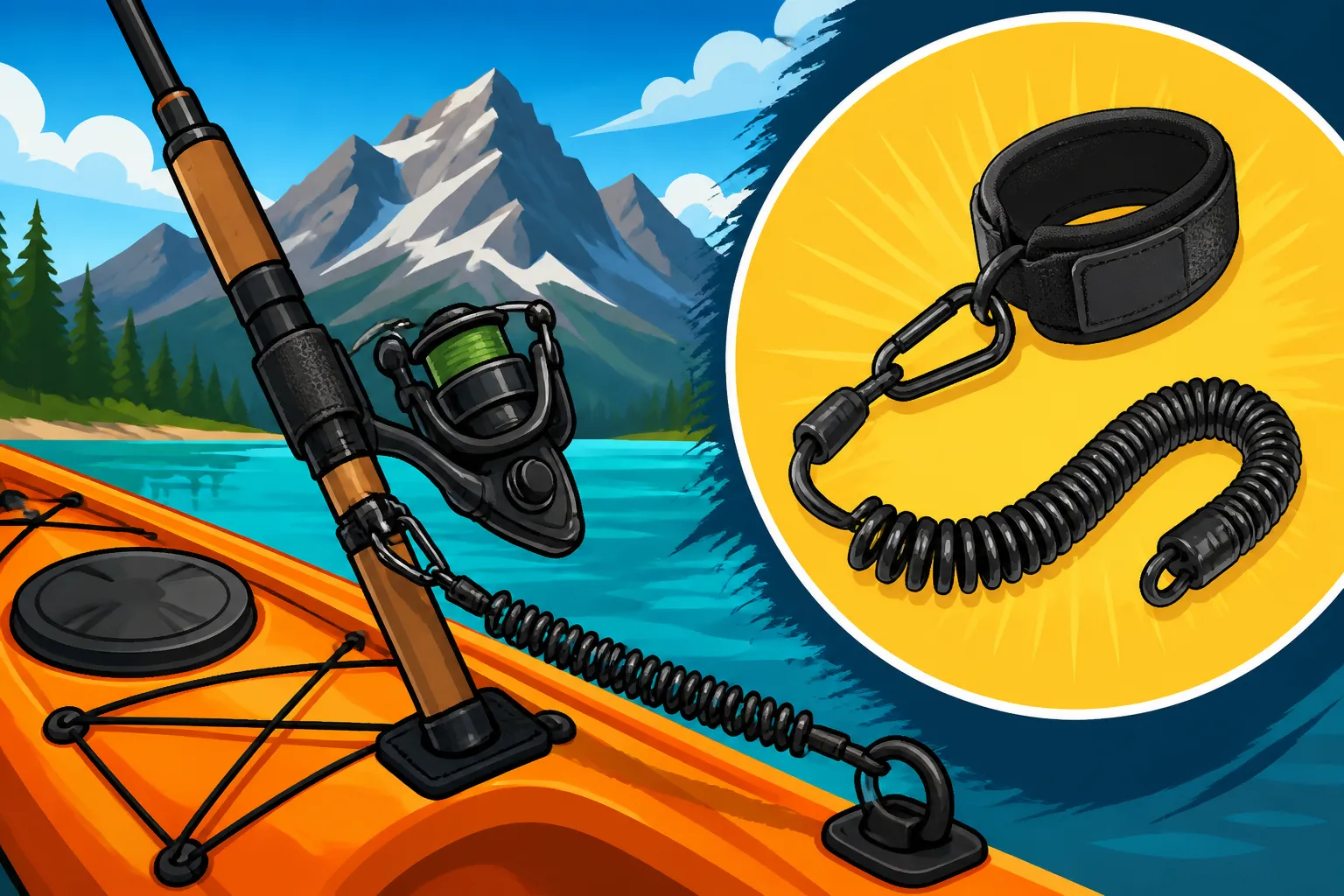
Coiled leashes are probably what most people picture when they think of a rod leash. They resemble an old-school telephone cord, designed to stretch out when needed and then retract to a compact size when not under tension. This retracting action helps keep the leash out of your way while you're actively fishing, reducing the chance of tangles. They typically feature a clip or carabiner on one end for attaching to your kayak (often a D-ring or pad eye) and a loop or Velcro strap on the other for securing around your rod handle.
The biggest benefit of coiled leashes is their ability to stay compact. They don't have a lot of excess line flapping around, which means less snagging on other gear or getting caught in your paddle strokes. However, they do have a limit to how far they can stretch comfortably, and sometimes that spring-back can be a bit strong if you need your rod to move freely for a moment, like when you’re landing a fish. High-quality coiled leashes will use durable materials that resist UV degradation and saltwater corrosion, crucial for longevity. Many brands, which you can often find at a Bass Pro Shops or online through Amazon, offer these in various lengths and strengths.
Straight Leashes
Straight leashes are much simpler in design, usually just a length of webbing or cord with attachment points on both ends. They don't retract like coiled leashes, which means they offer a consistent length and less resistance when you move your rod. This can be a huge advantage if you prefer a less restrictive feel or if you need to pass your rod around your body to fight a fish from a different angle.
The downside to straight leashes is the potential for excess slack. If the leash is too long, it can get tangled in your feet, your paddle, or other gear in the cockpit of your kayak. To combat this, many anglers will strategically tie them shorter or use a small bungee or Velcro strap to bundle up the slack. They are often made from strong, durable nylon or polypropylene webbing, which is very robust. You might find straight leashes are also a popular choice for kayak fishing in Alberta due to their strength and simplicity. They are generally very reliable and often less expensive than their coiled counterparts, making them a great budget-friendly option.
Specialized and DIY Leash Systems
Beyond the standard coiled and straight leashes, there are some more specialized options and plenty of room for DIY creativity. Some kayak manufacturers or accessory brands offer integrated leash points or systems designed to work seamlessly with their kayaks. For instance, certain rod holders might have built-in attachment loops, or you might find leashes specifically designed for rod butts that fit into flush-mount rod holders.
DIY leash systems often involve a length of paracord or bungee cord, with various knots and clips. The advantage here is complete customization. You can choose the exact length, material, and attachment methods that suit your personal setup. However, the downside is that a poorly constructed DIY leash might not be as reliable or durable as a commercially produced one. If you go the DIY route, ensure you use strong, marine-grade materials and reliable knots. For instance, using a good quality snap hook on one end and a secure fisherman's bend knot to attach to your rod's handle can create an effective system. This custom approach can be very rewarding, especially if you have unique needs for your Best Kayak for River Fishing in Alberta setup.
Choosing the Right Rod Leash for Your Kayak and Fishing Style
Selecting the perfect rod leash isn't just about grabbing the first one you see. It involves considering your kayak type, how you fish, and the specific environments you'll be exploring in Alberta. A leash that works great for calm lake trolling might be a hindrance in a fast-moving river, so let's dig into the details to help you make an informed decision.
Length and Flexibility Considerations
The length and flexibility of your rod leash are paramount. If a leash is too short, it will constantly pull on your rod, restricting your casting or making it awkward to land a fish. If it’s too long, it can become a tangled mess, snagging on your feet, your paddle, or getting caught in other gear.
- Coiled Leashes: These offer excellent flexibility, extending when needed and retracting to keep things tidy. A good coiled leash should allow your rod to reach the water's surface comfortably without constant tension, but not so much slack that it can get caught. Think about the distance from your common rod placement (e.g., in a rod holder, across your lap) to where you'd attach the leash on your kayak. For many kayak anglers, a coiled leash that extends to about 3-4 feet is a good starting point. This length allows for most casting motions and the ability to fight a fish without feeling unduly restricted.
- Straight Leashes: With straight leashes, you need to be more precise with the length. Measure the distance from your rod's attachment point to your kayak's attachment point while the rod is in its most extreme typical position (e.g., fighting a fish off the bow). Add just enough slack for comfortable movement, but not so much that it's excessive. Many experienced anglers will customize straight leashes, tying them to the exact length they need, or using a small bungee loop to manage excess slack.
Consider your fishing style too. If you're primarily trolling, a slightly longer, more flexible leash might be fine. If you're actively casting and moving your rod frequently, a shorter, less obtrusive option could be better.
Attachment Points and Quick-Release Mechanisms
How and where you attach your rod leash, both to your kayak and your rod, is crucial for both security and functionality.
- Kayak Attachment: Most kayaks have D-rings, pad eyes, or bungee cord systems that serve as natural attachment points. Ensure the point you choose is sturdy and won't interfere with your paddling or access to other gear. Using a strong carabiner or a sturdy clip at this end allows for quick attachment and detachment of the leash from the kayak. Some kayak anglers even attach a small piece of rope to their kayak's handle or seat frame, creating a dedicated leash point that's easily accessible.
- Rod Attachment: The most common methods are a loop around the rod handle (often secured with a sliding knot or Velcro strap) or a clip directly to a reel seat ring or a dedicated leash point on the rod butt. A Velcro strap offers easy on-off, while a more permanent knot offers maximum security. The key is to ensure the attachment doesn't impede your grip or the reel's function.
- Quick-Release: This is an important, but often overlooked, feature. In an emergency – perhaps your rod gets snagged on something immovable while fighting a monster, or you need to ditch your rod to manage a capsize – you want to be able to release your rod quickly. Some leashes incorporate a quick-release buckle, while others rely on a simple snap clip that can be opened in a pinch. Practicing this release mechanism before you're in a stressful situation is a really good idea. You can find leashes with quick-release buckles at outdoor retailers like Bass Pro Shops, or browse options on Amazon.
Material Durability and Maintenance
The material of your rod leash directly impacts its durability and longevity, especially given Alberta's varied weather conditions and water types.
- UV Resistance: Spending hours under the sun can degrade plastics and certain fabrics. Look for leashes made from UV-resistant materials like nylon webbing or specialized synthetic cords that won't weaken or fray quickly.
- Corrosion Resistance: If you ever fish brackish water, or even just expose your gear to constant moisture, stainless steel or marine-grade plastic clips are essential to prevent rust and corrosion. Even in freshwater, cheaper metal components can pit and seize over time.
- Strength: The leash needs to be strong enough to withstand the pull of a fighting fish, accidental snags, and the general abuse of being out on the water. A thin, weak cord won't cut it. Check the stated breaking strength if available, or visually inspect the thickness and weave of the material.
- Maintenance: Regularly inspect your leash for signs of wear and tear, especially near attachment points. Rinse it with fresh water after each outing, especially if you've been in dirty or particularly sandy conditions, and allow it to air dry completely to prevent mildew. Store it out of direct sunlight when not in use. A little care goes a long way in extending the life of your leash.
By carefully considering these factors, you can select a rod leash that provides maximum security and convenience for your specific kayak fishing needs, letting you enjoy the waters of Alberta with confidence.
Installation and Best Practices for Using a Rod Leash
You've picked out the perfect rod leash – awesome! But simply having it isn't enough; knowing how to properly install and use it is just as crucial. A poorly attached leash is almost as useless as no leash at all. Let's make sure your valuable gear stays exactly where it belongs while you're out chasing fish in Alberta.
Where to Attach Your Rod Leash on Your Kayak
The ideal attachment point on your kayak depends on your specific setup and fishing style. The goal is to choose a spot that is secure, easily accessible, and minimizes tangles.
- D-Rings and Pad Eyes: Most kayaks, especially fishing kayaks, come equipped with D-rings or pad eyes. These are excellent, secure points to clip your leash onto. Look for one that's close to where your rod will be used or stored. For instance, if you primarily keep your rod in a flush-mount holder behind your seat, a D-ring on the side of the seat or near the rear tank well might be ideal.
- Seat Frames or Handles: Many sit-on-top kayaks have sturdy seat frames or handles (grab handles) that can also serve as reliable attachment points. These are often easily within reach, which can be beneficial for quick release if necessary. Just ensure the leash won't interfere with your paddling motion or seat adjustments.
- Gear Tracks: Some modern fishing kayaks feature gear tracks. While not directly designed for leashes, you can often add an accessory (like an eye bolt or a cleat) that mounts to the track, providing a movable and secure attachment point. This offers fantastic versatility if you like to change your setup or move your rod around.
- Avoiding Interference: No matter where you attach it, always perform a dry run on land. Sit in your kayak with your rod, go through your casting motions, and simulate fighting a fish. Make sure the leash doesn't get tangled in your paddle, catch on your PFD, or snag on your tackle box. This pre-check is crucial, especially when getting ready for a trip on a busy body of water like the North Saskatchewan River Fishing Spots.
Securing the Leash to Your Rod
Equally important is how you secure the leash to your rod itself. It needs to be tight enough to prevent accidental detachment but not so tight that it damages the rod or interferes with its function.
- Rod Handle/Grip: The most common and often best place to attach is around the rod handle or grip, above the reel. Use a strong Velcro strap or a loop of cord with a secure knot (like a bowline or fisherman's knot). This part of the rod is robust and designed for handling. Ensure the attachment is snug but doesn't compress the cork or foam too tightly over time.
- Reel Seat: Some anglers prefer to attach to the reel seat or directly to the reel itself. If attaching to the reel, be extremely careful not to interfere with the spool, drag, or handle. Attaching to the metal parts of the reel seat can be secure, but avoid any plastic components that might crack under stress.
- Dedicated Leash Points: A few high-end rods, particularly those designed for kayak fishing, might have a small, reinforced loop or attachment point built into the butt section. If your rod has this, it's often the ideal place to connect your leash.
- Avoid the Rod Blank: Never, ever attach a leash directly to the rod blank (the main shaft of the rod). The blank is designed to bend and flex, and any point pressure from a leash, especially under tension, can easily lead to a broken rod. Even a small attachment can compromise the blank's integrity.
General Best Practices and Maintenance
Once you've got your leash installed, a few general habits will ensure it serves you well for many fishing seasons.
- Routine Inspection: Before every outing, take a moment to visually inspect your rod leash. Look for fraying, cuts, stretched elastic (on coiled leashes), bent clips, or signs of rust. It's much better to discover a failing leash on shore than when you're adrift on Lesser Slave Lake Walleye Fishing.
- Rinse and Dry: After each trip, especially if you've been in muddy or sandy water, rinse your leash with fresh water. Let it air dry completely before storing to prevent mildew and extend the life of the materials.
- Avoid Over-Stretching (Coiled): While coiled leashes are designed to stretch, constantly yanking them to their absolute limit can weaken the coil over time. Try to find a length that offers enough reach without perpetual maximum tension.
- Organize Slack (Straight): For straight leashes, use a small piece of Velcro or a bungee cord to tidy up any excess slack when not in active use. This prevents it from becoming a trip hazard or snagging on things.
- Practice Quick Release: As mentioned earlier, know how to quickly detach your rod from your kayak in an emergency. Practice this a few times while on dry land. This small exercise could prevent a dangerous situation.
- Layered Security: Remember, a rod leash is one layer of security. Combining it with good rod holders (Best Rod Holders for Kayak Fishing) and mindful handling of your gear creates a comprehensive safety net.
By following these installation guidelines and best practices, your rod leash will become an invaluable, almost invisible, part of your kayak fishing kit, giving you the confidence to chase that next big catch without worrying about your gear disappearing.
| Leash Type | Advantages | Disadvantages | Best For |
|---|---|---|---|
| Coiled | Compact, stays out of the way, quick retraction | Can have strong spring-back, limited stretch | Active casting, general purpose kayak fishing |
| Straight | Consistent length, less resistance, durable | Potential for tangles if too long, less tidy | Trolling, precise length needs, heavy-duty use |
| DIY | Fully customizable, budget-friendly | Requires careful construction, variable reliability | Specific niche needs, experienced DIYers |
Ultimately, investing in a quality rod leash and understanding how to use it properly is a small step that makes a huge difference in your kayak fishing enjoyment and gear longevity. Whether you're navigating the clear waters of the Kananaskis Lakes or the vast expanses of Lake Athabasca, having your rod securely tethered offers invaluable peace of mind. So, get out there, cast away, and enjoy everything Alberta's incredible fishing scene has to offer, knowing your rod is always coming home with you.
Disclaimer
This article is for general informational purposes only and does not constitute professional advice. Laws, prices and regulations vary by location and change over time. Consult a qualified professional for guidance on your specific situation.