How to catch pike in weedy bays
There's nothing quite as frustrating as seeing a promising patch of weeds, knowing full well that trophy northern pike are lurking within, but struggling to get your lure to them without fouling up. We've all been there – casting a perfect retrieve, only for it to come back with a salad of green algae or a hook full of submerged grass. It can make you want to give up on those prime hideouts altogether. But don't despair! Weedy bays are an absolute goldmine for pike, offering them everything they need, and with the right approach, you can learn how to effectively target these aggressive predators without constantly battling the vegetation. This comprehensive guide will break down the strategies, gear, and techniques you need to conquer those weedy pike haunts and put more fish in your boat.
Understanding Pike Behavior in Weedy Environments
To consistently catch northern pike in weedy bays, you first need to understand why they are there and how they use the vegetation to their advantage. Pike aren't just hiding in weeds; they're actively using them as part of their predatory strategy.
Why Pike Love Weedy Bays
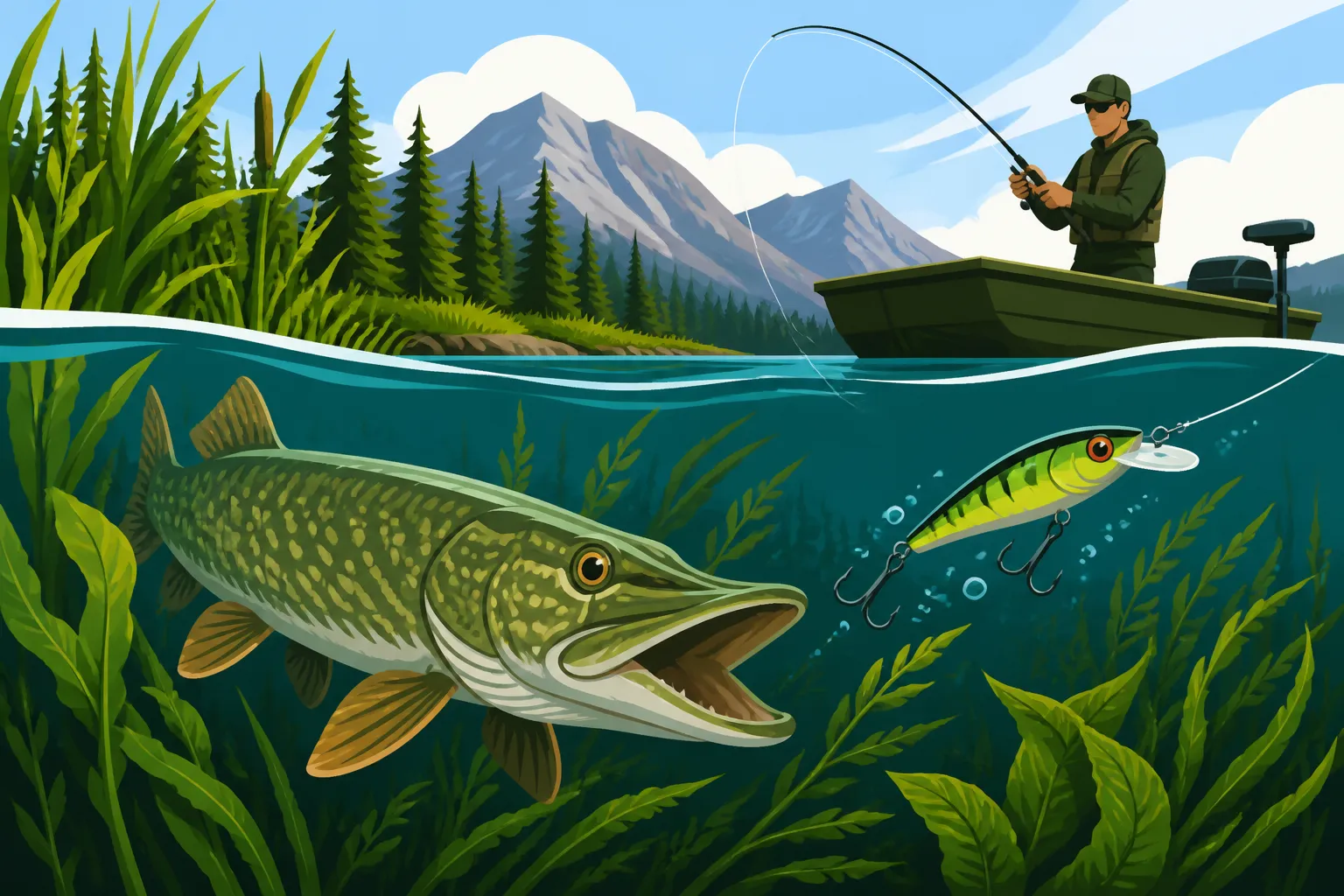
Think of a weedy bay as a bustling underwater diner with plenty of cozy corners for an ambush predator. Pike are perfectly adapted to these environments. Firstly, weeds provide exceptional cover. Their camouflage allows them to blend in seamlessly, becoming invisible to unsuspecting baitfish like minnows, suckers, and perch that also seek refuge and food within the aquatic vegetation. They'll often position themselves at the edges of weed lines, in small pockets, or along lanes within the weeds, waiting for an opportunity to strike. It's a classic "sit and wait" ambush tactic.
Secondly, these areas are often rich in food. Younger, smaller fish, along with insects and other invertebrates, thrive in the shelter and nutrient-rich waters of weedy bays. This creates a ready-made buffet for pike of all sizes. From tiny hammer-handle pike to true giants, if there's food and cover, you can bet a pike is not far away. The dense canopy of weeds also offers protection from overhead predators, especially for smaller pike, making it a safe haven. It's truly a complete ecosystem that caters to every need of a northern pike, making them one of the most common spots to find them across Alberta's diverse fisheries. Understanding Northern Pike Habits in Alberta Lakes is key to unlocking their patterns.
Seasonal Movements within Weeds
Pike don't just stay put in the weeds; their location within these areas can shift dramatically with the seasons and even the time of day. In spring, as water temperatures begin to rise after ice-out, pike often move into shallower, sun-warmed weedy bays for spawning. After they spawn, they remain in these areas to recover and feed aggressively on baitfish, making it one of the best times for Best Techniques for Early Spring Pike. The weeds are often sparse at this time, making them easier to fish.
As summer progresses and water temperatures climb, dense weed beds offer vital shade and cooler water deeper within the cover. Large pike might retreat to deeper weed edges or pockets of weeds in slightly deeper water, especially during the brightest parts of the day. They'll often be found in the thicker, denser mats, seeking comfort from the heat. Conversely, during dawn and dusk, or on overcast days, they might push further into the shallower sections to hunt.
In fall, as water temperatures begin to drop, pike become incredibly active. The weeds, which might have been incredibly dense in summer, often start to die back, creating more open pockets and clear lanes. This makes it easier to present lures effectively. Pike will aggressively feed, stocking up for winter, and can be found throughout the bay, from the shallow edges to deeper weed lines, often following schools of baitfish that are also moving in preparation for colder weather. Knowing these seasonal shifts is crucial for finding the most active fish.
Essential Gear for Weedy Bay Pike Fishing
Fishing thick weeds for pike isn't a job for finesse gear. You need robust equipment that can handle powerful fish and the heavy resistance of vegetation. Forget your ultralight panfish setup; we're talking about serious horsepower here.
Rod, Reel, and Line Selection
When it comes to battling pike in heavy cover, your rod, reel, and line are your lifeline. You'll want a heavy or medium-heavy power casting rod, typically 6'6" to 7'6" in length. This gives you the backbone to rip lures free from weeds, set hooks firmly into a pike's bony mouth, and, most importantly, muscle a big fish out of dense cover before it can wrap itself around submerged structure. A fast or extra-fast action tip is beneficial for quick hook sets, but the strength of the blank is paramount.
For reels, a baitcasting reel is often preferred for its torque and ability to handle heavier lines and lures. Look for a model with a robust drag system, smooth operation, and a gear ratio suitable for working larger baits. A good quality baitcaster will allow you to cast accurately into small weed pockets and retrieve with authority. When choosing a reel, remember that it needs to stand up to the strain, so investing in a reliable brand like a Shimano Curado or Daiwa Tatula can make a huge difference.
Your choice of line is equally critical. Braided line is the undisputed champion for weedy environments. Its near-zero stretch provides incredible sensitivity, allowing you to feel every bump and tick, and its exceptional abrasion resistance means it can cut through weeds rather than getting snagged or frayed. A breaking strength of 30-65 lb test is usually appropriate, depending on the size of pike you're targeting and the density of the weeds. Some anglers swear by 50lb braid as a perfect all-around choice. This heavy line helps you effectively handle fish and retrieve lures, minimizing lost tackle and frustrating moments. You can read more about Best Line Weight for Pike Fishing to fine-tune your setup.
Leader Materials for Pike
Even with heavy braid, those razor-sharp teeth of a northern pike are still a significant threat. A proper leader is non-negotiable to prevent bite-offs. There are a few popular choices:
- Steel Leaders: These are the most common and reliable option. They come in various styles, from single-strand wire to multi-strand braided wire. Single-strand is very stiff and can kink, but it's incredibly strong. Multi-strand, like American Fishing Wire's Surflon or Malin Hard Wire, is more flexible and less prone to kinking, offering a more natural lure presentation. They're usually crimped or tied with specific knots.
- Fluorocarbon Leaders: While not entirely bite-proof for large pike, heavy fluorocarbon (80-120 lb test) offers a more subtle presentation. It's nearly invisible underwater and can withstand some abrasion. Many anglers prefer it when fishing in clearer water or when pike are particularly wary. However, be prepared to check your leader frequently for nicks and replace it often, as a big pike can still chew through it if it gets it deep enough.
- Titanium Leaders: These are a more expensive but highly durable option. Titanium leaders are very flexible, kink-resistant, and have excellent memory, meaning they'll return to their original shape after being bent. They offer the best of both worlds: strength and a natural presentation.
Regardless of your choice, ensure your leader is at least 6-12 inches long. This length provides enough protection from the pike's teeth while still allowing your lure to run naturally. You can find a good selection of quality leaders and tools for making them on platforms like Amazon. For more detailed insights, check out Best Wire Leader for Pike Fishing.
Top Lures and Techniques for Weedy Bays
The key to success in weedy bays is using lures that can navigate the vegetation without constantly fouling, and knowing how to present them effectively.
Weedless Lures: Spoons, Soft Plastics, and Jigs
These are your bread and butter when fishing in dense cover.
- Weedless Spoons: The classic Johnson Silver Minnow or Dardevle spoon, often tipped with a pork rind or soft plastic trailer, is a time-tested pike catcher. Its unique shape allows it to slide over and through weeds with minimal snagging. The trick is to vary your retrieve, sometimes a steady pull, sometimes a stop-and-go that allows it to flutter down into pockets. The flash and wobble are irresistible.
- Soft Plastics: Large soft plastic paddle-tail swimbaits, jerkbaits, or even creature baits rigged weedless on a heavy-duty wide gap hook are incredibly effective. The hook point is skin-hooked into the plastic body, making it virtually snag-proof. Swimbaits like the Storm WildEye Swim Shad (though not perfectly weedless, they are effective on edges) or a large soft plastic shad from brands like Keitech or Zoom, rigged on a weighted swimbait hook, can be swam just above or through the weeds. For truly dense stuff, a Texas-rigged soft plastic frog or lizard can be worked right over the mats.
- Jigs: Heavy-duty jigs adorned with a substantial soft plastic trailer or bucktail are excellent for working weed pockets or punching through lighter weed cover. A weedless jig head, often with a brush guard, is crucial here. The combination of a jig's vertical fall and the enticing action of the trailer can trigger aggressive strikes from pike tucked deep within the vegetation. Look for jigs designed for flipping and pitching in heavy cover.
Topwater and Subsurface Baits for Active Pike
When pike are active and looking up, especially during low light conditions or on overcast days, topwater fishing in weedy bays can be absolutely explosive.
- Topwater Frogs/Ploppers/Walkers: Soft plastic frogs that can be fished directly over dense lily pads or matted vegetation are fantastic. They create commotion and can draw violent strikes. Hard-bodied topwater lures like poppers, chuggers, or "walk-the-dog" style baits (e.g., Heddon Super Spook) are best fished along weed edges or over sparse weeds. The noise and disturbance they make are a huge draw for aggressive pike. Check out Topwater Fishing for Pike in Alberta for more on this exhilarating technique. You can find an excellent selection of topwater lures on Amazon.
- Spinnerbaits and Chatterbaits: These lures are surprisingly weedless due to their single hook and wire frame (spinnerbaits) or blade design (chatterbaits). They excel at crashing through lighter weeds or deflecting off denser cover. The flash and vibration are highly attractive to pike. Vary your retrieve speed; sometimes a slow roll is best, other times a faster retrieve to keep it above the snags. Using large blades on spinnerbaits can create more lift, helping them stay above some of the shallower weed growth.
Presentation Strategies: Casting, Retrieving, and Jigging
How you work your lure is just as important as the lure itself.
- Casting into Pockets and Edges: Accuracy is paramount. Look for openings, lanes, and the defined edges of weed beds. Cast directly into these pockets or parallel to the edges. When your lure hits the water, let it settle for a moment, then start your retrieve. Often, a pike will be waiting at the very edge of the cover, ready to ambush.
- Working Over and Through Weeds: For weedless soft plastics or frogs, cast directly onto dense mats and retrieve them slowly, mimicking a creature crawling across the surface. When you hit an opening, let the bait pause or drop momentarily. For spinnerbaits and spoons, aim to retrieve them just above the weed tops. If you feel resistance, give a sharp rip of the rod to pull the lure free, which often triggers a reactionary strike.
- Jigging and Punching: For extremely dense weeds, heavy jigs with compact soft plastics can be "punched" through the mat. This involves a short, accurate cast or vertical drop directly into a thick mat, letting the heavy jig break through. Once it's through, work it up and down in the small pocket of open water below the mat. This technique is often used for big, lazy pike resting deep within the cover. This can be very effective on larger lakes like Lesser Slave Lake where expansive weed beds dominate the shallower areas.
Navigating and Locating Pike in Weedy Bays
Finding the fish in a vast weedy bay can feel like finding a needle in a haystack. But with a strategic approach, you can narrow down your search.
Reading the Weeds: Pockets, Edges, and Lanes
Not all weeds are created equal. Pike favor certain structural elements within the vegetation:
- Weed Edges: The transition zone where weeds meet open water is always a prime target. This is a natural ambush point, allowing pike to dart out and grab passing baitfish. Fish both the inside and outside edges of weed lines.
- Pockets and Holes: Look for irregular openings or clear spots within dense weed beds. These are ideal places for pike to rest and ambush. A single, well-placed cast into a pocket can often yield a strike.
- Lanes and Channels: Sometimes, boat traffic or natural growth patterns create distinct lanes or channels through expansive weed beds. These act as highways for baitfish and, consequently, for pike. Fan-cast down these lanes, varying your retrieve.
- Irregularities: Look for points, turns, or depth changes within the weed line. These breaks in uniformity often concentrate fish. A small point of weeds extending into deeper water, or a sudden indentation in the weed bed, can be a hotspot. Pay attention to changes in weed species too; different types of weeds might hold different concentrations of baitfish or offer better cover.
Boat Control and Stealth
When fishing weedy bays, how you approach and position your boat or kayak can make a huge difference.
- Electric Trolling Motor: This is your best friend. An electric trolling motor allows you to move silently along weed edges, reposition quickly, and hold your position in light winds. Its quiet operation minimizes disturbance, which is crucial for not spooking wary pike in shallower water. Investing in a good quality electric motor with GPS spot-lock features (like those from Minn Kota or Rhodan) can significantly enhance your ability to fish these areas effectively.
- Shallow Water Anchors: For kayaks or small boats, a shallow water anchor (like a Power-Pole or Talon) can be invaluable for silently holding your position without deploying a noisy traditional anchor, especially when you find a promising pocket or lane.
- Stealthy Approach: Always approach a weedy bay with caution. If possible, use the wind or current to drift silently, or keep your trolling motor speed to a minimum. Cast ahead of your boat to avoid spooking fish that might be close by. Wearing polarized sunglasses will help you see subtle changes in the weed line and spot potential ambush points or even the pike themselves. If you're using a kayak, consider a model designed for stability and quiet paddling, like those often reviewed on Amazon, which can help you sneak up on fish. Best Kayak for Lesser Slave Lake offers insights into choosing the right vessel.
Best Times and Conditions for Weedy Bay Pike
Pike can be caught year-round in weedy bays, but certain conditions will significantly increase your odds of success.
Optimal Weather and Water Conditions
Pike are often most active during specific weather patterns and water conditions.
- Overcast Days: Cloudy or overcast conditions often trigger pike activity. Without bright sunlight penetrating the water, pike feel more comfortable moving around and hunting, even in shallower parts of the bay. The subdued light makes them less wary.
- Stable Barometric Pressure: Sudden changes in barometric pressure, especially dropping pressure ahead of a storm, can make fish lethargic. Pike tend to be more active and cooperative during periods of stable or slowly rising barometric pressure.
- Moderate Winds: A light to moderate chop on the water's surface can be beneficial. It breaks up the water's surface, making it harder for pike to see you, and can also help disorient baitfish. Too much wind, however, makes boat control difficult and can push baitfish out of the bay.
- Water Clarity: While pike can tolerate a range of water clarities, slightly stained or murky water can actually be advantageous. It helps the pike with their ambush tactics, making them harder for baitfish to spot. In crystal clear water, you'll need to use lighter leaders and more subtle presentations.
- Water Temperature: Pike are cold-blooded, and their metabolism is heavily influenced by water temperature. They are generally most active in water temperatures between 10-20°C (50-68°F). In spring and fall, these temperatures are common throughout weedy bays. In summer, they might seek deeper, cooler pockets within the weeds.
Time of Day and Year Considerations
Understanding when pike are most likely to feed actively can drastically improve your fishing experience.
- Early Morning and Late Evening: Just like many predatory fish, pike often exhibit peak activity during low light periods. Dawn and dusk are prime times in weedy bays, as baitfish are also often more active, moving into shallower areas to feed. The decreased light gives pike an advantage. This is an excellent time to try topwater lures when they're actively hunting.
- Mid-Day on Overcast Days: Don't count out mid-day, especially if it's cloudy. On a completely overcast day, pike might remain active throughout the entire day, cruising weed edges and looking for meals. This is when working those deeper weed pockets or outer edges with weedless jigs or spoons can really pay off.
- Spring and Fall: As mentioned before, spring and fall offer some of the best pike fishing in weedy bays. In spring, post-spawn pike are ravenous and often shallower. In fall, they're bulking up for winter, and weed beds often have more open water, making them easier to fish. Both seasons provide comfortable water temperatures for pike activity. Even during the peak of summer, if you can find bays with good water flow or slightly deeper channels that bring in cooler water, they can hold fish. To maximize your chances, research Alberta Fishing Season Dates by Zone to align your trips with optimal conditions.
Fishing weedy bays for northern pike is incredibly rewarding once you crack the code. It requires patience, the right gear, and an understanding of how these powerful predators utilize their environment. With these tips and techniques, you'll be well on your way to pulling some toothy monsters out of the green stuff!
Disclaimer
Fishing regulations can change frequently. Always consult the most current Alberta Guide to Sportfishing Regulations before heading out. This guide provides general information and recommendations, but it is your responsibility to know and follow all applicable laws and regulations. Practice safe catch-and-release, especially with larger breeding pike, to help ensure healthy fish populations for the future.