Kayak Fishing Techniques for Alberta Lakes
Struggling to get to those prime fishing spots hidden away from crowded boat launches? Tired of the noise and expense of a motorized boat making your peaceful angling dreams feel out of reach? Kayak fishing on Alberta's beautiful lakes offers an incredible, serene, and highly effective way to connect with the water and the fish, and this guide is here to help you unlock that potential.
Why Kayak Fishing is a Game-Changer on Alberta Lakes
There's something uniquely satisfying about propelling yourself across a glassy lake at dawn, silent as a shadow, reaching those untouched pockets where the big ones lurk. Kayak fishing isn't just a trend; it's a profound shift in how many of us experience Alberta's incredible waters. It strips away the complexities and expenses of larger vessels and replaces them with simplicity, intimacy, and unparalleled access. If you've ever felt limited by shore fishing or overwhelmed by the demands of a powerboat, a fishing kayak might just be your perfect paddle partner.
The Undeniable Advantages of a Kayak
First off, let's talk about access. Alberta's lakes, from the smallest stocked ponds to the massive expanse of Lesser Slave Lake, offer a diverse range of fishing opportunities. Many of the most productive spots—shallow bays, weed lines, hidden coves, and tight creek mouths—are simply inaccessible to larger boats. A kayak, with its shallow draft and maneuverability, glides right into these areas. You can sneak up on wary Northern Pike hiding in thick lily pads or effortlessly follow a shoreline structure for cruising Walleye. This silent approach is a huge asset; fish are far less likely to spook when a paddle or pedal drive is your propulsion rather than a roaring outboard.
Beyond access, there's the cost factor. Owning and maintaining a fishing boat, especially a larger one, can quickly become a significant investment. Kayaks are a fraction of the price, both upfront and in terms of ongoing expenses. No fuel costs, minimal maintenance, and often, you don't even need a trailer—many models can be car-topped or fit in the back of a truck. This democratizes fishing, making prime water access a reality for far more anglers. Plus, the physical activity is a bonus! Paddling or pedaling across a lake provides a fantastic workout and a deeper connection to your surroundings.
Navigating Common Misconceptions
Now, I know what some of you might be thinking: "Kayaks are unstable," or "I can't carry enough gear in a kayak." These are common misconceptions, and I'm here to tell you that modern fishing kayaks have evolved tremendously. The dedicated fishing kayaks on the market today are incredibly stable, often designed for stand-up casting. They're much wider and have flatter hulls than recreational kayaks, providing a solid platform. You'd be surprised how quickly you gain confidence in one.
As for gear, while you can't bring the kitchen sink, smart packing and purpose-built storage solutions mean you can bring everything you need. Rod holders, tackle storage, cooler space, and even mountable electronics are standard features or easily added. It's about being strategic with your setup, which we'll dive into shortly. Another concern often voiced is "I'll be too slow." While you won't be jetting across the lake at 30 knots, many pedal-drive kayaks are surprisingly fast and efficient, allowing you to cover significant water with ease, especially when you consider you're often targeting specific, smaller areas. The focus shifts from speed to precision and stealth.
Essential Kayak and Gear Setup for Alberta Waters
Getting your kayak fishing rig dialed in is key to a successful and enjoyable day on the water. It’s not just about having a boat; it’s about having the right boat and the right accessories to tackle Alberta’s diverse lake environments. Think of your kayak as your personal fishing platform, and you want to ensure it's stable, efficient, and equipped for the kind of angling you love most.
Choosing the Right Kayak for Stability and Functionality
When you're looking for the Best Kayaks for Alberta Fishing, you'll quickly realize there's a huge variety out there. For lake fishing in Alberta, especially if you plan to target bigger species like Walleye or Northern Pike, stability is paramount. You want a "sit-on-top" fishing kayak. These are generally wider and offer a more open deck, making it easier to cast, move around, and access your gear. Many even allow for stand-up casting, which is a huge advantage for sight fishing or getting a better angle on a retrieve.
You'll encounter two main propulsion types: paddle and pedal. Paddle kayaks are traditional, affordable, and excellent for stealth, but can be less efficient for covering large distances or fishing hands-free. Pedal kayaks, like those from Hobie or Old Town, use a pedal drive system that allows you to move using your legs, leaving your hands free for casting, reeling, or holding your sandwich. This hands-free operation is a game-changer for many, allowing you to maintain position in wind or current while actively fishing. While they come with a higher price tag, the efficiency and convenience are often worth the investment for serious lake anglers. Consider the size of the lakes you'll frequent; a smaller, lighter kayak is easier to transport and launch on smaller bodies of water, while a larger, more stable one is better suited for tackling bigger, choppier lakes like Gull Lake or Lesser Slave Lake.
Must-Have Accessories for Safety and Success
Beyond the kayak itself, a few essential accessories will make your Alberta lake fishing trips safer and more productive. First and foremost, a Personal Flotation Device (PFD) is non-negotiable. Not only is it legally required under Alberta Boating Laws for Anglers, but it’s your lifeline. Look for a fishing-specific PFD with extra pockets and tool attachments; it’s much more comfortable for all-day wear. Companies like Mustang Survival offer excellent options designed with anglers in mind. If you're wondering about the cost of a PFD, it’s a small price to pay compared to an Alberta life jacket fine per missing PFD.
Next, consider your paddle. Even if you have a pedal drive, a good backup paddle is crucial. A lightweight, adjustable paddle from brands like Werner or Bending Branches can make a huge difference in comfort and efficiency. Rod holders are also a must. Most fishing kayaks come with flush-mount holders, but adjustable, ram-mounted holders from companies like RAM Mounts or Scotty are invaluable for trolling or holding rods while you're transitioning between spots. For propulsion, if you're going with a paddle kayak, consider a good Best trolling motor for a fishing kayak if permitted on your chosen lake. They can extend your range and save your arms. Lastly, don't forget a dry bag for electronics, keys, and snacks, a whistle for emergencies, and an anchor system. A small grapnel anchor or a drift sock can help you hold position in the wind or slow your drift over productive structure. You can find many of these essential items on platforms like Amazon, making it easy to outfit your rig.
| Item | Description | Why It's Essential for Alberta Lakes |
|---|---|---|
| PFD (Life Jacket) | Fishing-specific PFD with pockets | Legal requirement, vital for safety, comfortable for all-day wear. |
| Paddle | Lightweight, adjustable (even for pedal kayaks) | Primary or backup propulsion, crucial for maneuvering in tight spots or emergencies. |
| Rod Holders | Flush-mount and/or adjustable RAM/Scotty mounts | Keeps rods secure, allows for trolling and hands-free fishing. |
| Anchor System | Grapnel anchor, anchor trolley, or drift sock | Holds position in wind or current, controls drift over structure. |
| Dry Bag | Waterproof bag for essentials | Protects phone, keys, wallet, camera, and snacks from water damage. |
| Whistle | Pealess marine whistle | Essential safety signal for emergencies, legally required on most boats. |
| Water Bottle | Reusable, insulated bottle | Hydration is critical for long days on the water. |
| Sun Protection | Hat, sunglasses (polarized!), sunscreen | Prevents sunburn, reduces glare for better fish spotting. |
| Net | Large, rubber-coated landing net | Safely lands fish, reduces harm to fish during release, prevents hooks from tangling. |
| First-Aid Kit | Basic kit with essentials (band-aids, antiseptic, pain relievers) | For minor cuts, scrapes, or other small mishaps that can happen on the water. |
Mastering Basic Kayak Fishing Techniques
Once you've got your kayak and gear sorted, it's time to hit the water and learn to use your new silent fishing machine effectively. Kayak fishing requires a slightly different approach than fishing from a large boat or the shore, primarily focusing on stealth, efficient movement, and adapting your casting.
Paddling, Pedaling, and Positioning for Stealth
The beauty of kayak fishing lies in its stealth. Fish are much less likely to detect your presence when you're gliding silently across the water. If you're in a paddle kayak, learn to paddle efficiently with minimal splashing. A strong, smooth stroke will get you where you need to go without alarming any nearby fish. Practice your J-stroke or sweep stroke to maintain a straight line with fewer paddle entries. When you're actively fishing, learn to use subtle movements to adjust your position. A gentle dip of the paddle can nudge you into the perfect casting lane or hold you against a light breeze.
For pedal-drive kayaks, it's even easier to maintain stealth and control. Your feet do the work, leaving your hands free. This is especially advantageous when trolling or when you need to make precise adjustments to stay on a structure or in a current seam. Imagine being able to slowly pedal along a weed edge, constantly adjusting your speed and direction, all while casting your lure into prime ambush spots. Positioning is everything in a kayak. Use the wind and currents to your advantage to drift silently over productive areas. If the wind is too strong, deploy a drift sock to slow your pace. Always try to approach your target area from downwind or down-current to avoid spooking fish. This allows your lure to be presented first, before your kayak's shadow or presence.
Casting and Retrieval Strategies from a Kayak
Casting from a kayak can feel a bit different at first, especially if you're used to casting from solid ground or a wider boat. You're lower to the water, and your range of motion might feel slightly restricted. The key is to adapt your casting style. Shorter, more controlled casts are often more effective than attempting huge, long-distance power casts, which can throw off your balance. Practice sidearm casts or roll casts, especially if you're fishing in areas with overhead obstructions like overhanging trees or thick brush along the shoreline. These casts are less prone to snagging and are often easier to execute from a seated position.
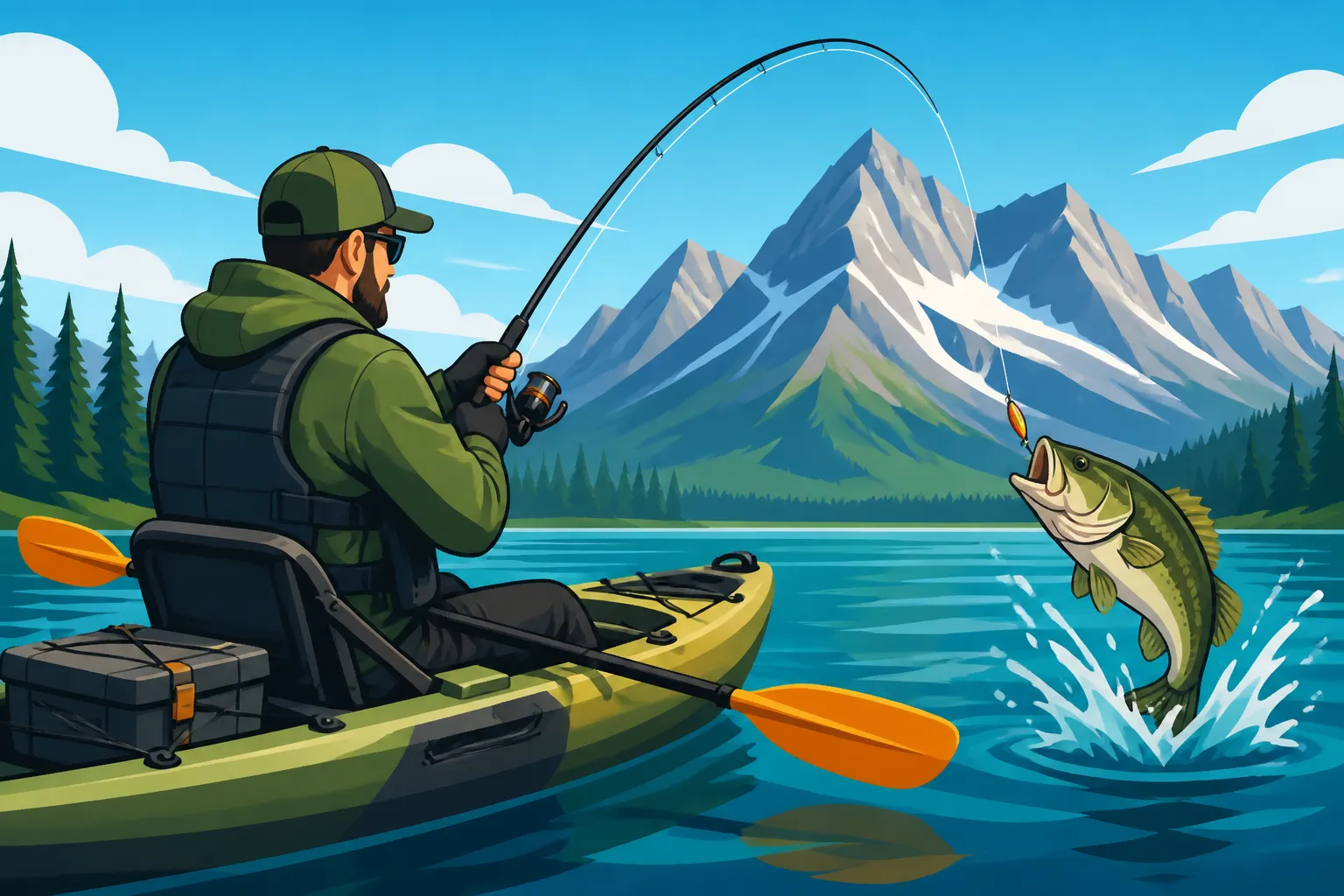
When it comes to retrieval, remember that you're an integral part of the presentation. Your kayak's movement can add action to your lure. For example, a slow paddle or pedal while retrieving a crankbait can give it a lifelike swimming motion that's hard to replicate from a static position. When you hook a fish, it's a dynamic dance. Learn to "kayak the fish" – use the buoyancy and maneuverability of your kayak to follow the fish's runs and keep it away from snags. Don't fight the fish solely with your rod; let the kayak help you. This reduces stress on your gear and increases your chances of landing a strong fish. Keep your rod tip low to the water to avoid putting too much leverage on the fish, which can lead to pulled hooks or broken lines.
Targeting Alberta's Popular Lake Species from a Kayak
Alberta's lakes are teeming with fantastic fishing opportunities, and a kayak puts you right in the heart of the action. Whether you're chasing the delicious Walleye, battling the aggressive Northern Pike, or seeking out the deep-dwelling Lake Trout, adapting your techniques to the kayak platform will significantly boost your success.
Chasing Walleye in Deep, Open Waters
Walleye are a prized catch in many Alberta lakes, known for their delectable taste and challenging fight. From a kayak, targeting Walleye in deeper, open water on lakes like Pigeon Lake or Wabamun Lake requires a blend of stealth and strategic positioning. Walleye often congregate around underwater structures like humps, points, and sudden depth changes. Your kayak's ability to precisely position you over these subtle features is a huge advantage. You can slowly pedal or paddle along contour lines, dropping a jig or a live bait rig directly into their strike zone.
Techniques like vertical jigging with a spoon or a soft plastic, especially when you can see the fish on your Best Fish Finders for Alberta Lakes, become incredibly effective from a kayak. You can maintain a perfect vertical presentation, mimicking injured baitfish. Trolling also works wonderfully. Use a rod holder to run a crankbait or a bottom bouncer with a worm harness, slowly pedaling or paddling at 1-2 mph. The silence of your kayak means the Walleye are less likely to spook, allowing them to focus on your offering. Remember that Walleye are light-sensitive, so low light conditions—dawn, dusk, or overcast days—are often prime times. Learn more about How to Catch Walleye in Alberta for species-specific insights.
Hunting Northern Pike in Weedy Bays
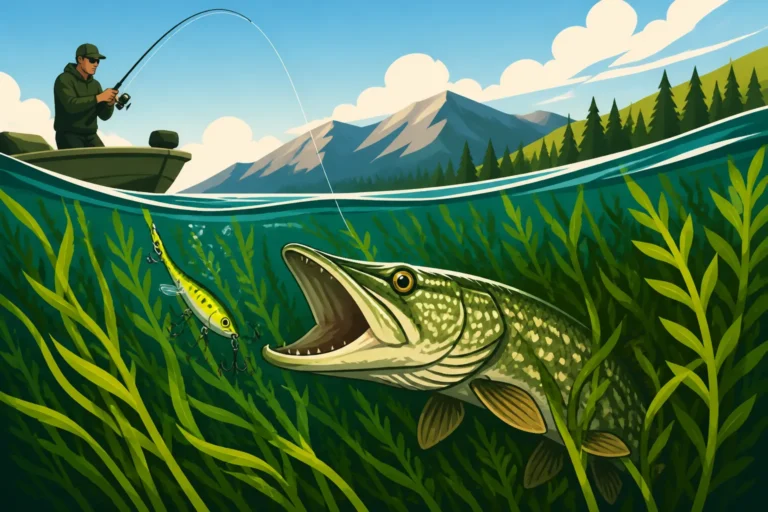
Northern Pike are aggressive predators that love to ambush prey from dense cover. From a kayak, you can sneak right into their preferred hunting grounds—shallow, weedy bays, lily pad fields, and timber-filled coves that bigger boats simply can't reach. Lakes like Keho Lake and many smaller prairie ponds are fantastic for this. Your low profile allows you to cast right up against dense vegetation without getting snagged on overhanging branches.
For pike, focus on casting weedless spoons, spinnerbaits, or topwater frogs and mice imitations into and around thick cover. The "walk the dog" action of a topwater lure, especially at dawn or dusk, can trigger explosive strikes. When retrieving, use a varied retrieve with pauses and twitches, mimicking a struggling baitfish. If you spot a pike cruising, you can quietly reposition your kayak for a precise cast. The key is to be patient and thorough, working every pocket of cover. Remember, pike have razor-sharp teeth, so always have a good pair of long-nose pliers and a jaw spreader on hand for safe unhooking. This species-specific information complements general knowledge on How to Catch Northern Pike in Alberta.
Finding Lake Trout in Cold, Clear Depths
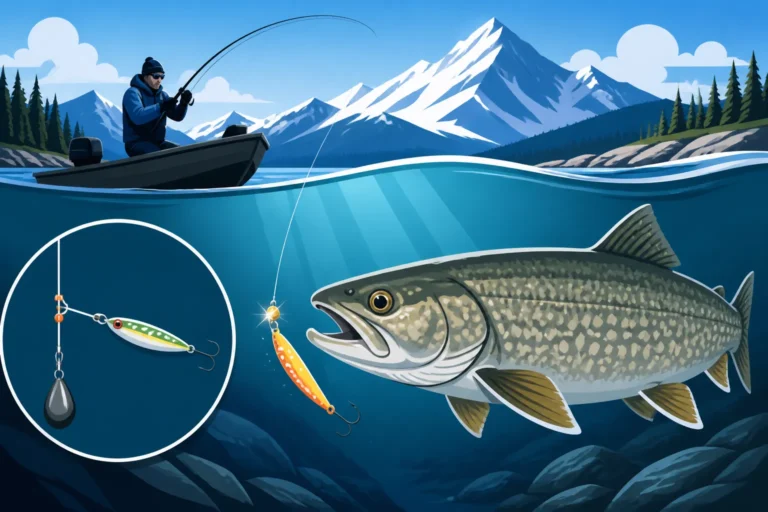
Lake Trout are the titans of Alberta's deep, cold, clear lakes like Cold Lake and Upper Kananaskis Lake. Catching them from a kayak presents a unique challenge and reward. Unlike pike or walleye, lakers often suspend in deep water or hug deep structures, requiring different tactics. From a kayak, the most effective methods typically involve deep jigging or specialized trolling.
For deep jigging, use heavy spoons, tube jigs, or soft plastics rigged on heavy jig heads. A good fish finder is almost a necessity here to locate the thermocline (where lake trout often suspend) and to mark baitfish schools. Your kayak's ability to maintain a precise position directly over a deep school of fish, especially with a pedal drive, is a huge advantage. Slowly vertical jigging your presentation, watching your sonar for marks, can be incredibly effective. For trolling, you'll need to get your lures down deep. This can be achieved with heavy inline weights, snap weights, or specialized deep-diving crankbaits. Pedal kayaks are excellent for maintaining a consistent trolling speed. Pay close attention to depth contours and current breaks. Early morning and late evening are often productive, as are overcast days. For more detailed strategies, check out How to Catch Lake Trout in Alberta.
Advanced Strategies and Considerations for Kayak Anglers
Once you've got the basics down, you'll naturally start looking for ways to refine your approach and make your kayak fishing adventures even more productive. This often involves embracing technology and learning to read the subtle cues of the environment.
Utilizing Electronics: Fish Finders and GPS
If you're serious about elevating your kayak fishing game on Alberta's larger lakes, investing in a portable fish finder is a game-changer. Modern units, even compact ones, offer incredible detail. You can mount transducers directly to your kayak hull or use suction cup mounts for easy deployment. A good fish finder allows you to:
- Locate Structure: Identify humps, drop-offs, rock piles, and submerged timber that attract fish. This is crucial for Walleye and Lake Trout in deeper water.
- Mark Fish: See individual fish or schools of baitfish, giving you confidence that you're fishing in the right area. Imagine paddling over a hump and seeing arches indicating a school of Walleye – that's when you drop your jig!
- Monitor Depth and Temperature: Understand the thermal layers (thermocline), which are key for species like Lake Trout.
- Navigate and Mark Waypoints: Built-in GPS allows you to mark productive spots, boat launches, and safe routes, especially on expansive waters like Lesser Slave Lake.
Brands like Humminbird and Lowrance offer excellent compact units that are perfect for kayaks. When considering a fish finder, think about screen size (you need to see it clearly), battery life (you'll be out all day), and transducer type (CHIRP or Down Imaging provides excellent clarity). Remember to protect your electronics from water with a dry bag or a dedicated protective cover. You can find robust, kayak-specific fish finder mounts and protective cases on Amazon, ensuring your investment is secure and functional.
Adapting to Weather and Water Conditions
Alberta's weather can be notoriously unpredictable, and water conditions on lakes can change rapidly. A skilled kayak angler isn't just good at casting; they're excellent at reading the environment and adapting their strategies.
- Wind: Wind is arguably the biggest challenge for kayak anglers. A strong wind can make paddling arduous, create chop that reduces visibility, and make holding position difficult. On windy days, target sheltered bays, river mouths, or the lee side of islands. Use your anchor or drift sock to manage your drift. If conditions become too hazardous, err on the side of caution and head for shore.
- Rain: Light rain can often improve fishing, especially for trout, as it washes insects into the water and reduces light penetration. Just make sure you have good rain gear and waterproof storage for your electronics and valuables. Heavy downpours can muddy the water, making visibility low and potentially pushing fish to different areas.
- Water Clarity: Clear water often means fish are more wary. Use longer, lighter leaders and natural-colored baits. Low-light conditions (dawn, dusk) or overcast skies will be your friend. In stained or turbid water, brighter colors and lures with more vibration can be more effective.
- Temperature: Fish activity is heavily influenced by water temperature. In spring, target warming shallow bays. In summer, focus on deeper, cooler water for species like Lake Trout or find oxygenated areas. In fall, as water cools, fish often move back to shallower feeding grounds for a pre-winter feast. Knowing Alberta Fishing Season Dates by Zone is crucial for understanding what species are active and where.
By paying attention to these factors and adjusting your approach, you'll turn challenging days into successful ones.
Safety First: Essential Protocols for Kayak Fishing
While kayak fishing offers incredible freedom and access, it's vital to remember that you're on the water, and safety should always be your top priority. Alberta's lakes, while beautiful, can be unforgiving if you're unprepared. A little planning goes a long way in ensuring your day is memorable for the right reasons.
Preparing for Emergencies on Alberta's Lakes
The absolute first rule of kayak fishing safety is to wear your PFD at all times. It's not a suggestion; it's a non-negotiable life-saving device. Even if you're an experienced swimmer, a sudden capsize in cold water can quickly incapacitate you. Furthermore, ensure your PFD is in good condition and fits properly. Beyond your PFD, always carry a few key items:
- Whistle: A pealess whistle is a simple but effective signaling device in case of distress. It's often legally required on personal watercraft.
- First-Aid Kit: A compact, waterproof first-aid kit can handle minor cuts, scrapes, and other small injuries.
- Knife/Line Cutter: Essential for cutting tangled line, dealing with snags, or even in an emergency where you need to cut yourself free from something.
- Spare Paddle: Even with a pedal drive, a paddle can get you out of trouble if your primary propulsion system fails or you encounter shallow, weedy areas.
- Communication Device: A fully charged cell phone in a waterproof case or a VHF radio is crucial for emergencies. Ensure someone on shore knows your float plan: where you're going, when you expect to return, and who to call if you don't check in.
- Water and Snacks: Dehydration and low blood sugar can impair judgment. Pack enough for your trip and a little extra.
Before you even launch, always check the weather forecast. High winds, thunderstorms, or sudden temperature drops can turn a pleasant day into a dangerous one. If the forecast looks iffy, it's always better to reschedule or choose a more sheltered location. Also, be aware of cold water immersion. Even on sunny summer days, Alberta's deeper lakes can have dangerously cold water. Dressing in layers and considering a dry suit or wetsuit for early spring or late fall fishing is a wise precaution.
Understanding Alberta's Boating Regulations
Ignorance of the law is no excuse, and Fisheries and Oceans Canada (DFO) and Alberta Environment and Protected Areas (AEPA) have clear regulations that apply to all watercraft, including kayaks. It's crucial to be familiar with the broader Alberta Fishing Regulations Explained as well as specific boating rules.
For kayaks, remember:
- PFD Requirement: As mentioned, everyone on board (even if it's just you) must have a properly fitting, Canadian-approved PFD readily accessible.
- Sound-Signaling Device: A whistle or horn is required.
- Bailer or Hand Pump: You need a way to remove water from your kayak.
- Visible Light: If operating between sunset and sunrise, you need a white light that is visible from all directions, like an all-around white light mounted on a pole, to show your presence.
- Boating Restrictions: Some lakes or sections of rivers may have specific restrictions, such as speed limits, motor prohibitions, or seasonal closures. Always check local regulations before you go, especially for waters within provincial or national parks like those in Kananaskis Country.
The "Know Your Rules" section in the annual Alberta Guide to Sportfishing Regulations is your best friend. It outlines all the necessary gear for different types of vessels and species-specific rules, including bag limits and season dates. Being prepared and compliant means you can focus on the fishing, confident that you're operating safely and legally.
Disclaimer
The information provided in this guide is for general informational purposes only and does not constitute legal advice. Fishing regulations and safety guidelines can change. Always consult the most current Alberta Guide to Sportfishing Regulations and Transport Canada's safe boating guide before heading out on the water. Exercise caution and good judgment when participating in outdoor activities.