Best Trolling Motor for a Fishing Kayak
There's nothing quite like the freedom of a fishing kayak, silently gliding through the serene waters of an Alberta lake or navigating a winding river. However, any seasoned kayak angler knows the frustration of battling strong headwind, fighting an unexpected current, or simply needing to cover more water than paddle power allows. This guide is dedicated to helping you overcome those challenges by exploring the best trolling motors designed specifically for fishing kayaks, ensuring your time on the water is more productive and enjoyable.
Why a Trolling Motor for Your Fishing Kayak?
Adding a trolling motor to your fishing kayak isn't just about going faster; it's about transforming your entire angling experience. It's about efficiency, control, and ultimately, accessing more fish in less time and with less effort. For many, it completely changes what they thought was possible from a kayak.
Enhanced Mobility
Imagine paddling against a stiff breeze on Lesser Slave Lake, your arms burning, while trying to cast accurately. It’s an exhausting scenario many of us have faced. A trolling motor provides continuous, effortless propulsion, freeing your hands for fishing and allowing you to maintain precise boat control. This means you can spend more time actually presenting your lures and less time just trying to stay in position. It’s a game-changer for navigating tight spots, holding a line over a submerged structure, or drifting slowly down a river while casting. The subtle movements a motor allows are often key to successful presentations, especially when targeting wary fish.
Extending Your Reach
Alberta is home to countless incredible fishing spots, some of which are a fair paddle away from the launch. A trolling motor significantly extends your effective fishing range. You can confidently venture further into large lakes, explore new bays and coves that were previously too far to consider, or even make your way upriver to areas that would be impossible to paddle against the current. This expanded reach means discovering new honey holes, avoiding crowded areas, and spending your precious fishing time exploring pristine waters. It truly opens up a whole new world of possibilities for your kayak adventures, especially on those bigger bodies of water where distance can be a real barrier.
Battling Current and Wind
Perhaps one of the most critical advantages of a trolling motor for kayak anglers in Alberta is its ability to combat adverse conditions. Anyone who's tried to hold position against a strong current on the Bow River or faced a sudden gust of wind that pushes them off their drift knows the struggle. A trolling motor allows you to maintain your position with minimal effort, keeping you perfectly aligned with productive seams, current breaks, or weed lines. This isn't just about comfort; it's about safety and effectiveness. It means you can fish in conditions that would otherwise be frustrating or even unsafe for paddle-only kayaks, granting you more days on the water.
Types of Trolling Motors: Mounted, Hand-Controlled, Foot-Controlled
When considering a trolling motor for your fishing kayak, you'll quickly realize there's a variety of designs. The best choice often comes down to your kayak's design, your preferred fishing style, and how much hands-free operation you desire.
Transom-Mount Motors
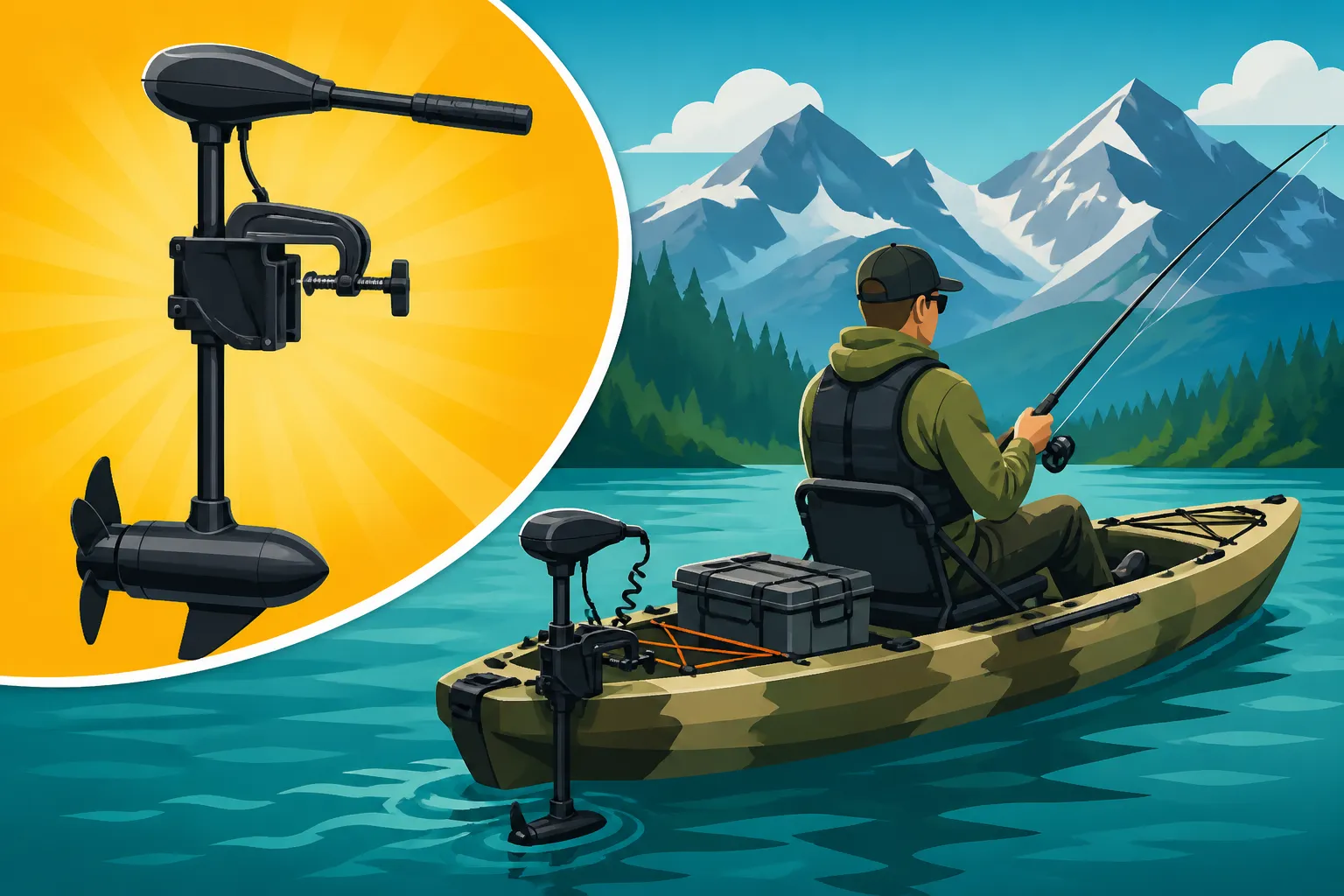
Transom-mount trolling motors are the most common and often the most budget-friendly option for kayaks. These motors are traditionally designed for the stern of a small boat, clamping onto a transom or a custom-built motor mount at the rear of your kayak. They're typically hand-controlled, meaning you steer and adjust speed directly from the motor head. Installation is relatively straightforward for kayaks that have a flat stern or can be easily fitted with an aftermarket mounting bracket.
The primary advantage here is simplicity and cost. They are generally easy to attach and detach, making transport and storage less of a hassle. However, steering from the stern can sometimes be less intuitive than steering from the bow, especially if you're trying to fish forward. You might find yourself turning your body frequently to make adjustments, which isn't always ideal when trying to stay focused on your line. Brands like Minn Kota and Motorguide offer many reliable transom-mount options that can be adapted for kayak use.
Bow-Mount Motors
Bow-mount trolling motors are more advanced and offer superior boat control, especially for precise maneuvering and holding position. These motors are installed at the front (bow) of the kayak and are typically operated by a foot pedal or a remote control, allowing for hands-free steering. While traditional bow-mount motors are designed for larger boats and can be cumbersome to adapt to a kayak, specific models and aftermarket mounting systems have made them viable for larger, more stable fishing kayaks.
The significant benefit is unparalleled control and the ability to steer exactly where you're looking, mimicking the natural steering of a paddle. Many high-end bow-mount motors also feature GPS-enabled spot-lock technology, which uses satellite positioning to automatically hold your kayak in a precise location, even in wind or current. This is an absolute game-changer for finesse fishing or holding a spot on a particular structure. However, they are generally more expensive, heavier, and require more complex installation than transom-mount options. Brands like Minn Kota's Ultrex or Terrova, and some offerings from Rhodan, are popular choices for those who go this route, though the kayak adaptation often requires specialized mounts.
Kayak-Specific Integrated Systems
The kayak fishing industry has truly evolved, leading to purpose-built, integrated trolling motor systems. These are often designed to fit specific kayak models, sometimes even replacing pedal drive systems or slotting into dedicated recesses. They often feature proprietary mounting solutions that keep the motor tucked away, minimizing snags and maximizing stealth. These systems are typically sleeker, more efficient, and integrate seamlessly with the kayak's design, offering the cleanest look and often superior performance for dedicated kayak anglers.
Examples include motors that mount through a scupper hole, or those designed to drop into a pedal drive well. Control can vary from hand-operated toggles to wireless remote controls, providing incredible convenience. The downside is that they are often kayak-model specific, meaning you might be limited to certain brands or models of kayaks if you want to take advantage of these integrated systems. They also tend to be on the higher end of the price spectrum, but for many, the seamless integration and performance are well worth the investment. When looking at a Best Kayaks for Alberta Fishing, consider if they are compatible with these types of systems.
| Motor Type | Mounting Location | Control Method | Pros | Cons | Ideal For |
|---|---|---|---|---|---|
| Transom-Mount | Stern | Hand-Steer/Remote | Simple, cost-effective, easy to install/remove | Less precise steering, steering from behind | Budget-conscious, occasional use, smaller kayaks |
| Bow-Mount | Bow | Foot/Remote | Precise control, hands-free fishing, GPS lock | Complex installation, heavier, more expensive, larger kayaks needed | Serious anglers, heavy wind/current, exact spot-holding |
| Integrated/Kayak-Specific | Mid/Stern/Bow | Hand/Remote | Seamless look, custom fit, efficient | Kayak-model dependent, higher cost, less universal | Dedicated kayak anglers, specific kayak models |
Key Features to Look For in a Kayak Trolling Motor
Choosing the right trolling motor isn't just about picking a brand; it's about understanding the specifications that matter most for kayak fishing. Thrust, battery life, shaft length, and control mechanisms all play crucial roles in your on-water experience.
Thrust Ratings Explained
Thrust is measured in pounds (lbs) and indicates the pushing power of the motor. A common misconception is that more thrust always equals better. While sufficient thrust is essential, too much can be overkill and drain your battery unnecessarily. For most fishing kayaks, which are relatively lightweight and streamlined, a motor in the 30-55 lbs thrust range is usually more than enough.
To determine your ideal thrust, consider your kayak's loaded weight (kayak + you + all your gear), the types of waters you fish, and prevalent conditions. For calm lakes or slow rivers, 30-40 lbs of thrust can easily move a single-person kayak. If you're consistently battling strong currents on larger rivers like the North Saskatchewan or facing heavy winds on big lakes such as Best Kayak for Lesser Slave Lake, stepping up to 45-55 lbs of thrust will give you the necessary power and control. Remember, it's not just about speed; it's about having enough power to hold your position effectively against adverse conditions.
Battery Efficiency and Runtime
The battery is the lifeline of your trolling motor, and its efficiency directly impacts your time on the water. Kayak anglers typically prioritize motors that draw less power for a given thrust, maximizing their battery's runtime. When looking at motors, check their amp draw at various speed settings. A motor that sips power is often preferable, even if it has slightly less peak thrust, as it allows you to fish longer.
Consider motors with variable speed control rather than just fixed speed settings. Variable speed allows you to dial in the exact amount of thrust needed, conserving battery life when you're just gently cruising or holding position. This flexibility is vital for extending your day, especially if you're exploring remote areas where recharging isn't an option. Look for motors explicitly designed for efficiency, and don't forget that your battery choice (which we'll cover next) is equally important for a long, productive day of Kayak Fishing Techniques for Alberta Lakes.
Shaft Length Considerations
Shaft length is perhaps one of the most overlooked, yet critical, features for kayak trolling motors. A shaft that's too long will have the prop sitting too deep, potentially hitting submerged obstacles or even the bottom in shallow water. A shaft that's too short, however, will cause the propeller to break the surface (cavitate) in choppy water or when going over waves, losing thrust and making a lot of noise.
For most fishing kayaks, a shaft length between 30 to 42 inches is a good starting point. The ideal length depends on your kayak's freeboard (the distance from the water to the top of the kayak at the stern or bow where the motor is mounted). You want the propeller to be submerged by at least 6-12 inches under the waterline in normal conditions. If you typically fish in very shallow areas, a slightly shorter shaft might be advantageous, but be mindful of cavitation. For choppy conditions or deeper water applications, a longer shaft will ensure consistent thrust. Measuring your kayak's transom height and considering the water conditions you'll typically encounter will help you dial in the perfect shaft length.
Mounting Options and Versatility
How a trolling motor mounts to your kayak is a huge factor in both performance and convenience. As discussed with the types of motors, you'll encounter transom mounts, bow mounts, and even integrated or scupper-hole mounts. The best option for you depends heavily on your specific kayak model and your fishing style.
Many anglers modify their kayaks with aftermarket brackets or DIY solutions to accommodate standard transom or bow-mount motors. Look for mounting systems that are robust, secure, and easy to install and remove for transport. Stability is key; you don't want your motor wobbling or shifting while you're trying to fish. Versatility is also a plus – if a mount allows for easy adjustment of motor depth or angle, it can greatly improve your on-water experience. Consider if the mount needs to be permanent or easily removable. If you frequently transport your kayak on a roof rack or in a truck bed, a quick-release mount will save you a lot of hassle.
Control Mechanisms
The way you control your trolling motor significantly impacts your fishing efficiency and comfort. The main options are tiller handle, foot pedal, and wireless remote.
- Tiller Handle: This is the most common control type for transom-mount motors. You steer and adjust speed directly from a handle on the motor. It's simple and reliable, but it occupies one of your hands, which can be a drawback when casting or managing your rod.
- Foot Pedal: Primarily found on bow-mount motors, a foot pedal allows for hands-free steering and speed control. This is a huge advantage for anglers who need both hands free for casting, retrieving, and fighting fish. However, foot pedals take up deck space and can sometimes be less comfortable for long periods on a kayak, as you're often seated lower.
- Wireless Remote: Many modern trolling motors, especially bow-mount and integrated systems, come with a wireless remote control. These remotes can be worn on your wrist, kept in a pocket, or attached to your PFD. They offer ultimate freedom, allowing you to control speed, direction, and even advanced features like spot-lock from anywhere in the kayak. This is arguably the most convenient option for serious kayak anglers, allowing maximum focus on fishing.
When choosing, think about how you typically fish and what setup will keep you most comfortable and efficient throughout your day on the water. For many, the ability to control the motor hands-free, whether by foot or remote, is a top priority.
Powering Your Kayak Trolling Motor: Batteries and Chargers
A trolling motor is only as good as the power source it's connected to. Understanding your battery options and how to properly charge them is paramount to ensuring reliable performance and extending your time fishing.
Understanding Battery Types: Lead-Acid vs. Lithium
The heart of your electric kayak propulsion system is the battery. You'll primarily choose between two main types:
-
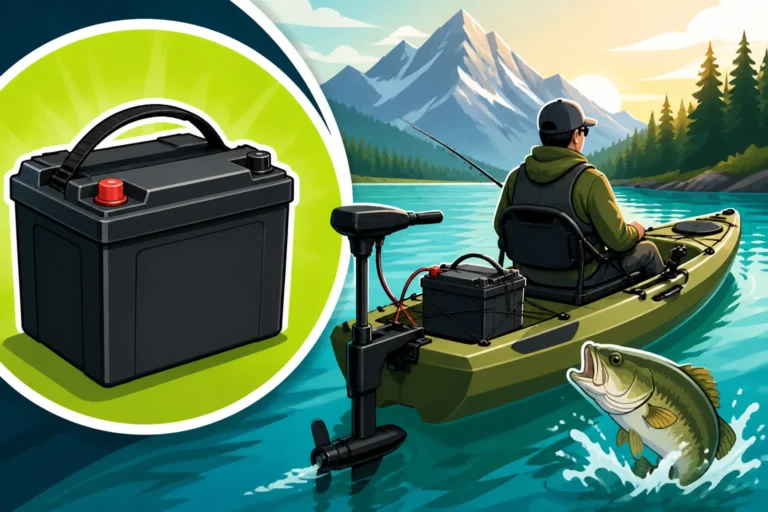
Lead-Acid Batteries: These are the traditional choice and include deep cycle marine batteries (flooded, AGM, or gel). They are generally more affordable upfront. Flooded lead-acid batteries require maintenance (checking water levels), while AGM (Absorbed Glass Mat) and gel batteries are sealed and maintenance-free. Lead-acid batteries are heavier and have a more limited discharge cycle life compared to lithium. They should generally only be discharged to about 50% of their capacity to prolong their life, meaning a 100Ah lead-acid battery effectively provides 50Ah of usable power. If you're picking one up, Bass Pro Shops or other local outdoor retailers will have plenty of options.
-
Lithium Iron Phosphate (LiFePO4) Batteries: Often simply called "lithium" batteries in this context, these are a revolutionary option for kayak anglers. They are significantly lighter, offer a much longer cycle life, and can be discharged almost completely (80-100%) without damaging the battery. This means a 50Ah LiFePO4 battery can offer similar usable power to a 100Ah lead-acid battery, but at a fraction of the weight. Their stable voltage output also means your motor performs consistently even as the battery drains. The main drawback is their higher initial cost, but their longevity and performance often make them a worthwhile long-term investment. They are widely available online through retailers like Amazon or specialized battery suppliers.
For kayak fishing, the weight savings of lithium batteries are a huge advantage, as reducing overall weight can improve kayak performance and ease of transport. However, a quality deep cycle AGM lead-acid battery can still be a perfectly viable and more economical choice for many, especially for shorter outings or if budget is a primary concern.
Calculating Battery Needs
Figuring out what size battery you need can feel like a math problem, but it's essential for ensuring you have enough juice for your fishing trip. The key is to match your battery's amp-hour (Ah) rating to your motor's amp draw and your desired runtime.
Most trolling motor specifications will list the maximum amp draw at full thrust. For example, a 55 lb thrust motor might draw 50 amps at its highest setting. If you run it continuously at full power, a 50Ah (usable) battery would last approximately one hour (50Ah / 50A = 1 hour). However, most anglers don't run their motors at full throttle all day. Variable speed control significantly reduces amp draw.
A good rule of thumb is to estimate your average amp draw. For moderate use (intermittent bursts of medium to high speed, mixed with lower speeds for positioning), you might average 10-20 amps per hour. If you plan a full 6-8 hour fishing day, and average 15 amps, you'd need about 90-120 Ah of usable battery capacity. So, if using lead-acid, you'd look for a 180-240Ah battery, or a 90-120Ah LiFePO4 battery. Always err on the side of slightly more capacity than you think you'll need; it’s better to have extra power than to be stranded without it!
Charging Solutions On and Off the Water
Proper charging is crucial for battery longevity and readiness.
-
Off-Water Charging: You'll need a suitable charger for your chosen battery type. Lead-acid batteries require specific charging profiles, and a multi-stage charger is recommended to ensure a full charge without overcharging, which can damage the battery. Lithium batteries also require a charger specifically designed for LiFePO4 chemistry. Using the wrong charger can damage a lithium battery or severely reduce its lifespan. Investing in a good quality smart charger that matches your battery type is non-negotiable.
-
On-Water Charging (Solar/Generators): For multi-day trips or extremely long fishing excursions, some kayak anglers consider portable solar panels or small generators. Solar panels can trickle charge smaller batteries or help extend the life of larger ones, especially in sunny Alberta. Small, portable generators can quickly recharge batteries on shore during a break, but these are generally less practical for kayaks due to size, weight, and noise. Most kayak anglers rely on their main battery capacity and thorough off-water charging. Always ensure your charging setup is safe and weatherproof, especially if you're taking it on the water.
Installation and Maintenance Tips
Getting your trolling motor properly installed and keeping it well-maintained will ensure its reliability and extend its lifespan, letting you focus more on catching fish.
Secure Mounting Techniques
A wobbly motor is not only inefficient but can also be a safety hazard. Your mounting system needs to be rock solid. For transom-mount motors, ensure the clamps are tightened securely to your kayak's transom or motor mount plate. Consider adding safety straps or bolts to prevent accidental detachment. If you're using a custom bracket, make sure it's bolted through the kayak hull with appropriate marine-grade hardware and sealant to prevent leaks. Through-bolting with backing plates distributes stress and is far more secure than simply using screws.
For bow-mount motors, follow the manufacturer's instructions meticulously. These often involve drilling multiple holes and using specific mounting hardware. Always use marine-grade stainless steel fasteners and generous amounts of marine sealant (like 3M 4200 or 5200) around any drilled holes to maintain your kayak's watertight integrity. Test the mount thoroughly on land before heading out, checking for any movement or flex. Remember, you'll be putting significant torque on this mount when maneuvering, so it needs to hold up under pressure. When reading the Alberta Boating Laws for Anglers, you'll notice the emphasis on proper boat maintenance and safety, which includes secure equipment.
Wiring and Electrical Safety
Electrical safety is paramount, especially on a watercraft. All wiring should be marine-grade (tinned copper) and properly sized for the amp draw of your motor. Use appropriate waterproof connectors and heat-shrink tubing to protect all electrical connections from corrosion and short circuits.
Install a circuit breaker or fuse appropriate for your motor's maximum amp draw, as close to the battery as possible. This protects your motor and battery from overcurrent situations and can prevent fires or damage in case of a short. Route your wiring carefully, securing it to prevent chafing or snagging. Avoid running wires through sharp edges or where they might be stepped on. Ensure all connections are clean and tight. Regularly inspect your wiring for any signs of wear, corrosion, or damage. Don't forget that compliance with boating regulations, even for kayaks with motors, is crucial, and part of this is having a safe electrical setup. You can learn more in resources like Alberta required boat safety equipment checklist.
Routine Care and Storage
Just like any piece of valuable fishing gear, your trolling motor requires regular care to perform its best and last for years.
- After Each Use: Rinse your motor thoroughly with fresh water, especially if you've been fishing in brackish or salty conditions (though this is less common in Alberta's freshwater systems). Pay special attention to the propeller and shaft, removing any weeds, fishing line, or debris that might have wrapped around them.
- Propeller Inspection: Regularly inspect your propeller for nicks, chips, or bends. Damaged props can reduce efficiency, cause vibration, and put unnecessary strain on your motor. Keep a spare prop on hand, along with the necessary wrench, for quick field replacements.
- Battery Care: Keep your batteries clean, dry, and charged. For lead-acid batteries, check water levels periodically if they are not sealed. Store batteries in a cool, dry place. If storing for an extended period, ensure they are fully charged and disconnect them from the motor. Consider a "smart" trickle charger for long-term storage of lead-acid batteries to prevent sulfation. Lithium batteries generally require less specific storage care but should still be stored partially charged (e.g., 50%) for very long periods.
- Motor Storage: Store your trolling motor in a dry, protected area. If possible, store it vertically to prevent oil leaks (if applicable) and protect the shaft and prop. A motor cover can help keep dust and grime off.
By following these simple maintenance steps, you'll ensure your Best Trolling Motor for a Fishing Kayak is always ready for your next Alberta adventure.
Choosing the Right Trolling Motor for Your Alberta Fishing Needs
Making the final choice on a trolling motor involves weighing several factors specific to your fishing habits and the diverse waters of Alberta. It's about finding that sweet spot between power, portability, and practicality.
Matching Thrust to Kayak Size and Conditions
As we touched on earlier, thrust is crucial. A smaller, lighter recreational kayak used primarily on calm, sheltered ponds near Calgary might do perfectly fine with a 30-pound thrust motor. You're just looking for a bit of extra push, not a speed demon. However, if you're piloting a larger, fully loaded pedal-drive fishing kayak on the vast waters of Cold Lake or the currents of the Red Deer River, you'll appreciate the added muscle of a 45 or 55-pound thrust unit.
Consider the heaviest load your kayak will carry. This includes yourself, all your rods, tackle, cooler, and any other gear. A general guideline is about 2 lbs of thrust per 100 lbs of loaded weight. Then, factor in wind and current. If you regularly face strong breezes or moving water, lean towards the higher end of the thrust recommendations. Remember, you can always dial down a powerful motor, but you can't get more power from an undersized one when you really need it.
Navigating Alberta's Diverse Waters
Alberta offers an incredible variety of fishing environments, from serene mountain lakes like those in Kananaskis Country to vast prairie reservoirs and powerful river systems. Your chosen trolling motor should be suited to these conditions.
- Small Lakes & Ponds: For these often calm waters, stealth and portability are key. A smaller, lighter transom-mount motor with moderate thrust (30-40 lbs) and a good, efficient battery will serve you well. Simplicity is often best here.
- Large Lakes (e.g., Lesser Slave Lake, Cold Lake): These expansive waters can get choppy and windy quickly. You'll want more thrust (45-55 lbs) and possibly a bow-mount motor with GPS spot-lock for precise positioning against waves and currents. Extended battery life is also paramount to cover long distances.
- Rivers (e.g., Bow River, Oldman River): Rivers present unique challenges with their currents. A powerful bow-mount motor with foot control or remote is often preferred for precise hands-free maneuvering while drifting or holding position in a seam. Shaft length becomes especially important here to avoid hitting bottom in shallow stretches. You'll also want to be very familiar with Alberta Boating Laws for Anglers and Life Jacket Requirements for Alberta Boaters when tackling river systems.
Balancing Portability and Performance
This is often the ultimate trade-off for kayak anglers.
- Portability: If you frequently load and unload your kayak alone, carry it long distances to the water, or simply want a minimalist setup, a lighter, more compact transom-mount motor with a lightweight lithium battery will be your friend. The ease of setting up and breaking down after a long day of fishing is a huge factor for many.
- Performance: If you prioritize hands-free fishing, precise boat control, and the ability to cover vast distances or battle tough conditions, a bow-mount or integrated system with advanced features will offer superior performance. However, these often come with added weight, more complex installation, and a higher price tag.
Ultimately, there's no single "best" trolling motor for every fishing kayak. The ideal choice is a personal one, influenced by your specific kayak, your fishing destinations, your budget, and your personal preferences for control and convenience. Do your research, consider the conditions you'll face most often, and you'll find a trolling motor that significantly enhances your Alberta fishing adventures. Don't forget, even with a motor, a Alberta Pleasure Craft Operator Card Requirement is in effect for most motorized boats, including kayaks with motors, so make sure you're properly licensed.
Disclaimer
This article is for general informational purposes only and does not constitute professional advice. Laws, prices and regulations vary by location and change over time. Consult a qualified professional for guidance on your specific situation.